
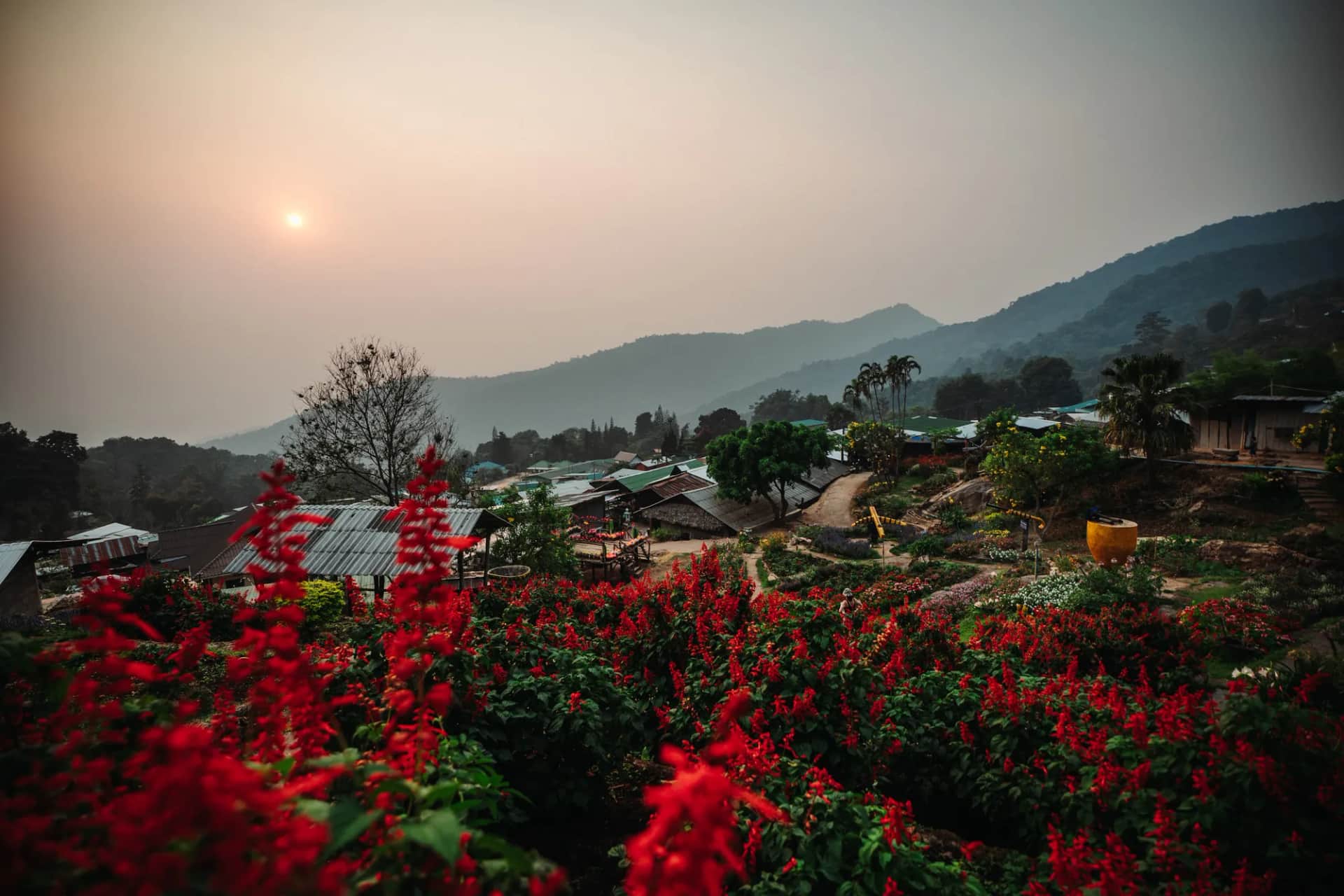

At the end of March 2024, I arrived in Chiang Mai to spend almost a month there. In my photos from that period, one detail keeps coming back: the sky. From Doi Kham hill, the city disappears under a white veil. At the Hmong village of Doi Pui, the sun sets as a blurred orange disc, well before it reaches the horizon. This is not heat haze, it is smoke from the burning season.
That year, Chiang Mai province spent 87 days above Thailand's fine particle standard between January and May, and the city was ranked among the most polluted in the world for several days in a row in early April. Civil servants were even told to work from home from 9 to 11 April.
If you are planning a trip to northern Thailand between February and April, here is what you need to know: where the smoke comes from, the figures for recent seasons, the months to avoid and, if your dates are already set, how to limit the damage.
Where the smoke comes from
Every dry season, northern Thailand burns. Farmers set fire to crop stubble, mostly maize but also rice and sugar cane, to prepare their fields. In the mountain forests, fires are lit for slash-and-burn farming or mushroom foraging, and others start on their own. On top of that comes smoke from Myanmar and Laos: in April 2024, more than 6,000 hotspots were detected in those two countries, against around 500 in Chiang Mai province.
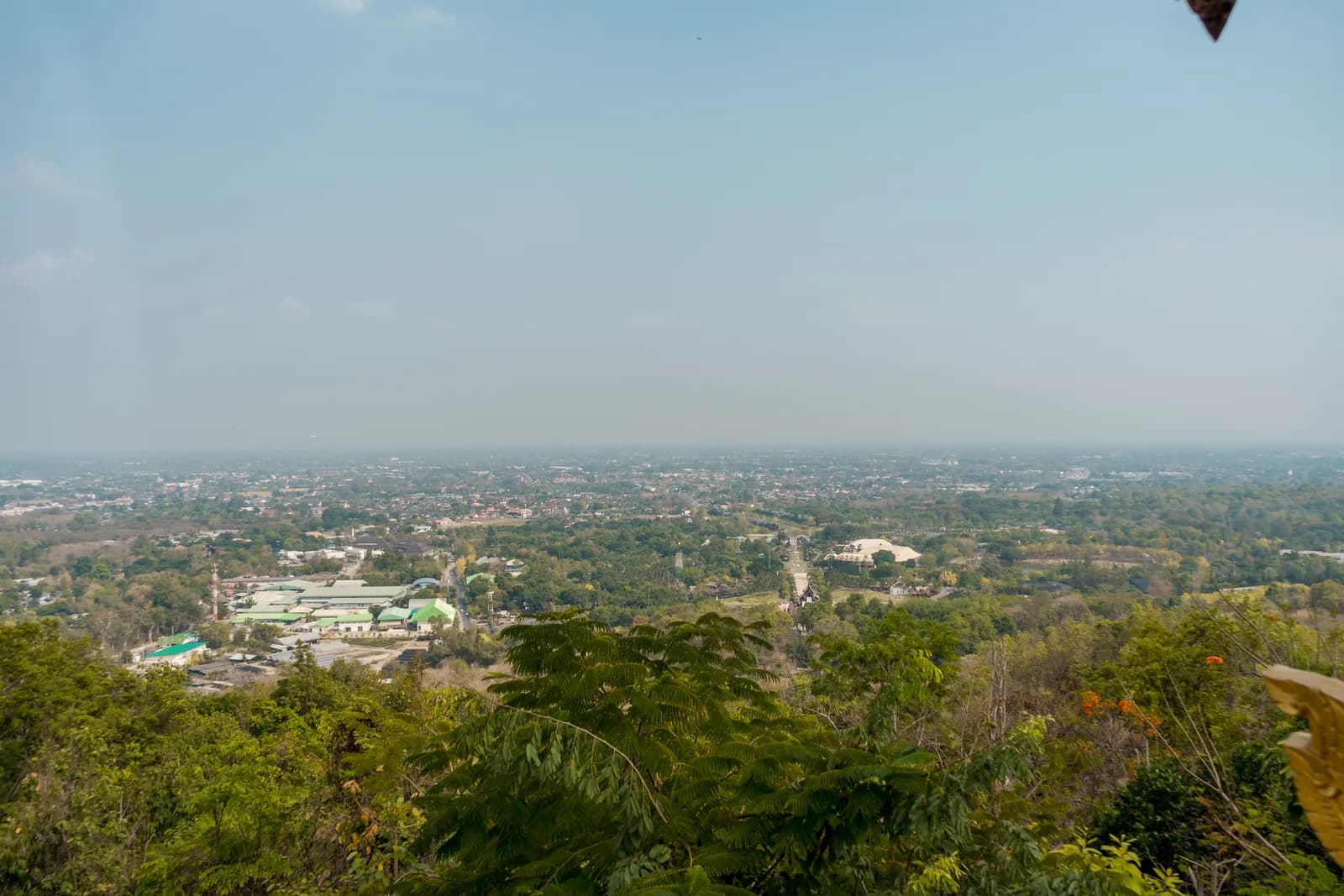
The terrain does the rest. Chiang Mai sits at the bottom of the Ping valley, surrounded by mountains. Thailand's Pollution Control Department (PCD) says so itself: this "basin-shaped terrain", combined with temperature inversions, stops the smoke from dispersing. According to data reported by NASA, around 70% of the fine particles measured in Chiang Mai in April come from burning biomass.
What my photos from April 2024 show
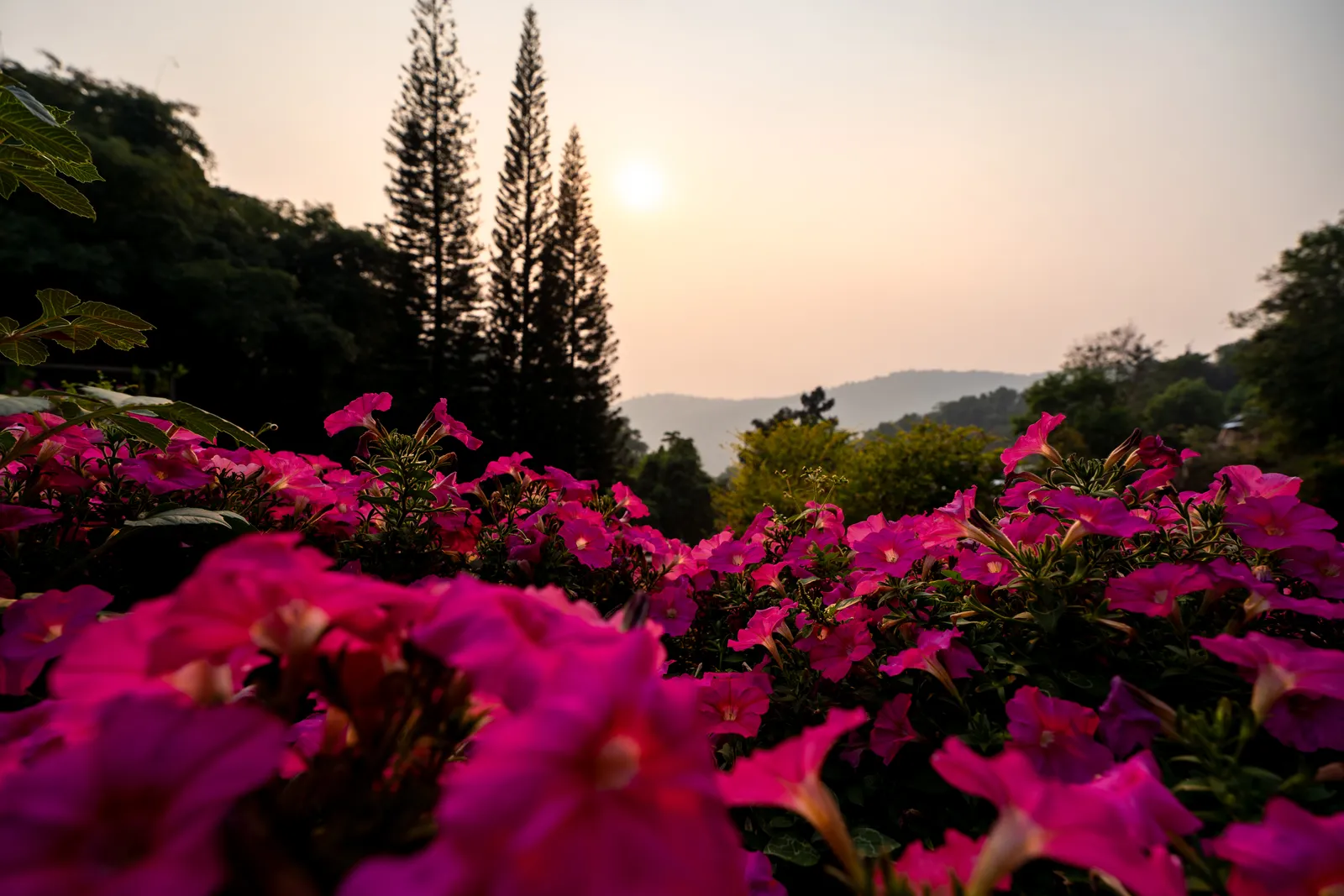
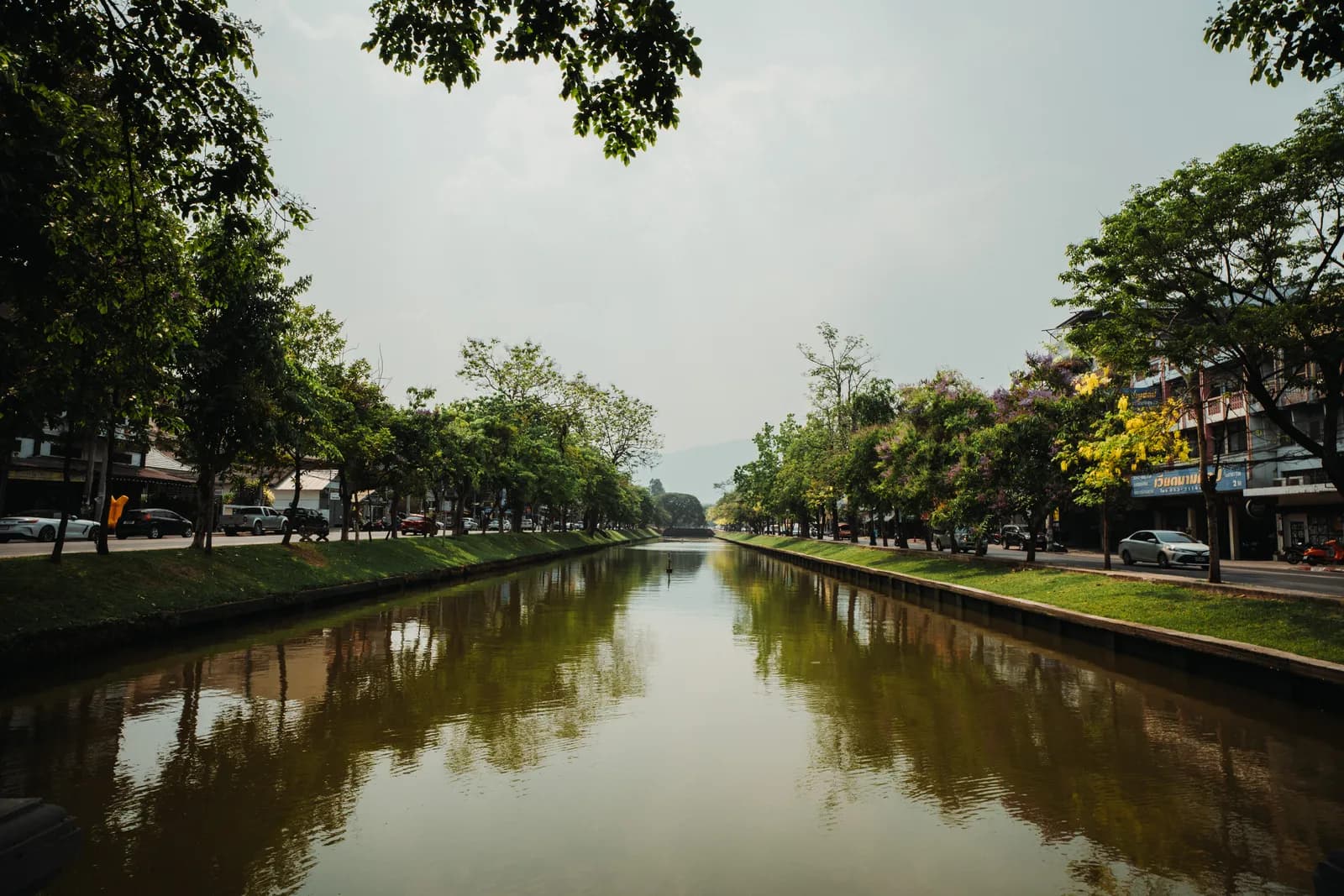
I have no measurements of my own from that period, but my camera recorded everything. Between 31 March and 26 April 2024, most of my pictures of the north share the same milky sky.
- Doi Pui, 6 April: the setting sun is just an orange disc above the mountains, well before the horizon.
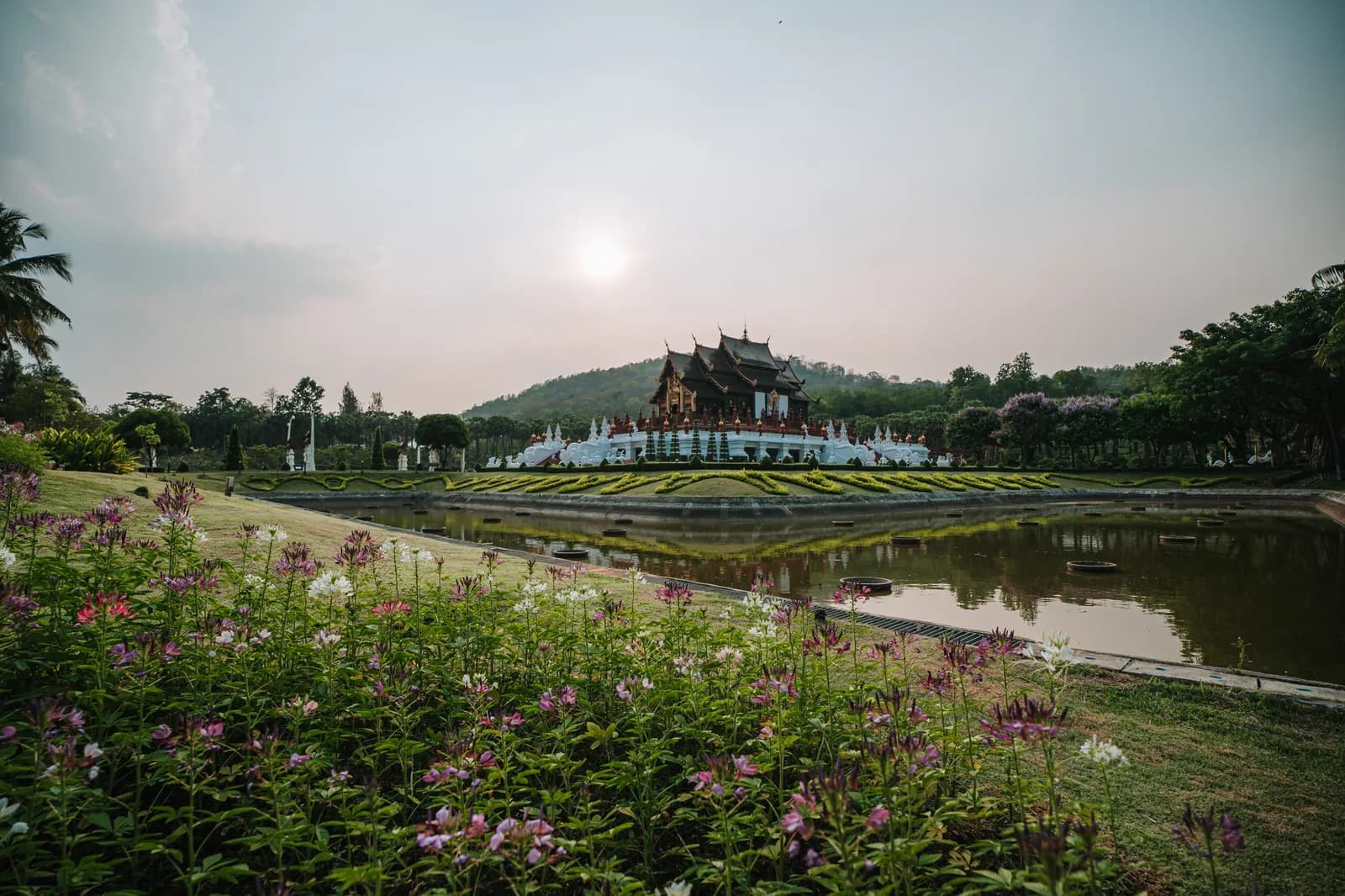
- Royal Park Rajapruek, 18 April: late in the day, the sun barely pierces a white sky above the royal pavilion.
- Chiang Rai, 21 April: the tea plantations of Singha Park fade into a colourless horizon.
- Doi Kham, 26 April: from the hill, the city of Chiang Mai can barely be made out under the veil.
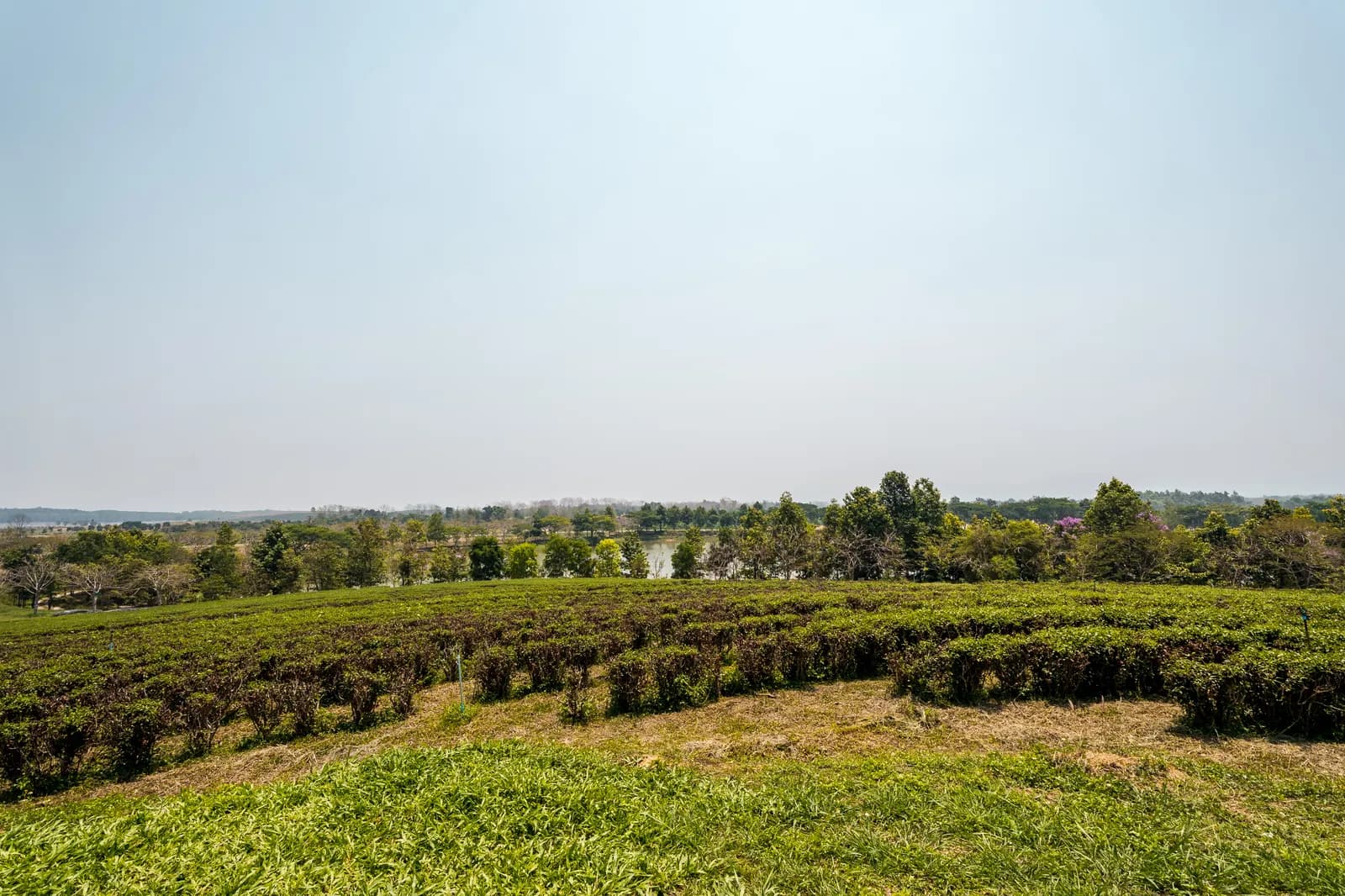
Photos : Pierre Bouyer
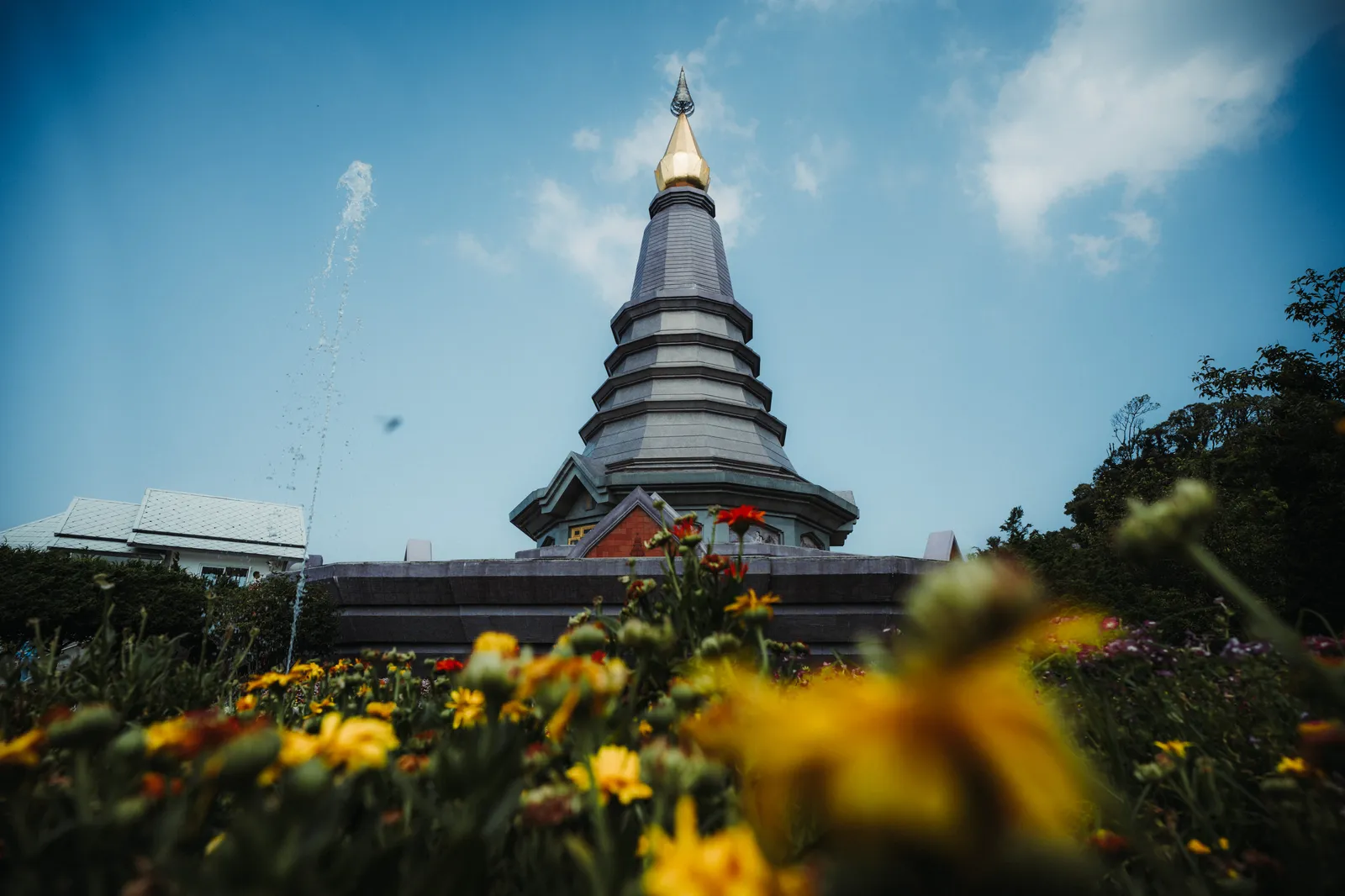
Only one day stands out: on 14 April, at Doi Inthanon, the sky was blue above the royal chedis. That was on that day, at that altitude. Studies place the smoke layer between 2 and 3km altitude in the dry season, and the summit stands at 2,565m: the mountain is therefore not a guaranteed refuge.
The figures for the last three seasons
Two benchmarks help to read the figures. Thailand's standard for PM2.5 fine particles has been 37.5 µg/m³ averaged over 24 hours since 1 June 2023 (it was 50 before). The World Health Organization's guideline is much stricter: 15 µg/m³ over 24 hours, not to be exceeded more than 3 to 4 days a year.
| Chiang Mai province, January to May | 2024 | 2025 | 2026 |
|---|---|---|---|
| Average PM2.5 | 63 µg/m³ | 39.7 µg/m³ | not published |
| Days above 37.5 µg/m³ | 87 | 60 | about 7 fewer than 2025 |
| Hotspots in the province | baseline | two thirds fewer than 2024 | 11,023, more than double 2025 |
2024 was a very bad year: IQAir ranked Chiang Mai the most polluted city in the world on 6 and 15 March, then for several days in early April. On 6 April, readings ranged from 112 to 398 µg/m³ depending on the monitoring point in the province.
2025 was clearly better on average, with fewer fires, but not spared from peaks: the city was again ranked the most polluted in the world on 17 March 2025.
2026 shows that nothing can be taken for granted. Hotspots more than doubled compared with 2025, and an acute crisis struck at the end of March and in early April: on 4 April, 409 µg/m³ was recorded in Mae Rim, and Chiang Mai, Lamphun and Phayao were declared disaster zones that same day.
Month by month: when to go north
The northern climate follows three seasons: cool from November to February, hot from March to May, rainy from May or June to October. The smoke overlaps with the hot season.
| Month | Air quality in Chiang Mai | My advice |
|---|---|---|
| November and December | Generally good | The best time, with cool mornings |
| January | Good at first, first readings above the standard possible | Very good, especially the first fortnight |
| February | Worsens as the month goes on | Possible, keeping an eye on forecasts |
| March | Peak of the season, often poor | Avoid |
| April | Often poor, above 35°C | Avoid, unless you go for Songkran knowing what to expect |
| May | Clears with the rains | Possible, hot and humid |
| June to October | Good | Rainy season, very green landscapes |
In 2025, the province's monitoring stations exceeded the standard on 17 to 23 days out of 31 in March, and 7 to 18 days out of 30 in April. In May, none.
If your dates fall in March or April
My trip to Thailand lasted three months, and the north fell in April. If that is your case too, here is how to organise yourself.
- Check air quality every morning. The PCD's Air4Thai app and website give readings from official stations, and IQAir adds private sensors. Chiang Mai University's network covers all 25 districts of the province.
- Bring N95, KF94 or FFP2 masks. These are the ones recommended by the Thai health authorities. Surgical and cloth masks filter fine particles poorly.
- Adapt your days. Above 50 µg/m³, the health authorities advise avoiding outdoor physical activity. Keep hiking and cycling for the decent days, and museums, cafés and cooking classes for the others.
- Choose well-sealed accommodation, ideally with an air purifier and air conditioning. Since 2024, public rooms with filtered air have also been set up in several neighbourhoods.
- Stay flexible. A cancellable booking in the north lets you head south earlier if the smoke settles in.
Children, older people, pregnant women and anyone with asthma or a heart condition are the most exposed. For them, I strongly advise against Chiang Mai in March and April. In the first quarter of 2024, a single Chiang Mai hospital treated more than 30,000 people for illnesses linked to fine particles.
Also bear in mind Songkran, the Thai New Year from 13 to 15 April, which Chiang Mai celebrates for four to five days with giant water fights. It is a wonderful festival, but it falls in the heart of the hot season: 40°C was recorded in Chiang Mai during Songkran 2024.
Chapka Insurance
Travel with peace of mind with the best travel insurance
Stay covered in every situation with the best insurance for your next trip.

Fallback options
The good news is that in March and April, the rest of the country is in the middle of its dry season. If you have some flexibility, reverse your itinerary: the north at the start of the trip, the islands afterwards.
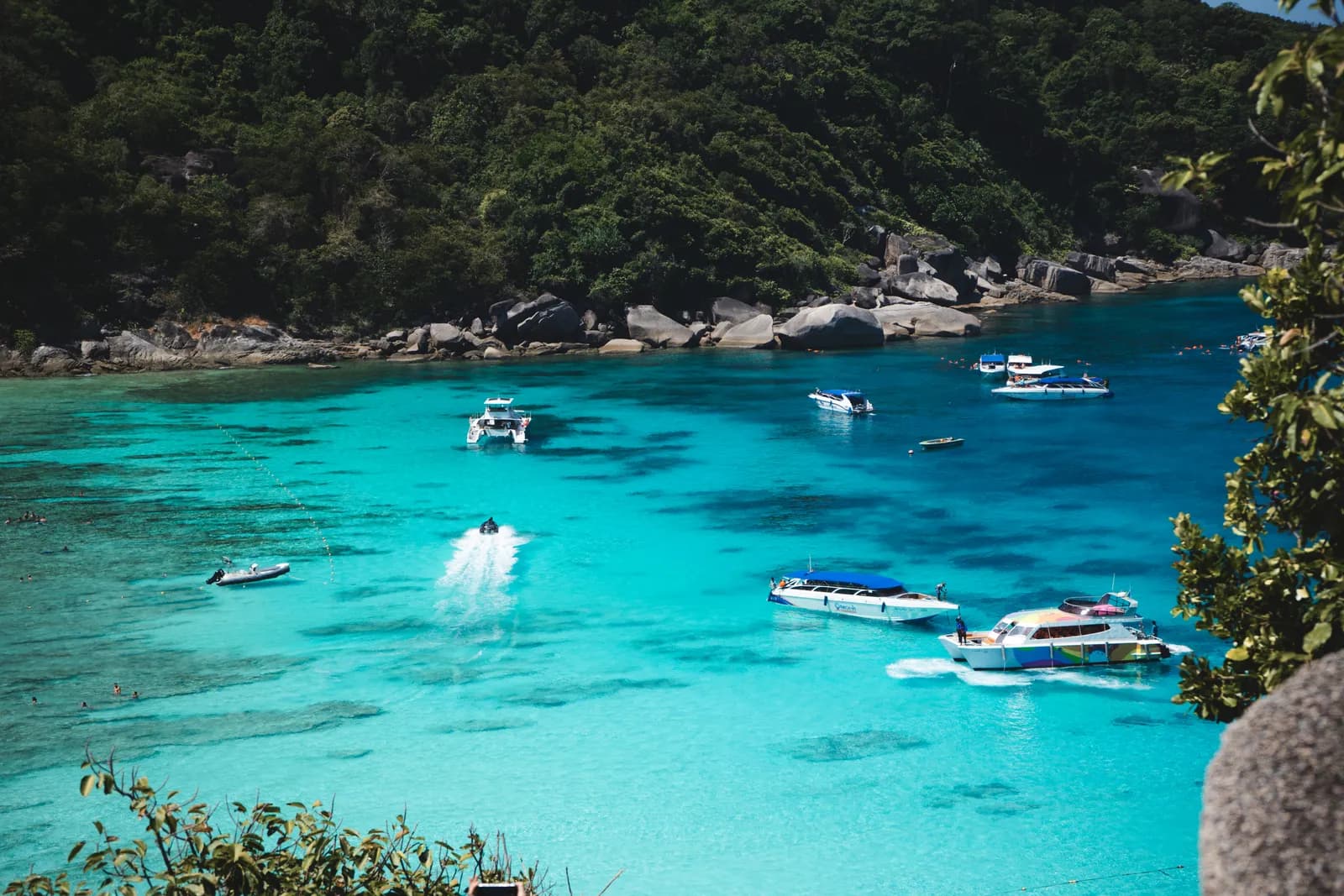
- The Gulf islands: Koh Samui, Koh Phangan and Koh Tao are dry from January to August, with a calm sea in March and April.
- The Andaman coast: Phuket, Koh Lanta and the Similan Islands are at their best from November to April. My articles on Kamala Beach, Koh Racha and Phuket's Big Buddha (in French) will help you plan this part of the trip.
- Bangkok: its pollution peak tends to fall between December and February. In March and April the air is generally better than in the north, but the heat is overwhelming.
What is changing, and what is not
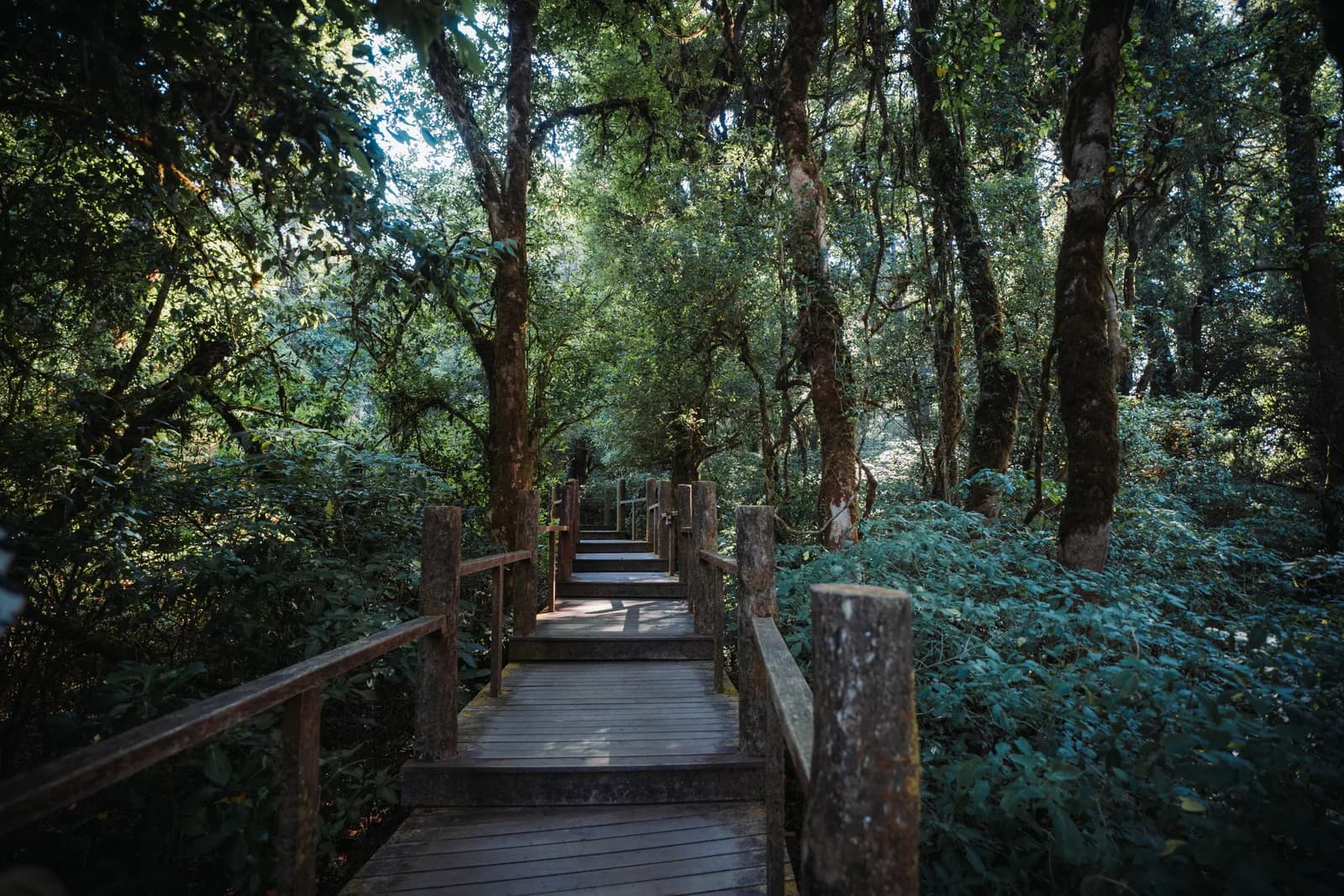
The authorities tighten the rules every year. In 2026, Chiang Mai province banned all open burning from 1 January to 31 May. Farmers must declare their burns in the Fire-D app, and those who burn without permission lose their farm subsidies for two years. Forest areas in nine national parks, including Doi Inthanon, were closed from February to April, but only outside the tourist sites, which remain open.
The long-awaited Clean Air Act, however, is still not in force in October 2026. Passed by the House of Representatives and amended by the Senate, it is now before a joint committee of the two chambers. And the 2026 record, with twice as many hotspots as in 2025, is a reminder that the weather and fires in neighbouring countries weigh as much as local bans.
When the rain comes
The air only really clears with the rains. A single shower is not enough: on 6 April 2026, rain cleared Chiang Mai's sky, and the smoke was back the very next day, putting the city at the top of the world ranking again. The lasting improvement comes with repeated storms, usually from the end of April or in May.
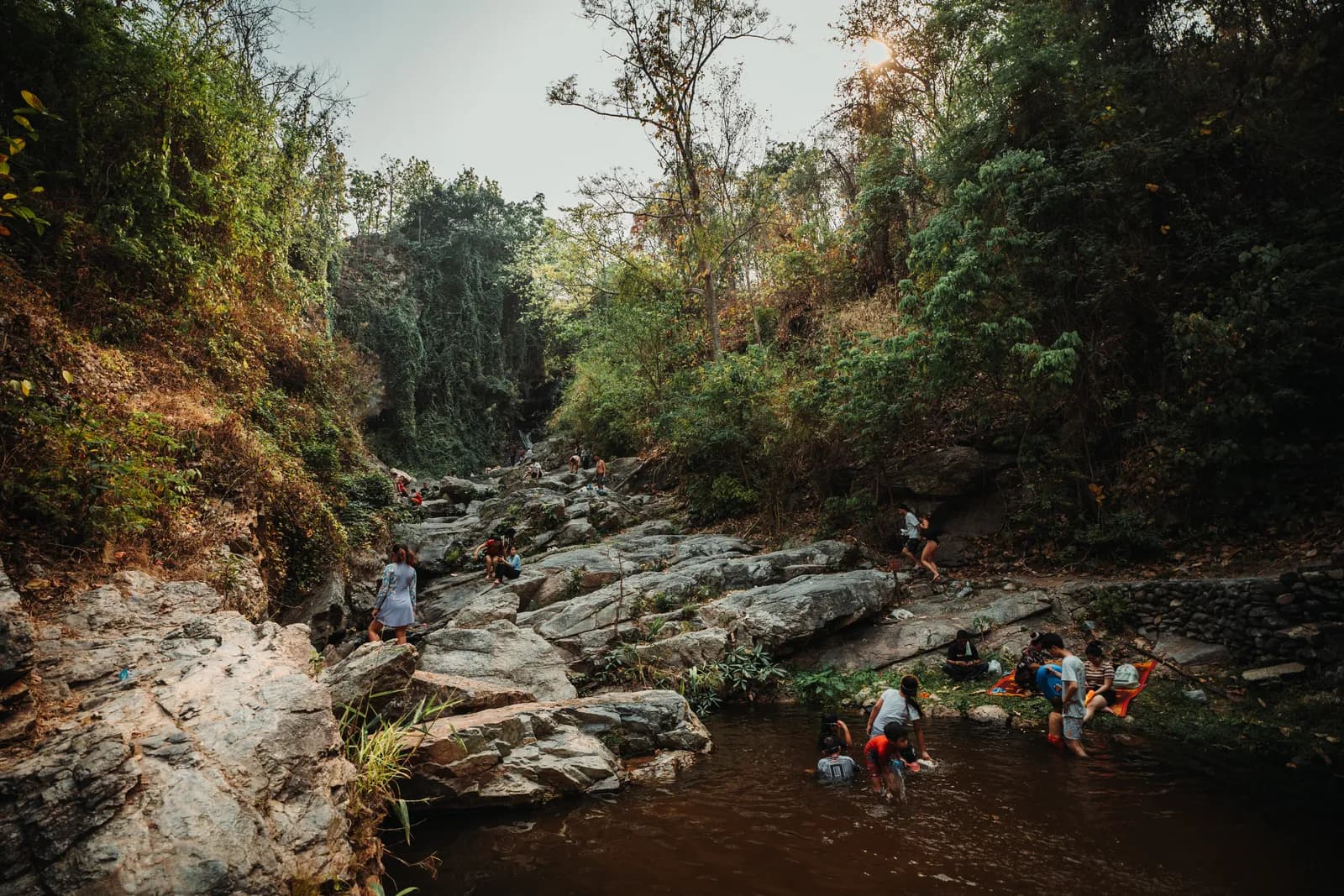
In 2025, the last day above the standard in Chiang Mai was 28 April. On 11 May 2026, readings across the province were back down to between 6.4 and 14.9 µg/m³. From May, concentrations generally drop below 10 µg/m³, and the north regains some of the best air in the country.
My advice
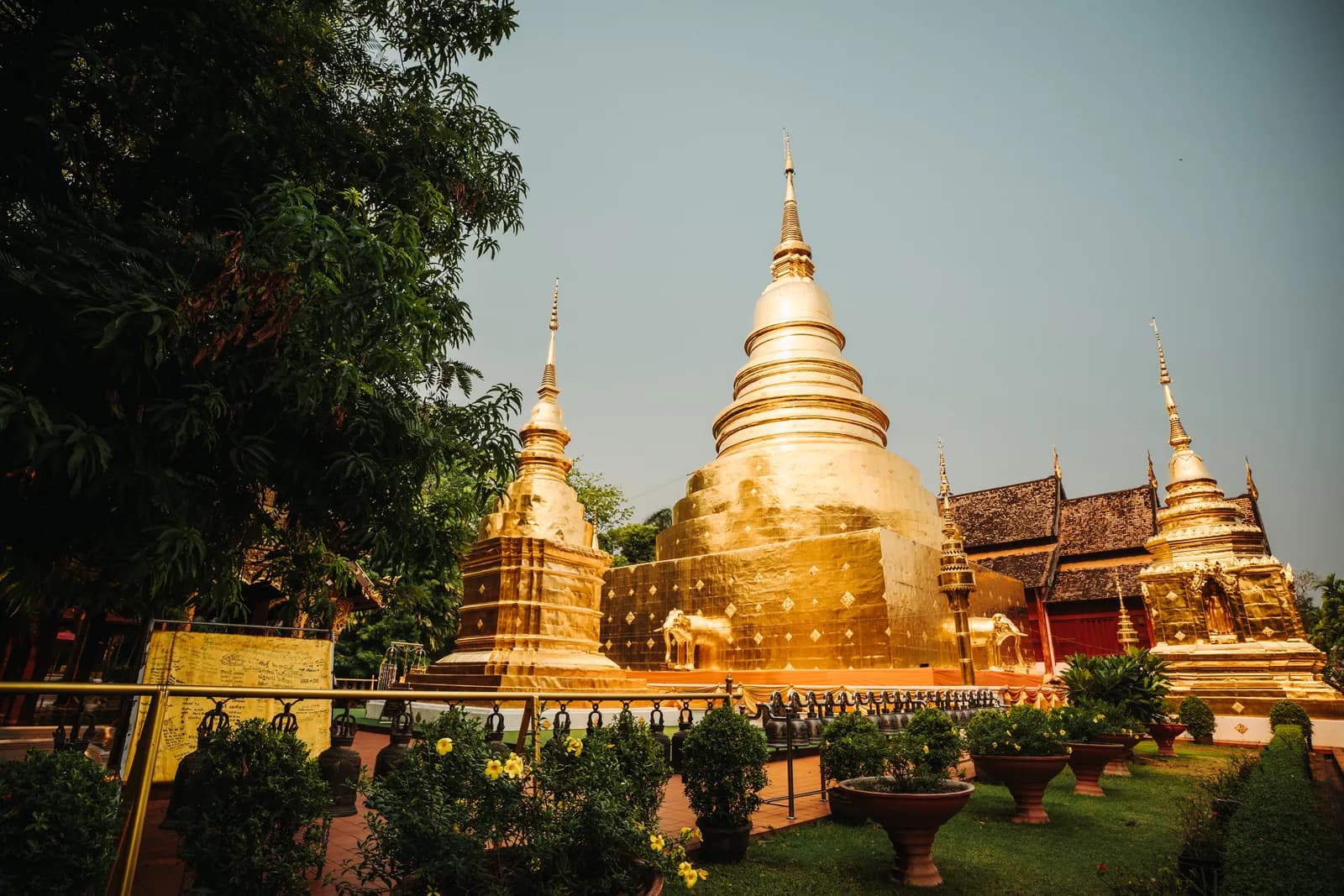
Chiang Mai is one of the richest stops on a trip to Thailand, and that is exactly why I recommend seeing it at the right time: between November and February, when the mountains stand out sharply against the sky and the mornings are cool. If your dates fall in March or April, go with a mask, an air quality app and a plan B in the south.
Find all my articles on Thailand, and my guide to staying connected with an eSIM, useful for checking air quality as soon as you land. For a long stay, my article on extending your visa in Phuket explains how to stay 30 days longer.
Frequently asked questions
Usually from January or February to April, sometimes into early May. It peaks in March and often continues into April. In 2025, readings above the standard were recorded in Chiang Mai from 9 January to 28 April.
Yes, the city stays open and the temples can be visited, but the air is often poor and it is very hot, with 40°C recorded during Songkran 2024. Bring an N95 or FFP2 mask, check air quality every morning and keep some indoor activities in reserve.
From November to February, during the cool season. December and early January are the safest for air quality, as the first readings above the standard can appear from January.
Not necessarily. Studies place the smoke layer between 2 and 3km altitude in the north during the dry season, and the summit of Doi Inthanon is at 2,565m. It can be clearer at altitude on some days, but there is no guarantee.
An N95, KF94 or FFP2 mask, as recommended by the Thai health authorities. Surgical and cloth masks filter fine particles poorly.
To the southern islands, on the Gulf side (Koh Samui, Koh Phangan, Koh Tao) or the Andaman side (Phuket, Koh Lanta), where it is the dry season. Bangkok is generally less affected than the north at that time, but it is very hot.
Sources and fact-checkingInformation checked on 9 October 2026 · 12 sources consulted
- Pollution Control Department, Chiang Mai regional office: 2025 PM2.5 report (Thai)
- NASA Earth Observatory: Hazy skies in a growing city (April 2024)
- NASA Earth Observatory: Grappling with Thailand's seasonal haze
- IQAir: Chiang Mai during the burning season (March 2026)
- Khaosod English: Chiang Mai work from home, 9 to 11 April 2024
- Thai PBS World: new PM2.5 standard of 37.5 µg/m³
- WHO: ambient air quality and health
- Thairath English: burning ban from 1 January to 31 May 2026
- Malay Mail: Chiang Mai, 4 April 2026
- Bangkok Post: Parliament rejects clean air bill changes
- Chiang Mai Citylife: skies clear as the wildfire season nears its end (May 2026)
- Pattaya Mail: Songkran 2024 in Chiang Mai at 40°C

Âme Bohème exists thanks to you
Some links in this article are affiliate links. This means that if you book or purchase a product through these links, we receive a small commission, at no extra cost to you. It's thanks to this support that we can continue creating free, quality content.
You can also buy us a coffee, or follow us on Instagram and Facebook.