Why Travel to Australia?
Australia is a continent in its own right. 7.7 million km² of staggeringly diverse landscapes: the Great Barrier Reef, the red desert of the Outback, Queensland's tropical rainforests, the endless beaches of the west coast, the snow-capped Australian Alps and the ancient rock formations of Uluru.
It is also the land of Aboriginal culture, the world's oldest continuous civilisation (65,000 years), of cosmopolitan cities like Sydney, Melbourne and Perth, of unique wildlife (koalas, kangaroos, platypuses, Tasmanian devils) and a laid-back way of life defined by surfing, barbecues and spectacular sunsets.
Australia's Must-Visit Regions
Sydney and New South Wales
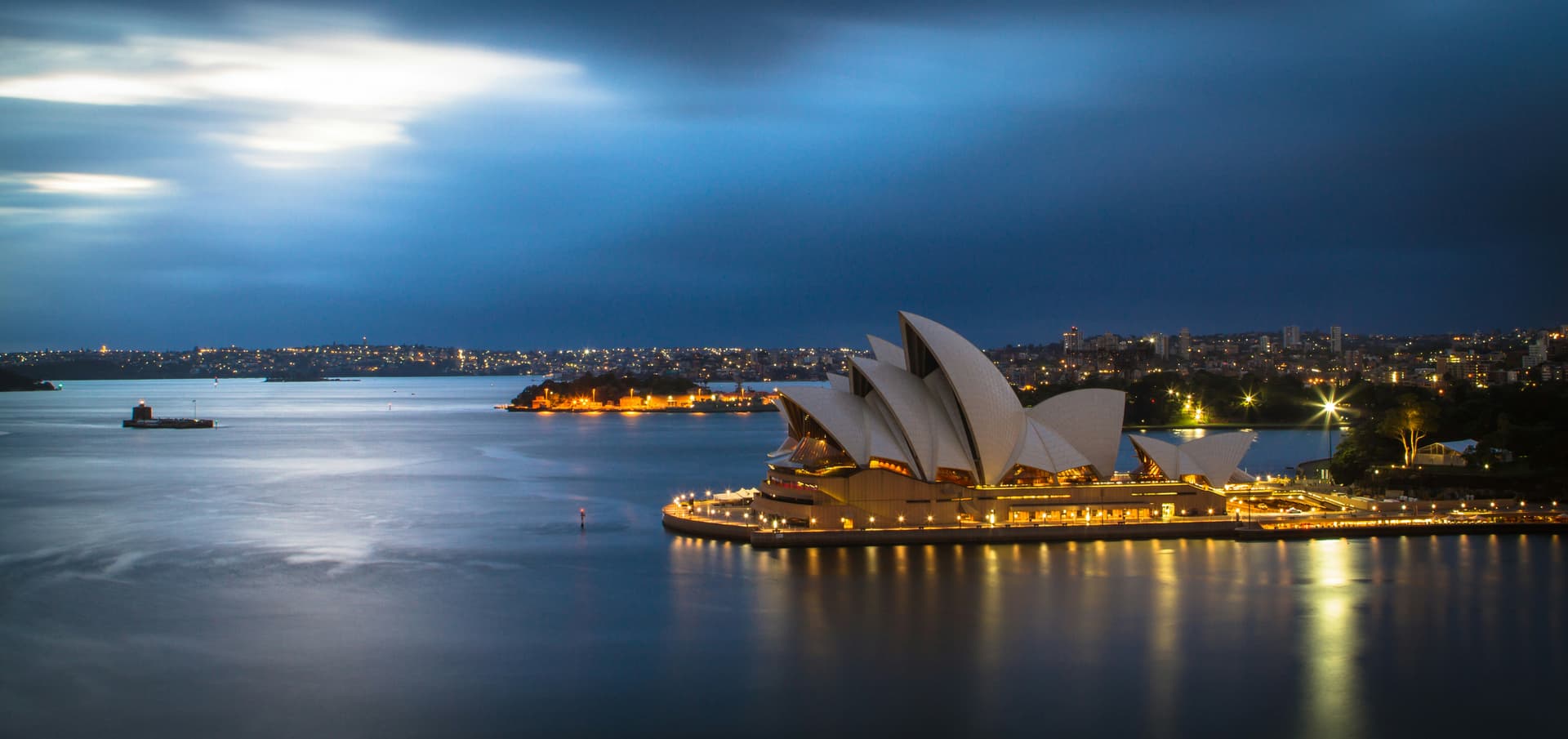
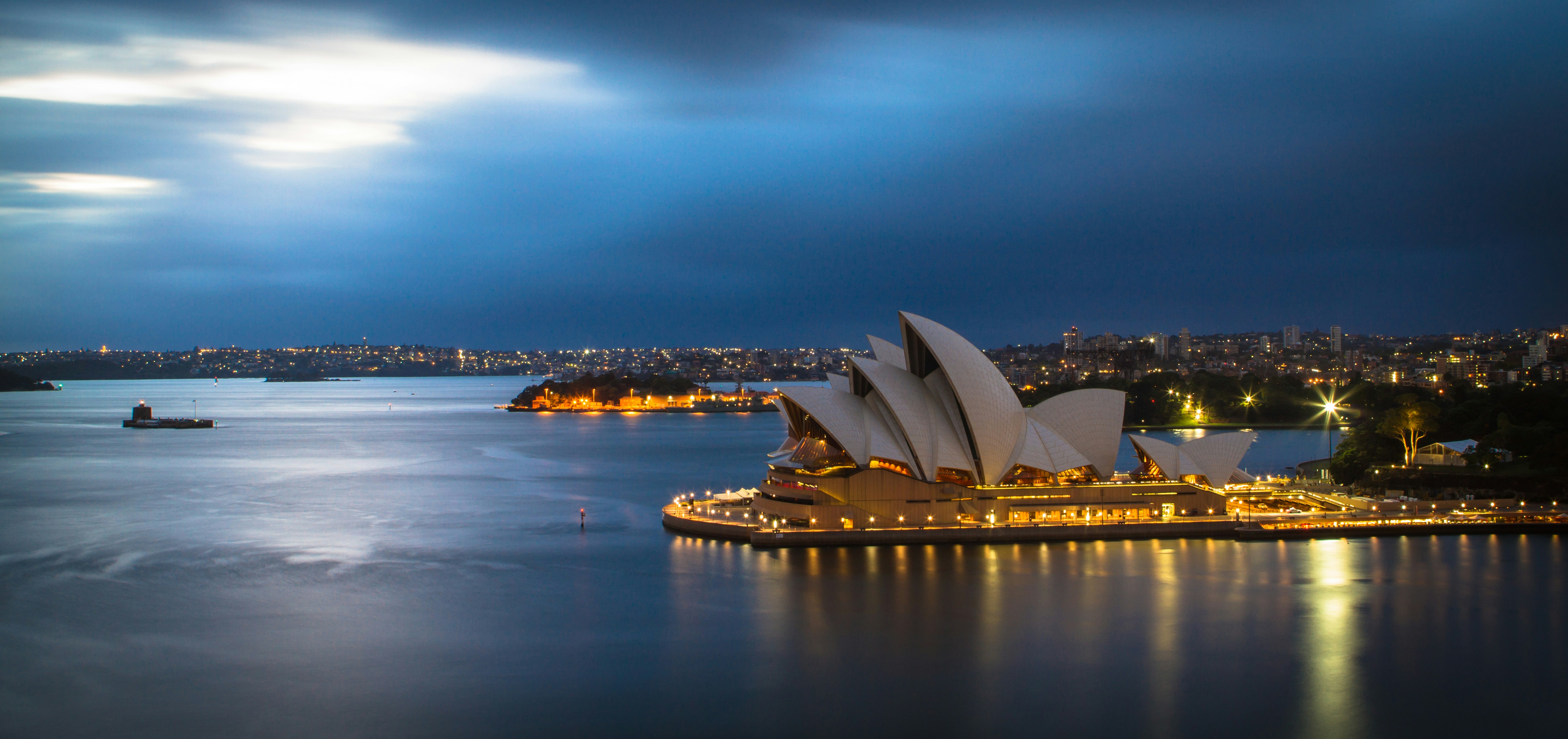
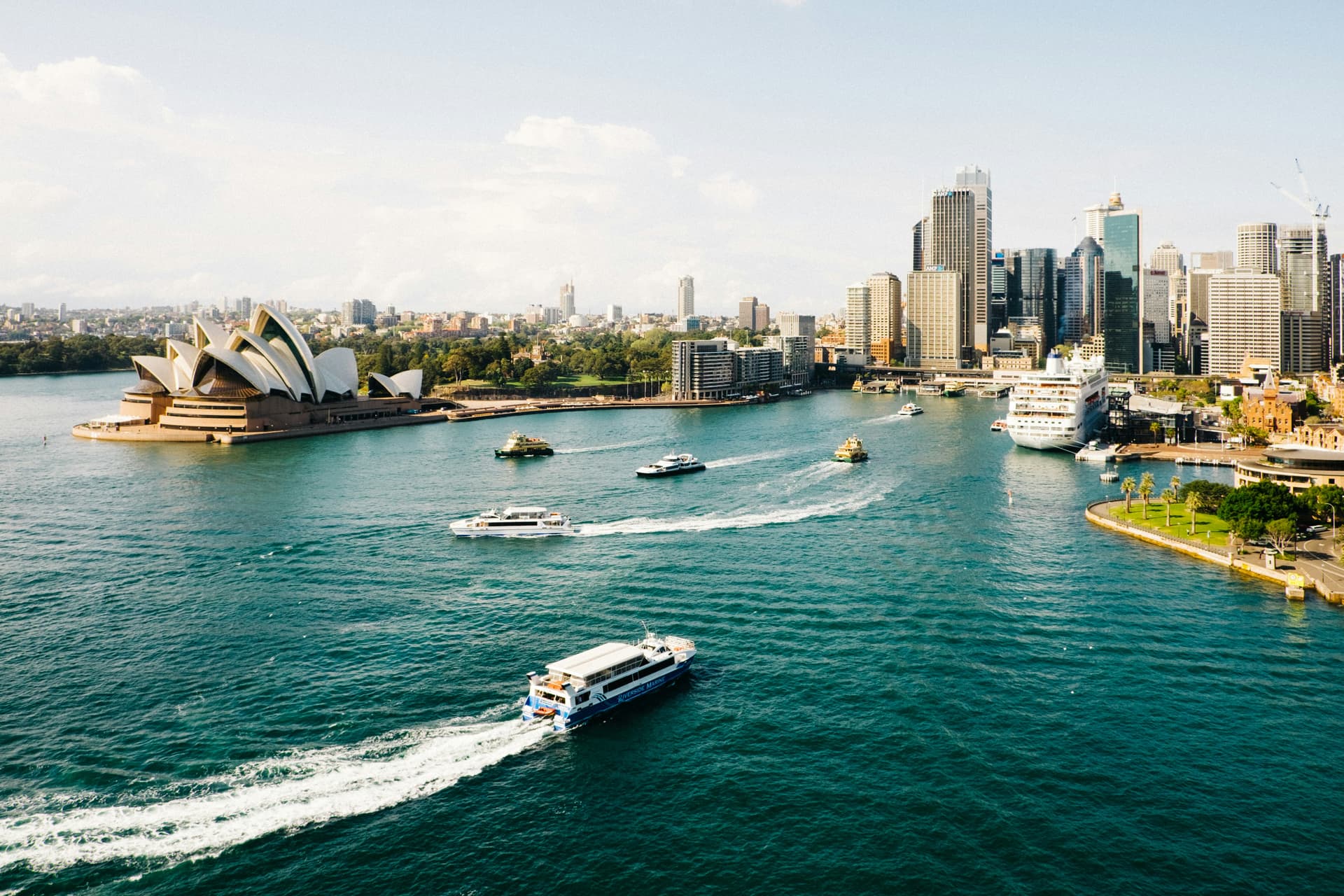
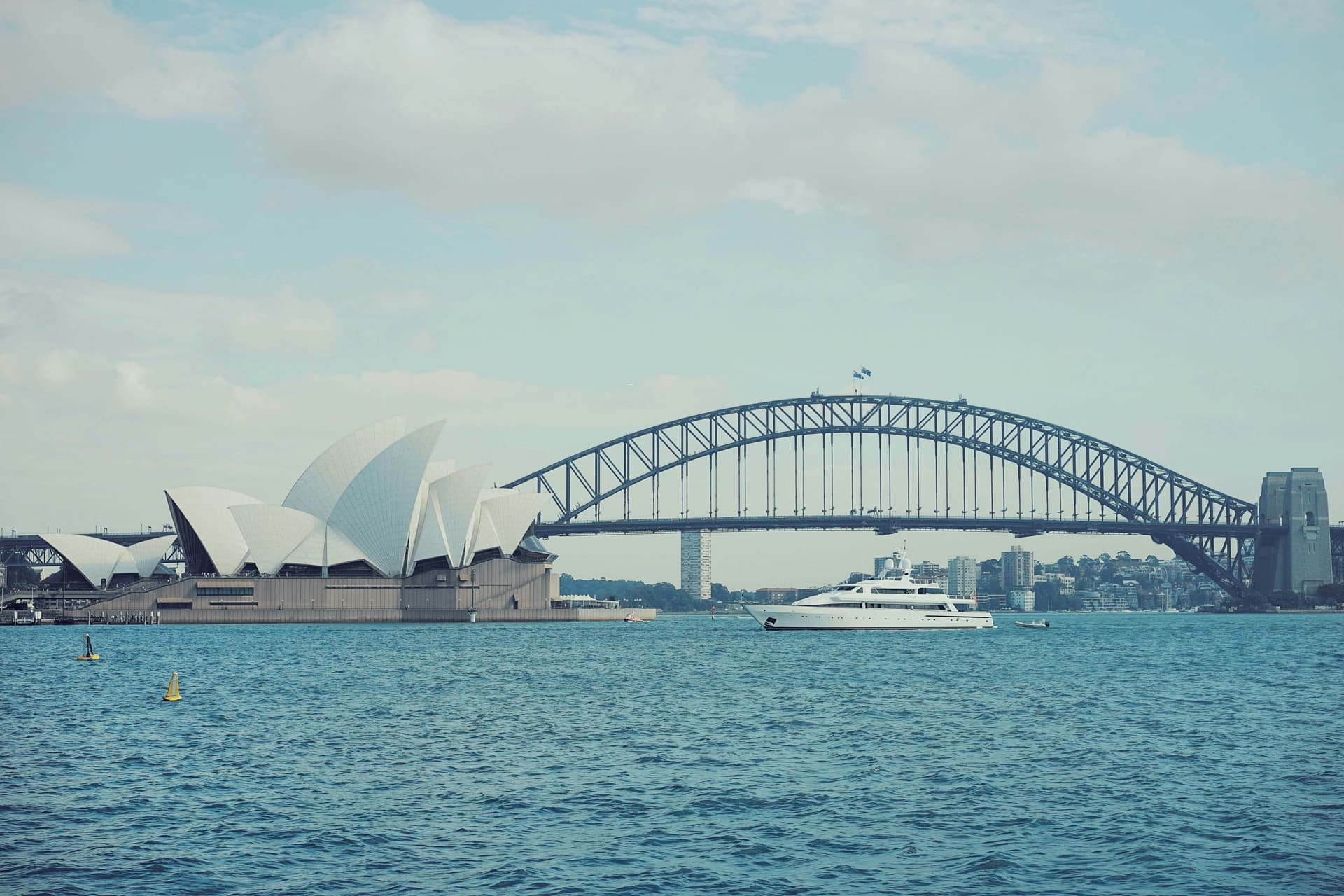
Sydney is Australia's icon: the Opera House and Harbour Bridge, Bondi Beach and its surfers, the Rocks (historic quarter), Darling Harbour and a booming food scene. Around Sydney, the Blue Mountains (spectacular rock formations, eucalyptus forests) offer a nature escape just 90 minutes from the city. Further north, the Hunter Valley (vineyards) and Byron Bay (bohemian vibe, surfing and dolphins) complete the picture.
Melbourne and the Great Ocean Road
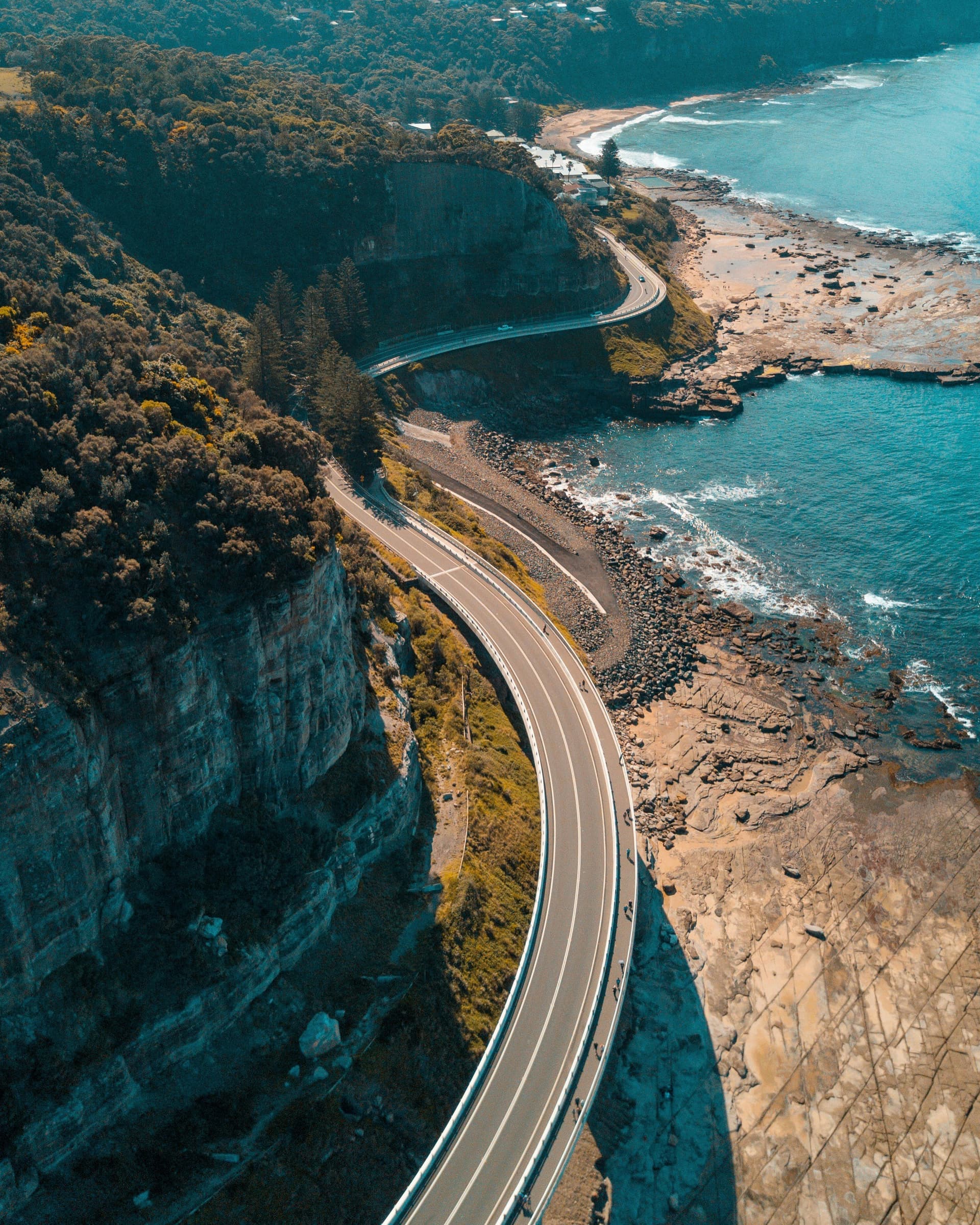
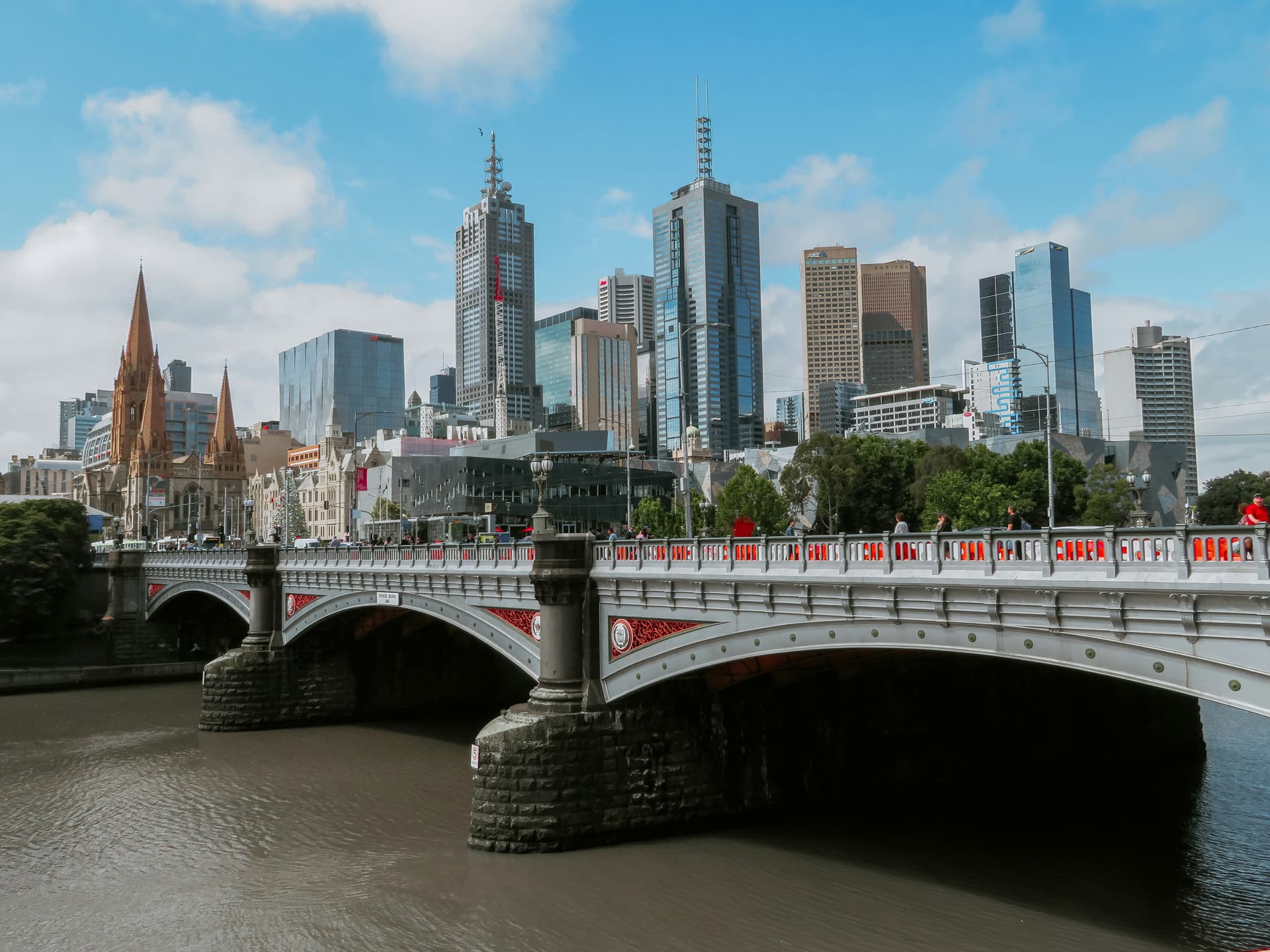
Melbourne is the country's cultural capital: street art in the laneways, specialty coffee shops, a vibrant music scene, multicultural neighbourhoods (Fitzroy, St Kilda, Brunswick). The Great Ocean Road (243 km along the south coast) is one of the world's most beautiful road trips, culminating at the Twelve Apostles — limestone stacks sculpted by the ocean. The Mornington Peninsula and Phillip Island (penguin parade) are also well worth a visit.
Queensland and the Great Barrier Reef
The Great Barrier Reef is the largest living organism on the planet: 2,300 km of coral reefs, 1,500 fish species, 400 types of coral. Cairns and the Whitsunday Islands are the main gateways. The Daintree Rainforest (the oldest in the world at 180 million years) borders the reef directly — the only place where two UNESCO sites meet. Further south, the Gold Coast offers surfing and nightlife.
The Outback and the Red Centre
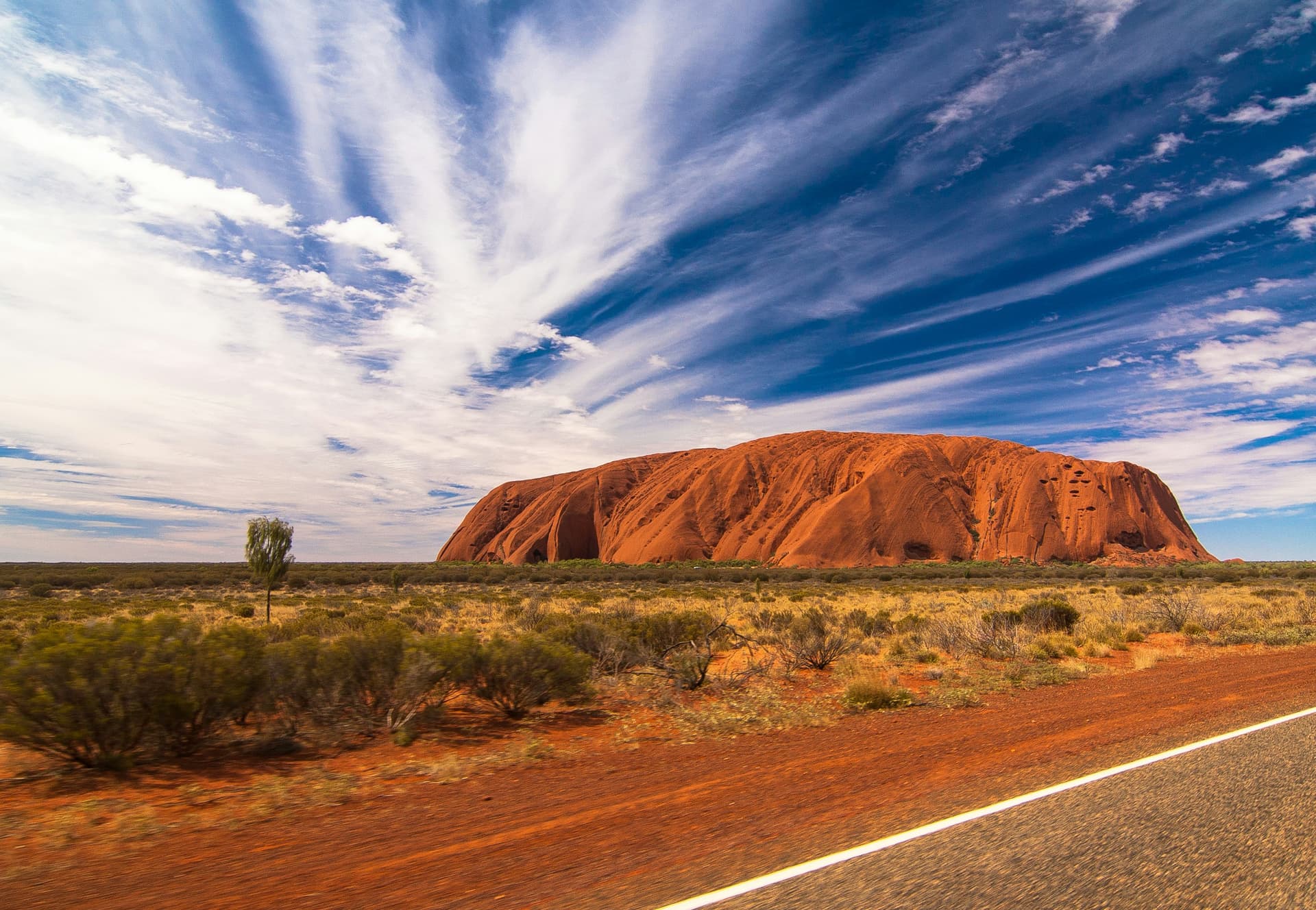
Uluru (Ayers Rock) is the spiritual heart of Australia: this 348-metre red sandstone monolith changes colour throughout the day, sacred to the Anangu people for millennia. Kata Tjuta (the Olgas), Kings Canyon, Alice Springs and the Stuart Highway through the Red Centre offer landscapes of magnificent desolation. Kakadu National Park in the Top End combines ancient Aboriginal rock art, billabongs teeming with crocodiles and spectacular waterfalls.
Western Australia and Tasmania
Perth is the world's most isolated city, bathed in sunshine 300 days a year. Rottnest Island (quokkas), Ningaloo Reef (swimming with whale sharks), the Pinnacles Desert, Broome and the Kimberley (spectacular gorges, Aboriginal art) are the treasures of the West. Tasmania captivates lovers of wild nature: Cradle Mountain, Freycinet (Wineglass Bay), primeval forests, locavore gastronomy and Tasmanian devils.

Legendary Road Trips in Australia
Australia is the ultimate road trip country. The distances are immense but the roads cross breathtaking landscapes.
- Great Ocean Road: Melbourne – Warrnambool (243 km). Sea cliffs, Twelve Apostles, eucalyptus forests and koalas
- East Coast: Sydney – Cairns (2,500 km). Beaches, Byron Bay, the Whitsundays, Great Barrier Reef. The classic Working Holiday route
- Red Centre Way: Alice Springs – Uluru – Kings Canyon (1,100 km loop). Red desert, Aboriginal art, starry skies
- Stuart Highway: Adelaide – Darwin (3,000 km). The north-south crossing of the continent, from ocean to Outback
- Indian Ocean Drive: Perth – Exmouth (1,250 km). The Pinnacles, Ningaloo Reef, whale sharks and Monkey Mia dolphins
Getting Around Australia
Distances in Australia are immense (Sydney – Perth: 4,000 km). A car or campervan is the preferred means of transport for exploring the country, especially for road trips. Domestic flights are essential for connecting the major cities. Check out our travel experiences to plan your Australian adventure.
- Car / Campervan: essential. Car rental from AUD 40–80/day. Campervan for road trips: AUD 60–150/day. Drive on the left!
- Domestic flights: Qantas, Jetstar, Virgin Australia. Essential for long distances. Sydney – Melbourne: 1h30
- Greyhound Australia: long-distance buses. Hop-on hop-off passes are handy for backpackers
- Indian Pacific / The Ghan: legendary trains (Sydney – Perth, Adelaide – Darwin). Luxury experiences across the Outback
- Ferry: Spirit of Tasmania (Melbourne – Tasmania). Overnight crossing with your vehicle
Budget: How Much Does a Trip to Australia Cost?
Australia is a relatively expensive destination, comparable to Western Europe. Budget AUD 100–250 per person per day (USD 65–165) depending on your travel style. Campervans and camping significantly reduce costs.
- Accommodation: camping AUD 20–40, hostel (dorm) AUD 25–45, motel AUD 80–150, hotel AUD 150–300. Campervan AUD 60–150/night all-inclusive
- Food: fast food AUD 12–20, restaurant AUD 20–45. Self-catering in a van or hostel is the norm for backpackers
- Transport: car rental AUD 40–80/day, campervan AUD 60–150/day, petrol AUD 1.60–2.20/litre. Domestic flights AUD 80–250
- Activities: Great Barrier Reef dive AUD 200–350, surf lesson AUD 70–100, Uluru sunrise tour AUD 50–100
- Tip: the Working Holiday Visa allows 18–35 year-olds to work and travel for 1 to 3 years. Ideal for funding a longer stay
When to Visit Australia?
Australia lies in the Southern Hemisphere: the seasons are reversed compared to Europe and North America. The Austral summer (December – February) is ideal for the south (Sydney, Melbourne, Tasmania). The Austral winter (June – August) is the best season for the tropical north (Queensland, Top End, Kimberley) and the Outback.
The Austral spring (September – November) and autumn (March – May) are the best seasons for an all-round trip: moderate temperatures everywhere, whale season (May – November on the east coast), wildflowers in Western Australia (September – October). Avoid the Top End in summer (monsoon, cyclones, closed roads).
Recommended Itineraries in Australia
The Classic East Coast (3–4 weeks)
Sydney (3 days) → Blue Mountains (1 day) → Byron Bay (2 days) → Gold Coast → Fraser Island (2 days) → Whitsunday Islands (2 days) → Cairns (3 days: Great Barrier Reef, Daintree) → fly home. The absolute classic, perfect for a first trip or a Working Holiday.
The South and the Great Ocean Road (2 weeks)
Melbourne (3 days) → Great Ocean Road (2 days) → Grampians (1 day) → fly to Adelaide → Barossa Valley (vineyards, 1 day) → Kangaroo Island (2 days) → ferry to Tasmania → Hobart, Cradle Mountain, Freycinet (5 days). Wild nature and gastronomy.
The Outback and the Red Centre (10 days)
Alice Springs (1 day) → West MacDonnell Ranges (1 day) → Kings Canyon (1 day) → Uluru and Kata Tjuta (2 days) → fly to Darwin → Kakadu National Park (3 days) → Litchfield (1 day). The real Australia, between red desert and tropical Top End.
Australia Off the Beaten Path
Beyond the classics, Australia hides hidden wonders. Ningaloo Reef (Western Australia) is as spectacular as the Great Barrier Reef but accessible directly from the beach — swimming with whale sharks here is an unforgettable experience. The Kimberley (gorges, waterfalls, Aboriginal art) is one of the last truly wild regions on the planet.
Lord Howe Island (a paradise island limited to 400 visitors), Coober Pedy (an underground town in the desert), Kangaroo Island (wildlife) and the Flinders Ranges (ochre mountains of South Australia) are all worth the detour. For a Southeast Asian adventure to combine, Thailand is an ideal stopover. Explore all our destinations.
Formalities and Practical Information
Australia requires an electronic visa (eVisitor subclass 651) for citizens of many European countries, free of charge and valid for 12 months (stays of up to 3 months). The Working Holiday Visa (subclass 417) allows you to work and travel for 1 to 3 years (AUD 635).
- Visa: eVisitor free (online, 3-month max). WHV for 18–35 year-olds (AUD 635, 1–3 years). Valid passport required
- Currency: Australian dollar (AUD). 1 USD ≈ 1.50–1.60 AUD. Credit cards accepted everywhere, tap-and-go widespread
- Time difference: UTC+8 (Perth) to UTC+10 (Sydney). Jet lag is significant (20–24h of flying from Europe/US)
- Health: no mandatory vaccinations. Beware of the sun (extreme UV), jellyfish (box jellyfish) and crocodiles in the North
- Customs: strict controls on arrival. No undeclared food, plants or animal products (heavy fines)
- Electricity: Type I plugs (230V). Adapter essential. Available at airports or supermarkets