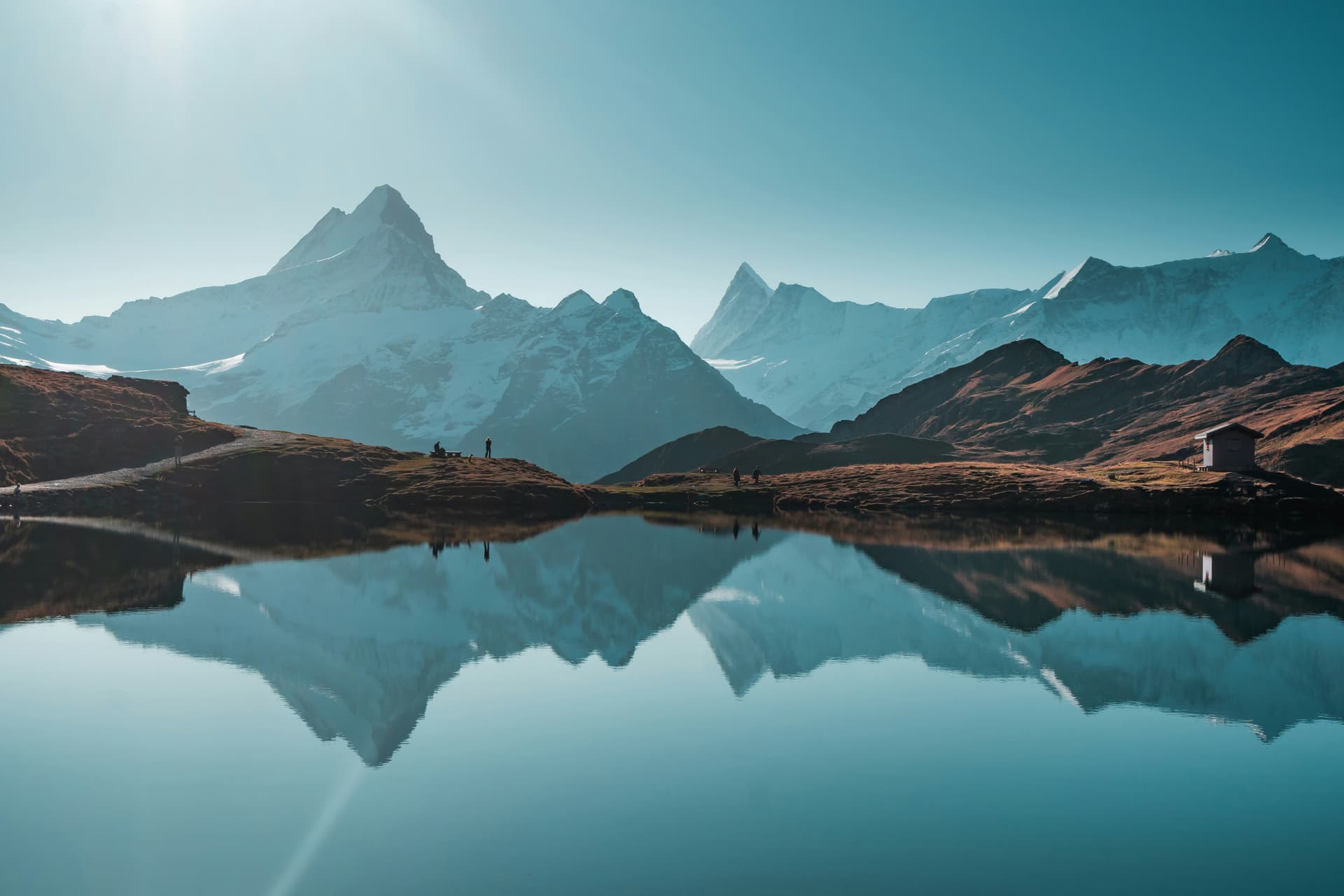
From the snow-capped Matterhorn to the crystal waters of Lake Brienz, scenic train rides to charming mountain villages, Switzerland is a masterclass in natural beauty.
Why Switzerland?
Switzerland is a country of alpine peaks, crystal lakes, scenic trains and a quality of life that sets the global standard.
In october, the climate in Switzerland is good. The weather is generally cloudy, with maximum temperatures around 14°C and about 8 rainy days. Tourist crowds are low.
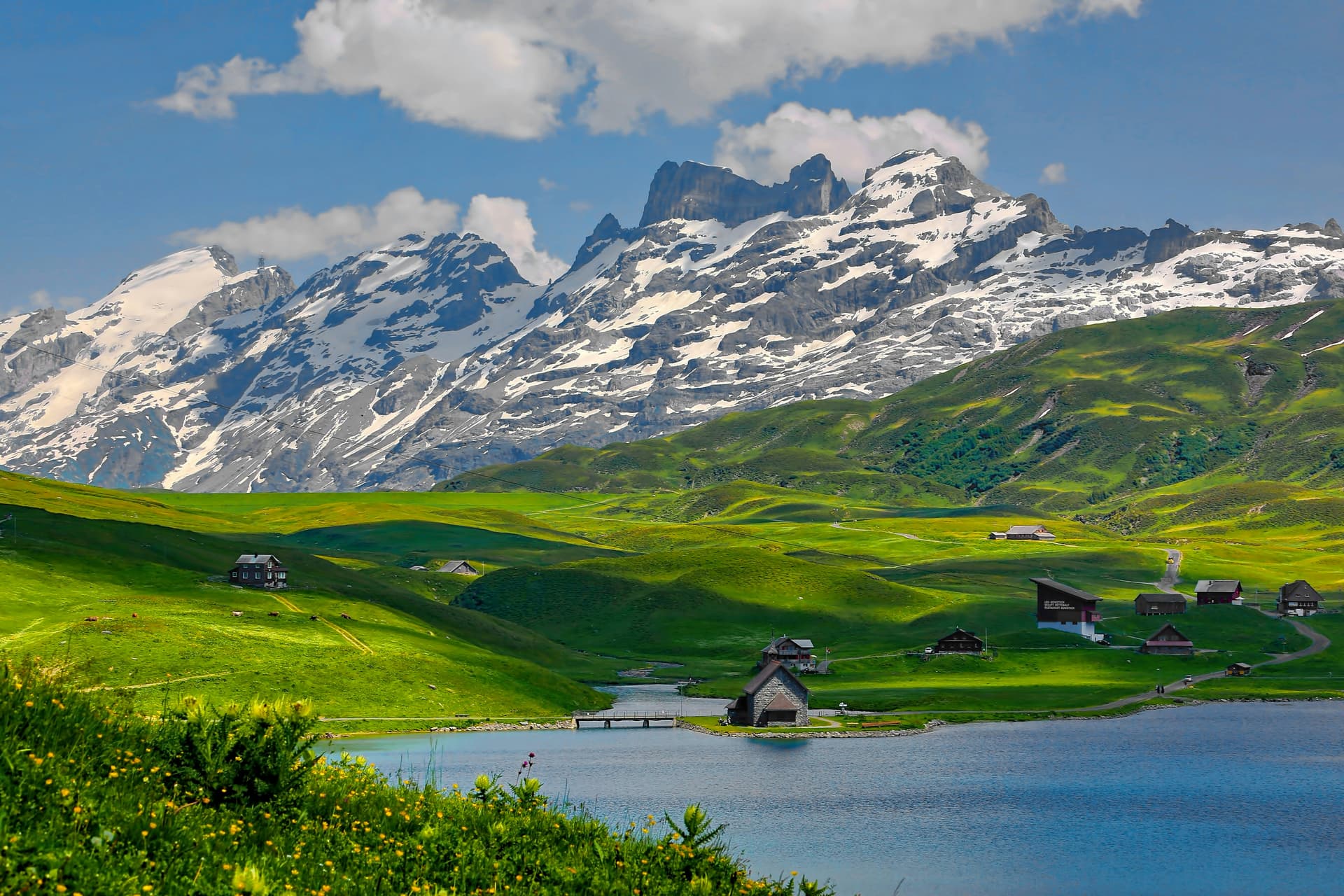
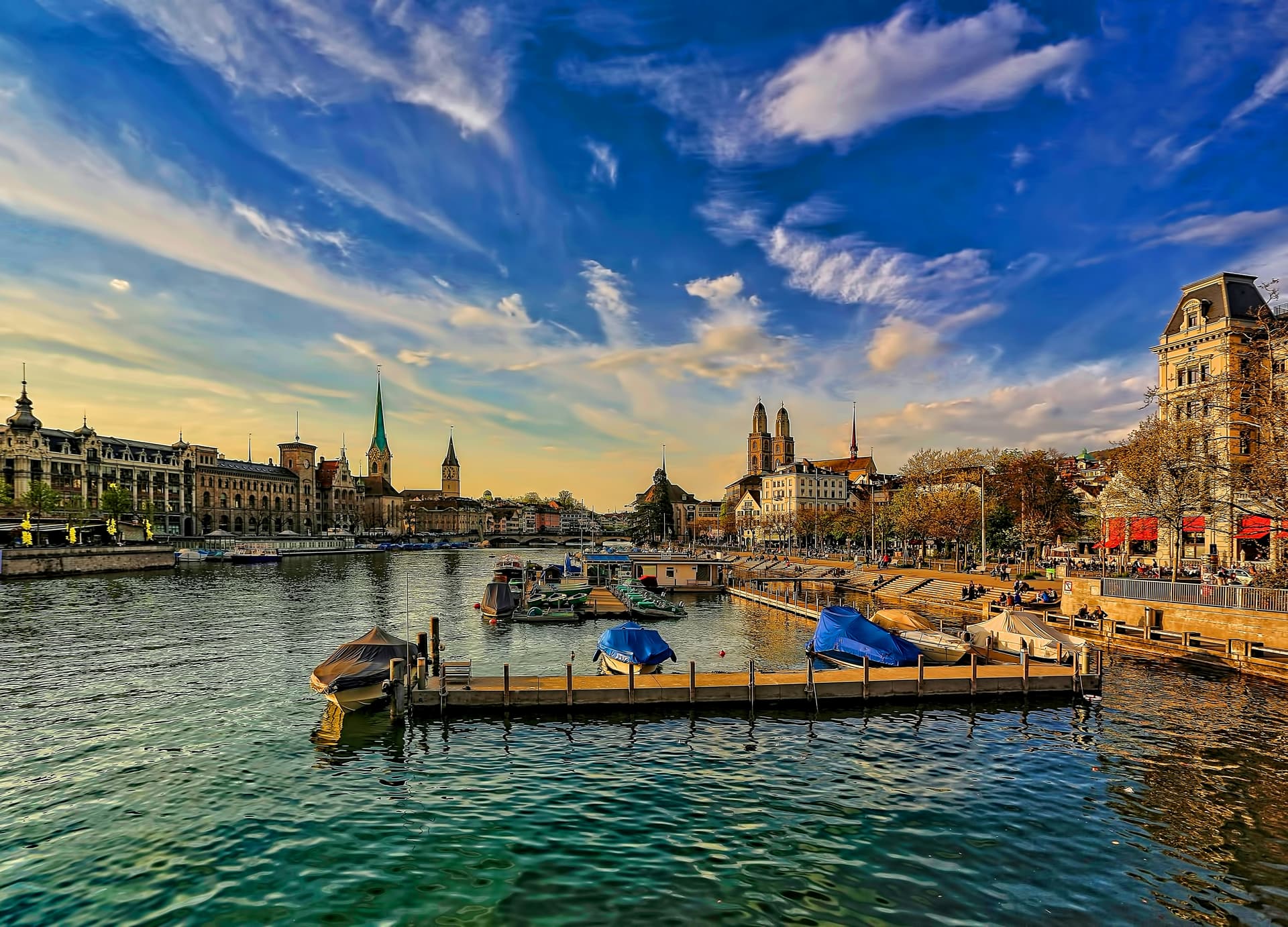
Switzerland is a country where nature reaches perfection. From snow-capped Alpine peaks to impossibly blue lakes, from flower-decked chalet villages to cosmopolitan cities, everything seems designed by an obsessive landscape artist. This small country at Europe’s crossroads packs an astonishing diversity of scenery, languages and cultures into just 41,000 km².
But Switzerland is far more than a postcard. It is a remarkable UNESCO heritage (13 listed sites), a network of legendary panoramic trains, comforting gastronomy (fondue, raclette, chocolate), and an art of living where watchmaking precision meets Alpine contemplation. Contrary to popular belief, Switzerland is also an accessible hiking country — 65,000 km of marked trails criss-cross the nation.
Switzerland has 4 national languages (German 63%, French 23%, Italian 8%, Romansh 0.5%), 48 peaks above 4,000 metres, 1,500 lakes and the world’s densest and most punctual public transport network. The country is so compact you can have breakfast in Zurich, lunch in Lugano (Italian side) and dinner in Geneva.
02The Must-See Regions of Switzerland
The Bernese Oberland
The Alpine heart of Switzerland. The trio Eiger, Mönch and Jungfrau dominates a landscape of waterfalls, flowering meadows and chalet villages. Interlaken, between Lakes Thun and Brienz, is the ideal base. The Jungfraujoch (“Top of Europe”, 3,454 m), reached by cog railway, offers a vertiginous view of the Aletsch Glacier — the largest in the Alps, UNESCO-listed.
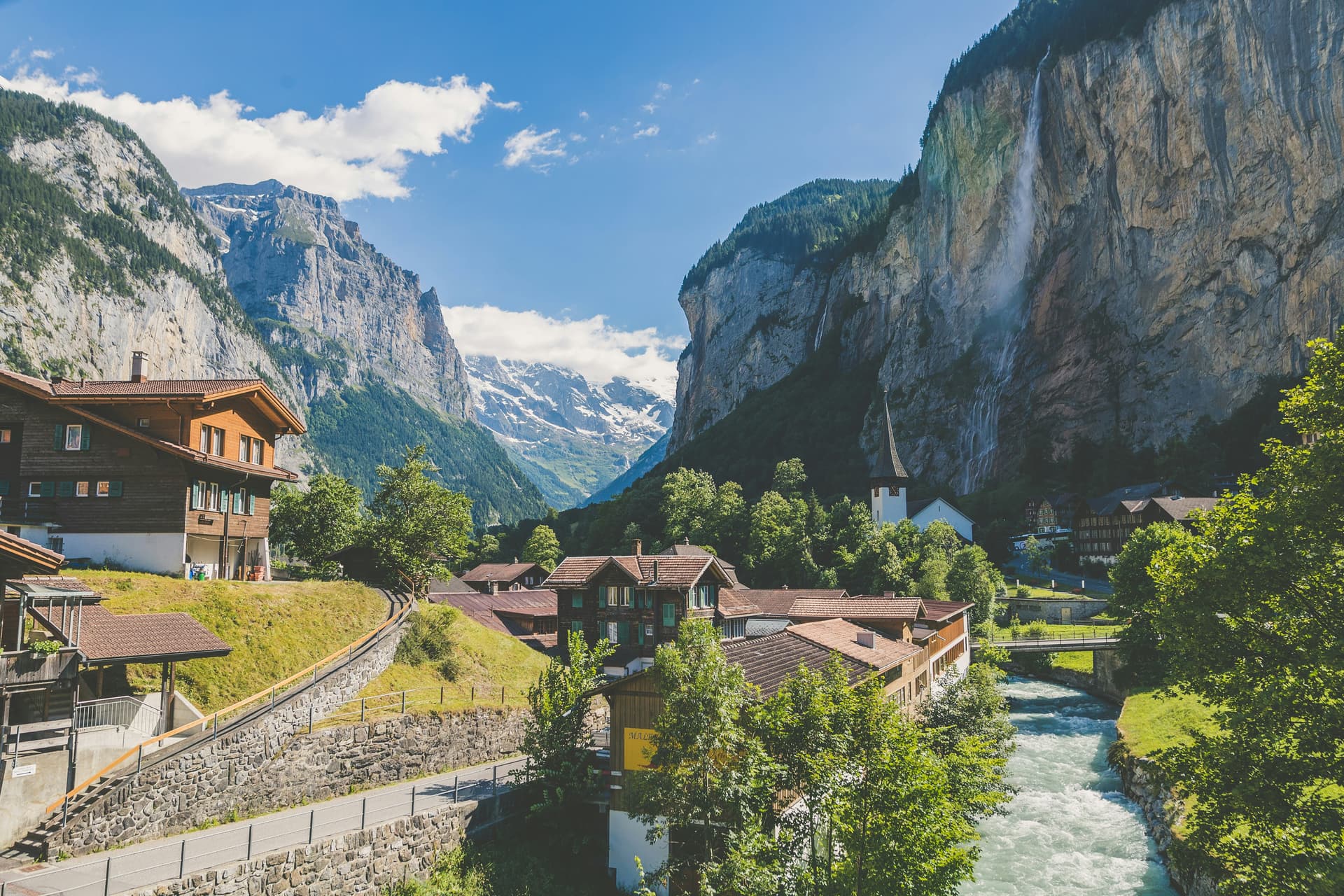
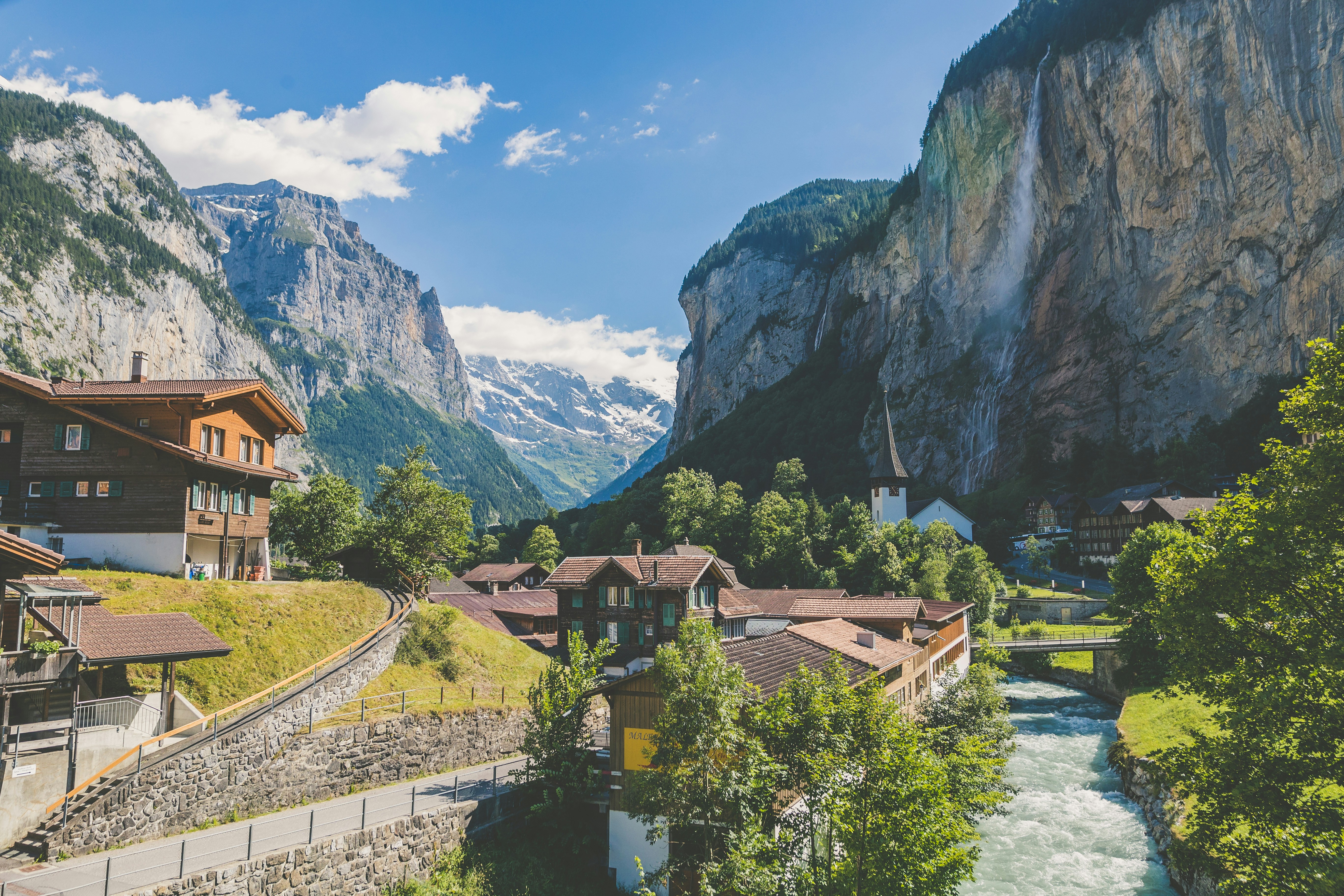
Lauterbrunnen, the valley of 72 waterfalls, inspired Tolkien’s Rivendell. Grindelwald is a paradise for skiing and hiking with the First Cliff Walk (suspended walkway above the void). Mürren, a car-free village accessible only by cable car, offers the finest views of the Alpine trio.
Valais and Zermatt
The Matterhorn (Cervin), Switzerland’s absolute icon, towers over Zermatt at 4,478 metres. This car-free village is a gem: pedestrian streets, wooden chalets, and a permanent view of the world’s most photographed mountain. The Gornergrat (3,089 m), reached by cog railway, offers a panorama of 29 peaks above 4,000 metres.
Valais also means the terraced vineyards of Lavaux (UNESCO-listed), the bisses (medieval irrigation channels turned hiking trails), the resorts of Verbier and Crans-Montana, and the natural thermal baths of Leukerbad — the largest Alpine spa in Europe.
Central Switzerland and Lucerne
Lucerne (Luzern) is perhaps Switzerland’s most beautiful city: its 14th-century covered wooden bridge (Kapellbrücke), its lake surrounded by mountains, and its medieval old town charm every visitor. Pilatus (reached by the world’s steepest cog railway, 48% gradient) and Rigi (the “queen of mountains”) offer 360° panoramas across the Alps and lakes.
Ticino — Italian Switzerland
Cross the Gotthard tunnel and you’re in the Mediterranean. Ticino offers palm trees, piazzas, gelaterias and an Italian joie de vivre. Lugano and its lake, Locarno and its film festival, the wild valleys of Verzasca (crystal emerald water) and Maggia — it’s Italy with Swiss punctuality.
Geneva and Lake Léman
Lake Léman (Western Europe’s largest lake) offers a spectacular setting with the Alps as a backdrop. Geneva is cosmopolitan and international (home to the UN, CERN, the Red Cross). Montreux hosts the legendary Jazz Festival in July and is home to Château de Chillon, Switzerland’s most visited monument. The Lavaux terraced vineyards above the lake are an enchanting UNESCO site.
03Switzerland’s Panoramic Trains
Switzerland boasts the world’s most spectacular panoramic trains. These legendary routes are not mere transport — they are experiences in themselves, crossing breathtaking Alpine scenery.
Glacier Express: Zermatt – St. Moritz (8h, 291 bridges, 91 tunnels). “The slowest express train in the world”
Bernina Express: Chur – Tirano (4h). UNESCO-listed, it crosses the Bernina Pass at 2,253 m and descends into Italy
GoldenPass: Lucerne – Montreux (5h). From lakes to vineyards via Alpine pastures
Jungfraujoch: cog railway to 3,454 m, the highest station in Europe
Pilatus: the world’s steepest cog railway (48% gradient)
The Swiss Travel Pass (from 232 CHF for 3 days) offers unlimited access to all trains, buses and boats, plus free entry to 500 museums and 25–50% discounts on mountain railways. It’s the best investment for a Swiss trip.
04Swiss Gastronomy: Beyond Fondue
Swiss cuisine reflects its four cultures. Fondue (half Gruyère, half Vacherin) and raclette are the icons, but every region has its treasures: Bernese rösti, Zürcher Geschnetzeltes (Zurich-style veal), Ticinese polenta, Engadiner Nusstorte (Grisons nut tart). And of course, chocolate — Switzerland produces 200,000 tonnes per year and consumes more than any other country.
Speciality
Region
Where to try
Fondue moitié-moitié
French-speaking Switzerland
Café de l’Hôtel de Ville, Gruyères
Valais raclette
Valais
On the Alpine pastures in summer
Rösti
Bern / German-speaking Switzerland
Topped with cheese
Artisan chocolate
Nationwide
Maison Cailler (Broc), Sprüngli (Zurich)
Bündnerfleisch
Grisons
Air-dried beef in thin slices
Polenta and brasato
Ticino
In grotti (rustic restaurants)
Engadiner Nusstorte
Engadine
Caramelised nut tart
05Getting Around Switzerland
Switzerland has the world’s most efficient public transport network. Trains, PostBuses (the iconic yellow coaches), lake boats and cable cars form a seamless network serving even the most remote villages. A car is unnecessary — and parking is prohibitively expensive.
Swiss Travel Pass: unlimited on the entire network (trains, buses, boats) + 500 museums + mountain discounts. The essential
SBB (CFF): trains punctual to the minute. Zurich – Geneva in 2h40, Bern – Interlaken in 50 min
PostBus: yellow buses serving Alpine valleys and passes. Some routes are spectacular
Lake boats: services on all major lakes (Léman, Zurich, Lucerne, Thun, Brienz). Included in Swiss Travel Pass
Cable cars: over 600 lifts, many operating in summer for hikers
06Budget: How Much Does a Trip to Switzerland Cost?
Switzerland is expensive — that’s a fact. But with a few tricks, it remains accessible. Budget 120 to 250 CHF per day per person (€110 to €230) for a comfortable trip. The Swiss Travel Pass and Coop/Migros supermarkets with their self-service restaurants are your best allies, just as in Norway.
Activities: Jungfraujoch 230 CHF (-25% with Swiss Travel Pass), paragliding 170–200 CHF. Hiking is free!
Top tip: Coop and Migros self-service restaurants offer quality full meals for 12–18 CHF — the locals’ secret
07When to Visit Switzerland?
Switzerland is a four-season destination par excellence. Summer (June – September) is the season for hiking, lakes and Alpine pastures. Temperatures are pleasant (20–28°C in the lowlands, 10–20°C in the mountains) and all trails are open. Spring (April – May) brings Alpine meadow blooms and the first warm days.
Winter (December – March) transforms Switzerland into a ski paradise with over 300 resorts. Zermatt, Verbier, St. Moritz, Jungfrau — the domains are vast and impeccably maintained. Christmas markets (Basel, Montreux, Zurich) add a magical touch. Autumn (September – October) is the secret season: grape harvest in Lavaux, blazing colours in the Engadine, and tourists gone.
September is the best choice: mountain trails are still open, lakes are warm enough for swimming, the grape harvest is in full swing in Lavaux, autumn colours are starting, and prices drop after summer high season.
08Recommended Itineraries
The Grand Tour of Switzerland (10–14 days)
Zurich (2 days) → Lucerne and Pilatus (2 days) → Interlaken, Jungfraujoch and Lauterbrunnen (3 days) → Zermatt and the Matterhorn (2 days) → Glacier Express to St. Moritz (1 day) → Bernina Express to Lugano (1 day) → Montreux and Lavaux (1 day) → Geneva (1 day). The complete circuit by panoramic train.
French-Speaking Switzerland (7 days)
Geneva (1 day) → Montreux and Château de Chillon (1 day) → Lavaux vineyards (1 day) → Gruyères and Cailler chocolate factory (1 day) → Zermatt and the Matterhorn (2 days) → return. The perfect itinerary for food and mountain lovers in the French-speaking region.
Intensive Bernese Oberland (7 days)
Interlaken base (7 days): Jungfraujoch (1 day), Schilthorn and Mürren (1 day), Lauterbrunnen and waterfalls (1 day), Grindelwald and First Cliff Walk (1 day), Lake Brienz and Iseltwald (1 day), Bachalpsee hike (1 day), Thun (1 day). The best of the Oberland for mountain lovers.
09Switzerland Off the Beaten Path
Beyond Zermatt and Interlaken, Switzerland is full of hidden gems. Appenzell (eastern Switzerland) offers preserved traditions (open-air voting, Alpine descent festivals) and spectacular hikes on the Säntis. The Lauterbrunnen Valley hides the underground Trümmelbach Falls (fed by meltwater from the Eiger glaciers).
The Val Verzasca in Ticino has crystal waters of a hallucinatory emerald green. The Creux du Van (Neuchâtel) is a spectacular rocky amphitheatre home to ibex. The Engadine and its lakes (Sils, Silvaplana) bathed in light inspired Nietzsche. Discover all our destinations for more inspiration.
10Formalities and Practical Information
Switzerland is not in the EU but is part of the Schengen area. The currency is the Swiss franc (CHF), but euros are often accepted in tourist areas (at an unfavourable rate). Bank cards accepted everywhere.
Visa: valid ID card or passport for EU nationals. No visa for stays under 90 days
Currency: Swiss franc (CHF). 1 EUR ≈ 0.95 CHF. Bank card accepted everywhere
Languages: German (Zurich, Bern, Lucerne), French (Geneva, Lausanne, Valais), Italian (Ticino), Romansh (Grisons)
Getting there: Geneva and Zurich 1h from Paris by plane, or 3h by TGV Lyria to Geneva, Lausanne, Basel
Health: EHIC accepted for emergency care. Medical infrastructure among the world’s best
Safety: one of the safest countries in the world. Only watch out for mountain weather conditions
Some links in this article are affiliate links. This means that if you book or purchase a product through these links, we receive a small commission — at no extra cost to you. It's thanks to this support that we can continue creating free, quality content.
You can also buy us a coffee, or follow us on Instagram and Facebook.
Thank you
Share
Comments
Share your thoughts
Leave a comment
Looking for more information for your trip? Book a personalised video call with us, or join the Curious Souls community on Discord.
Your email address will not be published. Required fields are marked with *