
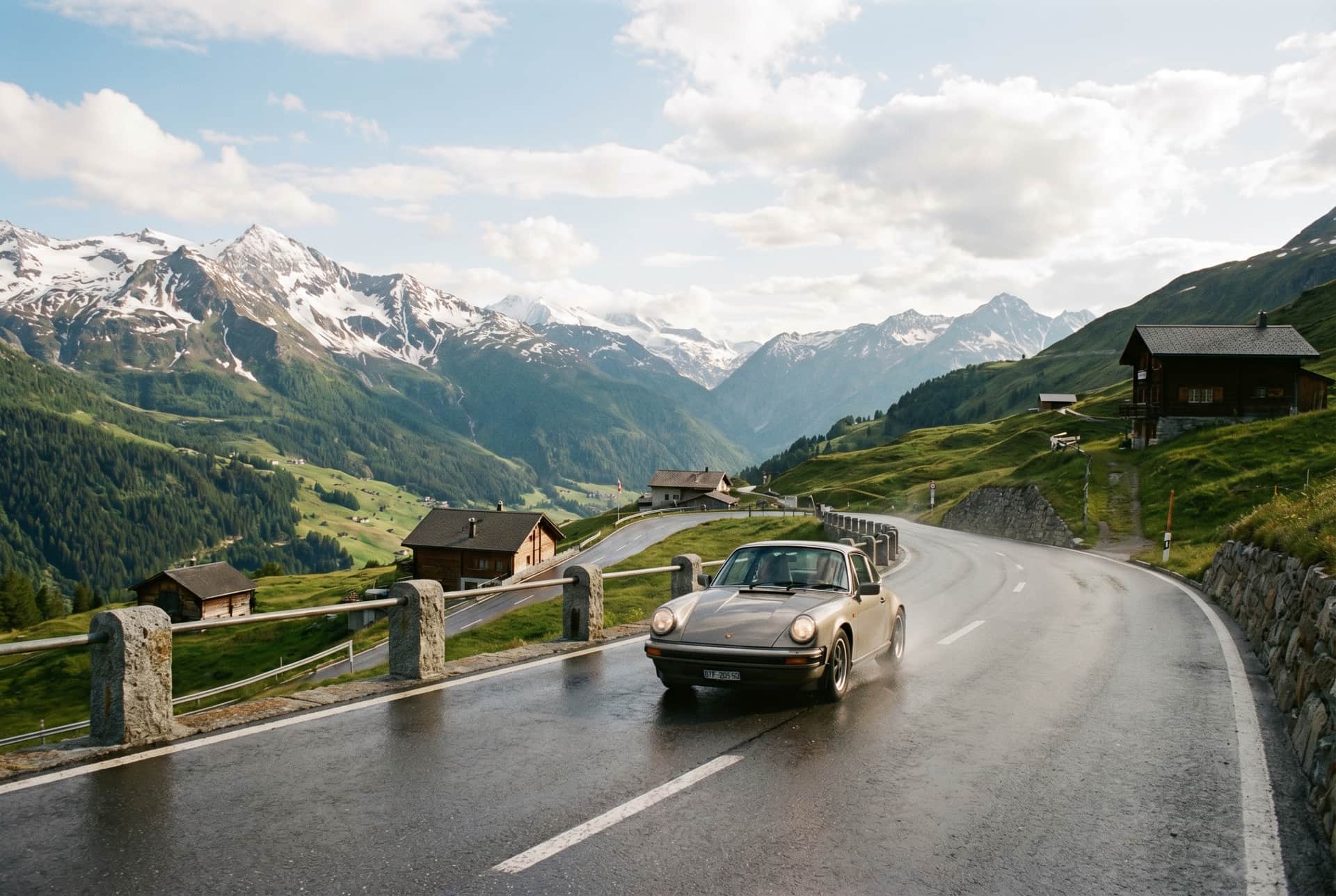

Driving in Switzerland means treating yourself to a non-stop spectacle: dizzying mountain passes, impossibly blue lakes, villages clinging to mountainsides. But before enjoying these panoramas, one small essential is needed: the Swiss motorway vignette. In 2026, it costs 40 CHF (around €42–44), is valid for 14 months and now comes in an electronic version. Here's everything you need to know to drive worry-free.

Swiss Motorway Vignette 2026: The Essentials
The motorway vignette is mandatory for all vehicles under 3.5 tonnes using Swiss motorways and semi-motorways. Cars, motorbikes, light campervans: no one is exempt.
- Price: 40 CHF (around €42–44 at the official rate)
- 2026 validity: 1 December 2025 to 31 January 2027 (14 months)
- Formats: sticker (windscreen) or e-vignette (electronic, linked to licence plate)
- Trailers and caravans: separate vignette required for each towed vehicle
- No short-term vignette: there is no daily, weekly or monthly option

E-Vignette or Sticker: How to Choose
Since 1 August 2023, Switzerland offers an e-vignette alongside the classic sticker version. Same price, same validity, but important practical differences.
The e-vignette is purchased online via the official portal e-vignette.ch (Portal Via, Swiss Federal Office for Customs). It is linked to your licence plate number: no sticker to apply, instant activation, ideal for motorbikes. No action needed if your windscreen is replaced.
The sticker vignette is applied to the inside of the windscreen (visible from outside). It is not transferable between vehicles. Important: never use adhesive tape to fix it, or you risk a fine.
Where to Buy the Swiss Vignette
- Online (recommended): official site e-vignette.ch (Portal Via) — 40 CHF, no extra fees
- At the border: Swiss border crossing offices
- In Switzerland: petrol stations, post offices, customs offices
- Before the border (from France): ATMB sales points, Mobilité Club France (≈ €44.50)
Fines and Checks
Driving without a vignette on Swiss motorways is costly: 200 CHF fine + mandatory immediate purchase of a vignette (40 CHF), totalling 240 CHF. Checks are frequent, especially at border crossings. Customs officers systematically verify the vignette on entry. A poorly applied sticker can also be penalised.
Separate Toll Tunnels: What the Vignette Doesn't Cover
The vignette does not cover all passages. Two tunnels have an independent toll:
- Grand-Saint-Bernard Tunnel (5,798 m, Martigny CH → Aosta IT): around 31 CHF one way, 50 CHF return within 30 days
- Munt La Schera Tunnel (3,385 m, Zernez CH → Livigno IT): around €17 in summer, more in winter
However, the Gotthard and San Bernardino tunnels are free (covered by the vignette).
Driving Rules in Switzerland

Speed Limits
| Road Type | Maximum Speed |
|---|---|
| Motorway | 120 km/h |
| Semi-motorway | 100 km/h |
| Outside built-up areas | 80 km/h |
| Built-up areas | 50 km/h |
Since 2026, a variable speed limit of 80 km/h has been deployed on certain motorway sections during peak hours. Speeding fines in Switzerland are among the highest in Europe and are proportional to income for serious offences.
Mandatory Equipment
- Warning triangle: must be easily accessible (not in the boot)
- Dipped headlights: mandatory day and night (since 2014)
- Seatbelts: front and rear
- Child seat: children under 12 or under 1.50 m
- Winter tyres: not mandatory, but you can be fined if your vehicle blocks traffic on snowy roads
What's Prohibited
- Radar detectors and apps that signal speed cameras: banned
- Blood alcohol above 0.05% (zero tolerance for drivers under 24)
- Fixing the vignette with adhesive tape
Main Border Crossings from France

- A40 (Lyon/Chambéry) → Saint-Julien-en-Genevois → Swiss A1 (Geneva / Lausanne)
- A41 (Annecy) → Bardonnex → Swiss A1 (Geneva)
- A35 (Strasbourg/Mulhouse) → Basel → Swiss A2 (Lucerne / Zurich)
The vignette is mandatory as soon as you enter a Swiss motorway. Customs officers check systematically at border crossings.
Summary Table
| Information | Detail |
|---|---|
| Vignette price 2026 | 40 CHF (≈ €42–44) |
| Validity | 1 December 2025 – 31 January 2027 |
| Formats | Sticker or e-vignette |
| Official online purchase | e-vignette.ch (Portal Via OFDF) |
| Vehicles concerned | All ≤ 3.5 t (cars, motorbikes, campervans) |
| Trailer / caravan | Separate vignette required |
| Fine without vignette | 200 CHF + 40 CHF (vignette) = 240 CHF |
| Tunnels NOT covered | Great St Bernard, Munt La Schera |
| Max motorway speed | 120 km/h |
Our Best Driving Itineraries in Switzerland

Switzerland is wonderfully suited to road trips. Here are some routes we've tested and loved:
- The lake route: Lugano and its gentle Mediterranean air, the enchanting village of Morcote, then Lucerne, the city that charmed me so much
- Thrills: the Verzasca Dam (James Bond bungee jump!) and the best outdoor activities around Lucerne
- Furka Alpine road: a legendary pass at 2,429 m, made famous by James Bond (Goldfinger). Open June to October.
- Lake Geneva and Lavaux: Montreux, the UNESCO-listed terraced vineyards, Château de Chillon.
- Interlaken and the Bernese Oberland: Grindelwald, the Jungfrau, Lakes Thun and Brienz.
Rent a Car to Explore Switzerland
To explore Switzerland at your own pace, renting a car is the ideal solution. Compare offers from local providers and book in advance for the best rates. Compare car rental prices in Switzerland.
Frequently Asked Questions About the Swiss Motorway Vignette
40 CHF (around €42–44). This price is set by the Swiss authorities and is the same for the sticker and the e-vignette. Watch out for sites that charge extra service fees.
No. Switzerland only offers an annual vignette, valid for 14 months. Even for a transit of a few hours, the annual vignette is mandatory.
On the official OFDF website: e-vignette.ch (Portal Via). Enter your vehicle type, country of registration and plate number. Activation is instant.
Same price, same validity. The e-vignette is linked to your licence plate (no sticker to apply). The sticker must be applied to the inside of the windscreen.
No. The Grand-Saint-Bernard and Munt La Schera tunnels have a separate toll. However, the Gotthard and San Bernardino tunnels are covered.
A 200 CHF fine plus mandatory immediate purchase of a vignette (40 CHF), totalling 240 CHF. Checks are frequent, especially at borders.
Yes, each vehicle or trailer requires its own vignette. A car towing a caravan = 2 vignettes.
Keep the old vignette (or a piece with the number), proof of purchase and the replacement invoice. You'll receive a free replacement vignette from the Swiss authorities.
120 km/h on motorways, 100 km/h on semi-motorways, 80 km/h outside built-up areas, 50 km/h in towns. Speeding fines are among the highest in Europe.
Accessible warning triangle, dipped headlights day and night, front and rear seatbelts, child seat for under 12s or under 1.50 m. Radar detectors are banned.

Hit the Road in Switzerland
Switzerland is a country that rewards drivers. Every bend reveals a more striking panorama than the last, every pass conquered is a victory. With your vignette in hand (or rather, linked to your plate), you're ready to hit the road.
To go further, check out our articles on the most beautiful Swiss destinations: strolling in Lugano, exploring the charming village of Morcote, marvelling at Lucerne, or taking the plunge at the Verzasca Dam. Happy driving!

Âme Bohème exists thanks to you
Some links in this article are affiliate links. This means that if you book or purchase a product through these links, we receive a small commission — at no extra cost to you. It's thanks to this support that we can continue creating free, quality content.
You can also buy us a coffee, or follow us on Instagram and Facebook.