Why travel to Germany?
Germany is far more than an economic powerhouse — it's a destination of stunning cultural and natural richness that never fails to surprise. Fairytale castles perched in the Bavarian mountains, half-timbered medieval towns, the deep forests of the Black Forest, vibrant and avant-garde Berlin, enchanting Christmas markets, and legendary craft beer — Germany offers a journey between romance and modernity.
With 52 UNESCO World Heritage Sites (the 3rd most in the world after Italy and China), cities steeped in history (Berlin, Munich, Dresden, Hamburg), spectacular Alpine scenery, hearty cuisine, and one of the best transportation networks in Europe, Germany is an ideal destination at any time of year.
Germany's must-visit regions
Berlin, the capital of freedom
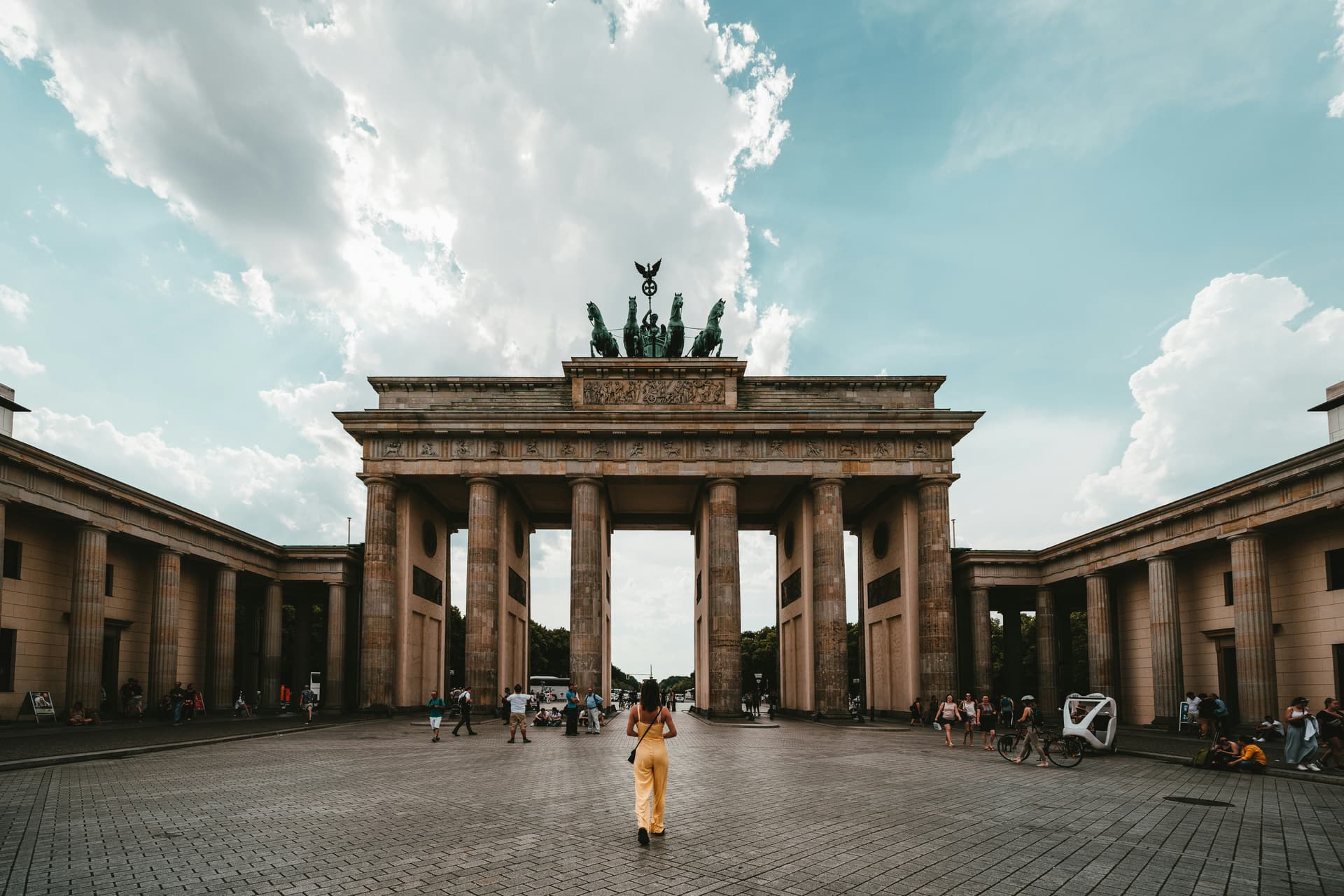
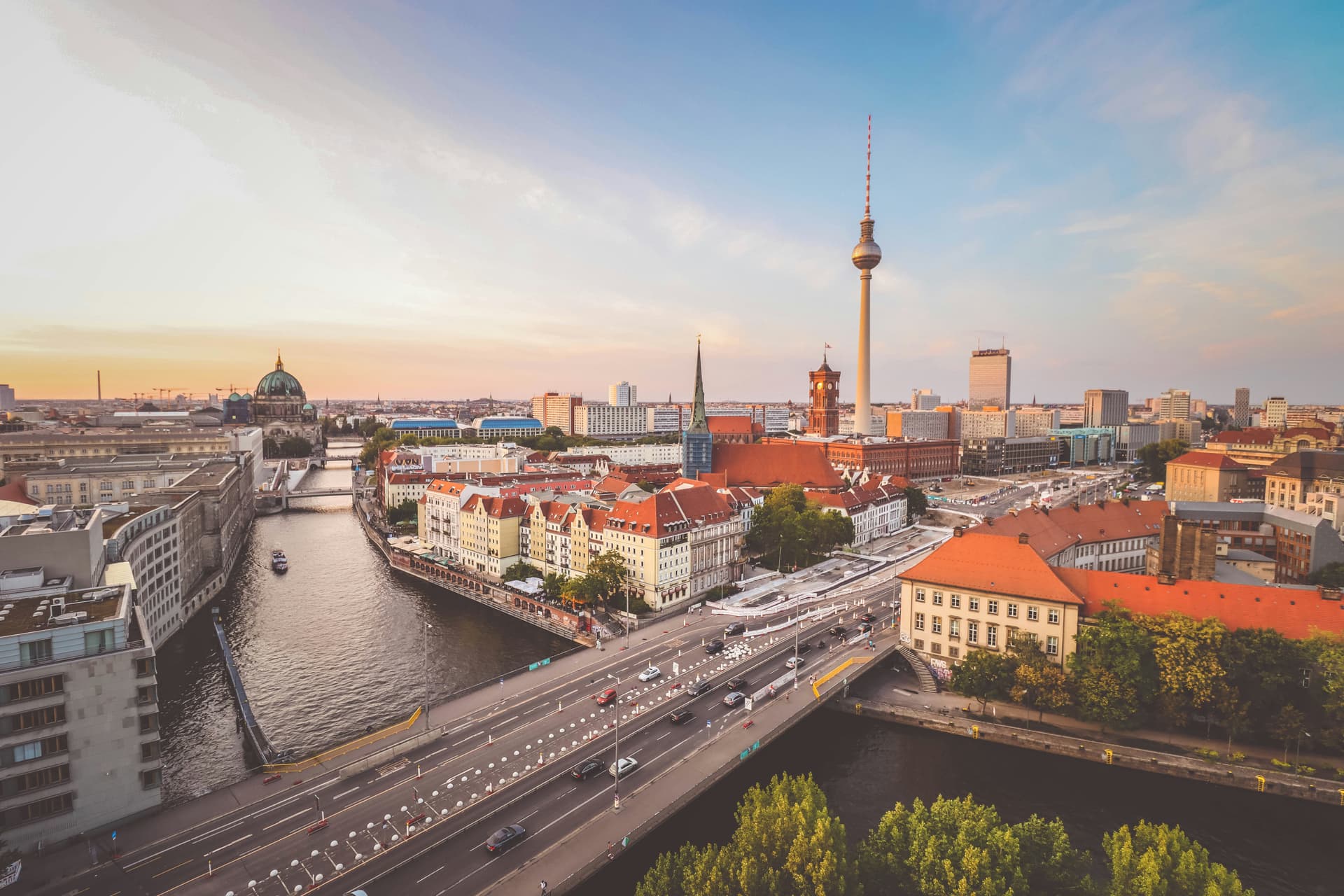
Berlin is one of Europe's most fascinating capitals: the Berlin Wall and East Side Gallery, the Brandenburg Gate, Museum Island (UNESCO-listed, 5 museums including the Pergamon), the Reichstag (Norman Foster's glass dome), the Holocaust Memorial, Checkpoint Charlie, and a legendary underground scene (clubs, street art, converted squats). Kreuzberg, Friedrichshain, and Prenzlauer Berg are the most vibrant neighborhoods.
Bavaria and the royal castles
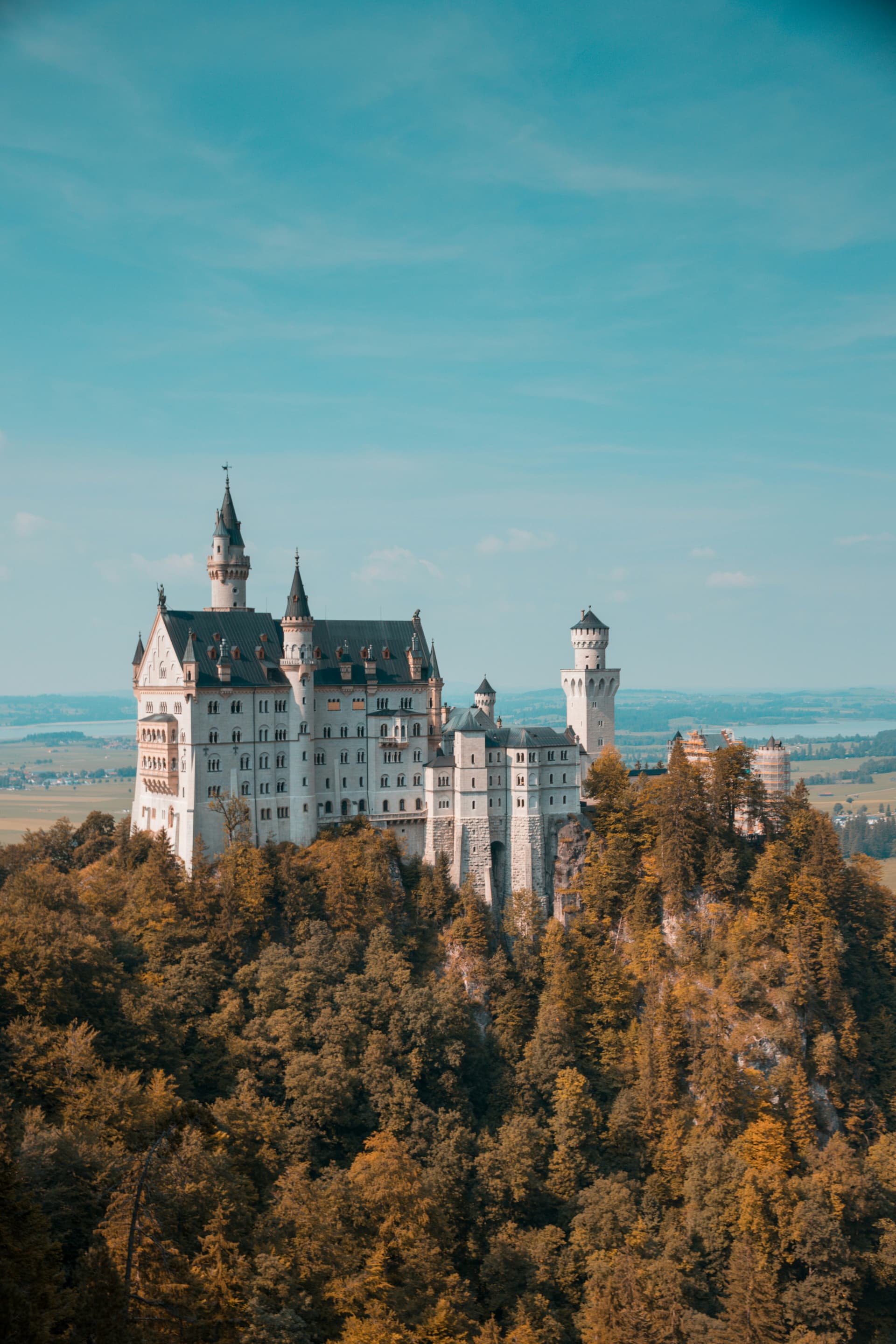
Bavaria is postcard Germany. Munich (Marienplatz, Residenz, Englischer Garten, traditional beer halls) is the starting point. Neuschwanstein Castle (the inspiration for Disney's Sleeping Beauty Castle) is the most photographed monument in Germany. Oberammergau, Garmisch-Partenkirchen (Zugspitze, 9,718 ft / 2,962 m — Germany's highest peak), Berchtesgaden (Koenigssee, an emerald lake surrounded by mountains), and the Romantic Road complete this Alpine tableau.
The Romantic Road and medieval towns
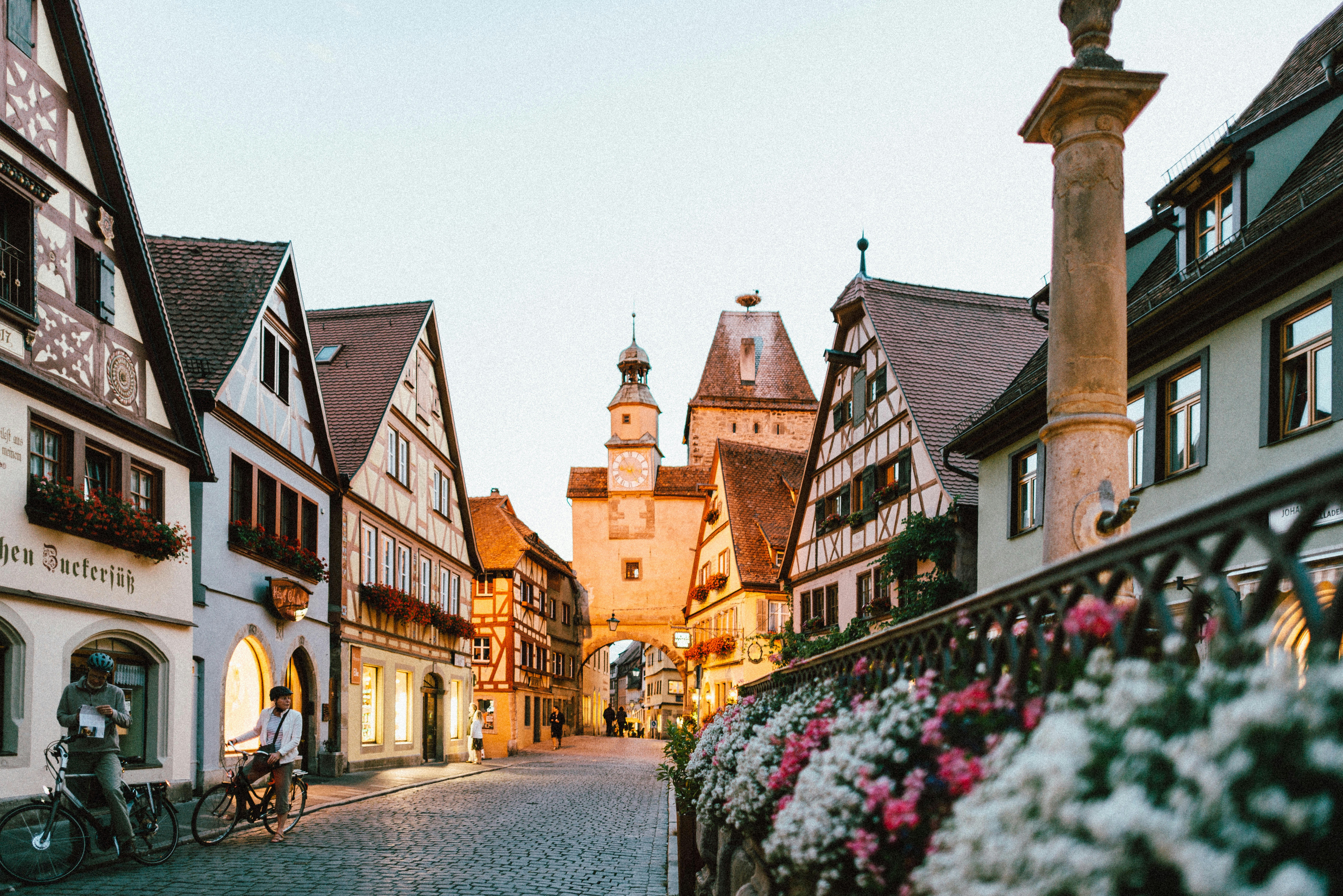
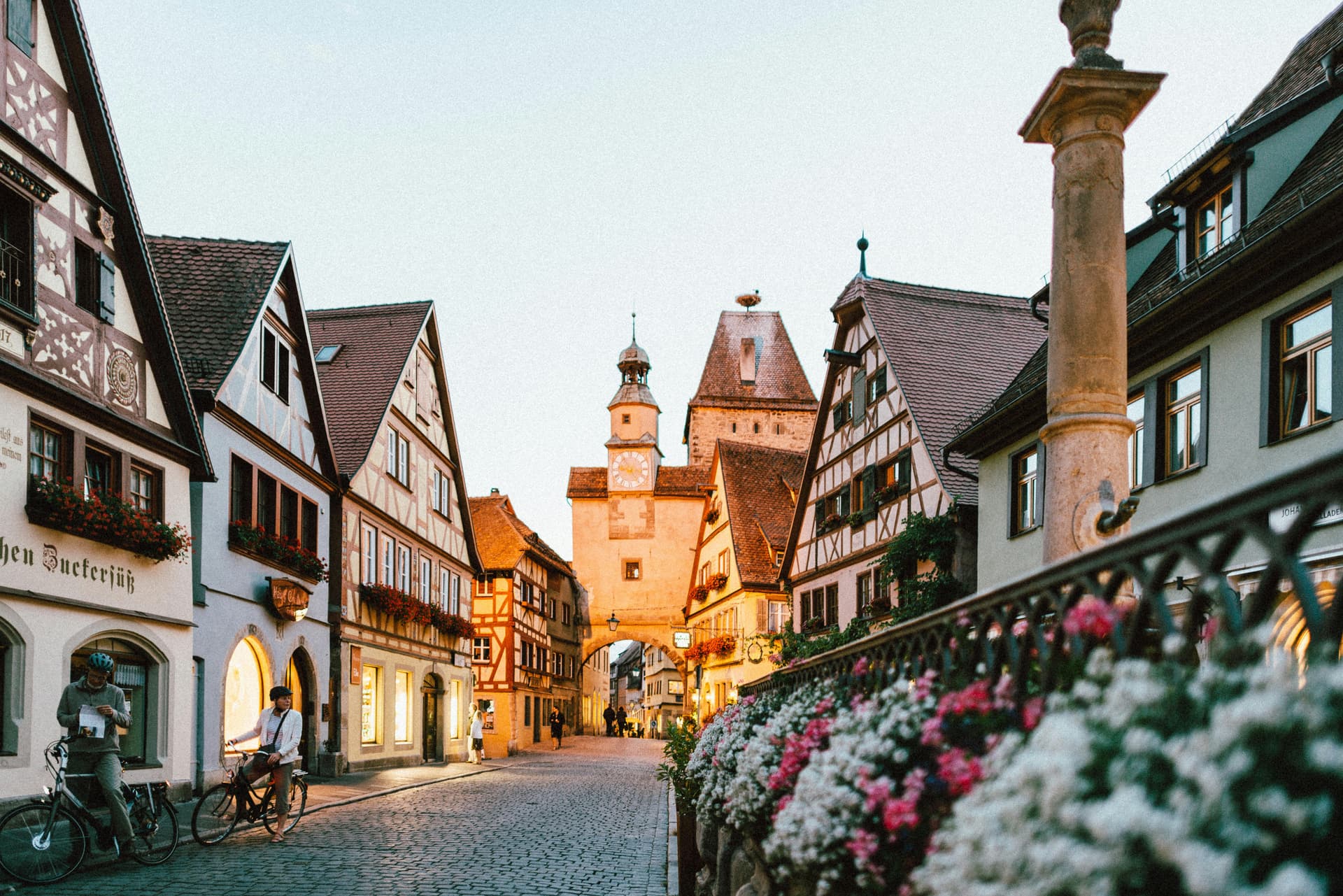
The Romantic Road (Romantische Strasse, 286 miles / 460 km from Wuerzburg to Fuessen) passes through Germany's most beautiful medieval towns: Rothenburg ob der Tauber (an intact fortified town with Christmas markets), Dinkelsbuehl, Noerdlingen (built in a meteorite crater), Augsburg, and Fuessen (gateway to Neuschwanstein Castle). It is Germany's most iconic road trip.
The Black Forest and the Rhine Valley
The Black Forest (Schwarzwald) is a mountain range covered in dense fir forests, dotted with half-timbered villages, waterfalls (Triberg), traditional farmhouses, and cuckoo clocks. Freiburg im Breisgau is its capital. The Rhine Valley (UNESCO-listed between Koblenz and Bingen) features terraced vineyards, medieval castles perched on every hilltop, and spectacular river cruises. The Lorelei Rock is the highlight.
Hamburg, Dresden, and the North
Hamburg (UNESCO-listed Speicherstadt, Elbphilharmonie, Reeperbahn, fish market) is the great port city of the North. Dresden (the Florence of the Elbe: Frauenkirche, Zwinger, Old Masters Gallery) has risen from the ashes. Cologne (Gothic cathedral, UNESCO, carnival), Leipzig (Bach, alternative culture), Heidelberg (romantic university town), and the island of Ruegen (chalk cliffs, Baltic Sea) are equally remarkable.


Classic itineraries in Germany
Germany is perfectly served by a dense rail network (Deutsche Bahn, ICE trains reaching 186 mph / 300 km/h), making multi-city trips easy and comfortable.
- Berlin + Bavaria: Berlin (3-4 days) → ICE to Munich (4 hrs) → Munich (2-3 days) → Neuschwanstein, Koenigssee, Romantic Road (3-4 days). The classic in 10-14 days
- Romantic Road: Wuerzburg → Rothenburg → Dinkelsbuehl → Noerdlingen → Augsburg → Fuessen/Neuschwanstein. 286 miles / 460 km by car, 3-5 days
- Christmas Markets: Nuremberg → Rothenburg → Munich → Dresden → Cologne. The most beautiful markets in the world, late November – December
- Rhine Valley: Frankfurt → Rhine cruise (Koblenz – Ruedesheim) → Heidelberg → Black Forest → Freiburg. Vineyards and castles, 7-10 days
- The North: Berlin → Dresden → Leipzig → Hamburg → Luebeck → Ruegen Island. Culture and the Baltic, 10-12 days
Getting around Germany
Germany has one of the best transportation networks in Europe. Deutsche Bahn (DB) connects all major cities via ICE (high-speed rail). Check out our travel experiences to plan your trip to Germany.
- ICE / Train: Berlin – Munich 4 hrs, Berlin – Hamburg 1 hr 45 min. The Deutschland-Ticket ($55/month) covers all regional and urban transit
- Car: excellent highway network (Autobahn, some sections with no speed limit). Rentals from $28-45/day. Ideal for the Romantic Road and the countryside
- FlixBus: very affordable long-distance buses. Berlin – Munich from $17. Dense network across the country
- Domestic flights: Eurowings, Ryanair. Useful for Berlin – Munich if short on time. Often beaten on price by trains
- Cycling: Germany is a cycling paradise. Bike paths everywhere, bike-sharing (Call a Bike), scenic river routes (Rhine, Danube, Elbe)
Budget: how much does a trip to Germany cost?
Germany offers excellent value for money for a Western European country. Expect to spend $65 to $165 per day per person depending on your travel style. Berlin is one of the cheapest capitals in Western Europe, while Munich is pricier.
- Accommodation: hostel $22-38, hotel $65-130, Airbnb $44-100. Berlin is 30-40% cheaper than Munich
- Meals: Currywurst/Doener $3-5, beer hall $11-20, fine dining $33-65. A beer (0.5L) costs $3-5
- Transportation: Deutschland-Ticket $55/month, ICE Supersparpreis from $20, FlixBus from $5-17
- Activities: museums $7-15 (many free in Berlin on the first Sunday), castles $9-16, Neuschwanstein $16
- Tip: German bakeries (Baeckerei) offer hearty breakfasts for $3-5. Supermarkets (Aldi, Lidl, REWE) are among the cheapest in Europe — great for picnicking
When to visit Germany?
Germany has four distinct seasons. Summer (June – August) offers the best conditions: long days (sunset at 9:30 PM), outdoor festivals, Biergaerten, Alpine hikes, and swimming in lakes. Spring (April – May) is beautiful with cherry blossoms and mild temperatures.
Autumn (September – October) is the season of Oktoberfest (mid-September to early October in Munich) and the grape harvest along the Rhine. Winter (November – February) is cold but magical: enchanting Christmas markets (late November – December 23), skiing in the Bavarian Alps, and the cozy atmosphere of the Weihnachtsmaerkte.
Recommended itineraries in Germany
Classic Berlin + Bavaria (12-14 days)
Berlin (4 days: Wall, Reichstag, Museum Island, Kreuzberg, Potsdam day trip) → ICE to Munich (4 hrs) → Munich (3 days: Marienplatz, beer halls, Englischer Garten) → Neuschwanstein (1 day) → Koenigssee and Berchtesgaden (1 day) → Romantic Road to Rothenburg (2 days) → Nuremberg (1 day) → return.
Christmas markets tour (7-10 days)
Cologne (2 days: cathedral, 7 markets) → ICE to Nuremberg (2 days: Christkindlesmarkt) → Rothenburg ob der Tauber (1 day: year-round Christmas shop) → Munich (2 days: markets, Residenz) → Dresden (2 days: Striezelmarkt, Frauenkirche). The magical itinerary from late November to mid-December.
Rhine and Black Forest (10 days)
Frankfurt (1 day) → Rhine cruise from Koblenz to Ruedesheim (1 day: castles, vineyards) → Heidelberg (2 days: castle, old town) → Alsace-Baden Wine Route → Black Forest (3 days: Freiburg, Triberg, Lake Titisee, hiking) → Lake Constance (2 days: Lindau, Meersburg). Nature, wine, and romance.
Germany off the beaten path
Beyond the classics, Germany hides some real gems. Saxon Switzerland (spectacular rock formations 1 hour from Dresden, Bastei Bridge) offers landscapes worthy of a film set. Bamberg (UNESCO-listed, Rauchbier breweries — smoked beer), Luebeck (UNESCO, Holstentor gate, marzipan), and Quedlinburg (UNESCO, 1,300 half-timbered houses) are underrated treasures.
The island of Ruegen (white chalk cliffs on the Baltic Sea, Art Nouveau seaside resorts) and East Frisia (North Sea islands, Wadden Sea — walking on the seabed at low tide, UNESCO) showcase Germany's lesser-known maritime side. For a complementary trip, neighboring United Kingdom is easily combined. Explore all our destinations.
Practical information and formalities
Germany is a member of the European Union and the Schengen Area. US and UK citizens can visit visa-free for up to 90 days with a valid passport. The currency is the euro — Germany is one of the easiest European destinations to navigate.
- Documents: valid passport (US/UK/Canada/Australia). No visa required for stays up to 90 days. Major airports: Frankfurt, Munich, Berlin
- Currency: euro (EUR). Note: Germany is still very cash-oriented. Many restaurants and shops do not accept cards (especially outside major cities)
- Time zone: CET (UTC+1), 6 hours ahead of US East Coast. Direct flights from New York to Frankfurt ~8 hrs, to Berlin ~9 hrs
- Language: German. English is widely spoken in major cities and by younger people. A few words of German are always appreciated
- Beer: the Reinheitsgebot (beer purity law of 1516) guarantees quality. Each region has its specialties: Weissbier (Bavaria), Koelsch (Cologne), Rauchbier (Bamberg), Berliner Weisse (Berlin)
- Pfand: bottle deposit ($0.09-0.28). Return bottles to supermarket machines to get your deposit back