Why travel to Peru?
Peru is one of the most fascinating destinations on the planet. Birthplace of the Inca civilization and millennia-old cultures far more ancient (Nazca, Moche, Chimú), this Andean country boasts a staggering diversity of landscapes: the Andes mountain range with peaks reaching 6,000 m, the densest Amazon rainforest on Earth, the coastal desert and the Pacific Ocean, and the mythical Lake Titicaca.
It is also the undisputed land of Latin American gastronomy — Lima is regularly ranked as the world's best culinary destination. From 13 UNESCO World Heritage Sites to the colorful markets of the highlands, from the mystical Machu Picchu to the enigmatic Nazca Lines, Peru is a journey through history, nature, and living culture.
Peru's must-visit regions
Cusco and Machu Picchu
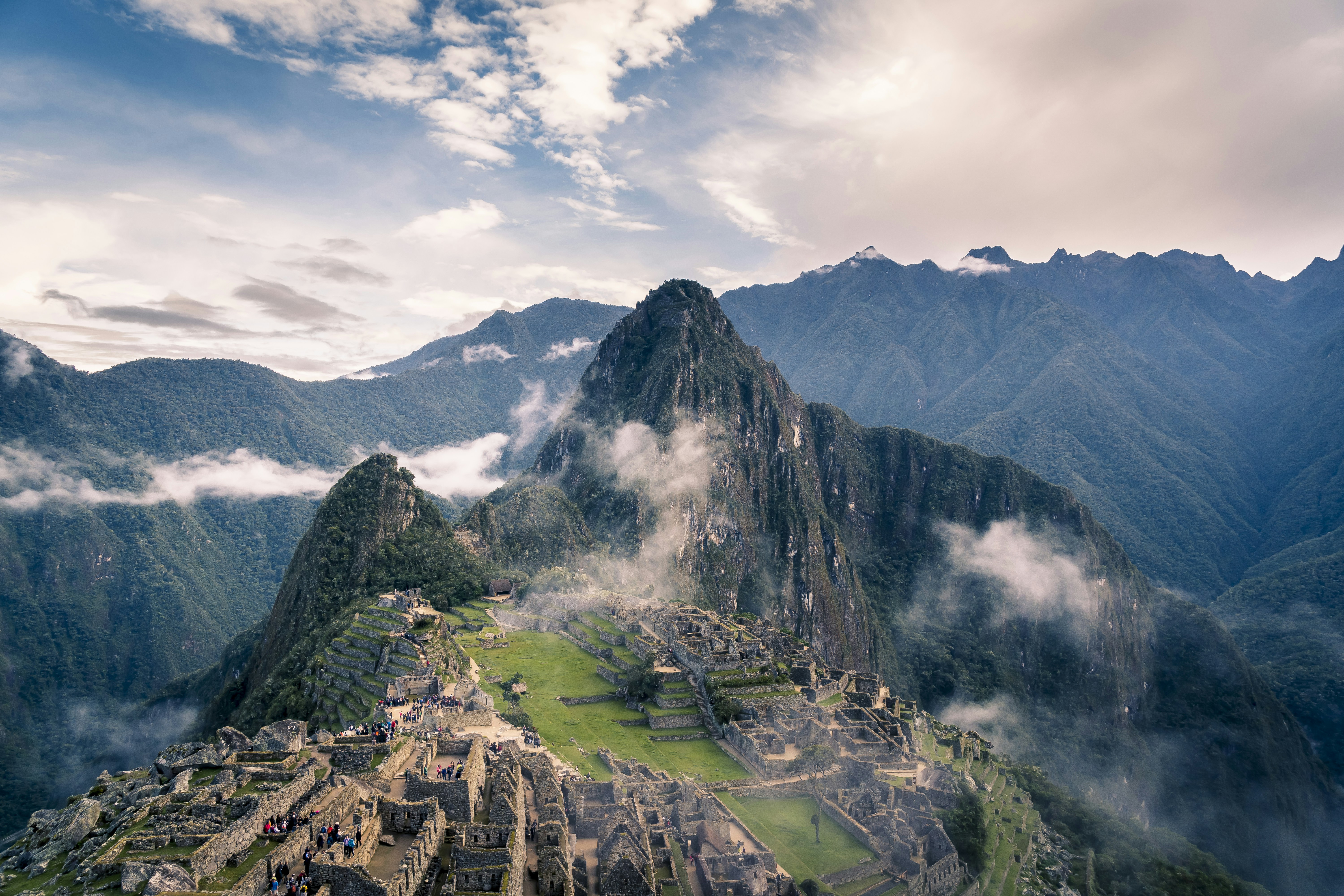
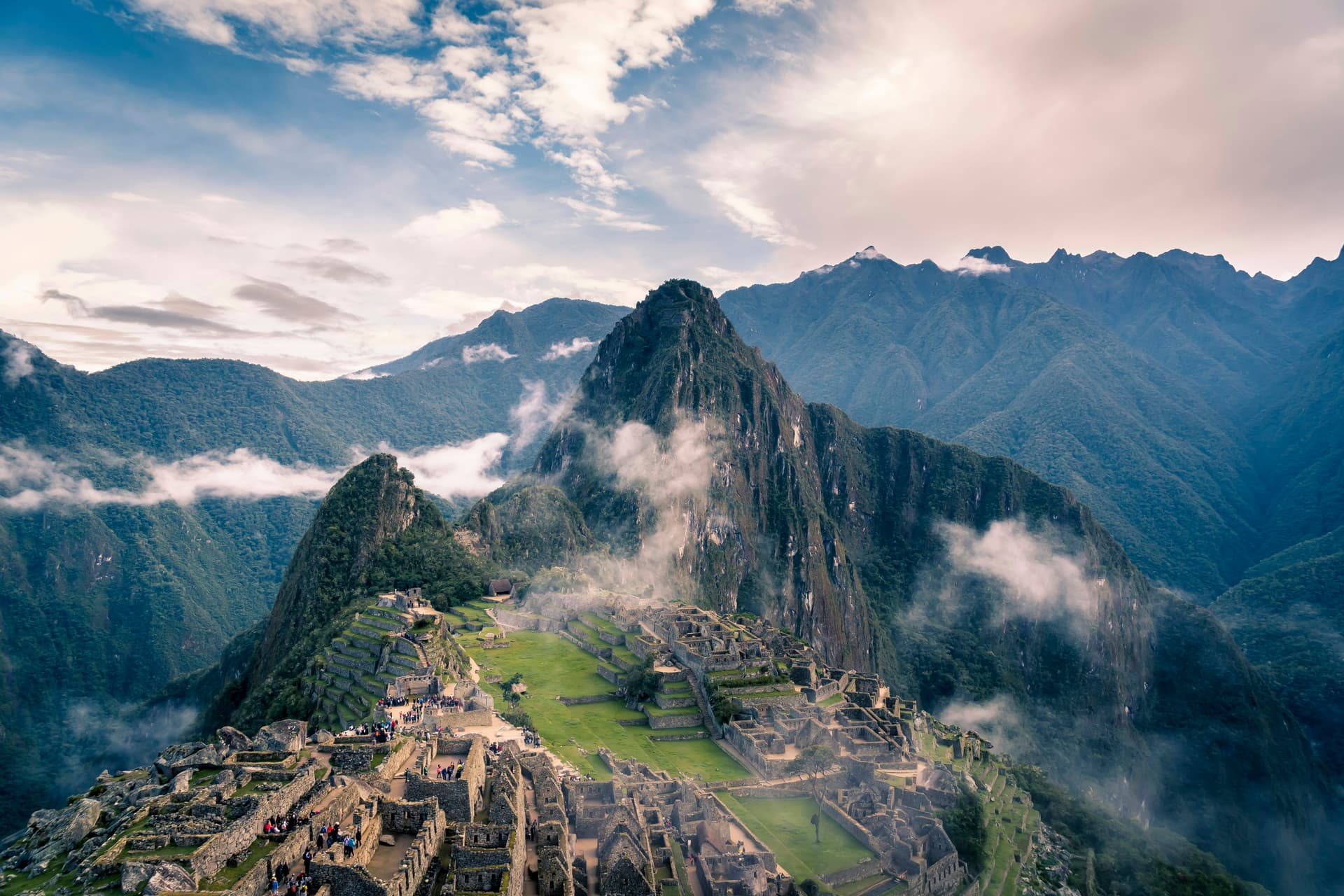
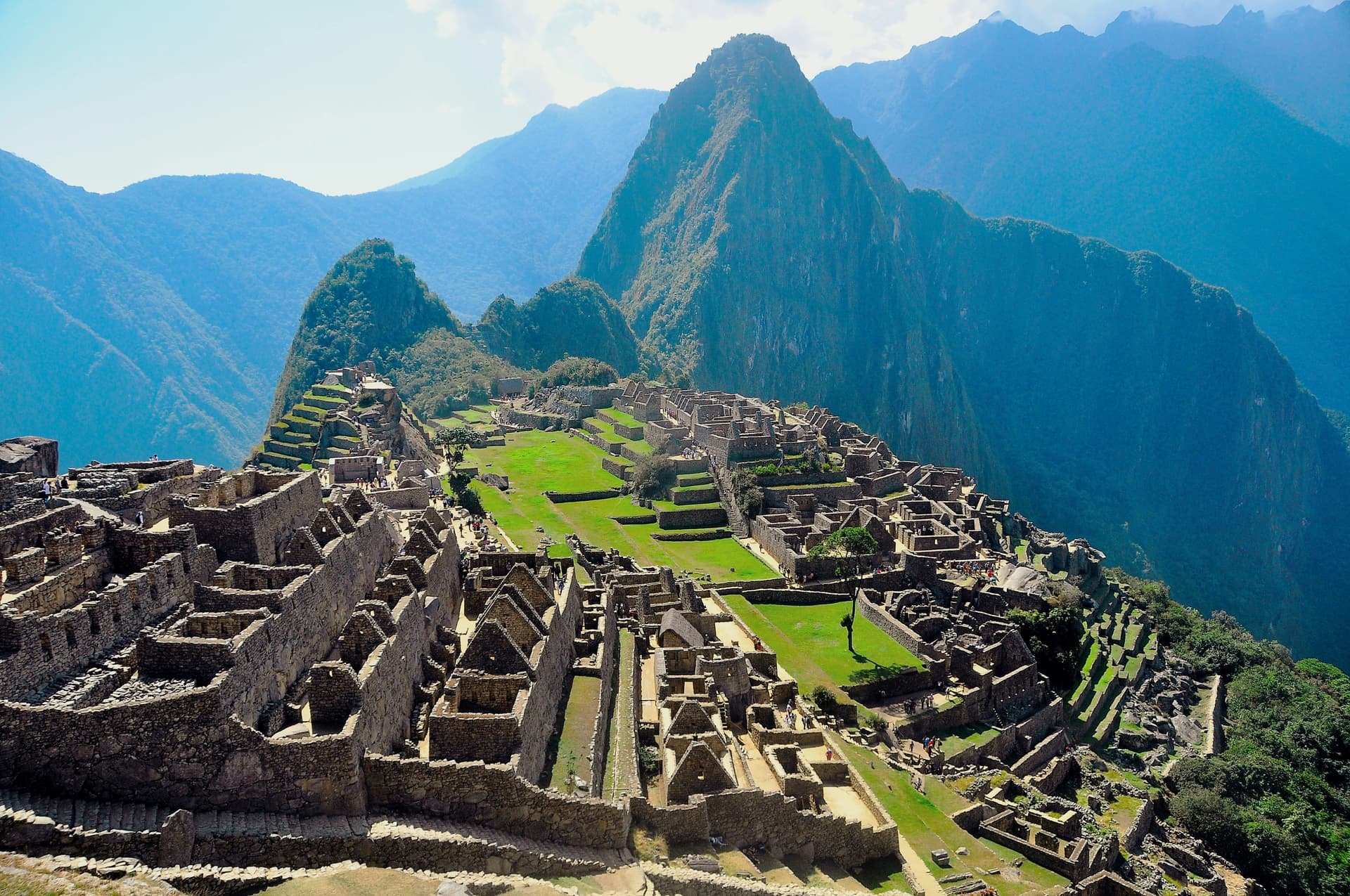
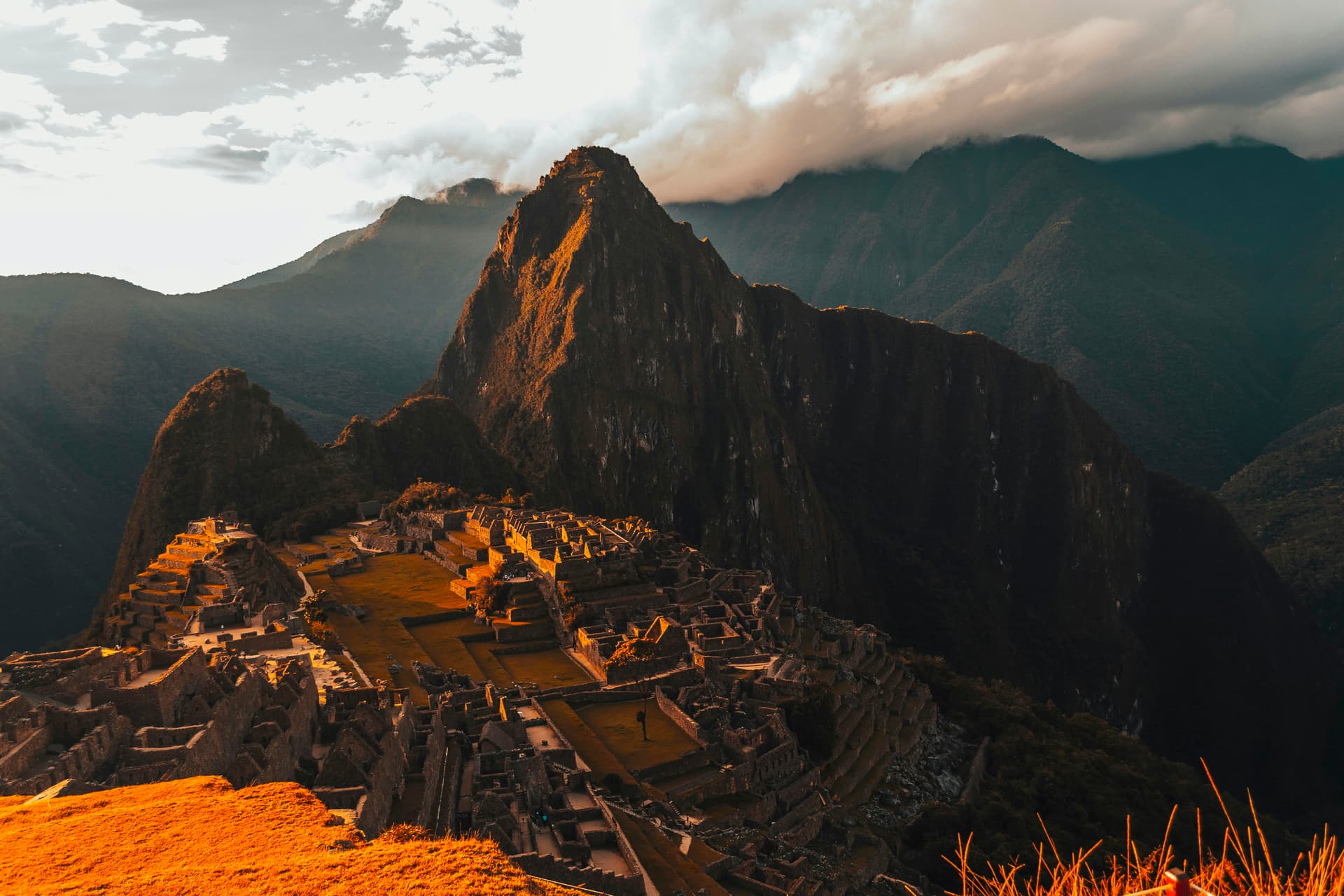
Cusco (3,400 m elevation), the former capital of the Inca Empire and a UNESCO World Heritage Site, is a magical city where Inca walls serve as foundations for Spanish colonial buildings. The Plaza de Armas, Sacsayhuamán, the San Blas neighborhood, and the colorful markets set the stage for the grand finale: Machu Picchu (2,430 m), the lost city of the Incas rediscovered in 1911 and one of the New Seven Wonders of the World. The Sacred Valley (Ollantaytambo, Pisac, Moray, Maras salt mines) rounds out this Inca immersion.
Lima, the gastronomic capital
Lima has become one of the world's gastronomic capitals, with 3 restaurants in the global top 50 (Central, Maido, Kjolle). Ceviche, lomo saltado, pisco sour, and Nikkei cuisine (Peruvian-Japanese fusion) are must-tries. Beyond the food scene, the Miraflores district (cliffs overlooking the Pacific), Barranco (bohemian and street art), the historic center (Plaza Mayor, UNESCO), and the Larco Museum are all well worth a visit.
Lake Titicaca and Arequipa
Lake Titicaca (3,812 m), the highest navigable lake in the world, is sacred to Andean cultures. The floating islands of the Uros (built from totora reeds), Taquile Island (UNESCO-listed textiles), and Amantaní Island (homestay overnight) offer unique experiences. Arequipa (the White City, UNESCO historic center) is the gateway to Colca Canyon — twice as deep as the Grand Canyon, where Andean condors soar.
The Peruvian Amazon
Peru is home to 60% of the Peruvian Amazon, including some of the most biodiverse areas on the planet. Iquitos (the largest city in the world inaccessible by road) is the gateway to the Pacaya-Samiria National Reserve. Puerto Maldonado and the Tambopata Reserve offer jungle lodges with opportunities to spot jaguars, macaws, pink river dolphins, and monkeys. Manu (a UNESCO Biosphere Reserve) is one of the wildest places on Earth.
The Nazca Lines and the coast
The Nazca Lines (UNESCO World Heritage Site) are one of the greatest archaeological mysteries: gigantic geoglyphs (hummingbird, monkey, spider) etched into the desert 2,000 years ago, visible only from the sky. The Huacachina oasis (sand dunes, buggy rides, and sandboarding), Paracas (marine reserve, Ballestas Islands — the "poor man's Galápagos"), and the ruins of Chan Chan (the largest adobe city in the world, UNESCO) complete the coastal experience.


Classic itineraries in Peru
Peru lends itself to varied itineraries, from high-altitude treks to jungle stays. Acclimatizing to the altitude is essential.
- The classic: Lima → Cusco → Sacred Valley → Machu Picchu → Lake Titicaca. The essential circuit in 10–14 days
- Grand tour: Lima → Arequipa → Colca Canyon → Titicaca → Cusco → Machu Picchu → Amazon (Puerto Maldonado). A full 3 weeks
- Inca Trail trek: 4 legendary days of hiking to Machu Picchu. Limited to 500 people/day — book 6 months in advance
- Coast and desert: Lima → Paracas (Ballestas Islands) → Huacachina (dunes) → Nazca (flight over the lines). The lesser-known side of Peru, 5–7 days
- Deep Amazon: Fly to Iquitos or Puerto Maldonado → jungle lodge 3–5 days. Wildlife spotting, nights in the forest, indigenous communities
Getting around Peru
Distances in Peru are vast and the mountainous terrain makes overland travel challenging. Domestic flights are the most practical way to connect major cities. Discover our travel experiences to plan your Peruvian adventure.
- Domestic flights: LATAM, Sky, JetSMART. Lima – Cusco (1h15, from $45), Lima – Arequipa (1h30). Essential for saving time
- Bus: Cruz del Sur, Oltursa (VIP sleeper buses). Lima – Arequipa 15h, Cusco – Puno 6h. Comfortable and affordable, but slow
- Train: PeruRail and Inca Rail for Cusco – Machu Picchu (Aguas Calientes). The Belmond Hiram Bingham is the luxury train option
- Colectivo: local minibuses for short distances. Cheap but often overcrowded and with no fixed schedules
- Taxi / Uber: Uber available in Lima. Elsewhere, negotiate the price before getting in. No meters in regular taxis
Budget: how much does a trip to Peru cost?
Peru is an affordable destination for South America. Budget 120 to 350 PEN per day per person ($33–$95) depending on your travel style. Machu Picchu and the Amazon are the most expensive items.
- Accommodation: hostel 25–60 PEN, hotel 80–200 PEN, boutique hotel 200–500 PEN. Homestay at Titicaca 30–50 PEN
- Meals: menú del día (starter + main + drink) 8–15 PEN ($2–$4), restaurant 25–60 PEN, fine dining 100–300 PEN
- Transport: domestic flight 150–500 PEN, VIP sleeper bus 50–150 PEN, Cusco – Machu Picchu train 200–400 PEN
- Activities: Machu Picchu entrance $152 (2024), Inca Trail 4 days $600–$800, Nazca overflight $80–$120, jungle lodge 3 days $200–$600
- Tip: the Boleto Turístico de Cusco (130 PEN) grants access to 16 archaeological sites and museums in the region. It pays for itself after the 3rd visit. Buy it upon arrival in Cusco
When to visit Peru?
Peru has two main seasons in the Andes. The dry season (May – October) is the best time for Cusco, Machu Picchu, Lake Titicaca, and mountain treks: blue skies, cold nights but sunny days. June–August is peak tourist season.
The rainy season (November – March) makes trekking difficult, and the Inca Trail closes in February. The coast (Lima, Nazca) can be visited year-round. The Amazon is hot and humid year-round, but the dry season (May–October) makes it easier to get around and spot wildlife.
Recommended itineraries in Peru
The classic Andean route (12–14 days)
Lima (2 days: gastronomy, Miraflores, Barranco) → fly to Cusco (2 days: acclimatization, city tour) → Sacred Valley (2 days: Ollantaytambo, Pisac, Moray, Maras) → Machu Picchu (1–2 days) → back to Cusco → bus to Puno → Lake Titicaca (2 days: Uros, Taquile, Amantaní) → fly back to Lima. The essential circuit.
The Grand Tour (3 weeks)
Lima (2 days) → fly to Arequipa (2 days: White City, Santa Catalina Convent) → Colca Canyon (2 days: condors) → bus to Puno/Titicaca (2 days) → bus to Cusco (3 days) → Sacred Valley + Machu Picchu (3 days) → fly to Puerto Maldonado → Amazon (3 days: jungle lodge) → back to Lima. Peru in all its diversity.
Coast and culture (10 days)
Lima (3 days: gastronomy, museums, Pachacamac) → bus to Paracas (1 day: Ballestas Islands, reserve) → Huacachina (1 day: dunes, sandboarding, buggy) → Nazca (1 day: flight over the lines) → fly to Cusco (3 days: city + Machu Picchu). An itinerary combining the lesser-known coast with the Andean classics.
Peru off the beaten path
Beyond the classics, Peru hides hidden treasures. Rainbow Mountain (Vinicunca) (5,036 m, the mountain of seven colors) has become a must-see, accessible as a day trip from Cusco. Chachapoyas (northern Peru) is home to Kuélap — the "Machu Picchu of the North," a pre-Inca fortress perched at 3,000 m, far less visited than its southern counterpart.
The Cordillera Blanca (Huaraz, Santa Cruz trek, Lake Parón) offers some of the most beautiful treks in South America. The Cotahuasi Canyon (the deepest in the world at 3,535 m) is even more impressive than Colca. For a complementary trip to Asia, Japan offers a fascinating cultural richness. Explore all our destinations.
Formalities and practical information
Peru is easy to access. US and EU citizens benefit from a visa exemption for tourist stays of up to 183 days. A passport valid for 6 months beyond entry is all you need.
- Visa: visa exemption (183 days max). Passport valid 6 months required. No prior online formality needed
- Currency: Peruvian sol (PEN). 1 USD ≈ 3.7–3.8 PEN. US dollars are accepted in tourist areas. Visa cards widely accepted
- Time zone: UTC-5 (same as US Eastern Standard Time). Flights with connections (Miami, Houston, Bogota), ~8–12h total from the US
- Health: yellow fever vaccine recommended for the Amazon. Altitude sickness common in Cusco (3,400 m). Drink bottled water, travel insurance strongly recommended
- Safety: standard precautions in major cities (Lima, Cusco). Avoid sketchy neighborhoods at night. Tourist areas are very safe
- Language: Spanish (official) and Quechua. English is spoken in tourist areas. A few words of Spanish go a long way