
Eighty days, from 13 February to 3 May 2024. That is how long I spent in Thailand, and it left me with 41 photo albums, sorted by date and place. Going back through them one by one, I was able to piece together the exact route: the southern islands in February and March, the north in April, Bangkok to finish.
This is not a theoretical itinerary. It is the route I actually followed, stop by stop, with what I saw there, how to get between each island or city, and above all what I would change if I set off again tomorrow. Three months is a long time, and the order of the stops matters as much as the stops themselves: Thailand has three different climates depending on the coast and the region.
At the end of the article you will find a condensed three-week version, and the entry rules as of October 2026, which changed on 15 September.
The route at a glance
The dates below are those of my photo albums. They show the real pace of the trip: long pauses on some islands, and almost a whole month in Chiang Mai.
| Dates | Stop | What I did there |
|---|---|---|
| 13 to 16 February | Phuket (Kamala, Surin) | West coast beaches, the Phuket Festival in the old town |
| 17 February | Khao Sok | The village at the foot of the national park |
| 24 to 27 February | Koh Phangan | Srithanu, Zen Beach, Mae Haad and Koh Ma, Haad Yao |
| 28 and 29 February | Koh Tao | John-Suwan viewpoint, Freedom Beach, the east coast |
| Early March | Koh Samui | Villa, Wat Khunaram, the Hin Ta Hin Yai rocks |
| 8 to 23 March | Phuket and the Andaman Sea | Patong, Koh Lanta, Bangtao, Similan Islands, Big Buddha, Koh Racha |
| 31 March to 19 April | Chiang Mai | Temples, Nimman, Doi Pui, elephants, Doi Inthanon |
| 20 and 21 April | Chiang Rai | White Temple, Blue Temple, Wat Huay Pla Kang, Singha Park |
| 26 April | Around Chiang Mai | Wat Phra That Doi Kham, Royal Park Rajapruek |
| 28 April to 3 May | Bangkok | Grand Palace, Wat Pho, Wat Arun, Chinatown, Golden Mount |
Phuket, for a gentle landing
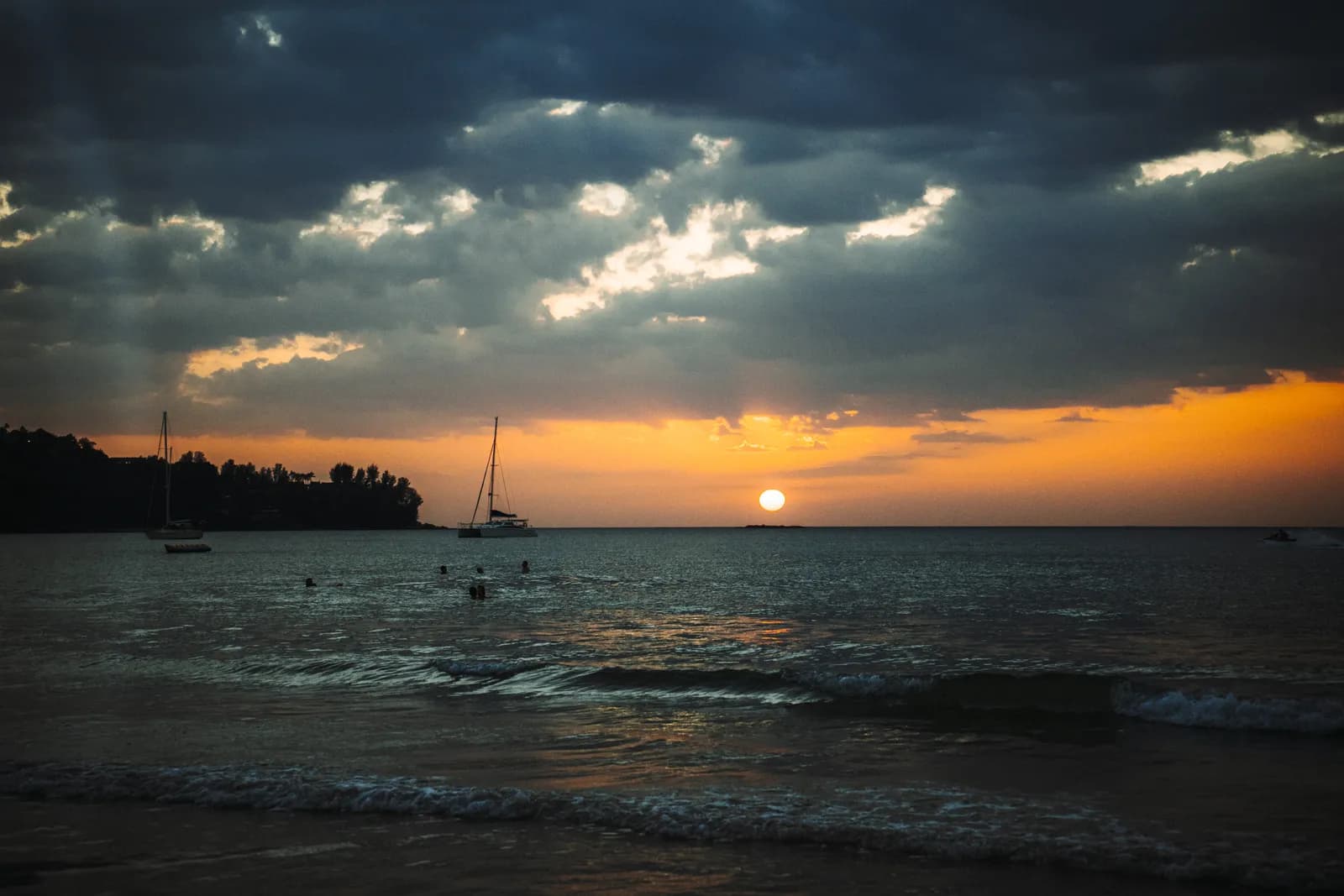
I started on Phuket's west coast, on the quiet beach side. Kamala Beach and Surin Beach make two good bases for the first few days: less noisy than Patong, with proper sunsets over the Andaman Sea and beach restaurants under the coconut palms.
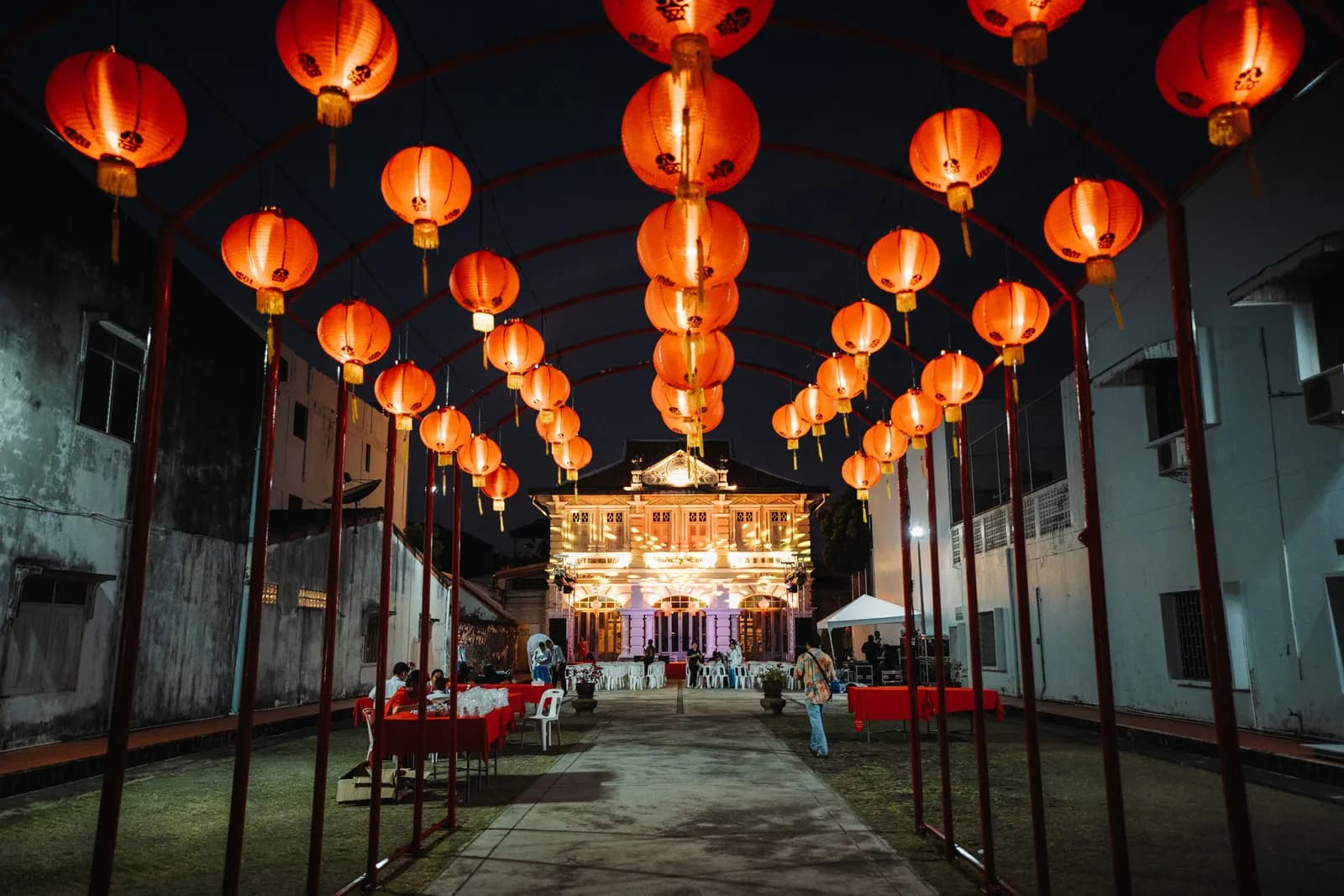
On 16 February I went down to Phuket's old town, right in the middle of the Phuket Festival, held that year from 15 to 17 February, a few days after Chinese New Year on 10 February. Dragon arches, streets of red lanterns at night, Chinese shrines open to visitors: it is the best way to discover the Sino-Portuguese quarter. If your dates allow, time your stay in Phuket around Chinese New Year.
From the Andaman Sea to the Gulf: Khao Sok and the ferry
To get from Phuket to the Gulf islands, the road crosses the peninsula. I stopped in Khao Sok, a village at the foot of the national park of the same name, about 3 to 5 hours by minivan from Phuket depending on where you start (around 1,100 baht for a shared hotel transfer).
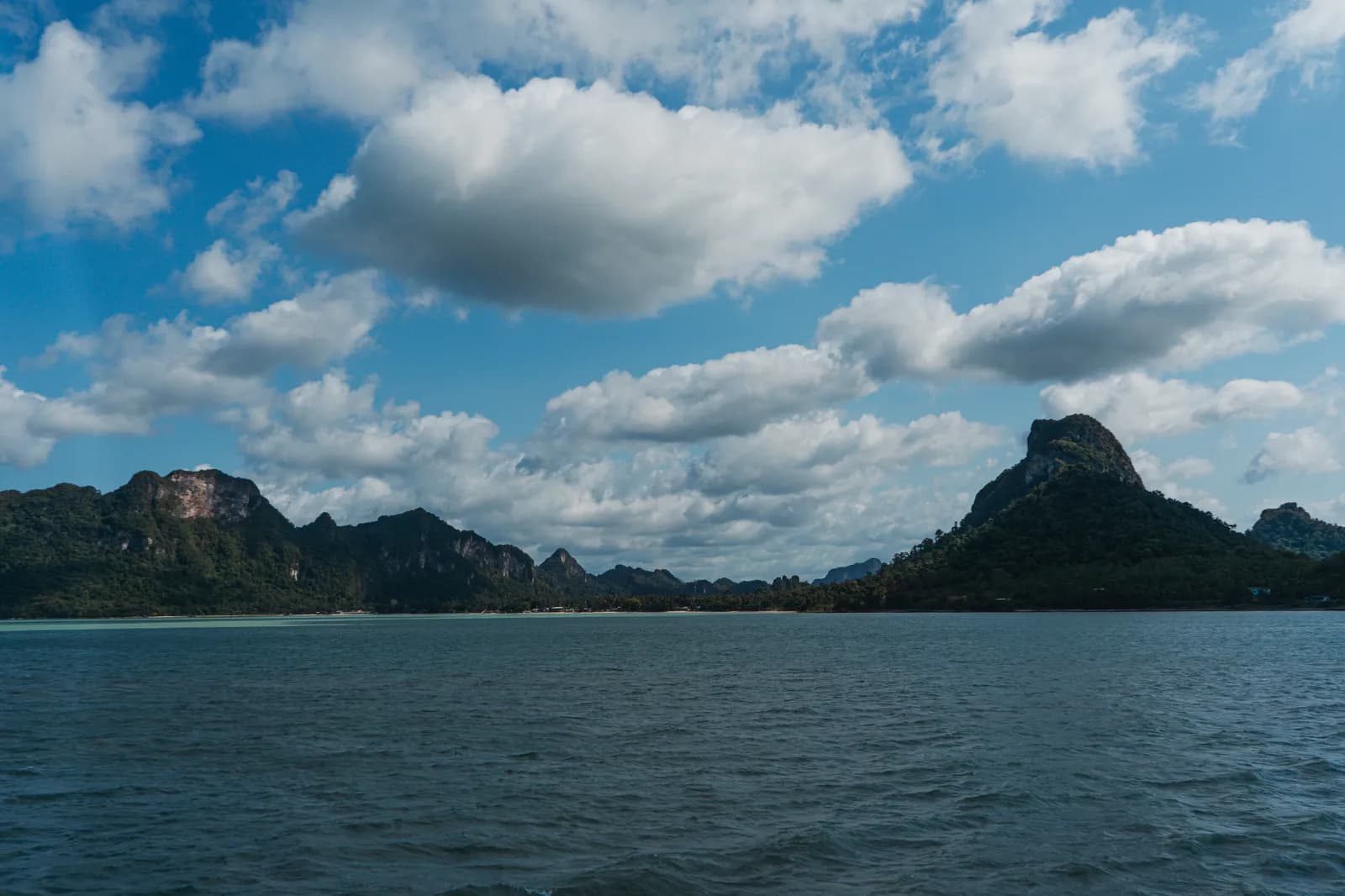
From there you need to reach Surat Thani and then Donsak pier. The Raja ferry takes about 2.5 hours to Thong Sala, on Koh Phangan, for 290 baht per passenger. The crossing is worth it in its own right: as you leave the coast, you sail past jungle-covered karst peaks before reaching open sea.
Koh Phangan, the west side
Koh Phangan is best known for the Full Moon Party at Haad Rin. I spent my days on the other side of the island, to the west, and the atmosphere is completely different.
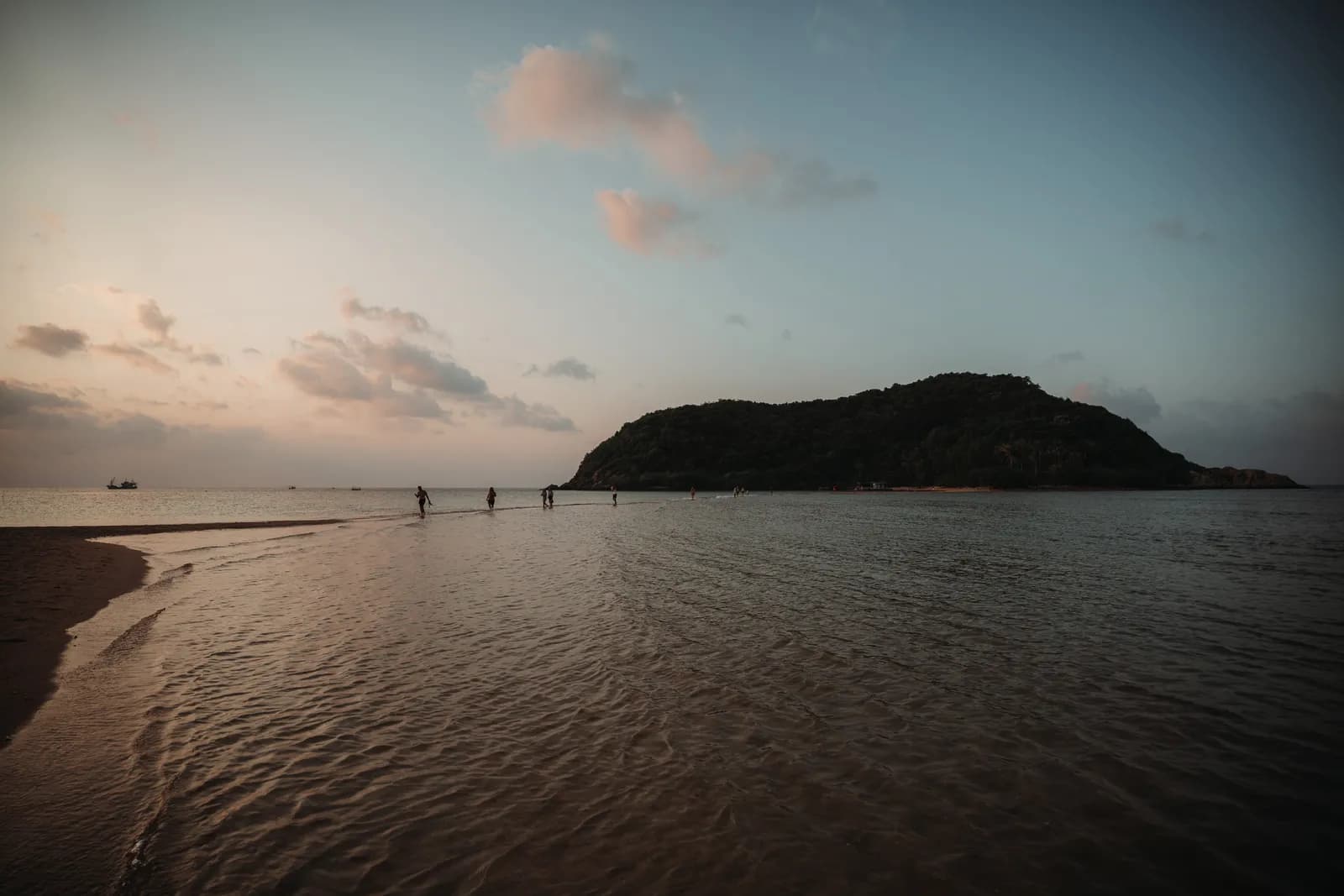
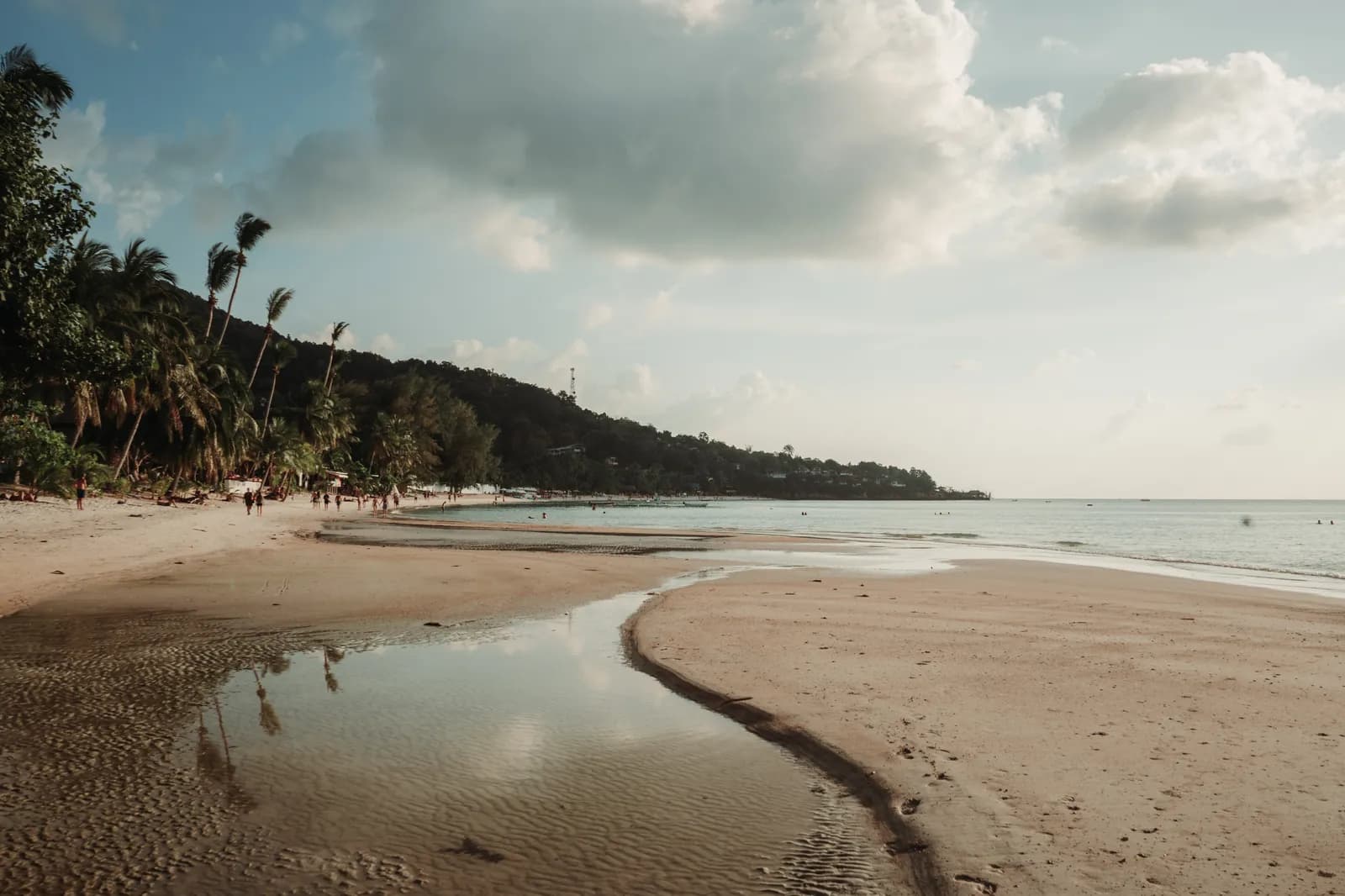
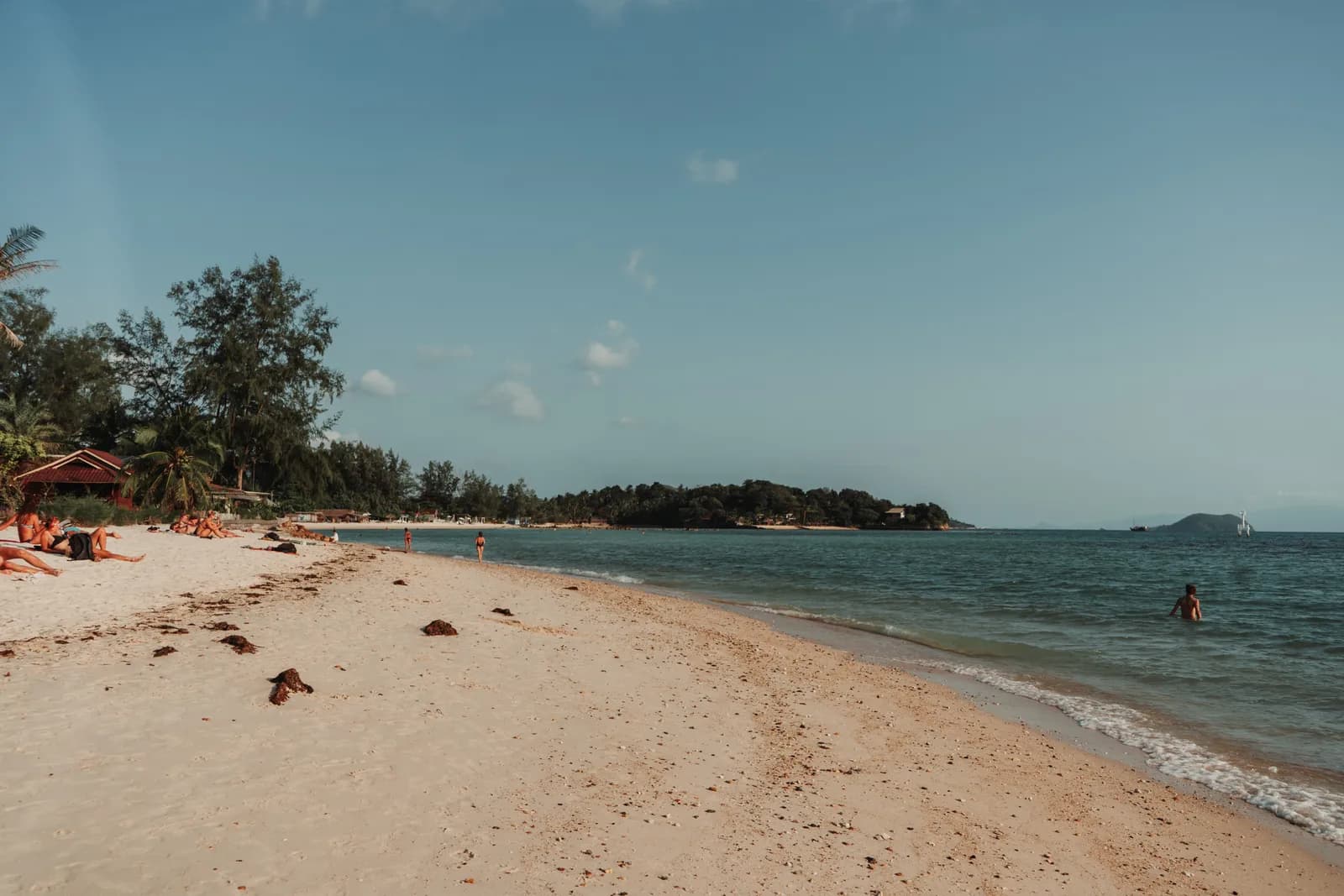
- Srithanu and Zen Beach: the island's yoga and wellbeing corner, with places to stay hidden in tropical gardens and a golden beach facing the sunset.
- Mae Haad and Koh Ma: in the north-west, a sandbar links the beach to the islet of Koh Ma at low tide. At dusk you almost walk on the water.
- Haad Yao: a sheltered bay, at its most beautiful at low tide when the sand forms channels that reflect the sky.
Photos : Pierre Bouyer
Allow at least four days to enjoy this side of the island without rushing. A scooter is essential to get around, and Phangan's roads are sometimes steep: do not try it if you have never ridden a two-wheeler.
Koh Tao, the island of viewpoints
Koh Tao is about an hour by catamaran from Koh Phangan. The island is small and very hilly, and its finest moments happen high up.
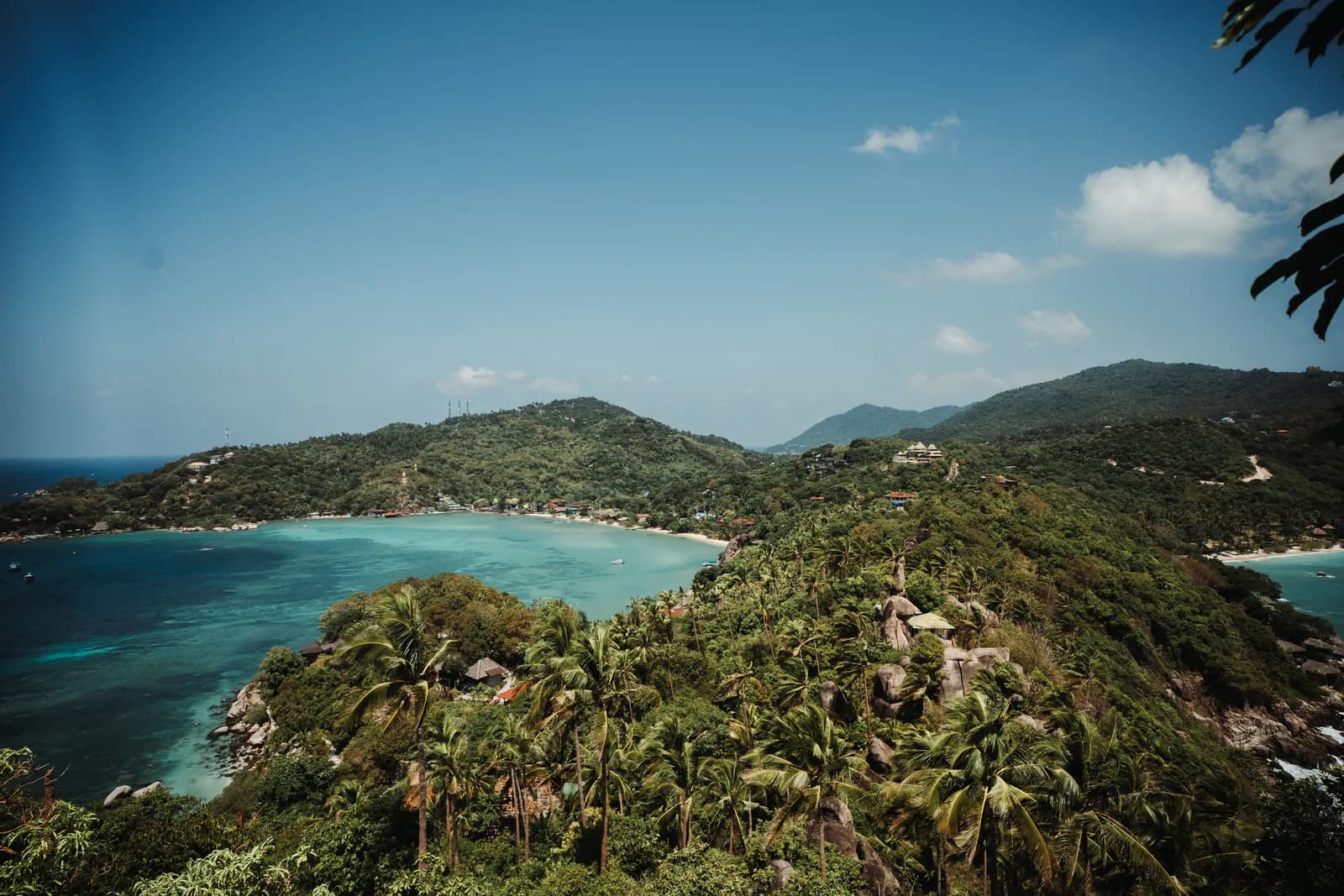
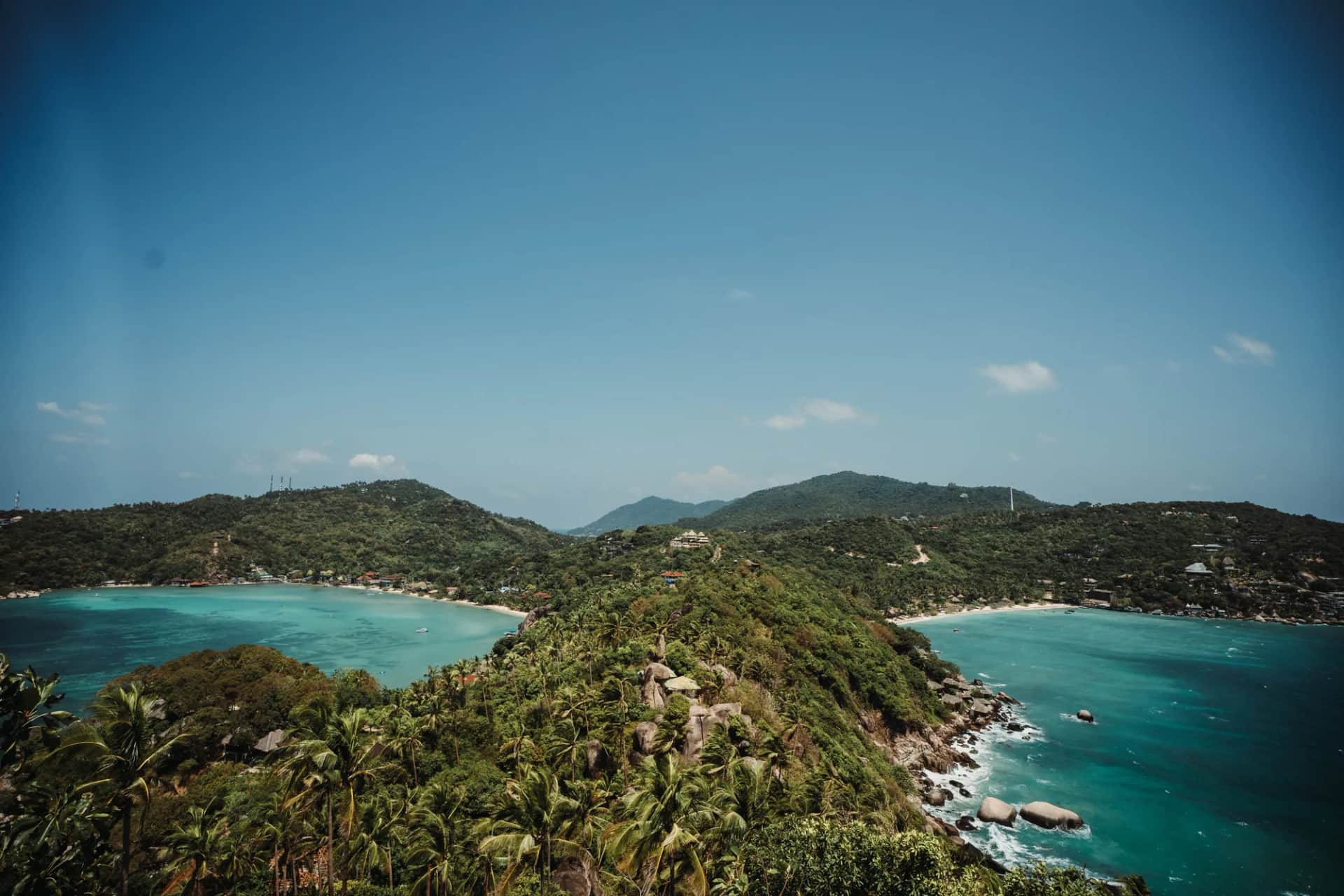
The John-Suwan viewpoint, in the south, offers the island's best-known view: two turquoise bays on either side of a palm-covered ridge, Shark Bay on one side and Chalok on the other. Right next to it, Freedom Beach is a small cove between the rocks, perfect for a swim after the climb. The wilder east coast alternates between wave-battered bays and huge granite boulders.
Two days is short for Koh Tao, especially if you dive: the island is one of Asia's major dive training centres. If you are doing your first certification, plan at least four days there.
Koh Samui, a villa and the south-east
From Koh Tao, allow 1.5 to 2 hours by boat to Koh Samui, often with a stop at Koh Phangan. Samui is the largest and best-equipped of the three Gulf islands, and I stayed there in a villa with a pool up in the hills, facing the sea.
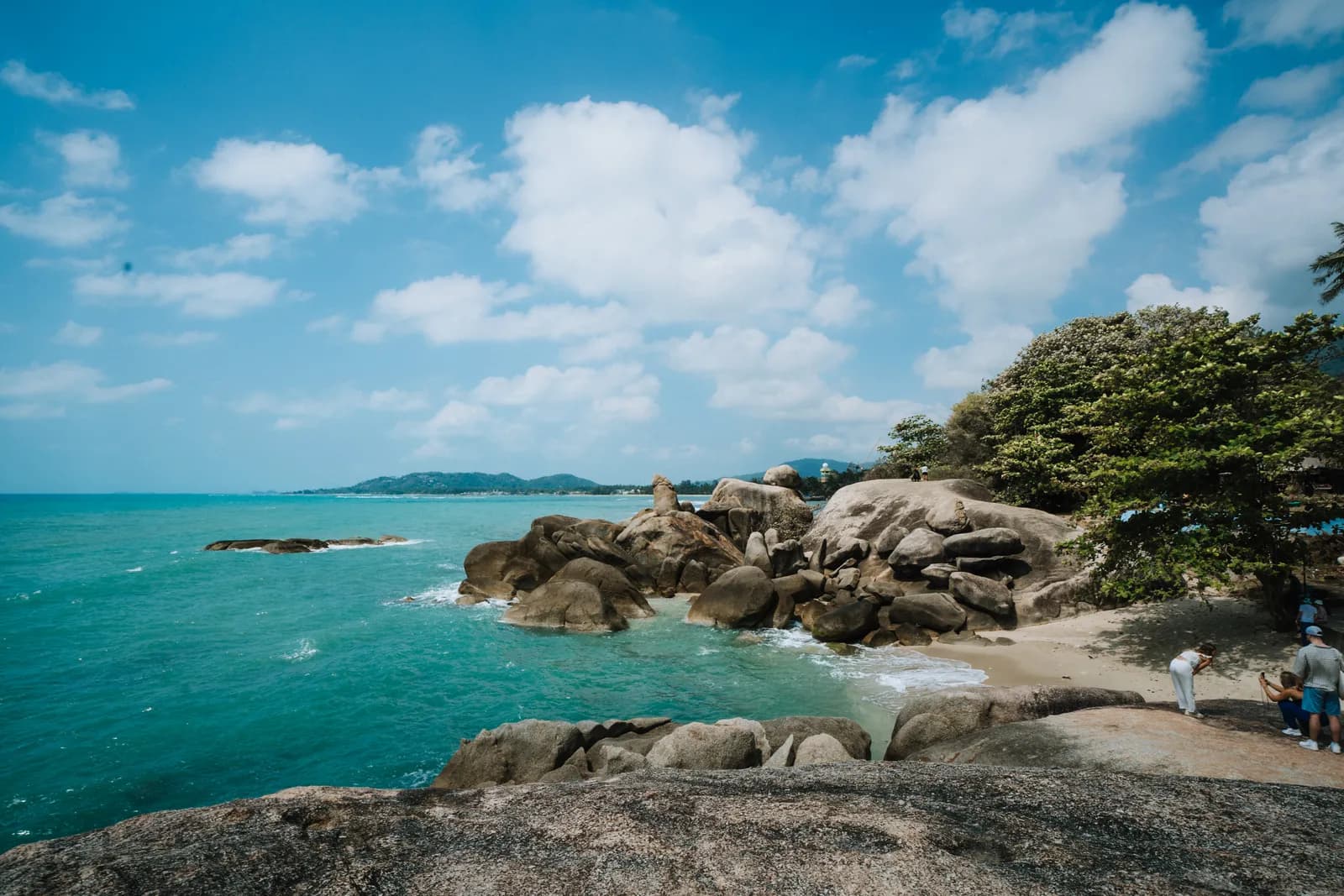
The south-east of the island deserves half a day. Wat Khunaram houses the mummified body of a monk, seated in meditation and wearing sunglasses: an astonishing sight, to be approached with respect. Nearby, the granite rocks of Hin Ta and Hin Yai plunge into turquoise water, and a Chinese shrine dedicated to Guan Yu can be spotted from afar.
To get back to the Andaman coast, the simplest option is the direct Bangkok Airways flight between Koh Samui and Phuket, in just under an hour. The bus and ferry route is possible but takes 7 to 7.5 hours.
Back on the Andaman Sea
I spent the second half of March around Phuket, taking day trips from there. It is the end of the high season on the Andaman side: calm sea, blue sky, but already very hot.
Patong and Koh Lanta
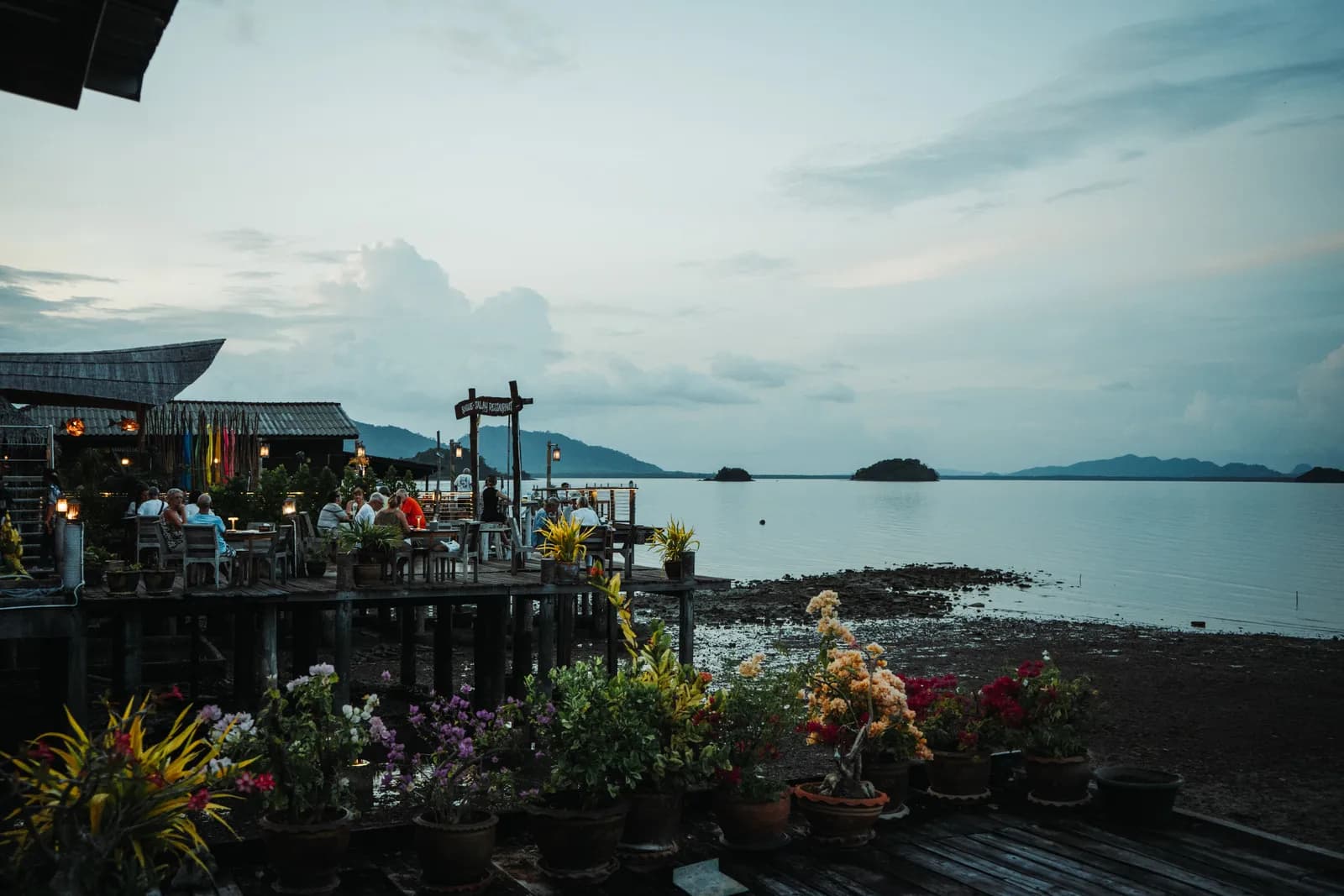
I went through Patong to see Bangla Road, the bar street, and I did not come away with a good impression. The next day, in Koh Lanta, the scenery changed completely: an old town of stilt houses, restaurants perched above the mudflats and islands on the horizon at dusk. From Rassada Pier in Phuket, speedboats take about 1.5 to 2.5 hours to Saladan, for 800 to 1,500 baht depending on the company.
The Similan Islands
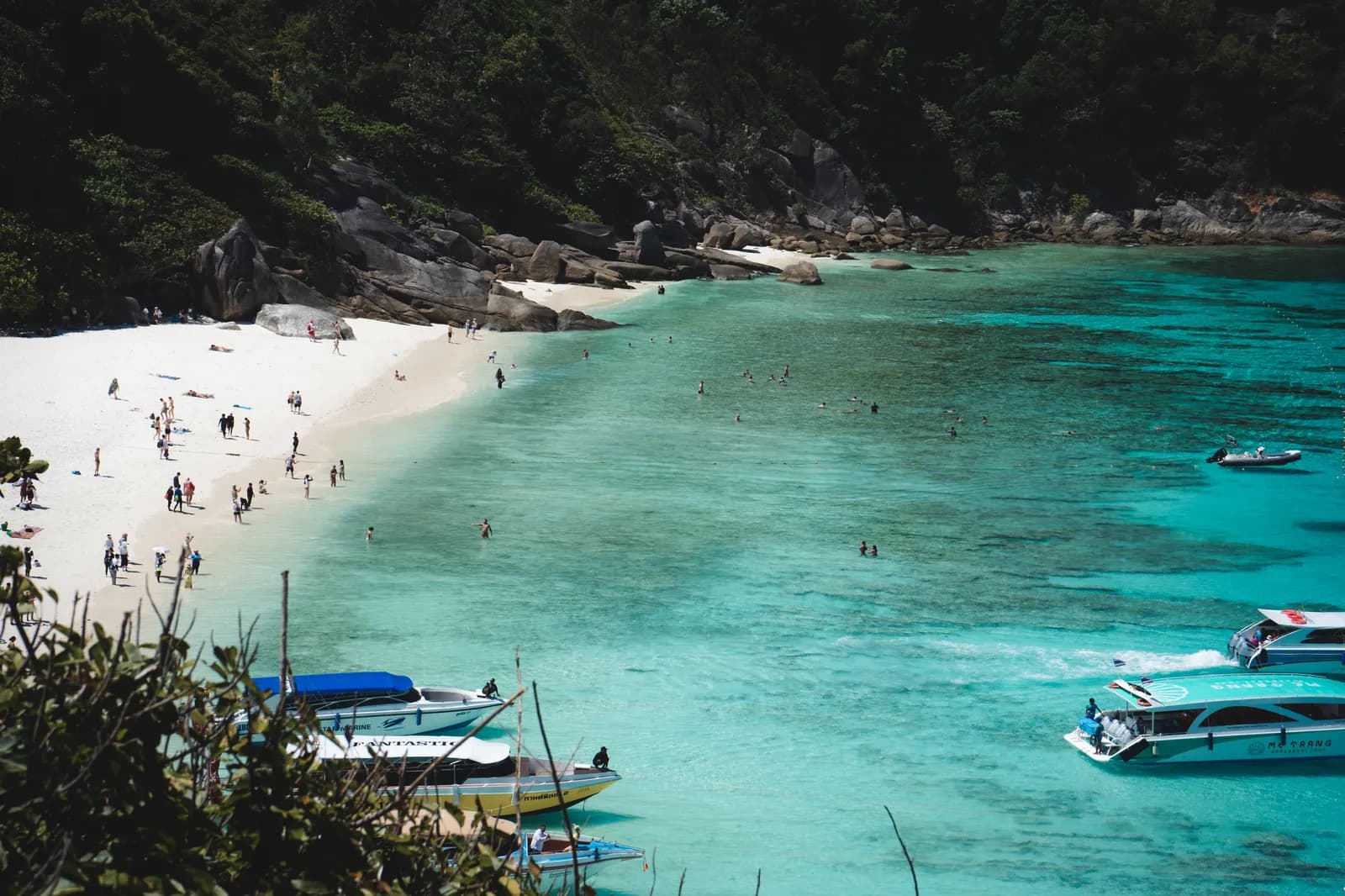
On 17 March I took the trip to the Similan Islands, the day from which I brought back the most images of turquoise sea. On island no. 8, a short path between the rocks leads above Donald Duck Bay: white sand, turquoise water and the famous sail-shaped rock. The national park is only open from 15 October to 15 May, with a quota of 3,325 visitors a day and a 500 baht entry fee per foreign adult. Visits run from 8am to 4pm, with no overnight stays.
Big Buddha and Koh Racha
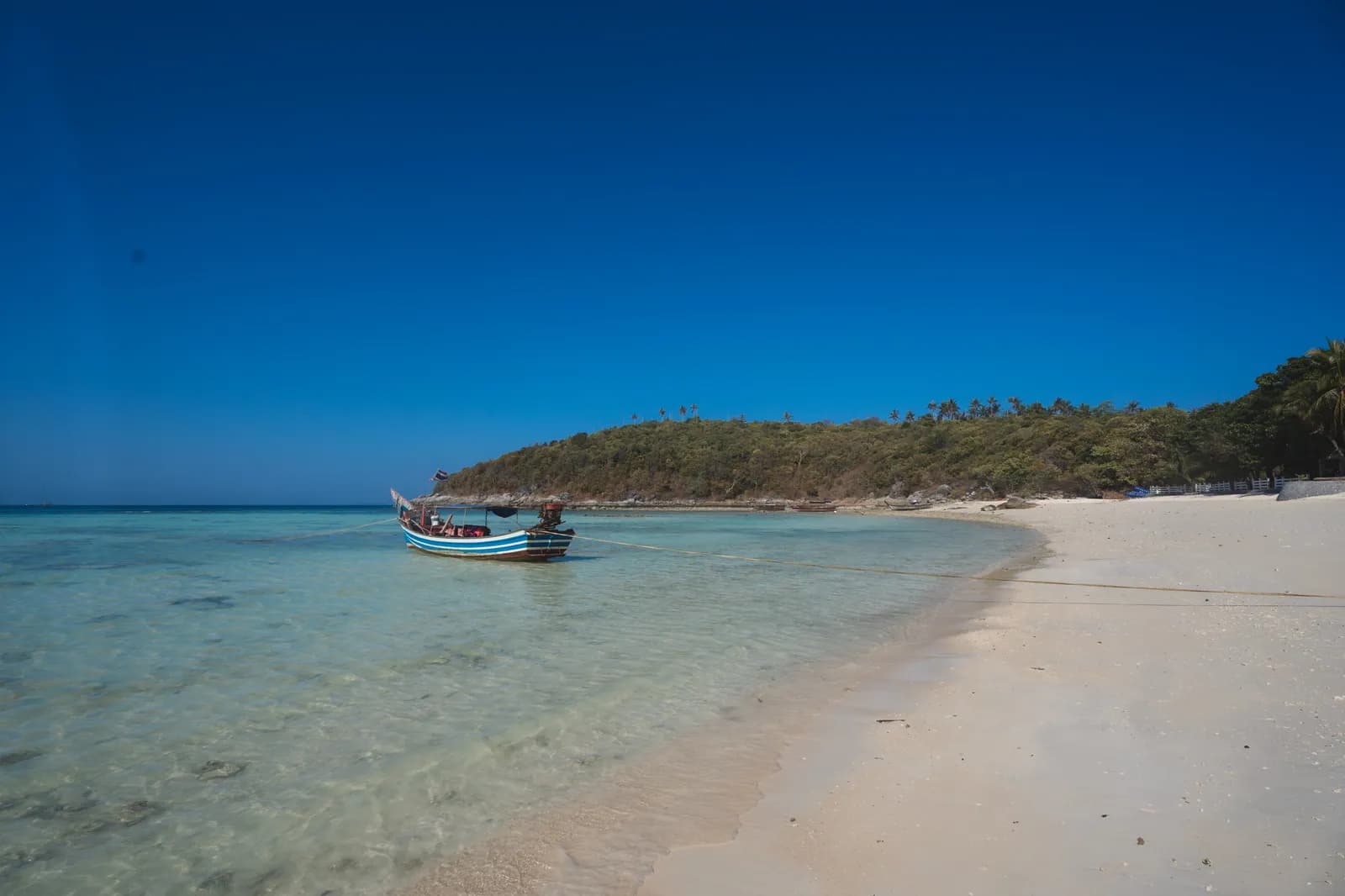
Phuket's Big Buddha overlooks Chalong Bay and is best visited late in the day. To finish on the Andaman Sea, I spent a few days on Koh Racha, an island about 30 to 45 minutes by speedboat south of Phuket, with white sand beaches and very clear water.
Chiang Mai, almost a month in the north
On 31 March I was in Chiang Mai, about 2 hours by direct flight from Phuket. I stayed until the end of April, with a side trip to Chiang Rai. It is the richest stop of the trip for anyone who loves temples, crafts and northern food.
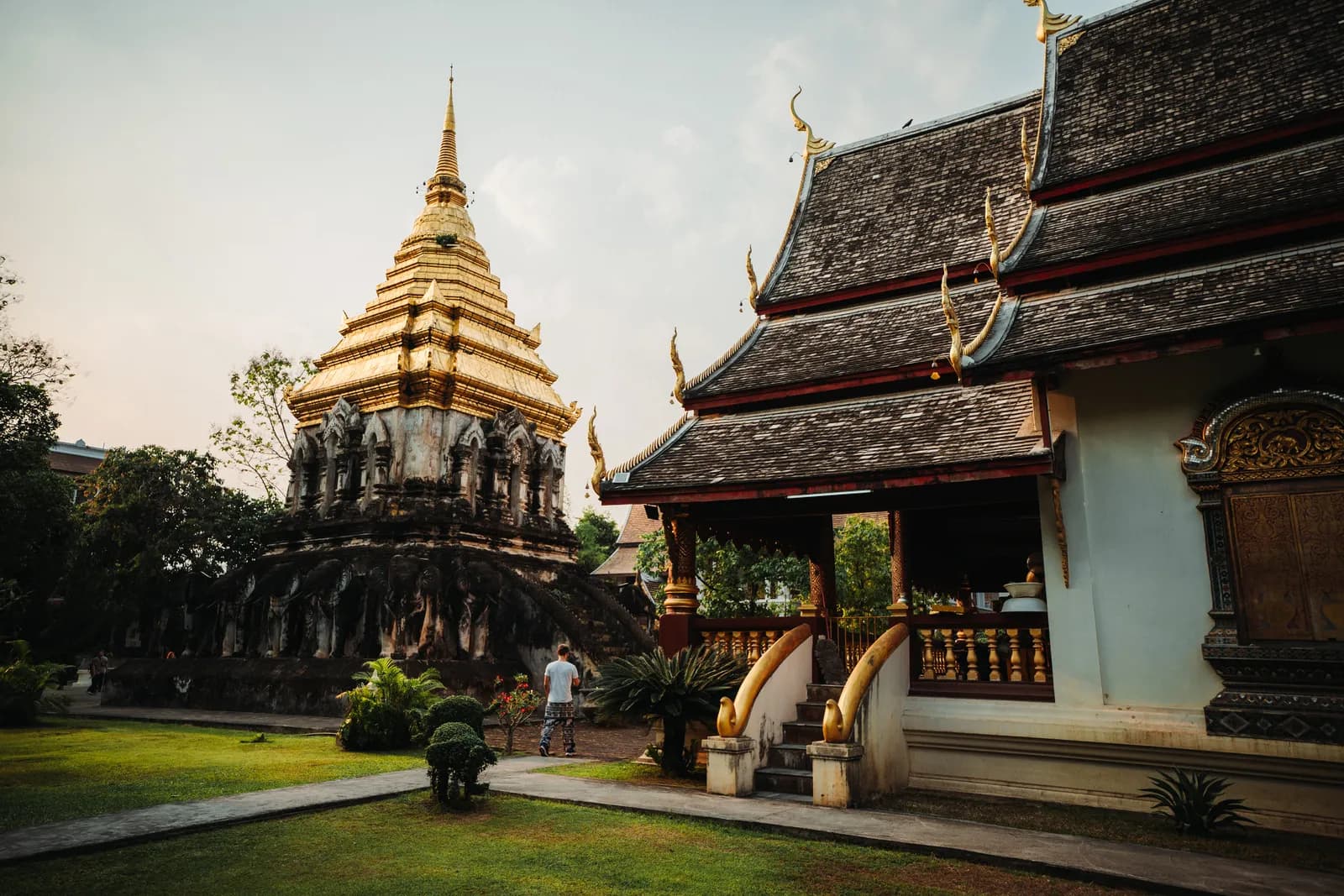
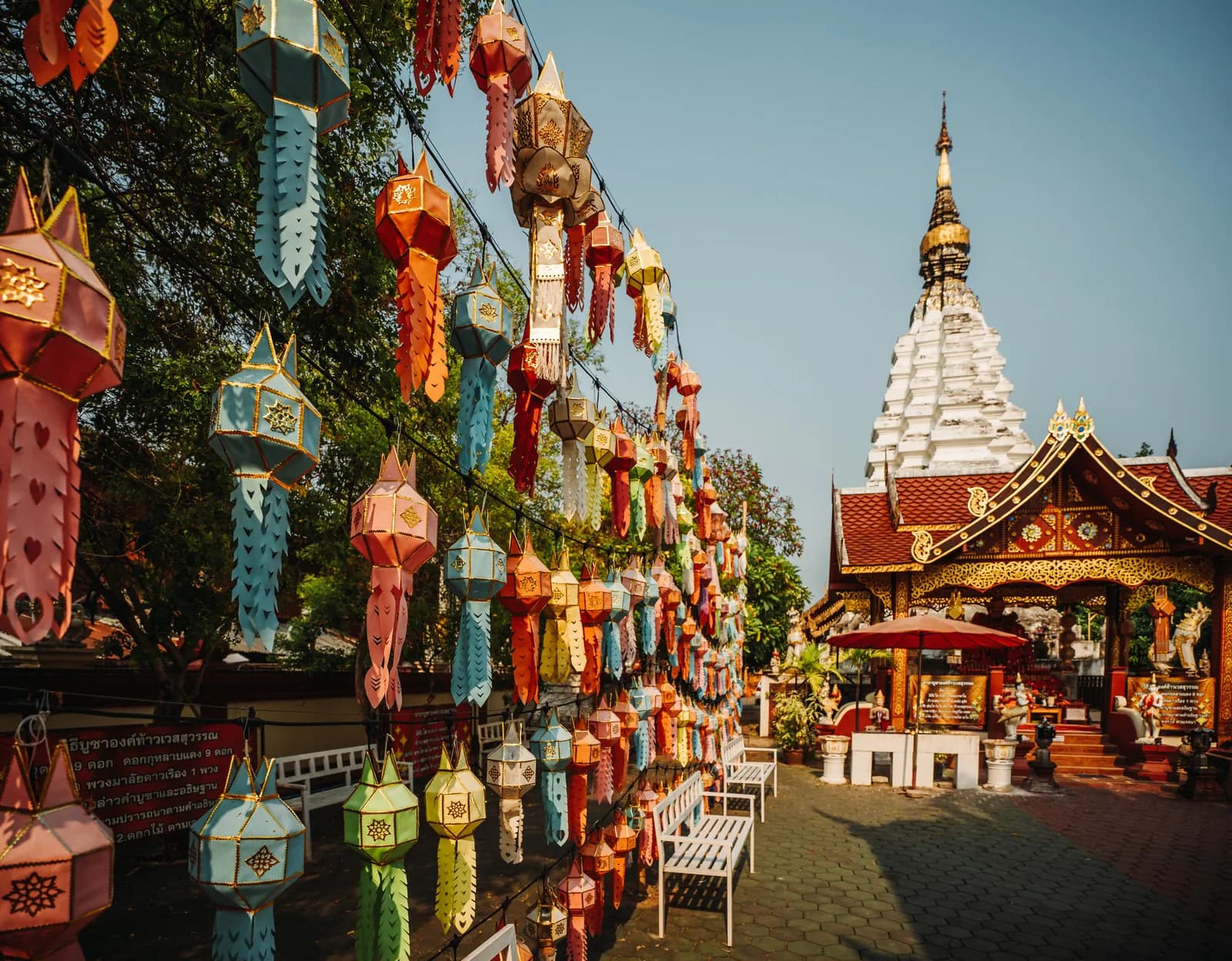
- The old town: Wat Chedi Luang and its huge ruined chedi, Wat Phra Singh, Wat Chiang Man, the teak Wat Phan Tao, the moat and Tha Phae Gate. On Sunday evenings, the Sunday Walking Street takes over Ratchadamnoen Road.
- Beyond the walls: Wat Sri Suphan, the silver temple, Wat Umong and its tunnels in the forest, Wat Suan Dok and its field of white chedis, the Nimman district and its garden cafés.
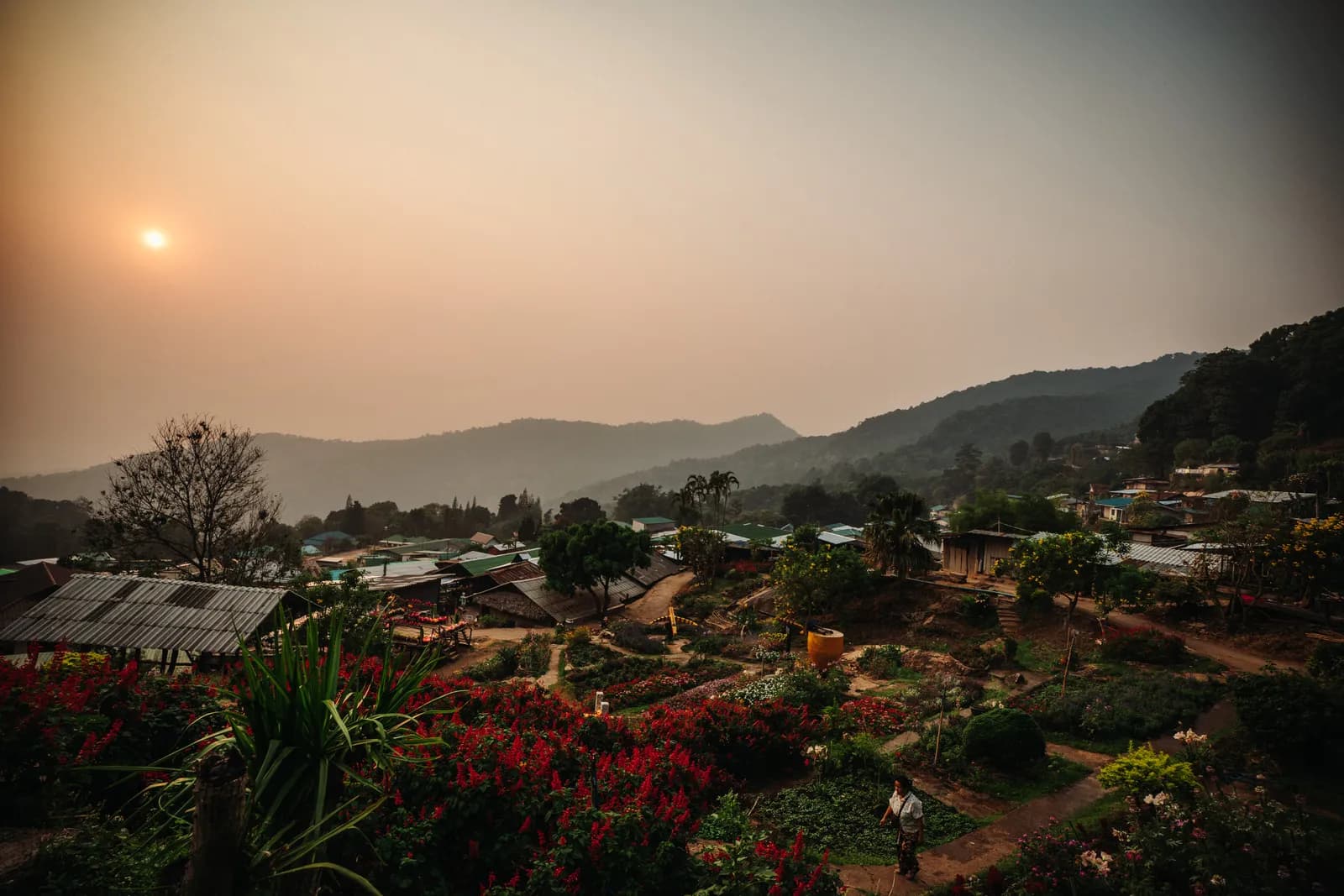
- The mountains: the Hmong village of Doi Pui and its flower gardens, Huay Kaew waterfall, an elephant sanctuary where you feed and walk with the animals without riding them.
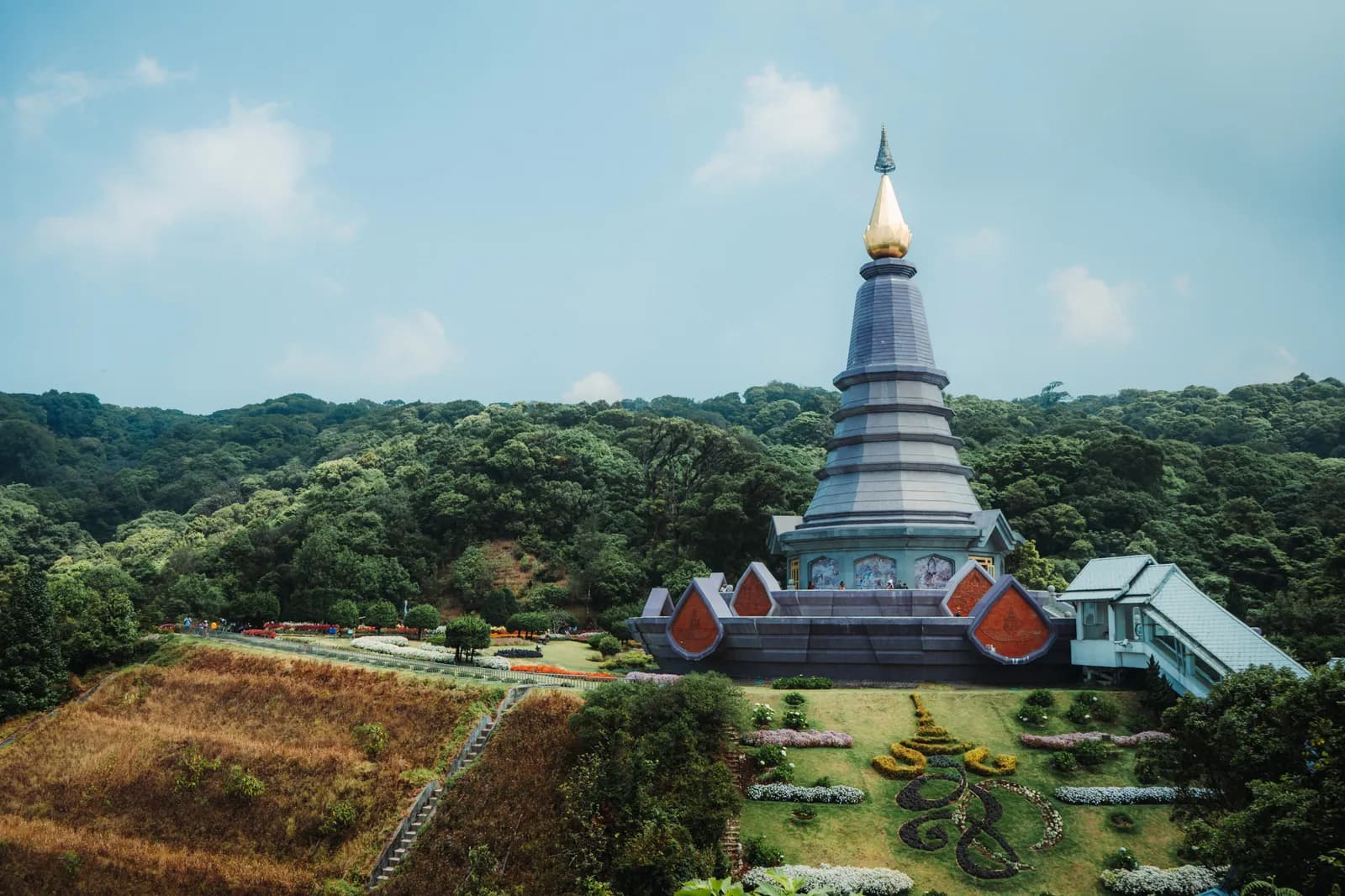
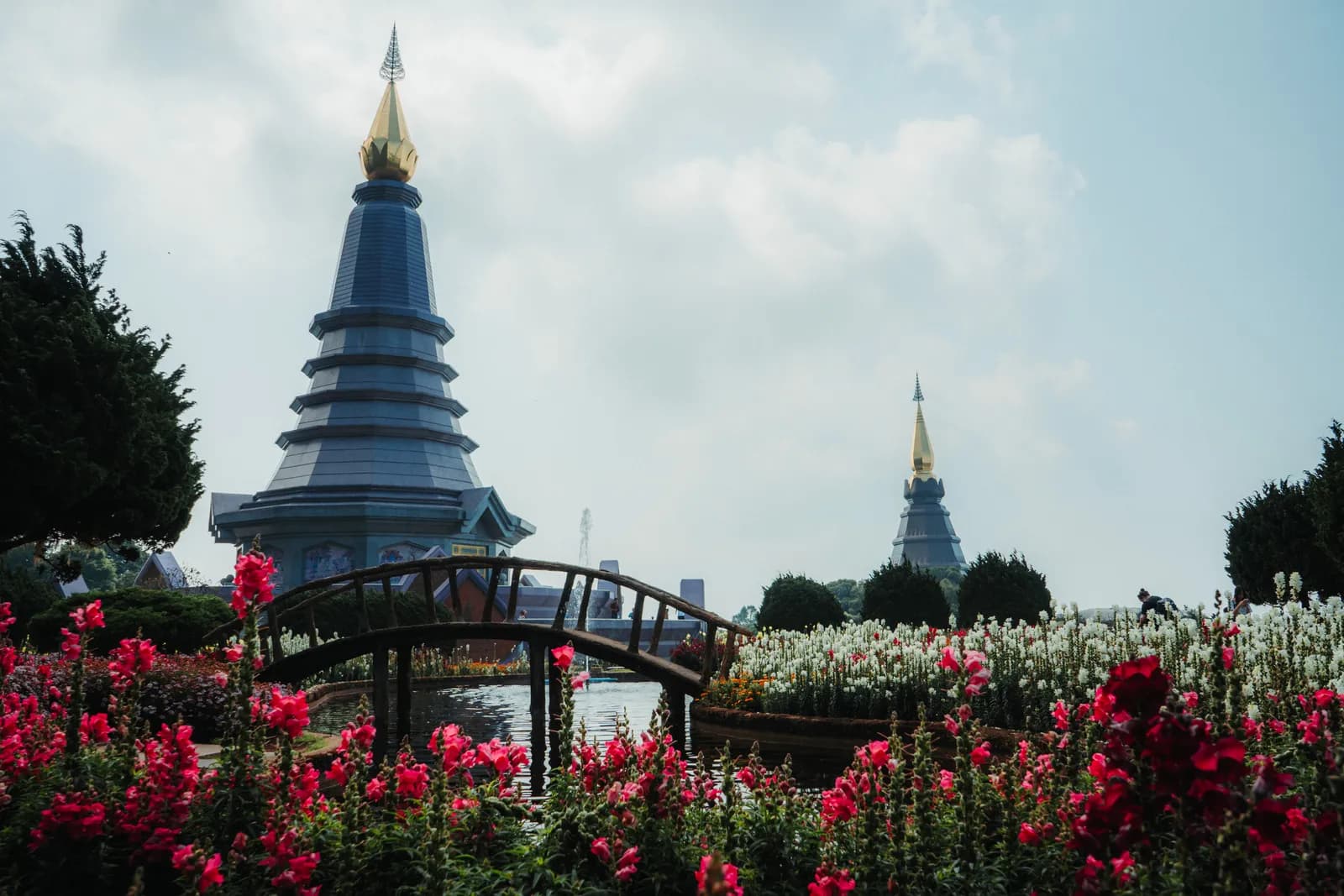
- Doi Inthanon: Thailand's highest point, at 2,565m, and its two royal chedis surrounded by gardens. Park entry is 300 baht, plus 100 baht for the chedis.
Photos : Pierre Bouyer
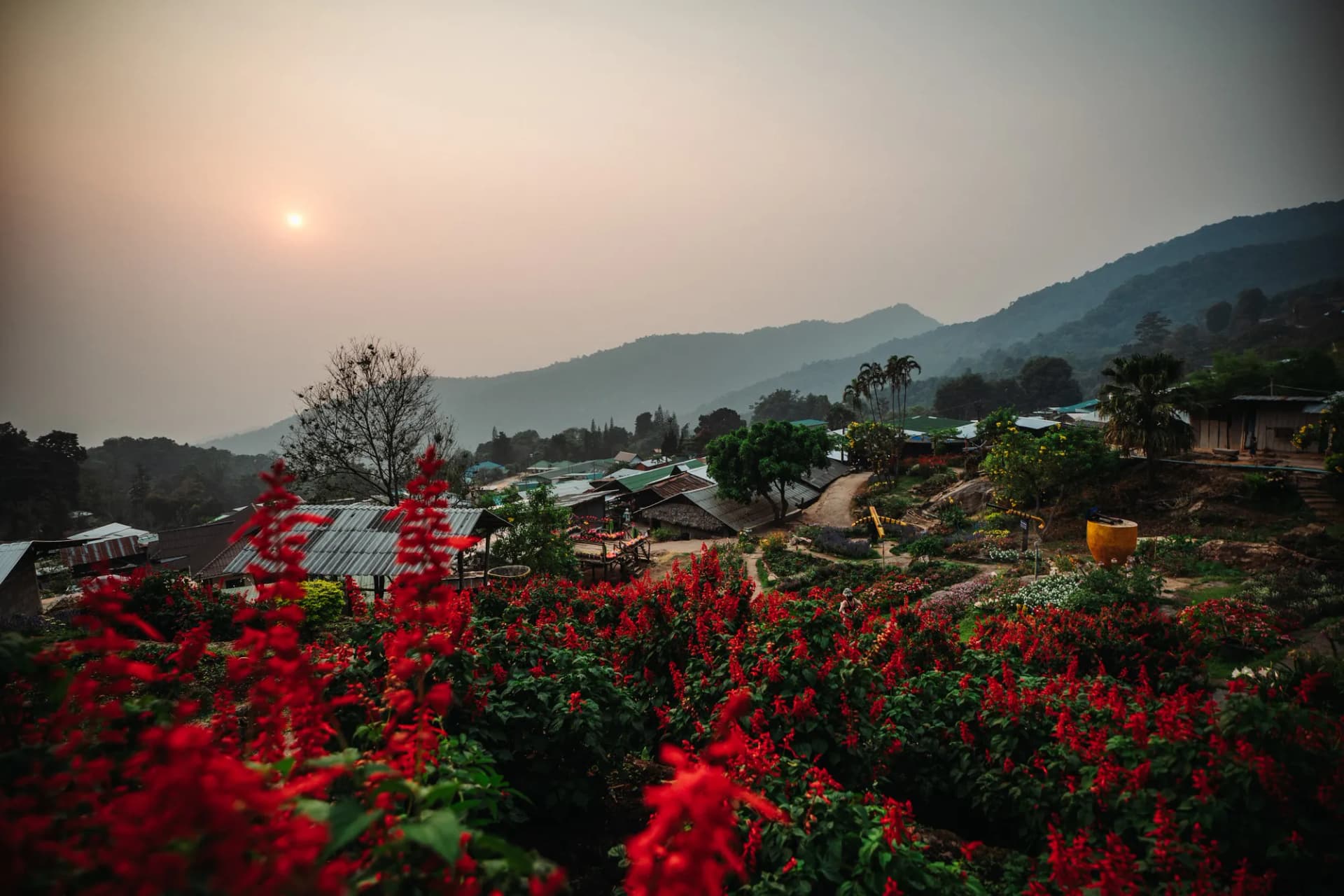
April in the north has two particular features. The first is Songkran, the Thai New Year from 13 to 15 April, which Chiang Mai celebrates for longer than the rest of the country, with giant water fights. The second is the burning season: in 2024, smoke covered the valley for much of the month, to the point that the city was ranked among the most polluted in the world for several days in a row. In my photos of Doi Pui and Doi Kham, the sun appears as an orange disc in a white sky. I have written a whole article on the burning season in Chiang Mai and the best time to visit the north.
Chiang Rai in two days
The Greenbus links Chiang Mai to Chiang Rai in 3 to 3.5 hours, with around a dozen departures a day from the Arcade terminal. Two days are enough for the essentials:
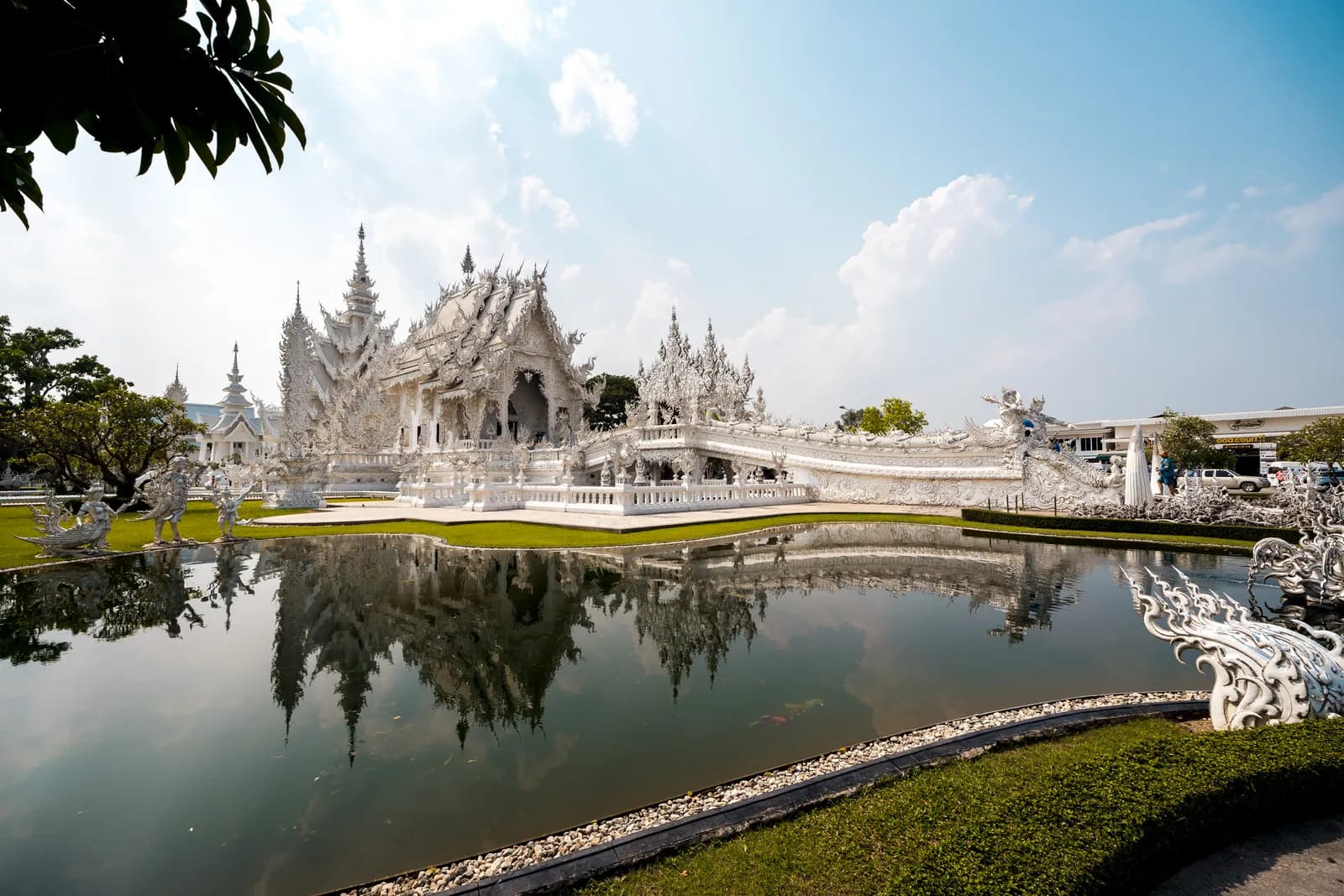
- Wat Rong Khun, the White Temple: the work of the artist Chalermchai Kositpipat, covered in mirrors and reflected in its pond. Entry went up from 100 baht in 2024 to 200 baht from 1 January 2026.
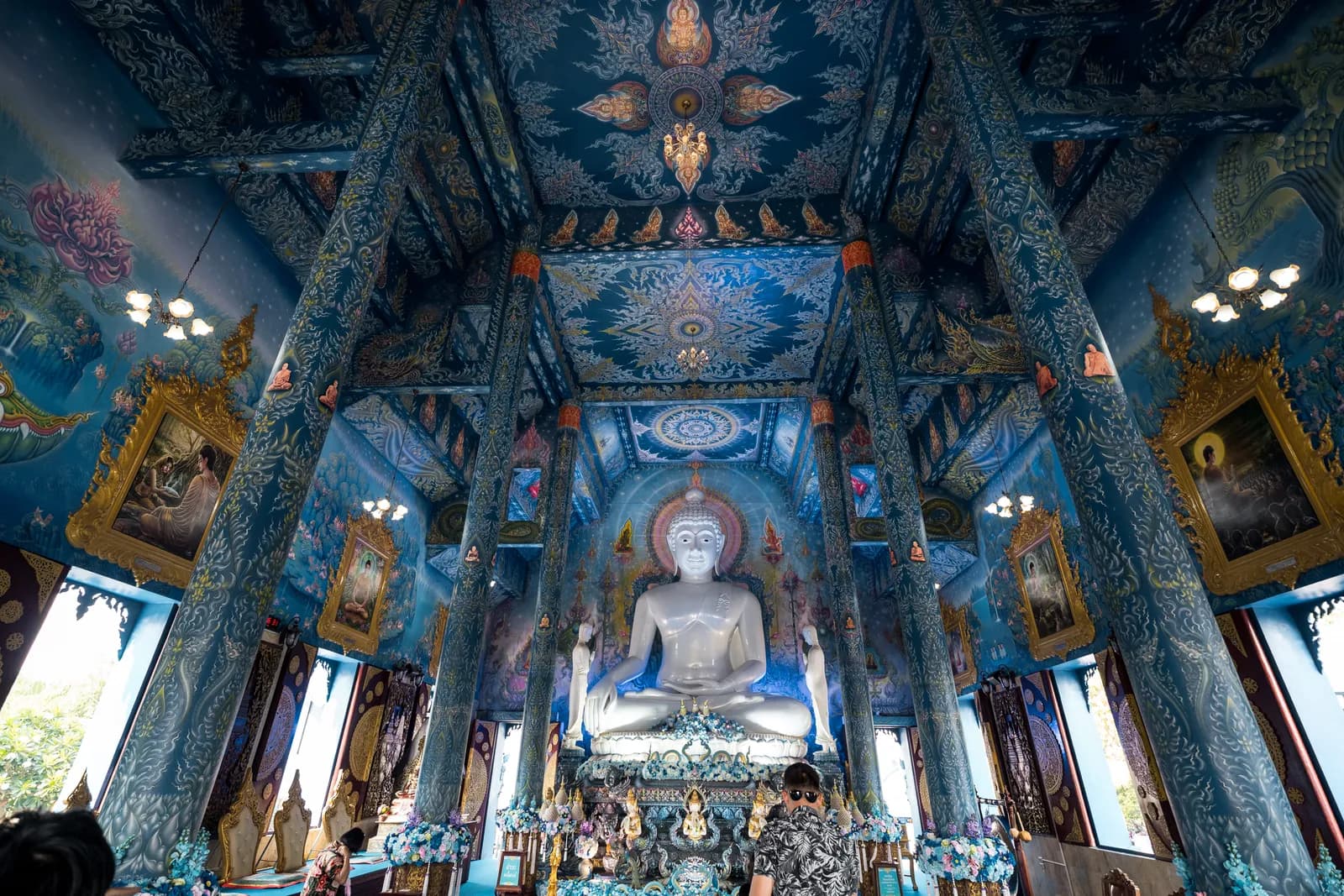
- Wat Rong Suea Ten, the Blue Temple: a midnight blue and gold interior around a white Buddha, one of the most photogenic in the country.
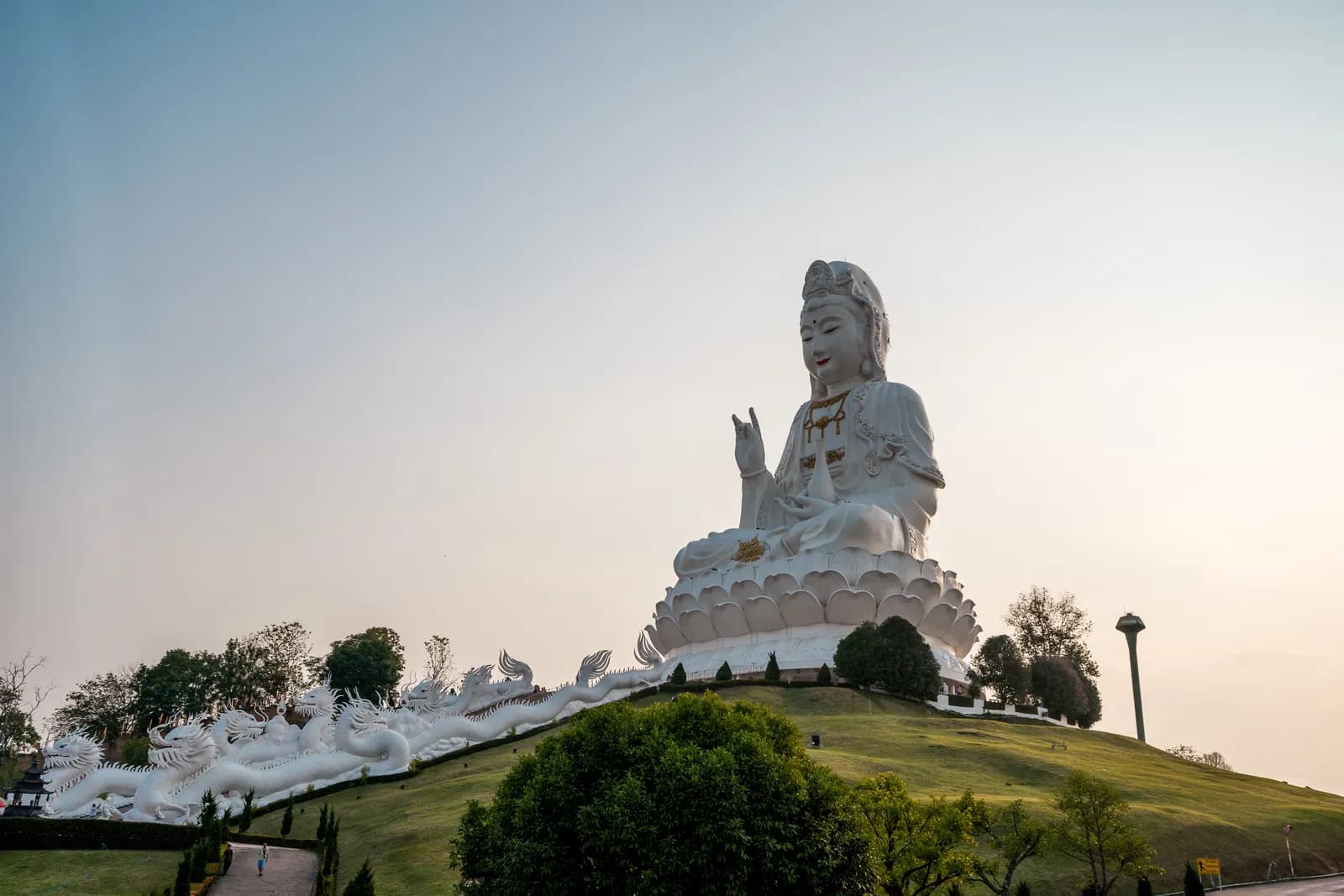
- Wat Huay Pla Kang: a huge Guanyin statue and a nine-storey pagoda guarded by dragons, superb at sunset.
- Singha Park: tea plantations, a lake, giraffes and zebras, best explored by bike.
Photos : Pierre Bouyer
Back in Chiang Mai, I spent one more day on the hill of Wat Phra That Doi Kham, with its great seated Buddha and view over the city, just above Royal Park Rajapruek and its gardens.
Bangkok to finish
Between Chiang Mai and Bangkok there are two options: the plane, about a 1 hour 15 minute flight, or the night train, about 12.5 hours to Krung Thep Aphiwat station, with second-class sleepers at around 1,000 baht. I kept Bangkok for the end: after three months of beaches and mountains, the capital makes a final, very packed stop, and a practical one before the flight home.
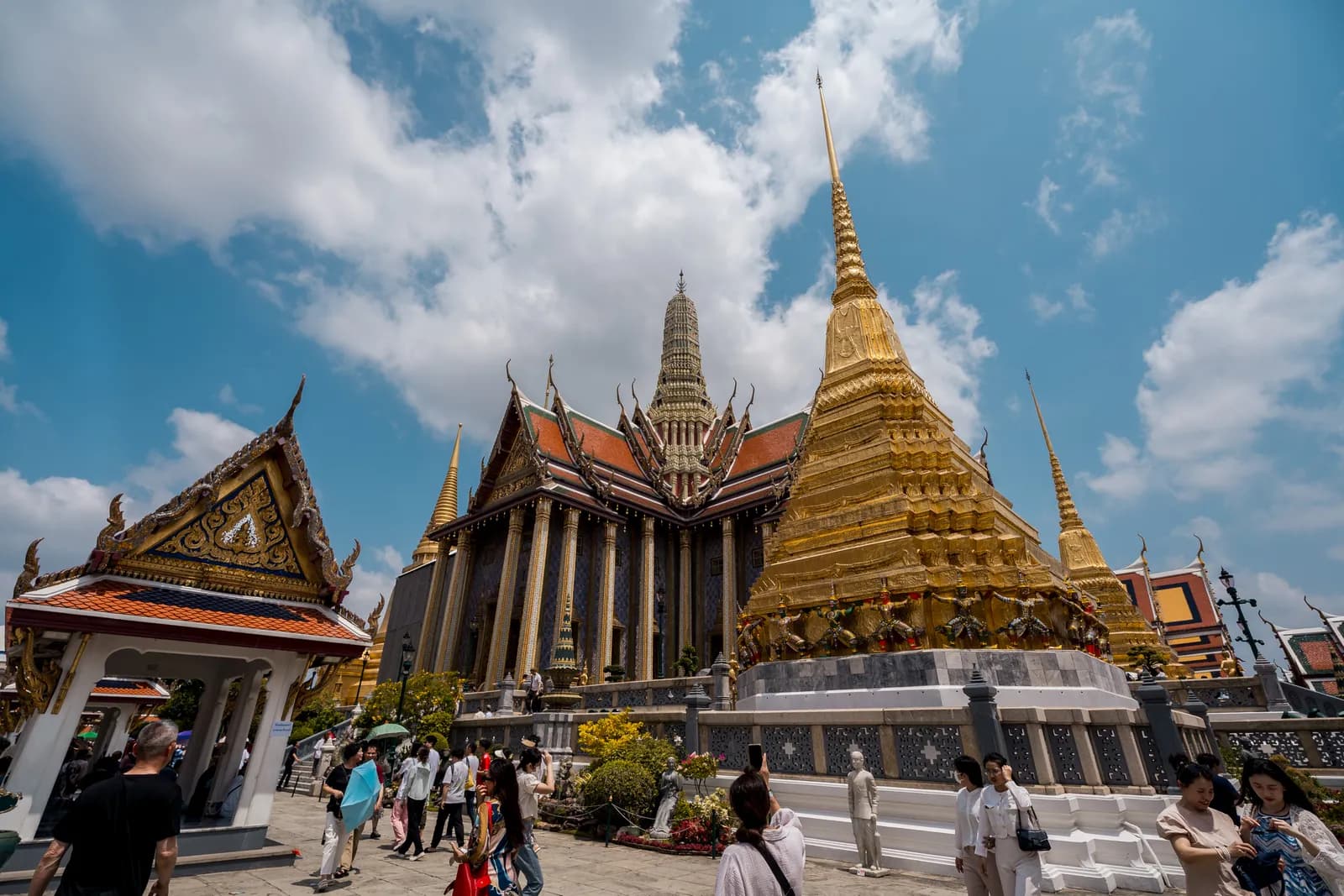
- The Grand Palace and Wat Phra Kaew: 500 baht, ticket office open from 8.30am to 3.30pm. Arrive at opening time.
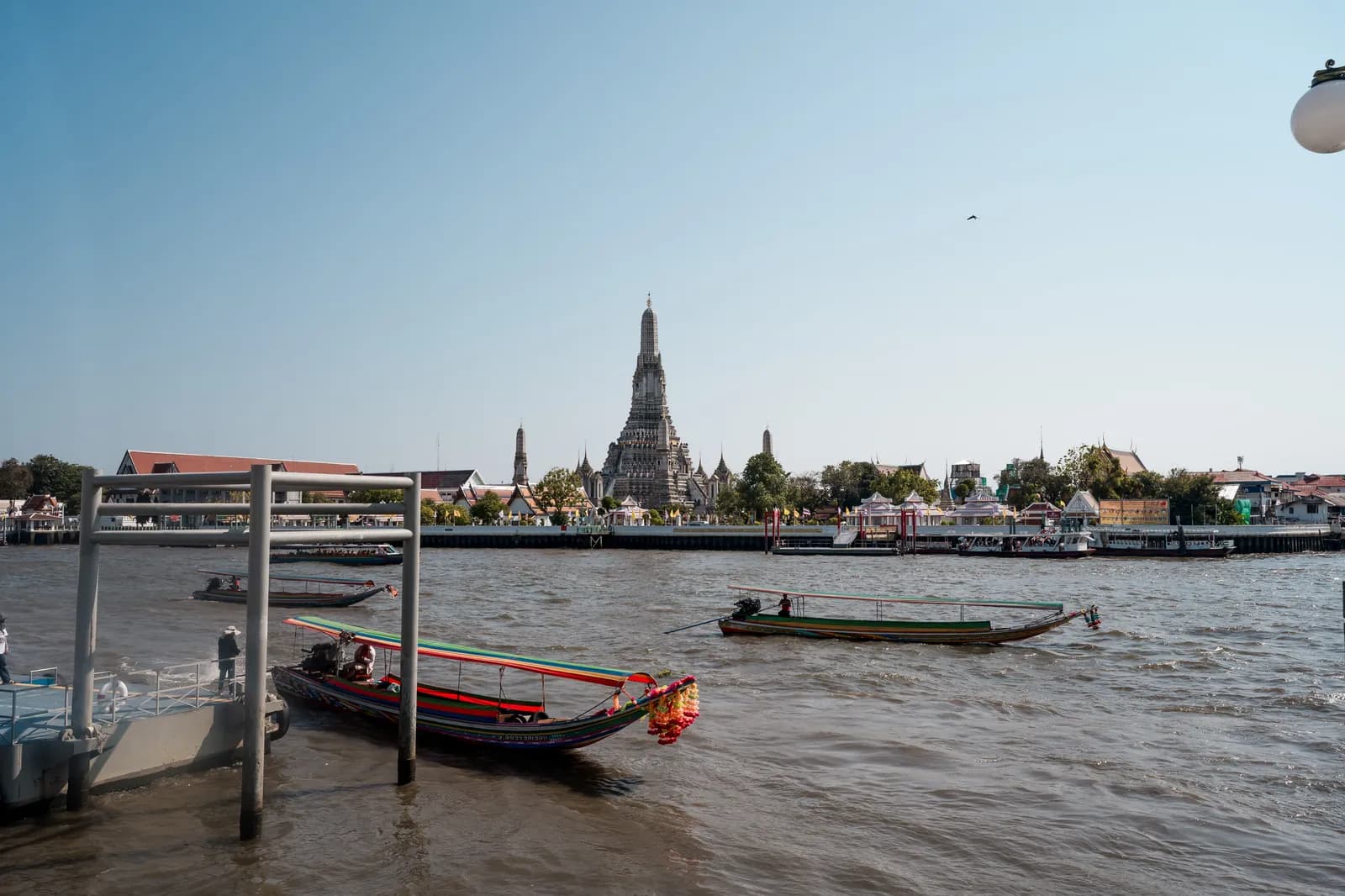
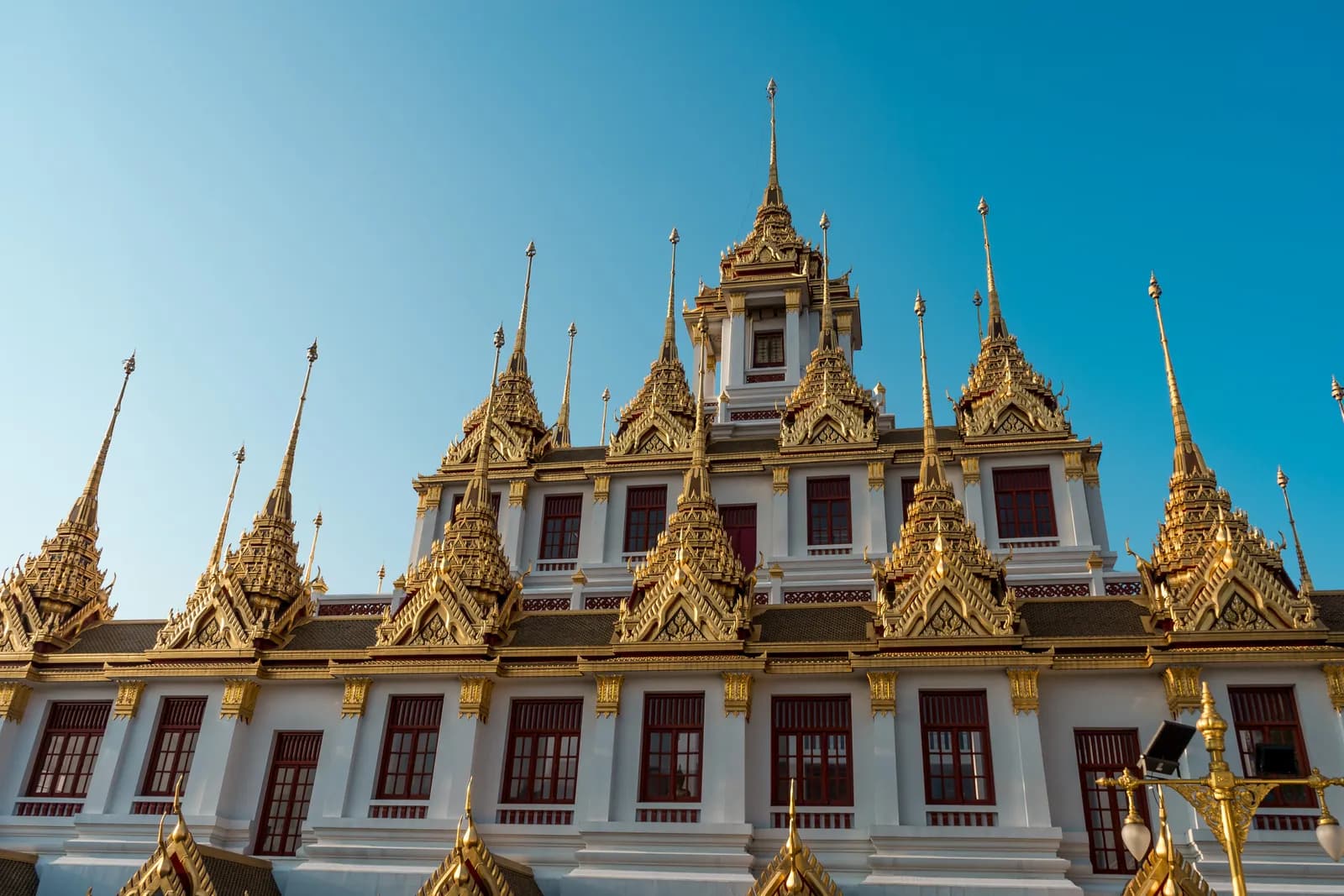
- Wat Pho and its Reclining Buddha, then Wat Arun on the opposite bank, reached by shuttle boat across the Chao Phraya. Prices have risen in recent years: allow about 300 baht for Wat Pho and 200 baht for Wat Arun.
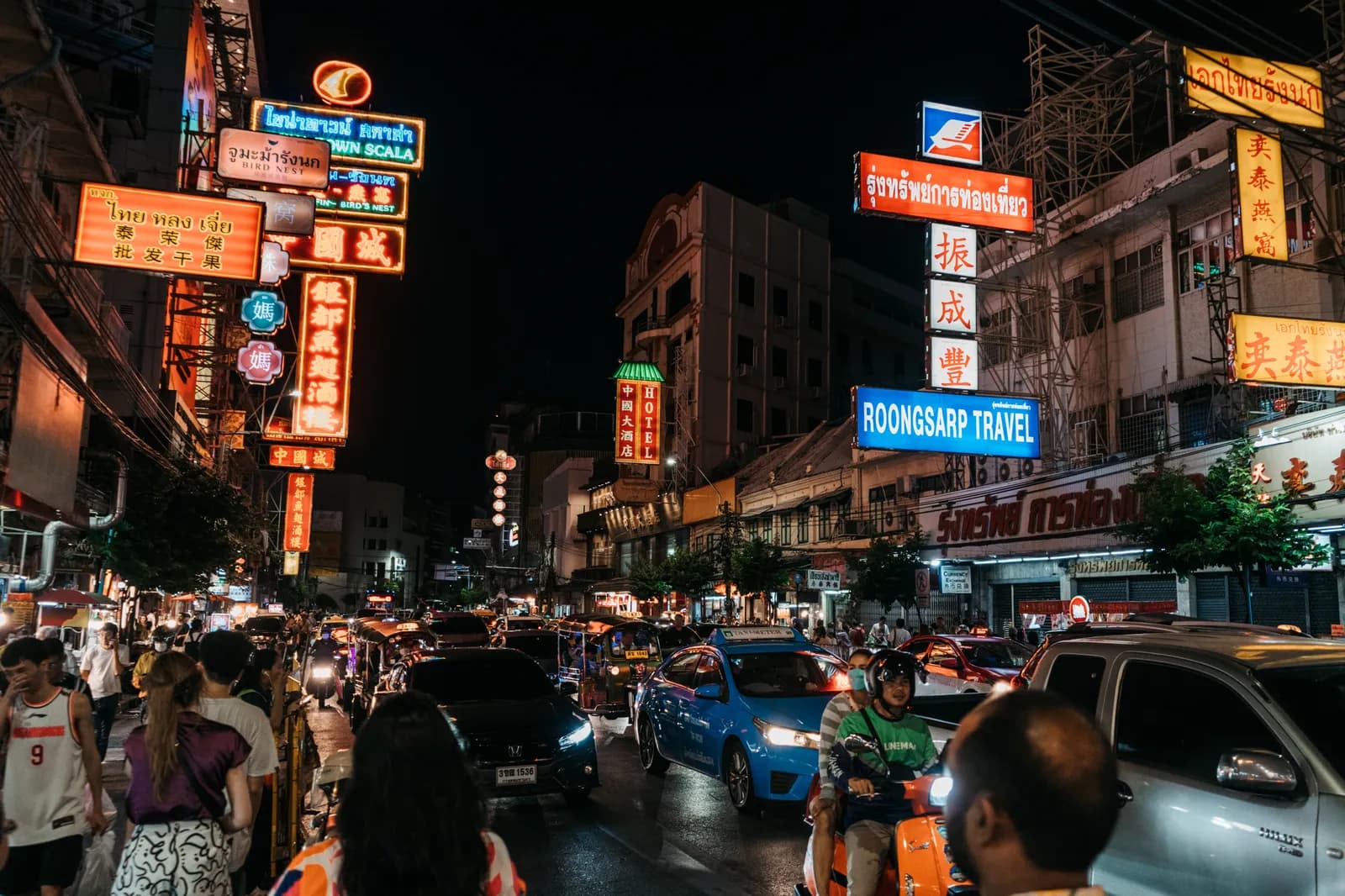
- Chinatown and Yaowarat Road, best seen at night for the neon signs and street food.
- The Golden Mount (Wat Saket), about 100 baht, for the best view over the old city, and the Loha Prasat right next door.
- Benjakitti Forest Park and Lumphini: walkways above the wetlands with the skyline as a backdrop, a breather between two temples.
Photos : Pierre Bouyer
What I would change today
Looking back, the order of my trip was right for the islands and wrong for the north. February and March are perfect in the Gulf and on the Andaman coast. But in April, Chiang Mai combines the end of the burning season with temperatures that often exceed 35°C, with 40°C recorded during Songkran 2024.
If I set off for three months again, I would start with the north in December or January, when the air is clean and the mornings are cool, then head down to the islands in February, March and April. If your dates are fixed from February to May like mine, at least swap the north and the south: Chiang Mai and Chiang Rai first, in early February, then the islands.
| Region | Best time | Avoid |
|---|---|---|
| North (Chiang Mai, Chiang Rai) | November to February | March and April (smoke, heat) |
| Andaman coast (Phuket, Lanta, Similan) | November to April | May to October (south-west monsoon) |
| Gulf (Samui, Phangan, Tao) | January to August | October to December (north-east monsoon) |
| Bangkok | November to February | March to May (very hot), rain from June to October |
The three-week version
If you only have three weeks, here is what I would keep from my route, in the recommended order for a departure between December and February.
| Days | Stop | Not to be missed |
|---|---|---|
| 1 to 3 | Bangkok | Grand Palace, Wat Pho, Wat Arun, Chinatown at night |
| 4 to 8 | Chiang Mai | Old town, Wat Sri Suphan, Doi Inthanon, Doi Pui |
| 9 and 10 | Chiang Rai | White Temple, Blue Temple, Wat Huay Pla Kang |
| 11 to 15 | Koh Phangan or Koh Tao | Haad Yao and Koh Ma, or John-Suwan and diving |
| 16 to 21 | Phuket and around | Old town, Similan Islands (October to May), Koh Racha |
Domestic flights are short and frequent: Bangkok, Chiang Mai, Koh Samui and Phuket are linked by direct flights, which makes this pace possible without spending your days in transit.
Entry formalities in 2026
The rules have changed a lot since my trip. In February 2024, French nationals entered visa-free for 30 days. The stay went up to 60 days in July 2024, then went back to 30 days on 15 September 2026, for tourism only. If you hold another passport, check the rules for your nationality.
- Extension: 30 extra days, once only, at an immigration office, for 1,900 baht. I explain the process in my article on extending your visa in Phuket (in French).
- A 3-month stay: 30 days plus a 30-day extension is not enough. You need a suitable visa before departure (a tourist visa through the e-Visa portal, or a DTV for long remote-working stays). The French foreign ministry describes repeated border runs as illegal, with a risk of being refused entry.
- TDAC arrival card: mandatory since 1 May 2025, free, to be filled in online within the three days before arrival.
For such a long trip, I also recommend travel insurance that covers medical care on the spot and repatriation: Thai private hospitals are excellent, but expensive.
Chapka Insurance
Travel with peace of mind with the best travel insurance
Stay covered in every situation with the best insurance for your next trip.
My articles to plan each stop
Three months in Thailand guarantees a country that changes face at every stop: the granite islands of the Gulf, the clear waters of the Andaman, the teak temples of the north, the sheer scale of Bangkok. To go further, find all my articles on Thailand, in particular my guides to Wat Chalong, Phuket's largest temple, and Rawai Beach, in the south of the island. To stay connected during the trip, my eSIM guide explains how to get mobile data as soon as you land.
Frequently asked questions
Not since 15 September 2026 for French nationals: the exemption is 30 days, extendable once by 30 days at an immigration office (1,900 baht). Beyond that you need a suitable visa before departure, such as a tourist visa through the e-Visa portal or a DTV for long stays. Check the rules for your own nationality.
If you travel between December and February, start with the north (Chiang Mai, Chiang Rai) while the air is clean and cool, then head down to the islands. The Gulf (Koh Samui, Koh Phangan, Koh Tao) stays pleasant until August, whereas the Andaman coast enters the monsoon from May.
From December to March, every region is dry. The north is ideal from November to February, the Andaman coast from November to April, the Gulf from January to August. March and April are still fine in the south, but the north is then smoky and very hot.
There is no direct link: allow for the road to Surat Thani and Donsak pier, then the Raja ferry to Thong Sala (about 2.5 hours, 290 baht). Lomprayah and travel agencies sell combined bus and boat tickets.
The Greenbus leaves from Chiang Mai's Arcade terminal, with around a dozen departures a day. The journey takes 3 to 3.5 hours and costs about 130 to 260 baht depending on the class.
No, the national park only opens from 15 October to 15 May. Foreign adults pay 500 baht, often collected by the tour operator, and visits are day trips only: overnight stays on the islands are no longer allowed.
Sources and fact-checkingInformation checked on 9 October 2026 · 10 sources consulted
- French Ministry for Europe and Foreign Affairs: Thailand latest updates (30-day exemption since 15/09/2026)
- Royal Thai Embassy: Thailand Digital Arrival Card (TDAC)
- Raja Ferry Port: Donsak, Koh Samui and Koh Phangan timetables and fares
- Lomprayah: Gulf island connections
- Thai National Parks: Mu Ko Similan
- Thai National Parks: Doi Inthanon
- TAT News: February 2024 festivals (Phuket Festival, 15 to 17 February)
- Khaosod English: the White Temple doubles its fee to 200 baht (November 2025)
- The Grand Palace, Bangkok: official website
- Pollution Control Department, Chiang Mai regional office: 2025 PM2.5 report (Thai)

Âme Bohème exists thanks to you
Some links in this article are affiliate links. This means that if you book or purchase a product through these links, we receive a small commission, at no extra cost to you. It's thanks to this support that we can continue creating free, quality content.
You can also buy us a coffee, or follow us on Instagram and Facebook.