Volcanic caldera, legendary sunsets and whitewashed villages
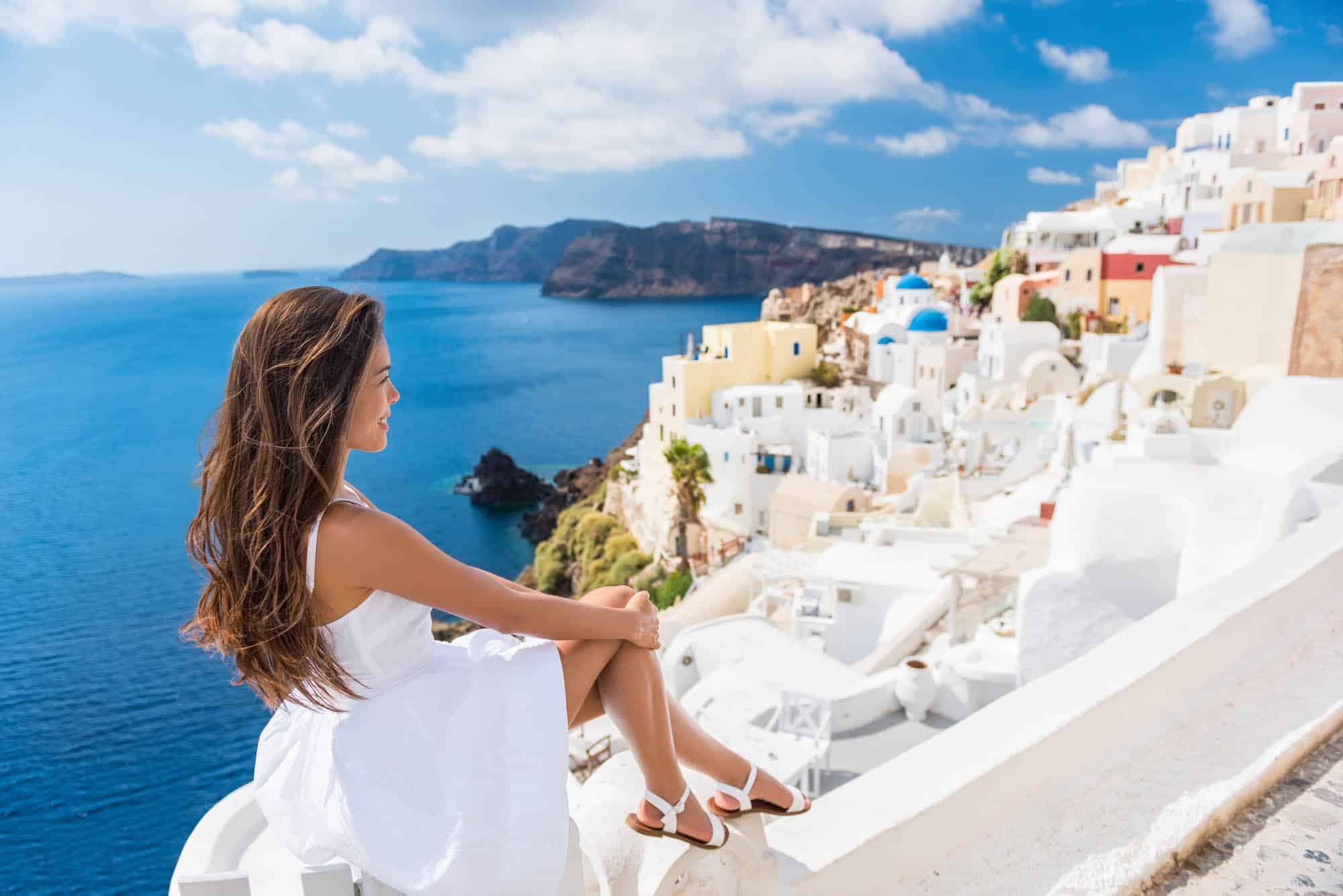
Perched on the cliffs of a volcanic caldera, Santorini captivates with its whitewashed villages, cobalt-domed churches and sunsets that have inspired poets for centuries.
Why Santorini?
Santorini captivates with its whitewashed villages perched on volcanic cliffs, legendary sunsets, turquoise caldera waters and a romantic atmosphere like nowhere else.
In september, the climate in Santorini is excellent. The weather is generally sunny, with maximum temperatures around 28°C and only 1 rainy day. The sea reaches 25°C. Tourist crowds are high.
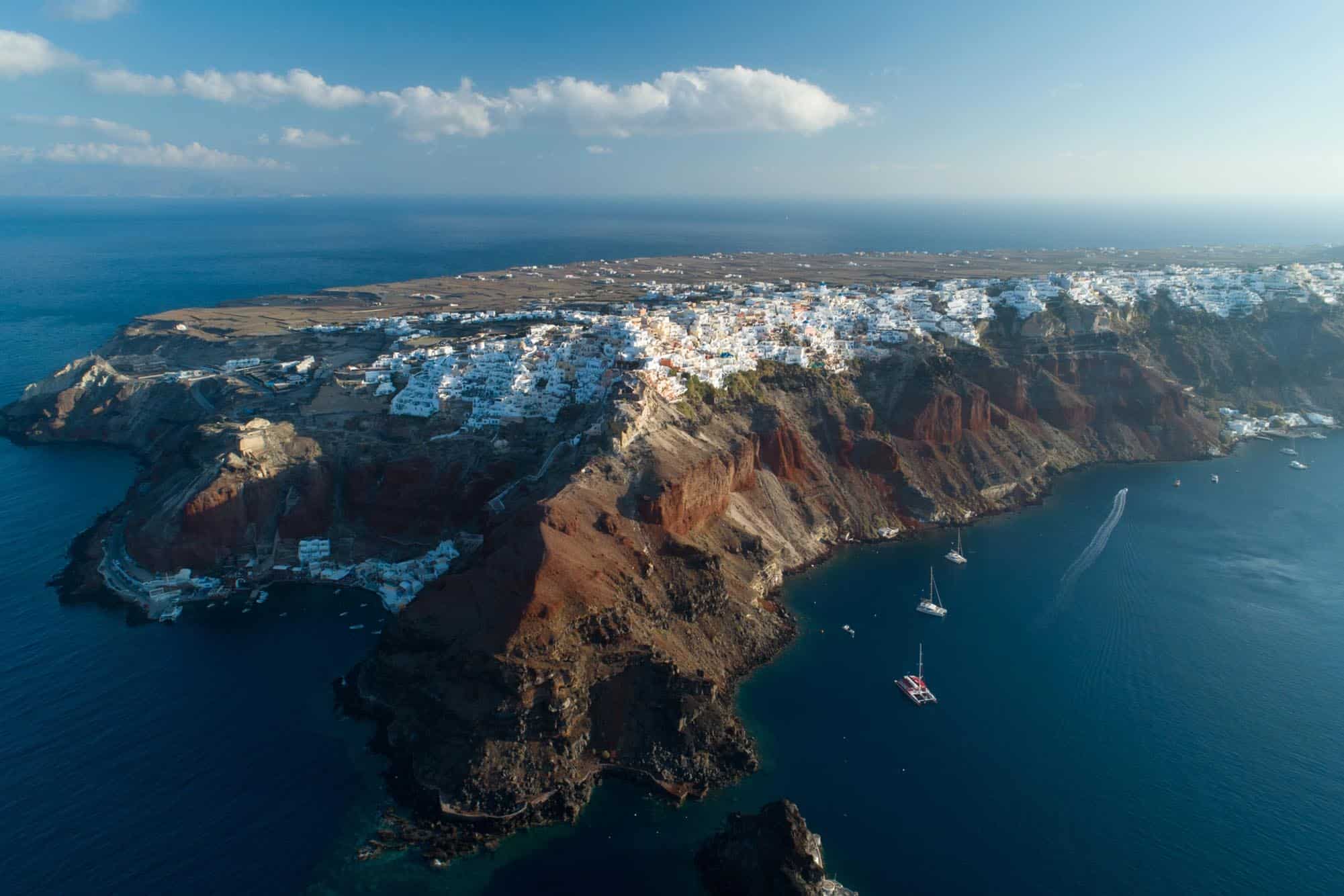
Santorini is arguably the most iconic island in the Mediterranean. Born from a cataclysmic volcanic eruption 3,600 years ago, this Cycladic island offers a unique geological spectacle: a caldera semicircle plunging into a deep blue sea, crowned by white villages clinging to the cliffs. Every sunset in Santorini is an event, every alley a postcard, every terrace a lookout over infinity. The island enchants lovers and history and geology enthusiasts alike.
Beyond the clichés, Santorini surprises with the richness of its wine-growing terroir, its exceptional archaeological sites, and its surreal-colored beaches. From the sophistication of Oia to the authenticity of Pyrgos, from the crimson cliffs of Red Beach to the Assyrtiko vineyards, Santorini is a place to be savored slowly. Explore our experiences in Greece to round out your trip.
Oia, the most photographed village in Santorini
02Oia and Fira, the iconic villages of Santorini
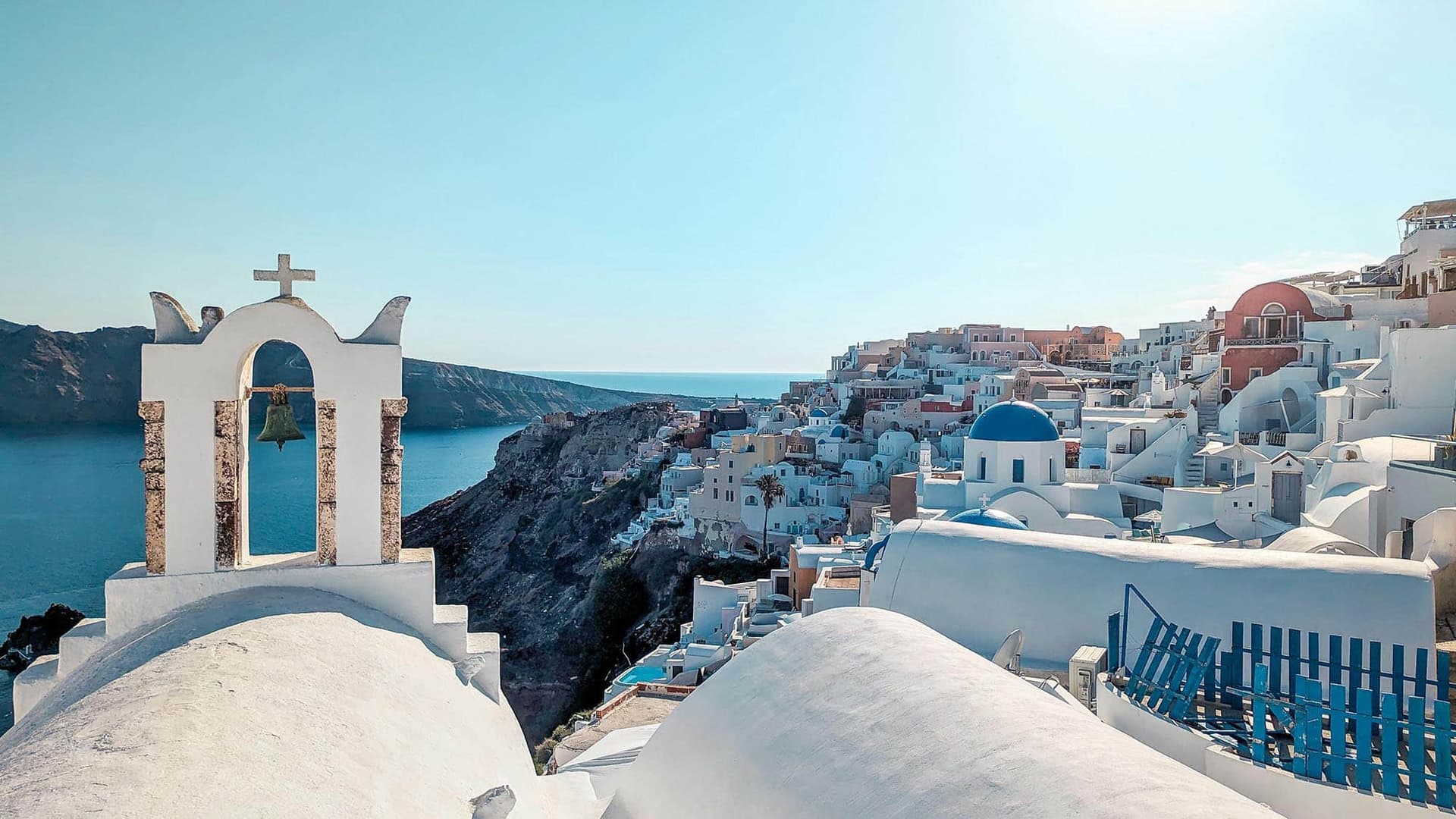
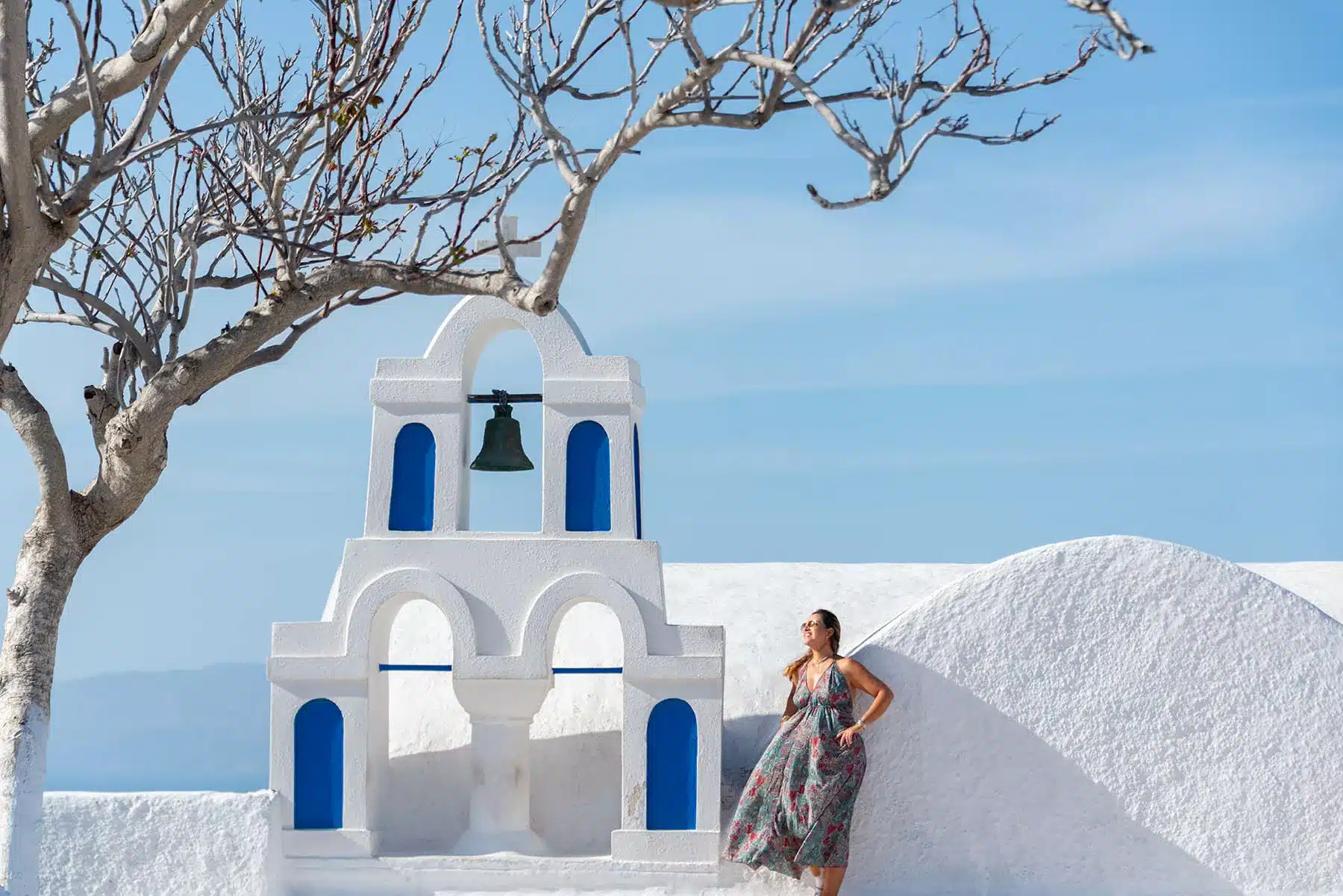
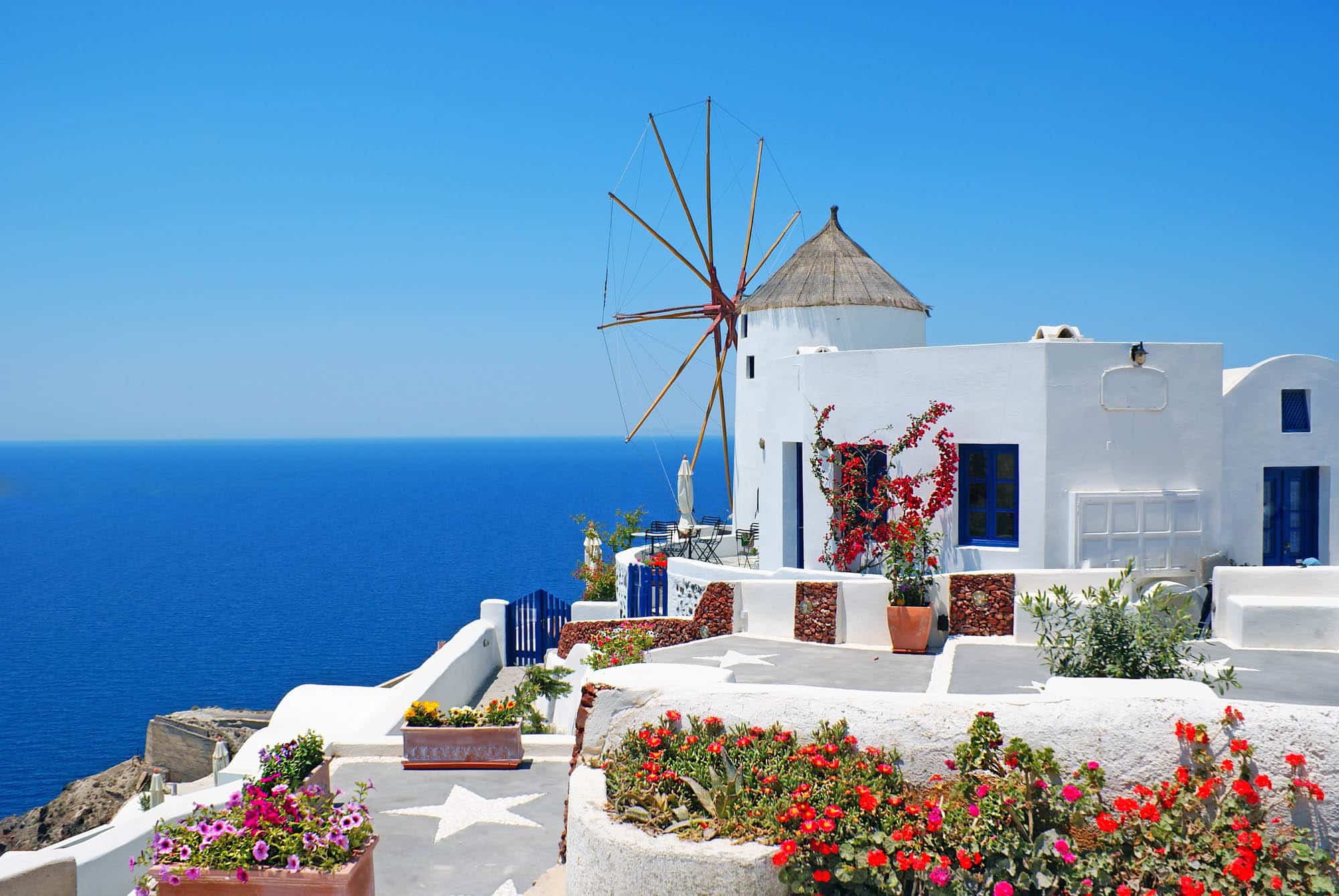
Oia is the most famous village in Santorini, perched at the northern tip of the caldera. Its white cave houses with blue domes, windmills, and winding staircases make it a dreamlike setting. The sunset from Oia Castle draws hundreds of spectators every evening — arrive early to find a spot. Fira, the capital, offers a livelier atmosphere with its museums (the Prehistoric Museum of Thera is a must), shops, and restaurants overlooking the caldera. The Fira-to-Oia hiking trail (9 km) is one of the most beautiful walks in the Mediterranean.
The legendary sunset of Oia over the caldera
03The unique beaches of Santorini
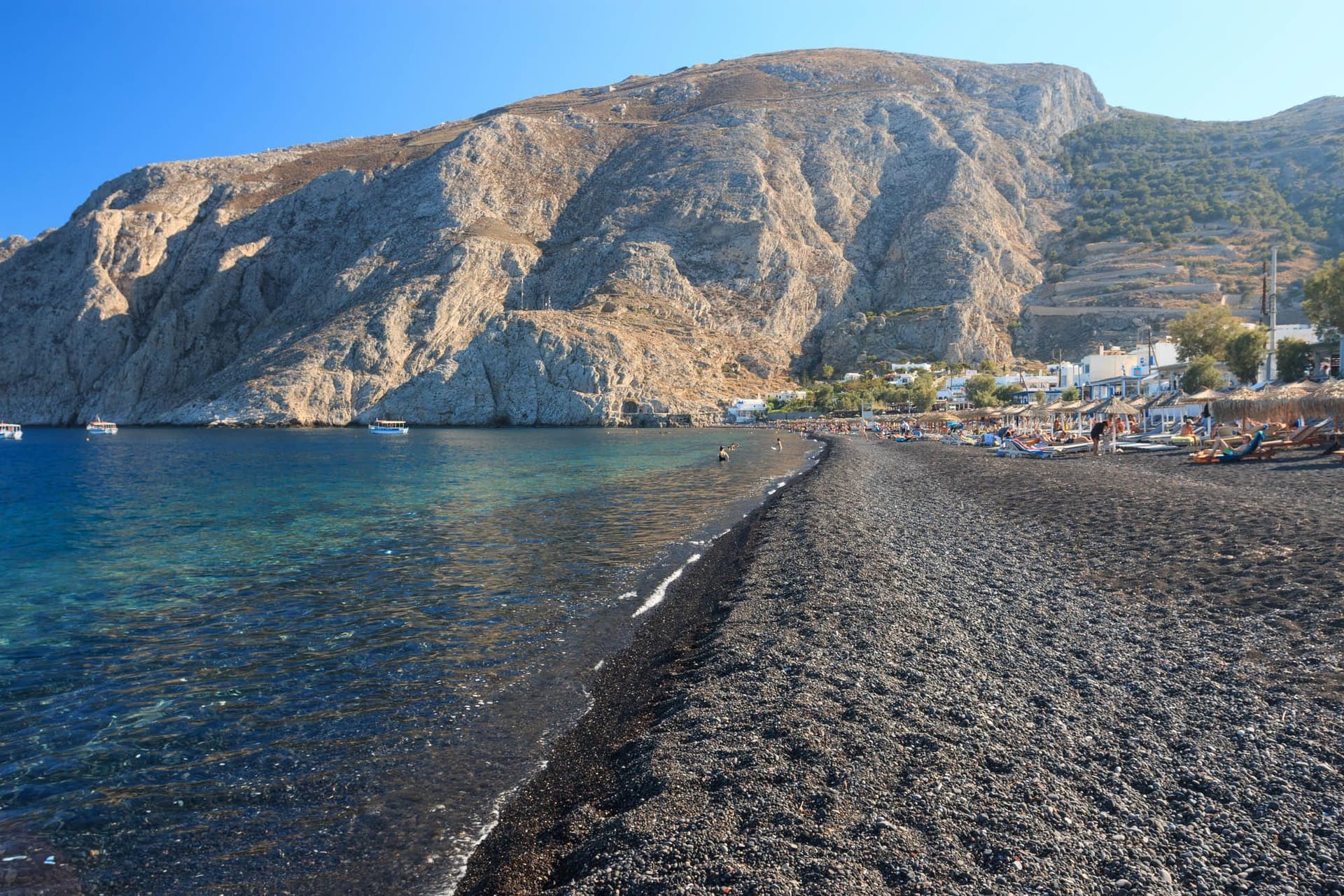
Santorini's beaches are volcanic in origin and display colors found nowhere else on earth. Red Beach (Kokkini Paralia) is the most spectacular: blood-red lava cliffs tower over a small cove of red and black pebbles. Perissa and Perivolos offer long stretches of black volcanic sand lined with beach bars. Kamari, more family-friendly, is well-organized with sunbeds and tavernas. White Beach, accessible only by boat from Red Beach, impresses with its white pumice cliffs.
Visit Red Beach early in the morning or late in the afternoon to avoid the crowds. Note: access via the coastal path is sometimes closed due to the risk of rockfall — check before you go.
04The volcanic history of Santorini
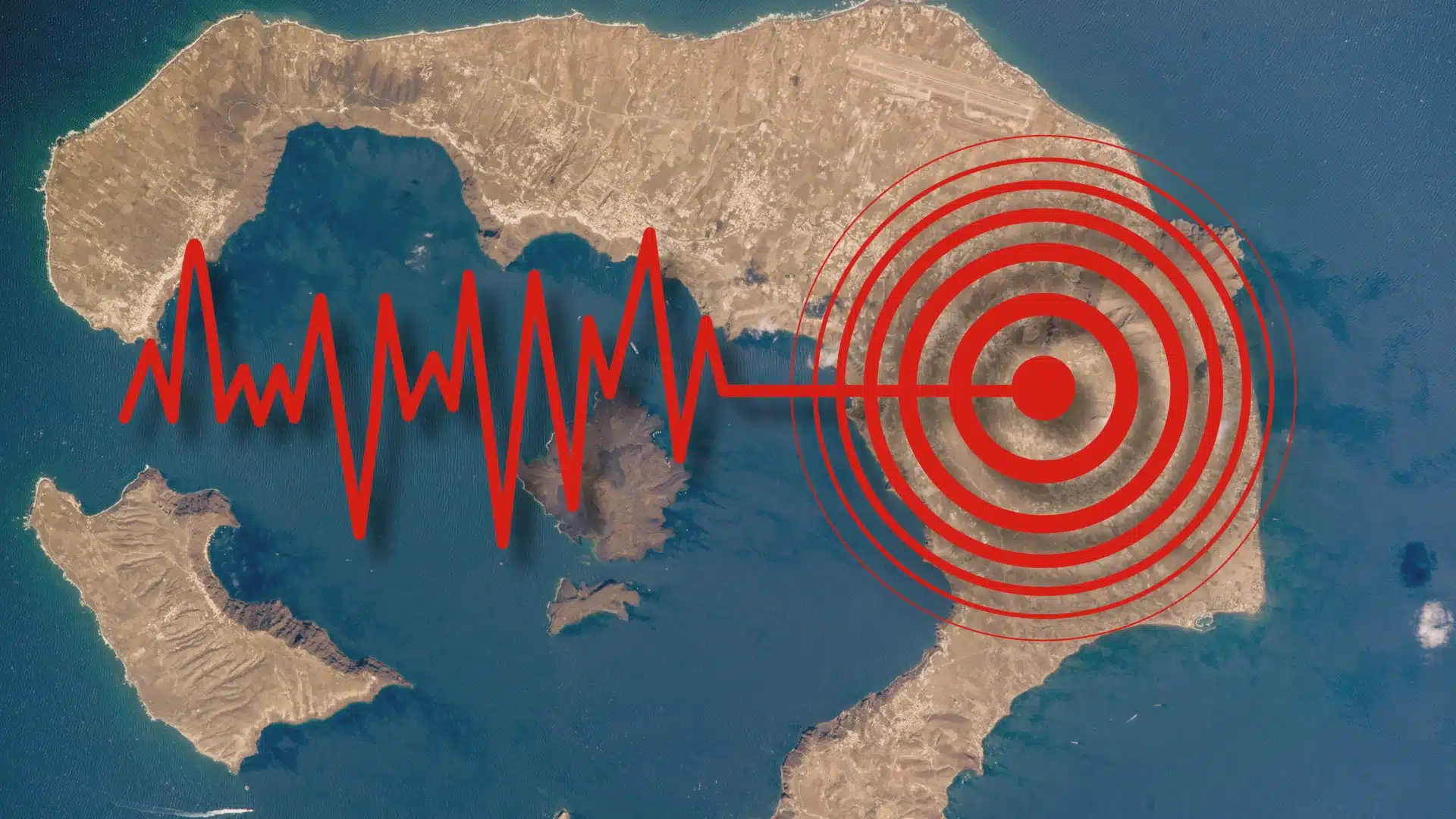
Santorini owes its current shape to the Minoan eruption of around 1600 BC, one of the most violent in human history. This catastrophe destroyed the flourishing Minoan civilization and may have inspired the myth of Atlantis. The archaeological site of Akrotiri, the "Pompeii of the Aegean," reveals an entire city preserved under ash with remarkable frescoes. At the center of the caldera, the island of Nea Kameni lets you walk on a still-active volcano — the fumaroles and the heat underfoot are a reminder that Santorini is a dormant volcano, not an extinct one.
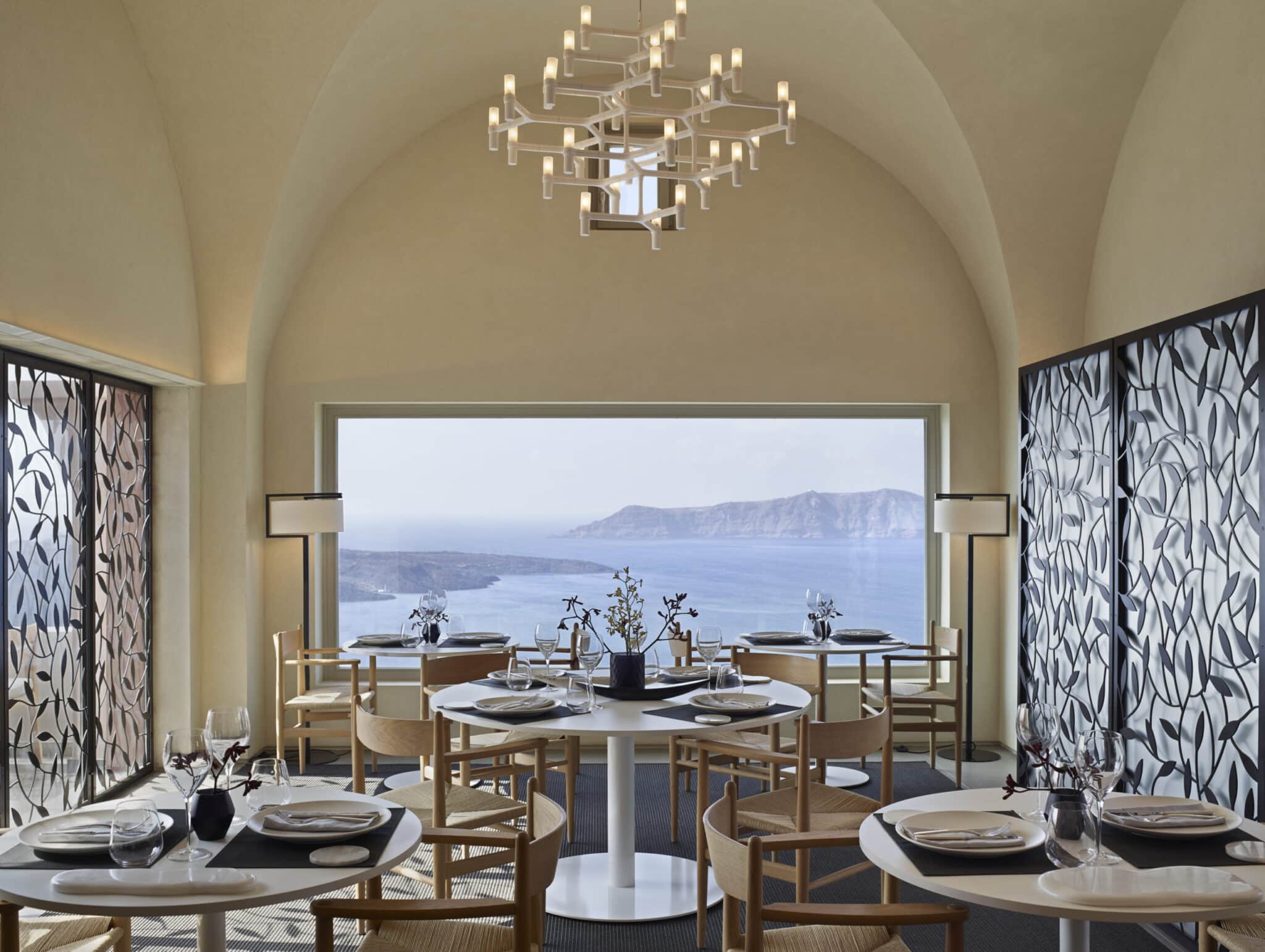
The Santorini caldera, born from a cataclysmic eruption
05Food and wine in Santorini
Santorini is a land of flavors. Its volcanic soil and dry climate produce exceptional ingredients: intensely flavored miniature cherry tomatoes (fava), wild capers, white eggplants, and the famous chloro tyri cheese. Santorini's vineyards, among the oldest in the world, produce Assyrtiko, a dry, mineral, and crisp white wine that pairs perfectly with seafood. The vines are pruned into crown shapes (kouloura) to withstand the wind. Visit the Santo Wines or Venetsanos estates for a tasting with caldera views.
Fava — Yellow split pea purée, the island's signature dish
Assyrtiko — Dry volcanic white wine, mineral and complex
Vinsanto — Sweet straw wine, perfect as a dessert or aperitif
06The authentic villages of Santorini
Away from the crowds of Oia and Fira, Santorini hides authentic villages well worth a visit. Pyrgos, the island's former capital, is a fortified medieval village with labyrinthine alleys and a 360° view from the kasteli. Emporio retains its Venetian towers and timeless atmosphere. Megalochori charms with its wine cellars and sea captains' houses. Imerovigli, the "balcony of the Aegean," offers the finest caldera panoramas with fewer crowds than Oia.
Pyrgos, a medieval village perched atop Santorini
07When to visit Santorini?
Santorini enjoys a dry Mediterranean climate with over 300 days of sunshine per year. Peak season (July–August) is very crowded and prices skyrocket. The best times to visit are May–June and September–October: gorgeous weather (25–28°C / 77–82°F), swimmable seas, reasonable prices, and fewer crowds. April is pleasant for hiking but the sea is still cool. In winter (November–March), many hotels and restaurants close, but the island reclaims a rare authenticity among its local residents.
Avoid cruise ship days (check the port call schedule): Fira and Oia are overrun by thousands of cruise passengers between 10 AM and 5 PM. In September, the golden light is perfect for photography.
08Budget and practical tips for Santorini
Santorini is one of the most expensive islands in Greece. Caldera-view hotels run 200–500 € per night in peak season. For a tighter budget, stay in Perissa or Kamari (50–100 €) and get around by local bus (1.80 €). Tavernas away from the tourist center offer meals for 12–20 €. The island is easy to explore by quad (20–30 €/day) or rental car (40–60 €). The ferry from Athens (Piraeus) takes 5 to 8 hours; a flight from Athens is just 45 minutes.
To escape the crowds, explore the south of the island. The Akrotiri Lighthouse offers a sunset just as stunning as Oia's, with no one around. The Trail 9 hike between the lighthouse and Kambia Beach crosses lunar landscapes. Thirassia, the island across the caldera, can be visited by boat and retains an unspoiled charm with its family-run tavernas. Dive in at Amoudi Bay (below Oia) to swim in warm volcanic waters. And to discover other sides of Greece, don't miss neighboring Crete, the largest Greek island.
10Practical information for Santorini
Santorini is part of the Cyclades, in the Aegean Sea. Santorini International Airport (JTR) receives direct flights from Paris in summer. The port of Athinios handles ferries from Piraeus, Crete, Mykonos, and other islands. Santorini is listed as a UNESCO World Heritage site for its archaeological treasures. The currency is the euro, and outlets are type C/F (standard European). English is very widely spoken in tourist areas.
The flower-lined alleys of Santorini, a picture-perfect setting
Âme Bohème exists thanks to you
Some links in this article are affiliate links. This means that if you book or purchase a product through these links, we receive a small commission — at no extra cost to you. It's thanks to this support that we can continue creating free, quality content.
You can also buy us a coffee, or follow us on Instagram and Facebook.
Thank you
Share
Comments
Share your thoughts
Leave a comment
Looking for more information for your trip? Book a personalised video call with us, or join the Curious Souls community on Discord.
Your email address will not be published. Required fields are marked with *