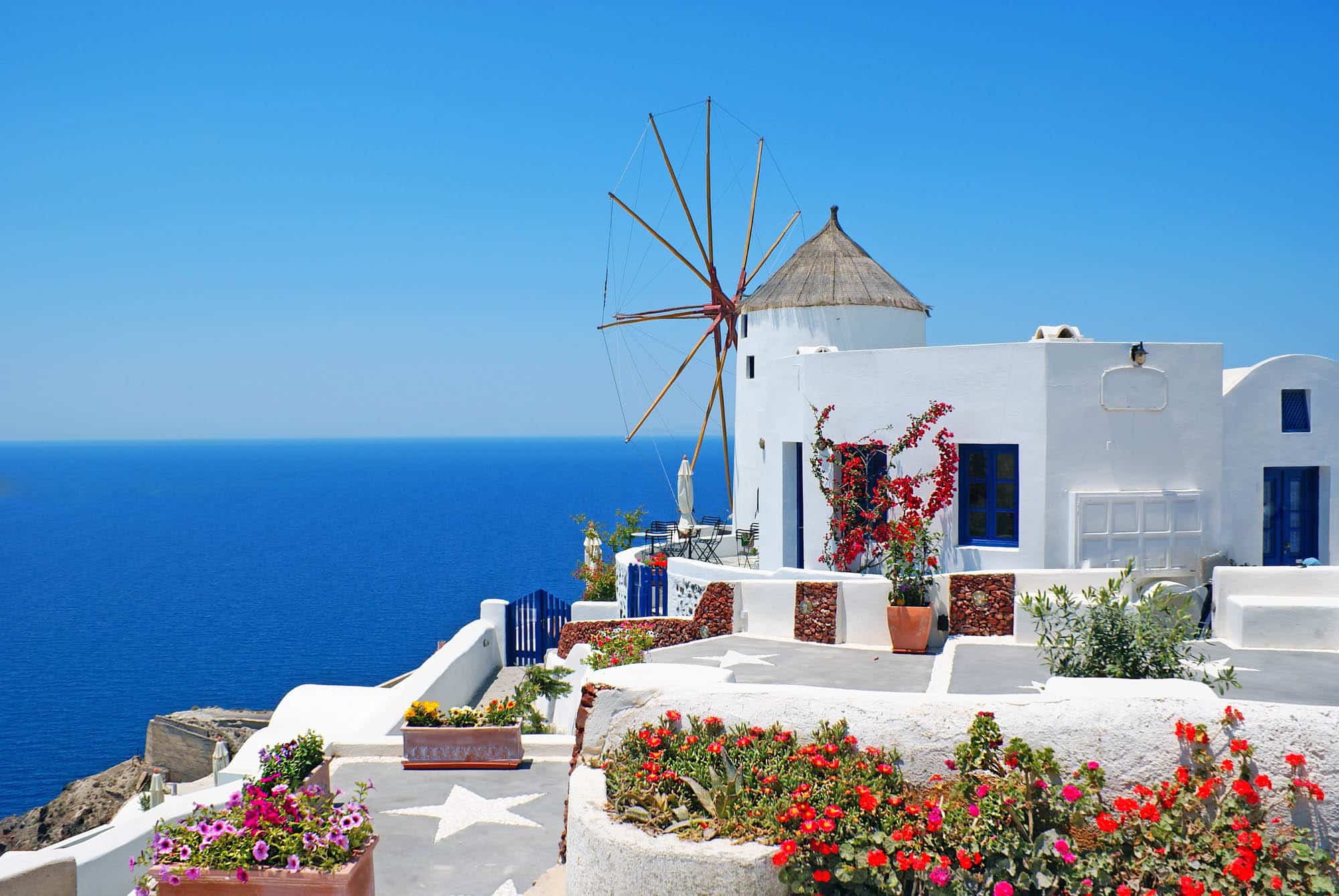

Have you ever stumbled upon photos of a sun-drenched island with white houses perched on cliffs and an endless blue sea in the background? You probably wondered: "Where is this paradise?" Well, this paradise is called Santorini, a true gem in the heart of the Aegean Sea.
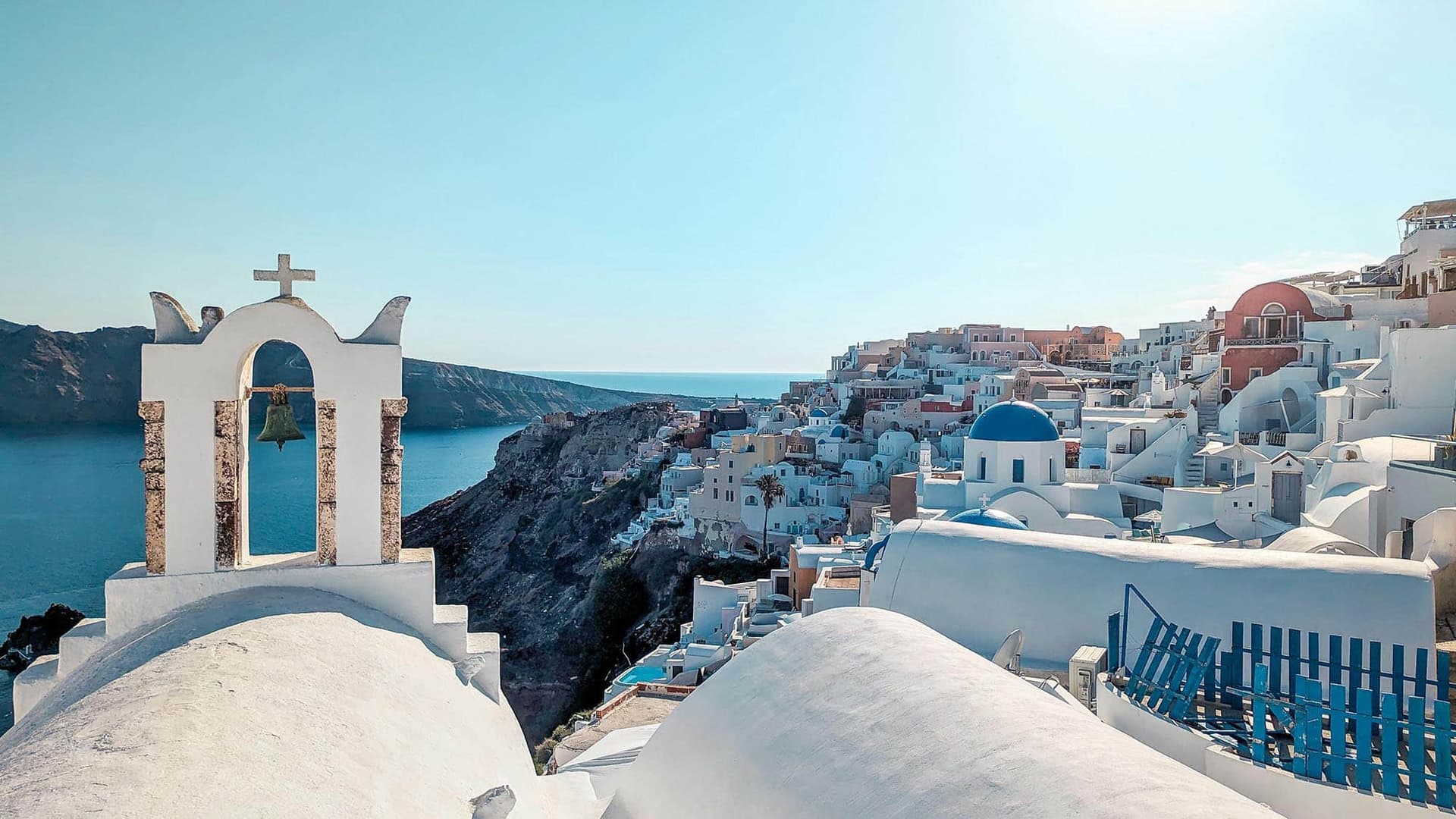
My first encounter with Santorini goes back a few years. I had gotten lost in the narrow streets of Oia, with its typical architecture and picturesque windmills, not to mention the legendary sunset. Since then, every trip to this Greek island has been a new adventure that I am thrilled to share with you.
I am going to explain exactly where Santorini is located, how to get there and why you absolutely must add it to your travel bucket list. So buckle up, friends, and get ready for an exciting journey to one of the most sought-after destinations in the Mediterranean.
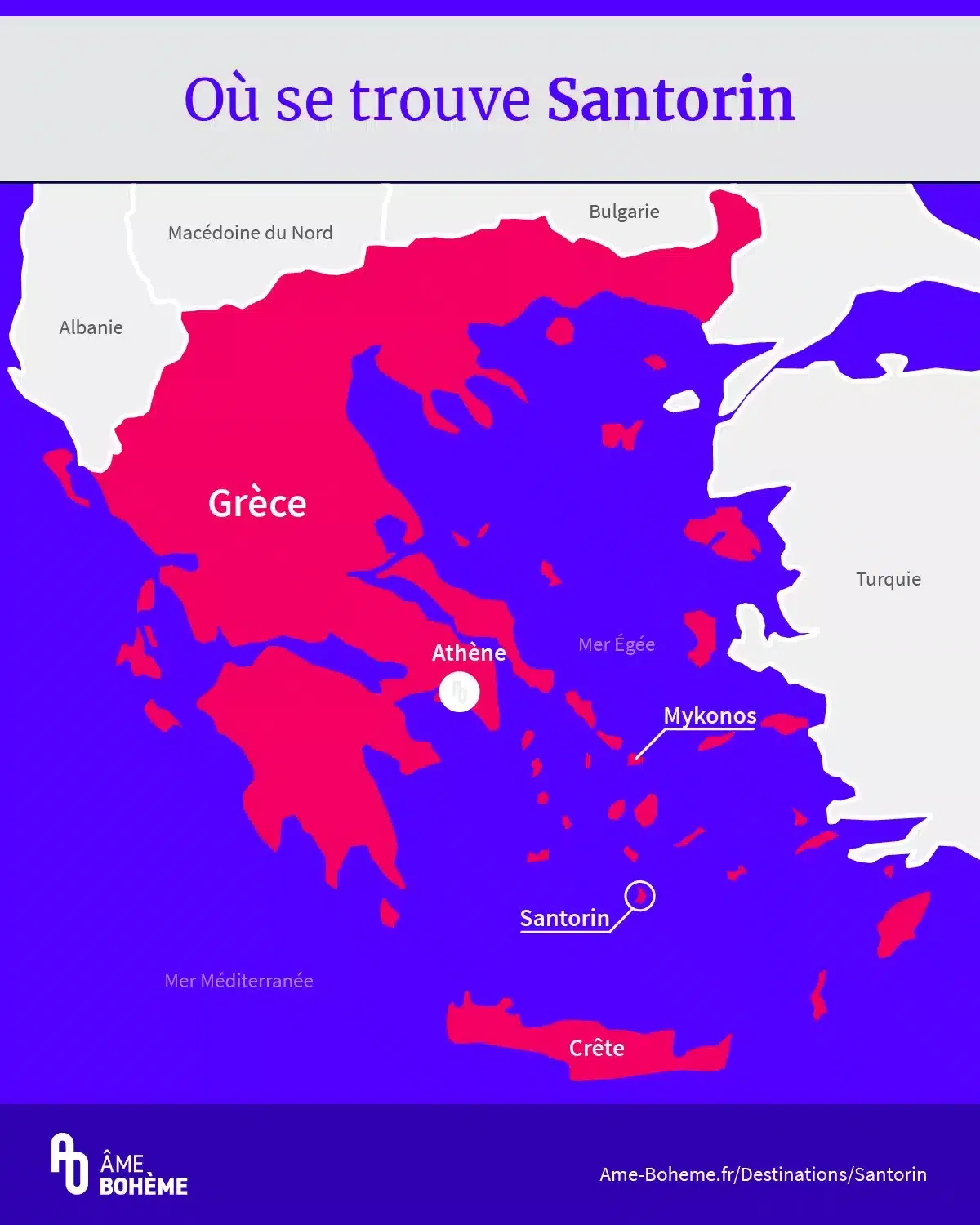
Exact location of Santorini in the Aegean Sea
Santorini, the island of contrasts, dizzying cliffs and unforgettable sunsets. But where exactly is this little corner of paradise? Grab your globe — it’s time for a geography lesson!
Santorini is a Greek island located in the Aegean Sea, to the southeast of the mainland. It is part of the Cyclades, an archipelago of paradise islands that offers a breathtaking spectacle. When people think of Greece, the Cyclades are often the first islands that come to mind — with their unique architecture, sandy beaches and azure-blue sea.
Chapka Insurance
Travel with peace of mind with the best travel insurance
Stay covered in every situation with the best insurance for your next trip.
From Paris, a direct flight takes about 3 hours and 30 minutes. From London, count on 4 hours. From other European cities such as Rome or Barcelona, it’s a 2-hour flight. Santorini is one hour from Athens. A tip for those who like to plan ahead: check for direct flights to Santorini, especially during the summer season. It can save you time and money.
For those seeking a more authentic experience, you can also reach Santorini by ferry from Athens. The journey takes approximately 5 hours, but the views of the other Cyclades islands are well worth the extra time.
But that’s not all! Once on the island, I recommend renting a quad or a motorbike to explore the island at your own pace. Nothing beats the pleasure of riding along Santorini’s winding roads with the Aegean sea breeze in your hair.
Now that you know where Santorini is and how to get there, it’s time to discover why this island is so special. Ready? Let’s go!
Exact distances from Santorini to major destinations
Santorini occupies a strategic position in the heart of the Aegean Sea, making it a perfect stop on a Greek island-hopping itinerary. Here are the precise distances separating Santorini from the main cities and surrounding islands:
Distances to the Cyclades islands
- Ios: 32 km (fast ferry crossing time: about 40 minutes)
- Anafi: 34 km to the east (crossing time: about 1h30)
- Folegandros: 40 km to the west (crossing time: about 1h)
- Naxos: 76 km to the northeast (crossing time: about 1h45)
- Paros: 85 km to the north (crossing time: about 2h)
- Mykonos: 115 km to the north (crossing time: about 2h30)
- Milos: 120 km to the west (crossing time: about 2h45)
Distances to major Greek islands
- Crete (Heraklion): 115 km to the south (crossing time: about 2h)
- Rhodes: 230 km to the east (connection mainly by air)
Distances to mainland Greece
- Athens (Piraeus): 230 km to the northwest (crossing time: 5h to 8h depending on ferry type)
- Thessaloniki: 500 km to the north (mainly accessible by air)
International distances
- Turkey (west coast): about 180 km to the east
- Cyprus: about 750 km to the southeast
- Italy (east coast): about 800 km to the west
These distances explain why Santorini is so well connected to other Greek islands, particularly by ferry, and why it often serves as a central stop on a Cyclades discovery itinerary.
General information about Santorini
Santorini covers an area of about 76 square kilometres, making it a compact gem to explore. In fact, it takes no more than 45 minutes to drive across the island from north to south.
Santorini has about 15,500 permanent residents, but this number can easily triple during peak tourist season. Don’t worry — the island retains its charm even when the streets are more crowded.
As for the climate, Santorini enjoys a Mediterranean climate, with hot, dry summers and mild winters. The best time to visit Santorini is from May to October, although I must admit I particularly love September and October. Temperatures are milder and the island is less crowded.
The official language is Greek, but English is widely spoken, especially in tourist areas. The currency is the euro, which simplifies things for European travellers.
Regarding safety, Santorini is generally a safe destination for travellers. However, as with any tourist destination, it is important to stay vigilant and take basic precautions.
Now that you have an idea of the size, climate and other general information about Santorini, you are ready to discover everything this island has to offer.
How to get to Santorini
Getting to Santorini is an adventure in itself that adds to the charm of this island. There are mainly two ways to reach it: by air and by sea.
Firstly, the quickest way to get there is to fly. Santorini has its own international airport, which receives direct flights from several European cities. The flight from Paris takes about 3h30, and it’s roughly the same from most major Western European cities.
Secondly, you can choose the sea route, which is an experience in its own right. Ferries depart regularly from Athens and many other Greek islands. The journey from the port of Piraeus in Athens takes about 5 to 8 hours, depending on the ferry type. You can find more details on booking ferries in our dedicated guide: How to take the ferry between Athens and Santorini: everything you need to know
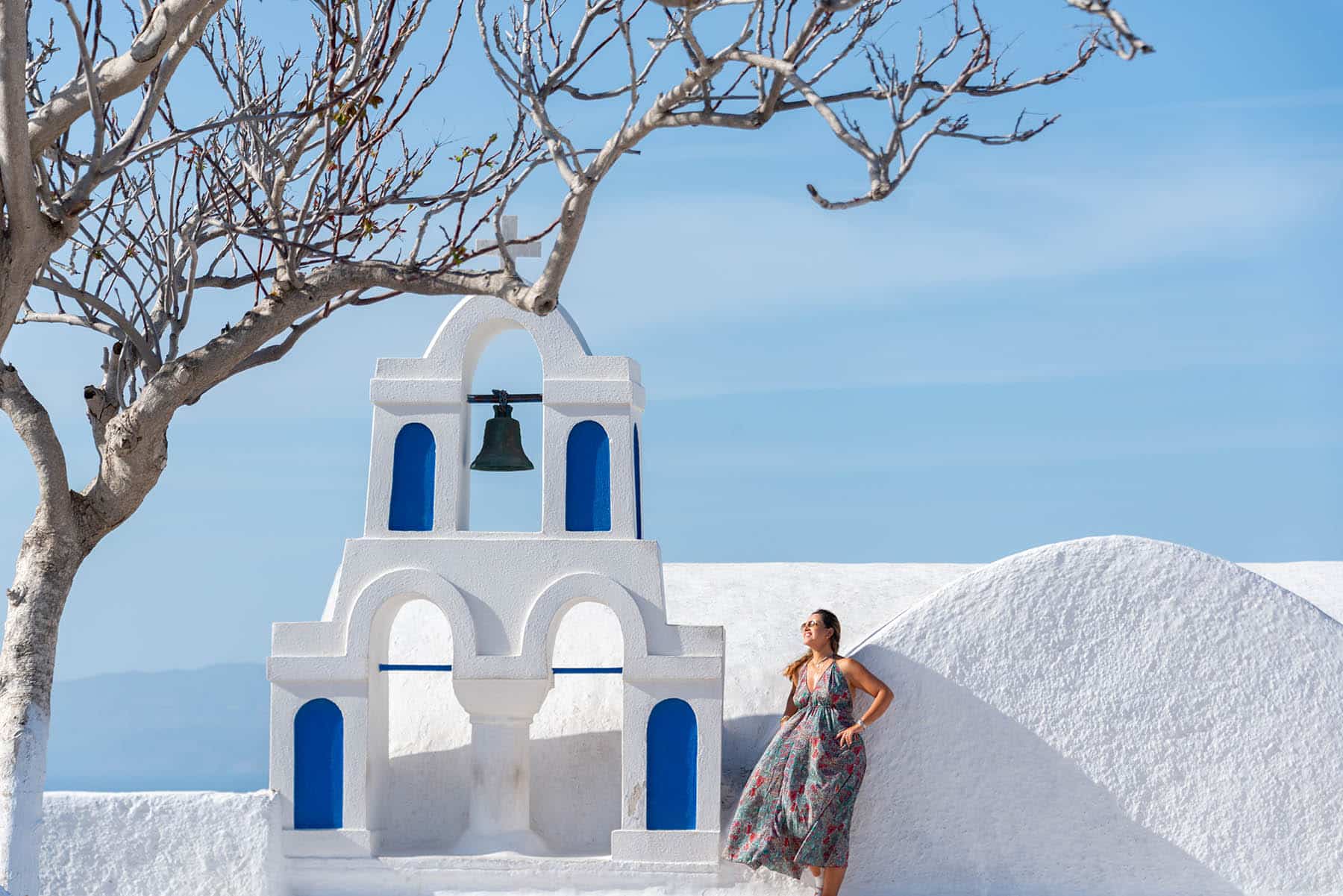
Why should you visit Santorini?
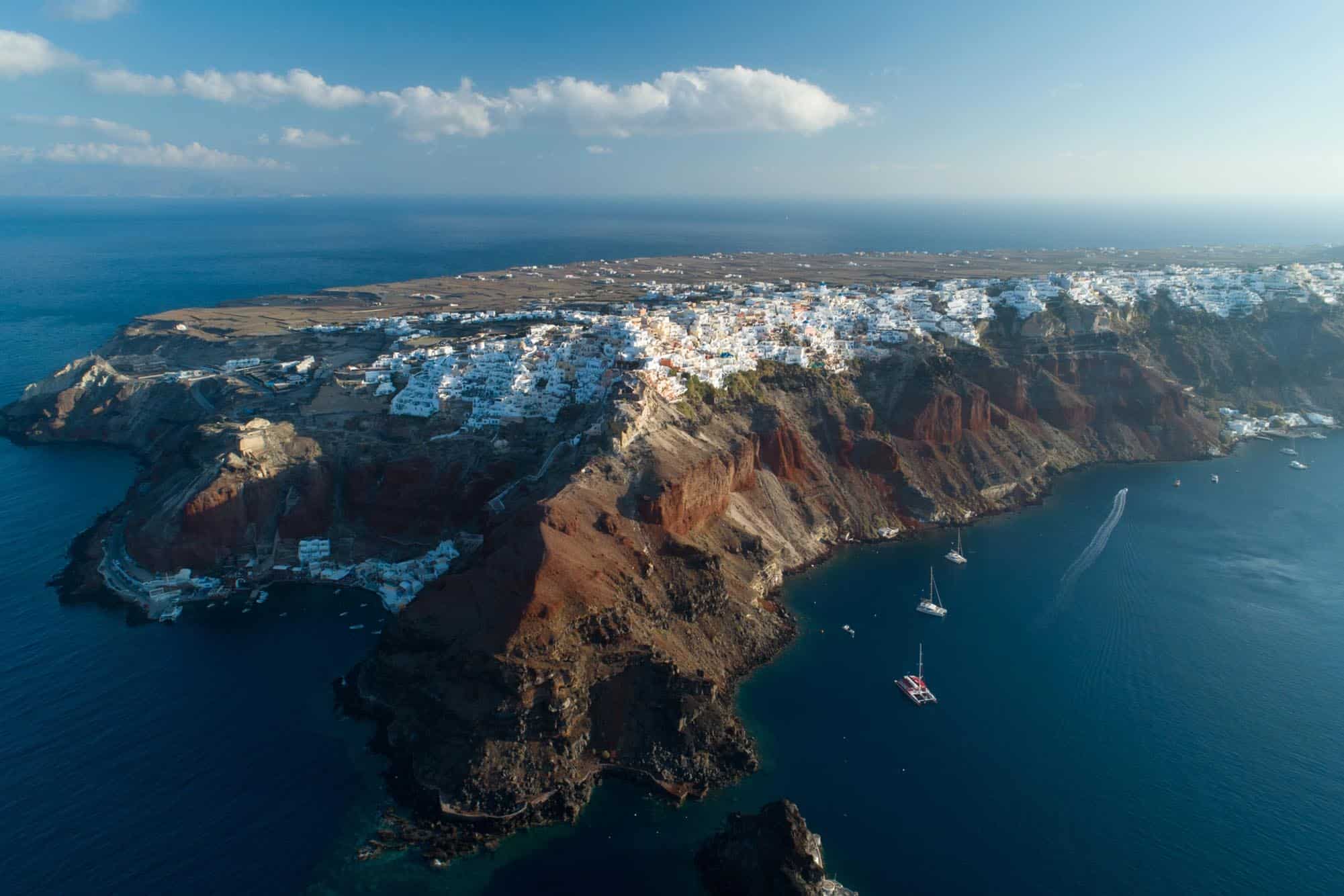
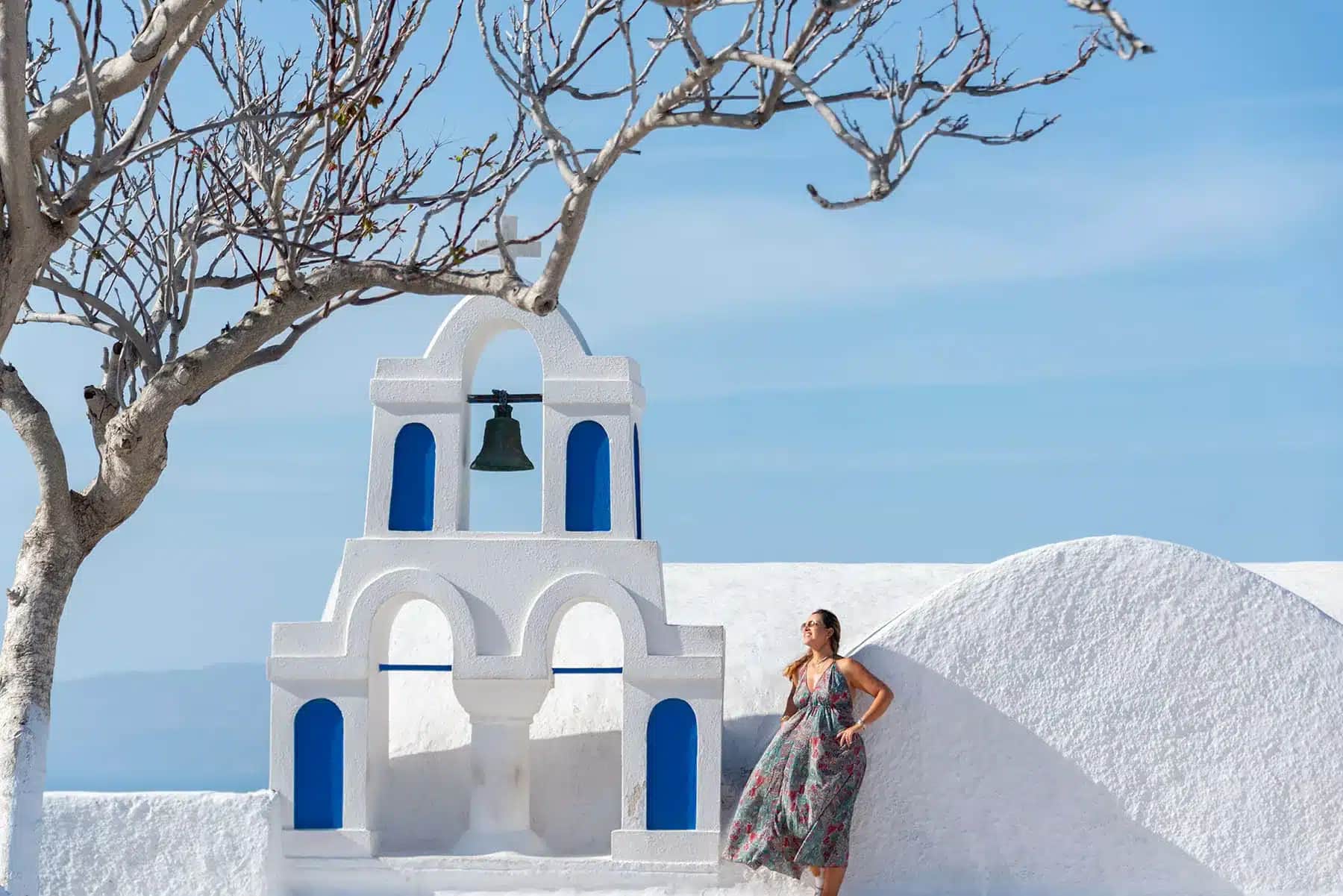
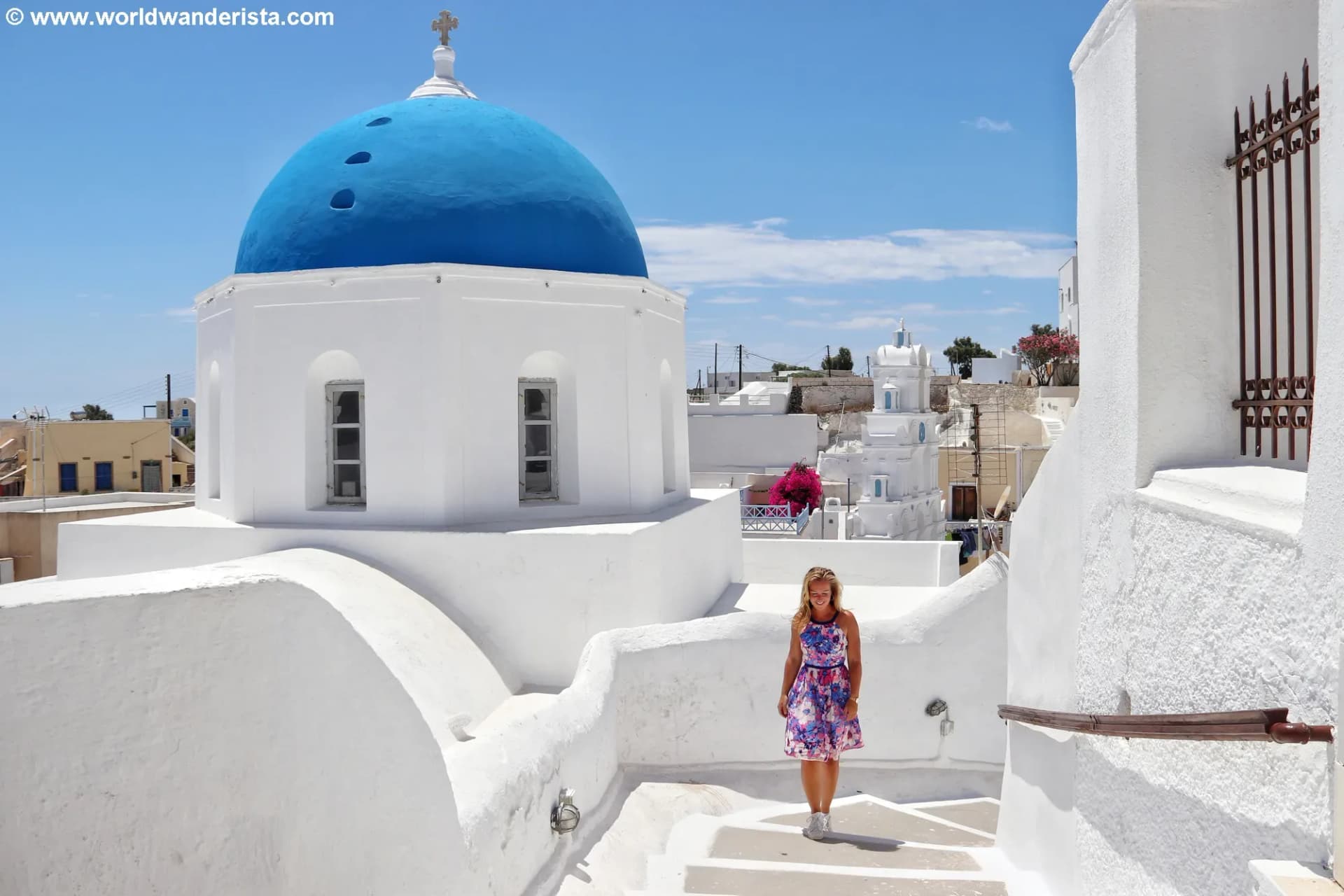
To begin with, there is the island’s unique landscape. The steep cliffs plunging into the Aegean Sea, the white houses clinging to the mountainside, and of course the famous blue-domed churches. It is a breathtaking sight that you won’t want to miss.
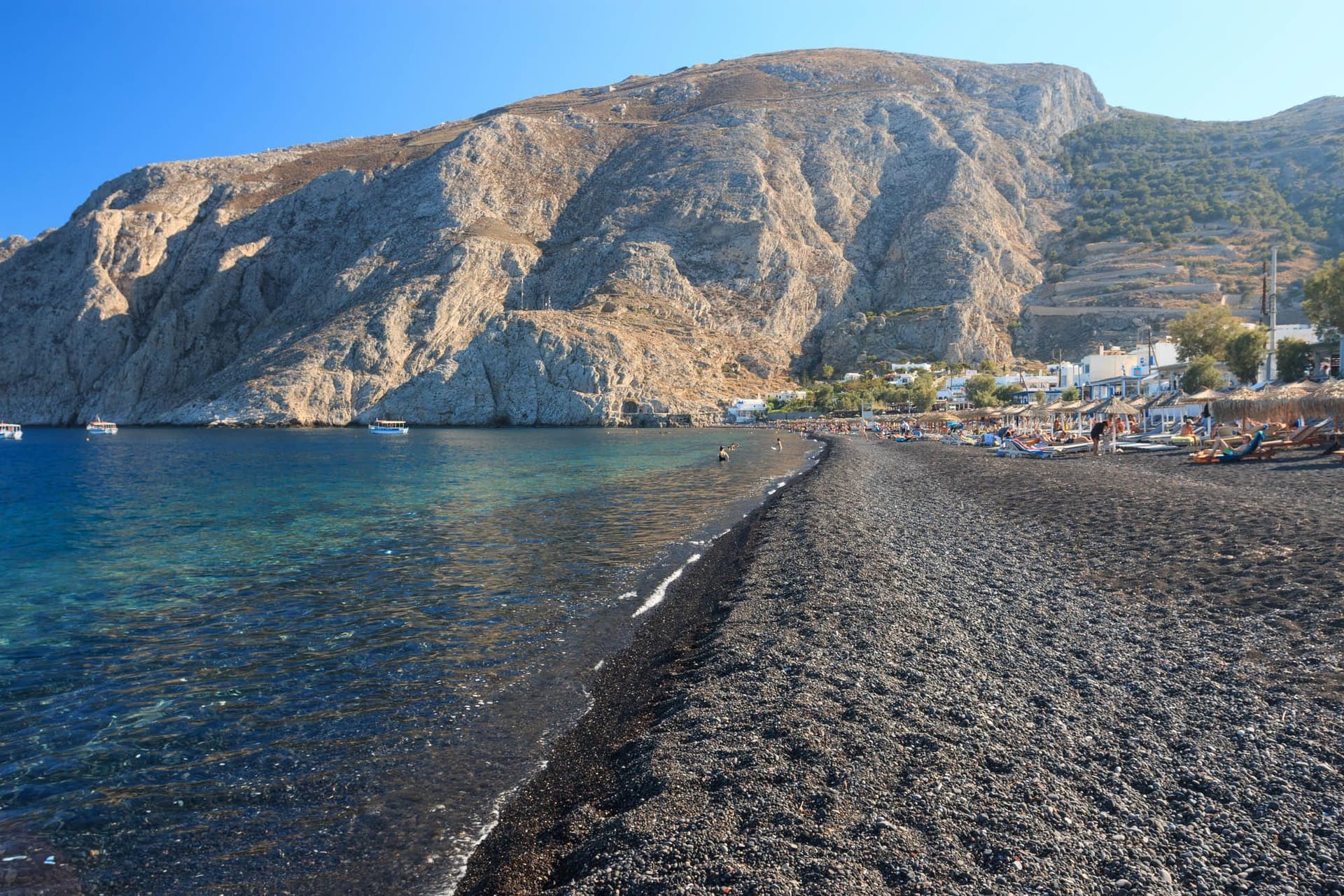
Then there are the magnificent beaches of Santorini. From the black-sand beaches of Perissa to Red Beach, by way of White Beach, each one offers a unique experience.
Don’t miss a visit to the archaeological site of Akrotiri, a well-preserved prehistoric town that provides a fascinating glimpse into the island’s ancient history.
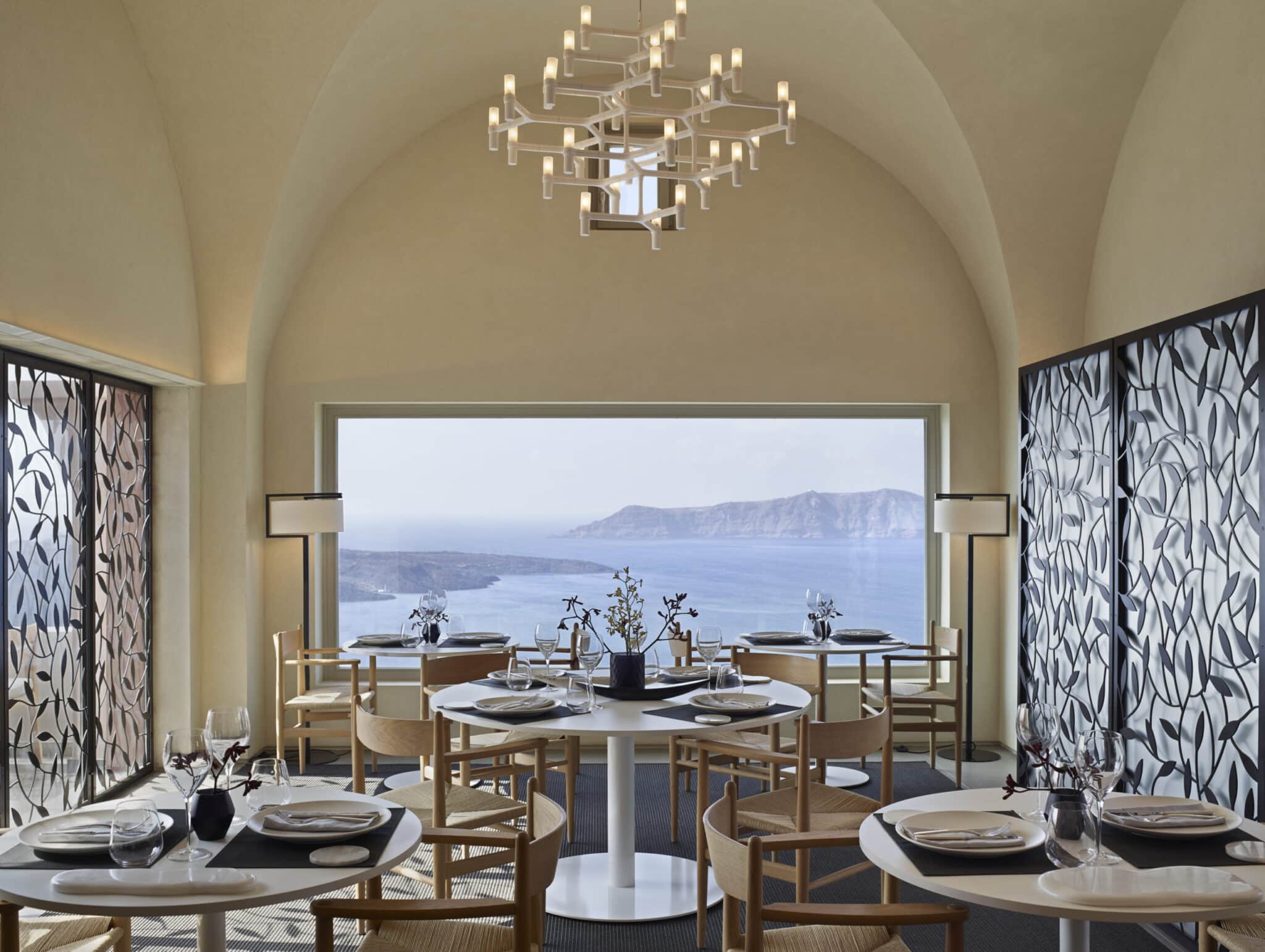
Finally, there is the cuisine. Fresh local produce, seafood and volcanic wines make Santorini a top-tier gastronomic destination. Whether you dine at one of the best restaurants in Imerovigli or in a hidden little taverna, you are sure to enjoy a memorable culinary experience.
Frequently asked questions about Santorini’s location
Santorini is a Greek island. It belongs to Greece and is part of the Cyclades archipelago in the Aegean Sea. It is accessible from the European Union without a visa or passport for EU nationals.
Santorini is part of the Cyclades, an archipelago of about thirty islands located in the Aegean Sea, southeast of the Greek mainland. Its closest neighbours are Ios (32 km), Anafi (34 km) and Folegandros (40 km).
Athens (port of Piraeus) is about 230 km from Santorini. By regular ferry, the journey takes 5 to 8 hours depending on the vessel type. By plane from Athens airport (ATH), the flight takes about 45 minutes to Santorini airport (JTR).
The centre of the island of Santorini is located at 36°23' N, 25°27' E. The capital Fira is located at 36.4167° N, 25.4314° E.
From Paris, a direct flight takes about 3h30. Direct flights are offered by Aegean Airlines, Transavia and easyJet, mainly from April to October. Santorini airport (IATA code: JTR) is located about 5 km from Fira.
Santorini’s geological context in the Aegean

Santorini is not just a popular tourist destination — it is also a fascinating geological phenomenon that bears witness to the powerful forces shaping our planet.
An island born from fire
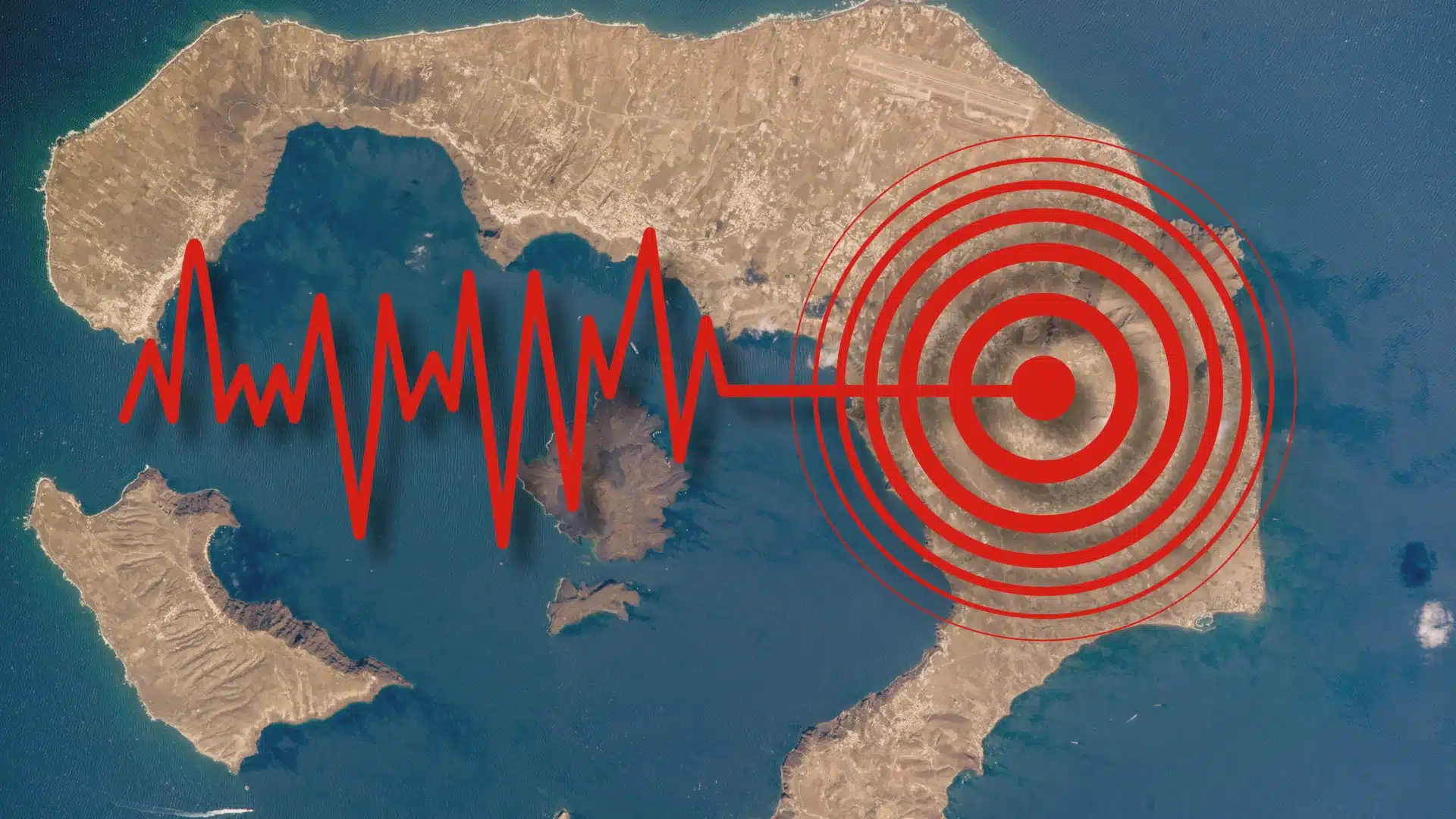
Santorini sits on the volcanic arc of the Aegean Sea, a subduction zone where the African plate dives beneath the Eurasian plate. This tectonic collision is the source of the intense volcanic activity that gave birth to the island several million years ago.
The island we know today is actually the result of a series of major volcanic eruptions that occurred over a period of 200,000 years. The most spectacular of these, known as the Minoan eruption, took place around 1600 BC and was one of the most powerful volcanic eruptions in human history.
The spectacular caldera
The Minoan eruption was so violent that it caused the centre of the pre-existing island to collapse, creating the immense caldera that visitors admire today. This depression, partially submerged by the Aegean Sea, forms a natural bay approximately 12 km long and 7 km wide, with cliffs rising up to 300 metres above sea level.
The water depth in the caldera reaches 400 metres in places, allowing even the largest cruise ships to drop anchor. Santorini’s iconic villages, such as Fira and Oia, are perched on the rim of this caldera, offering spectacular views of the sea and the central islands.
A still-active volcano
Contrary to what many people think, the Santorini volcano is not extinct but merely dormant. The islands of Palea Kameni and Nea Kameni, located in the centre of the caldera, are the most recent manifestations of this ongoing volcanic activity. Nea Kameni, in particular, began forming only 500 years ago and experienced its last eruption in 1950.
From underwater hot springs to volcanic gas emissions, Santorini offers many reminders of its dynamic geological nature. The black-sand beaches of Perissa and Kamari, as well as the famous Red Beach, also bear witness to this volcanic origin through their unique mineral compositions.
The islands that make up the Santorini archipelago

When people say “Santorini”, they often refer to an entire small volcanic archipelago made up of five main islands. Each has its own personality and contributes to the unique identity of this destination.
Thera (Thira)
Thera, also called Thira, is the main island of the archipelago and the one most visitors identify as “Santorini”. Crescent-shaped, it forms the eastern rim of the caldera and is home to the majority of the population and tourist infrastructure.
It is on Thera that you will find the iconic villages of Fira (the capital), Oia, Imerovigli and Firostefani, all perched on the caldera cliffs. The gentler east coast of the island hosts the seaside resorts of Kamari and Perissa, separated by the Mesa Vouno mountain range.
Thirassia
Located west of Thera, separated by the caldera, Thirassia is the second-largest island in the archipelago with an area of about 9 km². Far less developed for tourism, it offers a glimpse of what Santorini was like before the rise of mass tourism.
The main village, Manolas, is perched at the top of the cliff and has about 250 inhabitants. You can easily reach Thirassia from Thera by ferry, and this day trip allows you to escape the crowds while enjoying spectacular views of the caldera.
Aspronisi
Aspronisi (“the white island”) is an uninhabited islet located at the southwestern tip of the caldera. With an area of barely 0.1 km², it is the smallest of the five main islands. Its name comes from its light colour, due to pumice deposits.
Although rarely visited by tourists, Aspronisi is often included in boat tours around the caldera and contributes to the spectacular landscape of the archipelago.
Palea Kameni
Palea Kameni (“the old burnt one”) is a volcanic island located in the centre of the caldera. It began to form about 2,000 years ago following submarine eruptions. Uninhabited and arid, it is mainly composed of black volcanic rock.
The island is famous for its hot sulphur springs, particularly in Agios Nikolaos bay, where boat tours often stop to let visitors swim in the thermal waters with their reputed healing properties.
Nea Kameni
Nea Kameni (“the new burnt one”) is the most recent volcanic island in the archipelago, having emerged from the 16th century onward. Located just north of Palea Kameni, it covers an area of about 3.4 km² and rises 127 metres above sea level.
This uninhabited island is home to Santorini’s active volcanic crater and is a major tourist attraction. Boats shuttle daily from the old port of Fira, allowing visitors to disembark and hike to the summit to observe the fumaroles and enjoy a panoramic view of the entire archipelago.
Together, these five islands form what is commonly known as Santorini, a volcanic archipelago whose unique configuration tells the tumultuous geological story of this region of the Aegean Sea.
Santorini time zone and international time differences
To plan your trip and stay in touch with loved ones back home, it is useful to know Santorini’s exact time zone and its offset from major cities around the world.
Santorini time zone
Santorini, like all of Greece, is in the Eastern European Time zone (EET), i.e. UTC+2 in standard time. During daylight saving time (from late March to late October), the island switches to Eastern European Summer Time (EEST), i.e. UTC+3.
The clock change takes place:
- The last Sunday of March (switch to summer time): at 3:00 AM, clocks are set forward by one hour.
- The last Sunday of October (switch to winter time): at 4:00 AM, clocks are set back by one hour.
Time differences with major international cities
Here are the time differences between Santorini and the world’s major cities during the summer period (the busiest tourist season):
Europe
- Paris, Rome, Madrid, Berlin: Santorini is 1 hour ahead (when it is noon in Paris, it is 1 PM in Santorini)
- London: Santorini is 2 hours ahead (when it is noon in London, it is 2 PM in Santorini)
- Lisbon: Santorini is 2 hours ahead
- Helsinki, Moscow: Santorini is on the same time
Americas
- New York, Miami: Santorini is 7 hours ahead (when it is noon in New York, it is 7 PM in Santorini)
- Chicago: Santorini is 8 hours ahead
- Los Angeles, San Francisco: Santorini is 10 hours ahead
- Toronto, Montreal: Santorini is 7 hours ahead
- Mexico City: Santorini is 9 hours ahead (Mexico abolished daylight saving time in 2022)
- São Paulo, Rio de Janeiro: Santorini is 6 hours ahead
- Buenos Aires: Santorini is 6 hours ahead
Asia and Oceania
- Tokyo: Santorini is 6 hours behind (when it is noon in Santorini, it is 6 PM in Tokyo)
- Beijing, Hong Kong: Santorini is 5 hours behind
- Bangkok: Santorini is 4 hours behind
- New Delhi: Santorini is 2h30 behind
- Dubai: Santorini is 1 hour behind
- Sydney: Santorini is 7 hours behind
- Auckland: Santorini is 9 hours behind
Africa
- Cairo: same time as Santorini in summer (Egypt has observed daylight saving time again, at UTC+3, since 2023)
- Casablanca: Santorini is 2 hours ahead
- Johannesburg: Santorini is 1 hour ahead
Practical tips for dealing with jet lag
If you are travelling to Santorini from a destination with a significant time difference, here are some tips to alleviate the effects of jet lag:
- Before departure: Gradually start adjusting your internal clock a few days before the trip, going to bed earlier or later depending on the direction of the time shift.
- During the flight: Stay well hydrated and avoid alcohol and caffeine, which disrupt sleep.
- On arrival: Expose yourself to natural light to help your body adjust to the new rhythm. It is generally recommended to adapt immediately to the local time zone.
Don’t forget to take these time differences into account when planning calls or video conferences with family or colleagues back in your home country.

Âme Bohème exists thanks to you
Some links in this article are affiliate links. This means that if you book or purchase a product through these links, we receive a small commission — at no extra cost to you. It's thanks to this support that we can continue creating free, quality content.
You can also buy us a coffee, or follow us on Instagram and Facebook.