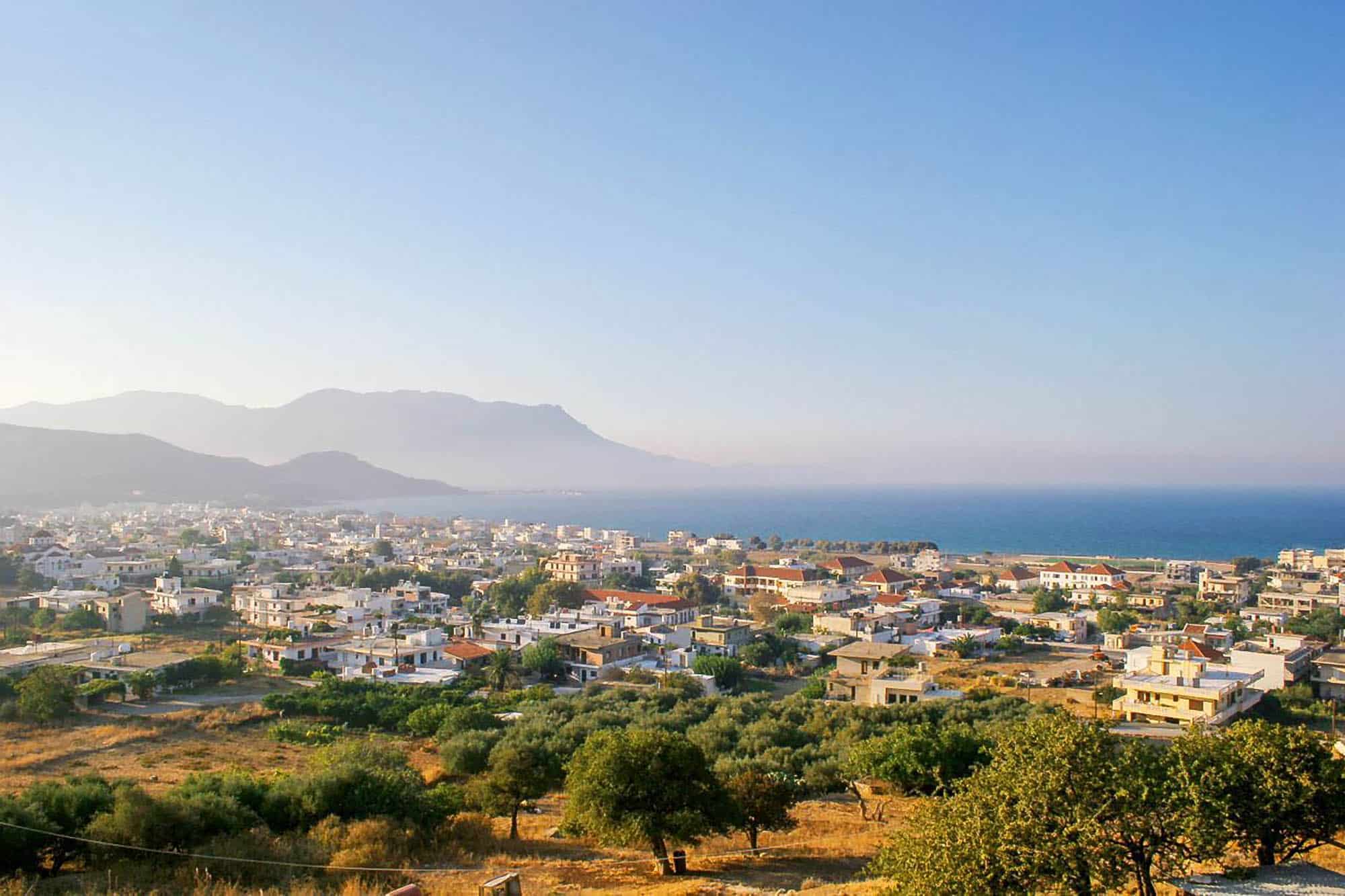
Greece largest island, between mythology and paradise beaches
Crete blends spectacular gorges, millennial Minoan palaces, crystal-clear beaches and a cuisine that ranks among the Mediterranean finest.
Why Crete?
Crete blends spectacular gorges, Minoan palaces, crystal-clear beaches and a cuisine that ranks among the Mediterranean's finest on Greece's largest island.
In september, the climate in Crete is excellent. The weather is generally sunny, with maximum temperatures around 29°C and only 1 rainy day. The sea reaches 25°C. Tourist crowds are high.
Crete is the largest island in Greece and the fifth largest in the Mediterranean. Cradle of the Minoan civilization, the first great civilization of Europe, it offers a staggering diversity: from spectacular gorges to heavenly beaches, from snow-capped mountains to fertile plateaus. Crete is not simply a Greek island: it is a miniature continent with its own identity, its generous cuisine, its traditional music and a proud character forged by millennia of turbulent history.
Land of the Minotaur and the palace of Knossos, Crete blends ancient mythology with Mediterranean joie de vivre. Its inhabitants are renowned for their unmatched hospitality and the Cretan diet, one of the healthiest in the world. Discover our experiences in Greece to enrich your stay.
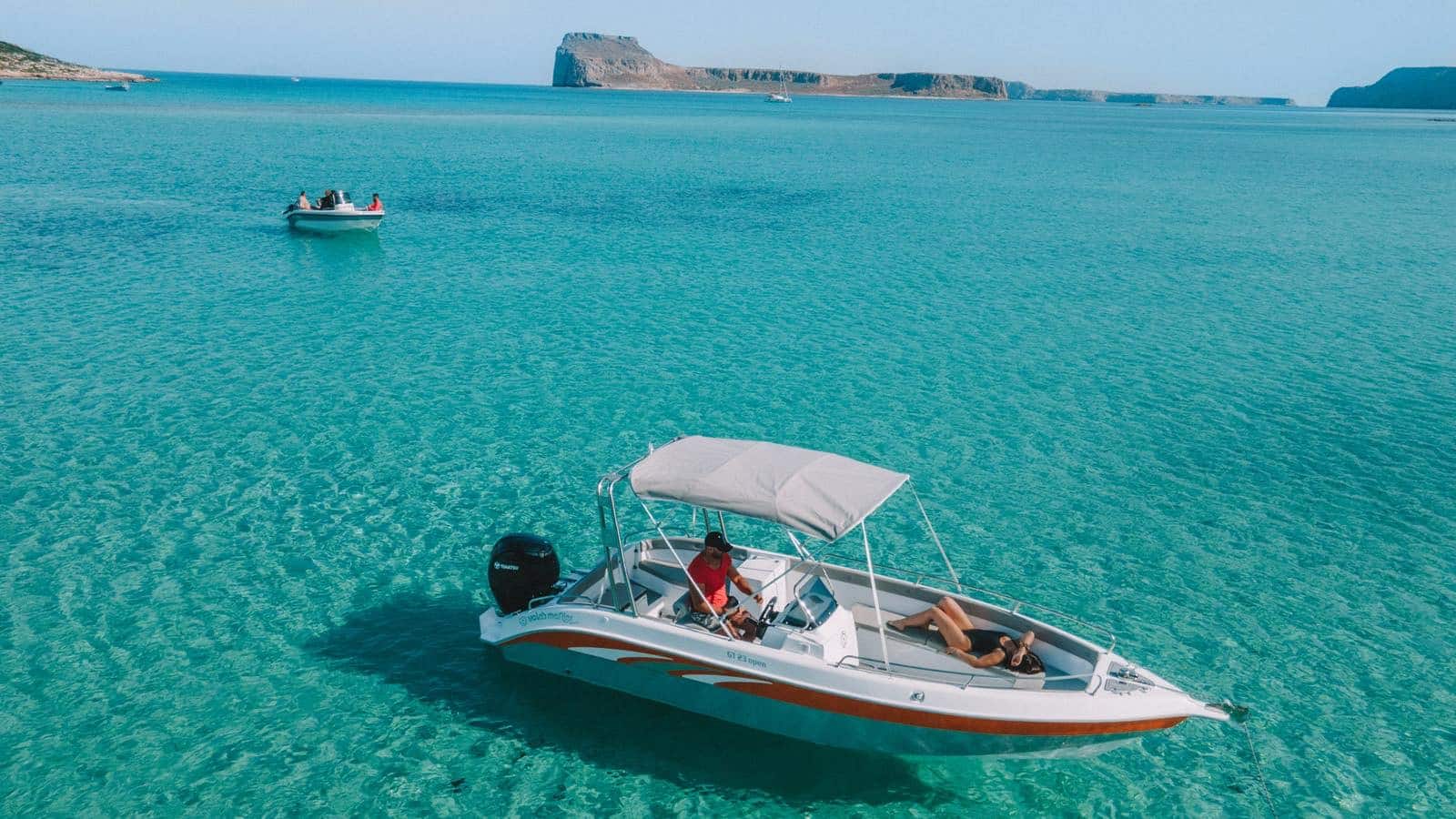
Balos, one of the most spectacular lagoons in the Mediterranean
02Heraklion and Knossos, the historic heart of Crete
The palace of Knossos, cradle of the Minoan civilization
Heraklion, the capital, is often underestimated but well worth exploring. The archaeological museum is one of the most important in Greece, housing original Minoan frescoes and the Phaistos Disc. The Venetian fortress of Koules guards the entrance to the old harbour. Just 5 km south, the palace of Knossos — the largest Minoan site — transports visitors 4,000 years back in time. Arthur Evans' colourful reconstructions are controversial but spectacular. Complete your visit with Phaistos, the second Minoan palace, set in a fertile plain in the south.
The archaeological site of Knossos, discovered by Sir Arthur Evans in the early 20th century, reveals a palatial complex of over 1,300 rooms. The restored frescoes, notably the Prince of the Lilies and the Bull-Leaping fresco, bear witness to a refined civilization that dominated the Mediterranean 3,500 years ago. The Archaeological Museum of Heraklion, one of the richest in Greece, perfectly complements the visit with its exceptional Minoan collections, including the famous Phaistos Disc and the Snake Goddess figurines.
The palace of Knossos, cradle of the Minoan civilization
03Chania and western Crete
The old Venetian harbour and the historic quarter
Chania is widely regarded as the most beautiful city in Crete. Its old Venetian harbour, dominated by the lighthouse and the Mosque of the Janissaries, makes for an enchanting setting at sunset. The Turkish quarter of Splantzia, the covered market (Agora) and the alleyways of the Jewish quarter form a colourful labyrinth. Western Crete is also home to the island's most beautiful beaches: Balos and its turquoise lagoon, Elafonissi and its pink sand, Falassarna and its crystal-clear waters. The Samaria Gorge, the longest in Europe (16 km), is an unforgettable hike through the White Mountains.
The Samaria Gorge is open from May to October. Set off early (7am) to avoid the heat. The descent takes 5 to 7 hours and ends at Agia Roumeli, from where a ferry takes you back to Sfakia or Paleochora.
04The paradise beaches of Crete
Elafonissi, Balos and the hidden gems of the coastline
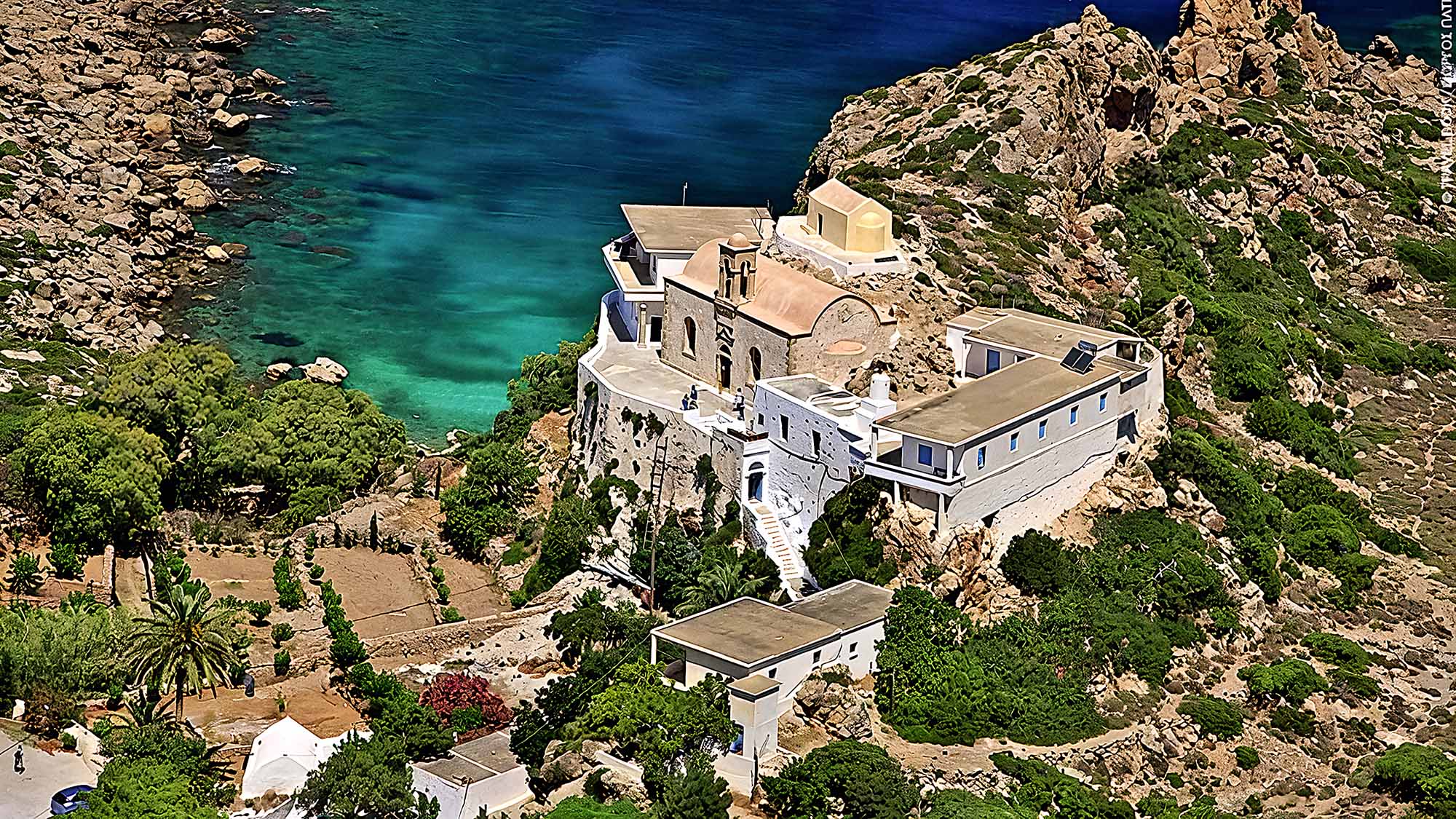
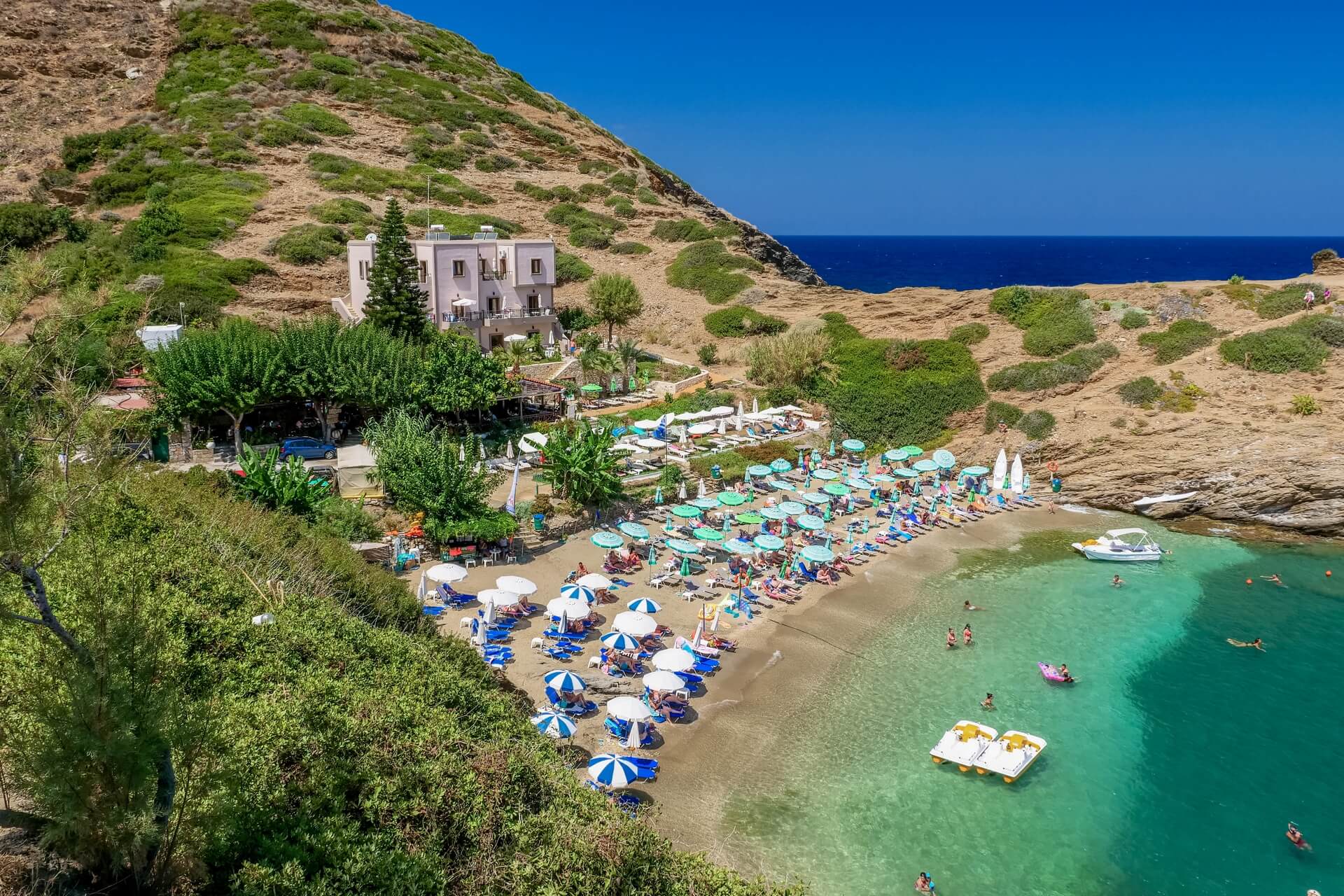
Crete boasts some of the most beautiful beaches in the entire Mediterranean. Elafonissi, with its pink sand and shallow waters, is a true paradise. Balos, accessible via an 8 km dirt track or by boat, offers a lagoon with unreal shades of blue. Vai, at the far eastern tip, is bordered by the largest natural palm grove in Europe. Preveli, below a monastery, combines a river, palm trees and a wild beach. The south coast, less developed, hides coves accessible only on foot or by boat.
Balos — Lagoon with unreal colours, accessible by boat or 4x4
Preveli — Palm grove, river and wild beach at the foot of a monastery
Vai — Europe's largest natural palm grove, exotic beach
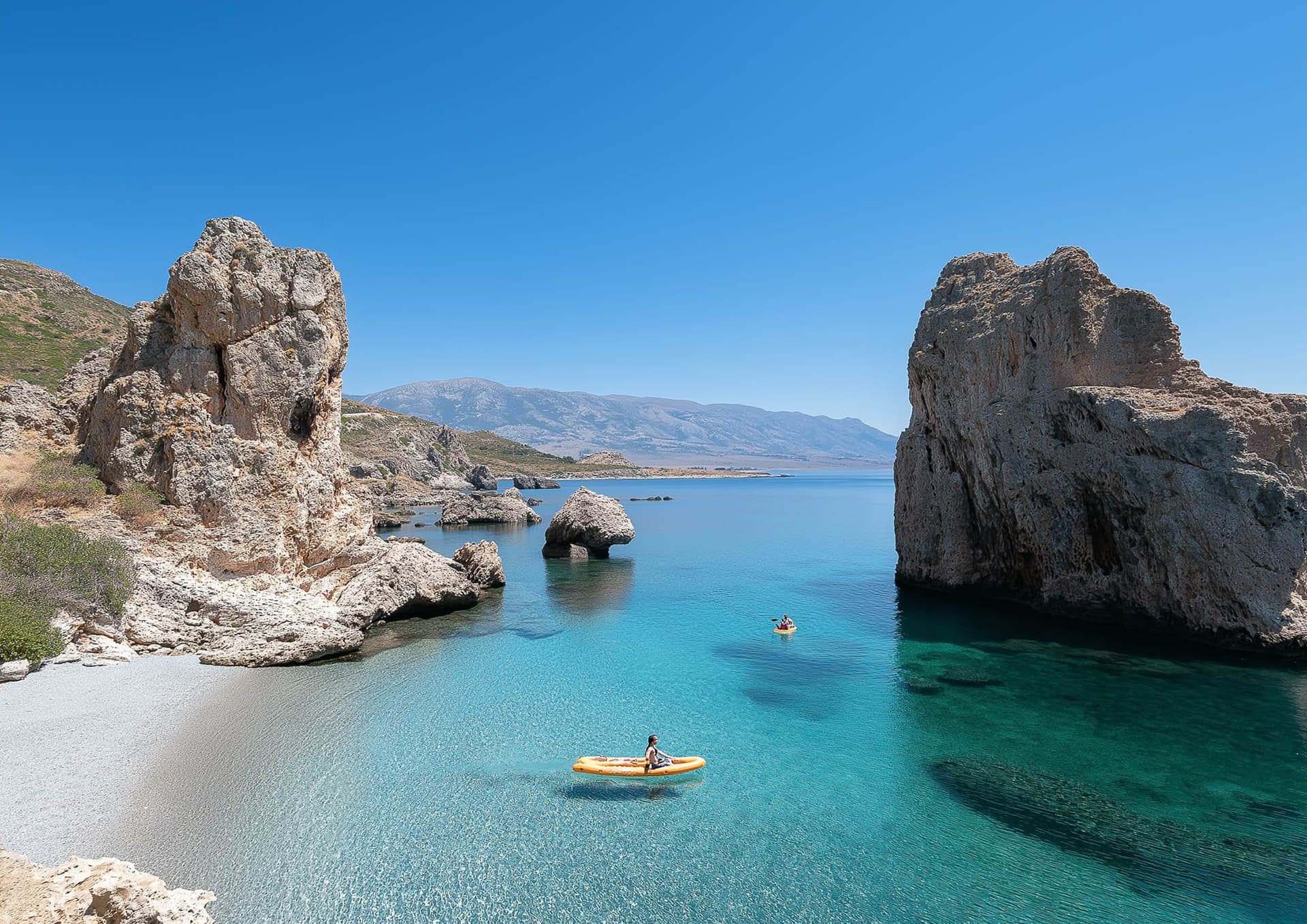
Beyond these iconic beaches, the south coast of Crete holds lesser-known treasures. Greece is full of wild coves, but those in Crete are particularly spectacular: Preveli and its palm grove, Seitan Limania nestled between vertiginous cliffs, and Vai with its palm forest unique in Europe. Each beach offers a different experience, from the shallow turquoise waters of Elafonissi to the sportier waves of Falassarna.
Elafonissi, the pink sand beach of the south-west coast
05Rethymno and central Crete
Rethymno is the most romantic city in Crete, with its perfectly preserved Venetian old town, its Fortezza fortress overlooking the sea and its miniature harbour lined with tavernas. The Arkadi Monastery, a symbol of Cretan resistance, is an unmissable place of remembrance. The Nida Plateau, on Mount Ida (2,456 m, the highest point of Crete), offers unexpectedly alpine landscapes. The Ideon Andron cave, where Zeus was said to have been raised according to mythology, can be visited from the plateau.
06Cretan cuisine: the diet of longevity
Olive oil, dakos and raki: authentic flavours
The Cretan diet is celebrated worldwide for its health benefits. Based on olive oil (Cretans consume more than anyone else), wild greens (horta), fresh goat cheese, snails (cochlioi), thyme honey and raki, Cretan cuisine is a feast for the senses. Try dakos (dried barley bread topped with tomato and feta), kalitsounia (cheese pastries), lamb kleftiko slow-cooked in the oven and apaki (herb-smoked pork). Every village has its family-run taverna where meals invariably end with a complimentary raki from the owner.
Cretan tavernas serve authentic cuisine at reasonable prices. Don't miss dakos (rusks topped with tomato and mizithra cheese), kalitsounia (small cheese pastries), stifado (rabbit stew) and lamb slow-cooked in the oven. The local markets in Heraklion and Chania are ideal for discovering local produce: thyme honey, graviera (local cheese), wild mountain herbs and of course extra virgin olive oil, produced here since antiquity.
Never refuse a raki offered in Crete — it is a sacred gesture of hospitality. Raki (or tsikoudia) is distilled locally after the grape harvest and accompanies every social occasion.
07When to visit Crete?
Mediterranean climate and summer high season
Crete enjoys the warmest climate in Greece. Summer (July–August) is very hot (30–35°C) and windy (the Meltemi blows strongly). The ideal periods are April–June and September–October: perfect temperatures (22–28°C), sea warm enough for swimming from June, reasonable prices and fewer crowds. Spring is spectacular for wildflowers and hiking in the gorges. The mild winter (12–16°C) allows you to visit historic sites without the crowds, and the mountains are blanketed in snow.
08Budget and practical tips for Crete
Transport, accommodation and daily budget
Crete is more affordable than the Cyclades. Renting a car is virtually essential for exploring the island (from €25/day) as public transport is limited in the south and the interior. Mountain roads are winding but well maintained. The island is large (260 km from east to west): plan at least a week. Heraklion and Chania both have international airports with direct flights from France and other European cities in season.
Accommodation — Hotel: €60–120/night, family guesthouse: €40–70, Airbnb: €35–80
Meals — Taverna: €10–18, restaurant: €20–35, mezze and raki: €8–15
Transport — Car: €25–45/day, bus Heraklion–Chania: €15, ferry to Santorini: €35–55
For a mid-range budget, expect between 60 and 100 euros per day for a couple, including accommodation in a guesthouse or small hotel, car rental and meals at a taverna. Accommodation ranges from hostels (€15–25/night) to charming boutique hotels (€80–150/night). Car rental in Crete generally costs between 25 and 45 euros per day in season, and fuel prices are comparable to those in mainland Europe.
09Crete off the beaten path
Loutro, Sfakia and the isolated villages of the south
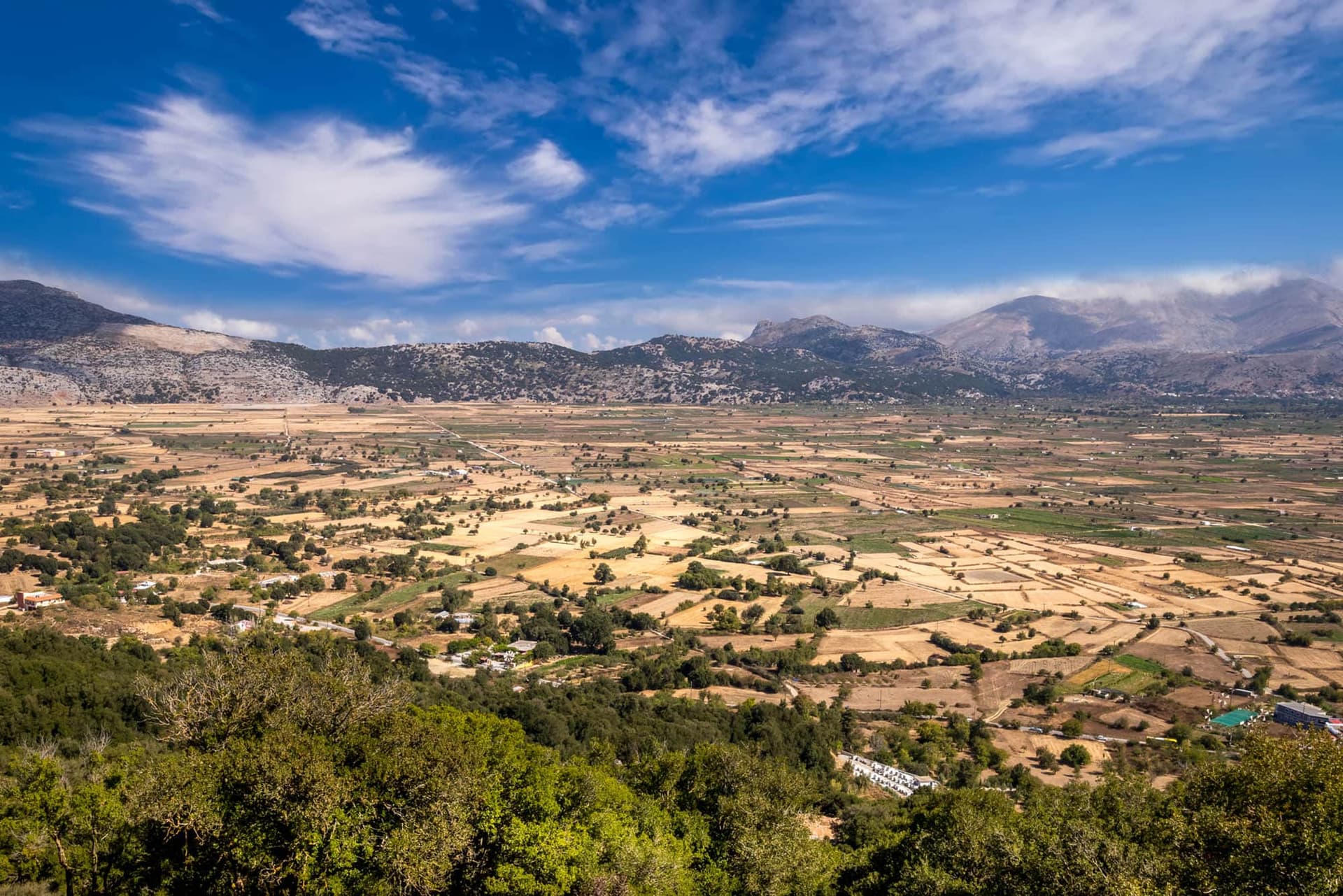
The south of Crete is another world: Loutro, a village accessible only by boat or on foot, Sfakia and its wild gorges, Sougia and its tranquil beach. The Lassithi Plateau, in the east, retains its windmills and timeless villages. The island of Gavdos, the southernmost point of Europe, attracts free spirits with its deserted beaches and complete absence of mass tourism. Combine Crete with Santorini (direct ferry in 2 hours) for an unforgettable Cyclades-Crete trip.
The Samaria Gorge, a UNESCO World Heritage Site, is the most famous hike in Crete. This 16-kilometre canyon cuts through a spectacular landscape from the Omalos Plateau down to the Libyan Sea. Other less-visited gorges also deserve a detour: Imbros, Aradena and Kourtaliotiko offer memorable hiking experiences without the summer crowds. The Lassithi Plateau, with its windmills and the Cave of Zeus, provides a cool escape away from the coast.
Crete from the sky: fly over the island's most spectacular landscapesLoutro, a Cretan village accessible only by sea
10Practical information for Crete
Airports, ferries and entry requirements
Crete has two international airports: Heraklion (HER) and Chania (CHQ), with direct flights from major European cities in season. Ferries connect Heraklion and Chania to Piraeus (Athens) in 9 to 10 hours overnight. Crete is home to several sites listed as UNESCO World Heritage. The currency is the euro, and power outlets are type C/F (standard European). Mobile coverage is good along the coast but can be limited in the mountains.
The Venetian harbour of Chania, the most romantic in Crete
Âme Bohème exists thanks to you
Some links in this article are affiliate links. This means that if you book or purchase a product through these links, we receive a small commission — at no extra cost to you. It's thanks to this support that we can continue creating free, quality content.
You can also buy us a coffee, or follow us on Instagram and Facebook.
Thank you
Share
Comments
Share your thoughts
Leave a comment
Looking for more information for your trip? Book a personalised video call with us, or join the Curious Souls community on Discord.
Your email address will not be published. Required fields are marked with *