
Seeing the monumental olive tree of Vouves, an incredible tree aged between 3,000 and 5,000 years in the heart of Crete, is a unique experience not to be missed during any stay on the Greek island.
The island of Crete is brimming with natural wonders, from sandy beaches to steep cliffs, deep gorges and majestic mountains. But among all these treasures, one stands out for its incredible age: the millennial olive tree of Vouves, a true natural sculpture shaped over millennia.
Located in the small village of Vouves, in the green hills of western Crete, this plant patriarch is both a living witness to History and an invitation to meditate on the cycle of life. Standing before its gigantic hollow trunk, which still produces olives, you cannot help but feel humility and wonder.
Practical Information
- The Vouves olive tree is in the village of the same name, near Kolymvari, about 30 km west of Chania.
- The site is free and accessible all year round, but the small museum only opens in season, usually April to October (hours vary, check on site).
How to Get There
The millennial olive tree of Vouves is located in the village of the same name, near Kolymvari, about 30 km west of the city of Chania, in western Crete.
- Take the national road 90 towards Kissamos
- Exit at Kolymvari (about 25 km), then follow the road south for 5 km to Ano Vouves
- Follow the signs for 'Monumental Olive Tree'
- KTEL bus from Chania to Kolymvari (Kissamos line, about 40 min)
- Then take a local taxi to Vouves (15 min)
Guided tour: Many local agencies offer full-day excursions that include Vouves as well as other sites such as Venetian towns or the Anoskeli olive mill.
The proximity of the olive tree to Chania (30 km) and the famous beaches of Balos and Falassarna (50 km) makes it an ideal stop during a stay in western Crete. Don't hesitate to combine these visits!
As the site is in a rural area, it is best to have your own vehicle or rent a car to get there easily from your accommodation on the island.
Planning your trip? Find all the essentials in our complete guide to Crete and check when to visit Crete with our month-by-month weather guide.
An Exceptional Natural Monument
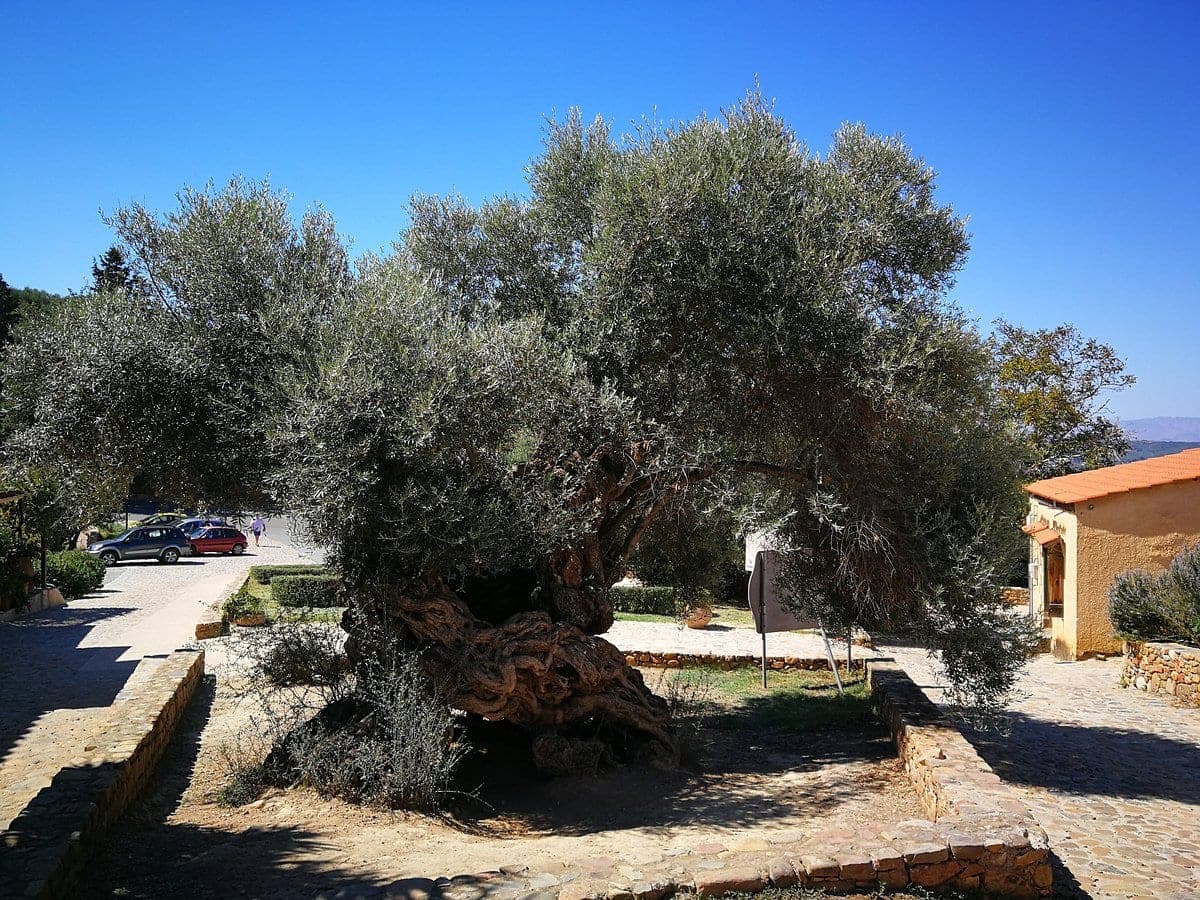
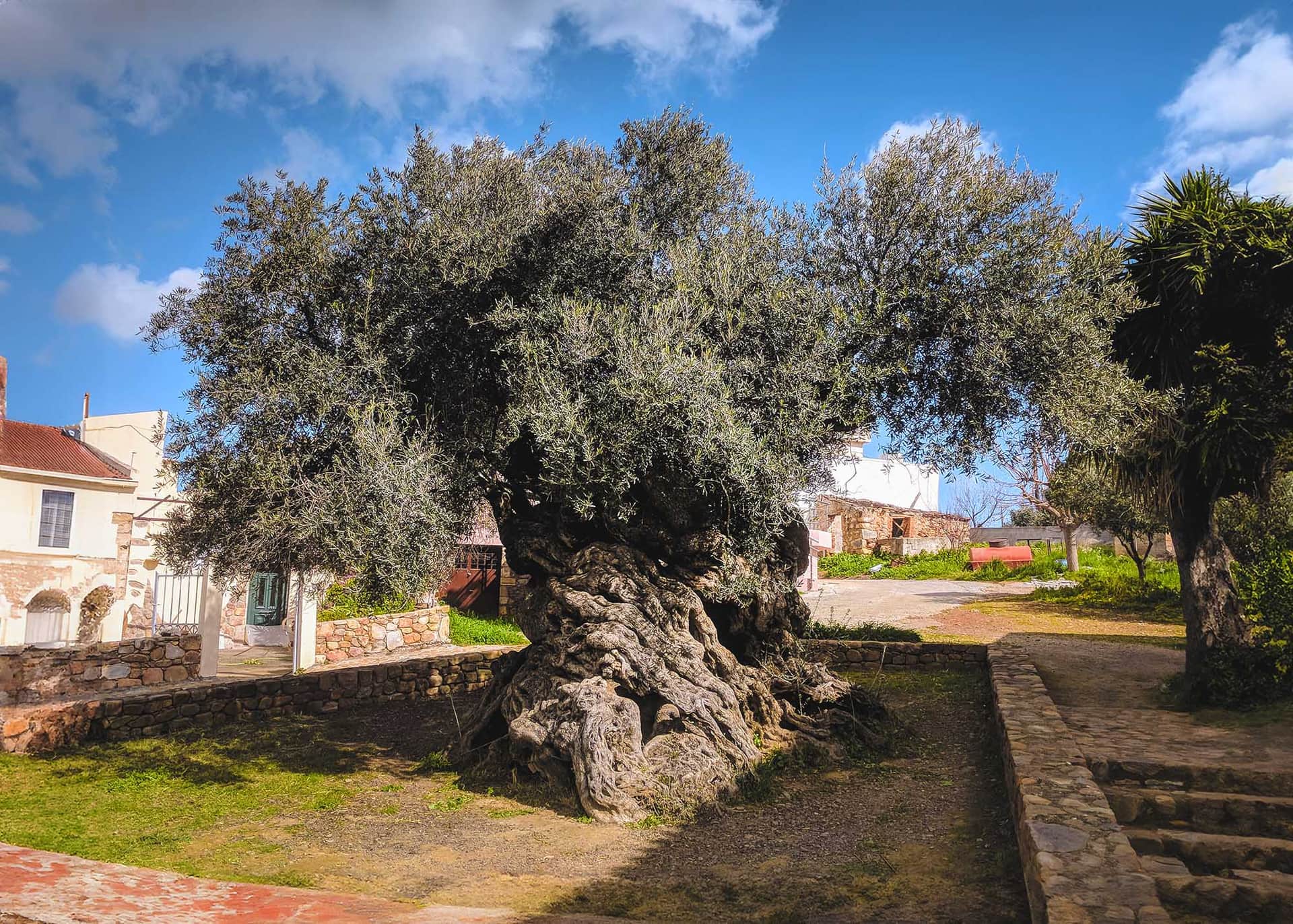
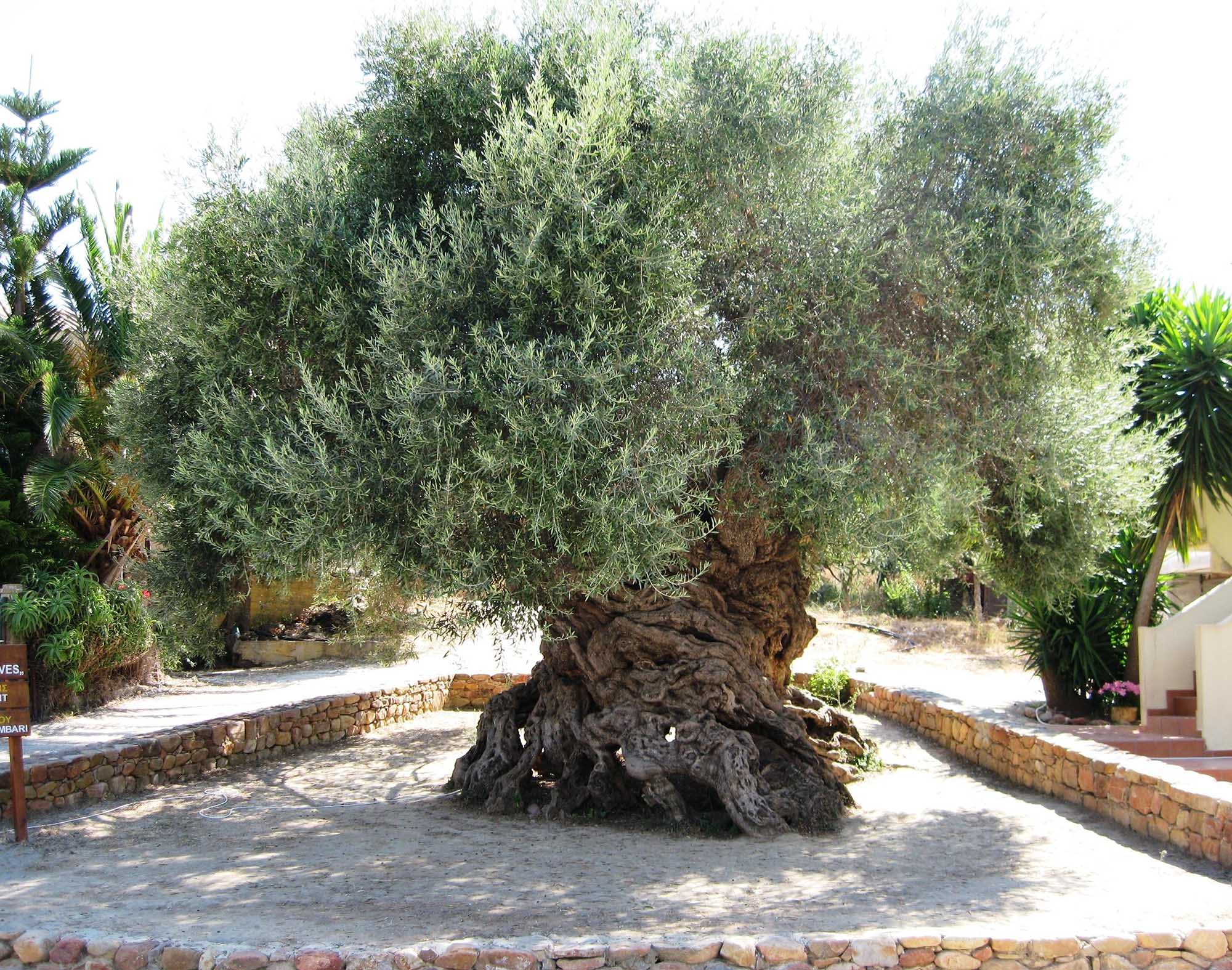
With a trunk circumference exceeding 12.5 metres at the base and a diameter of over 4.5 metres, the Vouves olive tree has been officially classified as a 'protected natural monument' by the Greek government. It is also listed among the 'Monumental Olive Trees' catalogued by the Association of Cretan Olive Municipalities (SEDIK).
Although its exact age cannot be determined precisely, scientific analyses estimate it is at least 3,000 years old, possibly up to 5,000 according to some sources! A tree more than twice millennial, which has weathered many eras of ancient and modern history.
- In 2004 and 2008, branches from the olive tree were woven into crowns presented to the marathon winners at the Athens and Beijing Olympic Games, continuing an ancestral Greek tradition.
- Other branches were also carried during the opening ceremonies of subsequent Olympic editions, making this tree a global symbol.
Despite its now hollow and partially hollowed-out trunk, the olive tree continues to produce olives every year, renewing the miracle of life in an endless cycle. A complete 3D model has even been created to study and preserve this centuries-old botanical wonder.

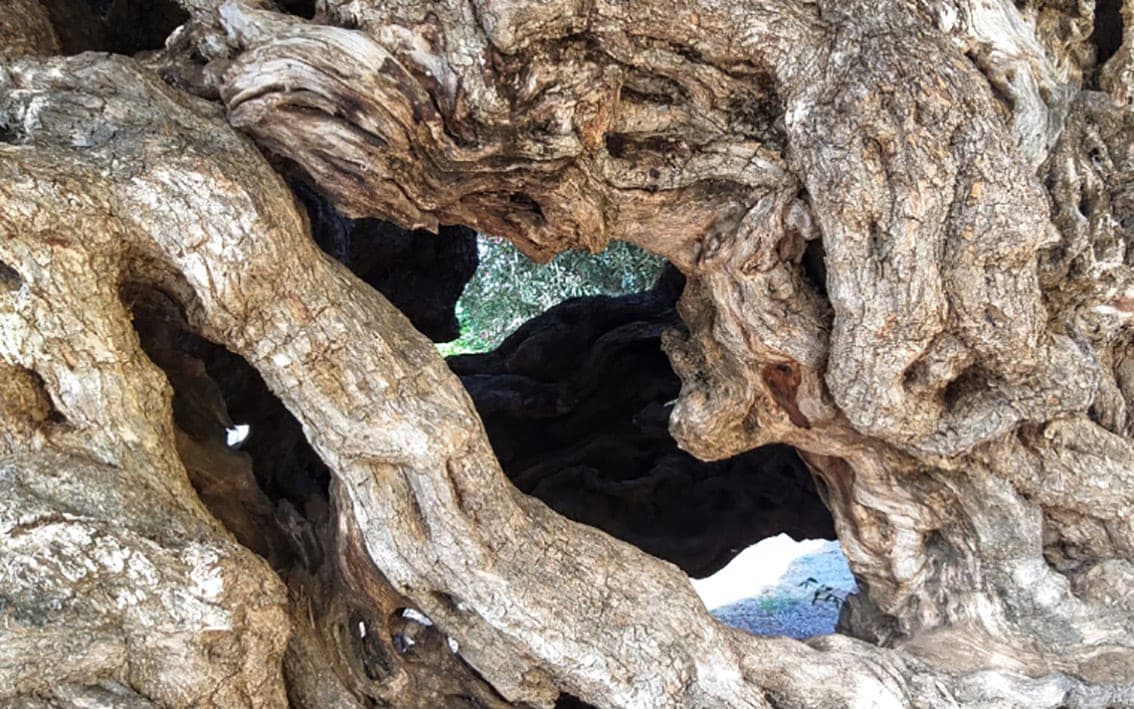
Every time I visit this tree, I am renewed by the fascination for the natural craftsmanship of its enormous hollow trunk, with its intertwined sections curving, bulging and opening like abstract art depicting a sea creature or science fiction invention.
An Unforgettable Experience
When I had the chance to visit this place in 2021, I was literally blown away by the majesty of this extraordinary plant being. From the entrance to the village of Vouves, in the province of Chania, the path winds through rolling hills planted with olive trees and vines characteristic of the Cretan landscape.
And suddenly, around a bend, there it stands before you: a massive hollow trunk, seeming almost unreal, so singular and sculptural is its form. It looks like an abstract work of art carved from wood by a visionary artist.
You can walk all the way around the hollow trunk to admire it from every angle, appreciating the variety of textures, curves and tangles of the ancient wood. A true dance of nature, slowly sculpted over millennia...
The photography opportunities are endless, as the tree offers unique perspectives and fascinating plays of light depending on the time of day. An incredible 'photo spot' not to be missed under any circumstances!
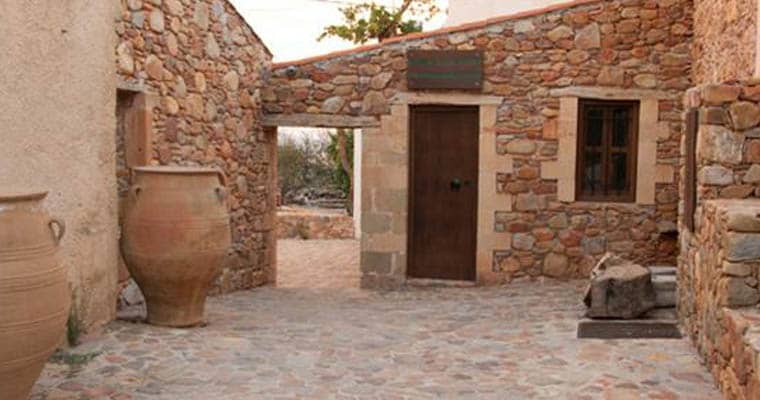
Don't hesitate to step inside the small museum next to the olive tree (small admission fee) which displays:
- Traditional tools and pottery related to olive cultivation
- Old photographs of the region
- And even fossilised olive leaves aged 37,000 to 50,000 years!
An ideal complement to immerse yourself in the millennia-old history of Cretan silviculture and fully appreciate the importance of this exceptional natural heritage.
A second venerable olive tree also stands nearby on the site, while trimmed bushes reproduce the Olympic rings between the two trees, in tribute to this place's role in the Games.
Explore the Region
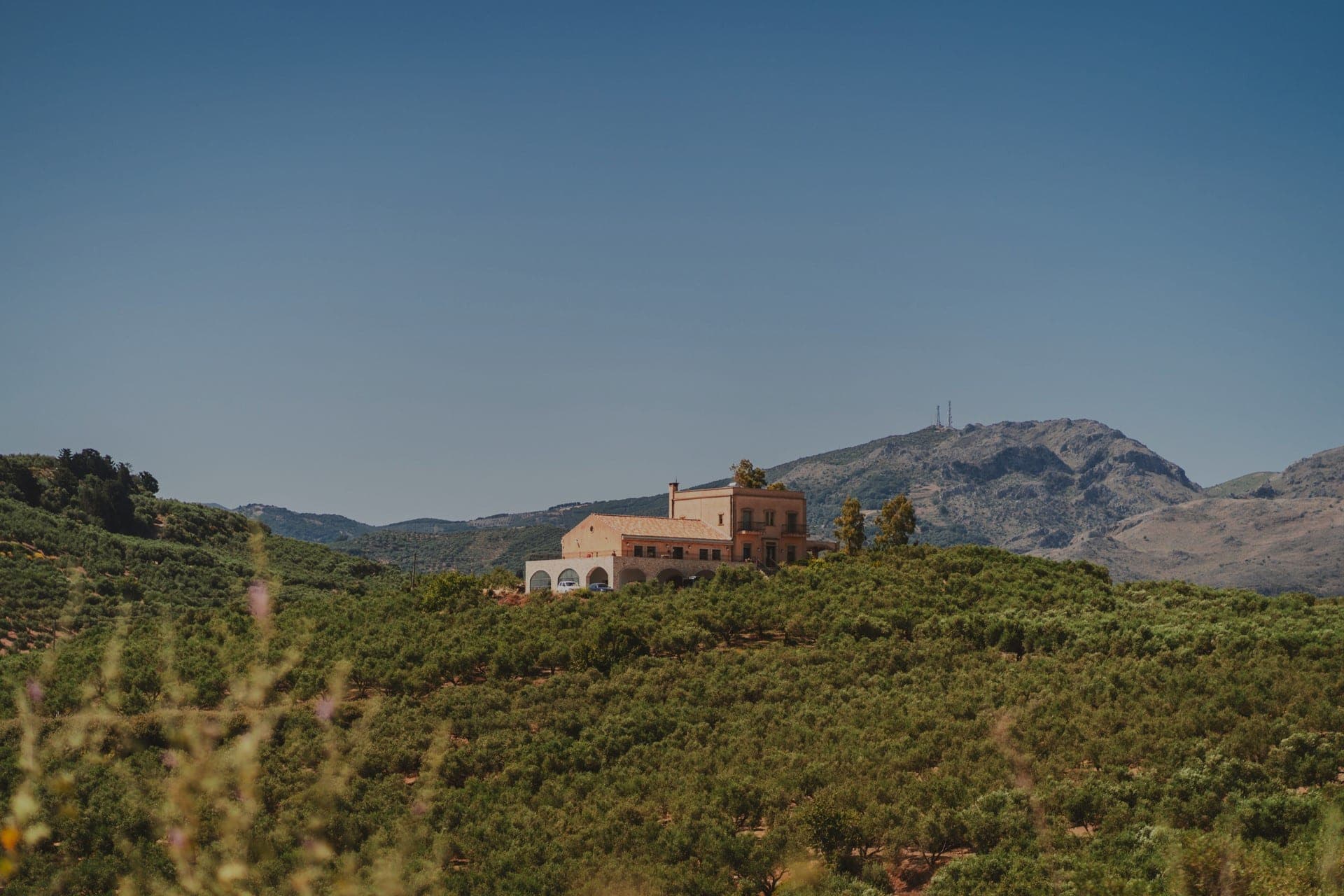
After being dazzled by the beauty of the millennial olive tree, why not continue exploring this rich olive-producing region?
- Biolea Estate which grows its olives organically and offers tastings.
- Terra Creta and Anoskeli (which is also a winery) also open their doors to visitors for guided tours and tastings.
Finally, about thirty kilometres east of Vouves, the charming Venetian town of Chania is also worth a visit for its picturesque old harbour and many lively cafes and tavernas. An excellent base for exploring western Crete!
A Natural Curiosity to Preserve
Beyond the wonder inspired by this extraordinary plant monument, visiting the Vouves olive tree is also an opportunity to reflect on the importance of preserving our natural heritage.
While this tree has weathered centuries and millennia, resisting the vagaries of climate and potential human threats, many other species are disappearing today at an alarming rate under the impact of human activities and climate change.
May we be inspired by the longevity and resilience of this exceptional tree to take care of our planet and pass on this rich natural heritage to future generations.
Faced with such a marvel, whatever our culture or beliefs, we can only be united in humility and gratitude for the wonders that surround us.
So don't hesitate any longer, add a visit to the millennial olive tree of Vouves to your next trip to Crete! A unique experience meeting an exceptional plant being, a true life lesson straight from the depths of History...
FAQ - The Vouves Olive Tree
Yes, although precise dating is impossible, most scientific analyses estimate its age at between 3,000 and 5,000 years minimum!
No, access to the inside is not permitted in order to preserve the tree. But you can walk all the way around the outside.
Access to the olive tree is free; only the small adjoining museum charges a small admission fee.
No, picking olives from this classified tree is not allowed. Visit the nearby olive mills for a tasting instead.
The site and tree are accessible all year round, but the museum only opens in season (usually April to October).

Âme Bohème exists thanks to you
Some links in this article are affiliate links. This means that if you book or purchase a product through these links, we receive a small commission — at no extra cost to you. It's thanks to this support that we can continue creating free, quality content.
You can also buy us a coffee, or follow us on Instagram and Facebook.