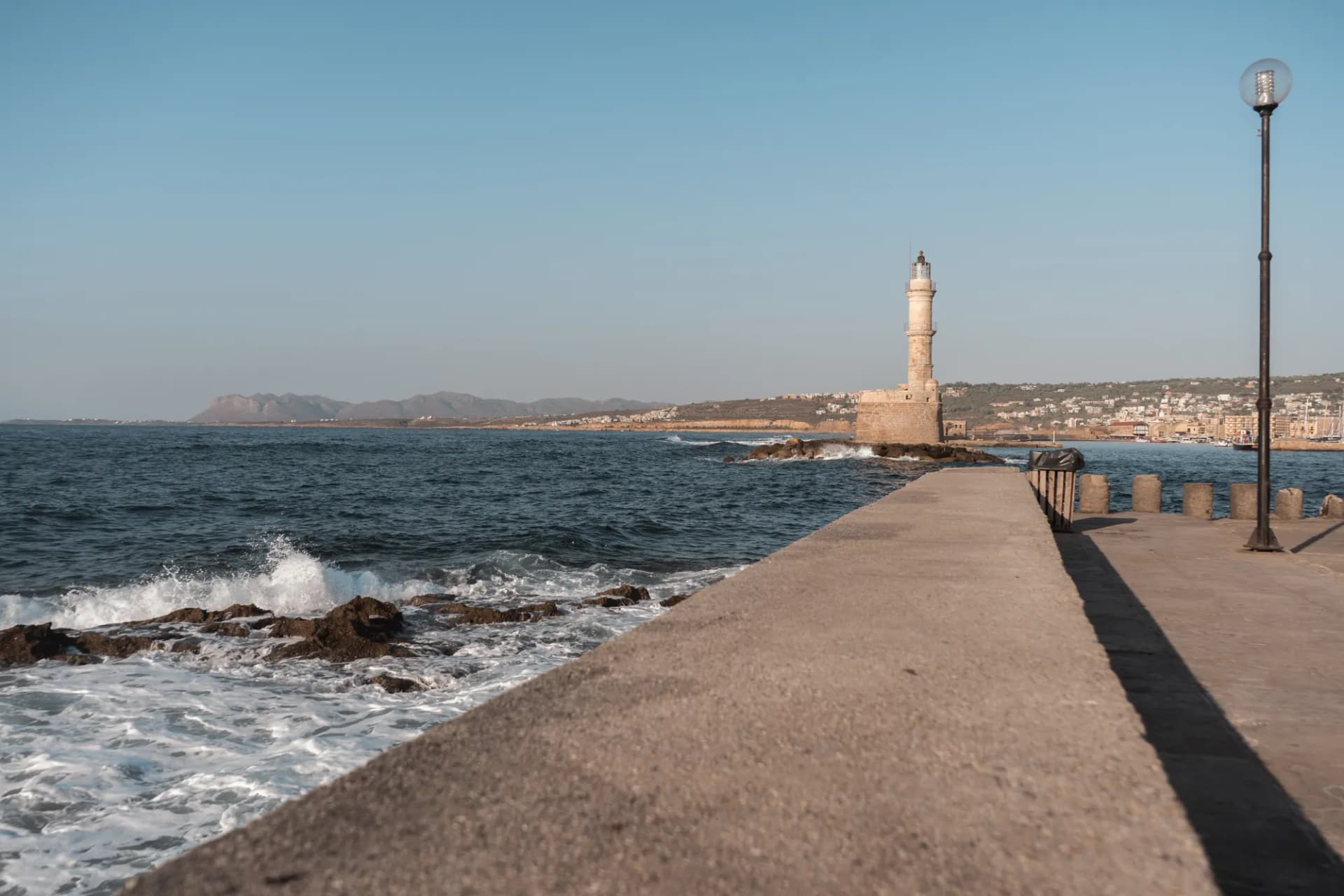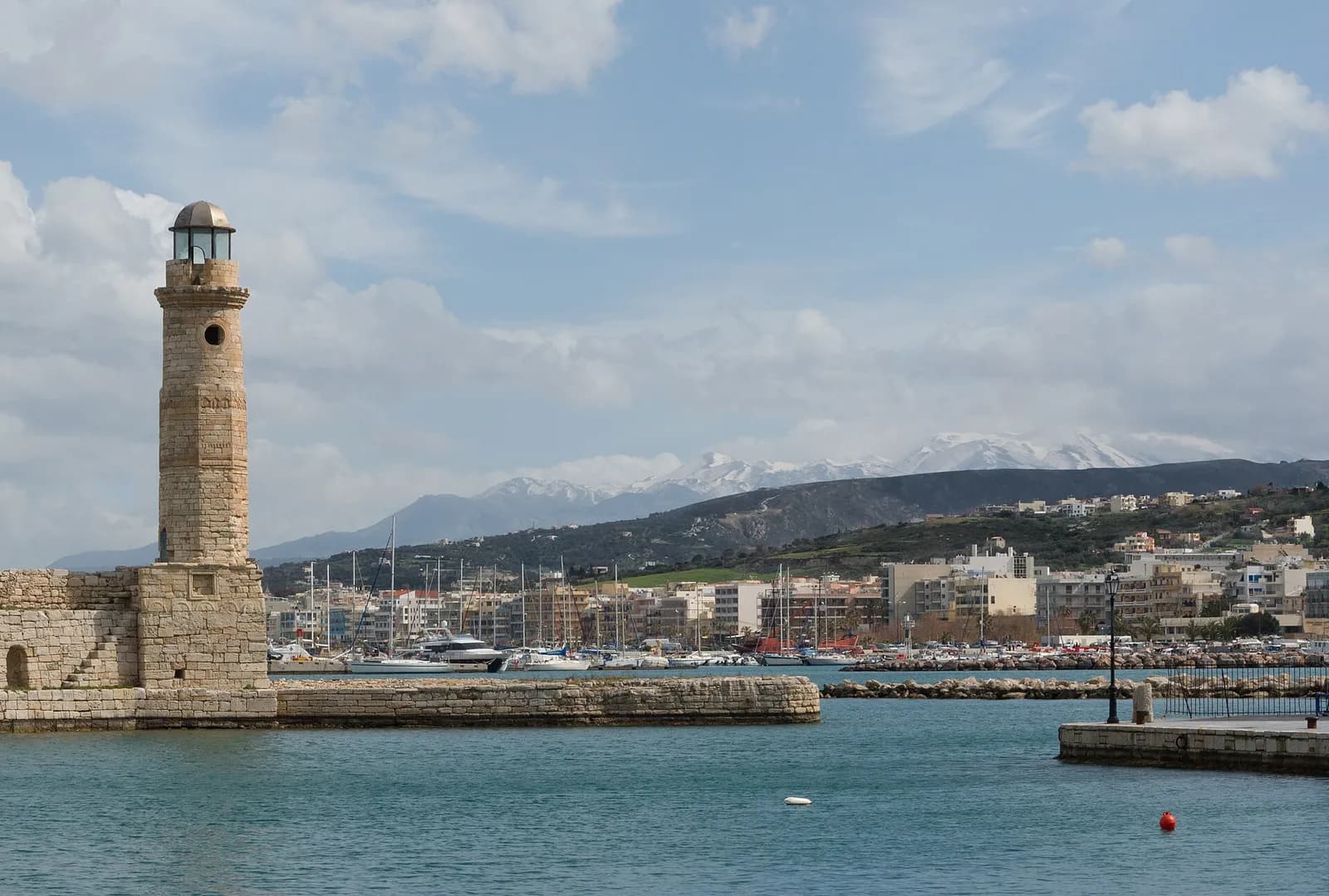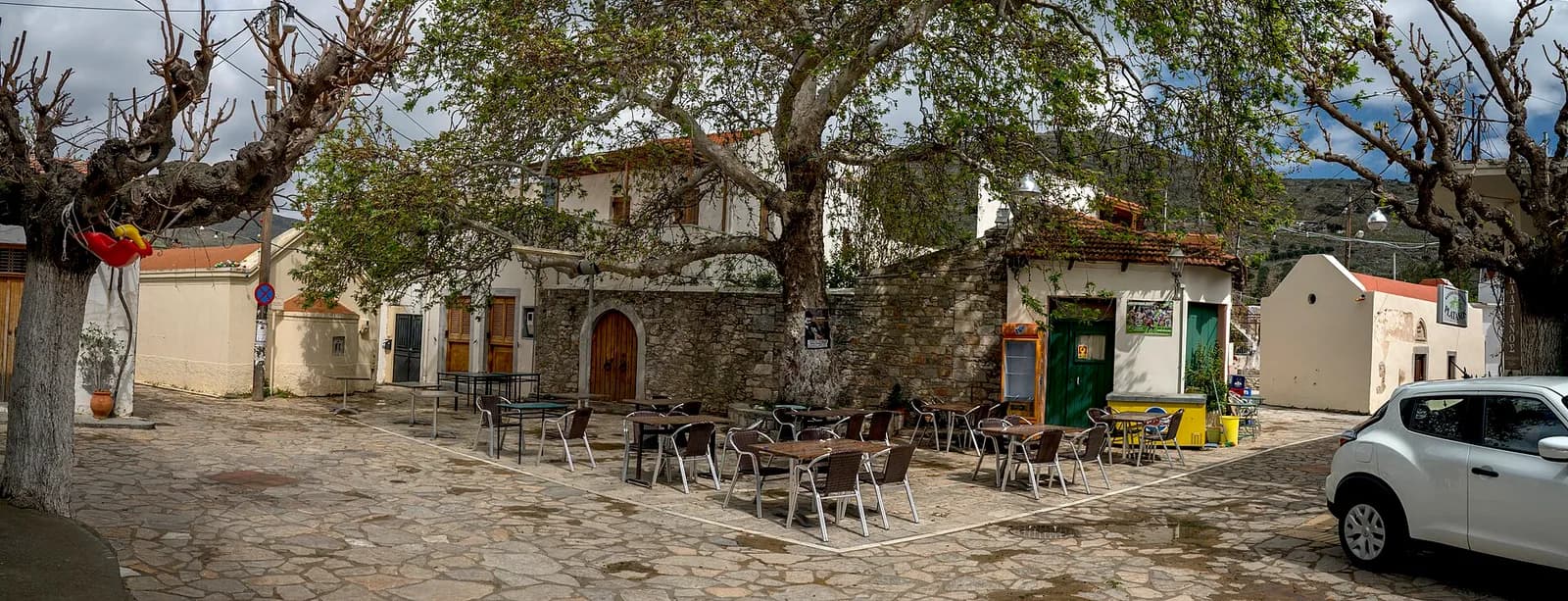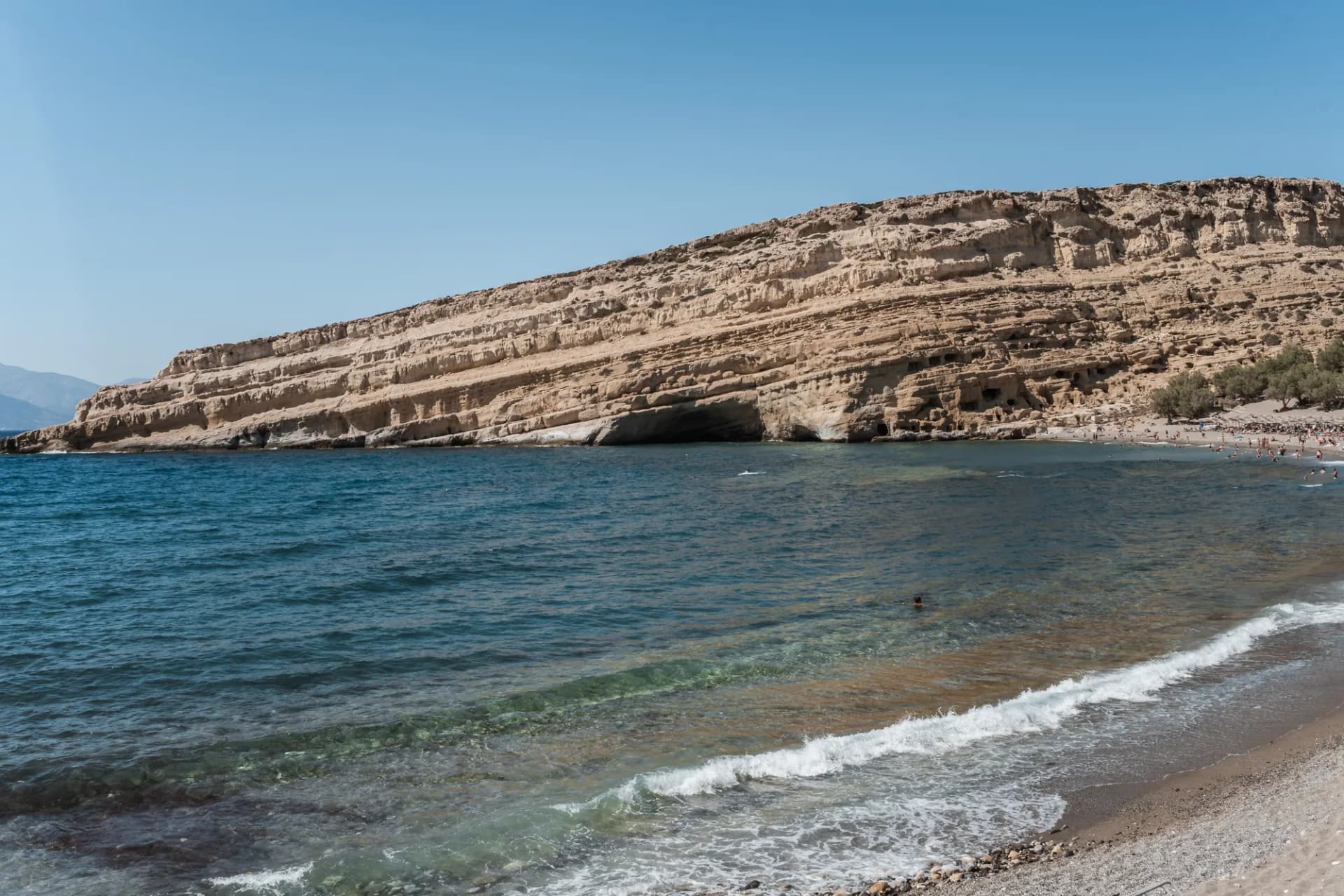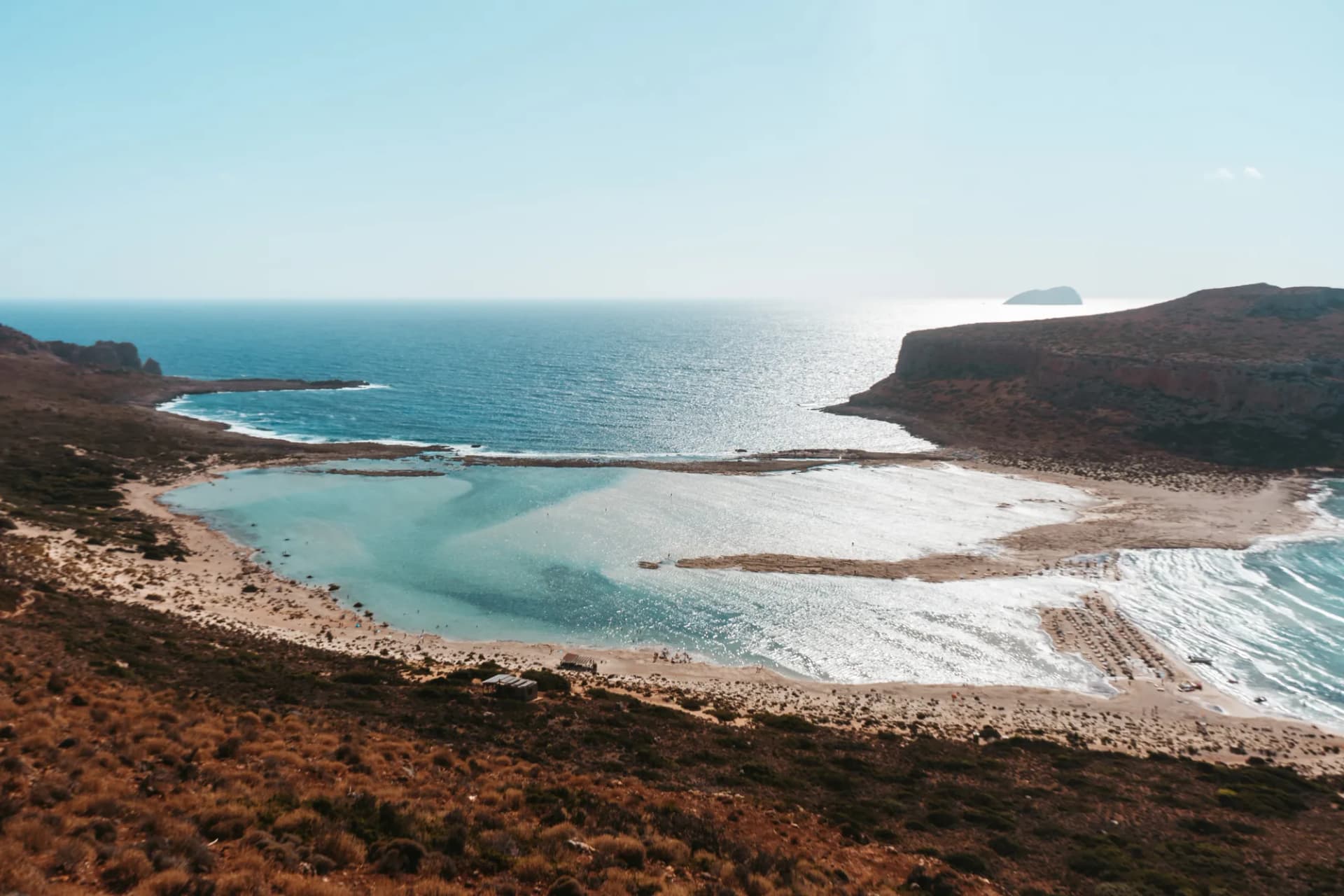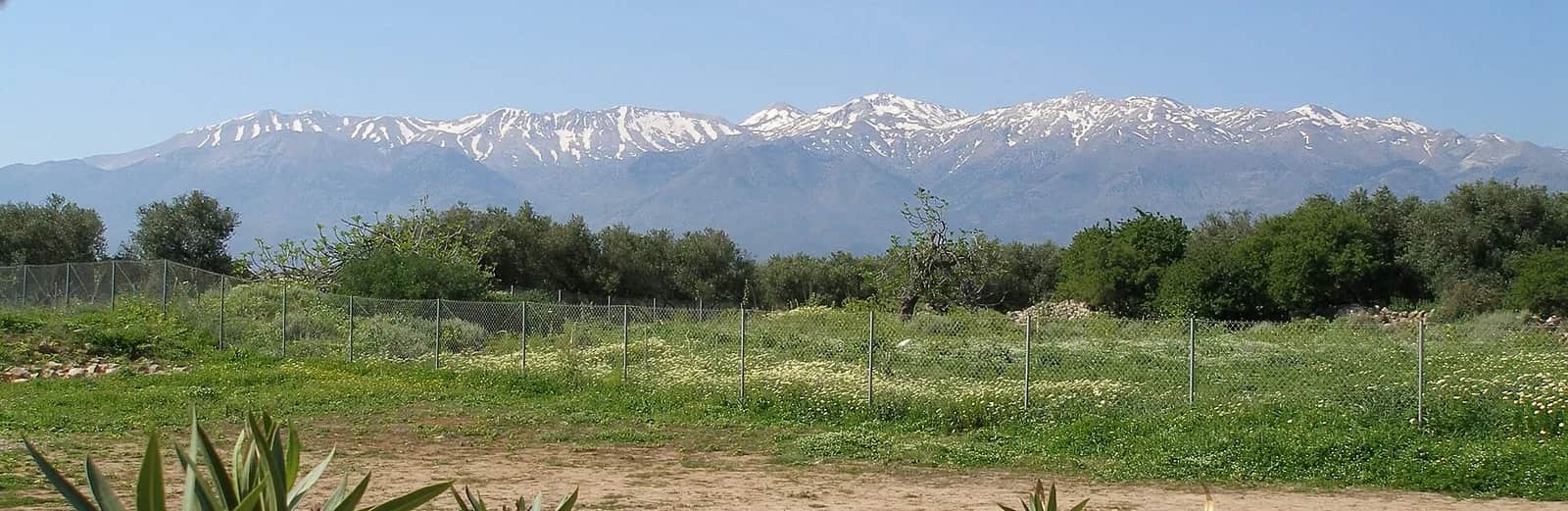

In April, Crete is coming out of winter. The hills are still green, the fields fill with poppies and daisies, the peaks of the Lefka Ori often keep their snow, and the first seaside tavernas are repainting their shutters. It is around 20°C in the afternoon in Heraklion, warm enough to have lunch outside, not yet warm enough for the sea to be warm.
In some years, it is also the month of Orthodox Easter, the most important celebration in the Greek calendar. Spending the night of the Resurrection in a Cretan village, with candles lit from hand to hand at midnight and firecrackers going off in the square, is still one of the most powerful experiences you can have on the island outside the high season.
In this guide, I go through the real April weather, what is open and what is still closed, how Holy Week unfolds, the Easter dates for 2027 and 2028, and the pitfalls to avoid (public holidays, Easter weekend prices). For an overview of the whole year, my guide on when to go to Crete, month by month is the place to start.
Weather in Crete in April: mild, changeable, rarely hot
The averages from the Greek national weather service (Heraklion airport station, 1991 to 2020) give April an average high of 20.1°C and an average low of 12.8°C. On average, 24 mm of rain falls over about 6 days, compared with nearly 50 mm in March. Sunshine climbs to 228 hours over the month, a little over 7 hours a day.
| Heraklion | March | April | May |
|---|---|---|---|
| Average high | 16.8°C | 20.1°C | 24.3°C |
| Average low | 10.2°C | 12.8°C | 16.2°C |
| Rainfall | 49 mm | 24 mm | 13 mm |
| Rainy days | about 10 | about 6 | about 4 |
| Sunshine | 177 h | 228 h | 301 h |
| Sea (average) | about 16°C | 17 to 18°C | about 20°C |
These averages hide a month of contrasts. Early April often still feels like March, with windy days and the odd shower; the end of the month already hints at May. The south of the island, facing the Libyan Sea, is generally drier and brighter than the north: if the coast around Heraklion or Chania is overcast, crossing the mountains is often enough to find the sun again.
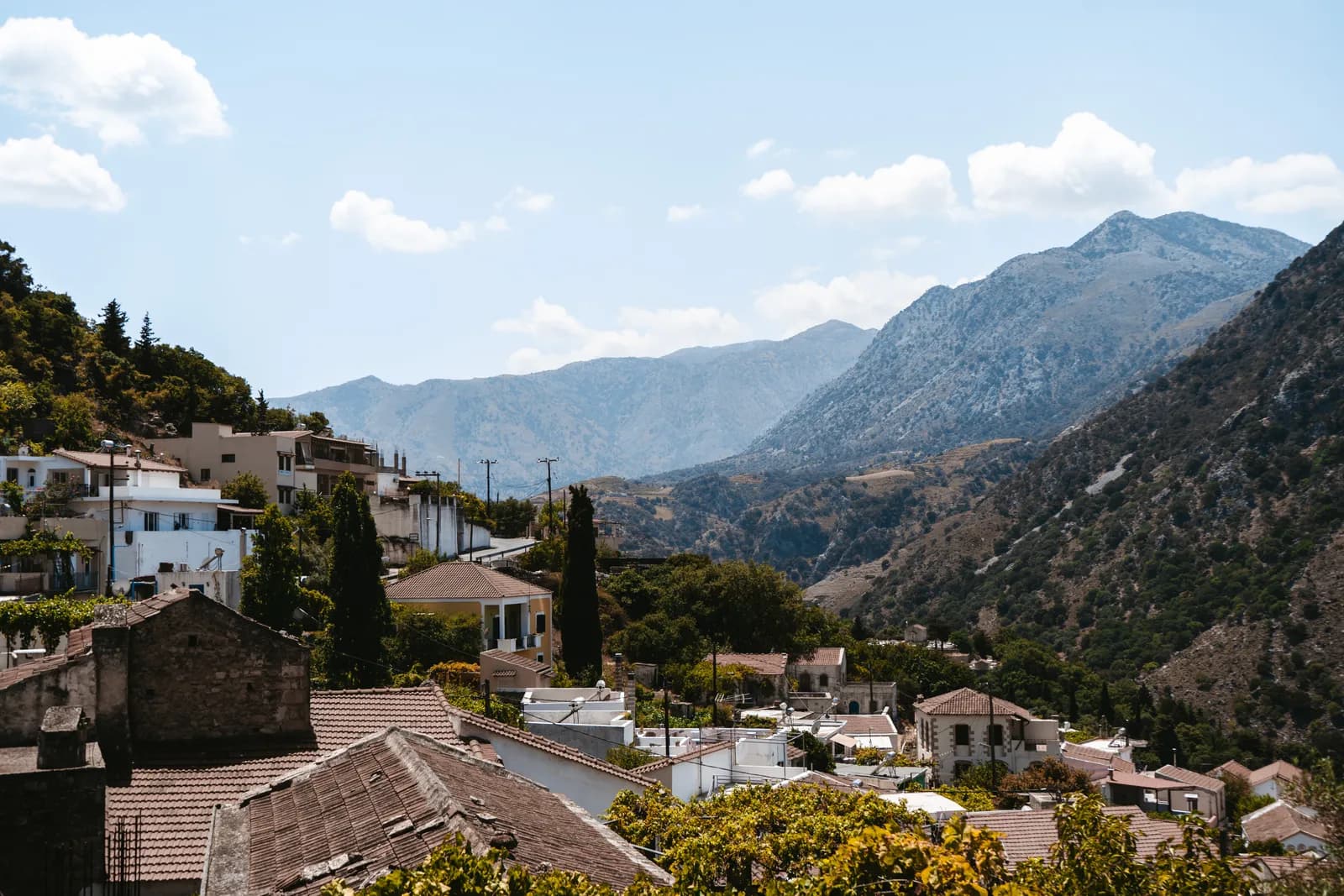
At altitude, things change quickly. On the Lassithi Plateau, at over 800 m, mornings are cool and the wind can be cold; on the Lefka Ori, snow is common from November to April. I recommend packing layers: T-shirt, light jumper, windproof jacket and a warm coat for the evenings and the mountain roads.
Flowers and walking: the real reason to come in April
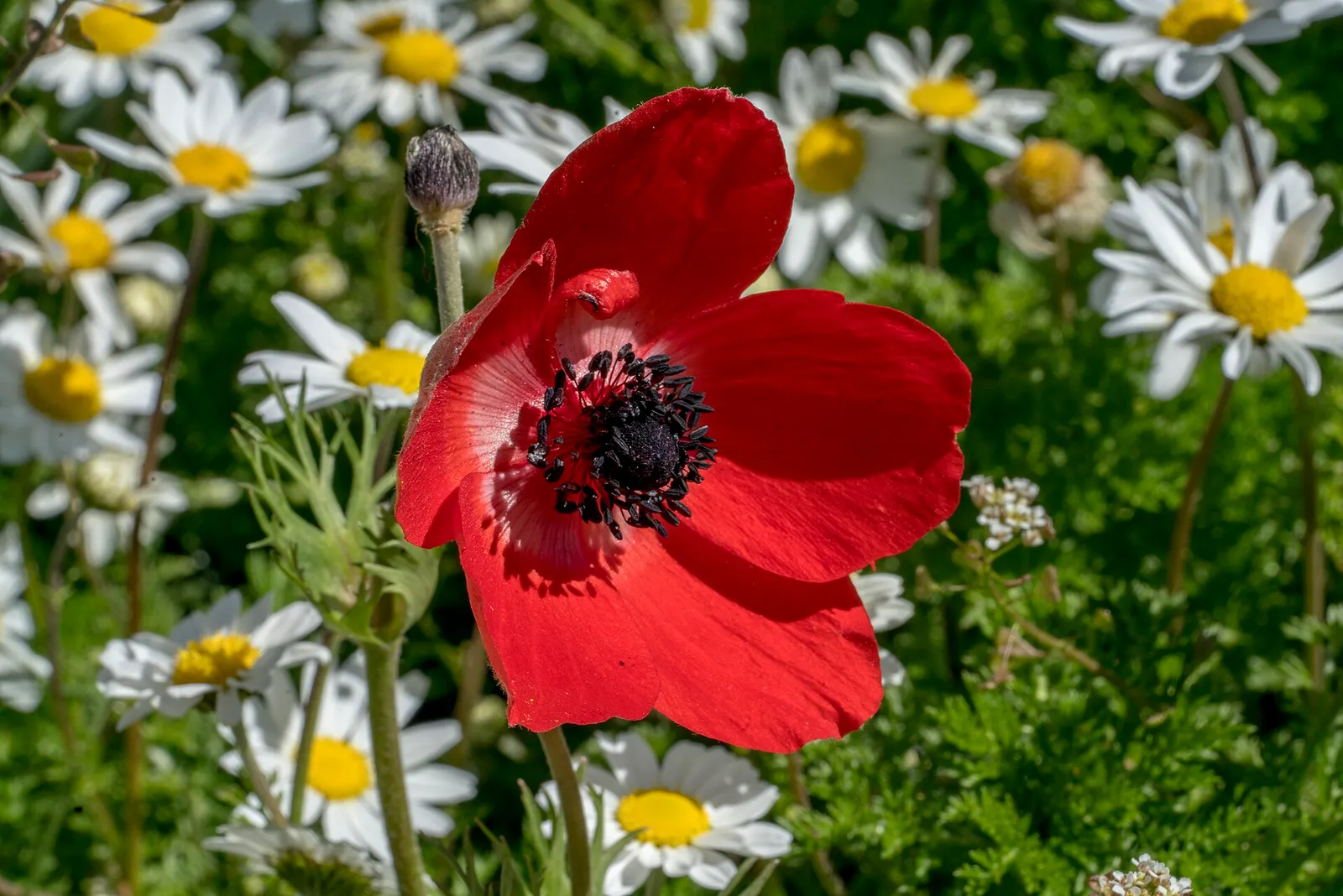
April is when Crete is at its greenest. After the winter rains, the verges, olive groves and scrubland are covered in wild flowers: poppies, yellow chrysanthemums, pink rockroses, sage, thyme in bud and, if you look closely, wild orchids along the paths. From June onwards, the landscape turns yellow very quickly.
Conditions for walking are ideal: moderate temperatures, soft light, empty paths. A few ideas that suit the season:
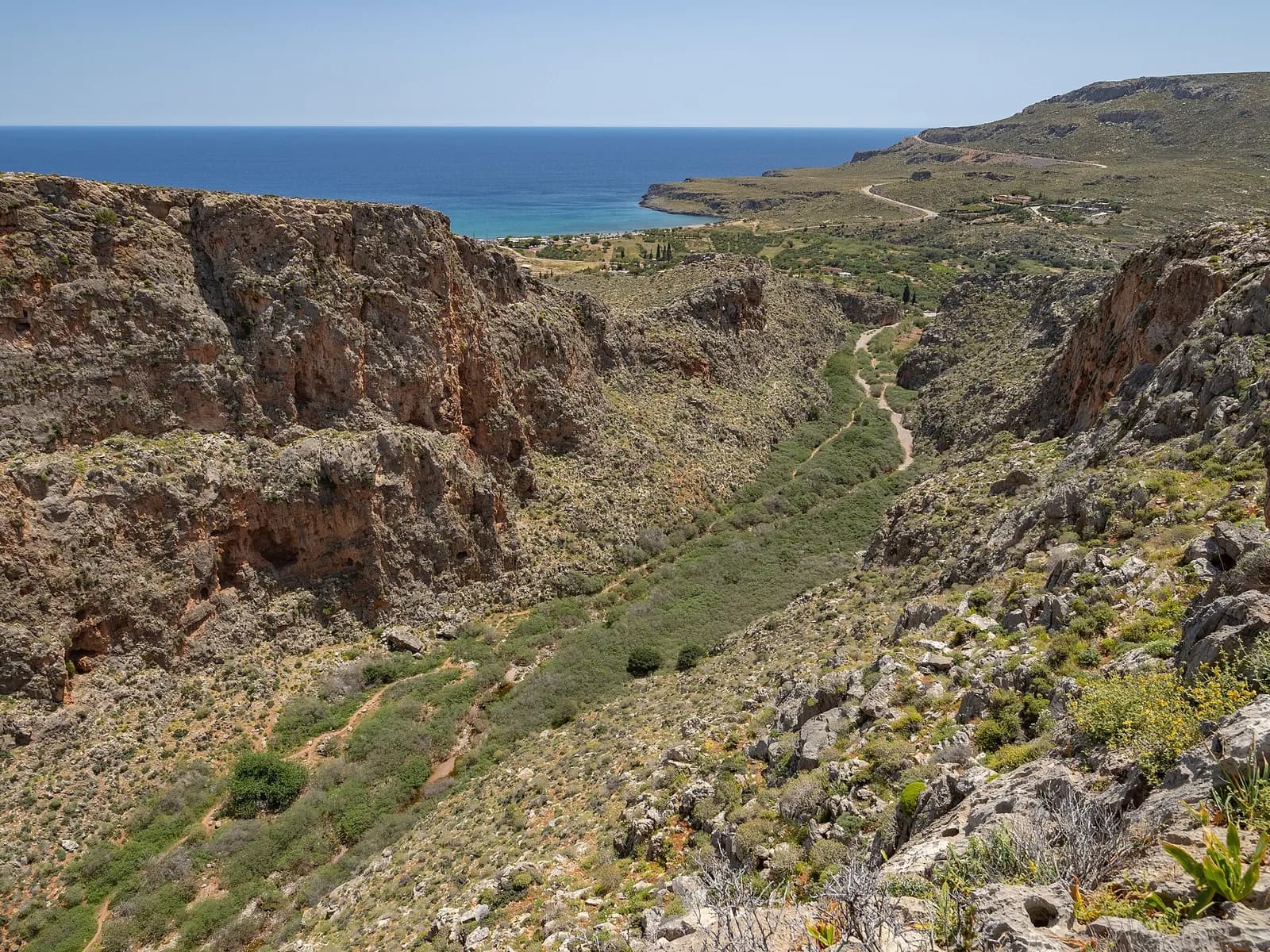
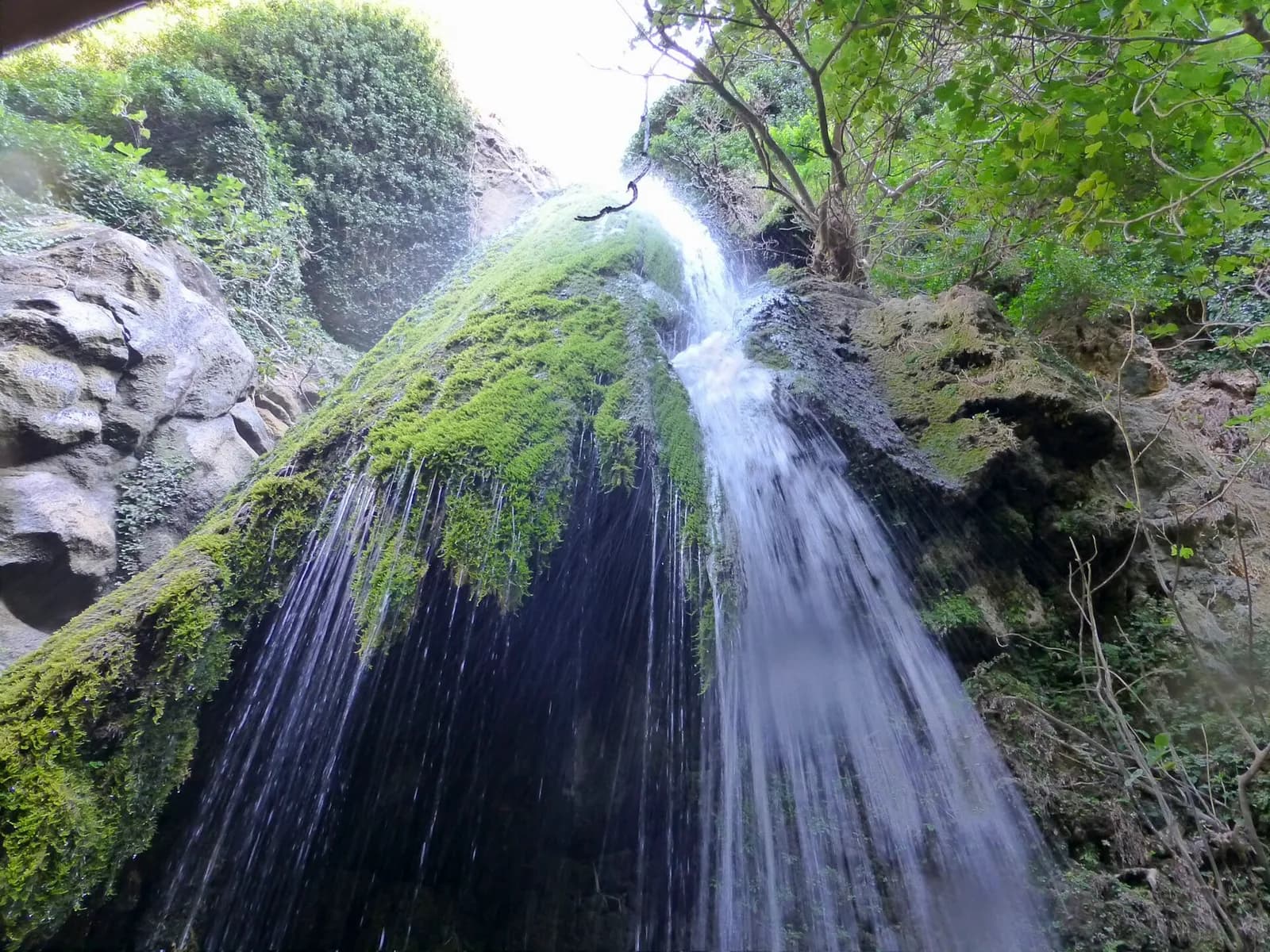
- The smaller gorges: Imbros, near Sfakia, Agia Irini, above Sougia, or the Richtis and Zakros gorges in the east are all accessible outside the season. Ask locally after heavy rain, as the stream beds may have water in them.
- The Lassithi Plateau: a loop on foot or by bike between the villages and the cultivated fields, with the Dikti range still snow-capped in the background in some years.
- The southern coastal paths: the stretch of the European E4 path between Chora Sfakion and Loutro is very pleasant to walk in spring, without the crushing heat of summer.
One important point: the famous Samaria Gorge is not open in April. The national park is closed from November to the end of April and normally opens on 1 May, provided the path has been repaired after the winter. In 2026, it only fully opened, through both entrances, on Tuesday 19 May. If Samaria is the main goal of your trip, go at the end of May or in June instead.
What is open or closed in April
April is a month of transition. The major cultural sites operate all year round, but part of the beach economy only reopens as the month goes on, often timed for the Easter weekend. Here is what to expect.
| Site or service | In April | Good to know |
|---|---|---|
| Palace of Knossos | Open | €20 (€10 reduced); closed on Easter Sunday |
| Heraklion Archaeological Museum | Open | €20; closed on Easter Sunday |
| Spinalonga | Open from 1 April | €20 (€10 reduced), 8.30am to 6pm; boat about €12 return from Plaka |
| Samaria Gorge | Closed | Normally opens on 1 May (19 May in 2026) |
| Cave of Zeus (Psychro) | To be checked | Reopened on 29 May 2026, closed on Tuesdays |
| Monasteries (Arkadi, Toplou, Preveli) | Generally open | Holy Week services; covered-up clothing required; check opening times |
| Boats to Balos, Gramvousa, Chrissi | Gradual restart | Regular departures mainly from late April or May |
| Beach hotels and tavernas | Gradual opening | Many reopen just before Easter or during April |
| Beaches | Accessible | Few or no sunloungers or beach bars in early April |
For Spinalonga, April is probably the best month of the year: the site has just opened, cruise groups are still rare and the light over Mirabello Bay is superb late in the day. All the practical details are in my guide to visiting Spinalonga.
The towns, on the other hand, are lively all year round: Heraklion, Chania, Rethymno and Agios Nikolaos have their restaurants, cafés and shops open. Purely beach resorts (parts of Hersonissos, Malia or the Stalis coast) can feel sleepy in early April, though. I recommend staying in a town or a lively village rather than an isolated resort.
Orthodox Easter in Crete: 2027 and 2028 dates
Orthodox Easter (Pascha) is calculated using the Julian calendar. As a result, it often falls one to five weeks after Catholic Easter, and sometimes on the same day. It doesn't always fall in April: in 2027, it is actually in May.
| Year | Good Friday | Easter Sunday | Easter Monday | Catholic Easter |
|---|---|---|---|---|
| 2027 | 30 April | 2 May | 3 May | 28 March |
| 2028 | 14 April | 16 April | 17 April | 16 April (same day) |
| 2029 | 6 April | 8 April | 9 April | 1 April |
In 2027, Holy Week therefore straddles the end of April and the start of May, and 1 May, Labour Day, falls on Holy Saturday. In Greece, 1 May is the only public holiday that can be moved; the Ministry of Labour announces each year whether it will be postponed. Check the official announcement before planning your visits.
Holy Week, day by day
Holy Week (Megali Evdomada) is lived intensely, even by Cretans who rarely go to church the rest of the year. Many observe the fast: no meat, no dairy and often no fish. Tavernas adapt their menus, with more vegetable, pulse and seafood dishes.
Holy Thursday: red eggs
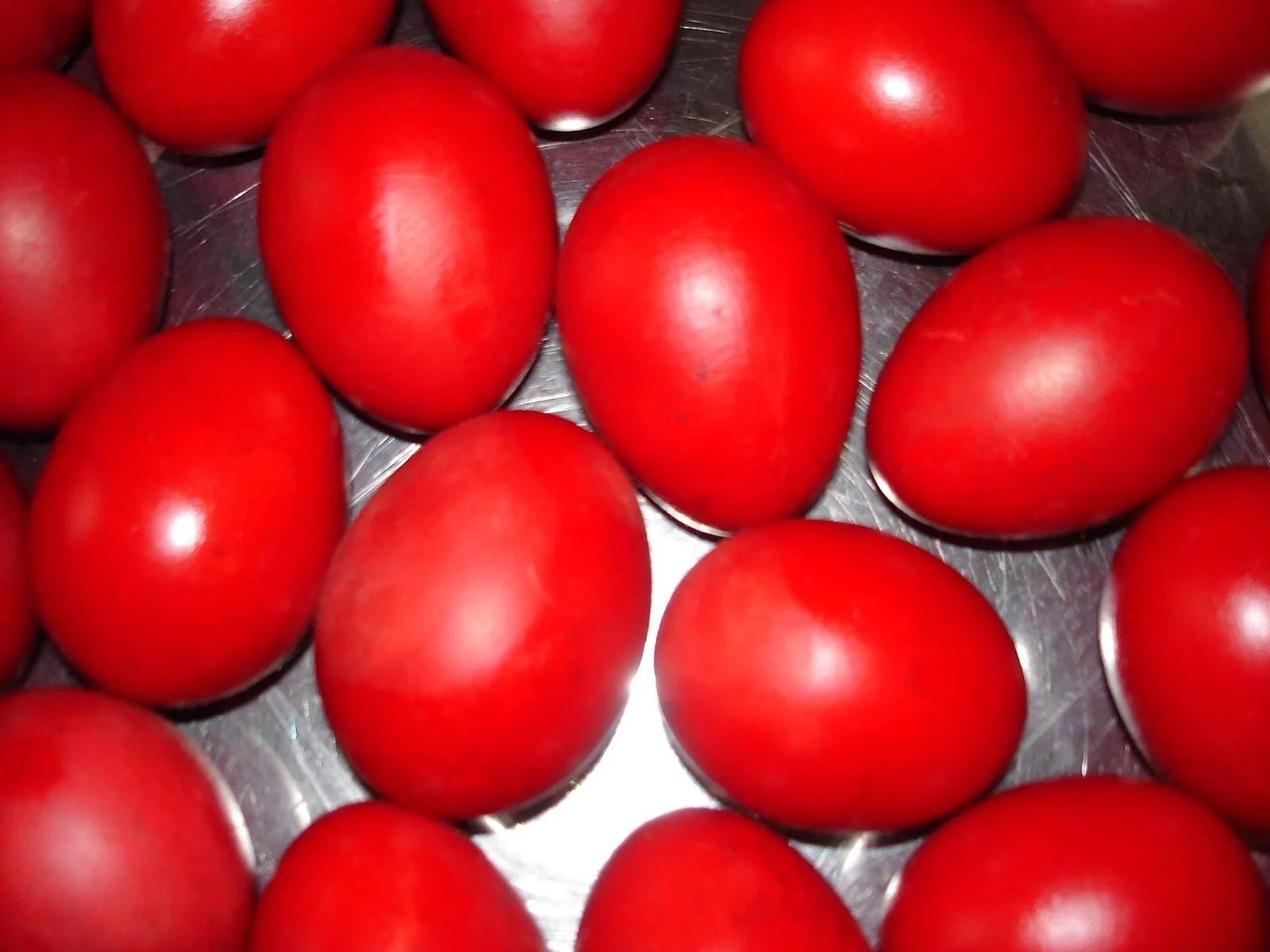
On Thursday, eggs are dyed red, the colour of Christ's blood, traditionally with onion skins and vinegar or with shop-bought dye. It is also the day people make tsoureki, a braided sweet bread flavoured with mahleb and mastic, often decorated with a red egg pressed into the dough. The bakeries are full of it all week.
Good Friday: the Epitaphios
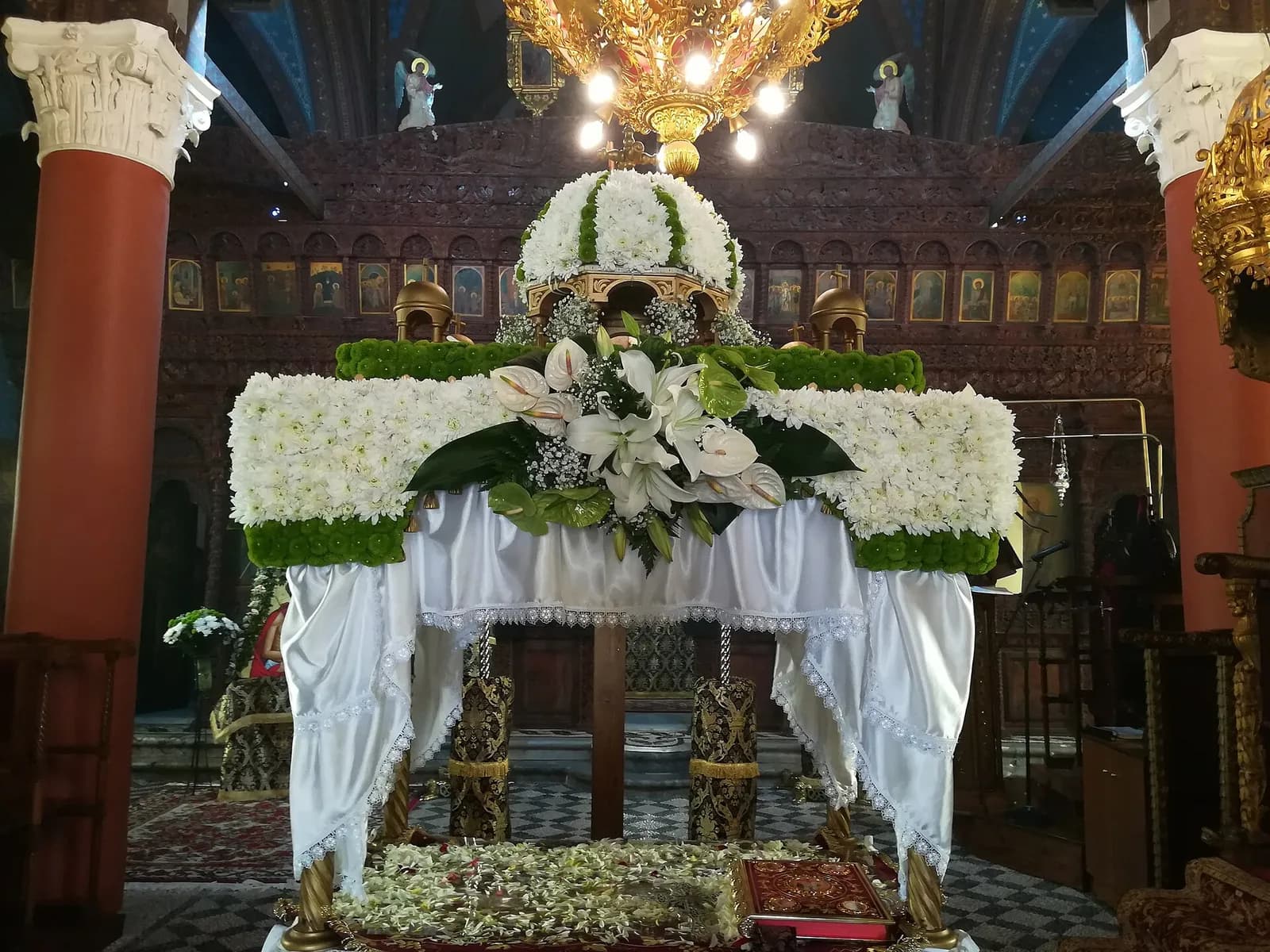
Good Friday is a day of mourning, and the church bells toll. In the morning, the women of the parish decorate the Epitaphios, the symbolic tomb of Christ, with an abundance of white, red and purple flowers. In the evening, after the service of Lamentations, it is carried in procession through the streets, followed by the faithful holding candles. In the towns, the processions of several parishes sometimes meet in a central square. It is a contemplative moment, very beautiful to watch from a respectful distance.
Saturday night: “Christos Anesti” at midnight
The high point comes during the night from Saturday to Sunday. The service starts at around 11pm; shortly before midnight, all the lights go out. The priest appears with a single flame, the Holy Light, which is passed from candle to candle to the crowd gathered outside. At midnight, he proclaims “Christos Anesti” (Christ is risen), and everyone replies “Alithos Anesti” (He is truly risen). The bells ring out, people kiss, and the sky lights up with fireworks and firecrackers.
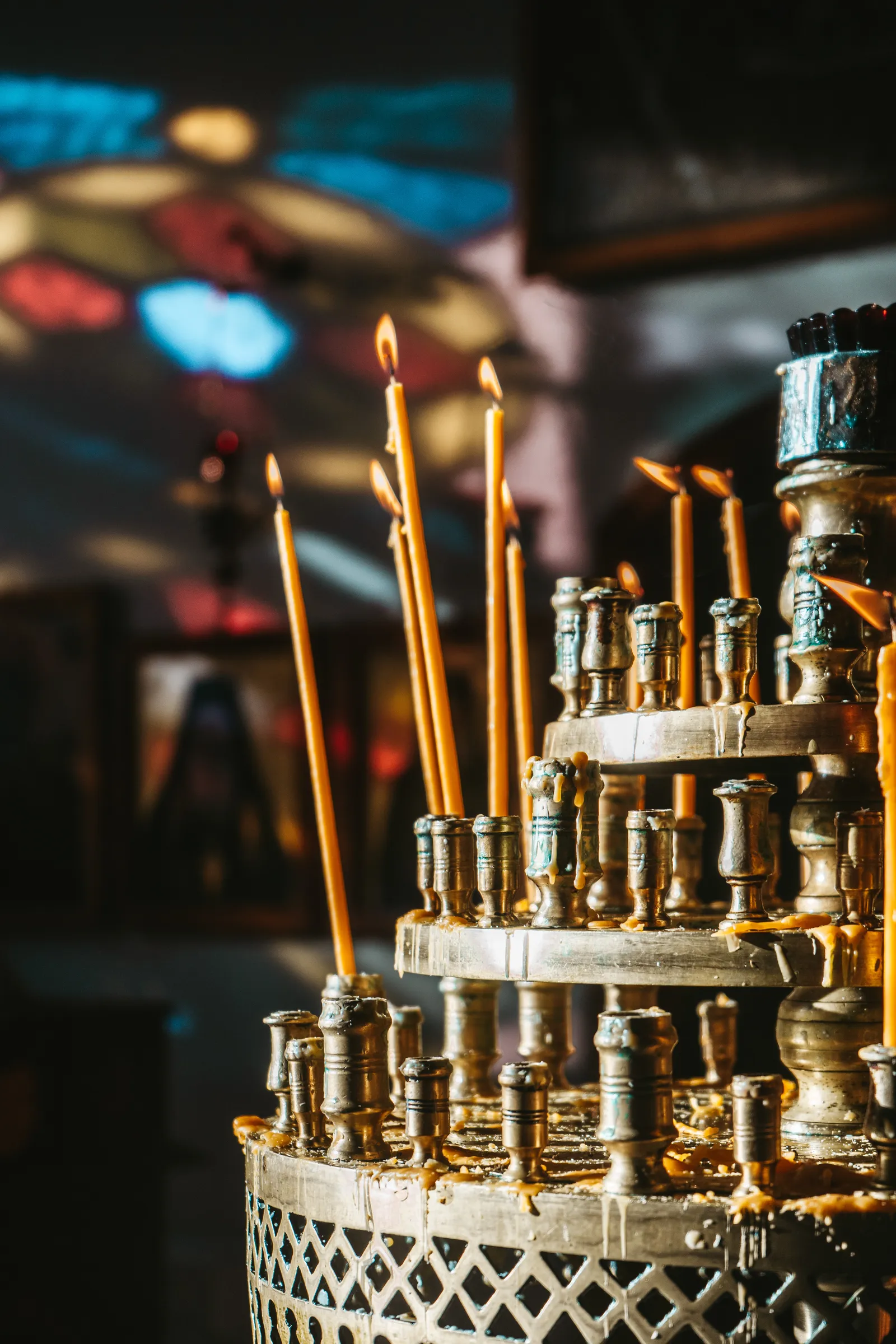
The faithful then carry the flame home, shielding it from the wind so it doesn't go out. The candles (lambades) are sold everywhere during the week, from the simplest to decorated ones for children. Buy yours in advance or at the church entrance.
The founara: the burning of Judas
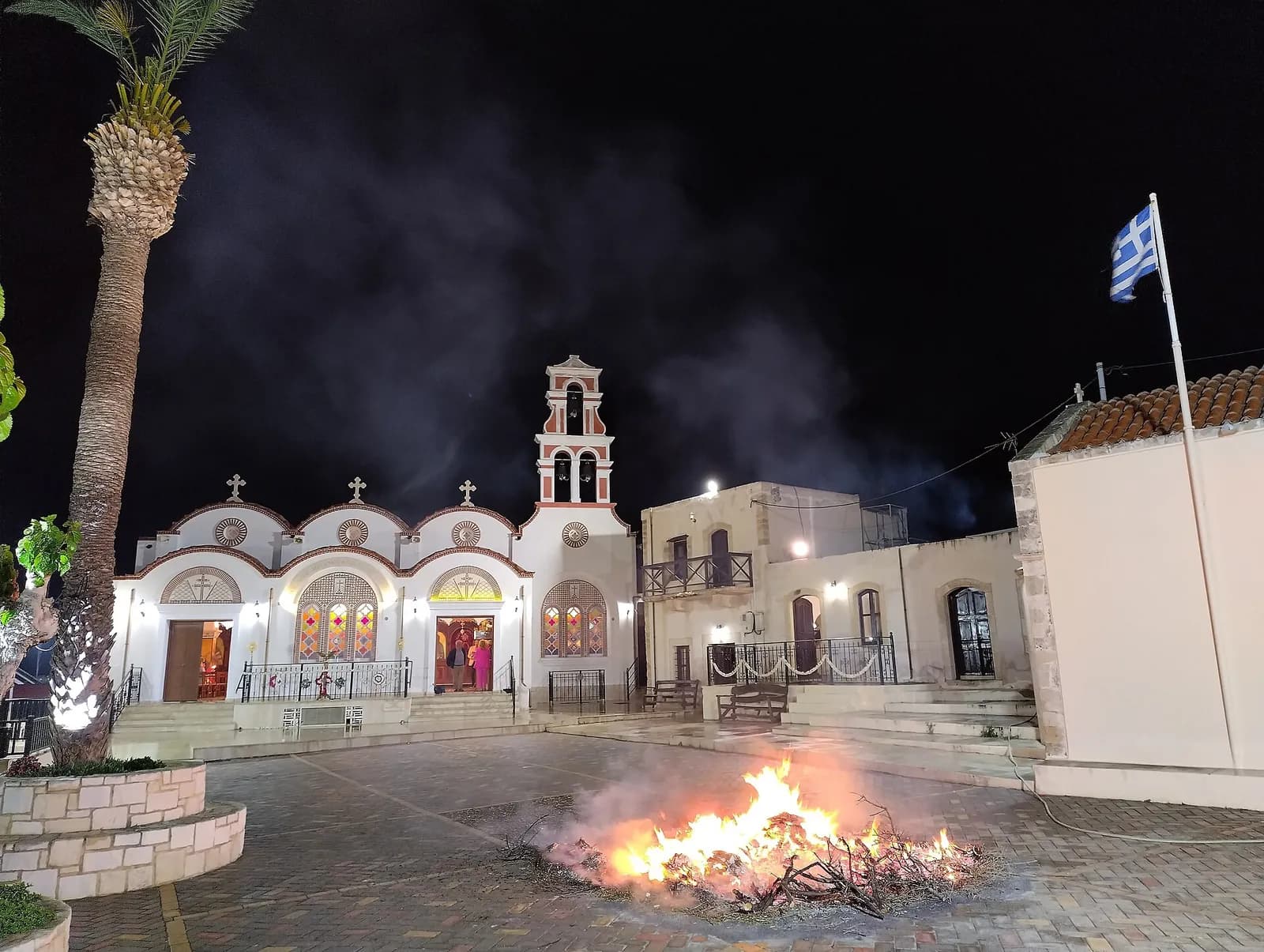
In many Cretan villages, Easter night ends with the “founara”, a large bonfire. On Saturday morning, the village boys gather dry wood and branches near the church or on a spot visible from the whole village, then put a rag effigy of Judas on top. The bonfire is lit after the midnight service, to the sound of firecrackers. This very old custom, also found elsewhere in Greece, symbolises the punishment of betrayal. There is no official schedule: ask your hosts or at the village kafeneio (traditional café).
Easter Sunday: the feast
The fast is broken straight after the service, in the middle of the night, with a hot soup; the best known in Greece is magiritsa, but recipes vary from one Cretan family to another. Sunday is for the festive meal, often outdoors and with the extended family:
- Lamb or kid: on the spit, roasted in the oven or cooked antikristo (skewered around the fire), depending on the family and the village.
- Red eggs: people knock them together in pairs (the tsougrisma) while wishing each other “Christos Anesti”; whoever's egg survives will have good luck.
- Tsoureki: Thursday's sweet bread, served for dessert or breakfast.
- Kalitsounia: small Cretan pastries filled with mizithra, the local fresh cheese; the sweet version, flavoured with cinnamon, is made in many homes for Easter.
If you aren't invited by a family, book a village taverna for Sunday lunch: many offer an Easter menu with lamb, and there is often live music until late in the afternoon.
Where to spend Easter in Crete
There is no single official place: every parish celebrates Easter, and the experience depends mainly on the scale you are after.
- In town: in Heraklion, around Agios Minas Cathedral, or in the old towns of Chania and Rethymno, the Friday processions are spectacular and Saturday night draws thousands of people. Handy if you don't have a car.
- In a village: this is where you experience the most intimate celebration, with the founara and the meal in the square. Mountain villages, those on the Lassithi Plateau or in the Rethymno hinterland, are well suited. Stay locally so you don't have to drive after midnight.
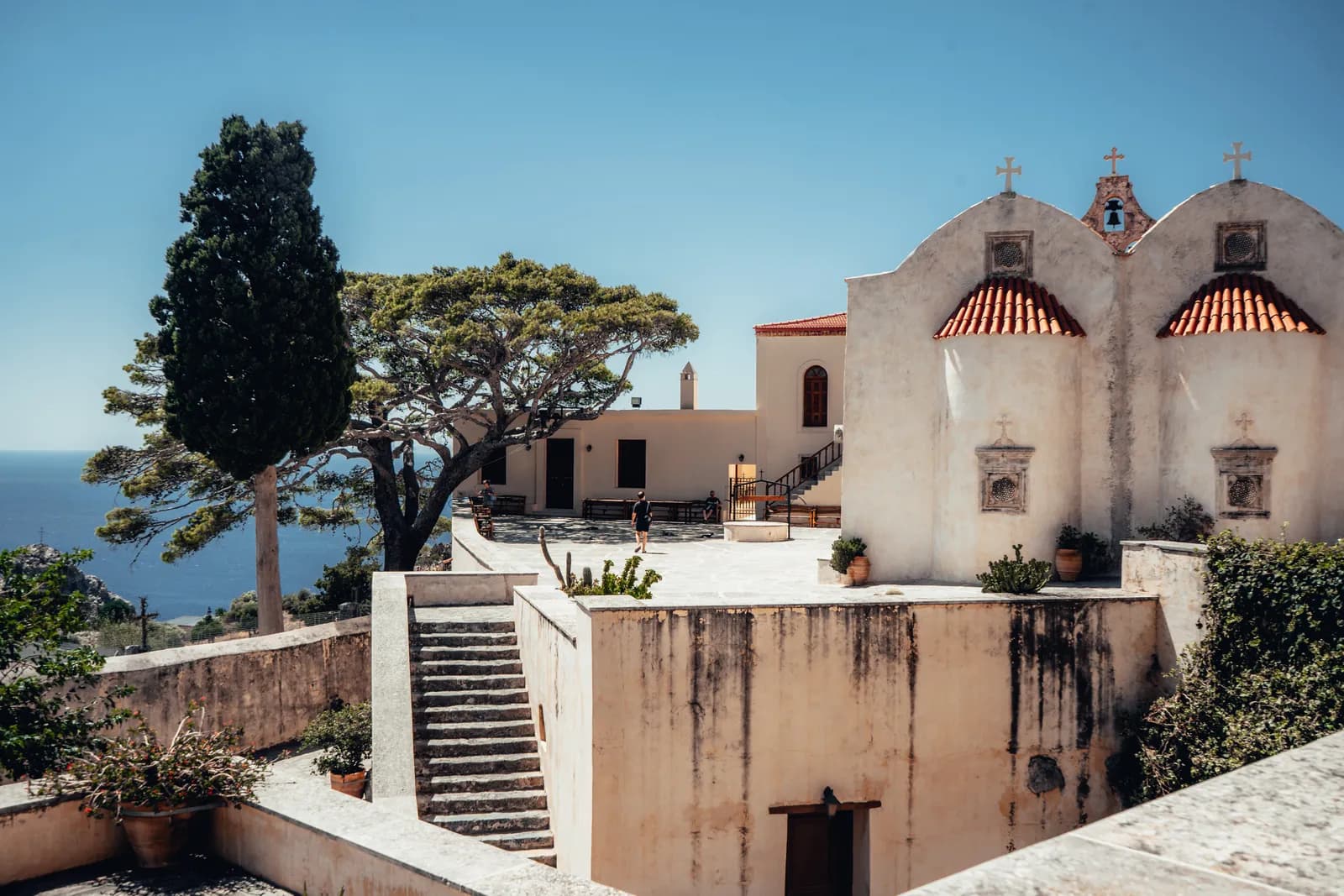
- In a monastery: the services there are long and deeply contemplative. Arkadi Monastery, near Rethymno, is a major place of remembrance for Cretans; ask locally about service and visiting times.
Wherever you go, wear covered-up clothing (shoulders and knees), silence your phone and avoid using the flash during services. Cretans happily welcome visitors, as long as they behave as guests rather than spectators.
Prices and crowds in April
Outside the Easter weekend, April is one of the best-value months of the season. Hotels that have just reopened charge low-season rates, often well below those of July and August, and sites like Knossos or Spinalonga can be visited without queues. Direct flights from France gradually resume from late March and April.
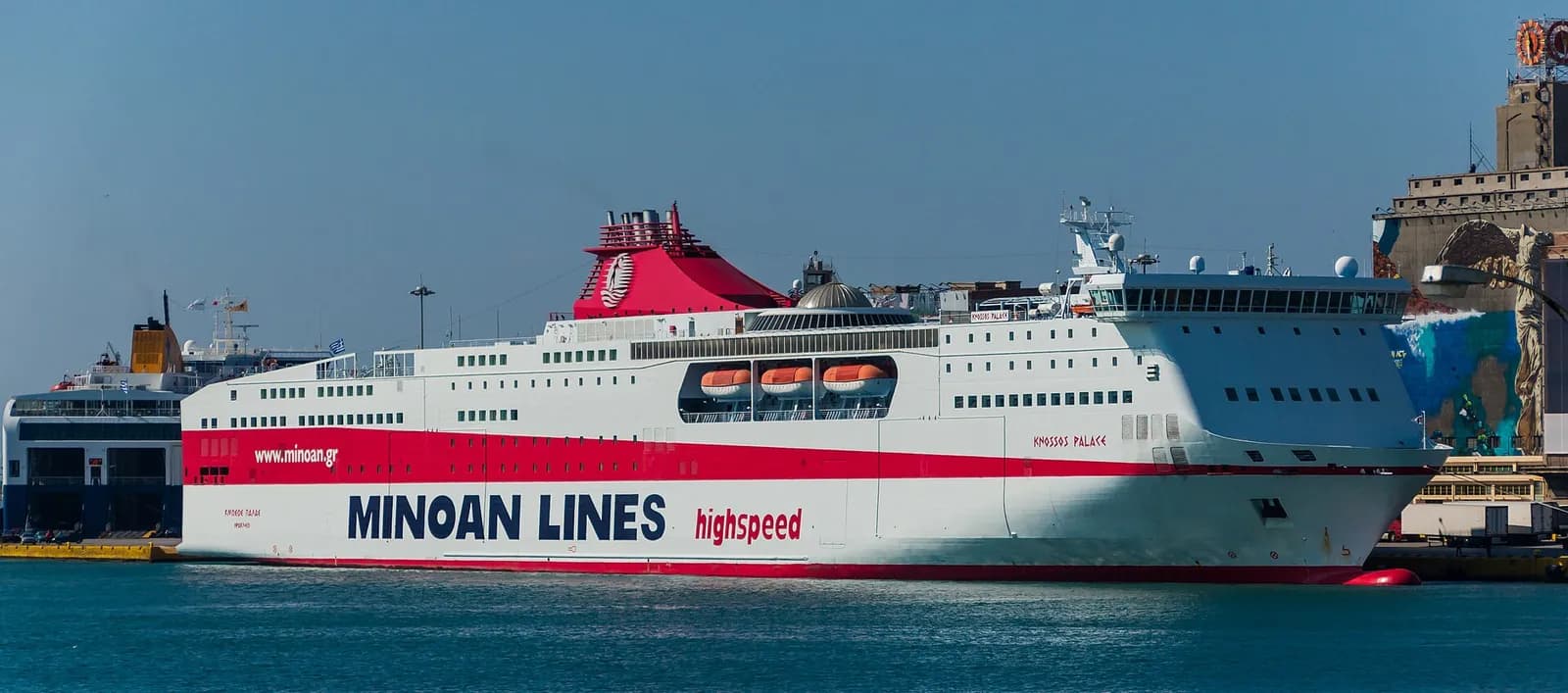
The Easter weekend is the exception. Many mainland Greeks return to their Cretan village or come to spend the holiday on the island: ferries from Piraeus, hire cars and village rooms fill up fast. I recommend booking at least two to three months ahead if you are aiming for the Easter dates.
DiscoverCars
Car rental comparison in 150+ countries
Compare prices from Hertz, Avis, Sixt and local providers. All fees included, free cancellation. Rated 4.6/5 on Trustpilot.


A car is almost essential in April: intercity buses run, but on low-season timetables, and the villages where Easter is celebrated are rarely well served. Book it at the same time as your flights if you are travelling during Holy Week.
Practical tips: public holidays and closures
Around Easter, a few days disrupt how the island runs. It is worth keeping them in mind so you don't find doors closed.
- Good Friday: a holiday for public offices and banks. Shops generally stay closed in the morning and only open from 1pm. Archaeological sites open with reduced hours.
- Holy Saturday: a working day, but many shops close earlier than usual; do your shopping in the morning.
- Easter Sunday: public archaeological sites and museums closed, shops closed; only tavernas and a few tourist minimarkets open.
- Easter Monday: national public holiday, banks and public offices closed.
- 1 May: Labour Day, a public holiday, often accompanied by transport strikes; it can be moved when it falls during Holy Week (one to watch in 2027).
One last point: plan to visit Knossos, the Heraklion museum or Spinalonga early in the week, from Monday to Holy Thursday, when opening hours are normal. Keep the weekend for the services, the villages and the festive tables.
Who is April in Crete for?
April is made for walkers, lovers of flowers and photography, archaeology enthusiasts and anyone who wants to see Crete living for itself rather than for tourists. It is less suited to pure beach holidays and to those dreaming of Samaria or the Balos boats. If your trip falls during Holy Week, treat it as the heart of your stay rather than a constraint: it is a rare way into the intimate side of Crete.
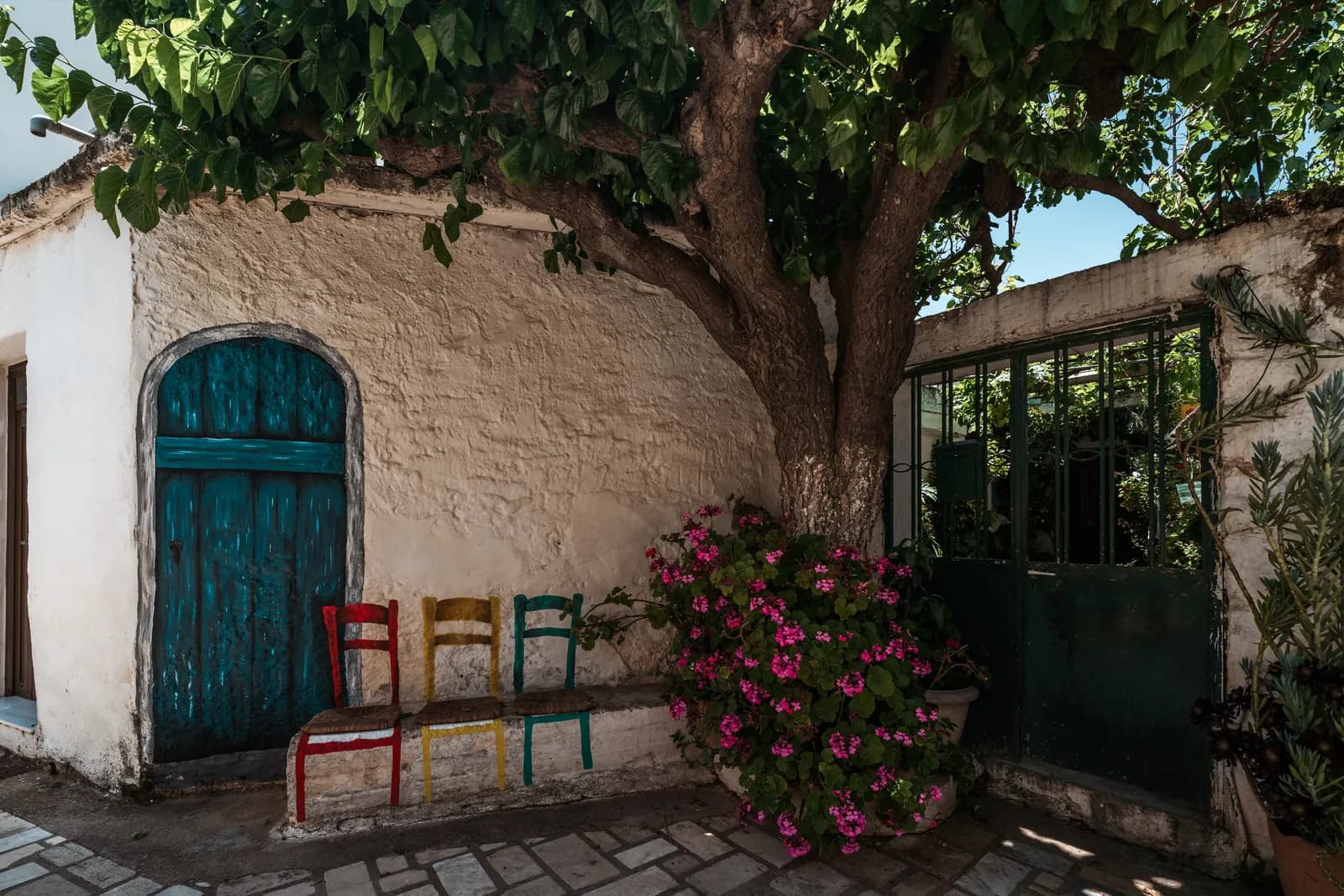
To plan your itinerary, my complete guide to Crete covers the regions and the roads, and you will find all our addresses and articles on the Crete destination page. To compare with the end of the season, also take a look at Crete in September: the same mild weather, but with a warm sea.
Frequently asked questions
The air reaches around 20°C in the afternoon in Heraklion, but the sea stays at around 17 to 18°C on average. Swimming is possible if you don't feel the cold much, on a windless day, in a sheltered cove. For truly pleasant water, aim for June instead.
Orthodox Easter falls on Sunday 2 May 2027 and Sunday 16 April 2028. In 2028, it coincides with Catholic and Protestant Easter. Good Friday is therefore 30 April 2027 and 14 April 2028, and Easter Monday is 3 May 2027 and 17 April 2028.
No. Samaria National Park is closed from November to the end of April and normally opens on 1 May, depending on the state of the path and the weather. In 2026, it only fully opened on Tuesday 19 May, after the annual maintenance work.
Good Friday and Easter Monday are public holidays: public offices and banks close, and shops generally only open in the afternoon on Friday. On Easter Sunday, public archaeological sites and museums are closed. Tavernas, on the other hand, are often open and full.
Yes, the services are public and visitors are warmly welcomed, as long as they dress appropriately and behave discreetly. Buy a candle at the church entrance for Saturday night and keep your distance from the firecrackers when the service ends.
Sources and fact-checkingInformation checked on 7 October 2026 · 15 sources consulted
- Wikipedia EN, Heraklion (tableau climatique HNMS, aéroport, 1991 à 2020)
- Weather2Travel, météo d'Héraklion en avril (température de la mer, ensoleillement)
- Wikipedia EN, List of dates for Easter (dates orthodoxes 2026 à 2029)
- Naftemporiki, ouverture des gorges de Samaria pour 2026 (19 mai)
- To Vima, Samaria Gorge reopens to visitors for 2026 season
- Wikipedia EN, Samaria Gorge (saison du 1er mai au 31 octobre)
- Wikipedia EN, Public holidays in Greece
- Naftemporiki, jours fériés de Pâques : Vendredi saint et 1er mai
- Cretan Beaches, Burning of Judah in Easter (la founara)
- Wikipedia EN, Epitaphios (liturgical)
- Wikipedia EN, Paschal greeting
- Wikipedia EN, Easter egg (œufs rouges du jeudi saint, tsougrisma)
- Wikipedia EN, Tsoureki
- Wikipedia EN, Kalitsounia
- Wikipedia EN, Crete (neige sur les Lefka Ori de novembre à avril)

Âme Bohème exists thanks to you
Some links in this article are affiliate links. This means that if you book or purchase a product through these links, we receive a small commission, at no extra cost to you. It's thanks to this support that we can continue creating free, quality content.
You can also buy us a coffee, or follow us on Instagram and Facebook.