
Picture yourself standing at the edge of one of Europe’s most impressive natural wonders: the Samaria Gorge in Crete. This epic hike gives you the chance to explore the island’s hidden gems. In this complete guide, find out how to do it and how to fully experience the magic of hiking the Samaria Gorge.
The Samaria Gorge on video
Planning your trip? Find all the essentials in our complete guide to Crete and check when to visit Crete with our month-by-month weather guide.
About the Samaria Gorge
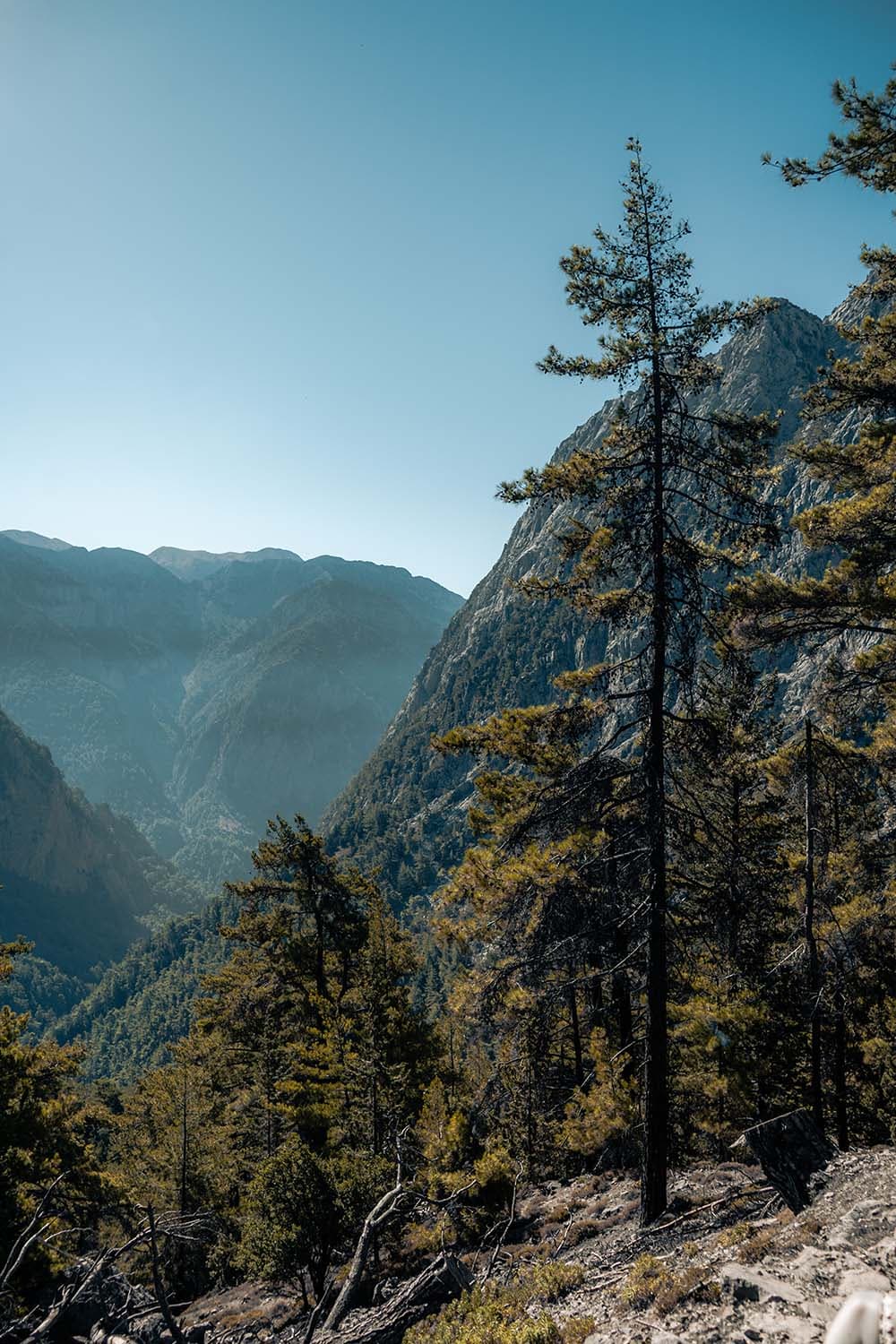
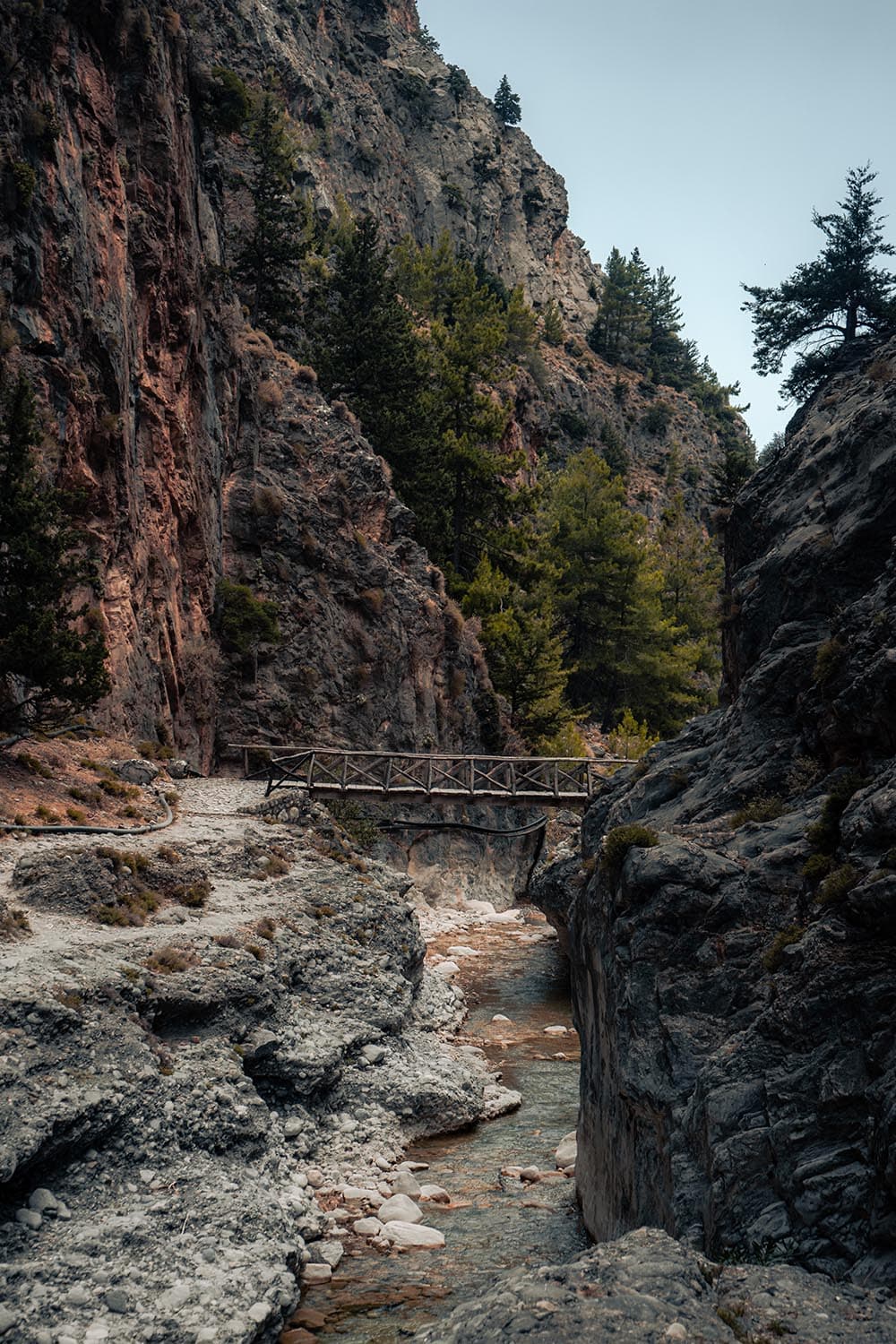
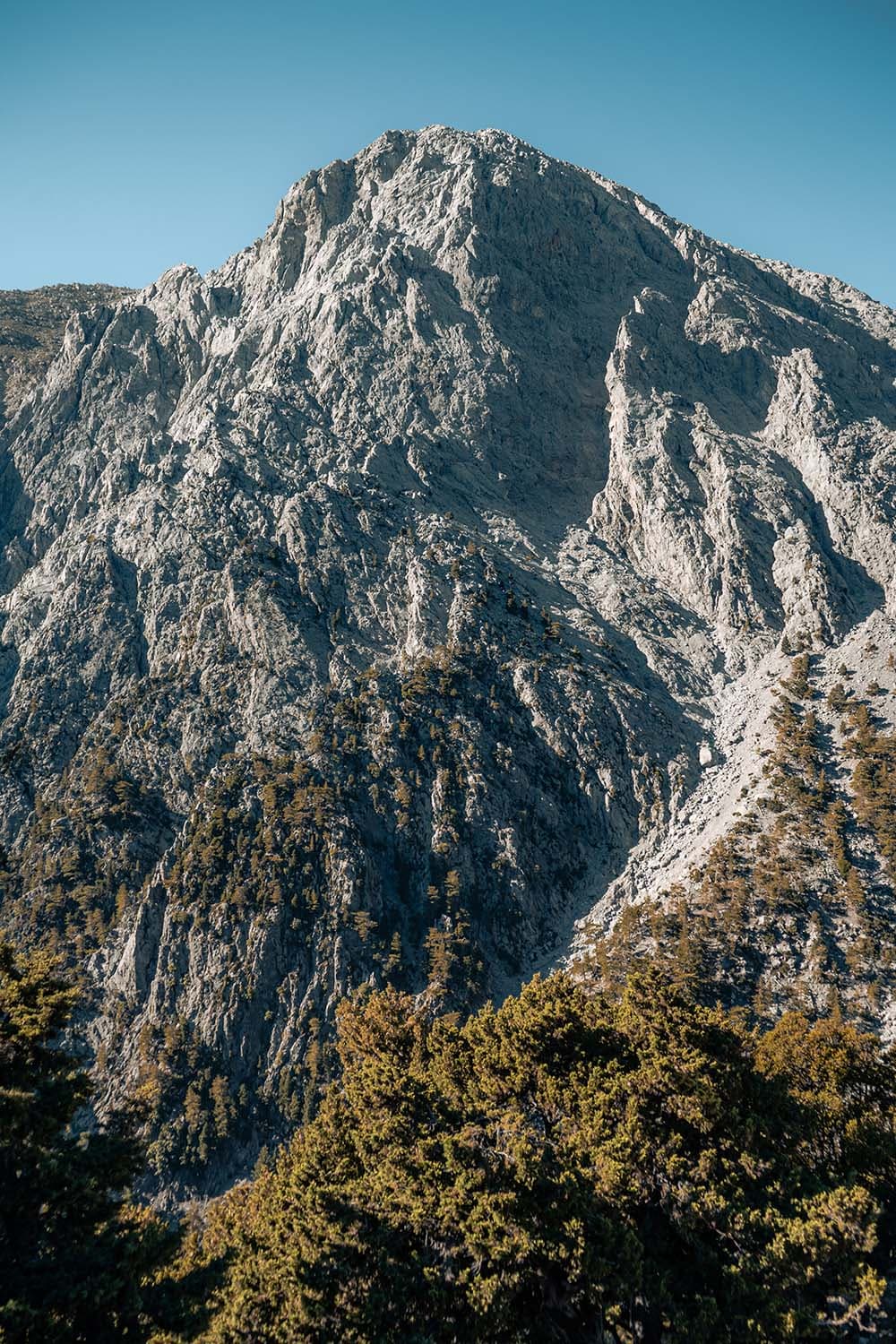
Nestled in the White Mountains of Crete, the Samaria Gorge is captivating for its rich history and very distinctive geology. Formed by a river that once flowed between the mountains, this 16-kilometre-long gorge was carved out over millions of years. The result is spectacular cliffs, towering walls and a diverse flora and fauna. The ancient paths running through the gorge have been used by people for more than 3,000 years. All of which adds a historical dimension to your journey.
Recognising the ecological and cultural value of this extraordinary landscape, UNESCO designated the Samaria Gorge a World Biosphere Reserve in 1981. This prestigious title underlines the importance of protecting the gorge’s unique biodiversity, which includes more than 450 plant species, many of them endemic to the region.
Hiking the Samaria Gorge is a moderately challenging adventure. The route covers a distance of 16 kilometres, descending from an altitude of 1,250 metres down to sea level. Although the trail is well maintained and signposted, the terrain can be rocky and uneven. So a moderate level of fitness and some hiking experience are recommended. Get ready to be captivated by this impressive natural masterpiece, a symbol of Crete

Chapka Insurance
Travel with peace of mind with the best travel insurance
Stay covered in every situation with the best insurance for your next trip.
Planning your Samaria Gorge hike
Timing is everything if you want to make the most of the Samaria Gorge. The ideal window for your visit is between May and October, when the weather is pleasant and the trail is open. The summer months of July and August are the busiest. So if you prefer a more intimate experience, consider visiting in the shoulder months of May, June, September or October.
The hike is a loop, but a slightly unusual one. Getting to the start of the trail is child’s play.
By bus from Chania
Buses run every day from Chania to the starting point at Xyloskalo, at the top of the gorge, and from Sougia, the end point, to take you back to Chania. The journey takes nearly two hours and winds through the mountains. Click here to find out more.
By car
Alternatively, you can rent a car for more flexibility, or join an organised tour that includes transport. There is a large car park at the start of the hike in Xyloskalo. You will also find buses in Sougia to take you back to the starting point once the hike is over.
Samaria Gorge entrance tickets and prices
Before setting off on your hike, you will need to buy an entrance ticket costing €10 per person (free for under-18s and over-65s).
Yes, but it also contributes to the upkeep and conservation of the park. Tickets can be bought at the start of the trail or, if you are on a guided tour, may be included in the package. Guided tours offer the advantage of in-depth knowledge of the gorge’s history, geology and wildlife, as well as the convenience of pre-arranged logistics.
Guided visits and tours of the Samaria Gorge
What to bring for the Samaria Gorge
Good preparation is the key to a successful and enjoyable hike. Here are a few essentials to bring on your Samaria Gorge adventure:
Gear, clothing and footwear
Go for comfortable, moisture-wicking clothing and hiking boots with good ankle support. Don’t forget a light, breathable jacket for the cooler temperatures in the morning or at higher altitudes, as well as a hat and sunglasses to protect you from the sun. Whatever you do, don’t hike in sliders or flip-flops: you risk breaking your ankle.
Food and water
Bring at least 2 litres of water per person, as refill points along the trail are limited. Pack a nutritious lunch and energy-boosting snacks, such as trail mix, granola bars or fruit, to keep you going throughout the day.
Safety and navigation gear
A basic first-aid kit, a map or GPS and a fully charged mobile phone are essential. Although the trail is well signposted, having these to hand can help you stay on track and deal with unexpected situations.
Camera gear and photography tips
The Samaria Gorge offers a wealth of photo spots. So make sure you bring your camera or smartphone with spare batteries. Capture every corner of the gorge, from the towering rock formations to the idyllic shores of Agia Roumeli. Experiment with different angles and focal lengths, and don’t be afraid to photograph other hikers as they immerse themselves in this impressive setting.
Hiking the Samaria Gorge
As you set off on your journey through the Samaria Gorge, you will come across a wide range of landscapes, landmarks and points of interest. Let’s break the hike down into manageable sections, with estimated completion times and rest points. I will also give you some tips on pacing yourself and managing your energy.
The full hike takes between 5 and 7 hours depending on your fitness. Make sure you allow enough time to catch the ferry at Agia Roumeli. Otherwise you will be stuck until the next day.

Tronçon 1 : Xyloskalo à Agios Nikolaos (0-3 km)
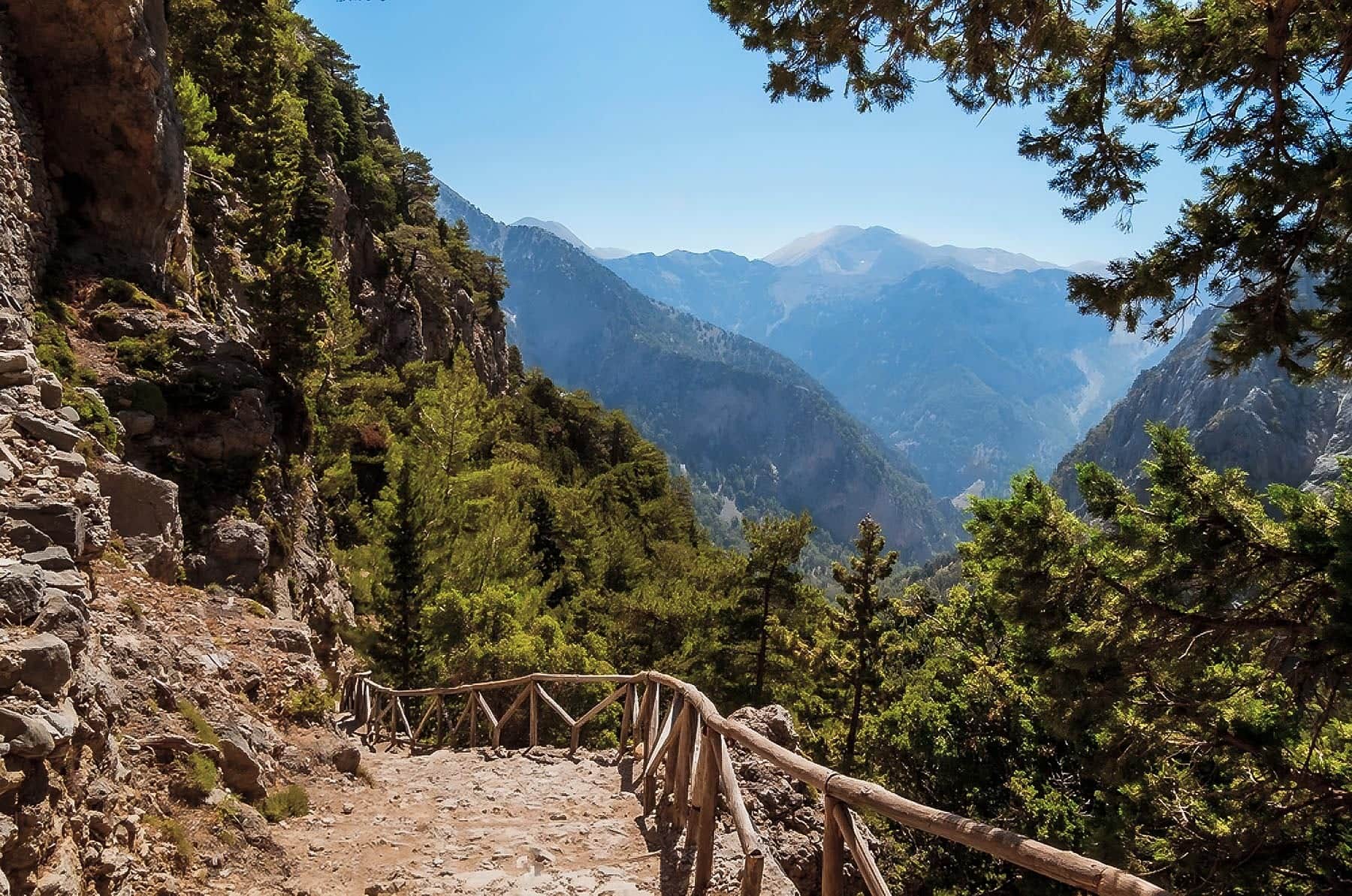
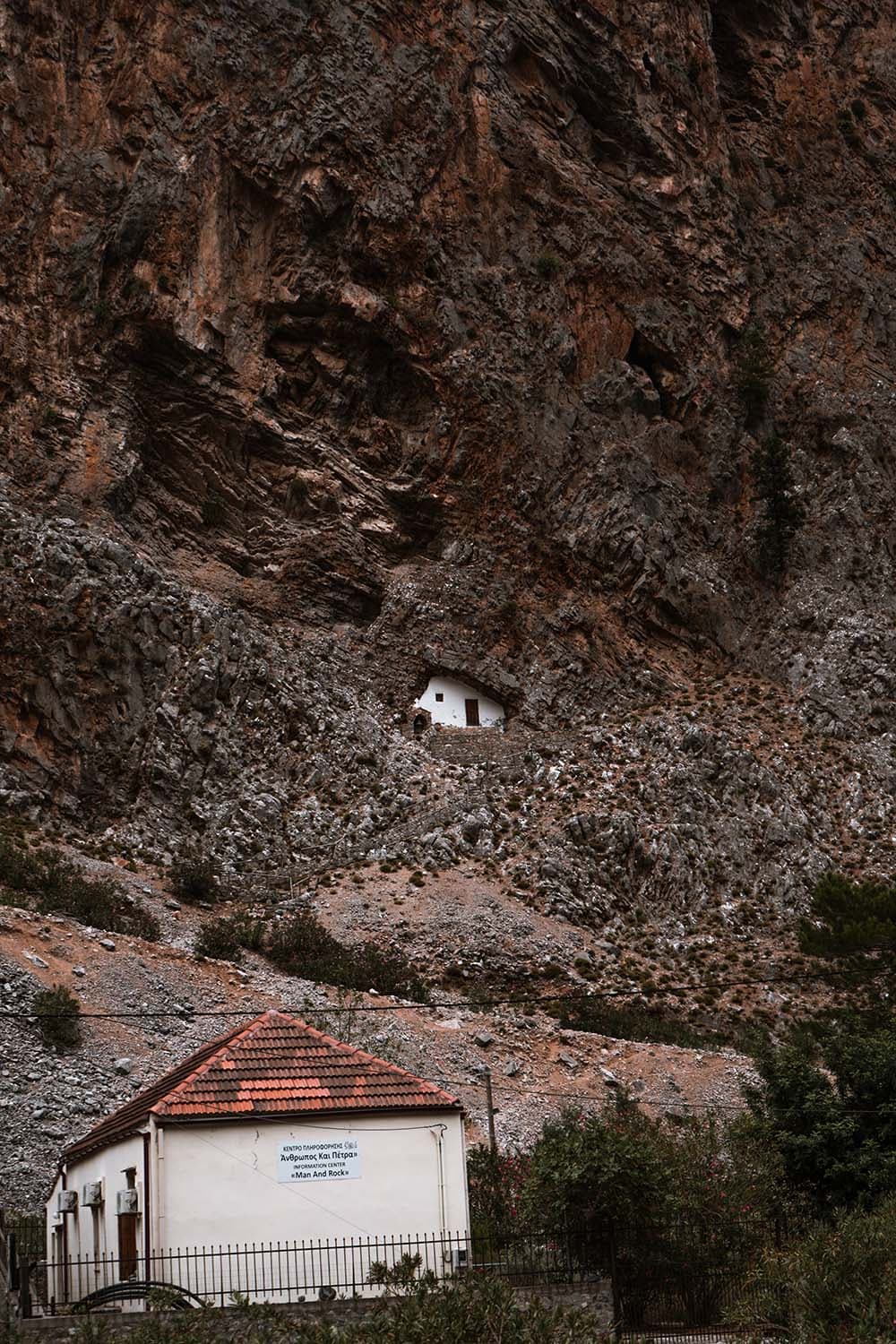
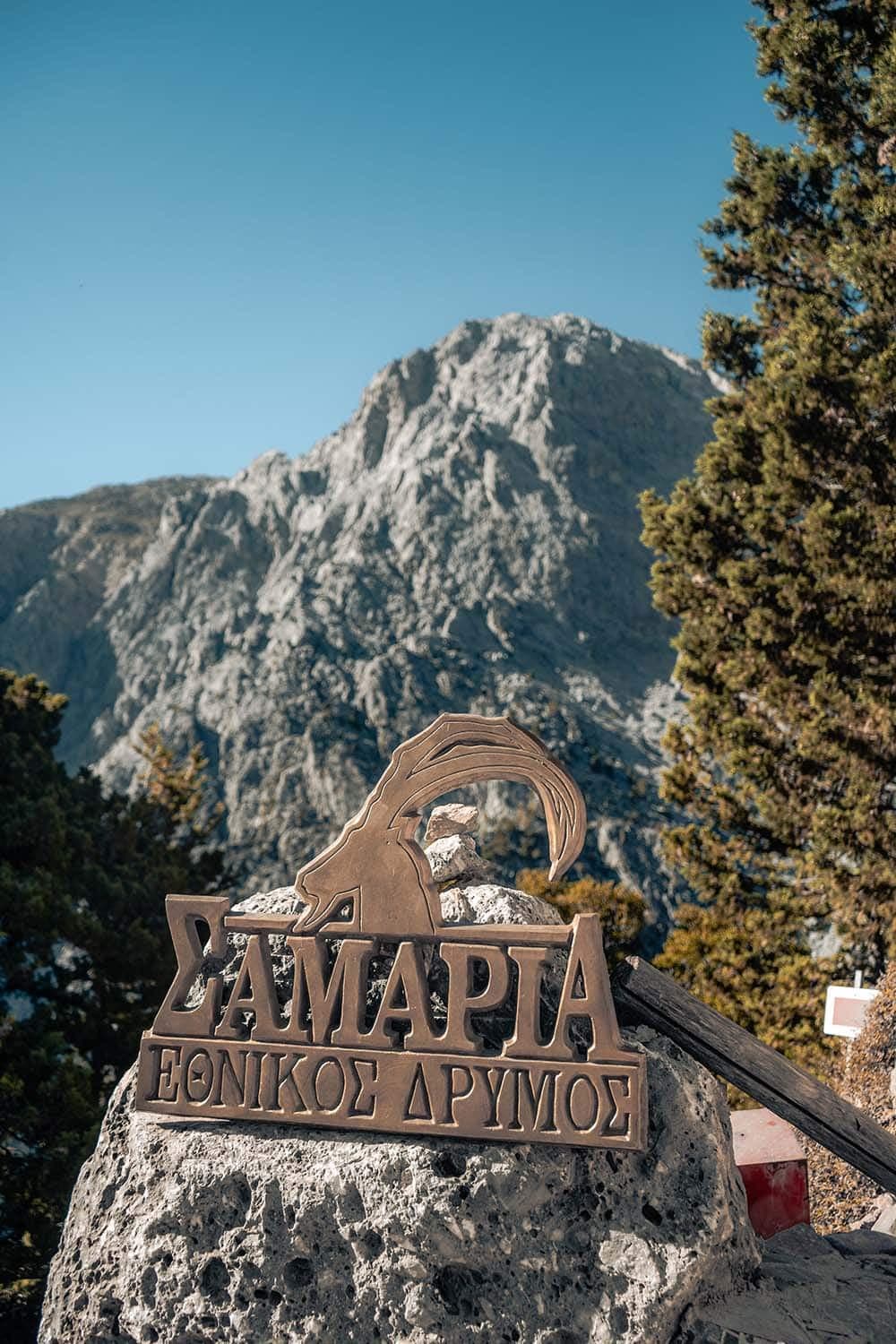
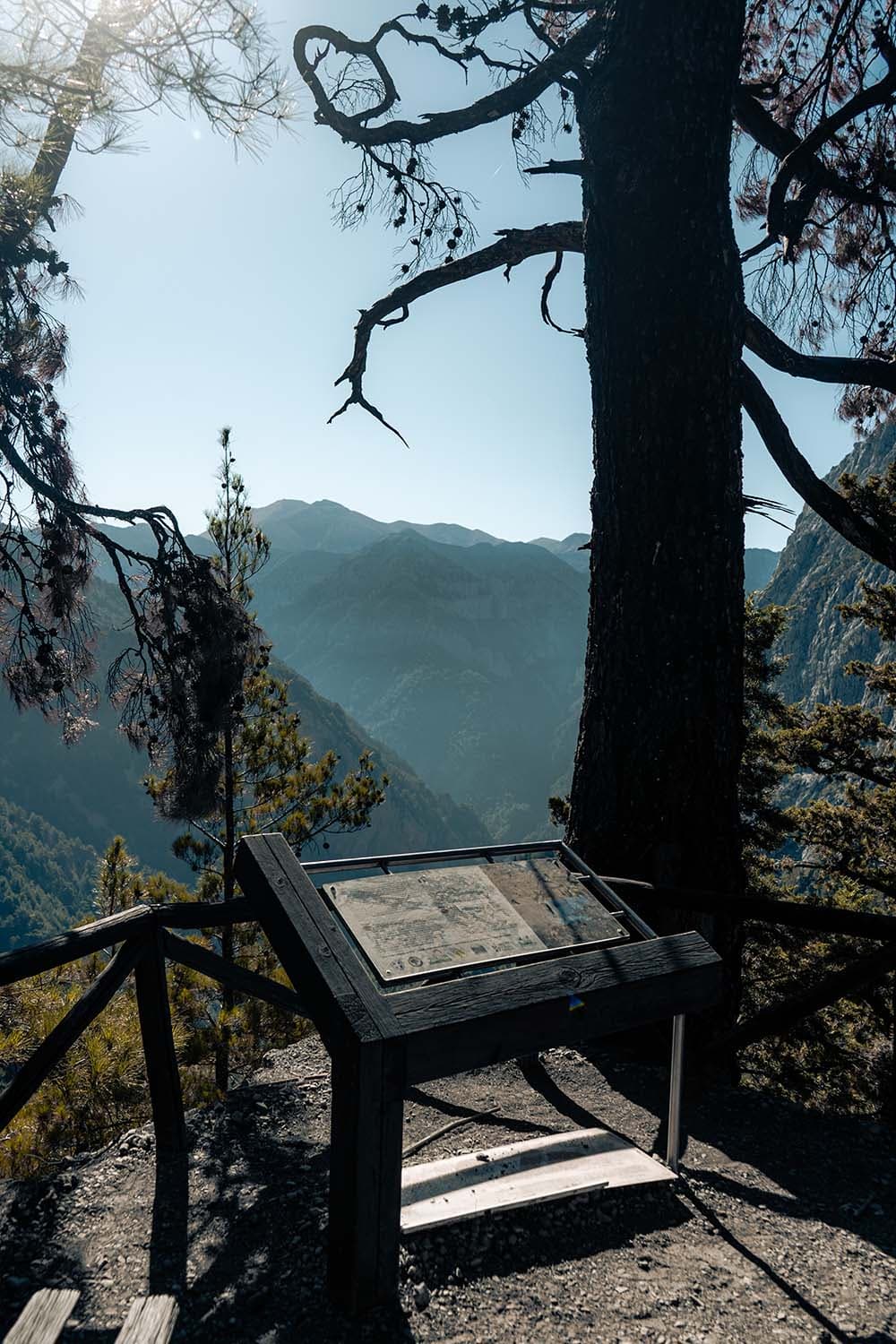
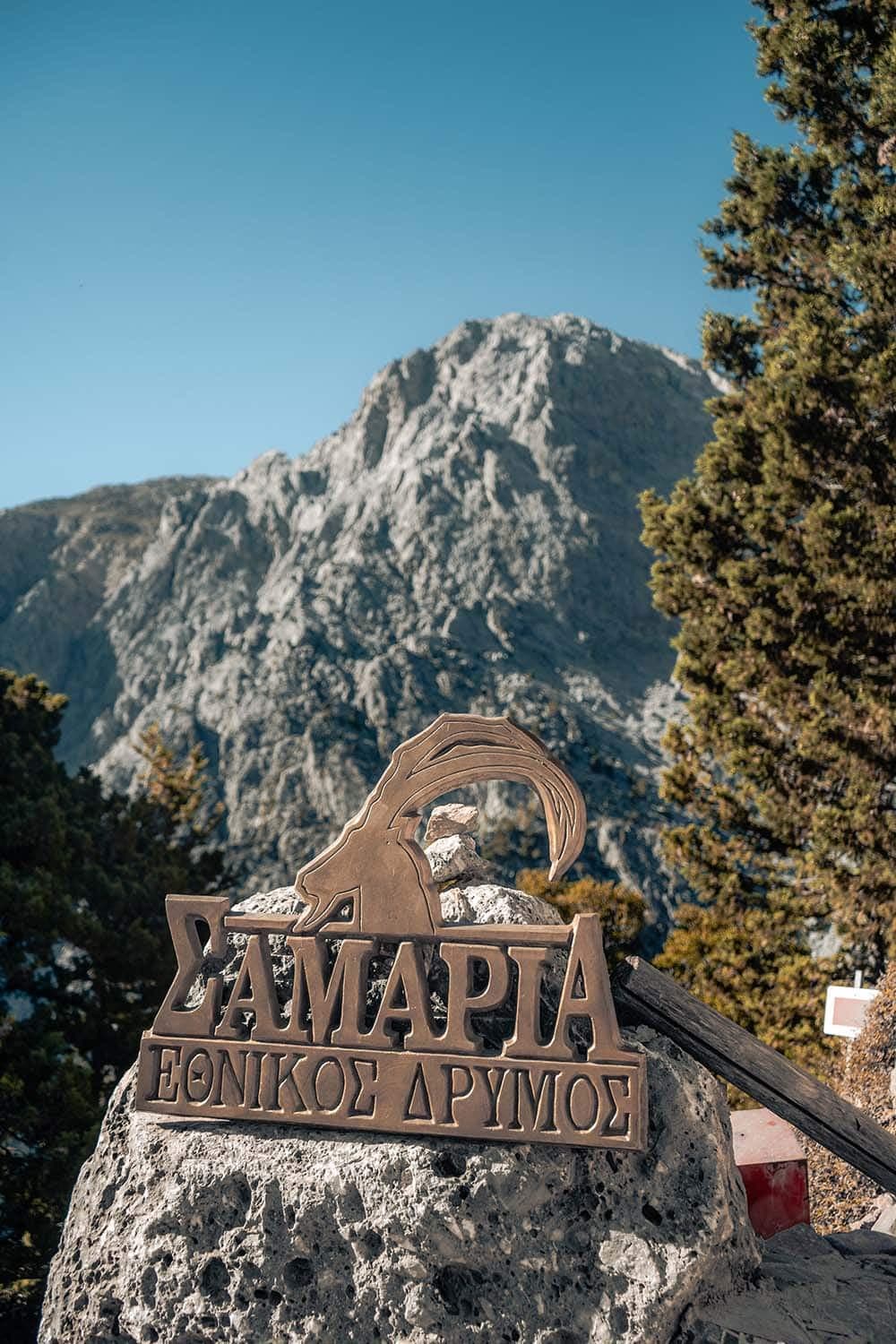
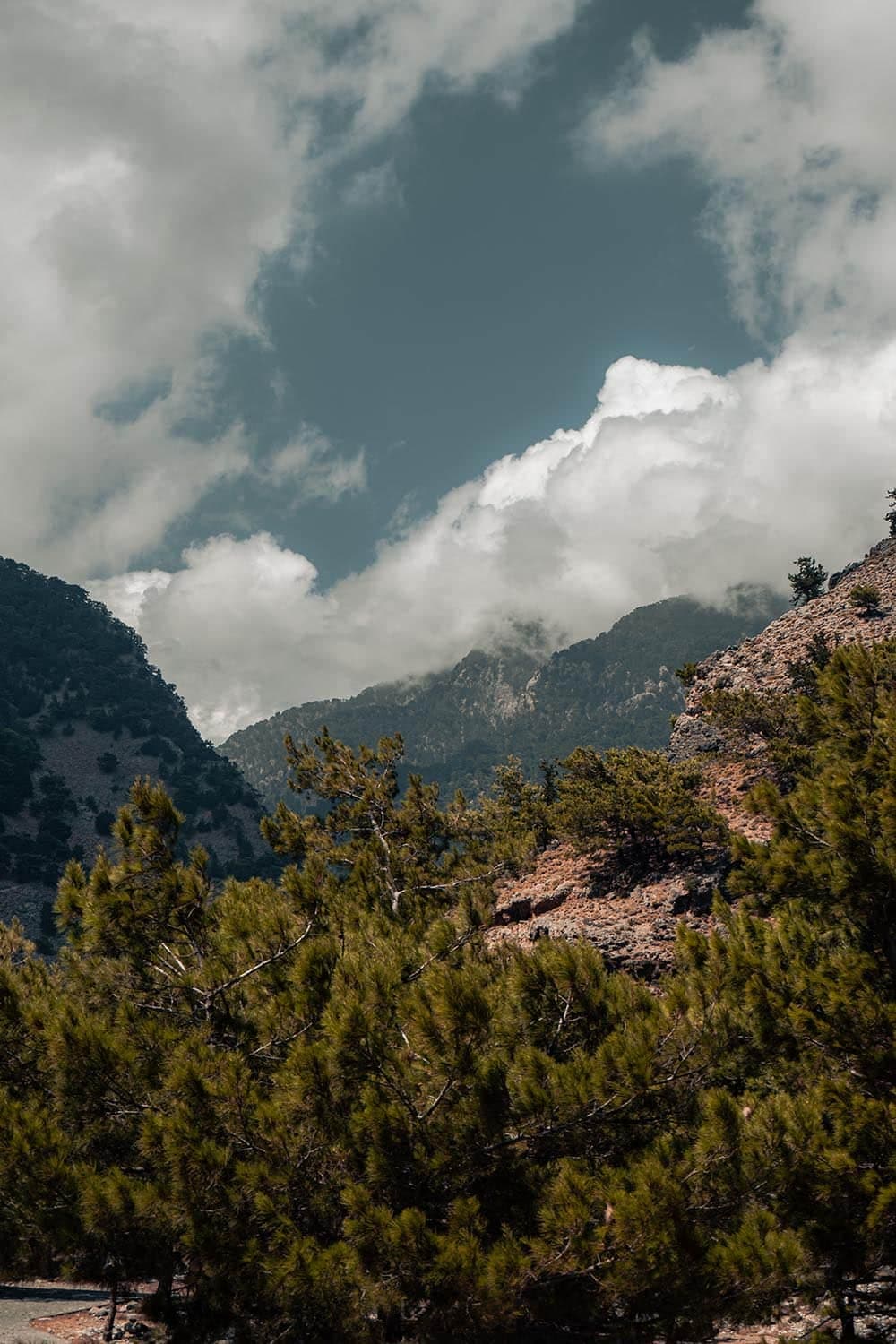
The hike starts at Xyloskalo, where you will head down a series of wooden steps through a lush forest of towering pines. Stop to admire the panoramic view of the gorge below. After about 3 kilometres, you will reach Agios Nikolaos, a Byzantine chapel nestled in a grove of ancient cypress trees, an ideal spot for a short rest and a moment of reflection.
Section 2: Agios Nikolaos to Samaria village (3–7 km)
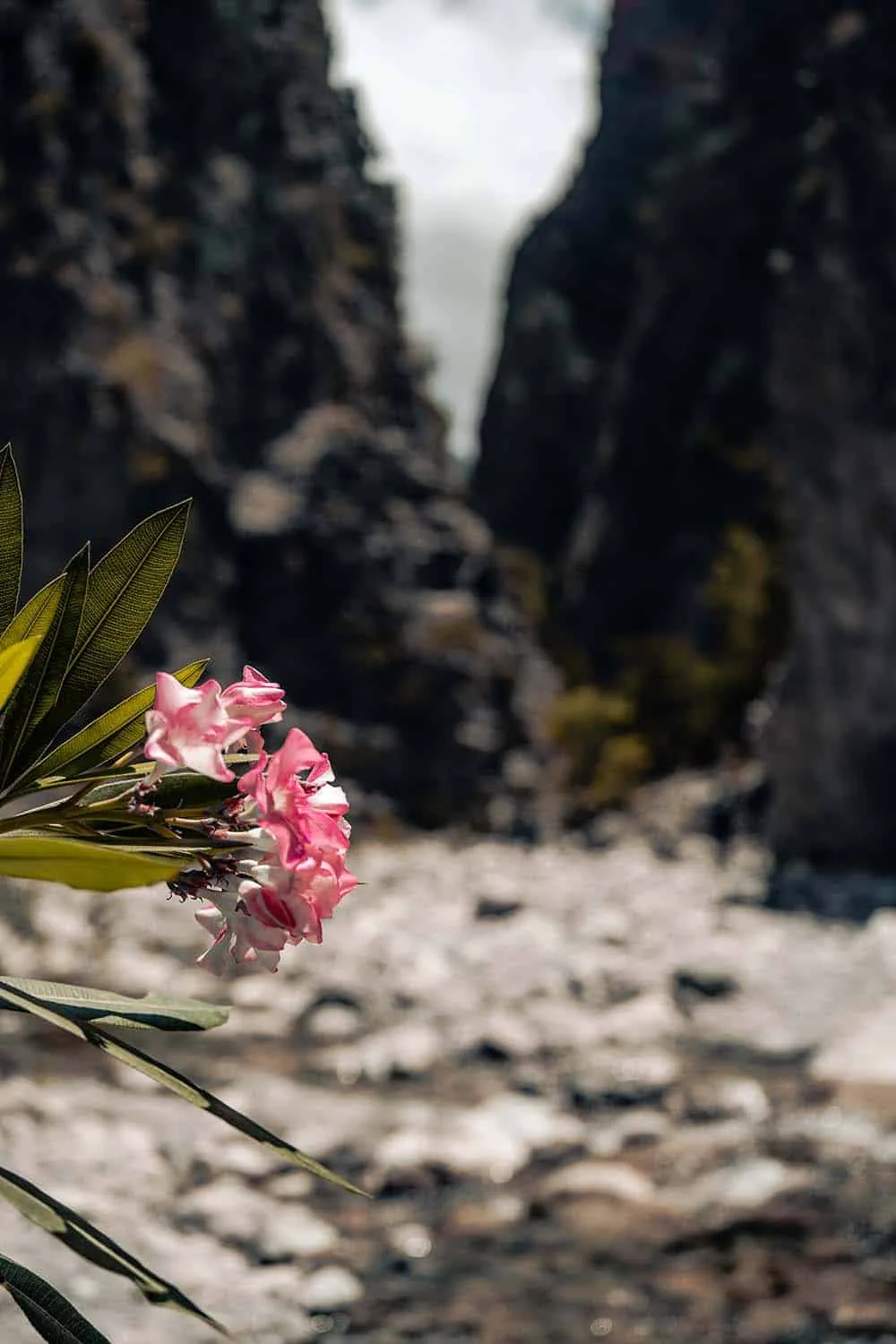
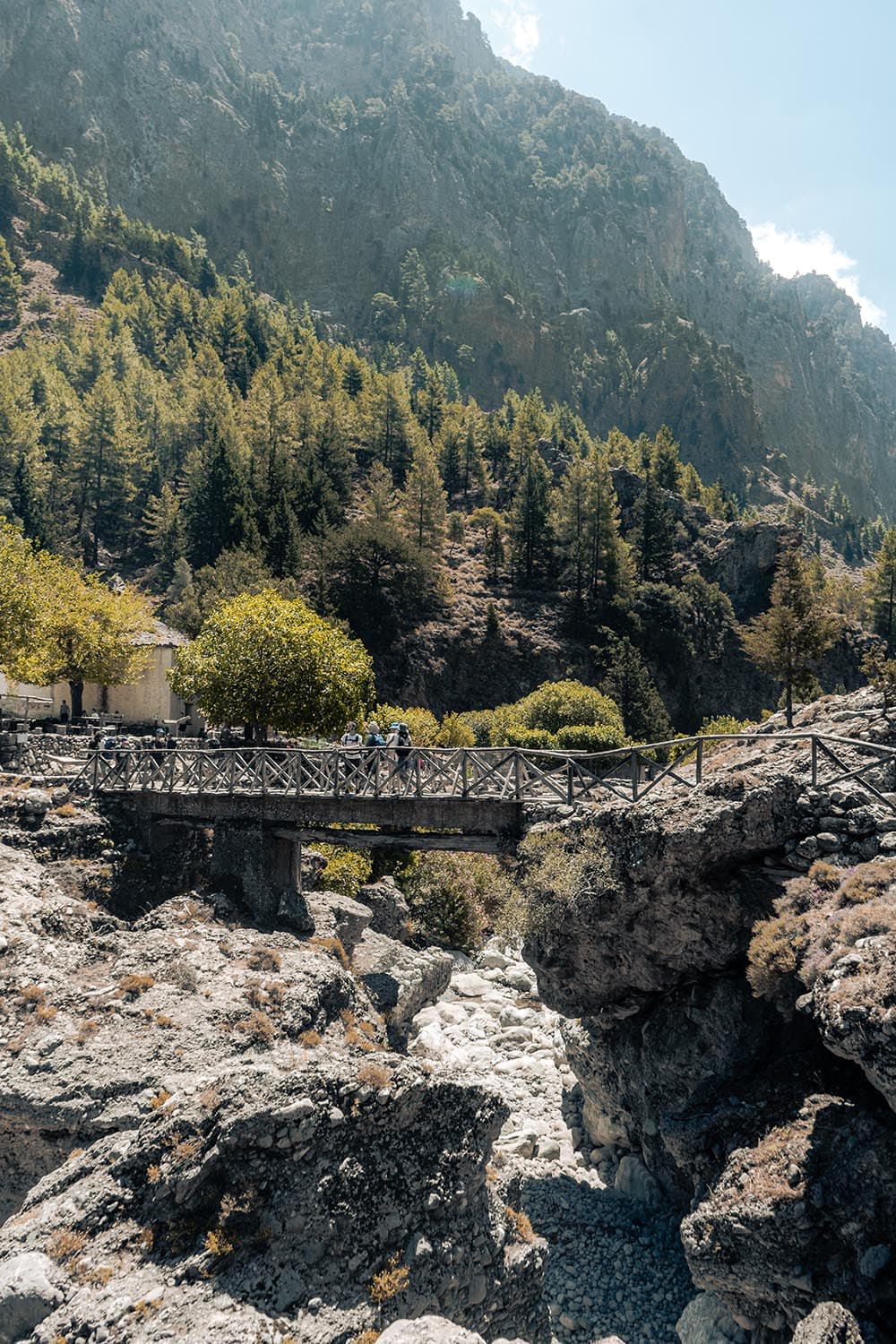
Continuing along the trail, you will cross rocky ground and wooden bridges as the gorge narrows. Keep an eye out for the kri-kri, a rare Cretan goat, and other endemic wildlife. After about 4 kilometres, you will reach the abandoned village of Samaria, once home to a thriving community. Here you can refill your water bottles, use the toilets and enjoy a well-deserved break.
Section 3: Samaria village to “The Gates” (7–11 km)
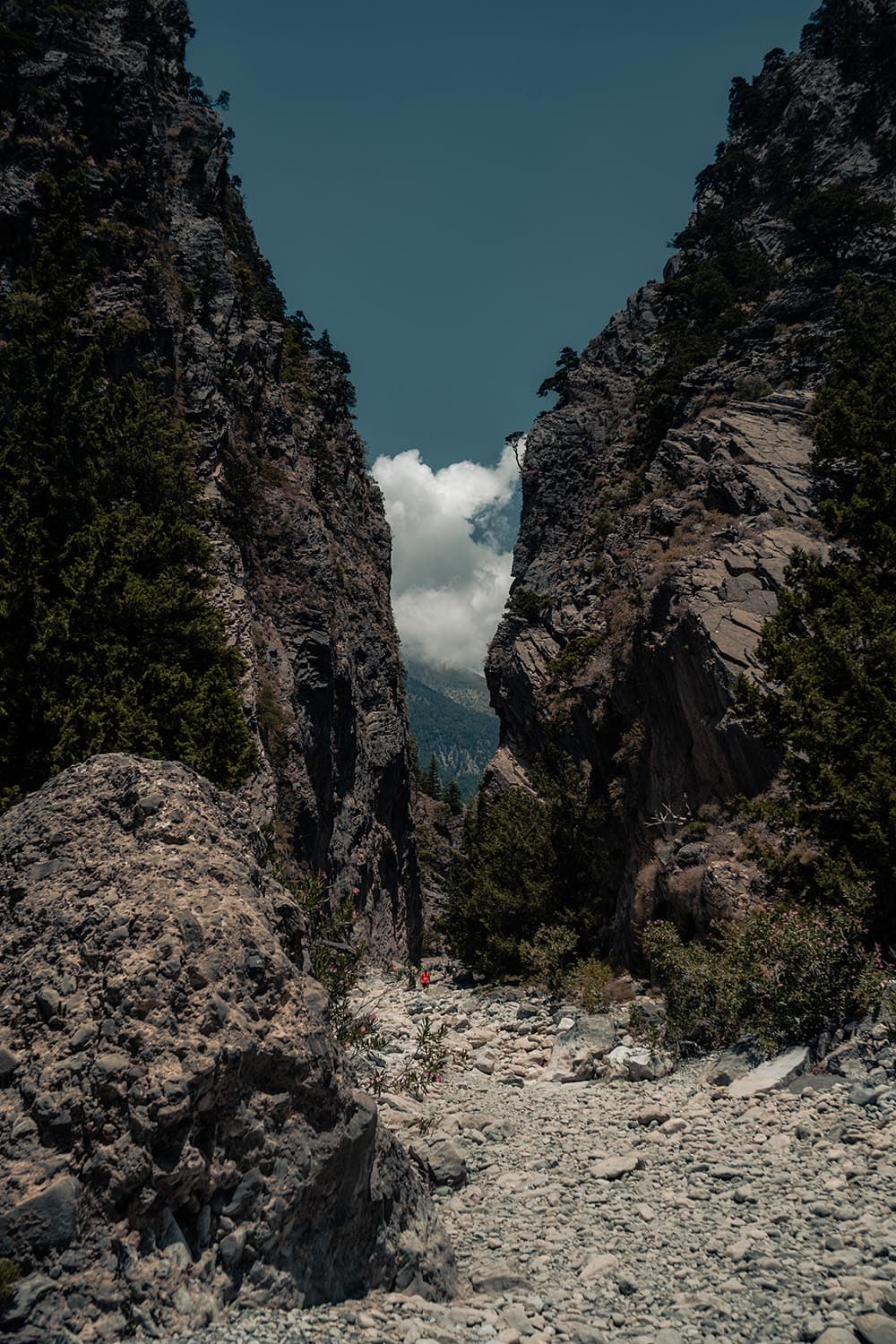
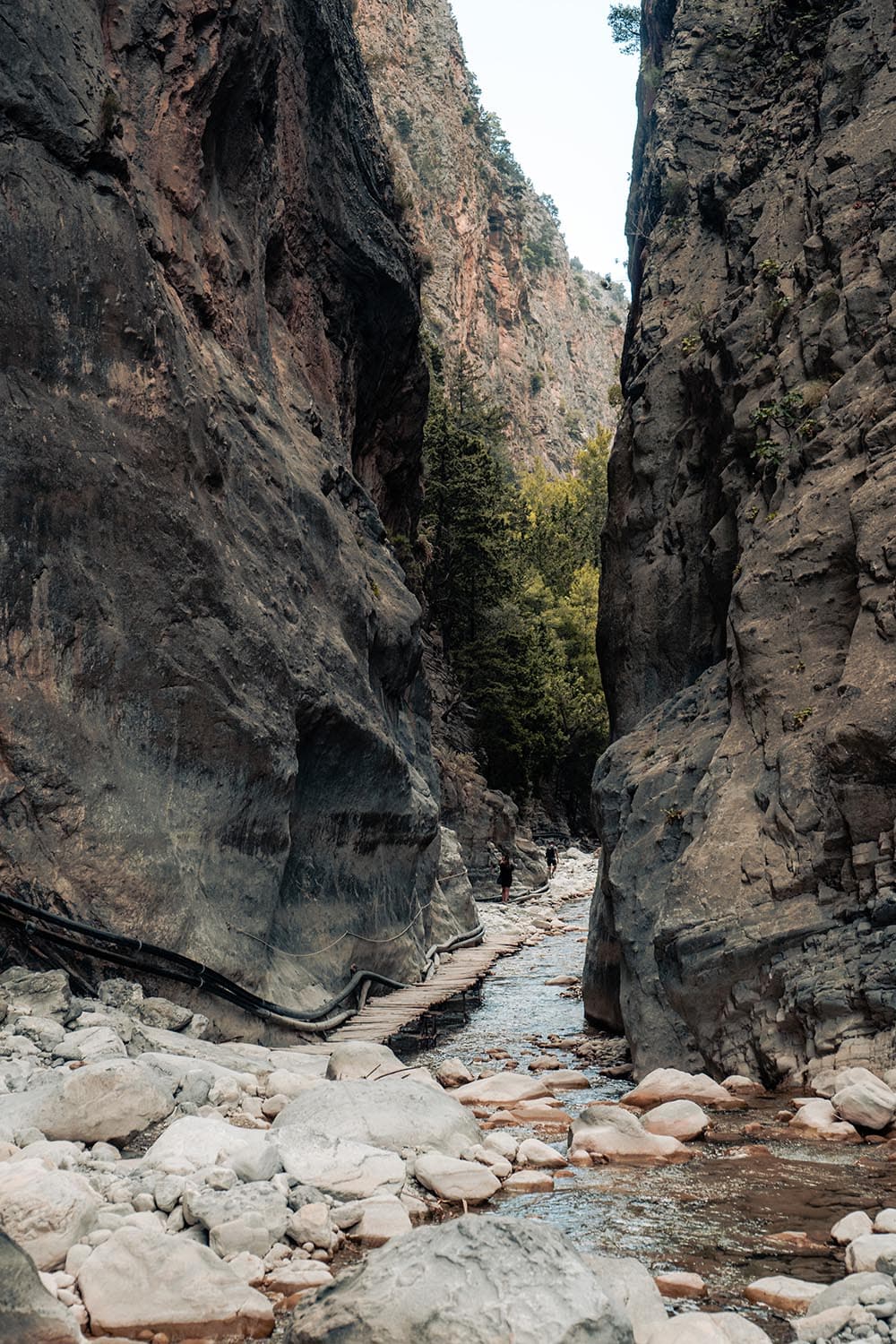
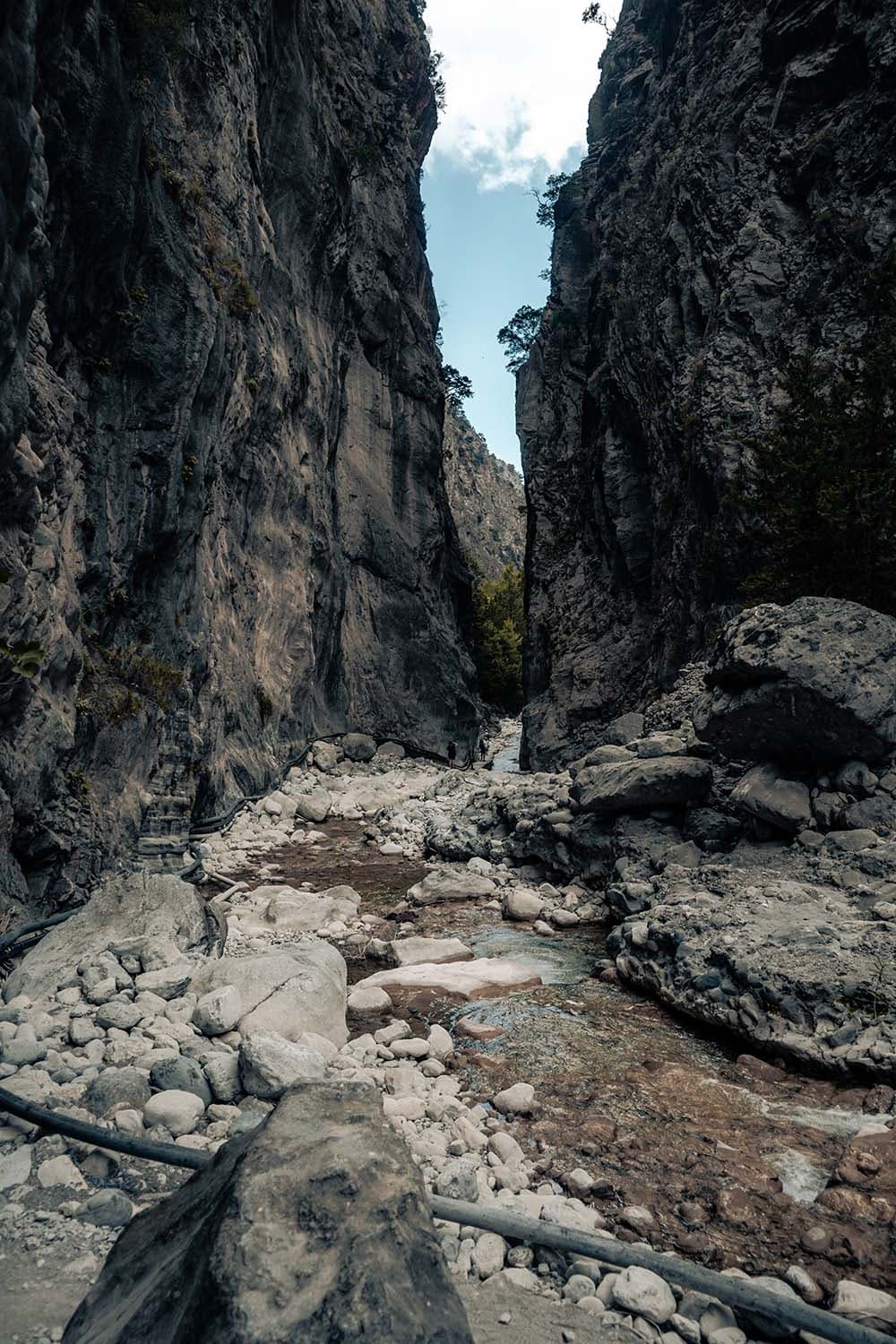
Leaving Samaria village, the trail descends steadily towards the most iconic section of the hike: “The Gates” or “Iron Gates”. This narrow passage has vertical walls rising more than 300 metres high and is only 3 metres wide. It is a truly awe-inspiring experience. Make sure you capture the moment on camera, as it is a highlight of the whole trip.
Section 4: “The Gates” to Agia Roumeli (11–16 km)
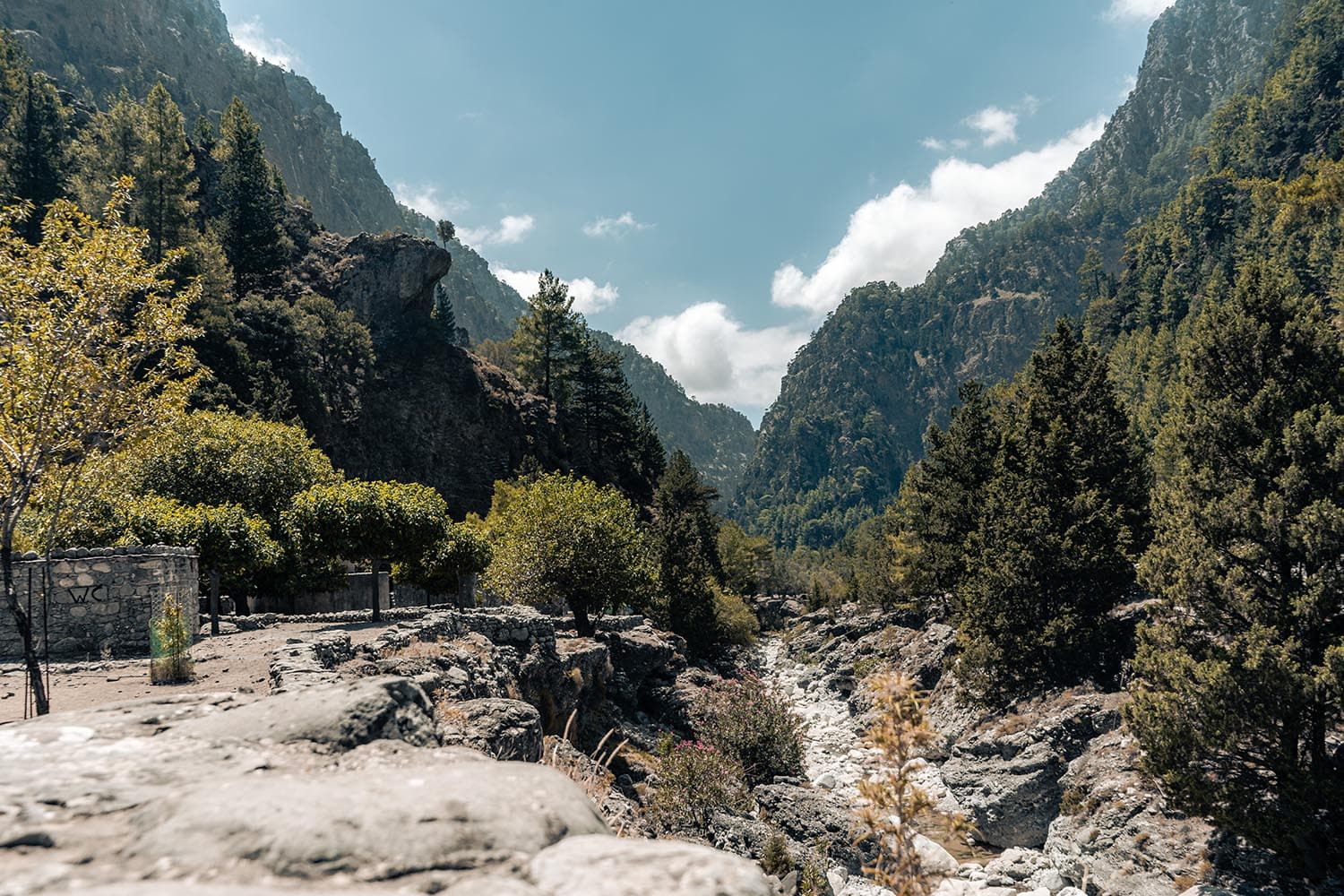
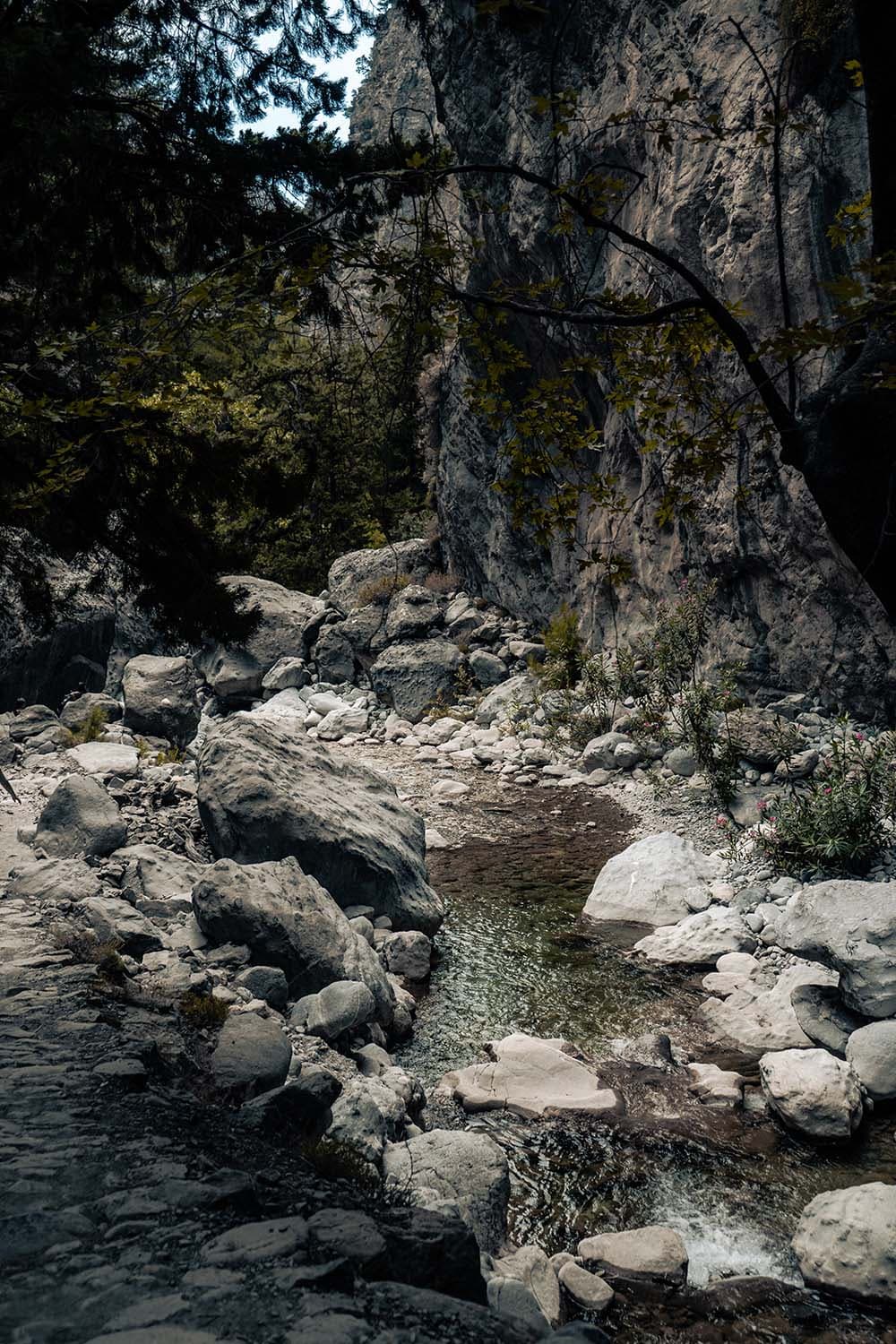
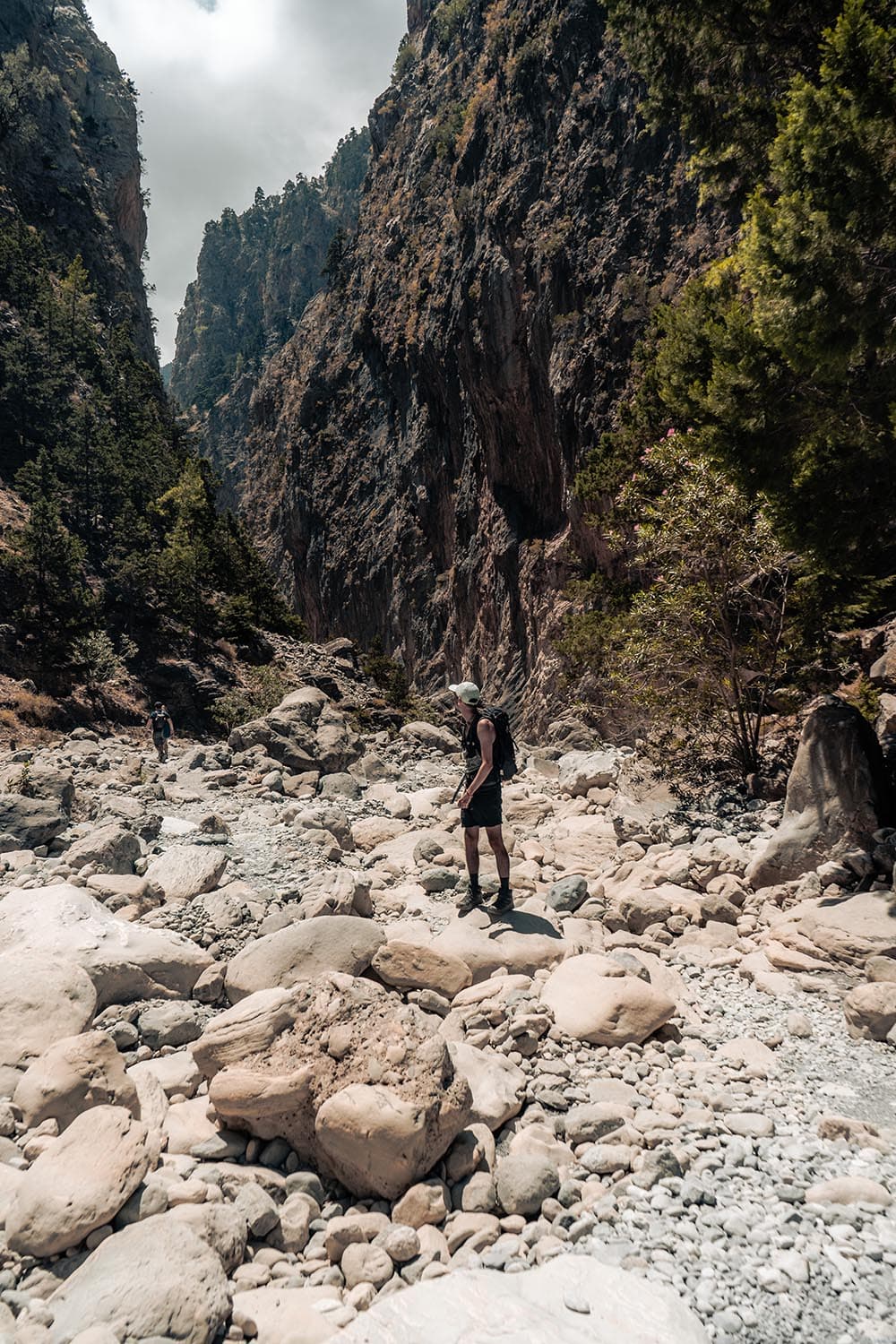
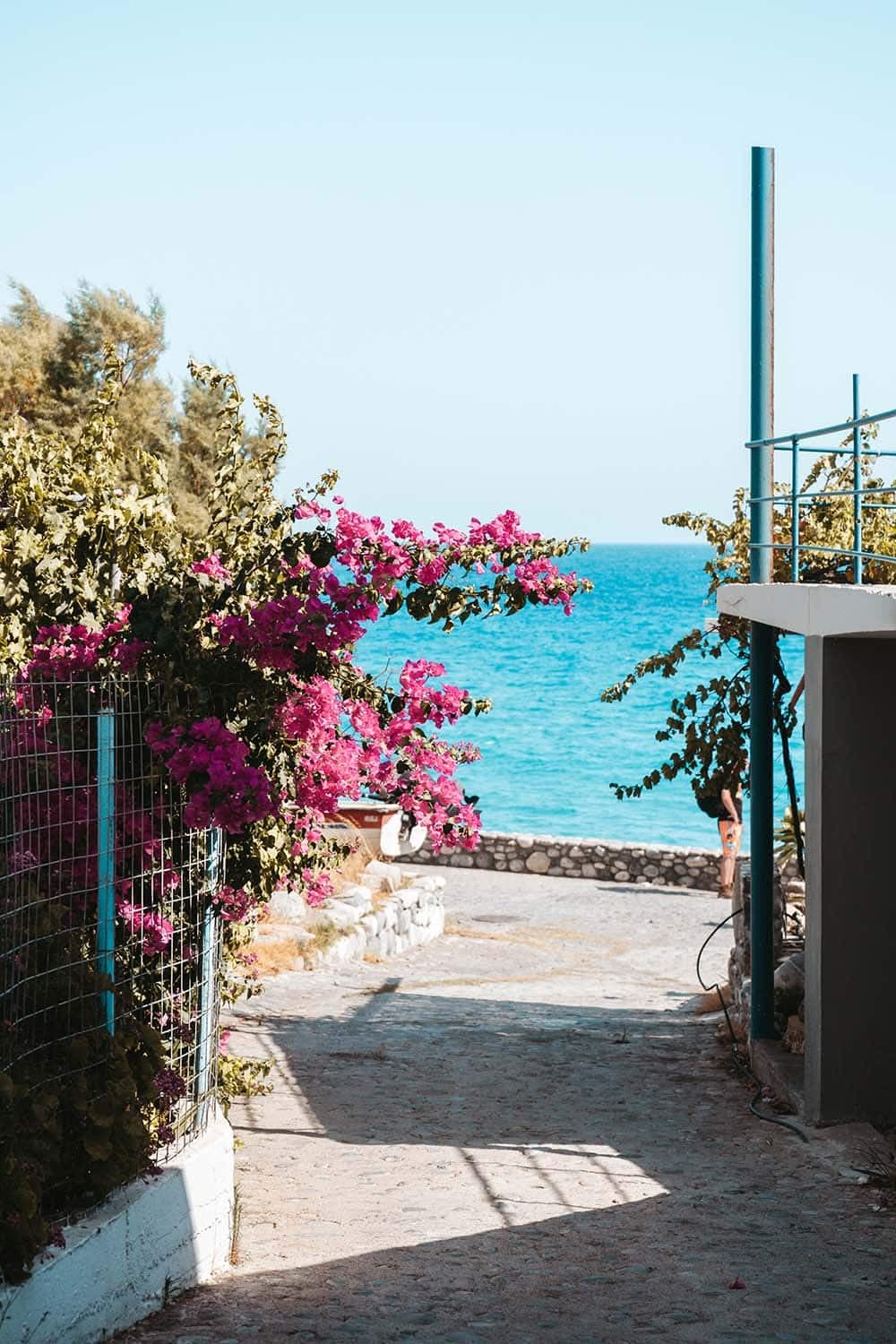
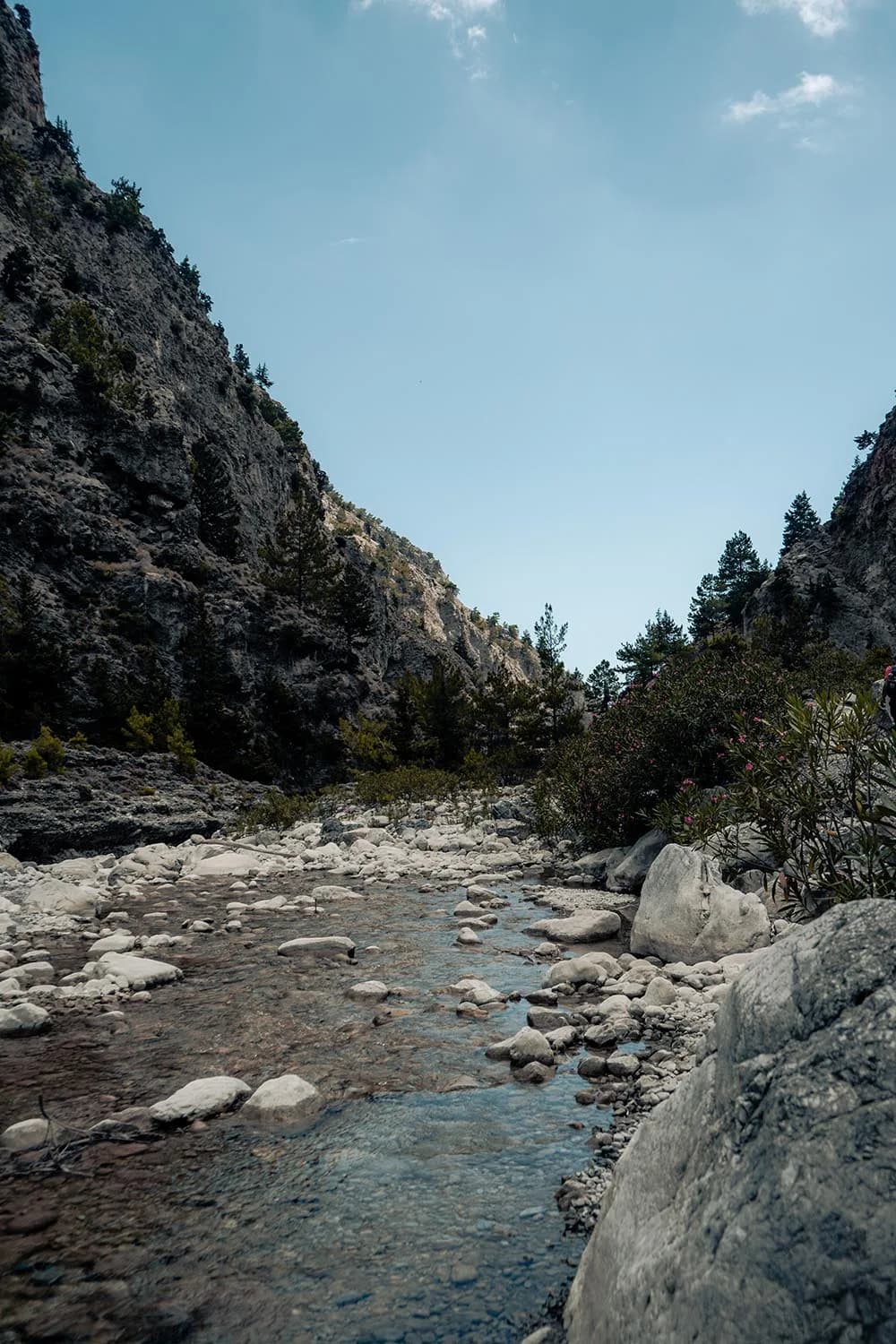
Beyond “The Gates”, the gorge widens and the terrain becomes gentler. You will pass through lush vegetation and follow the peaceful riverbed as you approach the coastal village of Agia Roumeli. The last stretch of the trail follows a pebbly path shaded by tamarisk trees, leading to the azure waters of the Libyan Sea. After about 5 kilometres, you will arrive in Agia Roumeli, where you can celebrate your achievement with a refreshing swim or a well-earned meal in a local taverna.
How long does the hike take?
The full hike usually takes 5 to 7 hours, depending on your pace and how many breaks you take. To manage your energy, start early in the morning to avoid the heat and the crowds. Keep a steady pace, taking regular breaks to rest, drink and savour the spectacular scenery. Listen to your body and don’t push yourself too hard – after all, the journey through the Samaria Gorge is an adventure to cherish and enjoy.
Safety and local regulations
Hiking the Samaria Gorge is an exhilarating experience. But it is essential to put safety first and respect the environment.
Common hazards and how to avoid them:
Loose rocks and slippery surfaces: stay on the marked trail, wear sturdy hiking boots with good grip and use trekking poles for extra stability.
Dehydration and heat exhaustion: stay well hydrated by carrying at least 2 litres of water per person and refilling at the designated water points. Wear a hat, sunglasses and sunscreen, and take breaks in shaded areas to avoid overheating.
Altitude sickness: although the altitude in the Samaria Gorge isn’t extreme, some hikers may still feel mild symptoms. Take your time, descend slowly and watch out for any sign of discomfort.
Rockfall risks
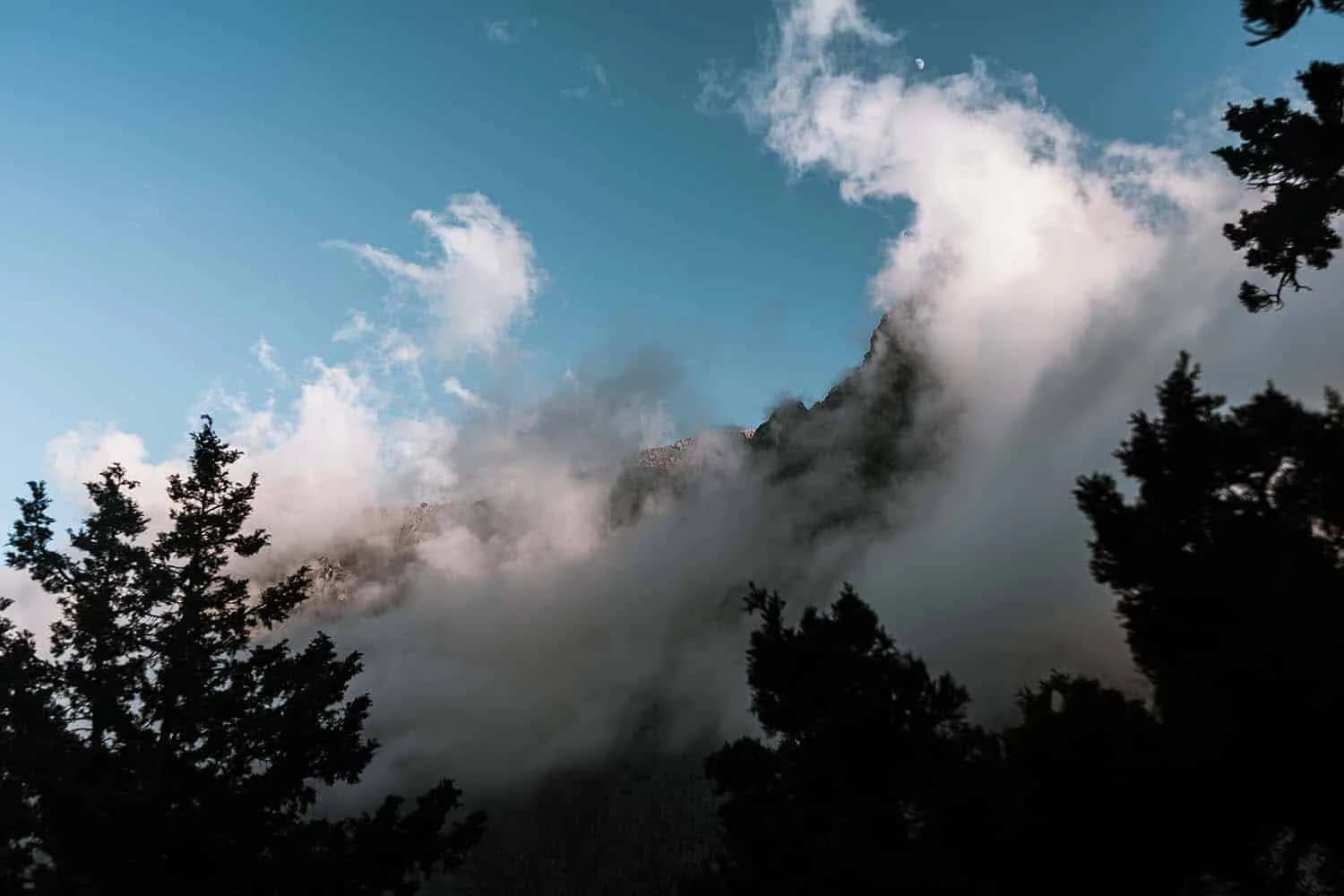
In the Samaria Gorge, you need to stay alert and be aware of the associated risks. One of these is the potential for rockfalls. They can happen due to natural processes such as weathering and erosion, or be triggered by other hikers or animals dislodging rocks higher up the trail.
Rockfalls happen in the gorge every year. So you need to be careful and attentive. When passing through narrow sections or areas with steep cliffs, avoid lingering for long periods. And stay alert to any noise or sign of falling rocks. If you hear or see rocks falling nearby, take shelter under a solid rock overhang or move quickly out of the path of the falling debris.
Wildlife and plants to know about
- Kri-kri,: a rare Cretan goat, is shy and not aggressive but should not be disturbed or approached too closely.
- Griffon vulture: golden eagleperegrine falcon. Watch them from a distance without disturbing their habitat.
- Many plant species in the gorge are protected, so avoid picking flowers or damaging the vegetation.
- Leave No Trace principles and protecting the environment:
- Take all your rubbish away with you, including food waste and packaging.
- Stay on the marked trails to minimise erosion and protect the fragile ecosystem.
- Don’t damage rocks, trees or man-made structures.
- Refrain from feeding wildlife or introducing non-native species.
Local regulations and restrictions for hikers
- The Samaria Gorge is open to hikers from May to October, with exact dates depending on weather conditions.
- Camping, fires and smoking are strictly forbidden in the park.
- Pets are not allowed on the trail.
- Swimming in the river or in any natural water source in the gorge is not allowed. Yes, even if it’s tempting!
Taking the ferry from Agia Roumeli to Sougia
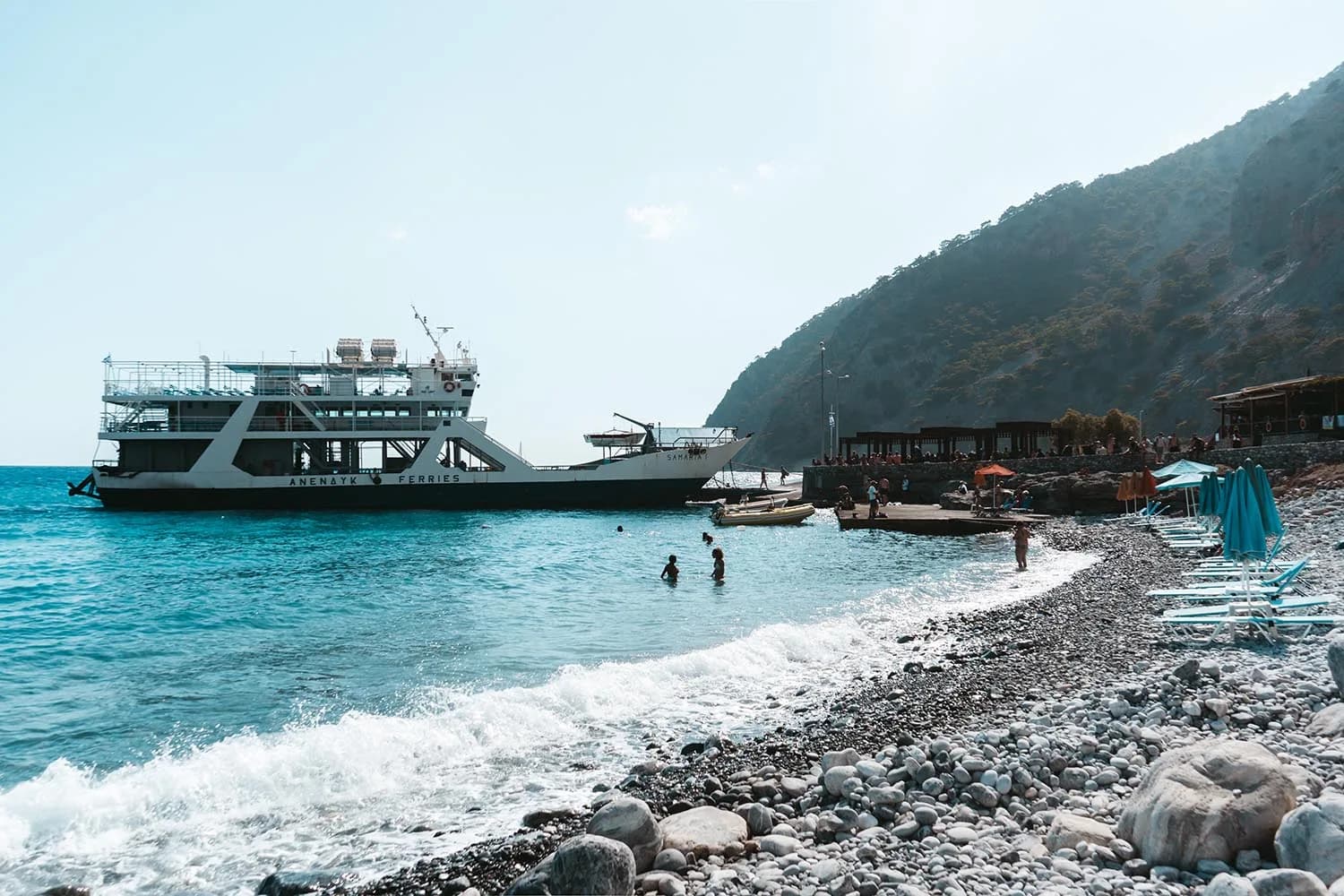
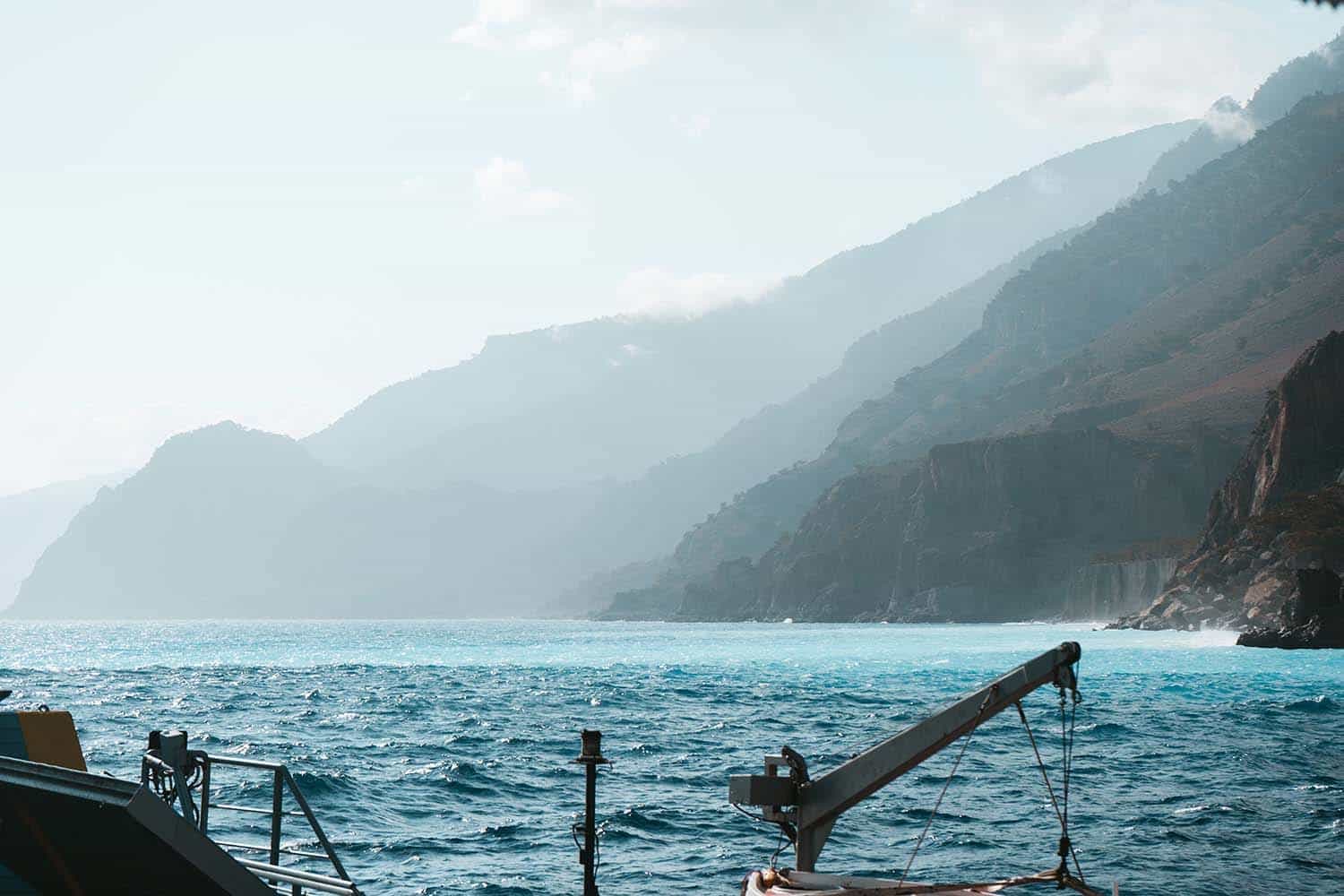
You need to take a ferry from Agia Roumeli to Sougia at the end of the trail. The boat trip is a pleasant way to unwind after your exhilarating hike, and the ferry leaves every day at 5:30 pm.
To make sure you catch the ferry and avoid having to spend the night in Agia Roumeli, it is essential to start your hike early enough. Setting off on the trail at dawn not only leaves you enough time to finish the hike at a leisurely pace, but also has the added advantage of avoiding the midday heat and the crowds, which tend to start later in the day.
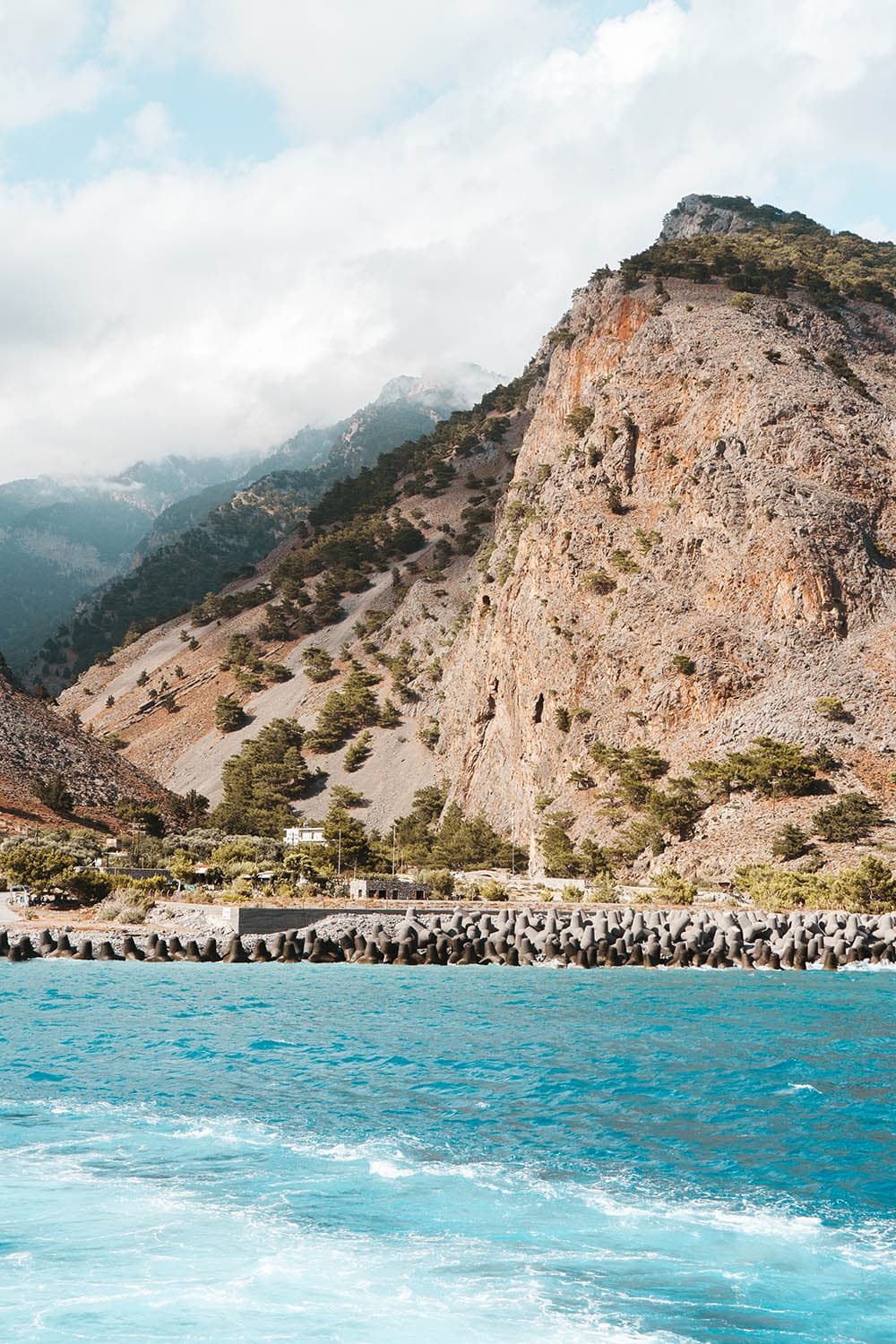
As you make your way through the gorge, keep track of your progress and pace yourself accordingly. Savour the enchanting scenery, but remember to leave enough time for the final stretch, as well as the walk to the ferry dock in Agia Roumeli. If you manage your time well, you will be rewarded with a relaxing ferry ride along the beautiful Cretan coast, watching the sun set over the Libyan Sea.
After completing your exhilarating hike through the Samaria Gorge, take time to relax and explore the surrounding area. Discover the hotels, enjoy delicious local food and venture further afield to discover more of Crete’s captivating attractions.
Hotels and accommodation nearby
In Agia Roumeli, you will find a range of accommodation to suit your needs, from family-run guesthouses to a variety of hotels. Popular options include the Gigilos hotel, Pachnes and Artemis studios.
Camping is not allowed in the Samaria Gorge National Park, but there are several campsites in the Chania area where you can pitch your tent.
Local food and restaurants
After your hike, treat yourself to a meal in one of Agia Roumeli’s local tavernas. Enjoy traditional Cretan dishes such as dakos (rusks topped with tomatoes, feta and olives), lamb with stamnagathi (wild greens) and kalitsounia (sweet or savoury cheese-filled pastries).
Don’t forget to try some local wines or the famous Cretan spirit, raki, which is often served as a digestif after meals.
Nearby attractions and activities to discover after the hike:
- 01 The ancient city of Lissos, just a few hours’ walk away, or a short boat ride from Sougia. This archaeological site is home to the ruins of a Roman theatre, a necropolis and a temple dedicated to Asclepius, the god of medicine.
- 02The pristine beaches of Crete’s south coast: Loutro and Frangokastello, where you can swim, sunbathe or simply enjoy the beautiful setting.
- 03The lovely town of Chania, with its picturesque Venetian harbour, lively markets and historic sites such as the Maritime Museum and the Archaeological Museum.
By extending your stay in this enchanting region, you will not only have the chance to rest and recharge after your Samaria Gorge hike, but also to create lasting memories by immersing yourself more deeply in Crete’s fascinating culture, history and natural beauty.
Conclusion – Exploring the Samaria Gorge
Hiking the Samaria Gorge is a unique experience that showcases the unrivalled beauty of Crete’s natural wonders. From the towering cliffs of “The Gates” to the peaceful coastal village of Agia Roumeli, this journey into the heart of Crete will leave you with lasting memories and a deep appreciation of the island’s rich history, culture and landscapes. By planning carefully, staying aware of potential hazards and respecting local regulations, you will enjoy a safe, pleasant and truly unforgettable adventure. So lace up your hiking boots and set off on the remarkable journey that awaits you in the Samaria Gorge.
Âme Bohème exists thanks to you
Some links in this article are affiliate links. This means that if you book or purchase a product through these links, we receive a small commission — at no extra cost to you. It's thanks to this support that we can continue creating free, quality content.
You can also buy us a coffee, or follow us on Instagram and Facebook.