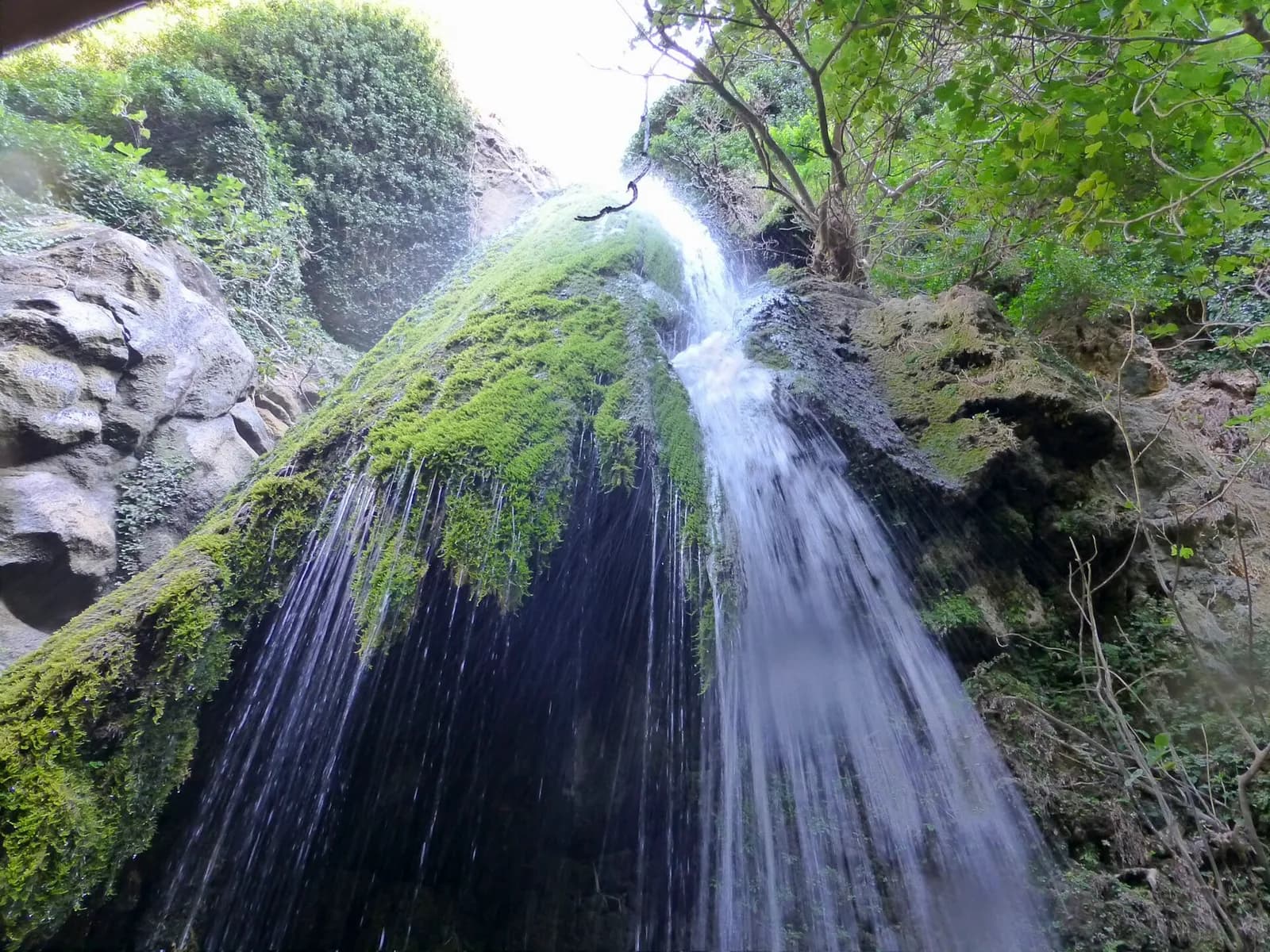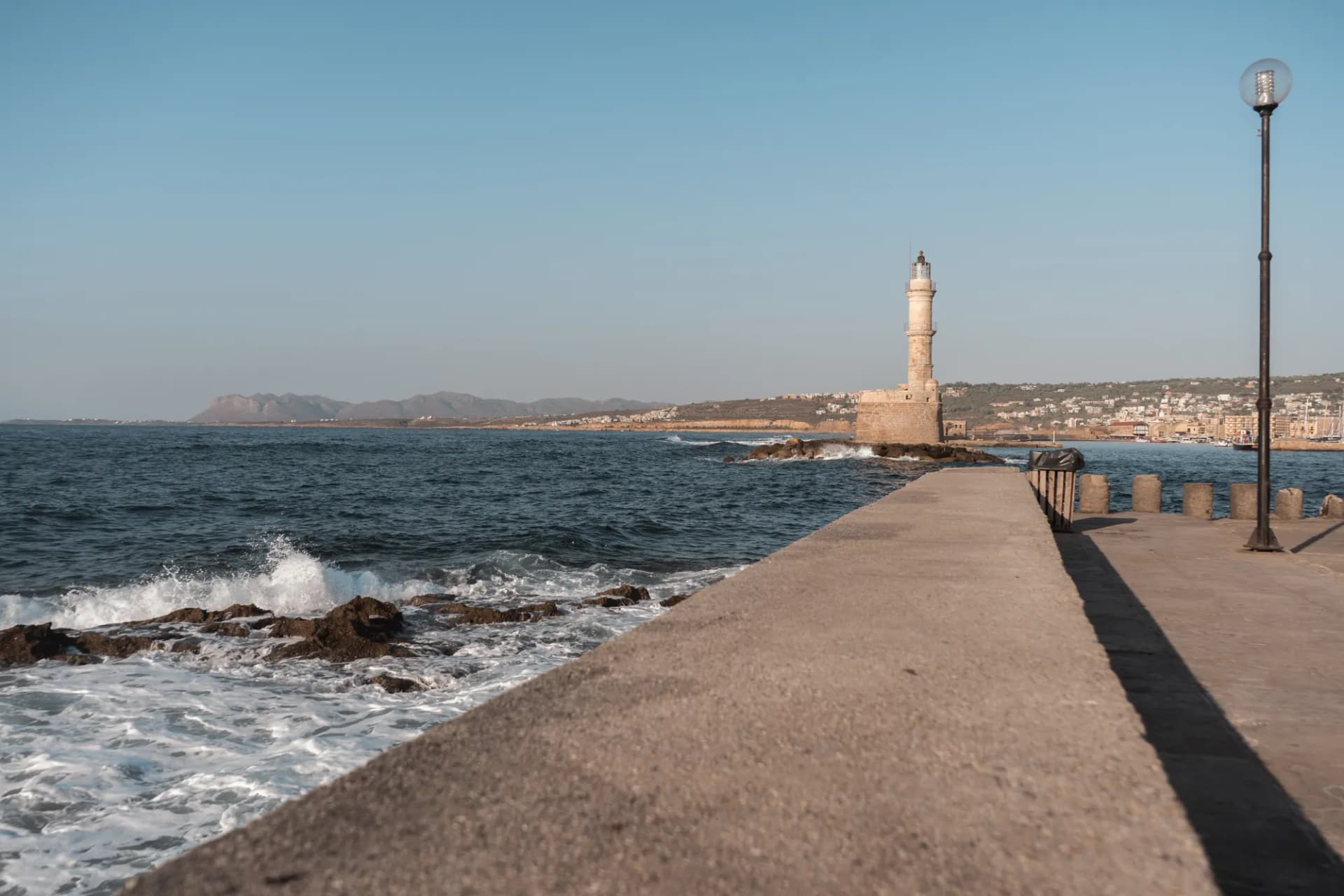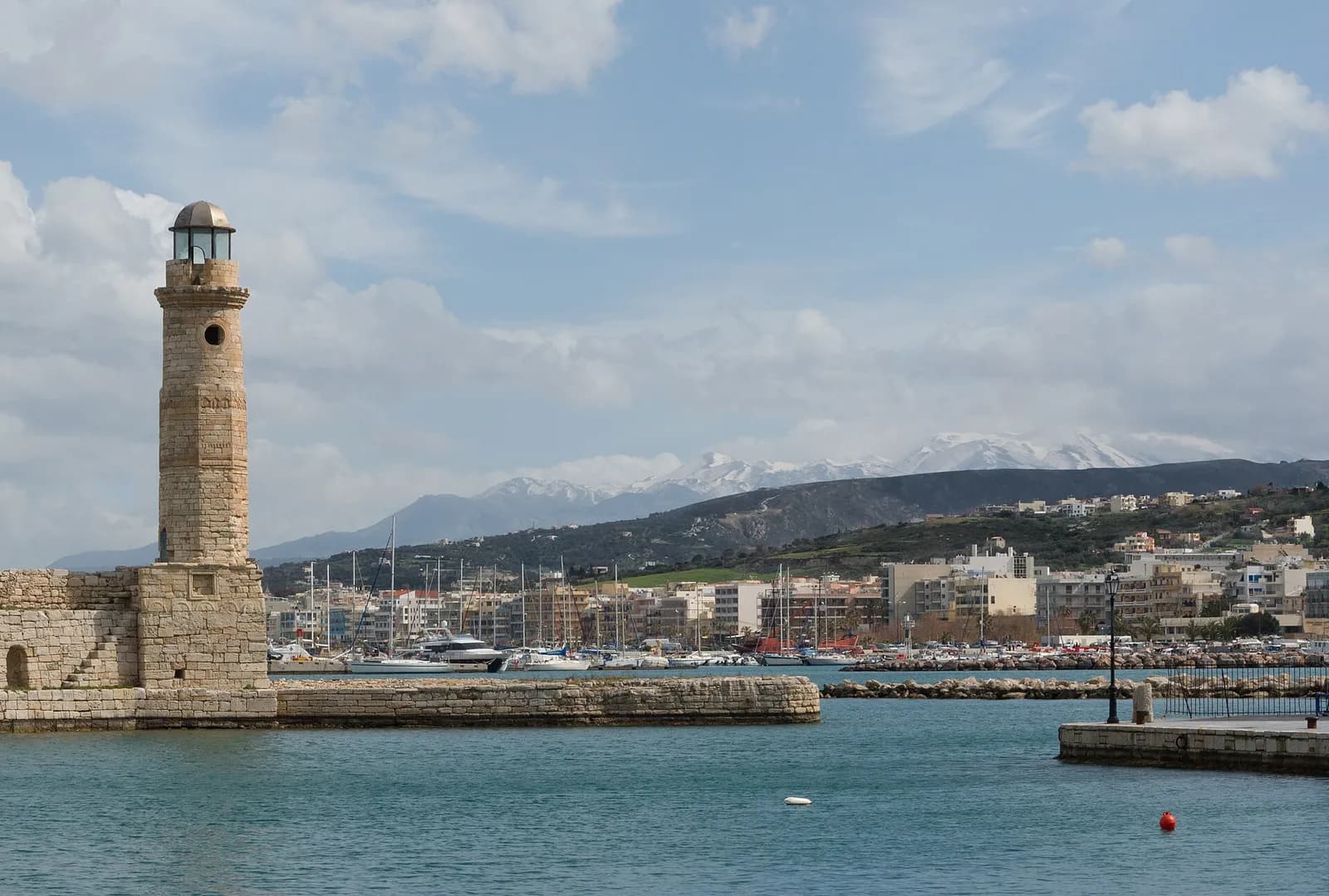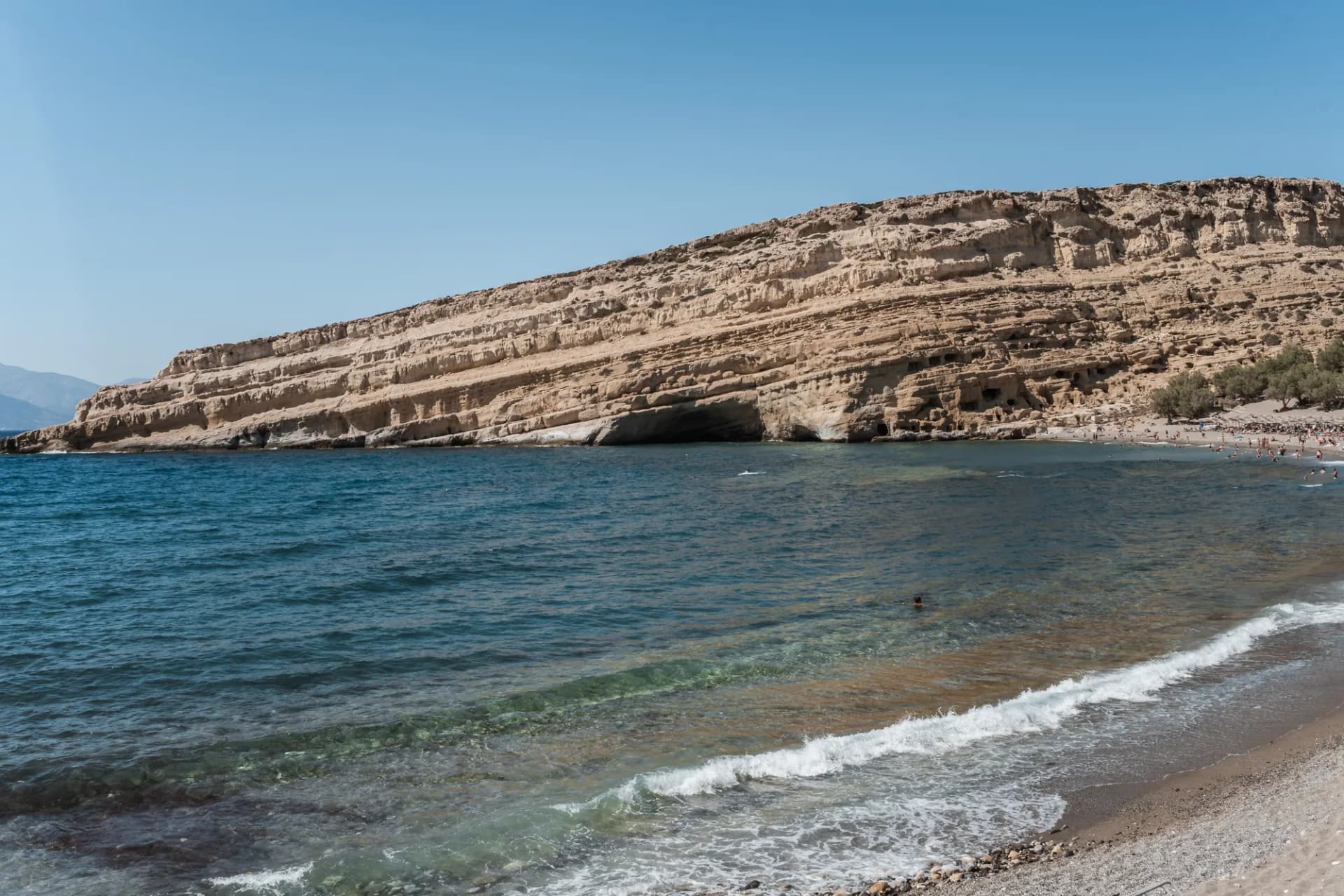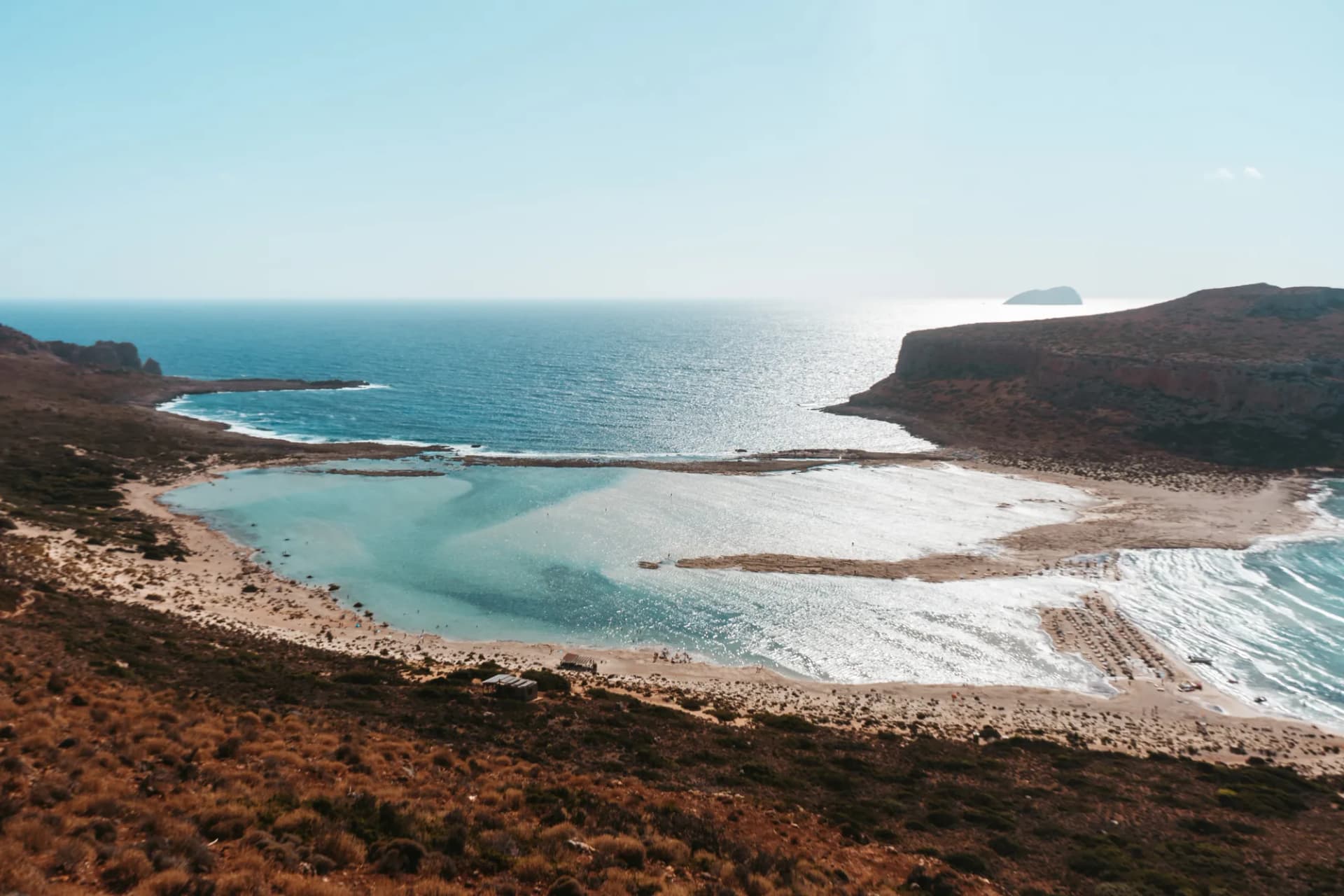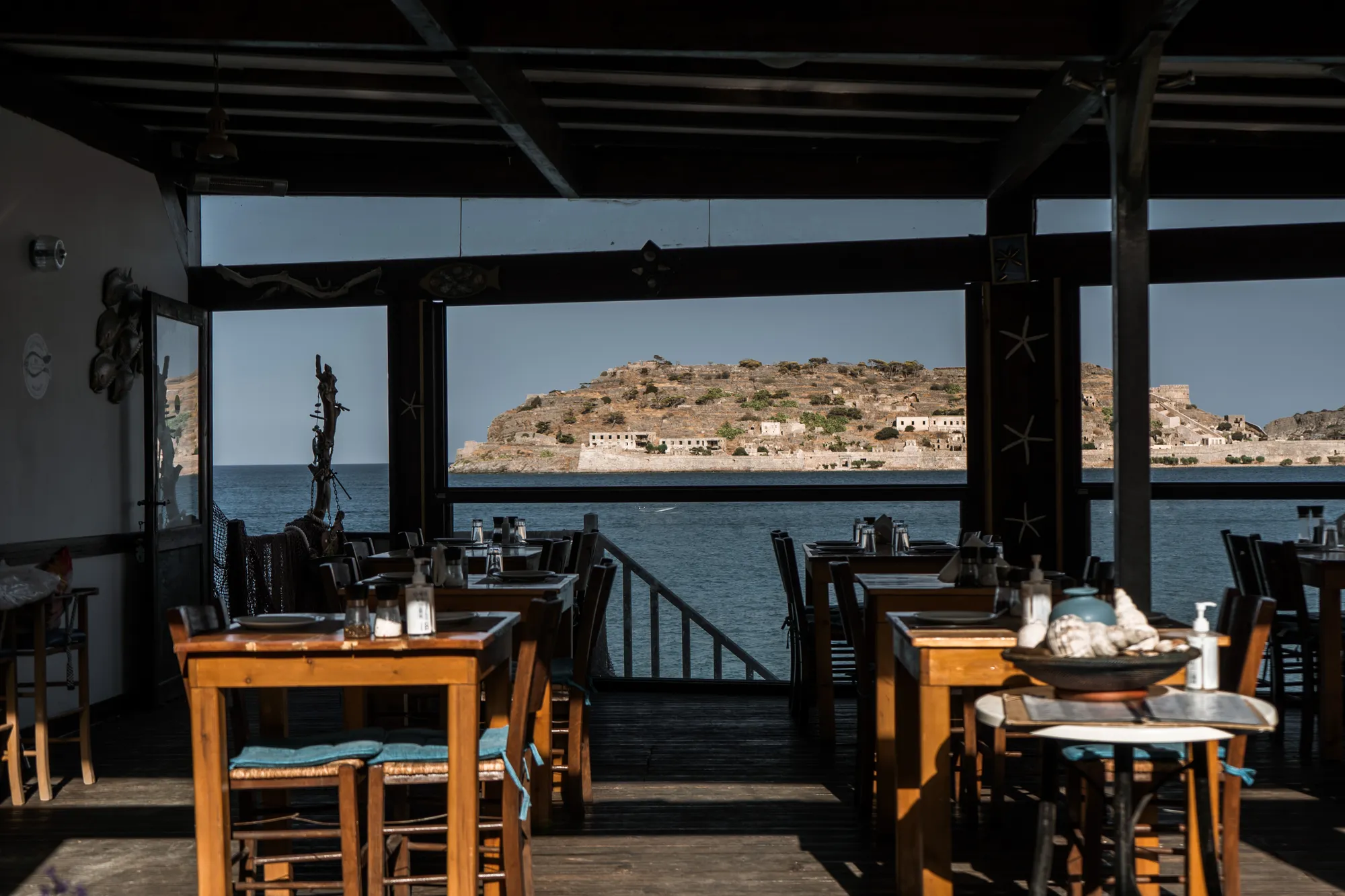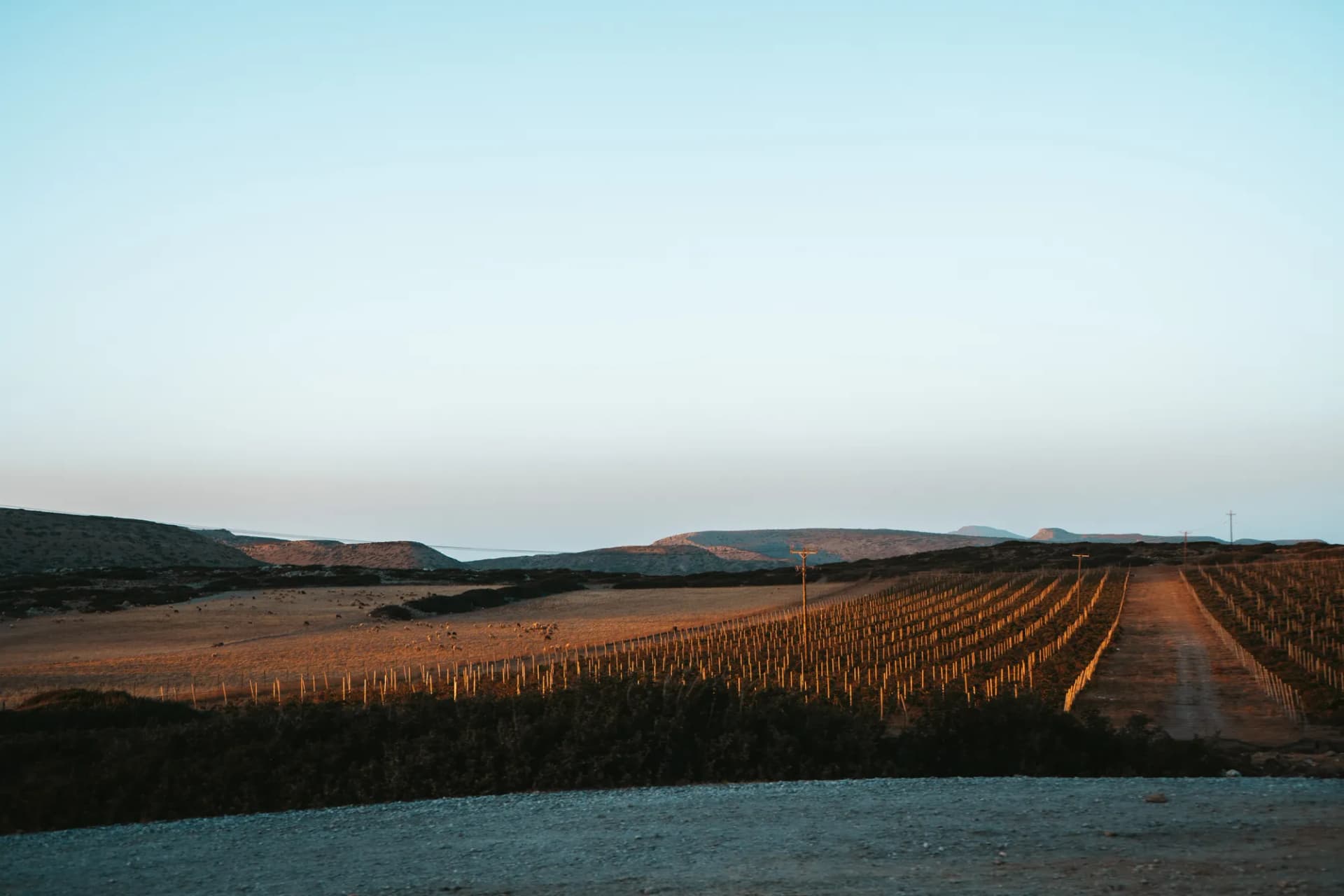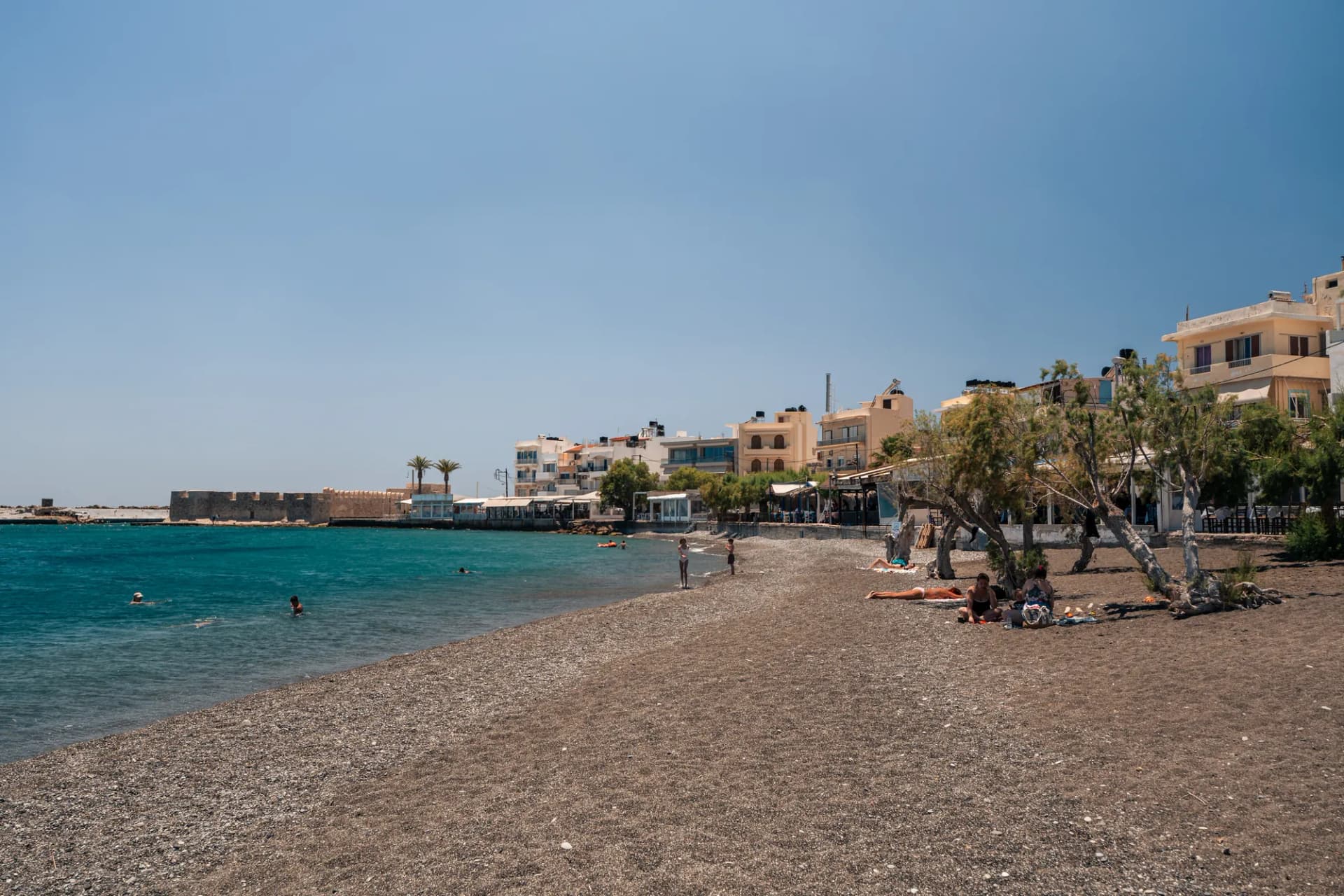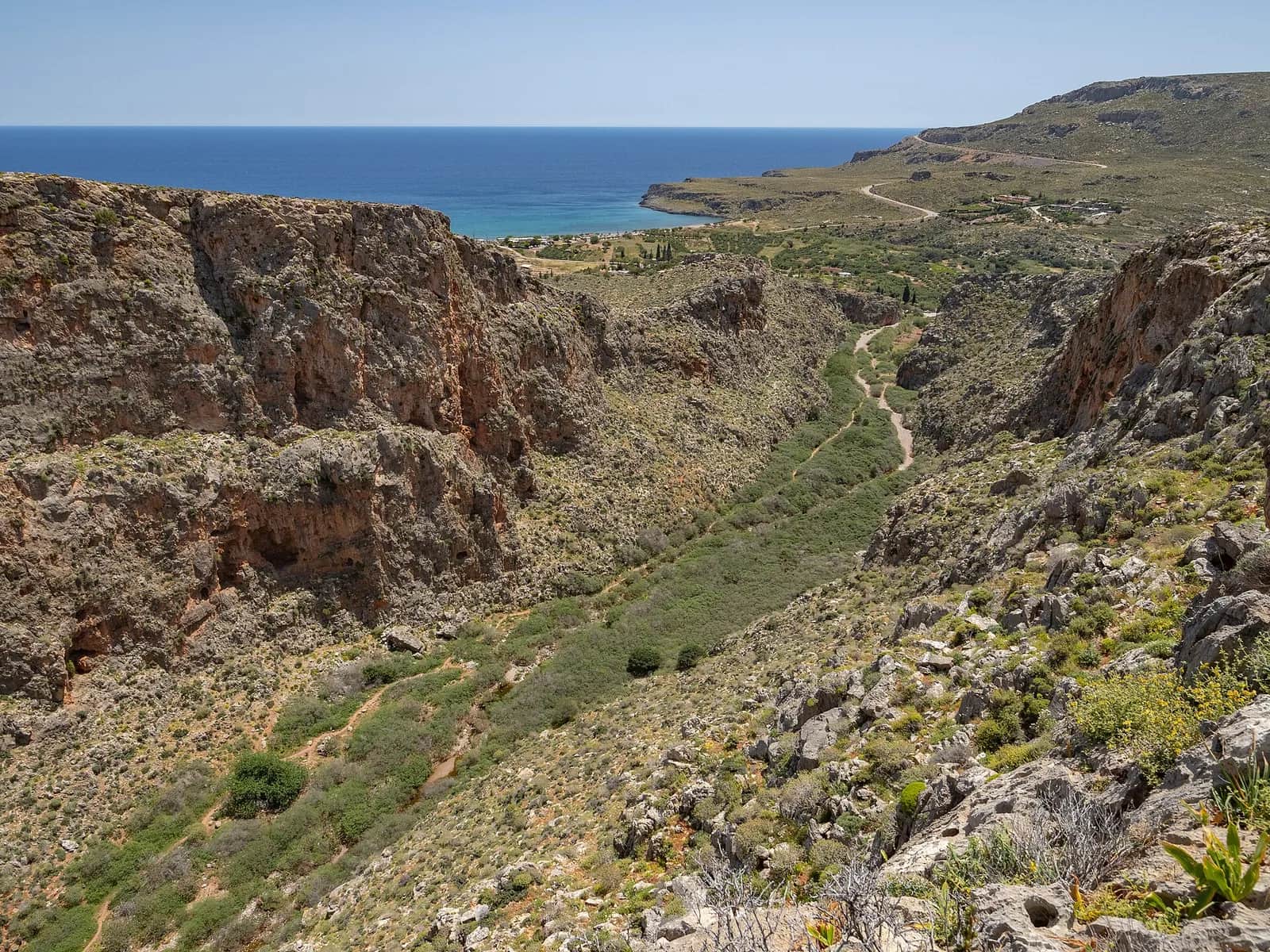

At the far eastern tip of Crete, a short, green gorge runs down from the village of Ano Zakros to a small pebble bay. The Greeks call it Farangi ton Nekron, the “Valley of the Dead”. The name sounds ominous, but there is nothing to worry about: the cliffs are riddled with caves where the Minoans laid their dead to rest more than 3,500 years ago.
What makes Zakros Gorge unique is what awaits you at the end: the ruins of a Minoan palace, the fourth on the island, found intact by archaeologists in the 1960s. In a single morning you can combine an easy walk among oleanders and plane trees, an archaeological visit and a swim in the Libyan Sea.
Here I give you everything you need to plan the day: the two starting points, how long it really takes, how much water to carry, the palace opening hours and ticket price, and above all the awkward question of how to get back to your car.
Why is it called the Valley of the Dead?
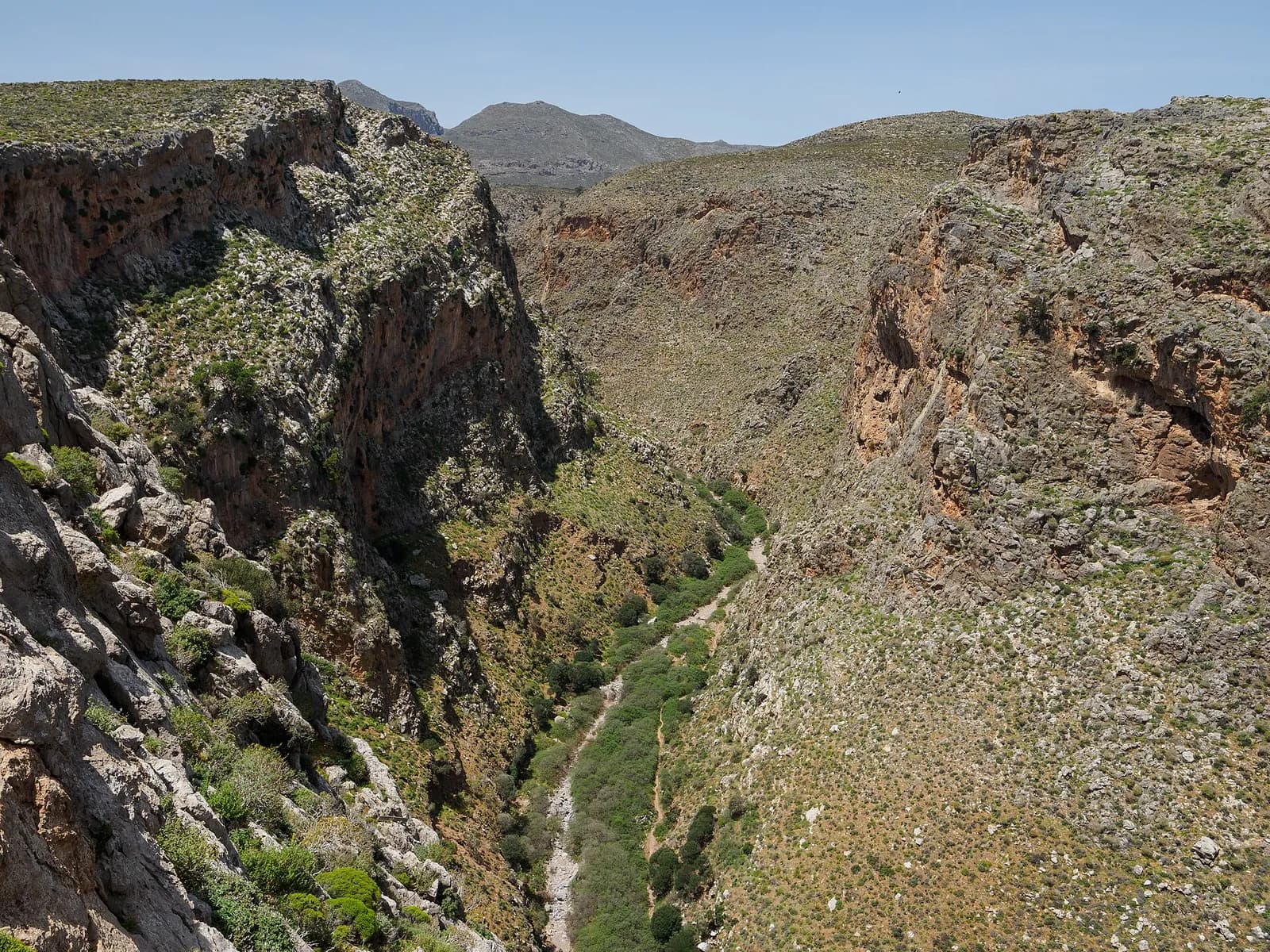
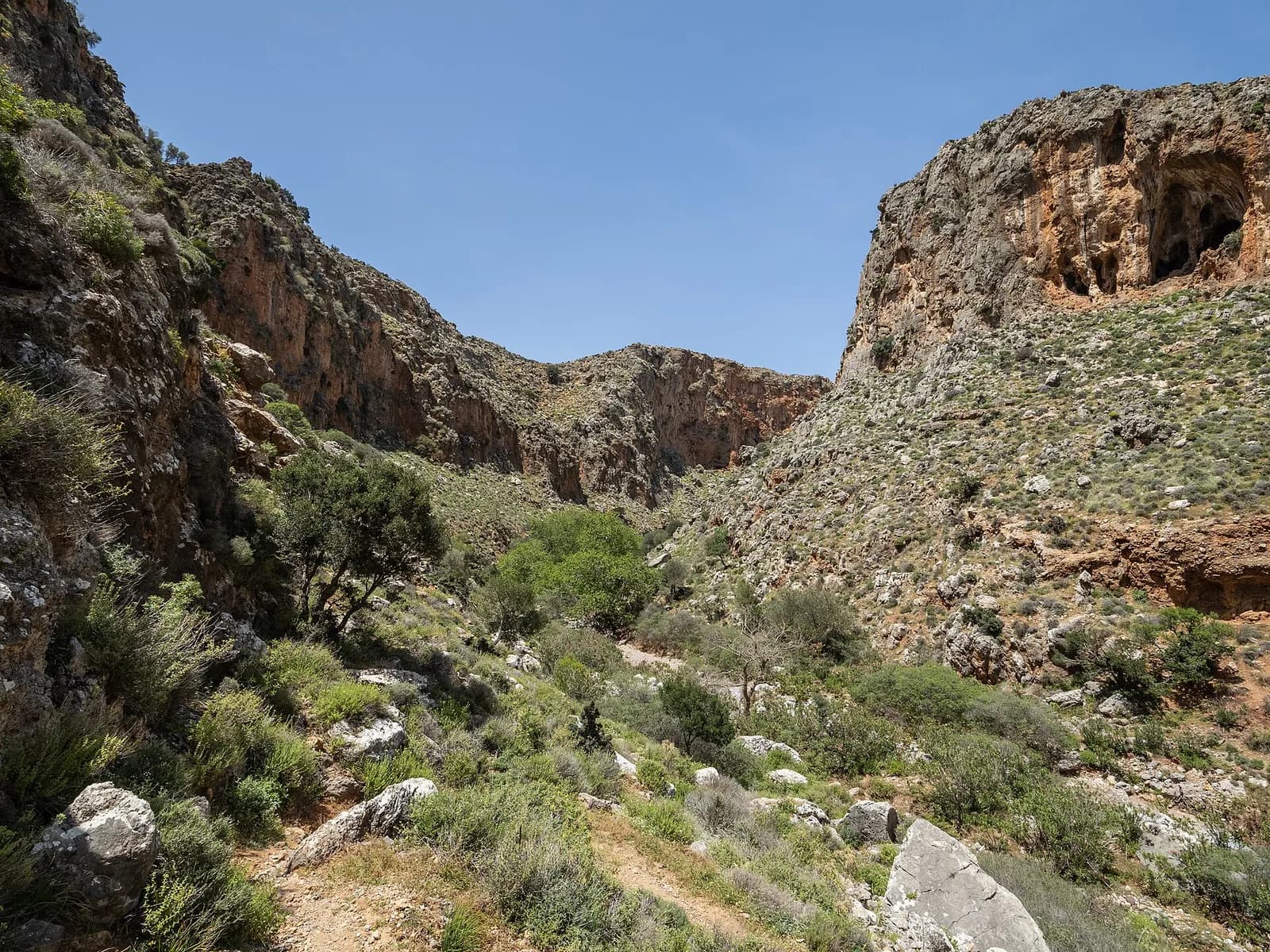
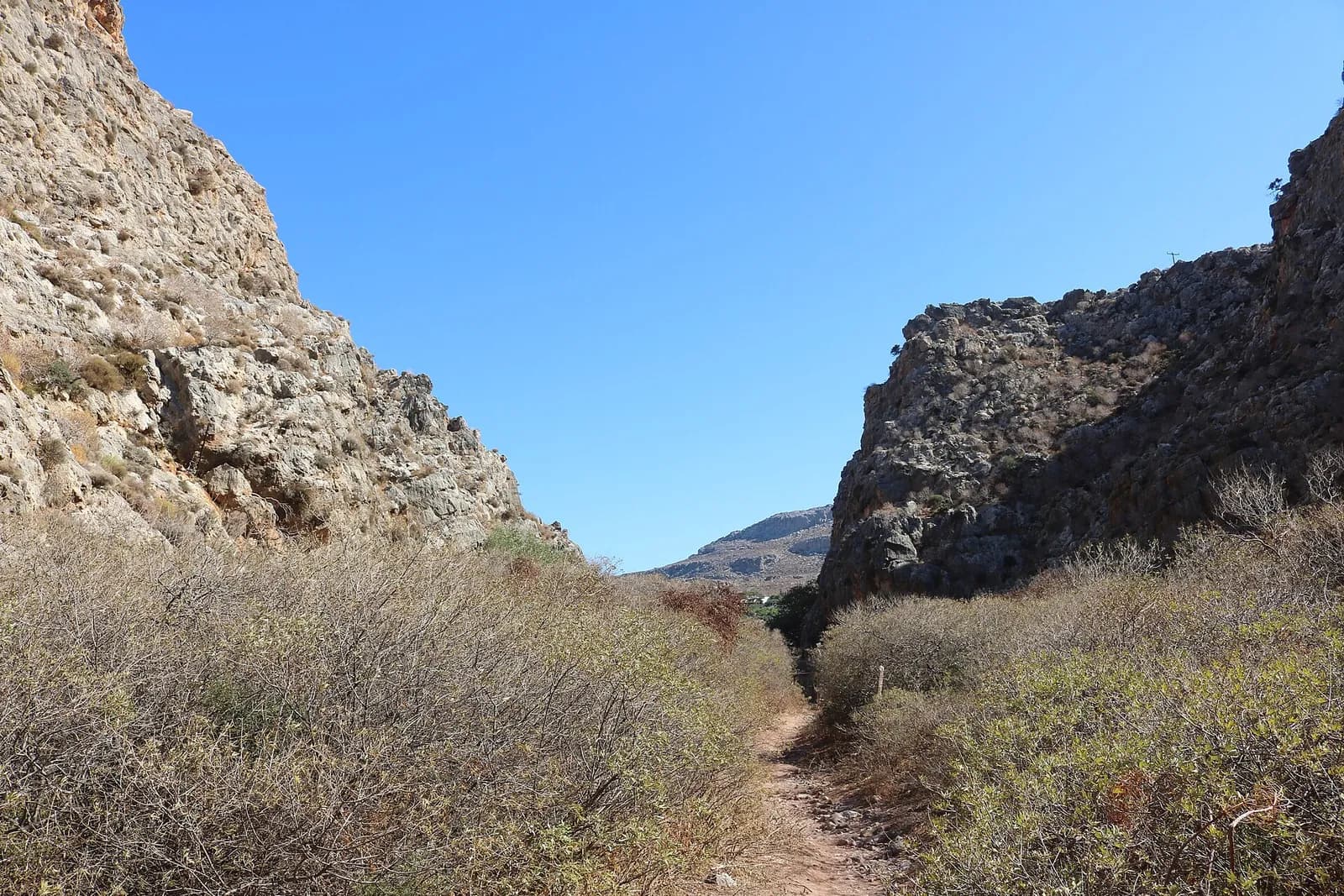
As you walk along the stream bed, look up: the limestone cliffs are pitted with hollows, small caves and rock shelters. In Minoan times, the people of the port town of Zakros buried their dead here. Excavations have uncovered burials in several of these caves, hence the name “Ravine of the Dead” given to the valley, which runs through both the upper and lower parts of the ancient territory of Zakros.
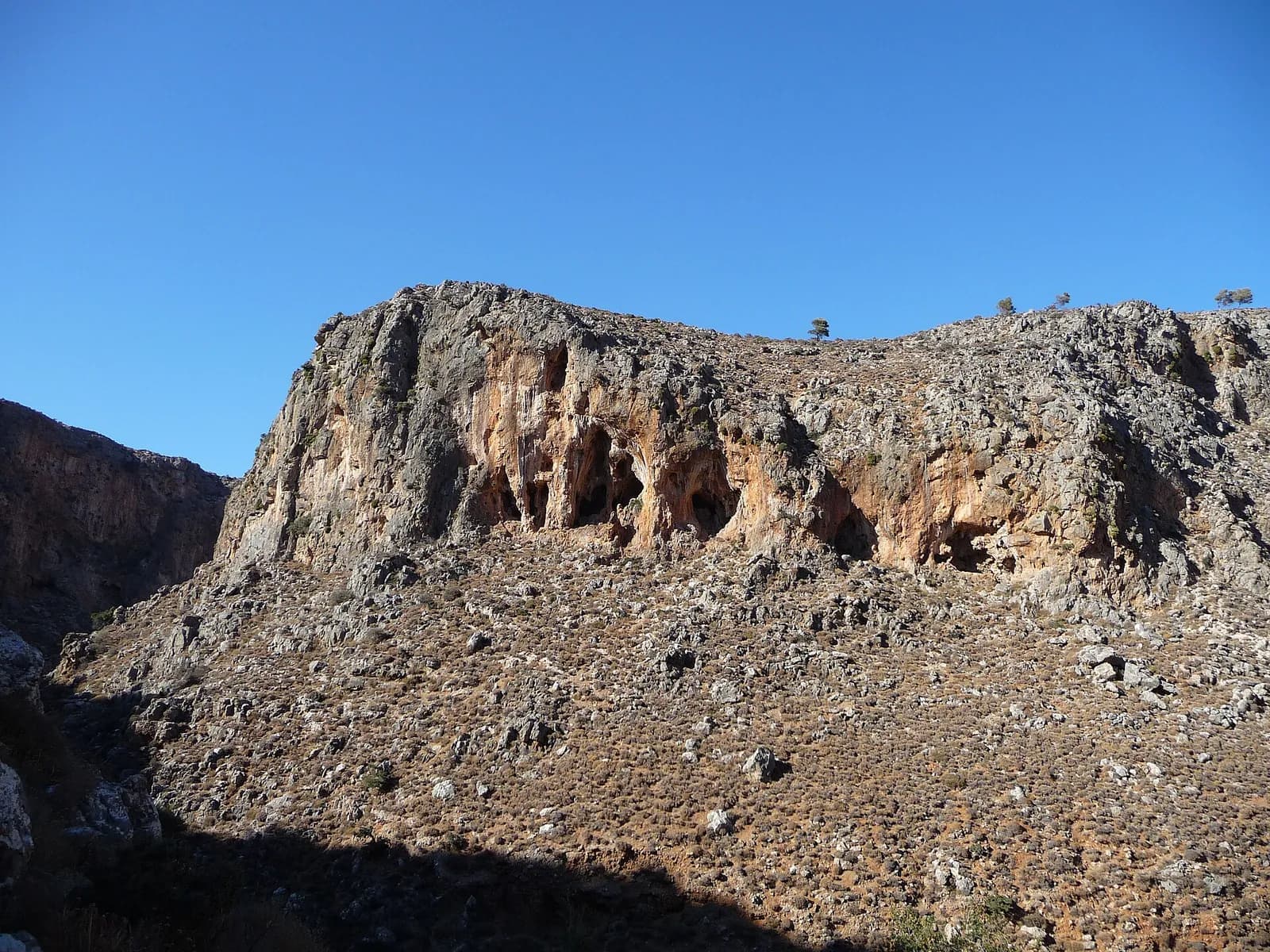
Don't expect landscaped tombs or signposts: these are openings in the rock, often high up, that you look at from the path. The grave goods were removed by archaeologists long ago. I'd advise against climbing up to get inside: the rock is crumbly and this is a protected archaeological site.
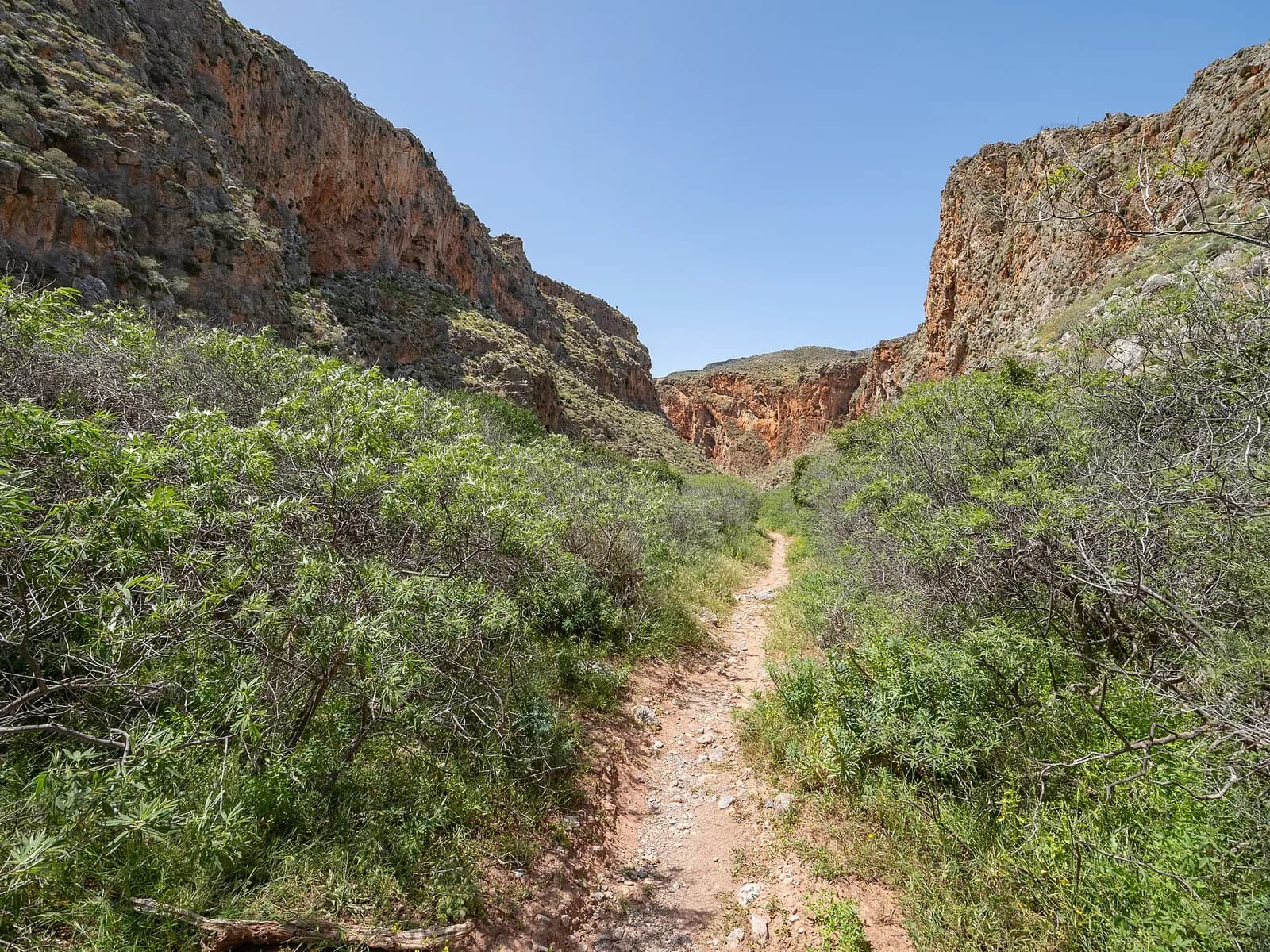
The rest of the scenery is far livelier: oleanders, plane trees, carob trees and wild olives grow on the valley floor, and a concrete irrigation channel runs alongside the path for much of the way. In spring the stream still flows in places; in summer it is usually dry.
The route and starting points
The gorge itself is between 2.5 and 4 km long, depending on where you consider it to begin. The full route from the village of Ano Zakros to the beach at Kato Zakros is about 6 km: it is the last Cretan stage of the E4 European long-distance path, which reaches the island's east coast here.
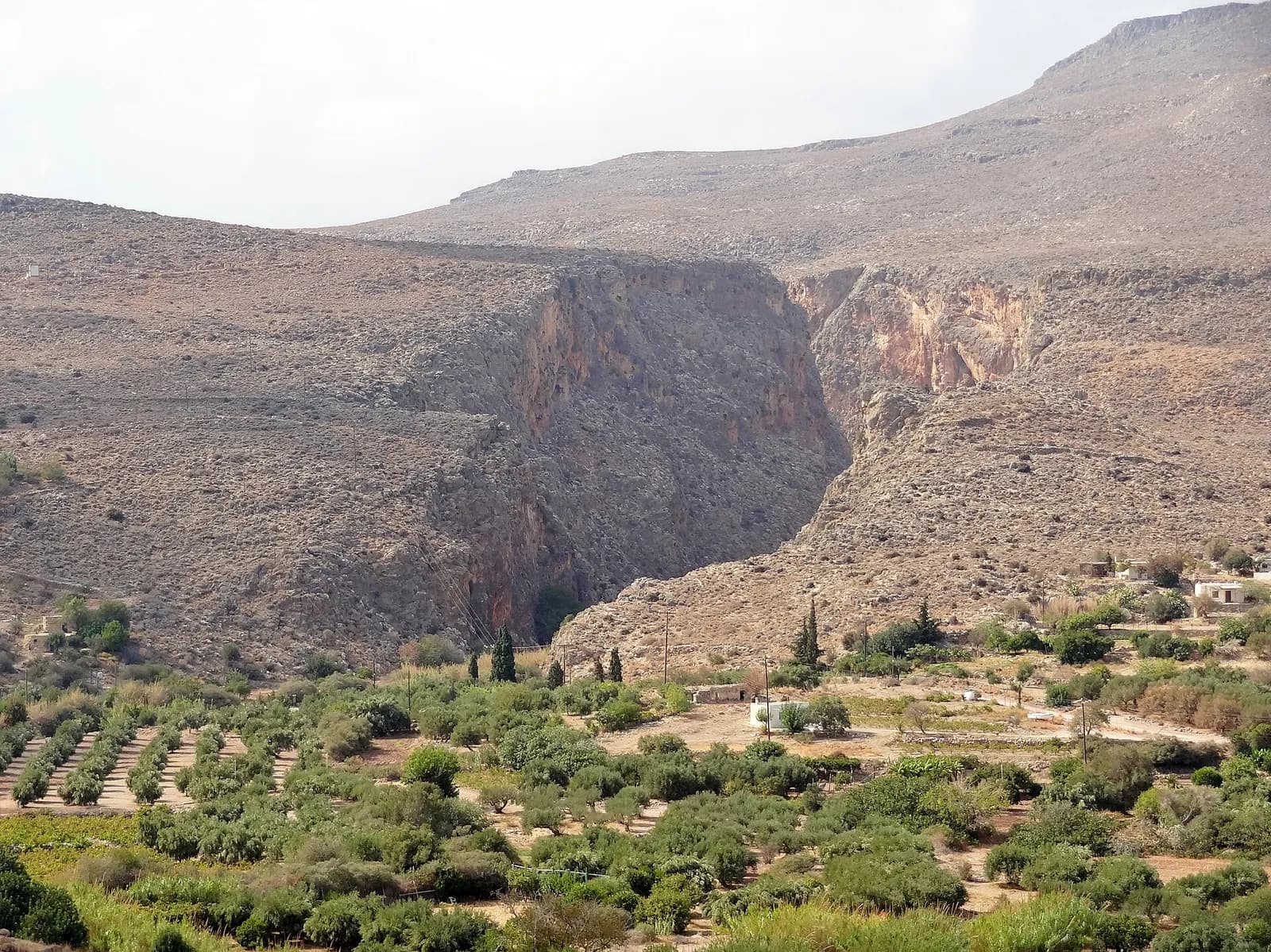
The upper entrance, just past Ano Zakros
The first access point is on the edge of Ano Zakros, heading towards Kato Zakros. The path first crosses olive groves and farming terraces before narrowing between the cliffs. This is the full version: allow 2 to 3 hours to the sea with photo stops. Its advantage is that it starts from the village, where you can park, have a coffee and fill your water bottles.
The halfway entrance, on the Kato Zakros road
The second access point is about 4 km past Ano Zakros, on the tarmac road that winds down to Kato Zakros. Look out for a large lay-by where parking is easy, next to a bus shelter. From there, a fairly steep 15-minute descent takes you to the bottom of the gorge, then you follow the stream bed to the exit. Allow about 1 to 1.5 hours to the beach.
Hike fact sheet
| Criterion | From Ano Zakros | From the halfway entrance |
|---|---|---|
| Distance | about 6 km | about 3 km |
| Time down | 2 to 3 hours | 1 to 1.5 hours |
| Elevation | gentle descent, 100 to 150 m within the gorge | steep 15-minute descent at the start, then flat |
| Difficulty | easy | easy |
| Waymarking | E4 path, signs | E4 path, misleading sign at the start |
| Water on the route | no reliable spring | no reliable spring |
| Shade | partial (plane trees, cliffs) | partial |
| Finish | Minoan palace and Kato Zakros beach | Minoan palace and Kato Zakros beach |
Figures vary from one source to another depending on where each one starts the gorge, so treat them as rough guides. The terrain, however, is the same for everyone: a mix of dirt path, pebbles and a few rocky passages in the stream bed. This is not the Samaria Gorge hike with its 16 km: here, a family with children used to walking will manage perfectly well.
Season, heat, water: preparing for the walk
The gorge can be walked almost all year round. The two exceptions are winter after heavy rain, when the stream swells and the crossing becomes dangerous, and the height of summer, when heat builds up between the cliffs around midday. The best times are April, May and early June (oleanders in bloom, water in the stream), then September and October. To choose your dates, have a look at our month-by-month guide to visiting Crete.
- Water: there is no reliable spring in the gorge. I recommend at least 1.5 litres per person, 2 litres in summer.
- Timing: in July and August, set off before 9am: you walk in the cool of the morning and spend the hottest hours at the palace and then on the beach.
- Footwear: walking shoes or trainers with a good grip are enough; hiking sandals come in handy in spring if you need to cross the stream.
- In your bag: a hat, sun cream, swimwear and a towel for a swim at the end, and some cash for the palace and the taverna.
- Phone signal: it can be weak at the bottom of the gorge; note down a taxi number before you set off.
The Minoan palace of Zakros
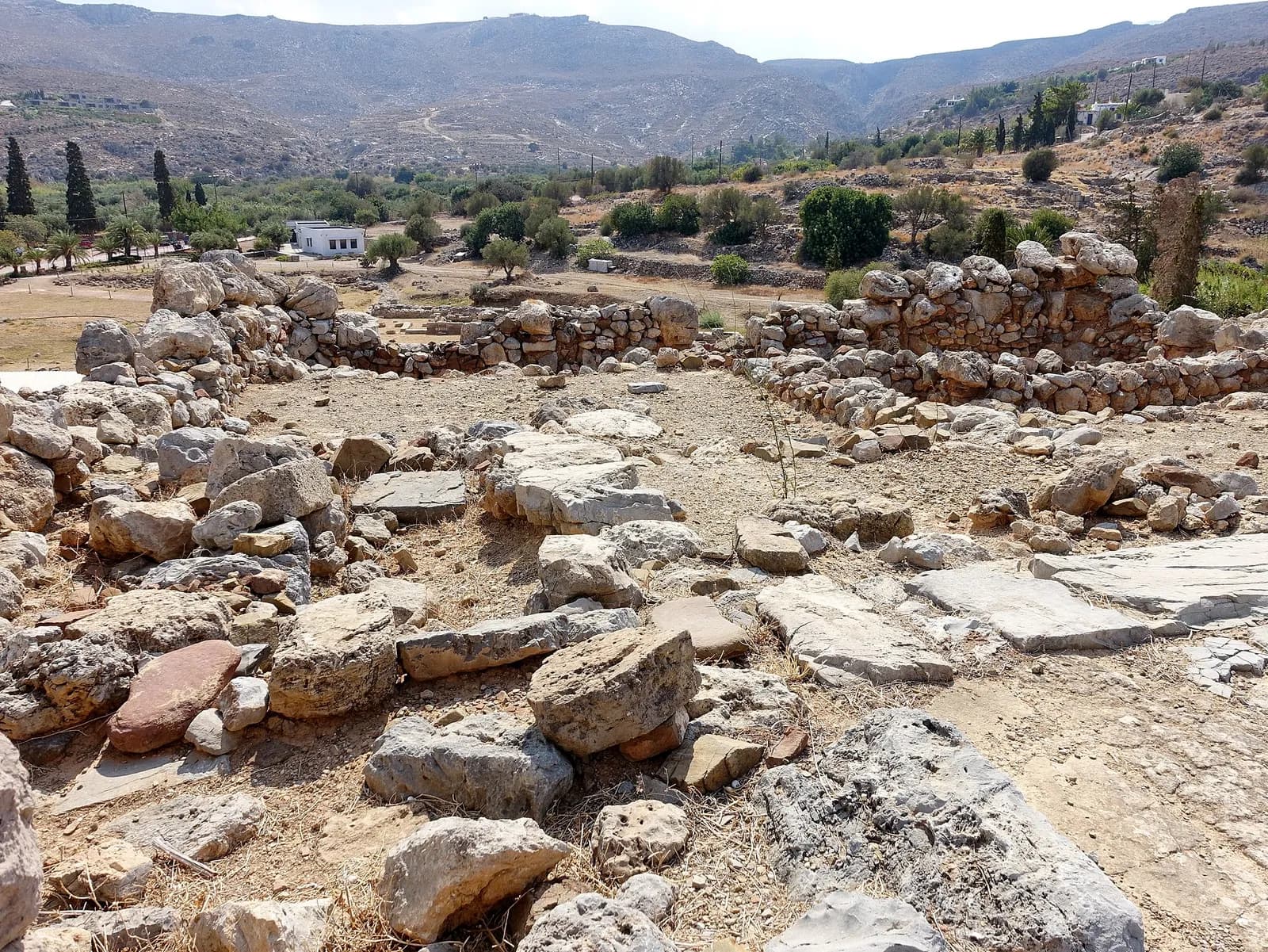
As you leave the gorge, just before the beach, the palace ruins spread out at the foot of the hill. Zakros was a port facing the East: ivory, copper ingots and objects from the eastern Mediterranean have been found here. It is the smallest of Crete's four great Minoan palaces, after Knossos, Phaistos and Malia.
A palace found unlooted
The British archaeologist David Hogarth excavated houses in the Minoan town as early as 1901, without finding the palace. It was the Greek archaeologist Nikolaos Platon who identified it in 1961, then began systematic excavations in 1962 on the eastern slope of the hill of Agios Antonios. He carried on working there until his death in 1992.
What sets it apart: it is the only Minoan palace discovered unlooted. Suddenly destroyed around 1450 BC, it was never rebuilt, and objects stayed under the rubble exactly where they had been left. Since July 2025, it has been one of the Minoan palatial centres inscribed on the UNESCO World Heritage List, alongside Knossos, Phaistos, Malia, Zominthos and Kydonia. The palace covered about 8,000 m² on several levels, around a central court. Zakros is also one of the main sources of documents in Linear A, the Minoan script that has still not been deciphered.
On site, you will mostly see low walls, the central court, storerooms and a pool, often half under water because the water table and sea level have changed since antiquity. The finest pieces, including some remarkable rhyta (ritual vessels), are on display at the Heraklion Archaeological Museum, others at the Archaeological Museum of Sitia. I recommend seeing one of the two before or after: the site really comes to life once you have seen what came out of it.
Palace opening hours and prices in 2026
| Period | Opening hours | Closures |
|---|---|---|
| 1 April to 31 October | opens at 8am, closes between 6pm and 8pm depending on the period | no weekly closing day |
| September and October | closing time brought forward in stages (8am to 6pm from 16 to 31 October) | no weekly closing day |
| 1 November to 31 March | 8.30am to 3.30pm | closed on Tuesdays |
| Full price | €10 | |
| Concessions | €5 | |
| Closed on public holidays | 1 January, 25 March, 1 May, Easter Sunday, 25 and 26 December |
Last admission is about 20 minutes before closing. Entry is free on certain days set by the Ministry of Culture (6 March, 18 April, 18 May, the last weekend of September, 28 October) and on the first and third Sundays of the month from November to March. Allow an hour for the visit. Opening hours change regularly: check them the day before on +30 28430 26897.
Kato Zakros: beach, tavernas and the end of the day
Kato Zakros is a sheltered bay, a beach of pebbles and coarse sand with crystal-clear water, and a handful of tavernas lined up facing the sea. No big hotels or concrete seafront: just a few rooms to rent and a slow pace of life, in contrast with the north of the region. After the hike and the palace, a swim is the natural reward.
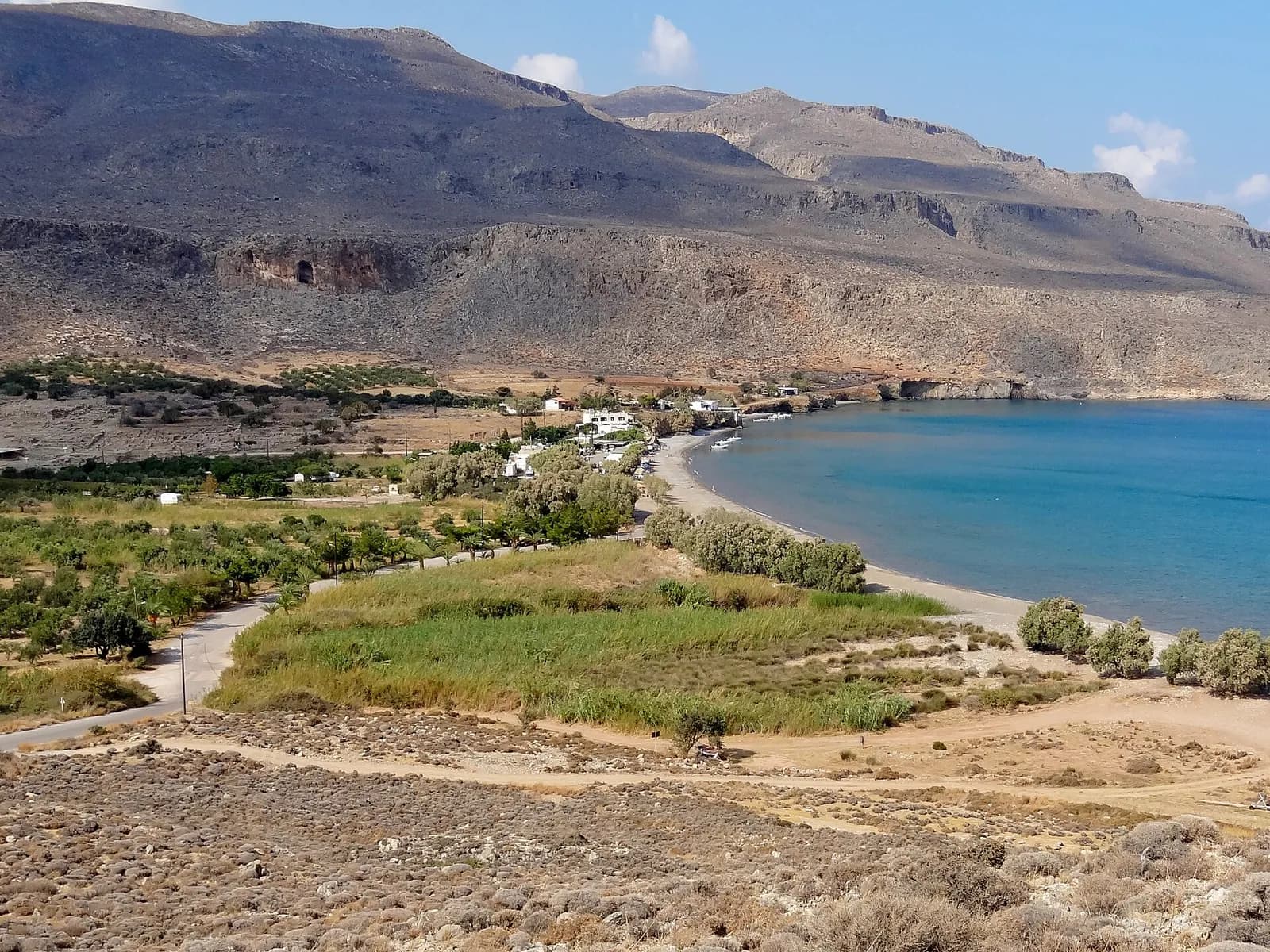
The tavernas serve simple Cretan food: grilled fish, salads, slow-cooked dishes. As everywhere in Crete, European Region of Gastronomy 2026, ask what comes from the day's catch or the vegetable garden. Out of season (November to March), some places close: if you come in winter, bring a picnic.
Getting back to Ano Zakros: on foot, by taxi or by bus
This is the real headache of the gorge, since the route is one way. If you came by car and left it at the top, you have three options.
- 01Walk back up: the same path in reverse, barely longer than the way down, but often in full sun in the afternoon. Fine in spring and autumn, gruelling in July and August.
- 02Taxi: the simplest solution. There is a taxi in Ano Zakros; ask for the number at the village café before you set off, or at the taverna when you arrive. The drive to the halfway entrance or the village only takes about ten minutes.
- 03KTEL bus: there is a Sitia, Zakros, Kato Zakros line, but with very few departures a week, varying with the season. Check at Sitia bus station (+30 28430 22272) before relying on it.
Ano Zakros, its springs and its mills
Don't drive through Ano Zakros (also simply called Zakros) without stopping. The village is built around plentiful springs that water the whole valley and feed its olive groves. This water made its fortune: Zakros was once a village of mills, with watermills for grain, fulling mills for wool and olive presses that served the whole province.
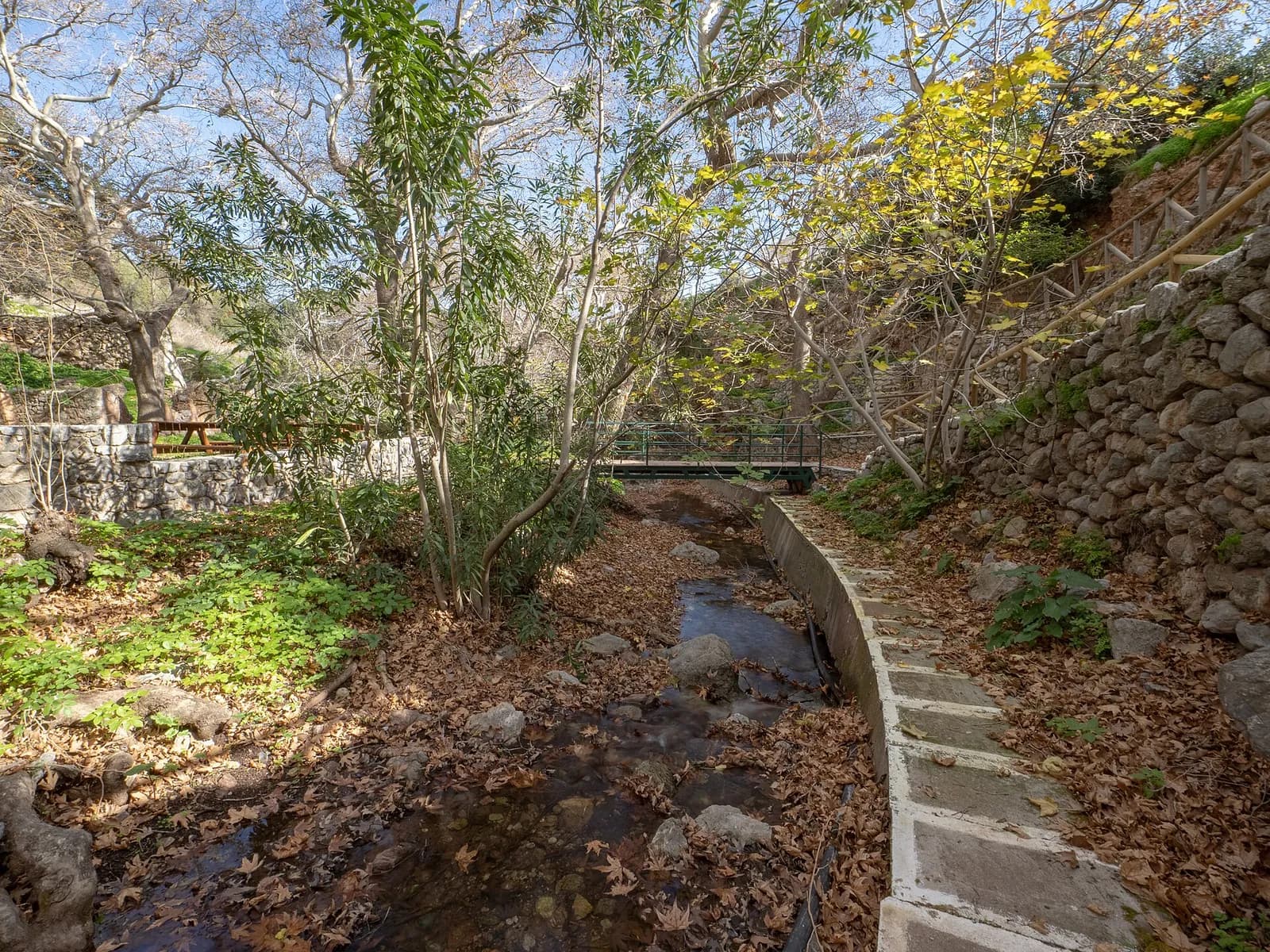
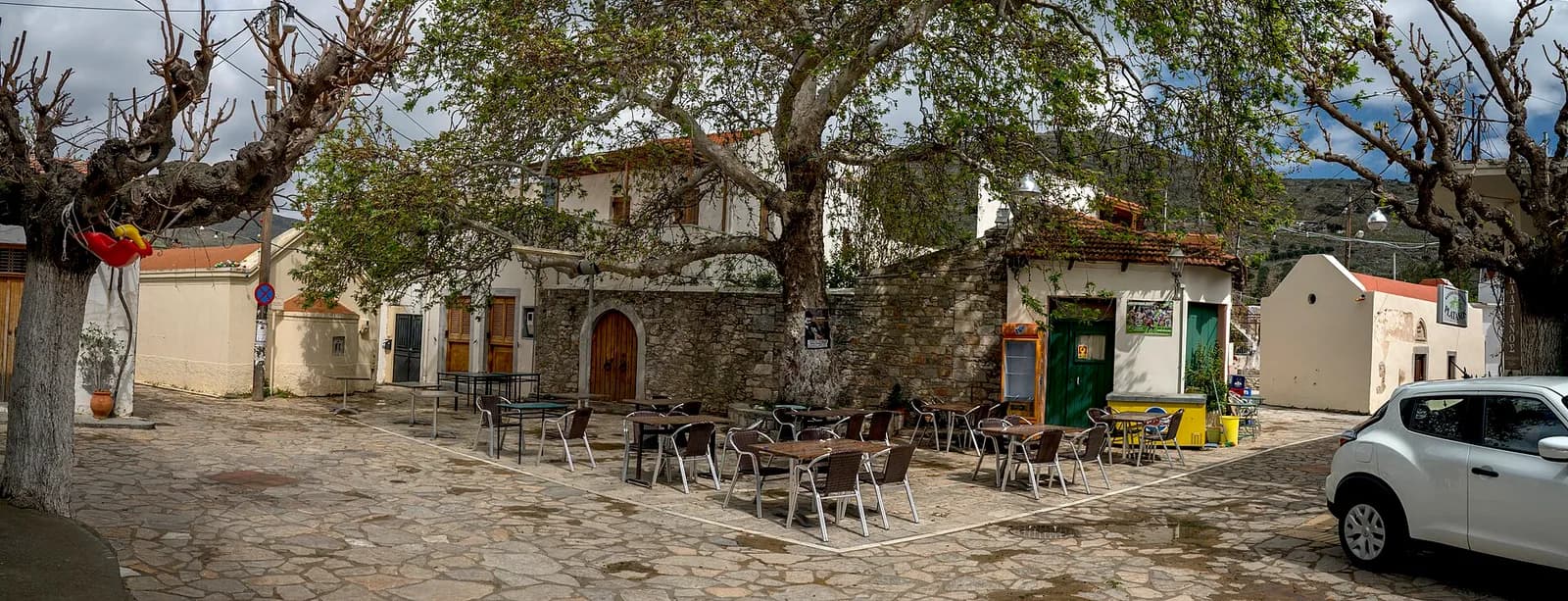
Around the spring, tall plane trees shade the cafés on the square, the perfect spot for a coffee before your walk. The village also has a museum of water and hydraulic works set around a restored mill, as well as a natural history museum and an information point for the Sitia UNESCO Global Geopark. Check their opening hours locally, as they vary out of season.
Optional extra: Xerokambos, further south
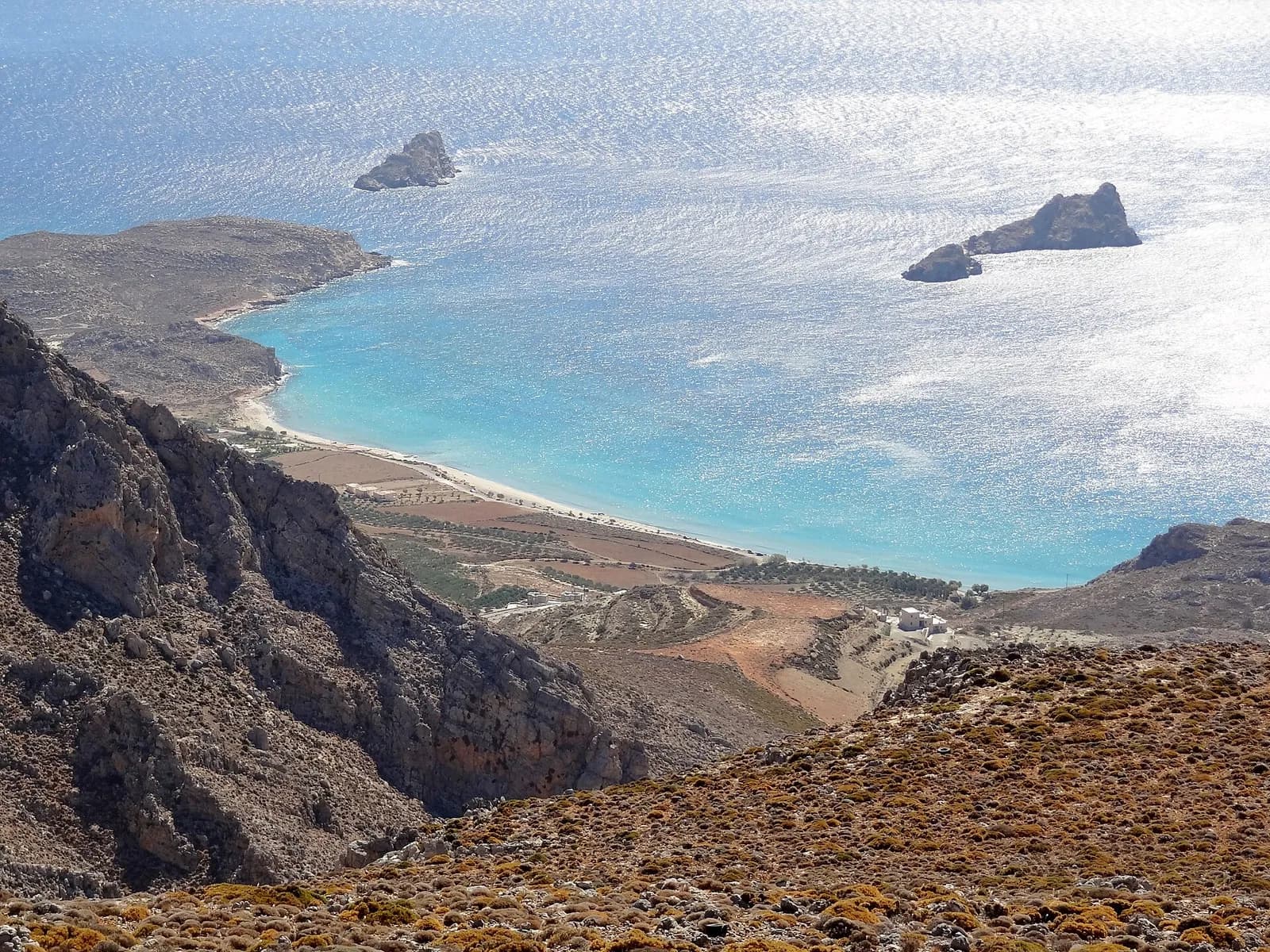
If you still have time, Xerokambos lies south of Zakros, along a narrow, winding road (allow about 30 minutes from Ano Zakros). It is a stretch of coast with one sandy beach after another, very little building, and a seasonal lagoon, Alatsolimni, which fills up in winter. A good option to end the day on a wider beach than Kato Zakros, or to spend a quiet night.
How to get to Zakros Gorge
Zakros is at the far end of Crete: without a car, the trip is complicated. I recommend you hire a car in Crete and spend the night before in Sitia, Zakros or Kato Zakros, rather than doing the round trip in a day from Agios Nikolaos or Heraklion.
| From | Distance (approx.) | Driving time (approx.) |
|---|---|---|
| Sitia | 38 km to Ano Zakros | 50 minutes to 1 hour |
| Agios Nikolaos | 110 km | 1 hour 45 to 2 hours |
| Elounda | 120 km | 2 hours |
| Heraklion | 170 km | almost 3 hours |
| Ano Zakros, Kato Zakros | 9 km | 15 minutes |
Parking is free and easy in the village, in the lay-by at the halfway entrance and at Kato Zakros, except at peak times in August when the beach car park fills up. The road from Sitia goes via Palekastro; the descent to Kato Zakros has hairpin bends but is fully tarmacked.
DiscoverCars
Car rental comparison in 150+ countries
Compare prices from Hertz, Avis, Sixt and local providers. All fees included, free cancellation. Rated 4.6/5 on Trustpilot.


A full day at the end of the island
An easy hike, Minoan tombs, an intact palace, a swim and grilled fish: Zakros Gorge sums up eastern Crete in a single day, far from the crowds at the big sites. To plan the rest of your itinerary, browse our complete guide to Crete and all our ideas on the Crete page. And if the Mirabello area appeals to you too, our guides to Agios Nikolaos and Elounda are coming soon.
Frequently asked questions
From the halfway entrance on the Kato Zakros road, allow about 1 to 1.5 hours to the beach. From the top, just past Ano Zakros, allow 2 to 3 hours including breaks. Add at least an hour to visit the Minoan palace at the end.
No. The descent within the gorge is about 100 to 150 m, the path is waymarked (it is part of the E4 European long-distance path) and it suits children who are used to walking. The only fairly steep section is the 15-minute or so descent from the halfway entrance. Avoid it after heavy rain, when the stream bed fills with water.
The Greek name, Farangi ton Nekron, comes from the many caves and hollows in the cliffs where the Minoans laid their dead to rest. Archaeologists have found Minoan burials there. So the name has nothing to do with hiking accidents.
Three options: walk back up the gorge (same time as the way down, hotter in the afternoon), call a taxi from Kato Zakros to take you back to your car, or catch the KTEL bus if it runs that day. Buses between Sitia, Zakros and Kato Zakros are few and seasonal: check the timetable at Sitia bus station before you set off.
A full-price ticket costs €10 and a concession €5. Entry is free on certain days set by the Greek Ministry of Culture (including 28 October) and on the first and third Sunday of the month from November to March.
Sources and fact-checkingInformation checked on 7 October 2026 · 14 sources consulted
- Hellenic Heritage : site archéologique de Zakros (horaires, tarifs, jours de fermeture)
- Odigos tou politi : décision ministérielle sur les horaires d'été 2026 des sites archéologiques (réduction progressive de septembre à octobre)
- Visit Crete : Archaeological site of Zakros (téléphone, histoire du palais)
- Wikipedia (anglais) : Zakros (fouilles Hogarth 1901, Platon 1961 à 1992, linéaire A, collections)
- Wikipedia (grec) : Ζάκρος (village, distance de Sitia, palais)
- Destination Crete : site archéologique de Zakros (découverte par Platon, palais non pillé)
- Destination Crete : Zakros Gorge, Valley of the dead
- Destination Crete : E4, étape 89 Zakros, Kato Zakros
- Cretan Beaches : Zakros Gorge of the Dead (longueur, dénivelé, balisage)
- Cretan Beaches : le village de Zakros (sources, moulins à eau, Géoparc de Sitia)
- Explore Crete : Zakros Gorge (deux entrées, absence de fontaine, retour)
- This is Crete : Zakros Gorge
- KTEL Héraklion-Lassithi (horaires de bus, gare de Sitia)
- Cretan Beaches : Xerokambos
Âme Bohème exists thanks to you
Some links in this article are affiliate links. This means that if you book or purchase a product through these links, we receive a small commission, at no extra cost to you. It's thanks to this support that we can continue creating free, quality content.
You can also buy us a coffee, or follow us on Instagram and Facebook.