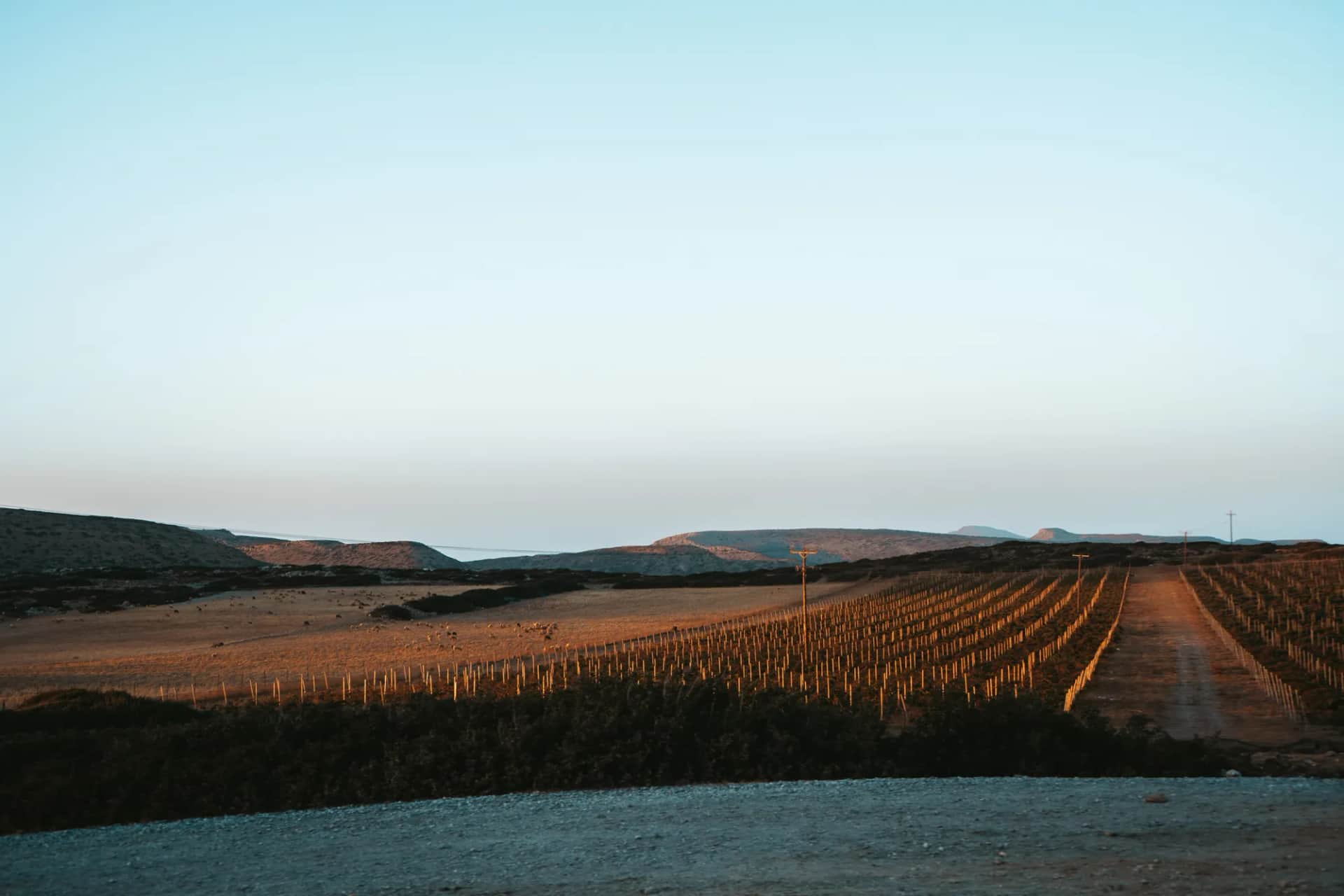

When it comes to wine in Crete, most guides send you south of Heraklion, to Peza and Archanes, where the island's big estates are concentrated. The east stays off the usual routes. Yet around Sitia and on the Ziros plateau, more than 600 m above sea level, vines have been grown since the Bronze Age, and the region has its own appellation, PDO Sitia, created in 1971 for its liatiko reds.
The Cretan wines of Lassithi don't count for much in volume: about a tenth of the island's output, according to the regional tourist board. But they have character: vilana and thrapsathiri whites from the uplands, liatiko and mandilari reds, a sweet liatiko made from sun-dried grapes, and a Malvasia that recalls the days when Venice shipped the wine of Candia all over Europe.
This guide covers the grape varieties, the history, the estates you can actually visit in the east of the island (there aren't many, and I'd rather be upfront about it), raki and the distilling season, and pairings with Cretan food.
Eastern Crete's vineyards at a glance
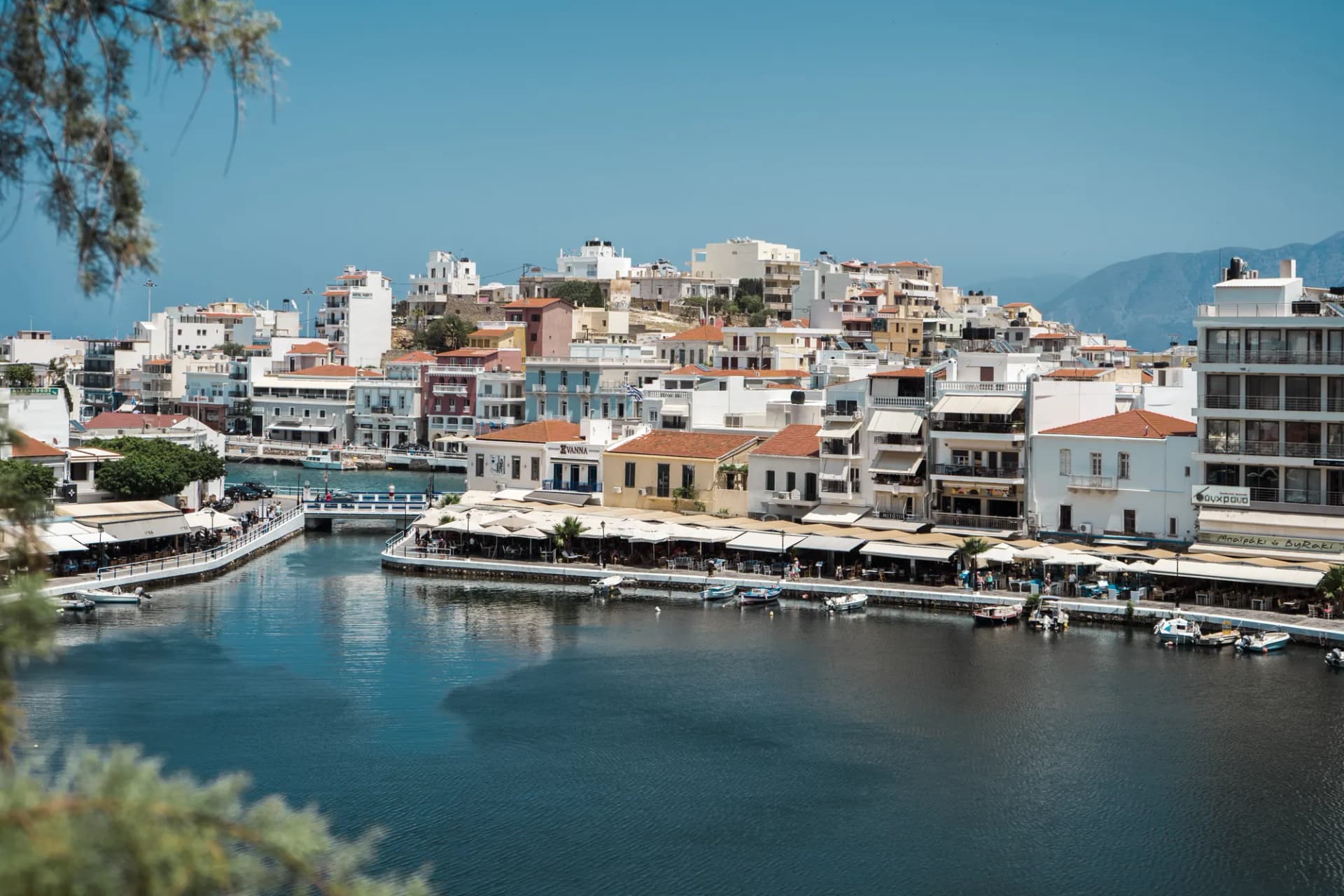
Lassithi is Crete's easternmost administrative region, with Agios Nikolaos as its capital, Ierapetra to the south and Sitia to the east. The vineyards fall into two main areas. The reds (liatiko and mandilari) occupy the lower ground, on the foothills of Mount Orno around Sitia. The whites (vilana and thrapsathiri) grow further south and higher up, on the Ziros and Lefki plateau, at an average altitude of about 620 m according to Wines of Greece, and up to almost 1,000 m on some plots.

That altitude changes everything: nights are cool, the grapes keep their acidity, and the plateau whites lack the heaviness sometimes associated with wines from hot islands. Towards Ierapetra, the Ampelourgein estate even farms vines between 850 and 1,150 m, many of them over a century old and ungrafted (on their own roots).
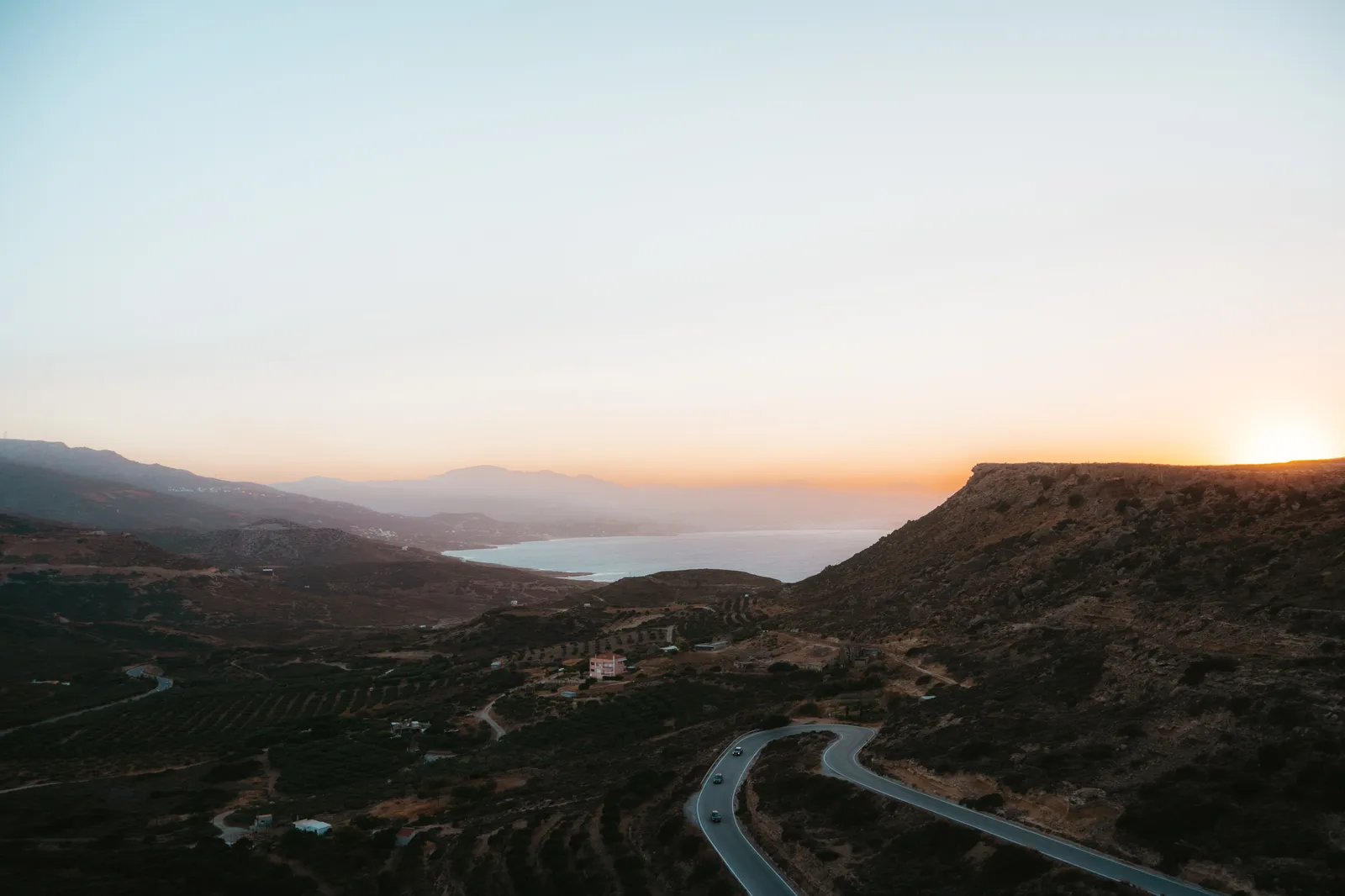
A final word on the landscape: Lassithi isn't just coastline. If you head up to the Lassithi Plateau, in the west of the region, you will mostly see orchards and potato fields; the quality vineyards are in the far east, around Sitia.
PDO Sitia and Malvasia Sitia: what the label tells you
Crete has four appellations of origin for dry wines: Peza, Archanes and Dafnes in the Heraklion area, and Sitia in Lassithi. On top of these come two Malvasia appellations, including Malvasia Sitia.
PDO Sitia
Created in 1971 for reds, the appellation opened to whites in 1998. The rules, as set out by the trade body Wines of Greece, are simple:
- Dry red: at least 80% liatiko, topped up with mandilari.
- Dry white: vilana (70%) and thrapsathiri (30%).
- Sweet red: 100% liatiko, from sun-dried grapes, or in a fortified version (fortified sweet wine).
Malvasia Sitia
Recognised in 2011, PDO Malvasia Sitia covers sweet white wines made from sun-dried grapes, either natural or fortified. They blend at least 85% assyrtiko, thrapsathiri, athiri and liatiko with no more than 15% Muscat of Spinas and malvasia di Candia aromatica. They must be aged for at least 24 months in oak barrels before being sold.
Native Cretan grape varieties worth knowing
Crete has kept a heritage of local grape varieties found almost nowhere else. Here are the ones you will come across on taverna wine lists in the east, and the ones worth tasting elsewhere on the island.
| Grape | Colour | Where to find it | What it gives | PDO Sitia |
|---|---|---|---|---|
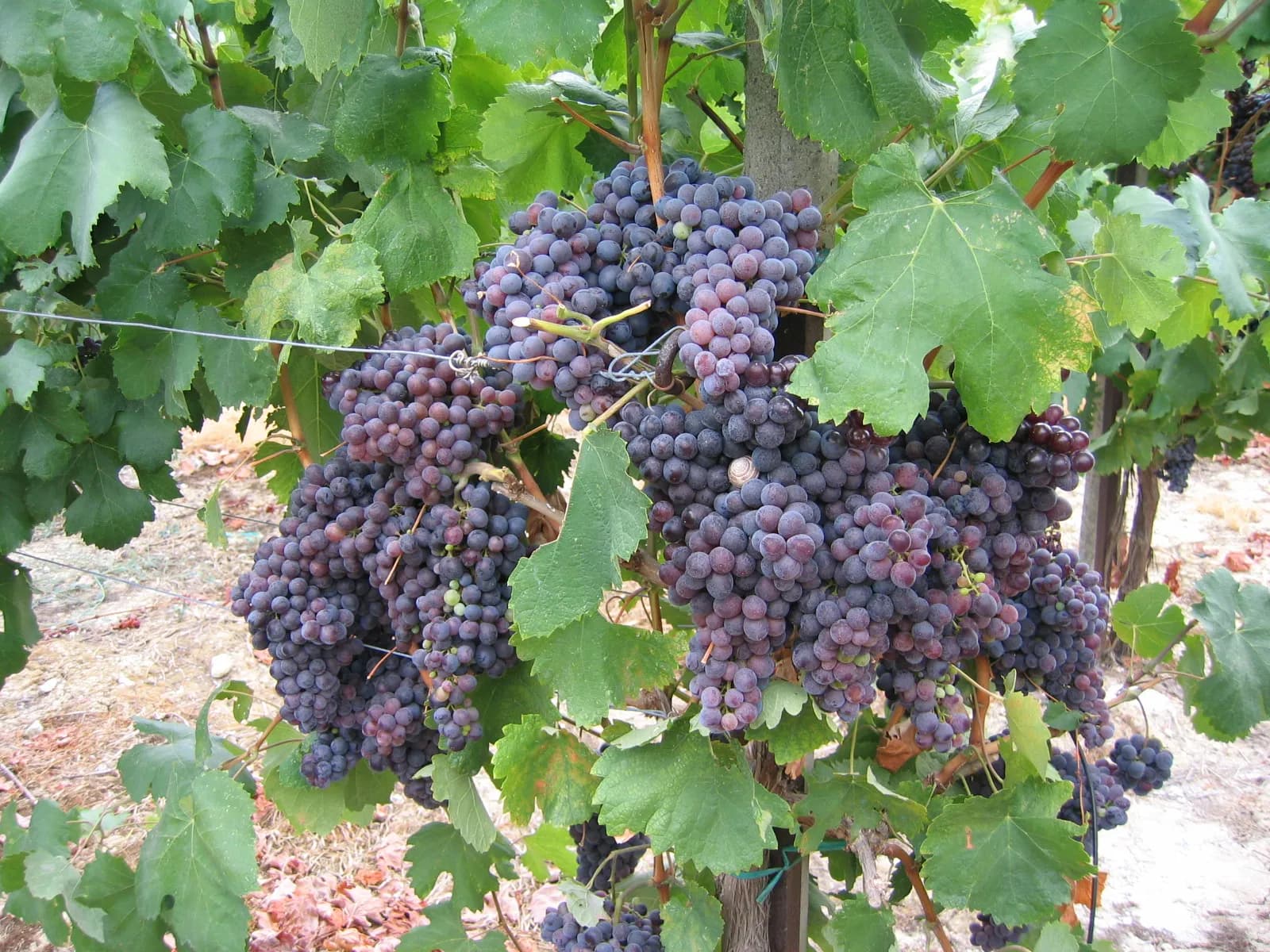
| Liatiko | Red | Sitia, Heraklion (Dafnes) | Light-coloured, spicy reds; great sweet wines from dried grapes | Yes (at least 80% in reds, 100% in sweet wines) |
| Mandilari | Red | The whole island, mostly in blends | Very dark colour, firm tannins; complements liatiko or kotsifali | Yes (supporting grape in reds) |
| Kotsifali | Red | Peza, Archanes (Heraklion) | Aromatic, warm reds, fairly high in alcohol | No |
| Vilana | White | Heraklion (Peza), Sitia | Fresh, floral, easy-drinking whites | Yes (70% in whites) |
| Thrapsathiri | White | Sitia, Ziros plateau | More structured whites, yellow fruit notes | Yes (30% in whites) |
| Vidiano | White | Mainly Rethymno, also Heraklion | Rounded whites: peach, apricot, melon, herbs | No |
| Plyto | White | Peza (Heraklion) | Crisp, light whites; a grape saved from extinction | No |
| Dafni | White | Heraklion, a few plots in Lassithi | Aromas of bay leaf (dafni in Greek), sage, citrus | No |
Two stories are worth remembering. Vidiano, now the most talked-about Cretan white, was almost extinct in the 1980s; a handful of growers replanted it in the late 1990s. One theory about its origins even has it born in Lassithi, before it was transplanted to Rethymno. Plyto and dafni, for their part, owe their comeback to the Lyrarakis estate in Alagni, south of Heraklion, which revived them from a few old vines.
As for liatiko, it is the true signature of the east. It ripens early, which would explain its name according to the most often quoted etymology (from Ioulios, July). Its reds are pale and fragrant, far from the dark, heavy wines you might expect in this climate, and its sweet versions are among the island's best dessert wines.
Three thousand years of wine in Crete, from Myrtos to Venice
The Minoans and the Vathypetro wine press
Lassithi claims some of the oldest traces of winemaking in Greece: at Myrtos, near Ierapetra, grape pips, stalks and skins were found in Bronze Age settlement layers dated to around 2600 to 2000 BC. The site of Fournou Korifi, 3.5 km east of Myrtos, is an early Minoan village where wine was already being made.
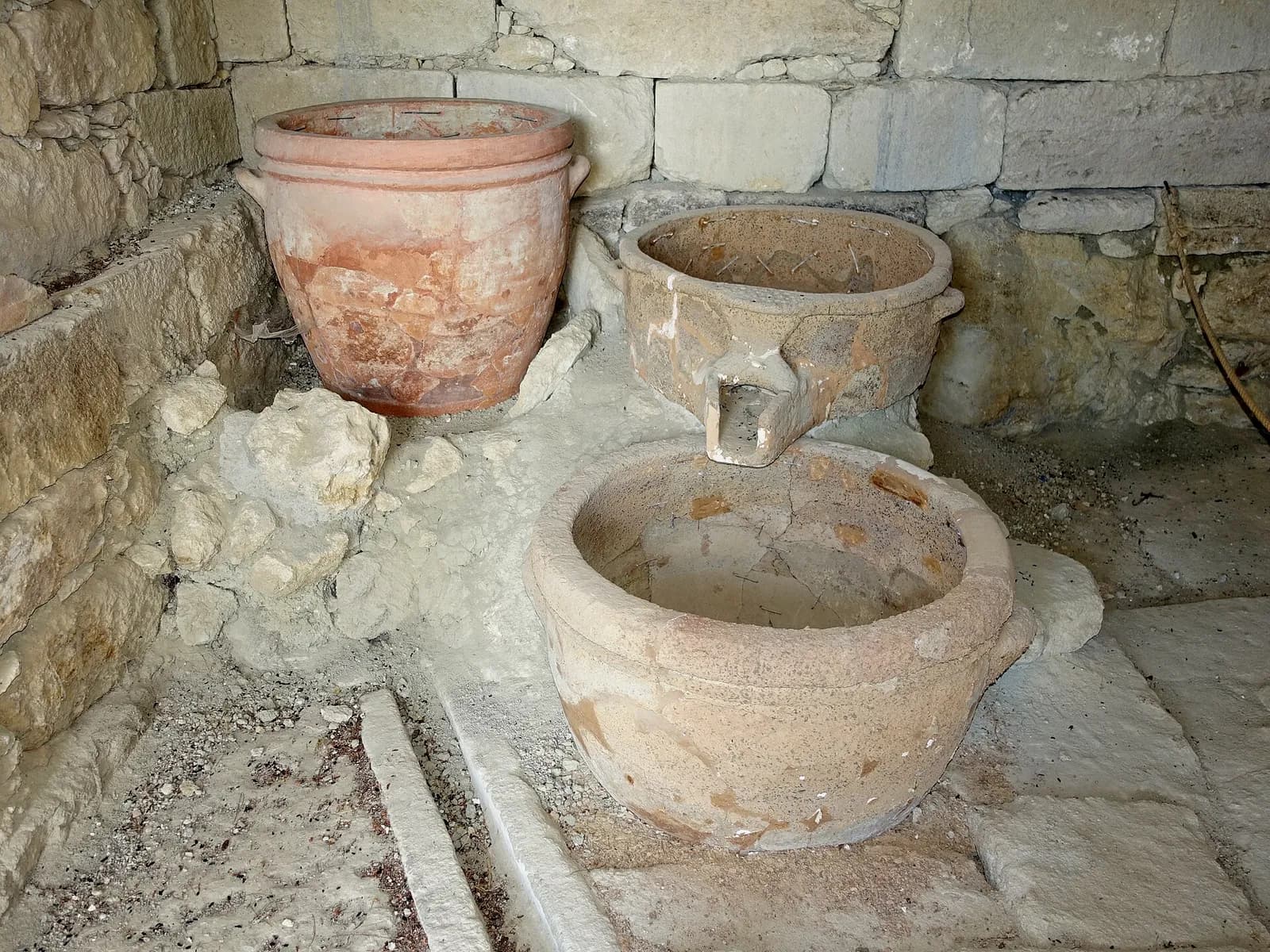
The most spectacular evidence, however, lies outside Lassithi: the Minoan villa of Vathypetro, 4 km south of Archanes (Heraklion area), excavated from 1949 by Spyridon Marinatos. Archaeologists uncovered one of the oldest known grape presses there, more than 3,500 years old, next to an olive press and a potter's workshop. If you are staying in Heraklion or have just visited the Palace of Knossos, it is a natural stop on the Peza and Archanes wine route.
Malvasia of Candia, the wine of medieval Europe
Under Venetian rule, from the 13th century, Crete (then called Candia) became one of the great export vineyards of the Mediterranean. The island's sweet wines were sold under the name Malvasia, after the port of Monemvasia in the Peloponnese, where these wines were originally shipped from. After the Ottoman conquest of the Peloponnese, it was mainly Cretan vineyards that supplied this Venetian trade.
This heritage explains why only four Greek place names are entitled to the Malvasia appellation: Monemvasia, Candia, Sitia and Paros. Today's Malvasia Sitia is its distant descendant.
Wineries to visit in Lassithi
Let's be clear: eastern Crete has no signposted wine route with an estate every five kilometres, as there is around Peza. I have only included producers whose existence, location and visiting arrangements I could confirm. In every case, call or write before you go.
The Toplou Monastery estate (Sitia)
This is the easiest and most complete visit in the east. Toplou Monastery, founded in the 14th century and dedicated to the Panagia Akrotiriani and Saint John the Theologian, lies about 15 km east of Sitia (25 minutes' drive), on the road to Palekastro and Vai. The monks have grown vines and olives for centuries; the vineyard was revived in the 1990s under Abbot Filotheos Spanoudakis, and a modern winery opened in 2012. Everything is certified organic.
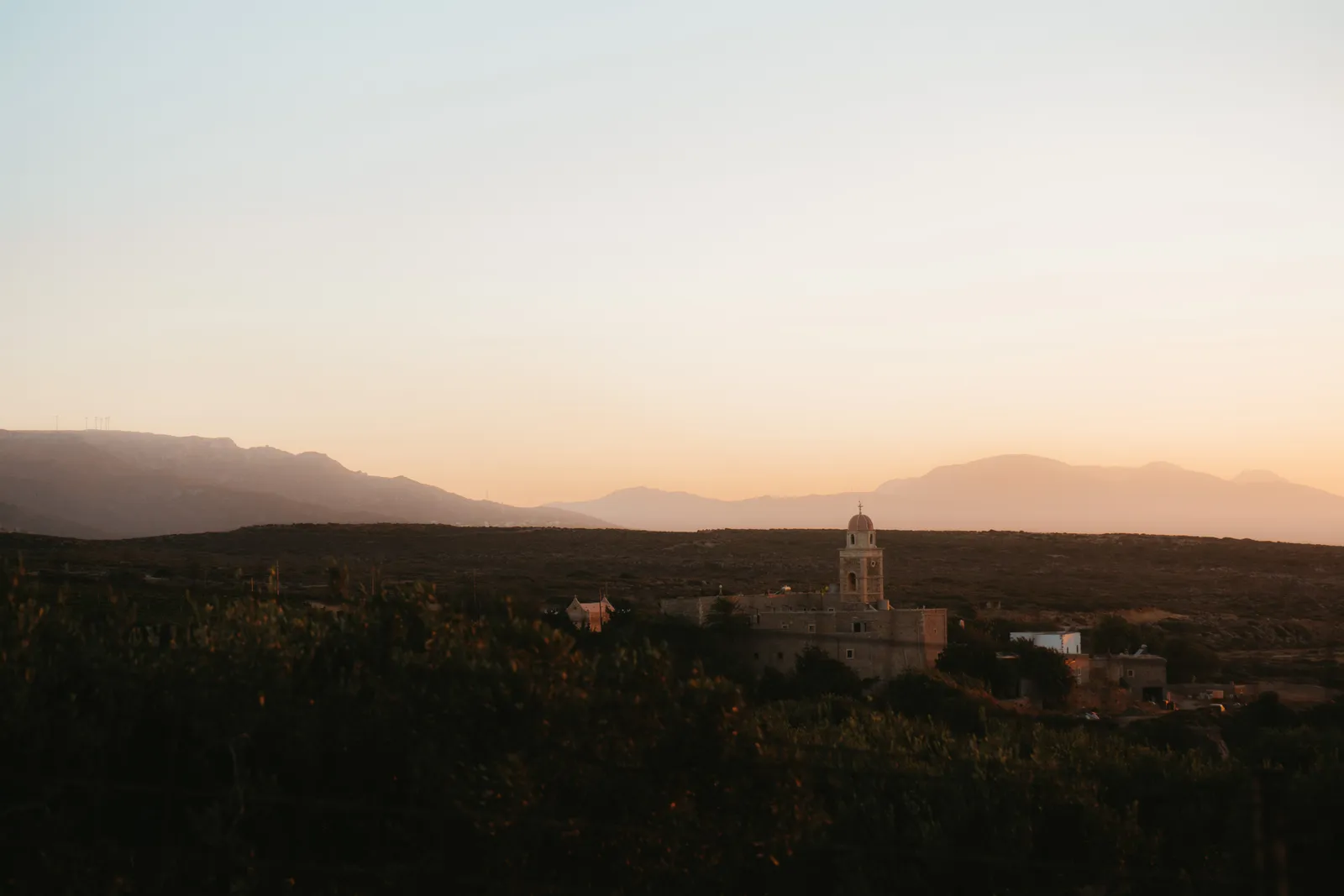
The guided tour (in English or Greek) takes in the vines, the cellar and the bottling line, and ends in the tasting room: wines (thrapsathiri, vilana, liatiko, but also syrah and chardonnay), tsikoudia and organic olive oil, served with a small plate of graviera cheese and barley rusks. According to Wines of Crete, visitors are welcomed from April to October, every day from 10.30am to 5pm, and the tour must be booked in advance (winetasting@ktimatoplou.gr, +30 28430 29636).
Domaine Economou (Ziros)
This is the name Greek wine lovers mention first when Sitia comes up. Yiannis Economou, who trained in Bordeaux (Château Margaux) and Piedmont, founded his estate in 1994 in Ziros, a village 650 m up on the plateau, about 31 km south-east of Sitia (40 minutes). He farms seven hectares of ungrafted vines, mostly liatiko and assyrtiko, without commercial yeasts, and releases his wines after many years of ageing.
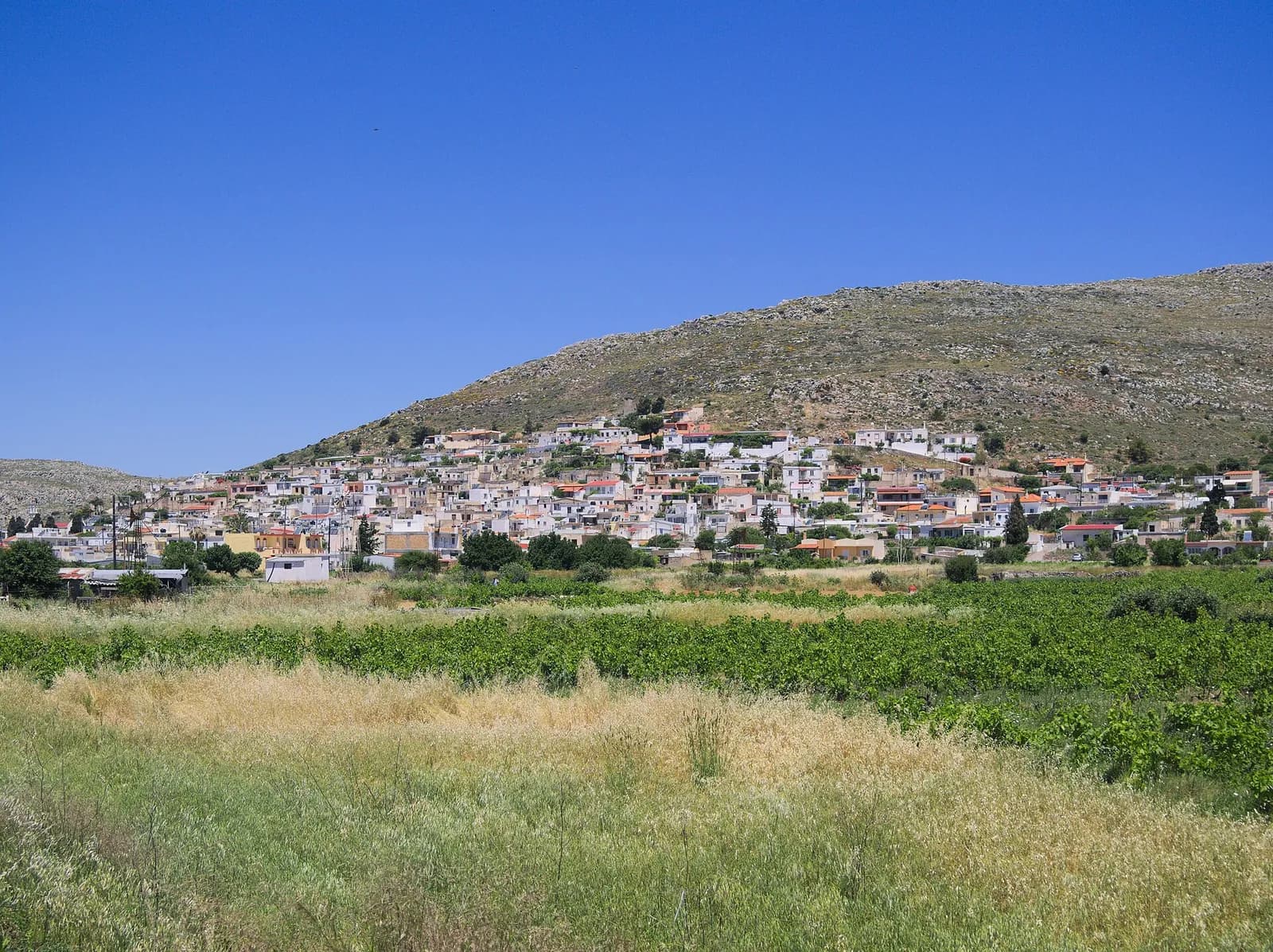
This is not a tourist winery: no sign at the gate, no open shop, and a winemaker known for keeping a low profile. Visits are possible if you get in touch beforehand (+30 6974 433986), but nothing is guaranteed. If you can't get an appointment, look for his bottles at wine shops and on the better wine lists in the region.
Ampelourgein (Schinokapsala, near Ierapetra)
Founded in 1997 by Nikolaos Papadakis, this small estate is based in Schinokapsala, a mountain village 21 km north-east of Ierapetra (about 45 minutes from Agios Nikolaos). Its vines, often a hundred years old, climb between 850 and 1,150 m. It makes low-intervention wines from thrapsathiri, dafni, Muscat of Spinas, liatiko, kotsifali and mandilari. Visits are by appointment (+30 28430 52468).
The Sitia cooperative
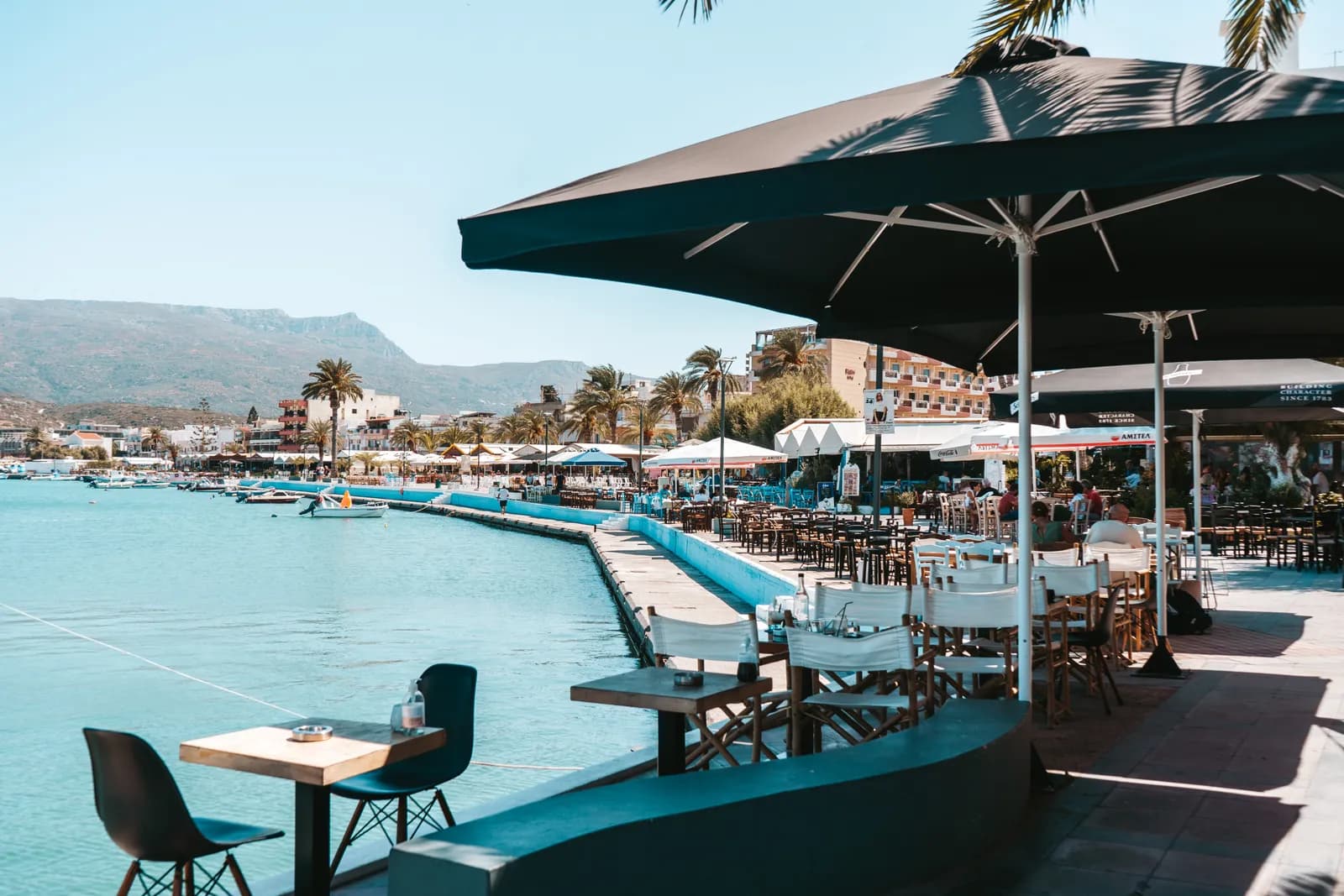
The Union of Agricultural Cooperatives of Sitia, founded in 1933 and now bringing together about 8,700 farmers, is located at kilometre 1 of the road from Sitia to Agios Nikolaos. It has historically been the main producer of PDO Sitia wines, especially sweet liatiko. Its website now mostly showcases its olive oil: I can't guarantee that a wine tasting is on offer, so it is best to call ahead (+30 28430 29991). The shop is still a good place for Sitia olive oil, the region's other great product, on an island where the olive tree is king (the olive tree of Vouves, in the west, is said to be over 2,000 years old).
Outside Lassithi: Lyrarakis and Zacharioudakis
Two names often come up when people search for wines of the east, even though they are in the Heraklion area. Lyrarakis is in Alagni, 440 m up, south of Heraklion, in the Peza area. Zacharioudakis is in Plouti, near Zaros and Gortyn, about 500 m up, facing the Messara plain. Both welcome visitors and are well worth the trip, but allow around 1.5 hours' drive from Agios Nikolaos: they belong to a day in the centre of the island, not the east.
Raki (tsikoudia) and the distilling season
You can't talk about vines in Crete without talking about tsikoudia, commonly called raki in the east of the island. It is a pomace spirit: after the harvest, the skins, pips and stalks ferment for about six weeks in a sealed vat, then are distilled just once in a wood-fired copper still, the kazani. The result is between 40% and 65% alcohol depending on the source, and it is served ice cold, often offered on the house at the end of a meal with fruit or a sweet treat.
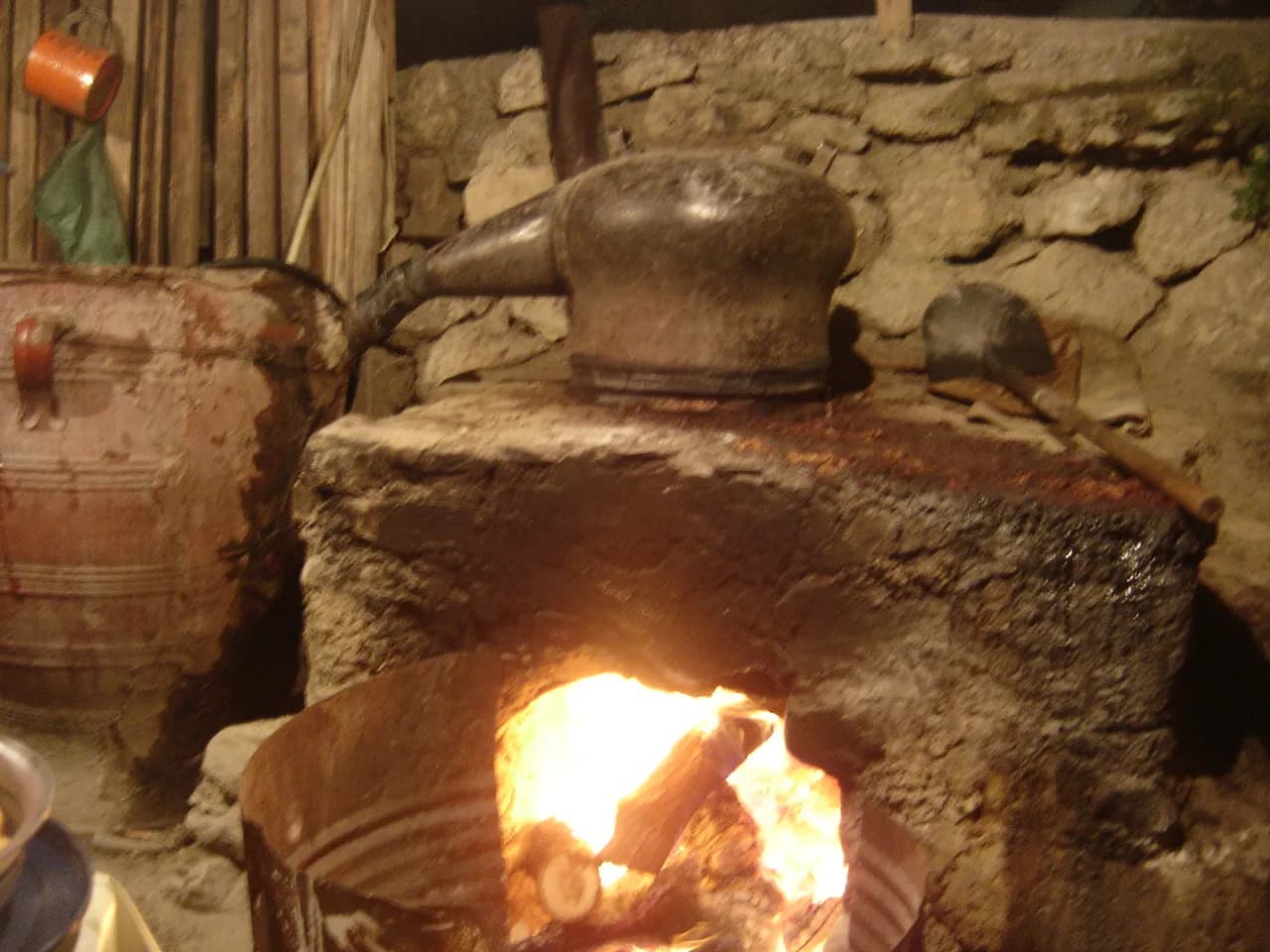
Distilling is only allowed for licence holders, usually one or two per village, to whom each family brings its pomace. The kazanemata season runs roughly from mid-October to mid-December, peaking in late October and early November. It is a festive time: people distil, grill potatoes and meat over the embers, and taste the first raki while it is still warm.
Cretan food and wine pairings
Crete is European Region of Gastronomy 2026, a title awarded by the International Institute of Gastronomy, Culture, Arts and Tourism (IGCAT). It is the perfect excuse to eat local and drink local. Here are the pairings I suggest with the wines of the east:
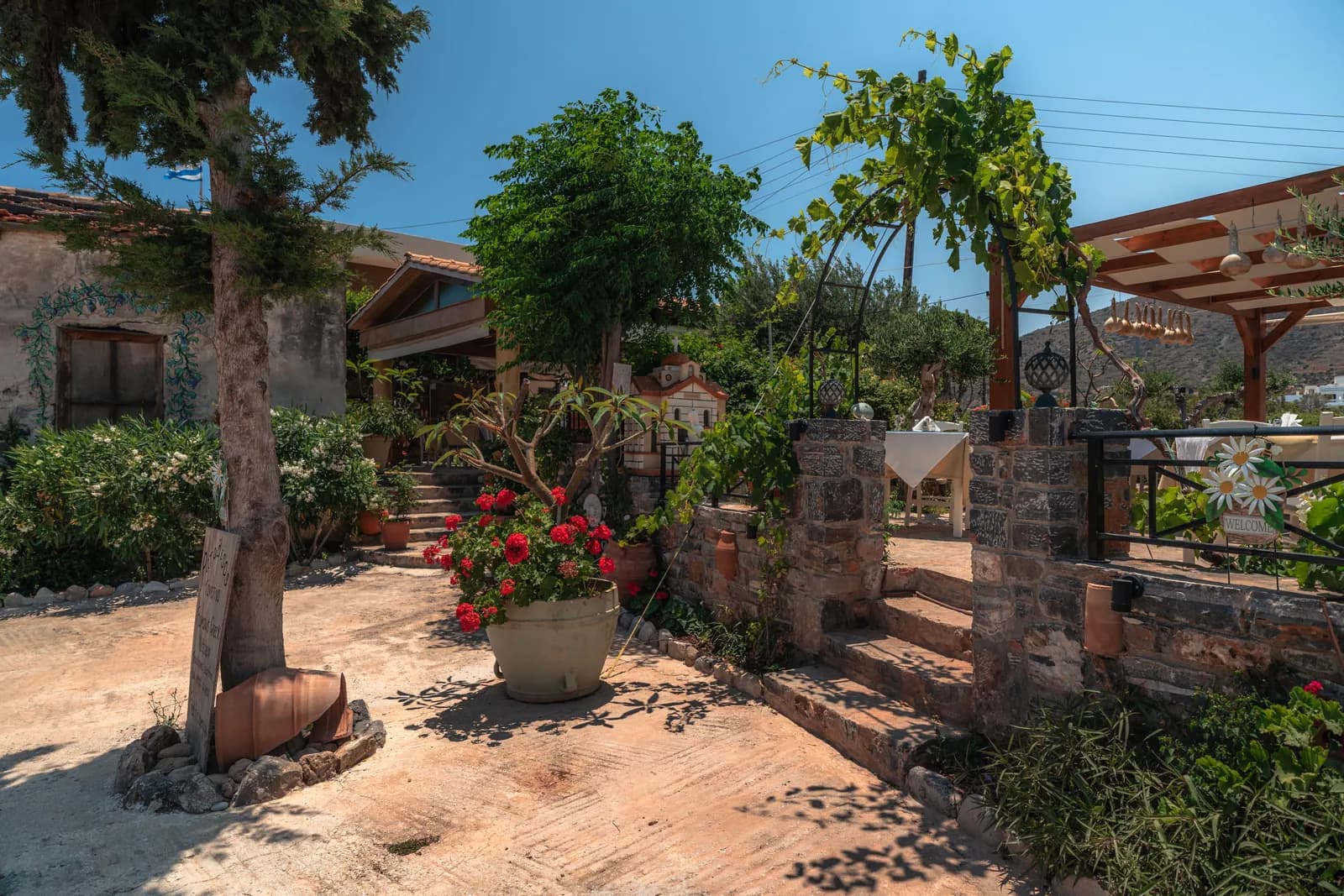
- PDO Sitia white (vilana and thrapsathiri) with dakos (barley rusk, tomato, mizithra cheese), grilled fish, horta (boiled wild greens, lemon, olive oil) or savoury kalitsounia.
- Vidiano with richer dishes: gamopilafo (rice cooked in meat stock), chicken with herbs, hard cheeses such as graviera.
- Liatiko red with roast lamb or kid, apaki (smoked pork) and boubouristi snails: its lightness and spice don't overpower the food.
- Kotsifali and mandilari blend with meat in sauce and autumn grills.
- Sweet liatiko or Malvasia Sitia with sweet kalitsounia made with mizithra and honey, or with an aged graviera at the end of the meal.
Practical information: access, season and budget
How to get there
Without a car, the eastern wine route is practically impossible: the estates are scattered and KTEL buses don't serve them. I recommend you hire a car in Crete for a few days and stay in or around Sitia if you want to fit in several visits.
| Route | Distance | Driving time (approx.) |
|---|---|---|
| Heraklion → Sitia | 123 km | 2 hours 10 |
| Agios Nikolaos → Sitia | 62 km | 1 hour 15 |
| Elounda → Sitia | 71 km | 1 hour 25 |
| Sitia → Toplou Monastery | 15 km | 25 minutes |
| Sitia → Ziros (Domaine Economou) | 31 km | 40 minutes |
| Agios Nikolaos → Schinokapsala (Ampelourgein) | 37 km | 45 minutes |
| Agios Nikolaos → Toplou | 77 km | 1 hour 35 |
Distances and times are calculated by road; the coast road between Agios Nikolaos and Sitia is winding, so allow some extra time.
DiscoverCars
Car rental comparison — 150+ countries
Compare prices from Hertz, Avis, Sixt and local providers. All fees included, free cancellation. Rated 4.6/5 on Trustpilot.


When to go
The harvest runs from late August to September depending on altitude, and the estates are very busy then: call ahead. September is still an excellent month to combine the beach with tastings (see our guide to Crete in September). October is the month of the first kazanemata, with fewer people on the roads. Bear in mind: Toplou says it welcomes visitors until the end of October, and in winter most small producers only receive visitors as an exception.
Budget
Tasting safely
Frequently asked questions
Dry reds blend at least 80% liatiko with mandilari. Whites combine vilana (70%) and thrapsathiri (30%). Sweet reds are 100% liatiko, made from sun-dried grapes or fortified.
Yes, by booking. According to Wines of Crete, visitors are welcomed from April to October, every day from 10.30am to 5pm, with a guided tour and a tasting of wines, tsikoudia and olive oil. The monastery is about 15 km from Sitia.
September and October. The harvest is finishing, the heat eases, and from mid-October the raki distilling season begins in the villages. In winter, most small producers don't receive visitors.
No. Lyrarakis is in Alagni and Zacharioudakis in Plouti, near Zaros, both in the Heraklion area. Allow about 1.5 hours' drive from Agios Nikolaos.
It is the Cretan grape pomace spirit, commonly called raki in the east of the island. It is distilled just once in a copper still, in autumn, by licensed distillers, and served ice cold at the end of a meal.
In summary
Eastern Crete's vineyards aren't something you tour like an organised wine route: this is discreet mountain winegrowing, carried by a few estates and a cooperative. Toplou Monastery is the easiest way in, while Ziros and Schinokapsala are for the curious who are happy to make an appointment. To build your itinerary, lean on our complete guide to Crete and our Crete page, which brings together all our articles on the island.

Âme Bohème exists thanks to you
Some links in this article are affiliate links. This means that if you book or purchase a product through these links, we receive a small commission — at no extra cost to you. It's thanks to this support that we can continue creating free, quality content.
You can also buy us a coffee, or follow us on Instagram and Facebook.