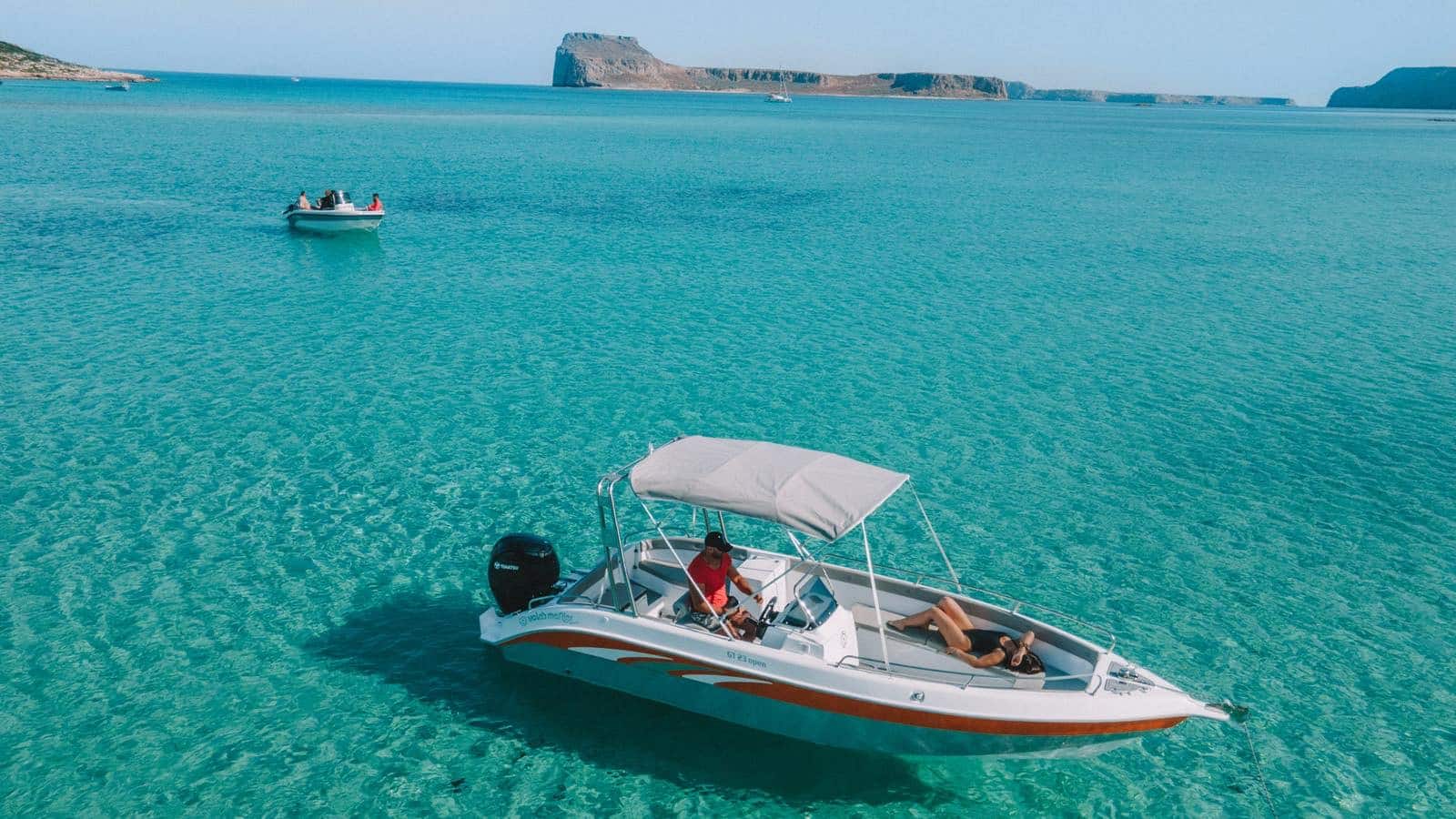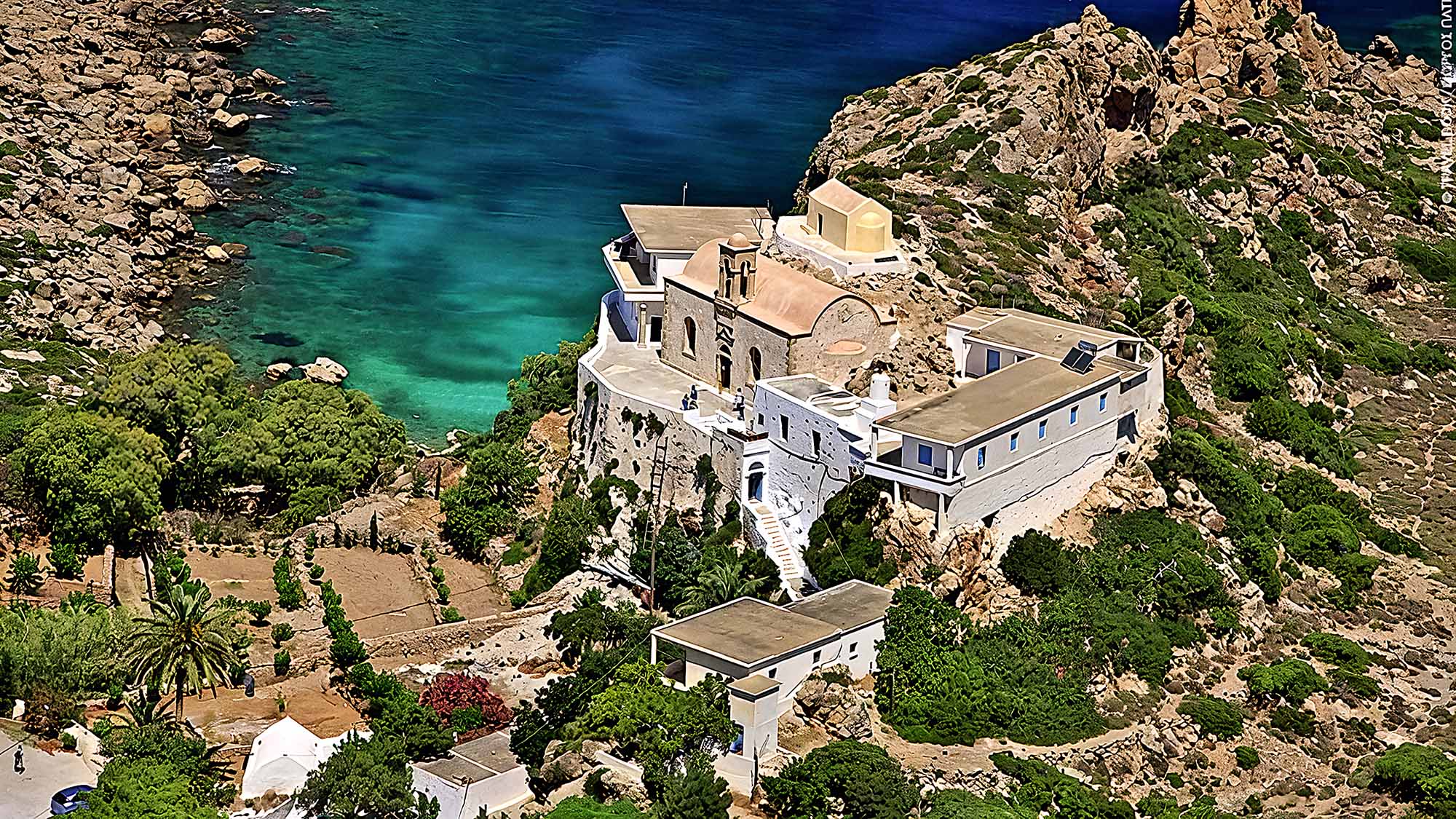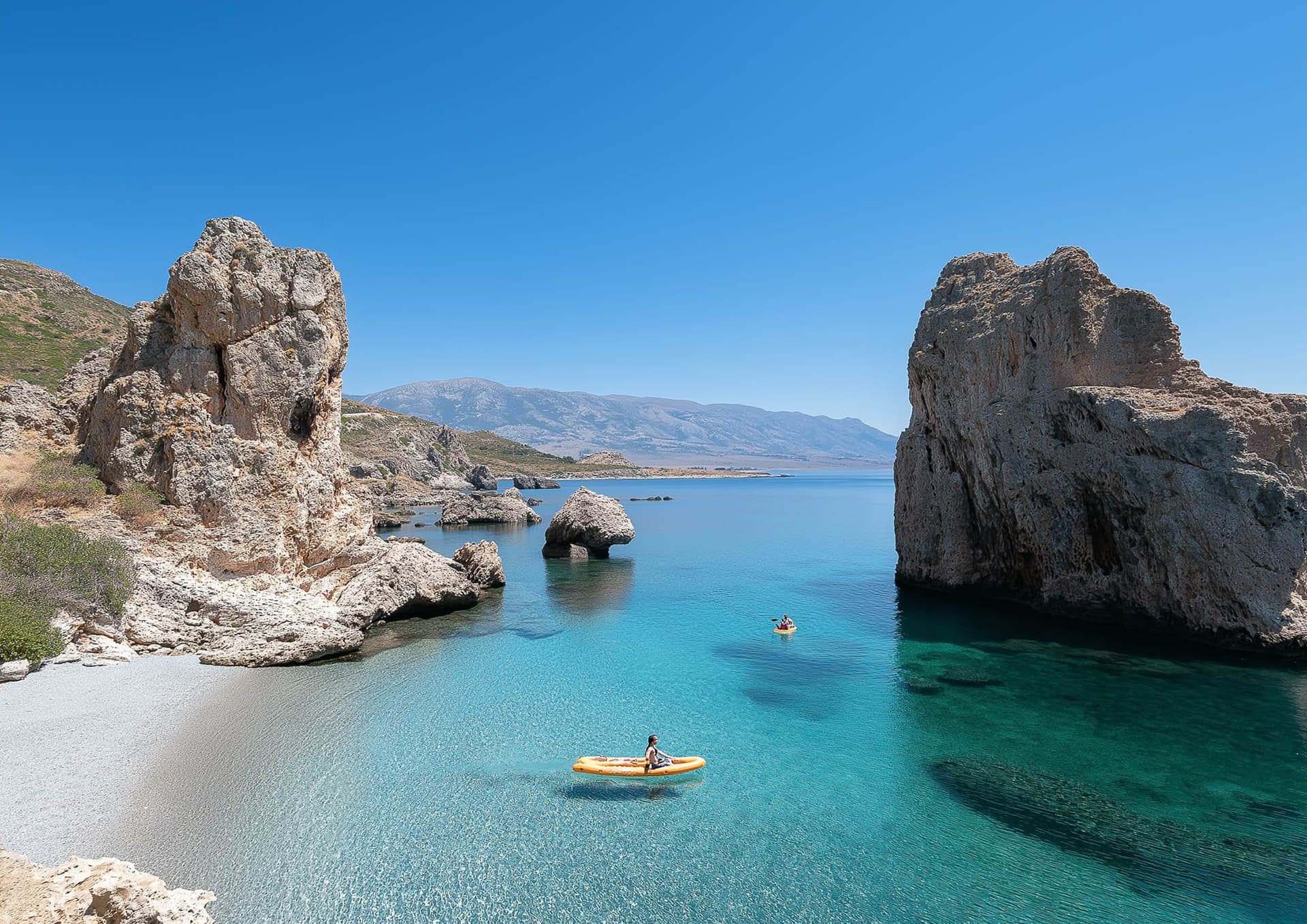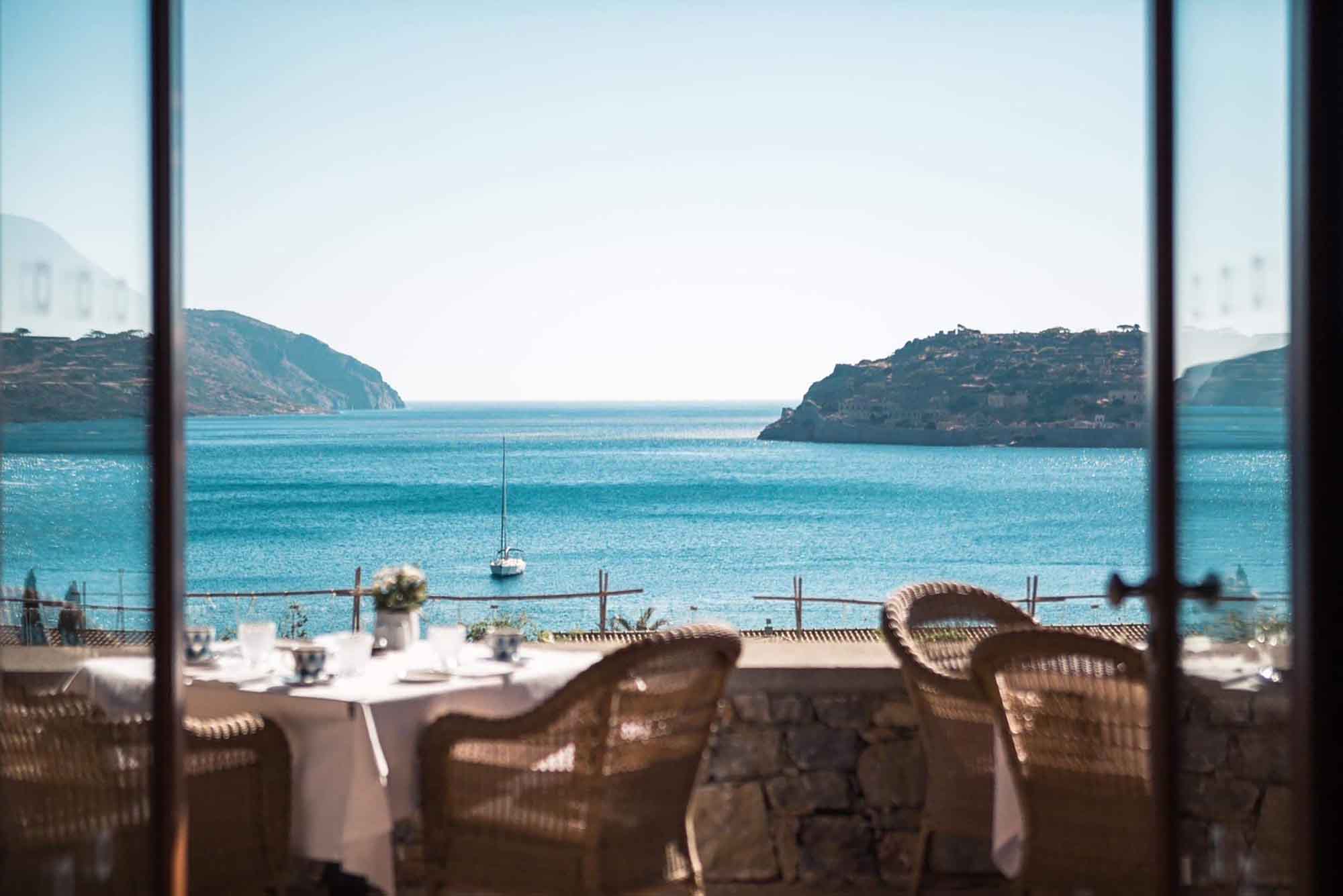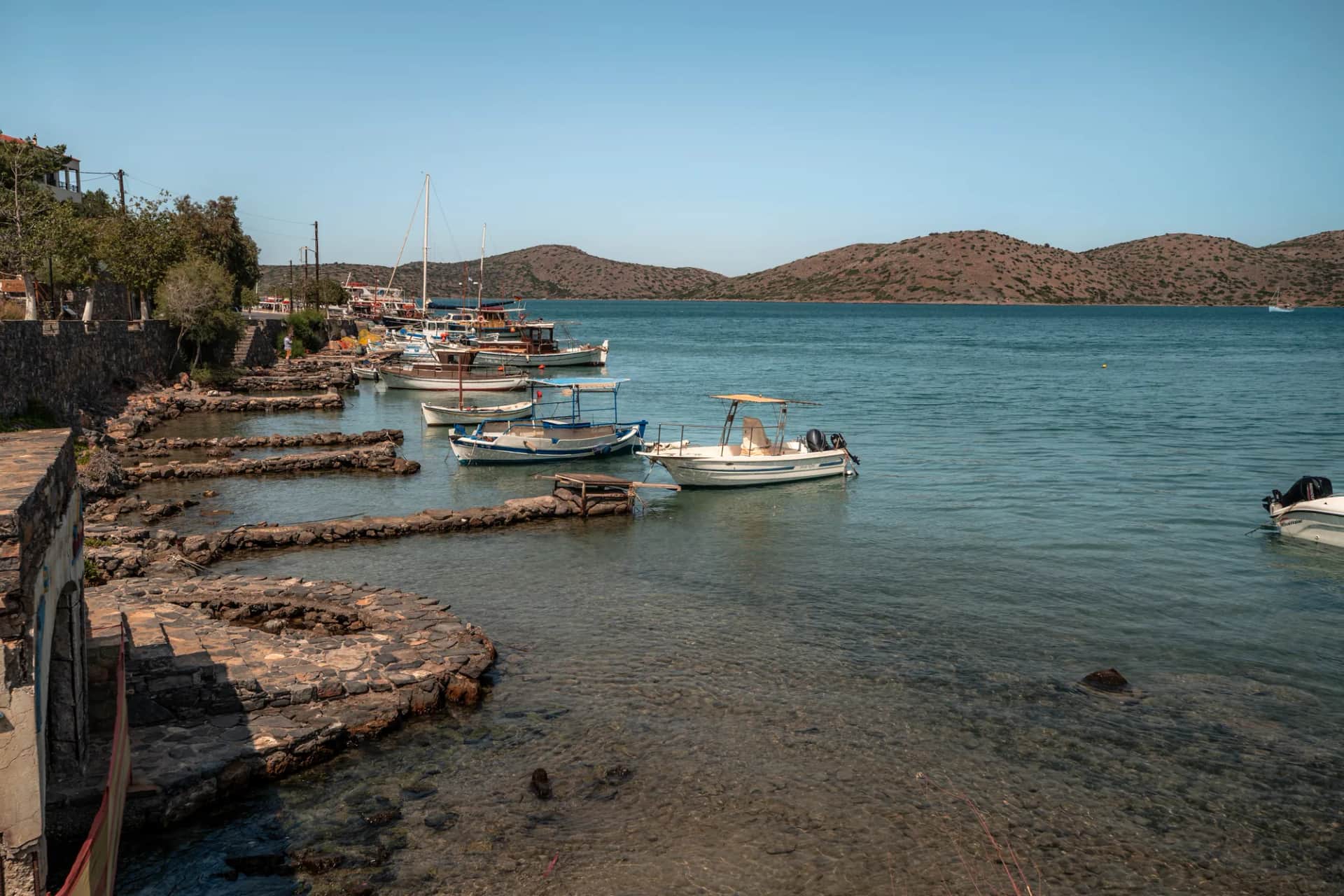

Elounda can be summed up in a single image: a bay closed off by a long peninsula, shallow turquoise water, and in the distance the outline of the Spinalonga fortress. The village lies about 11 km north of Agios Nikolaos, on the north-east coast of Crete, in the Lassithi region. Its reputation was built on the large luxury resorts lined up along the coast, so much so that many travellers see nothing of Elounda beyond their hotel pool.
Yet the real Elounda is elsewhere: on the harbour at Schisma, where the boats leave for Spinalonga, on the causeway that crosses the old salt pans, around the canal dug in 1897 and the mosaic of a 5th-century basilica, above the ancient city of Olous, swallowed by the lagoon. It is also an excellent base for the east of the island, about an hour from Heraklion airport.
In this guide, I give you everything you need to plan your stay: what you can really see at Olous, the beaches and how to reach them, the 2026 boat fares to Spinalonga, where to eat, where to stay for every budget, and the inland villages that most visitors never take the time to discover.
Elounda at a glance: a village, not just resorts
Administratively, Elounda is a community within the municipality of Agios Nikolaos, with 2,254 inhabitants at the 2021 census. It is made up of several settlements: Schisma, today's centre with the harbour, the square and the tavernas, Pano and Kato Elounda, Pines, Mavrikiano, Agia Paraskevi and Kalydon, the uninhabited part that includes the islet of Spinalonga and the Kolokytha peninsula.
Elounda's name travelled the world thanks to film and literature. Disney shot The Moon-Spinners here in 1964, starring Hayley Mills. More recently, Victoria Hislop's novel The Island, set between Plaka, Elounda and Spinalonga, was adapted into a series by Greek television in 2010 and 2011. A more unexpected piece of history: in November 1984, Andreas Papandreou, François Mitterrand and Muammar Gaddafi met in an Elounda hotel to discuss the conflict in Chad.
Upmarket tourism took off in the 1960s and 1970s, along the road running towards Plaka and Agios Nikolaos. The result: the coast is dotted with large hotel complexes, but the heart of the village has kept a human scale.
The harbour at Schisma and village life
Everything happens around the harbour at Schisma. This is where you will park your car, catch the boat to Spinalonga and have dinner in the evening looking out over the bay. The municipal beach starts right next to the harbour, with sunbeds, parasols and a lifeguard in season, surrounded by cafés and tavernas.
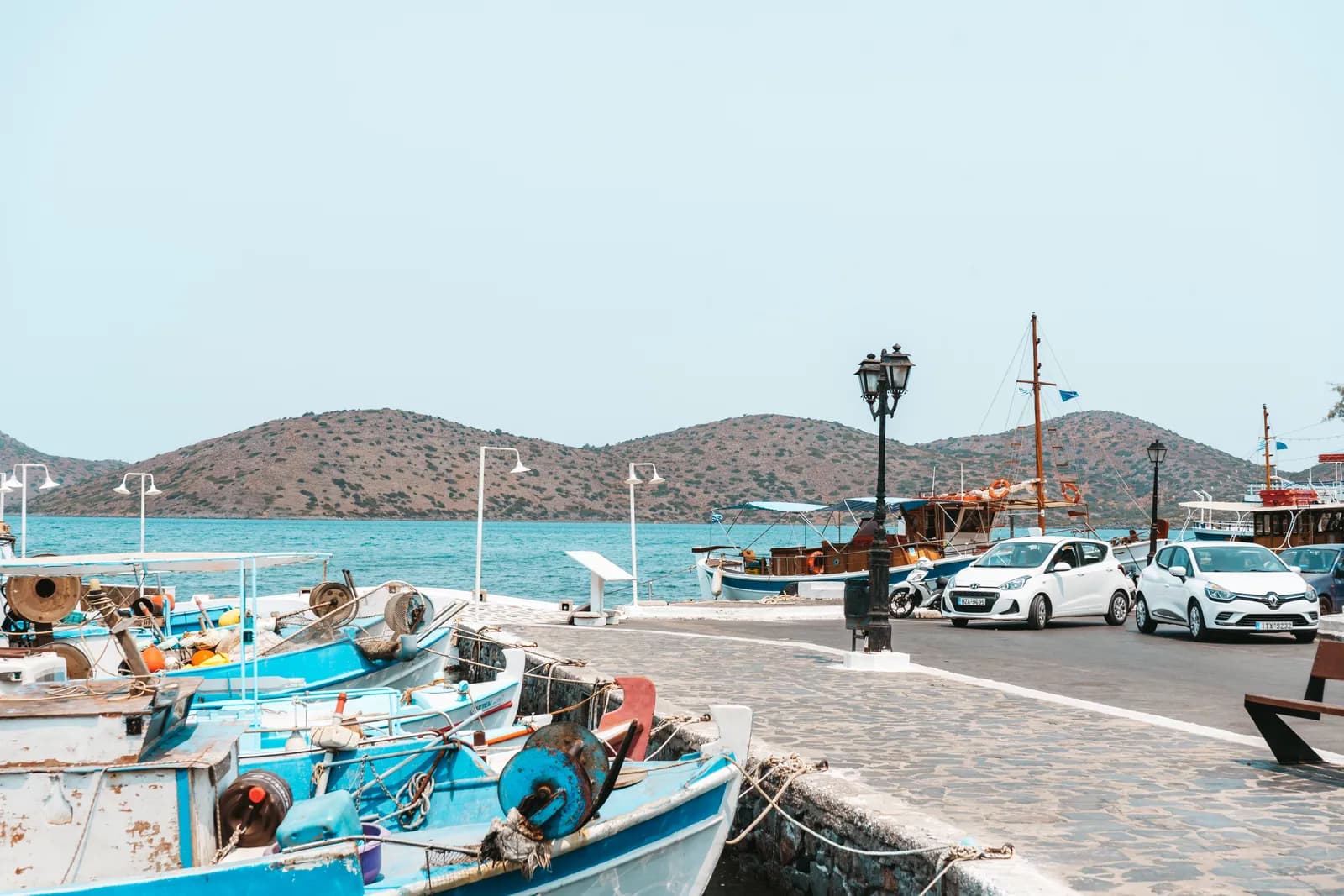
Mornings, before the excursion coaches arrive, are the best time to wander along the quay, watch the fishermen come in and have a coffee on the square. In the late afternoon, the low light over the peninsula is well worth the trip.
The causeway, the canal and the sunken city of Olous
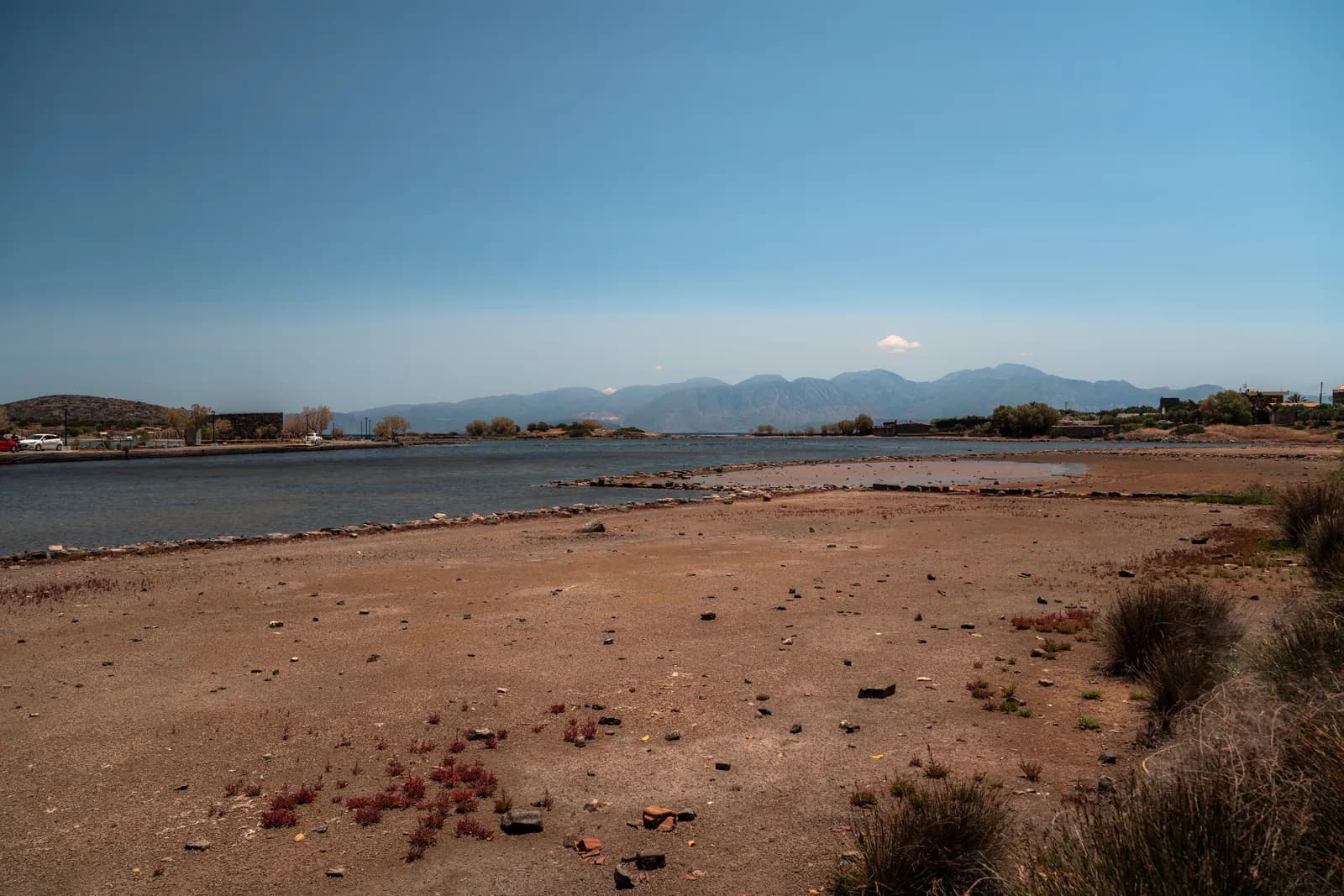
Leaving the harbour heading south-east, a narrow road skirts the lagoon and reaches the Spinalonga peninsula (not to be confused with the fortified islet of the same name). It crosses a very narrow strip of land with water on both sides. On your right you will see the squares of the old salt pans, worked since Venetian times: seawater evaporated in the basins and the salt was left at the bottom.
The Poros canal
At the end of the causeway, a small bridge spans a canal. This channel, called Poros, was dug in 1897 by the French army, which was in Crete during the intervention of the Great Powers. The aim was to let small boats pass from Mirabello Bay into the inner bay of Elounda. Since it was dug, the peninsula has technically been separated from the rest of Crete.
The mosaic of the early Christian basilica
Right next to the canal are the remains of an early Christian basilica dated to the 5th century, thought to have been the cathedral of ancient Olous. Excavations took place in 1937 and 1960, after initial digging by French soldiers while the canal was being cut. What remains: the foundations of a three-aisled basilica and, above all, a mosaic floor with geometric patterns, dolphins, fish, peacocks, vines and donors' inscriptions. It is one of the finest surviving early Christian mosaics in Crete.
Olous: what you really see
Let's be honest: don't expect a sunken city with streets and temples. Olous was an important ancient city, an ally of Knossos and Rhodes, with a sanctuary of Britomartis. As the land subsided, much of it ended up under the water of the lagoon. Today you mainly make out scattered wall bases in the shallow water around Poros, visible with a mask when the sea is calm.
Combine the mosaic with a snorkelling swim from the shallow coves on either side of the causeway. For more ideas on where to get in the water around the island, see our best snorkelling spots in Crete.
The windmills of the peninsula
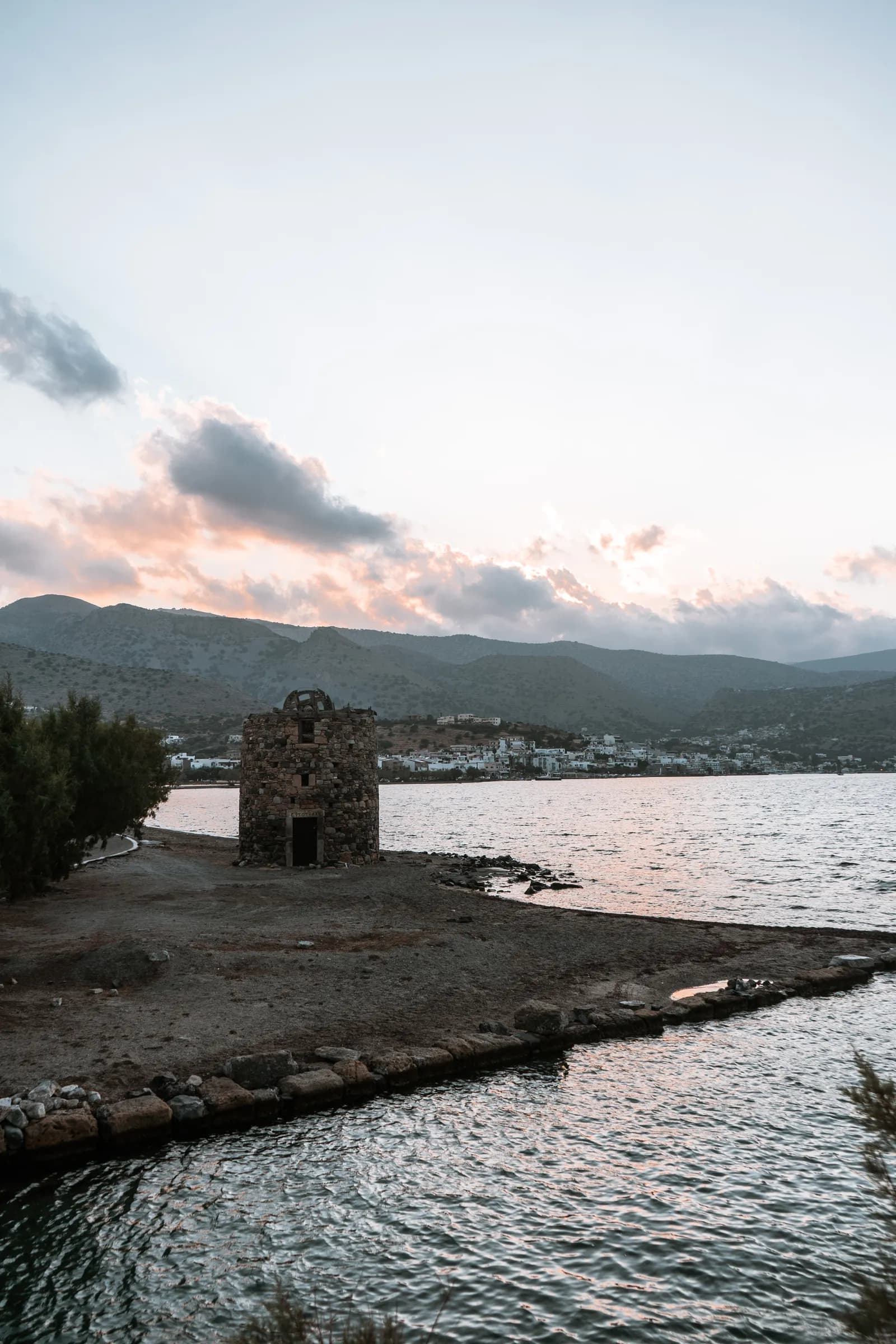
Near the canal and on the high ground of the peninsula, several ruined windmills are a reminder that grain was ground here by the wind, for lack of rivers. Other groups of mills stood around Pines. They have become a classic photo subject at sunset, with the bay below.
The beaches of Elounda and the Spinalonga peninsula
Elounda beach (the municipal beach)
Right below the village, next to the harbour, this is the most convenient beach: organised (sunbeds, parasols, lifeguard in season), with tavernas and cafés a few steps away. The water is calm and shelves gently, which makes it a good option with children. The downside: it gets very busy in July and August.
Kolokytha, the peninsula's cove
On the inner side of the Kolokytha peninsula, this small cove of pale sand and shallow turquoise water is the most photographed beach in the area. To get there, cross the causeway and the bridge over the canal, carry on along the dirt track, then park near the chapel of Saint Luke (Agios Loukas). From there it is a few minutes' walk, about 10 minutes depending on your pace, along a stony path.
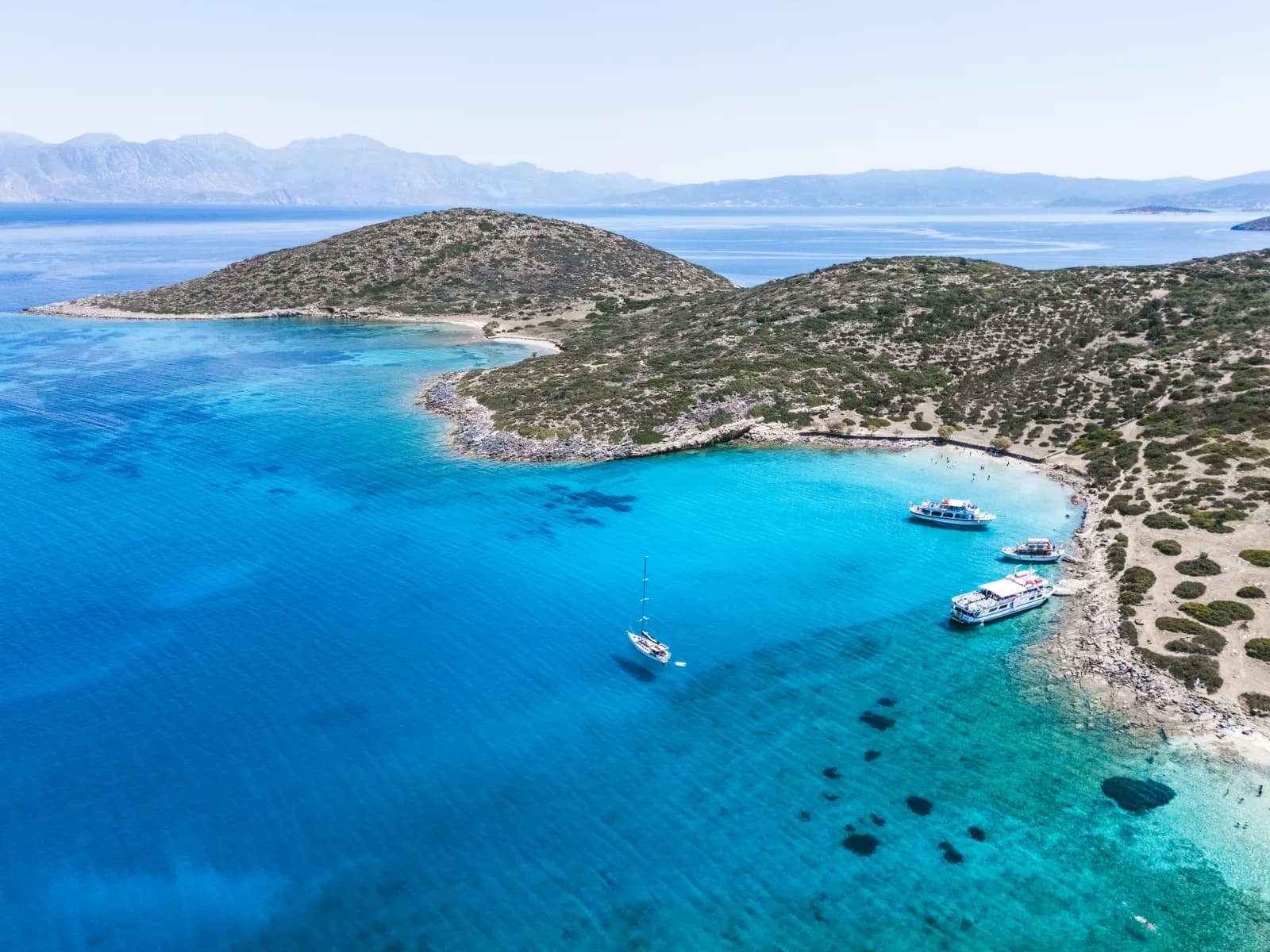
There are no facilities at all: no sunbeds, no snack bar, and only the shade of a few tamarisks. The cove is small and fills up quickly when the excursion boats stop for a swim. It is quietest before midday or after 3pm. About 200 m away are the ruins of another early Christian basilica (5th and 6th centuries) and, visible from the car park, the Byzantine chapel of Saint Phocas.
Other beaches nearby
- The little beach east of the village: near the isthmus, smaller and organised, handy if the municipal beach is full.
- Driros: a few kilometres north, towards Plaka, with pine trees, sunbeds and water sports.
- Plaka: about 5 km away, two pebble beaches facing Spinalonga, quieter than central Elounda.
Getting to Spinalonga from Elounda
Spinalonga, the islet fortified by the Venetians and later turned into a leper colony from 1903 to 1957, is the big visit in the area. For its history and the route around the island, I refer you to our complete guide to visiting Spinalonga. Here, I focus on the logistics from Elounda.
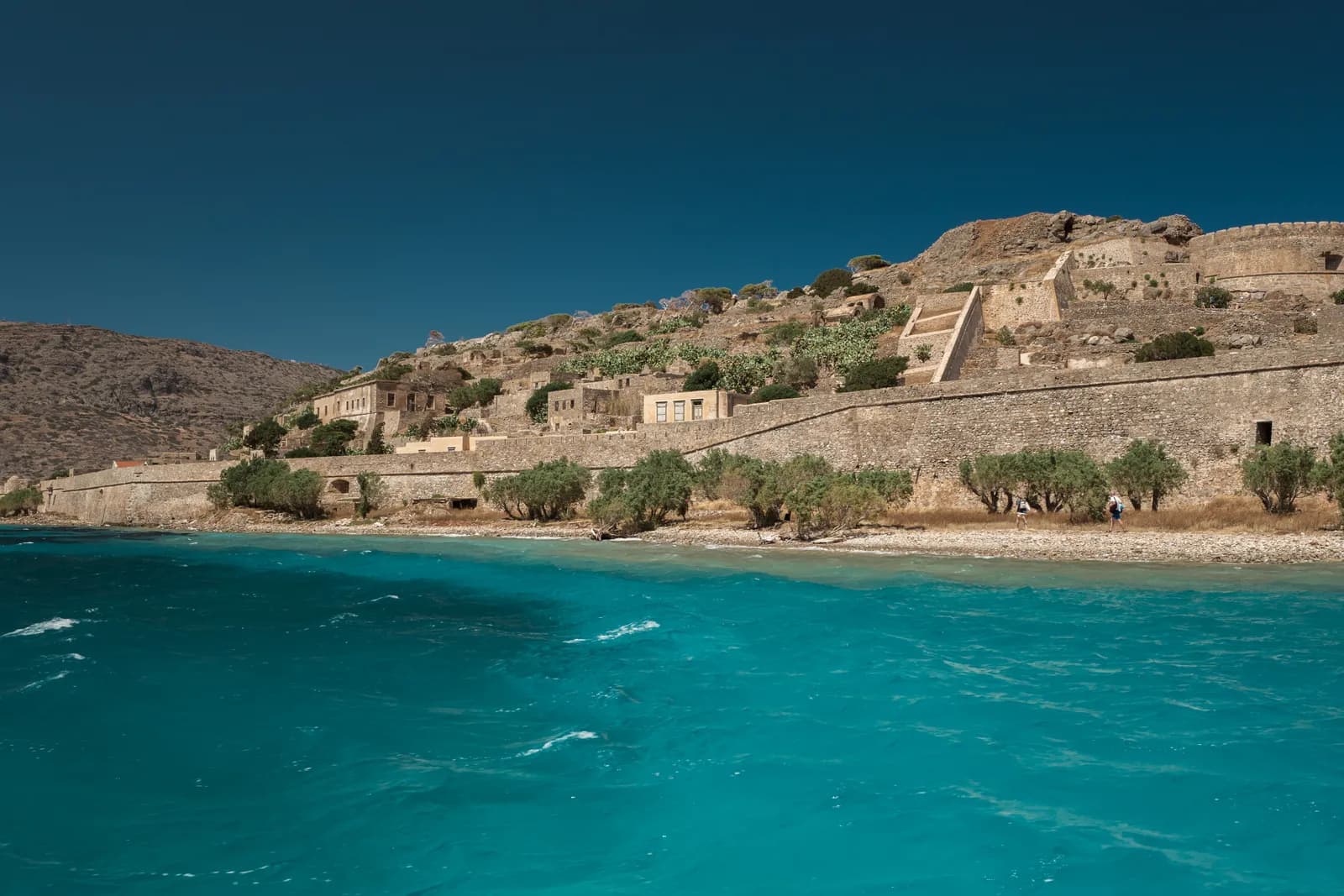
Boats leave the harbour at Schisma at regular intervals during the season, roughly from 9am until late afternoon. The crossing takes about 20 minutes, with views over the whole bay and the Kolokytha peninsula. Allow around €14 return per adult from Elounda (children often travel half price). The site entry ticket is paid separately, on arrival: €20 full price, €10 reduced. The site is open every day from 1 April to 31 October, 8.30am to 6pm.
| Departure point | Distance from Elounda | Crossing | Return boat (adult, 2026) | Best for |
|---|---|---|---|---|
| Elounda (Schisma) | 0 km | about 20 min | about €14 | Those staying in Elounda, without a car |
| Plaka | about 5 km | about 10 min | about €12 | The most budget-conscious, shortest crossing |
| Agios Nikolaos | about 11 km | 45 to 60 min | from about €20 (€25 and up for a cruise) | An excursion with a swim |
Elounda or Plaka? If you are staying in Elounda, leaving from the harbour is simplest: no car to park in Plaka, where parking is saturated in summer. If you have a car and want the shortest trip, Plaka saves you a few minutes and a few euros.
Where to eat and where to stay in Elounda
Where to eat
Most of the tavernas are on the harbour and the promenade along the bay, with one obvious speciality: fish and seafood. Prices are higher than inland, especially for fish sold by the kilo. Always ask the price per kilo before ordering.
- On the harbour: waterside terraces, an evening atmosphere, Greek food and fish. Book in August for tables on the quayside.
- In the back streets: family tavernas and grills (souvlaki, gyros), often cheaper than those on the front.
- Inland: villages such as Fourni, Pines and Kato Elounda have their own kafeneia (traditional cafés) and tavernas, with simpler Cretan cooking and gentler prices.
Things to try: dakos (barley rusk, tomato, cheese), kalitsounia (small cheese pastries), lamb with herbs, chochlioi boubouristi snails, and the raki offered at the end of the meal, often with a dessert.
Where to stay for your budget
Elounda is unusual in offering accommodation at both extremes.
| Type | Where | Rough high-season budget | Best for |
|---|---|---|---|
| Large luxury resorts | The coast between Elounda, Plaka and Agios Nikolaos | from €400 a night, often much more | Honeymoons, lazy stays with a private beach |
| Mid-range hotels | Around the village and on the hillsides | about €120 to €250 a night | Couples and families who want a pool and comfort |
| Studios and apartments | Schisma, Pano Elounda, Mavrikiano | about €60 to €120 a night | Independent travellers with a car |
| Village houses | Fourni, Pines, Kato Elounda | varies by house | Those looking for peace and authenticity |
The resorts are often outside the village, along the coast road: pleasant, but you need a taxi or a car to reach the harbour in the evening. A studio in Schisma, on the other hand, lets you do everything on foot. For a selection of waterfront places to stay across the island, see our article on the best beachfront hotels in Crete.
Elounda with children
Elounda is one of the easiest bases in Crete for a family. The bay is sheltered from the meltemi, the north wind that blows hard along the north coast in summer, and the water stays shallow for a long way out.
- The municipal beach: gently shelving, lifeguard in season, ice creams and tavernas close by.
- The boat to Spinalonga: a 20-minute crossing, a fortress to explore and a reduced fare for children.
- The coves around the causeway: ideal for a first go at snorkelling, as long as you watch out for sea urchins and bring water shoes.
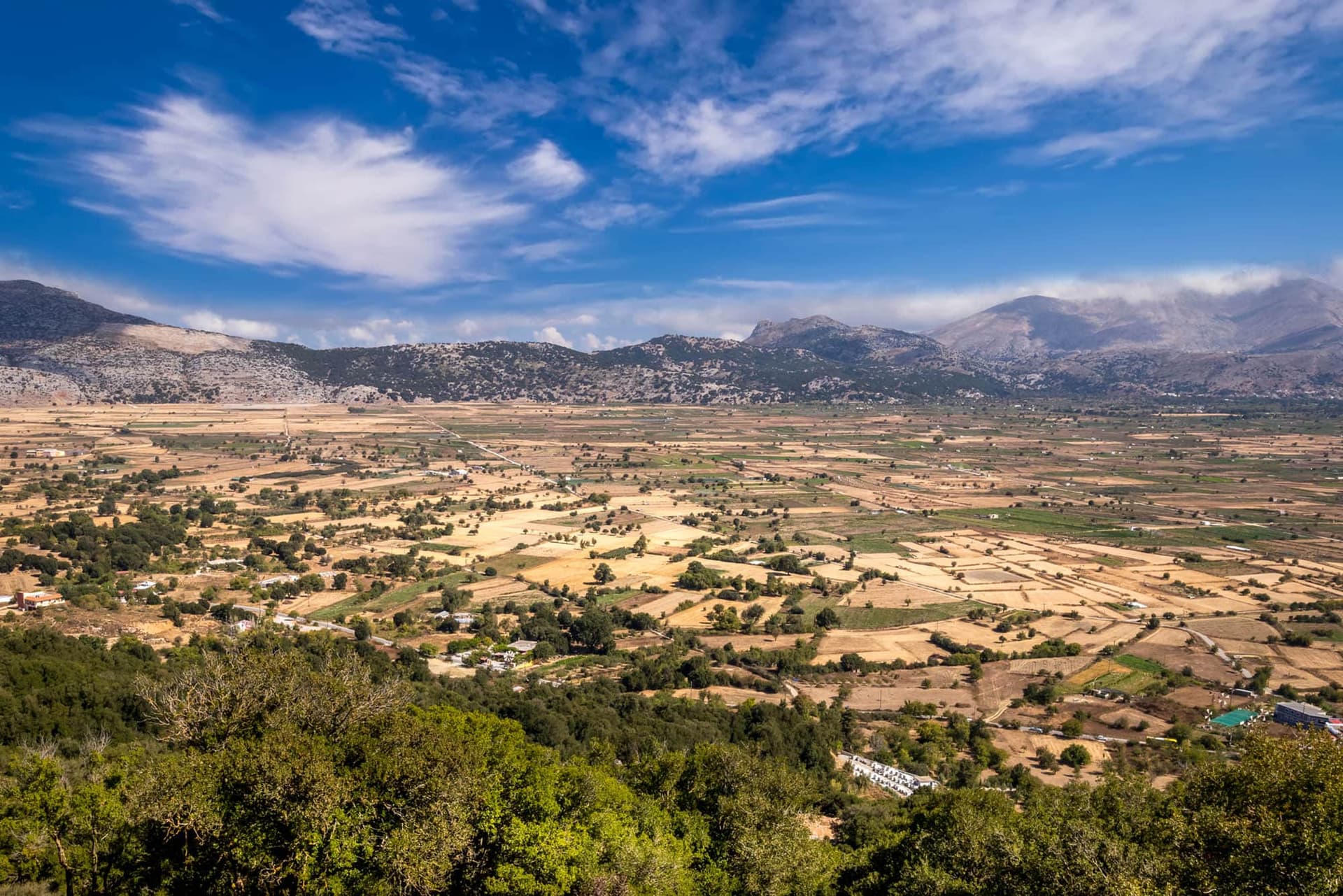
- A trip to the plateau: a little over an hour's drive away, the Lassithi Plateau and its windmills make a change from the beach, with the Cave of Zeus as a bonus.
The inland villages
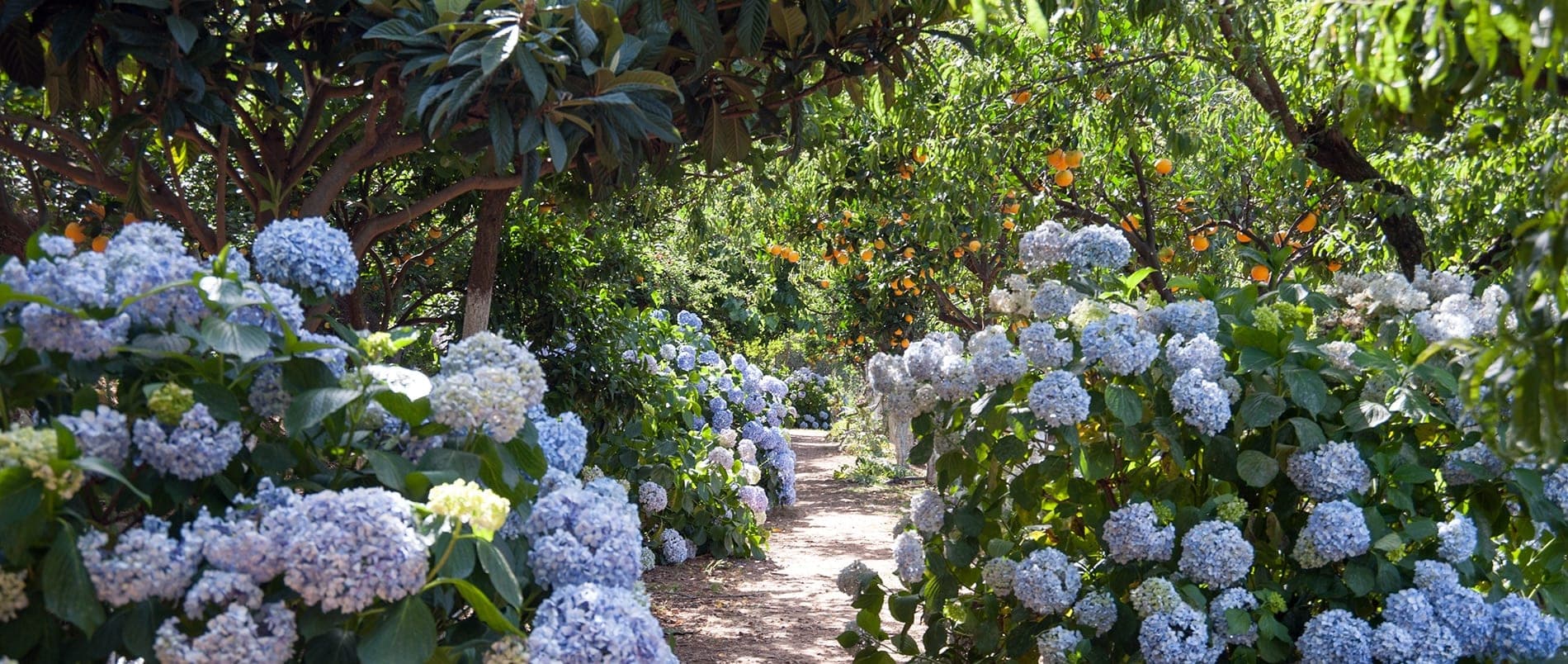
This is the part of Elounda I most recommend taking the time to discover. Above the coast, a winding road climbs to villages that are still agricultural, surrounded by olive trees and dry stone walls.
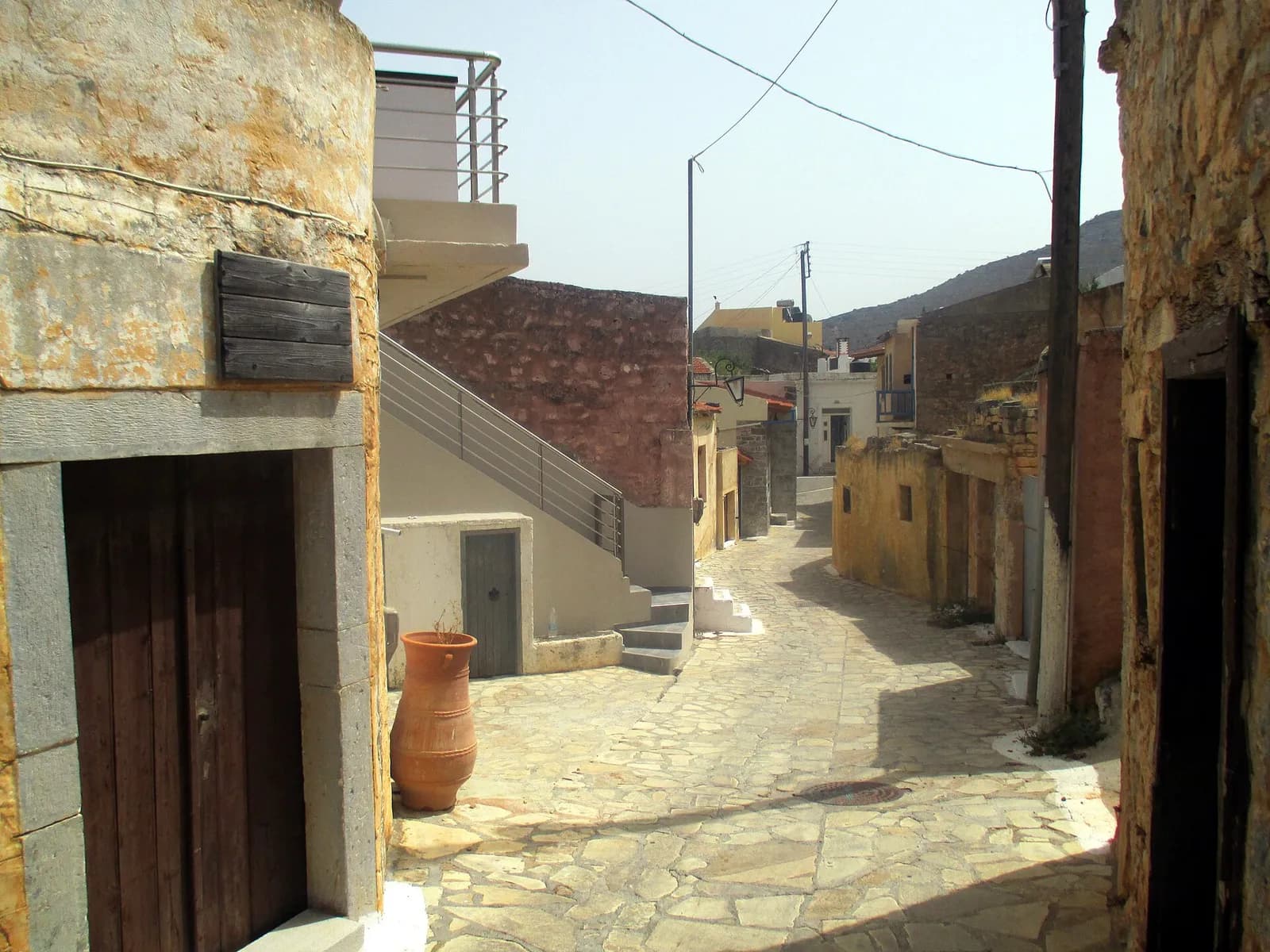
- Fourni: in the hills west of Elounda (about 11 km by road), barely 200 inhabitants, a shady square, kafeneia and tavernas. It is a good starting point for walks through the olive groves.
- Pines: an upland village above Elounda, known for its old windmills and its view over the bay.
- Kato and Pano Elounda: Elounda's old hamlets, with their stone houses and churches, a few minutes from the harbour.
- Mavrikiano: perched just above Schisma, with a sweeping view over the bay at sunset.
DiscoverCars
Car rental comparison — 150+ countries
Compare prices from Hertz, Avis, Sixt and local providers. All fees included, free cancellation. Rated 4.6/5 on Trustpilot.


Practical information: getting there, parking, when to go, budget
Getting there
The nearest airport is Heraklion, about 70 km away. Allow roughly 1 hour by road along the northern motorway (VOAK) to Agios Nikolaos, then the coast road to Elounda. KTEL buses link Agios Nikolaos and Elounda several times a day in season (timetables on the KTEL Heraklion-Lassithi website), but to explore the peninsula, the hinterland and the rest of Lassithi, a car is strongly recommended. All our advice is in our guide to hiring a car in Crete.
| From Elounda to | Distance | Driving time |
|---|---|---|
| Fourni | about 3 km | about 5 to 10 min |
| Plaka | about 5 km | about 10 min |
| Agios Nikolaos | about 11 km | about 15 to 20 min |
| Heraklion (city and airport) | about 70 km | about 1 hr |
| Lassithi Plateau | about 50 km | about 1 hr 15 |
Parking
There is a large car park next to the harbour and the municipal beach. In July and August it fills up by mid-morning: arrive before 10am if you are taking a boat. On the peninsula, people park on the verges of the track, or near the chapel of Saint Luke for Kolokytha.
When to go
The best time is from mid-May to the end of June and from September to mid-October: the sea is already or still warm, Spinalonga is open, and there are far fewer people than in August. In July and August, Elounda is very busy and accommodation prices climb. Out of season, from November to March, the islet of Spinalonga is closed to visitors, and so are some of the tavernas and hotels. To compare the months, read our article on the best time to visit Crete, and if you are coming at the height of summer, our guide to Crete in summer.
Budget
Elounda: my verdict
Elounda deserves better than its image as a luxury showcase. Within a few kilometres you go from a lively fishing harbour to a causeway between salt pans, from a 5th-century mosaic to a turquoise cove, and from a boat to Spinalonga to the olive-growing villages of the hinterland. With three to five days and a car, it is one of the best bases in eastern Crete.
To plan the rest of your trip, see our guide to Crete and our complete guide with beaches, villages and a road trip.

Âme Bohème exists thanks to you
Some links in this article are affiliate links. This means that if you book or purchase a product through these links, we receive a small commission — at no extra cost to you. It's thanks to this support that we can continue creating free, quality content.
You can also buy us a coffee, or follow us on Instagram and Facebook.