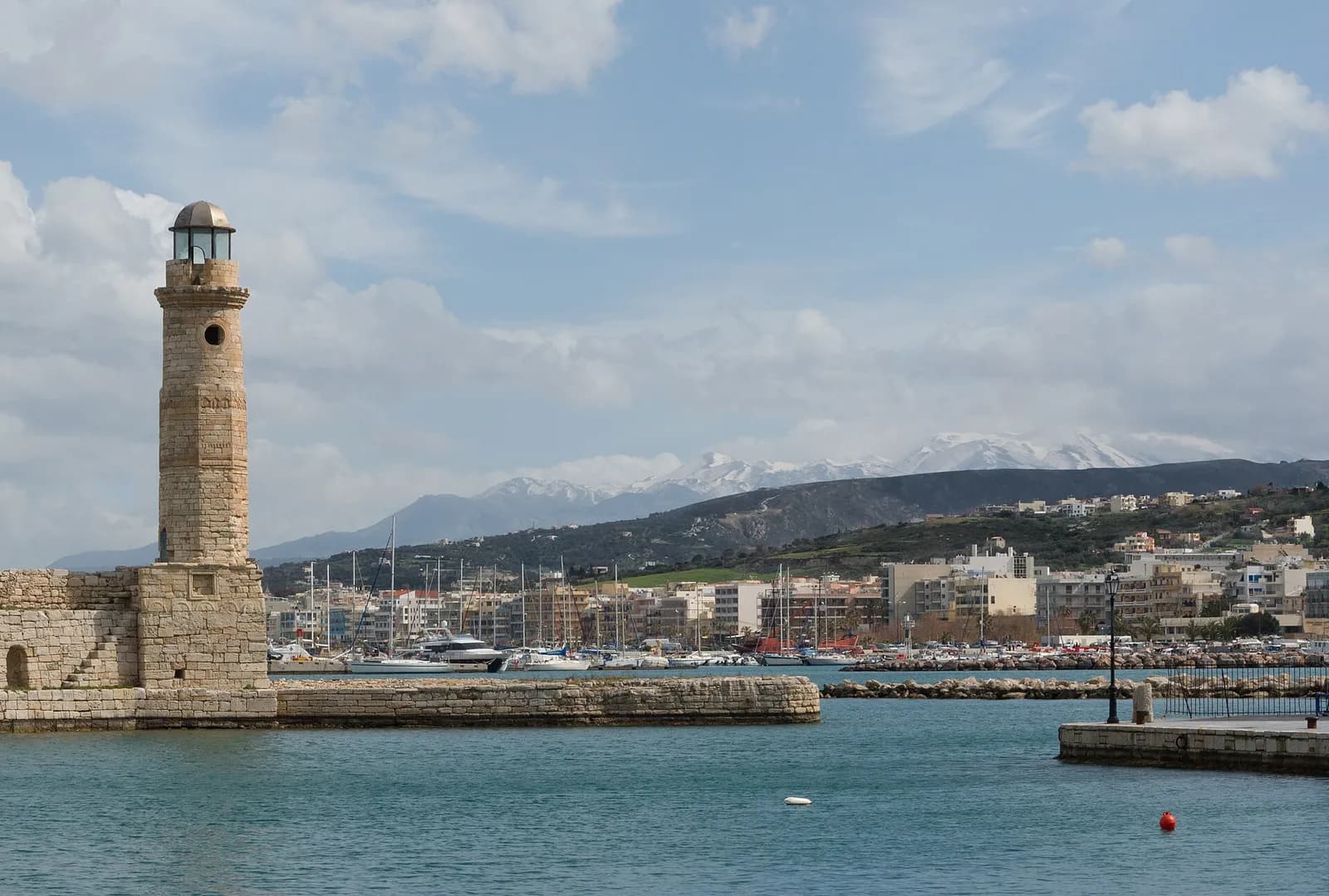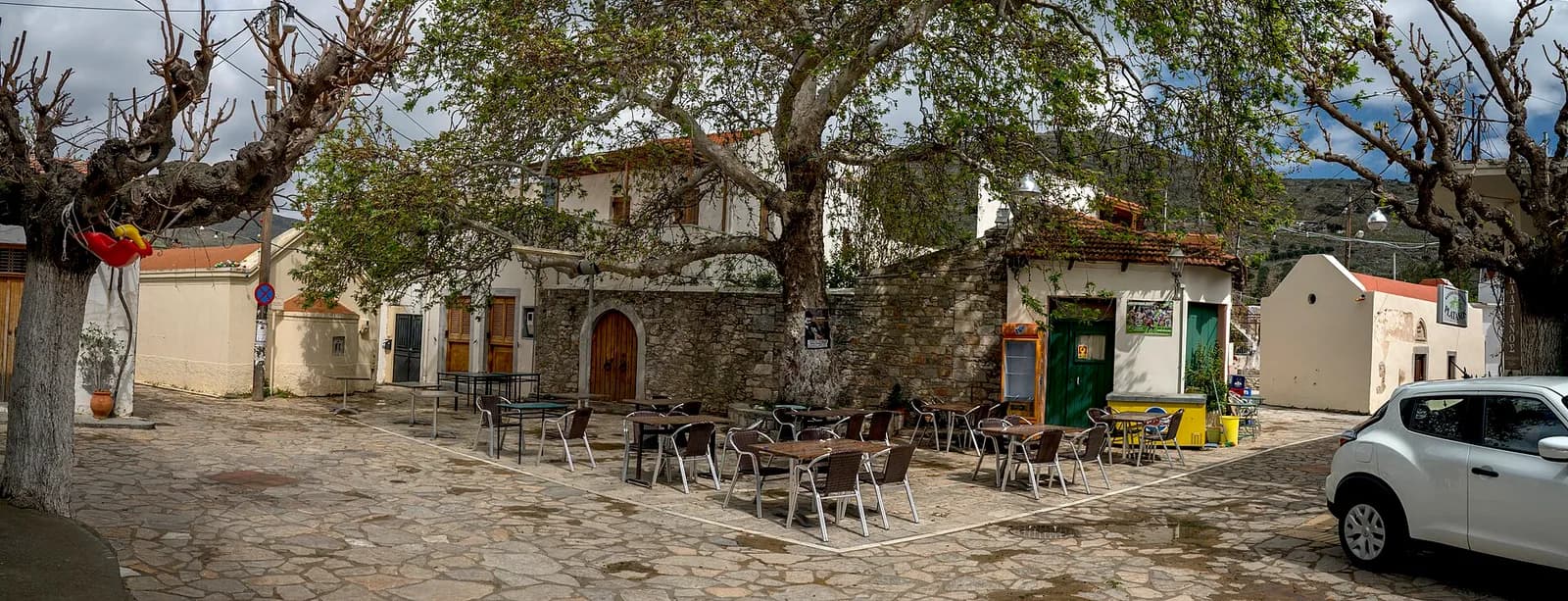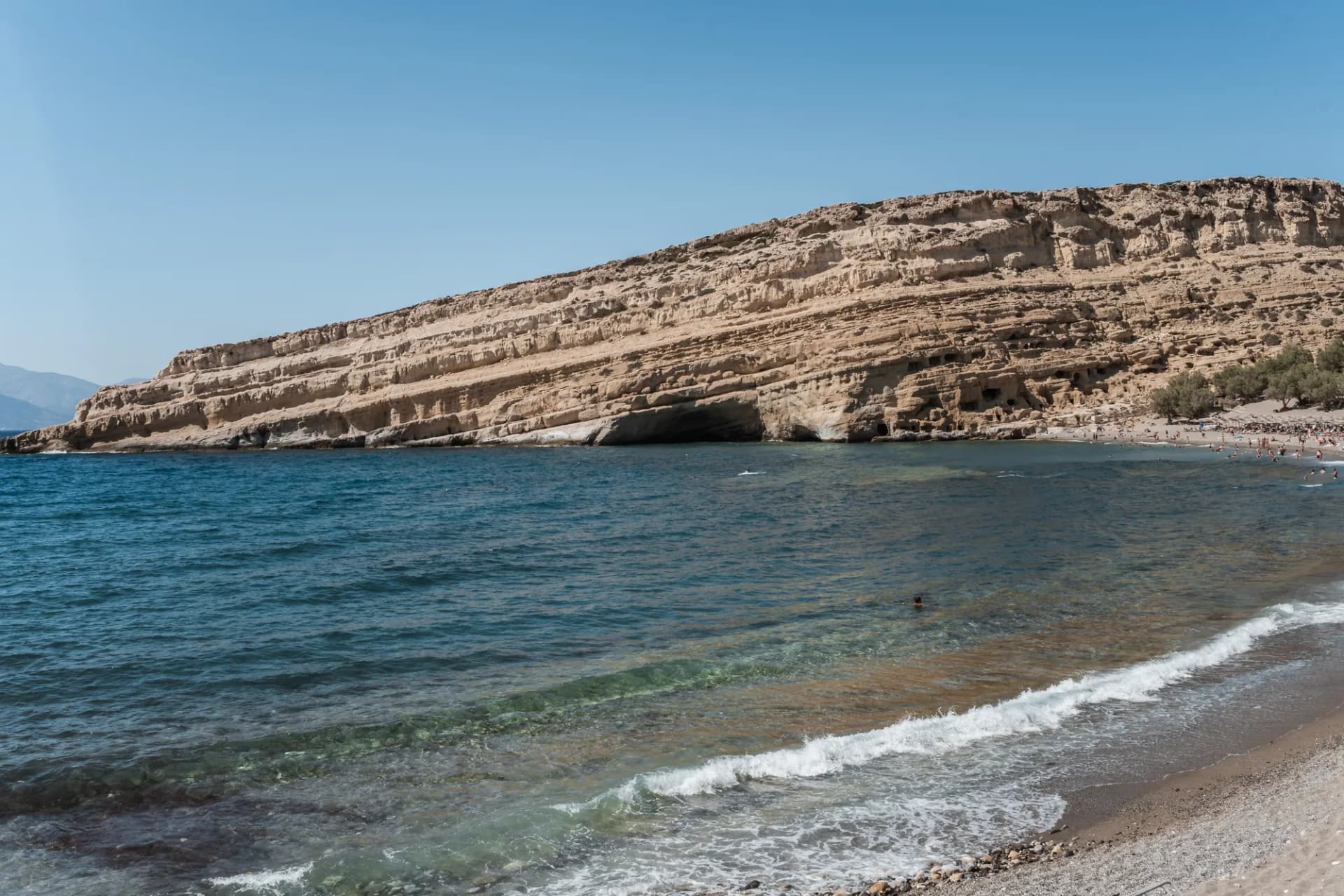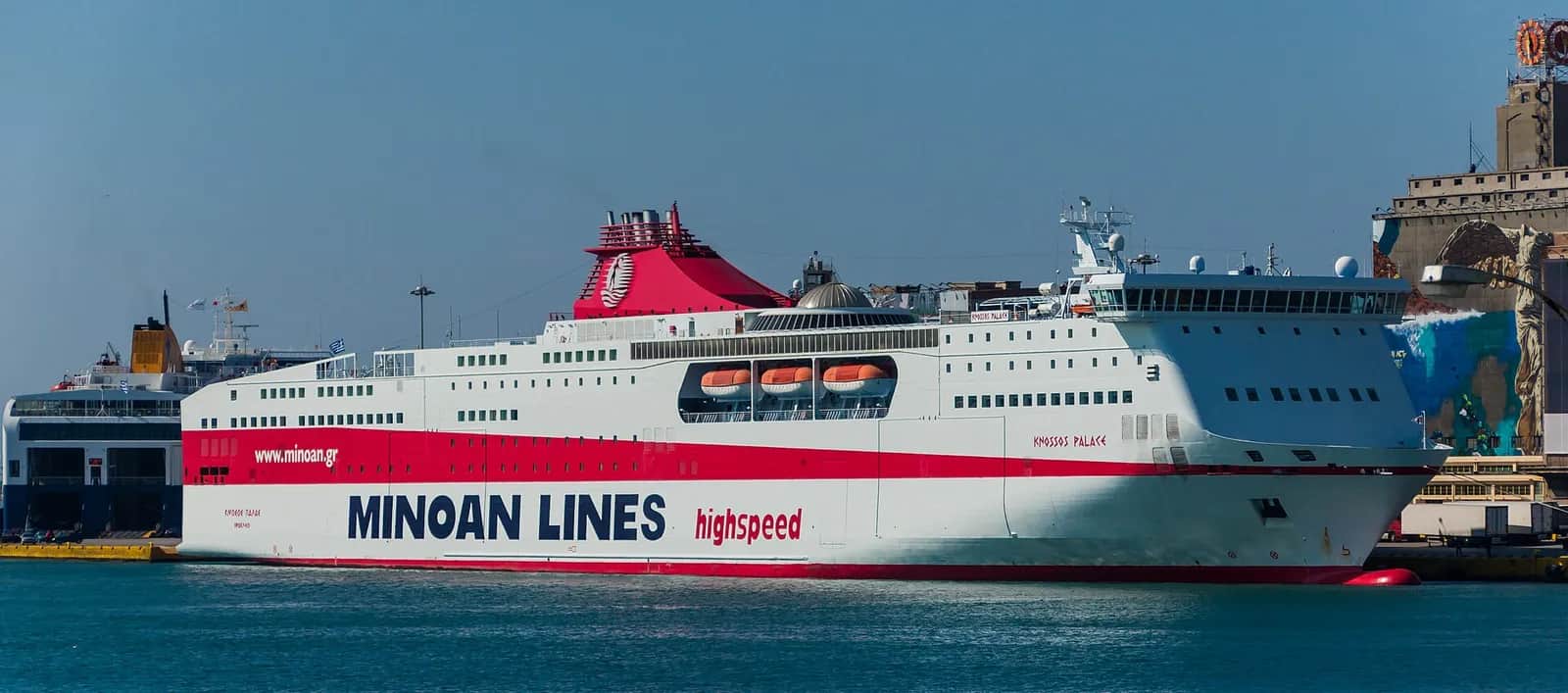

You board at Piraeus around 9pm, have dinner, go to sleep, and open your eyes at around 6.30am in front of Heraklion's Venetian walls. The Piraeus to Crete ferry is still one of the simplest, and often cheapest, ways to reach the largest Greek island, especially if you are travelling with your own car or combining Athens and Crete in the same trip.
You still need to pick the right arrival port, the right company and the right kind of seat. Between Heraklion, Chania (Souda port), Sitia and Kissamos, frequencies range from five sailings a day to two a week, and crossings from 8 to 14 hours. I have gathered here the routes actually running in 2026, price ranges, how to get to Piraeus port and practical tips for a crossing without nasty surprises.
Which routes run between Piraeus and Crete in 2026?
Crete has several ports, but they are not all linked to Piraeus with the same regularity. Here is what actually sails in 2026, according to the timetables published by the companies and booking platforms.
Piraeus to Heraklion, the main route
This is the busiest route, running all year round. Three operators share it: Minoan Lines (part of the Italian Grimaldi group), with the ships Knossos Palace and Festos Palace, ANEK Superfast (ANEK was absorbed by Attica Group, the parent company of Blue Star Ferries, at the end of 2023) and, in season, Seajets with its fast boats. In summer there are up to 5 sailings a day across all operators; from November to March, the frequency drops noticeably.
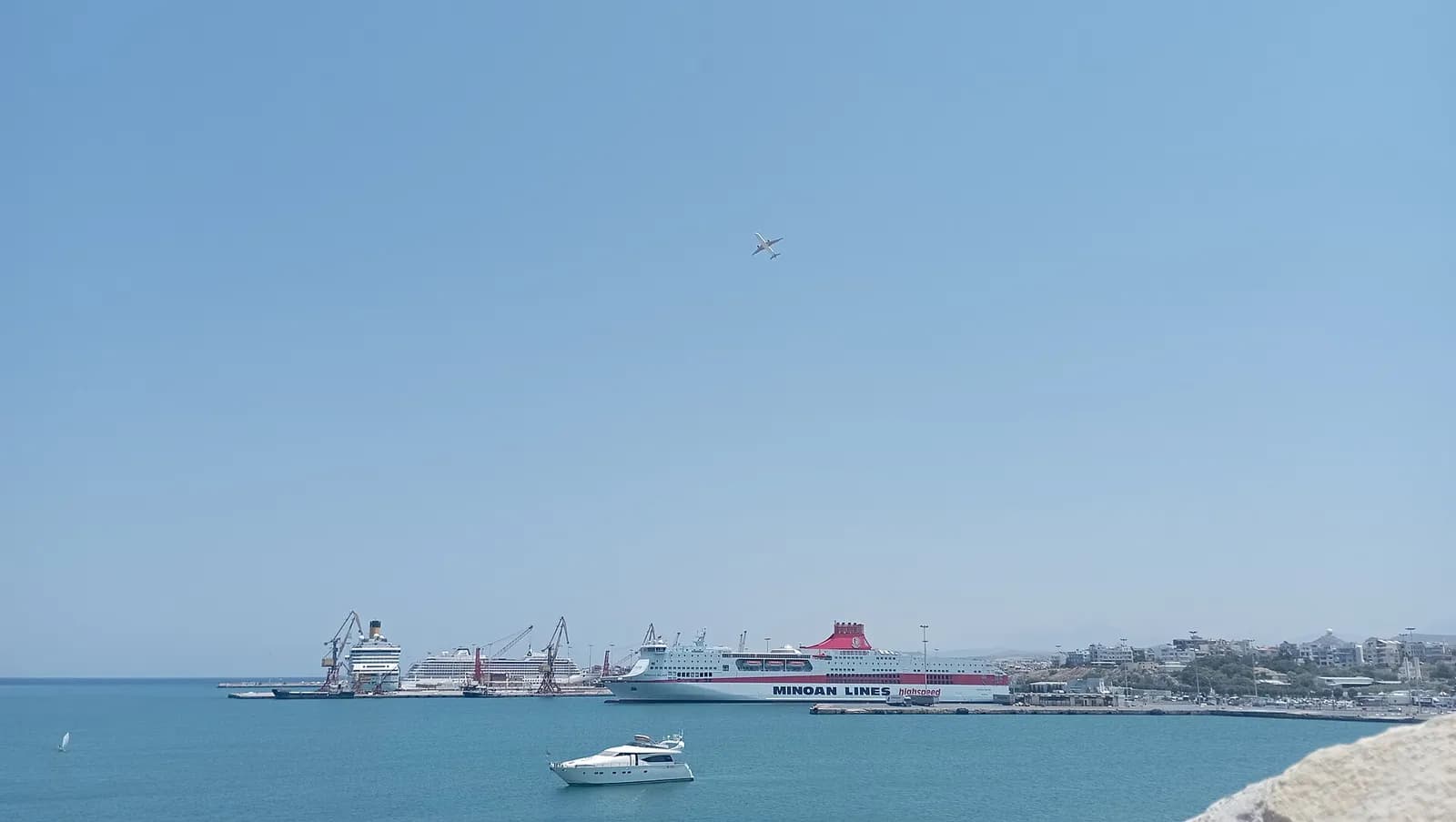
The classic pattern is still the overnight ferry: leaving Piraeus around 9pm and arriving around 6.30am, so roughly 9h15 to 9h30 at sea. On some days Minoan Lines adds a morning daytime sailing (around 9.30am, arriving late afternoon). Seajets goes via the Cyclades (Syros, Mykonos, Paros, Naxos, Santorini depending on the day) and takes around 7h50 to reach Heraklion. The arrival port is a stone's throw from the centre and the old Venetian harbour: my Heraklion guide will help you plan your first day.
Piraeus to Chania via Souda port
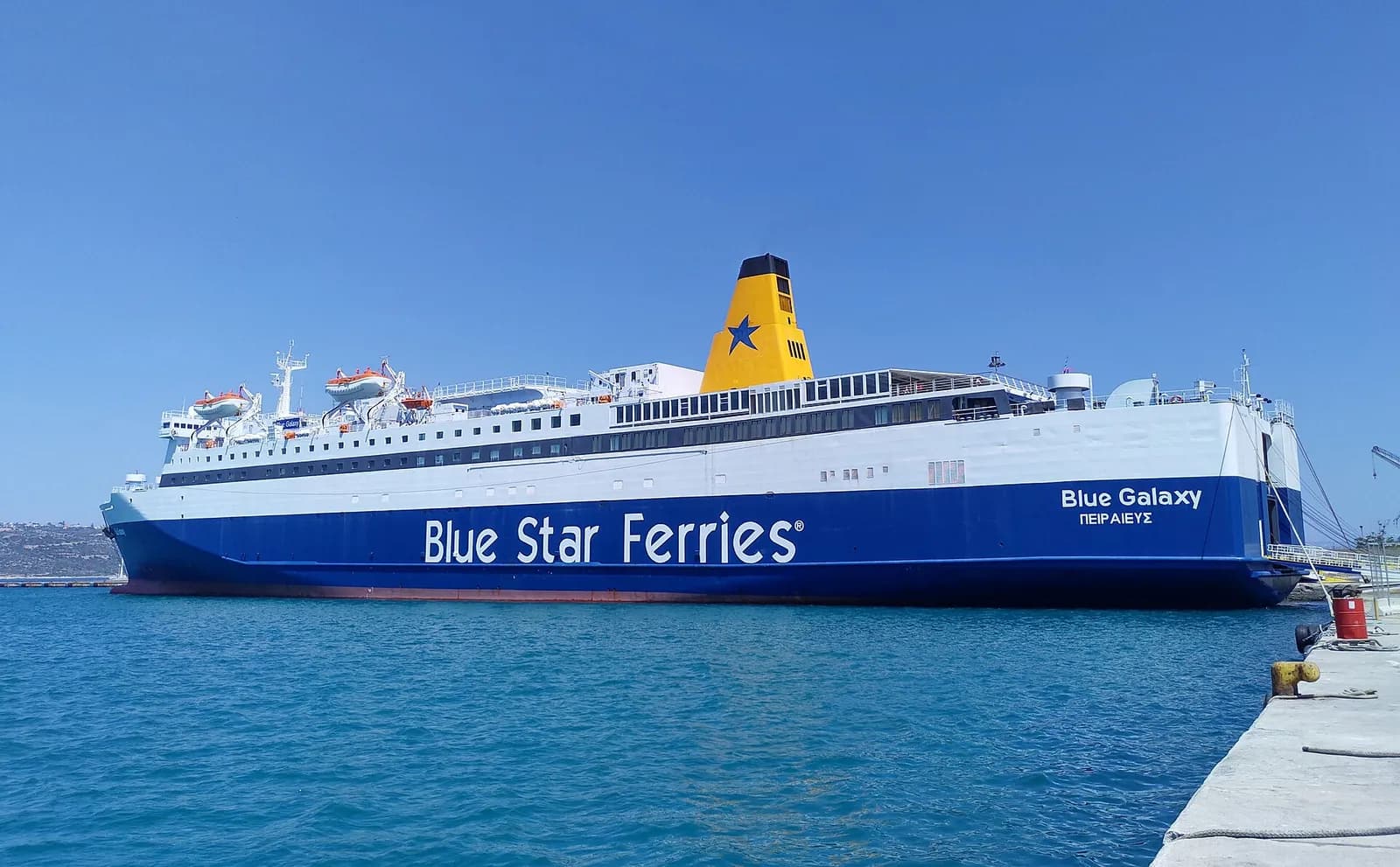
Ferries “to Chania” actually dock at Souda, a deep-water port about 6.5 km from the old town. The route is run by ANEK Superfast and Blue Star Ferries, with 1 to 2 sailings a day in season. Ships announced for 2026 include the Elyros, the Blue Galaxy and the Blue Star 1. Allow about 8h30 to 9h30 at sea, with an overnight departure around 9pm or 10pm and sometimes a daytime one around 10am.
Sitia, Kissamos and Rethymno
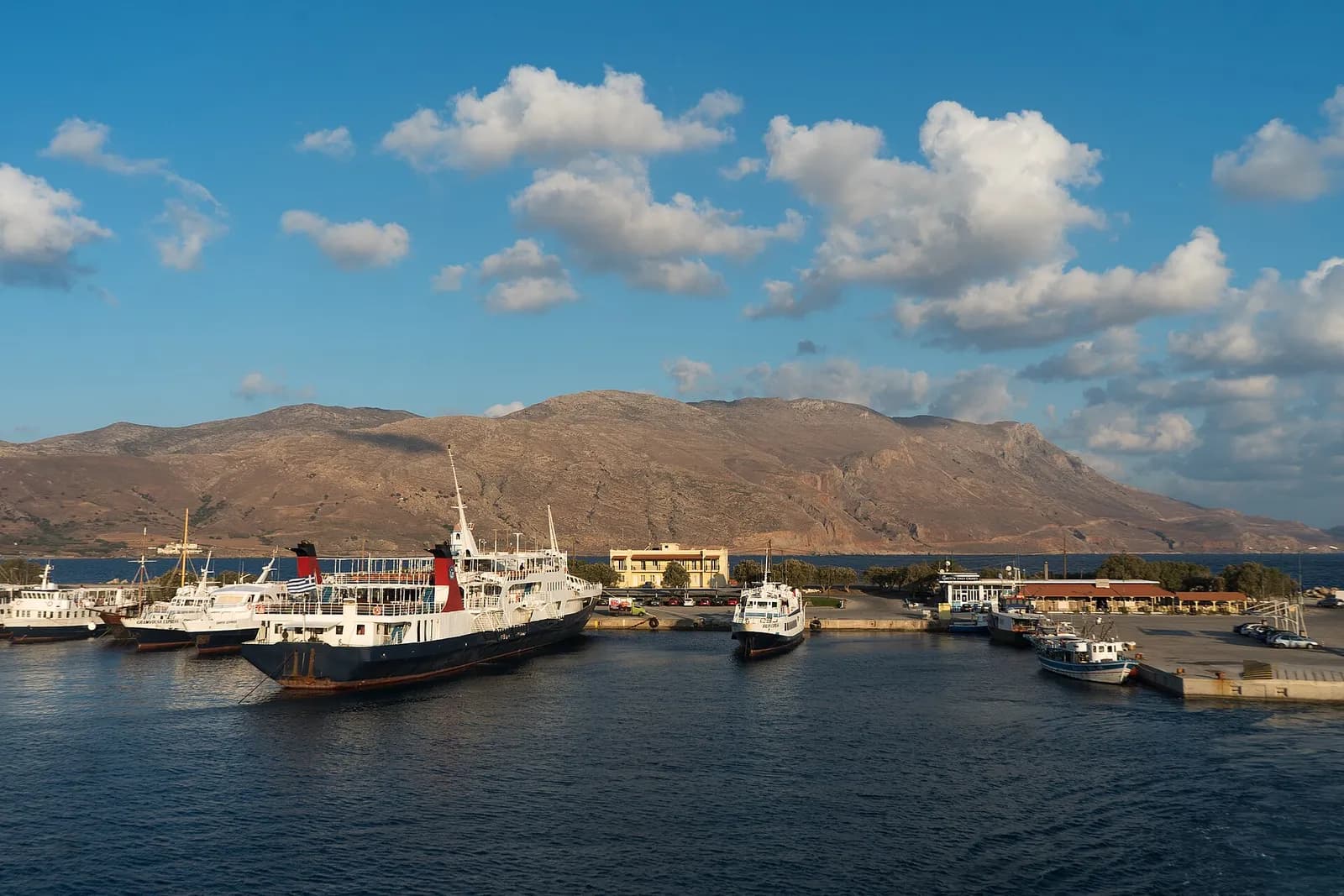
- Sitia: about 2 sailings a week with Blue Star (the Nissos Chios in 2026), via several islands. The crossing takes around 14 hours, with tickets from about €47. Only worth it if you are staying in the far east.
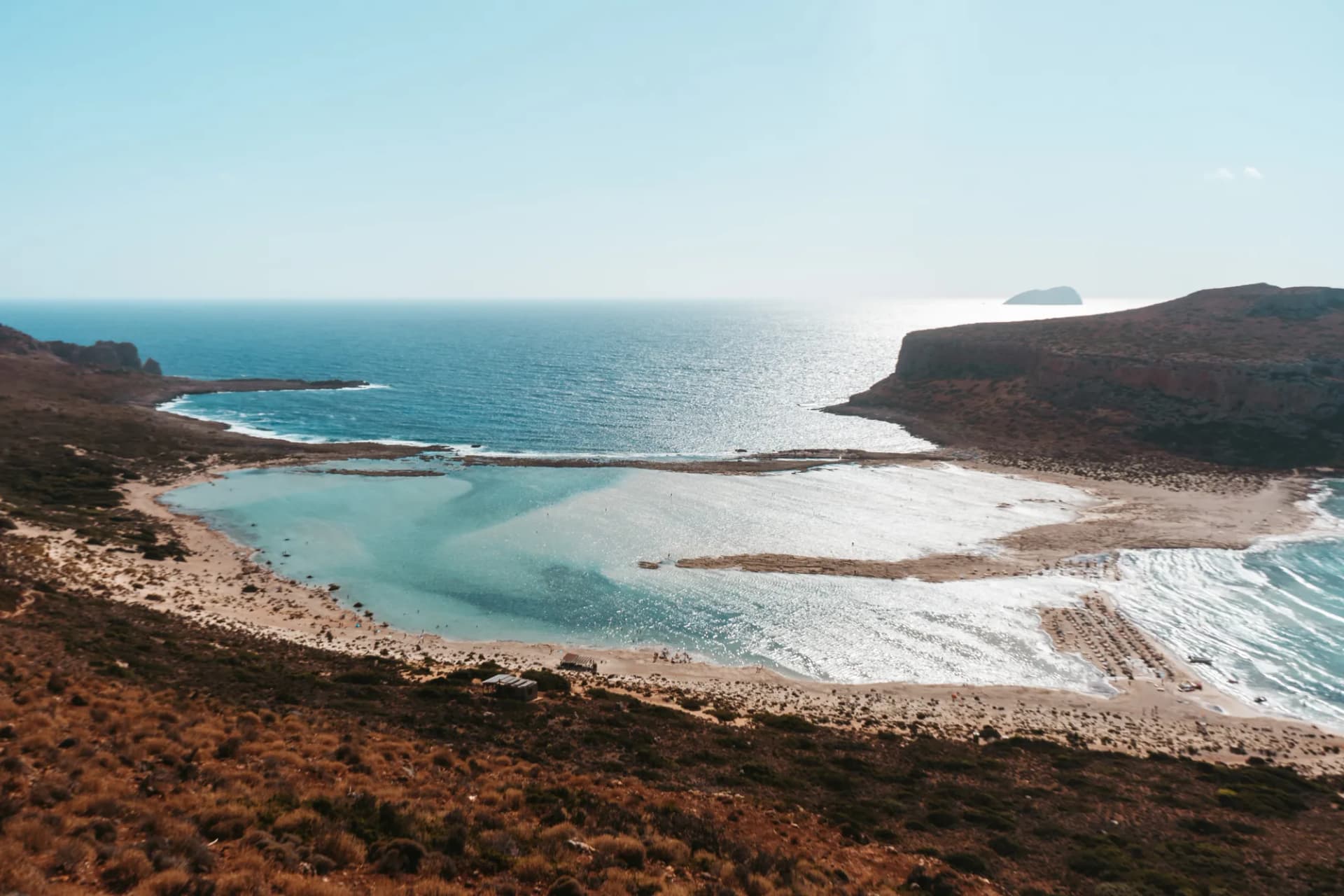
- Kissamos: 1 to 2 sailings a week with Seajets, via Kythira, for about 10h30 at sea. Handy for the west of the island and Kissamos, the gateway to Balos and Gramvousa, but timetables vary a lot with the season.
- Rethymno: no route from Piraeus had been announced for 2026. The town is easy to reach by car or KTEL bus from Heraklion (about 1h15) or Chania (about 1 hour).
- Agios Nikolaos: I could not find any direct route from Piraeus in 2026. The simplest option is to land in Heraklion, about an hour's drive away.
Route comparison table
The prices shown are basic passenger fares (deck or seat), one way, recorded for 2026. They vary a great deal depending on the date, the ship and how full it is.
| Route | Companies | Frequency (summer) | Duration | Indicative price |
|---|---|---|---|---|
| Piraeus to Heraklion | Minoan Lines, ANEK Superfast | 1 to 3 sailings a day | 9h15 to 9h30 | from €33, €40 to €80 in summer |
| Piraeus to Heraklion (fast) | Seajets (via the Cyclades) | up to 2 a day | about 7h50 | about €75 to €115 |
| Piraeus to Chania (Souda) | ANEK Superfast, Blue Star | 1 to 2 a day | 8h30 to 9h30 | from €52 |
| Piraeus to Sitia | Blue Star | 2 a week | about 14 hours | from €47 |
| Piraeus to Kissamos | Seajets (via Kythira) | 1 to 2 a week | about 10h30 | from €23 |
| Piraeus to Rethymno | none announced for 2026 |
Overnight or daytime ferry?
The overnight ferry is the traditional option, and for good reason. You do not lose a day of your holiday, you save a night in a hotel if you take a cabin, and you arrive early in the morning, ready to hit the road before the heat. The downside: arriving around 6am, sometimes before your accommodation's check-in time. I recommend planning breakfast at the port and an early first visit, before the heat and the tour groups.
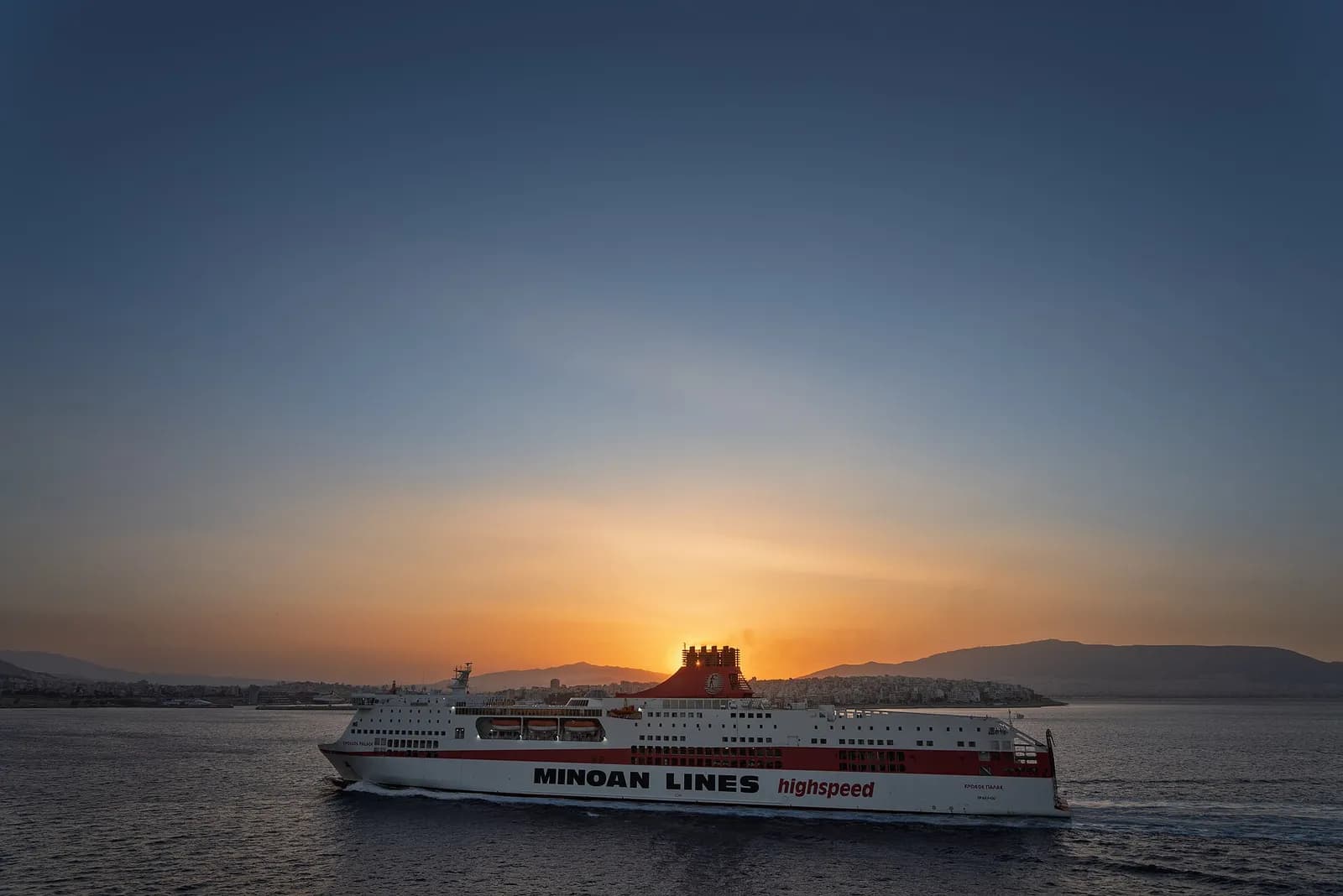
The daytime ferry (Minoan Lines on some days, or Seajets via the Cyclades) has two advantages: the light over the Aegean and the chance to stop off in Santorini or Naxos as part of a combined itinerary. On the other hand, it “eats up” a whole day, and the Seajets fast boats are more sensitive to wind: when the meltemi blows hard in July and August, they can be delayed or cancelled, which happens far less often to the big overnight ferries.
Cabin, deck or seat: how much it costs
On the conventional ferries to Crete, you can choose between three main categories. The ranges below are ballpark figures for the 2026 high season, to be checked when you book.
| Type of seat | Indicative price (one way, summer) | Who is it for? |
|---|---|---|
| Deck | about €40 to €70 | tight budget, daytime crossing |
| Numbered seat (aeroplane style) | a few euros more than deck | short night, solo traveller |
| 4-berth cabin | about €65 to €95 per person | families, groups of friends |
| Inside double cabin | about €90 to €145 per person | couples who want to sleep |
| Double cabin with porthole | about €110 to €170 per person | comfort and daylight when you wake |
| Car (up to 5 m) | about €100 to €300 depending on the date | road trip with your own vehicle |
| Motorbike | about €40 to €110 | travelling on two wheels |
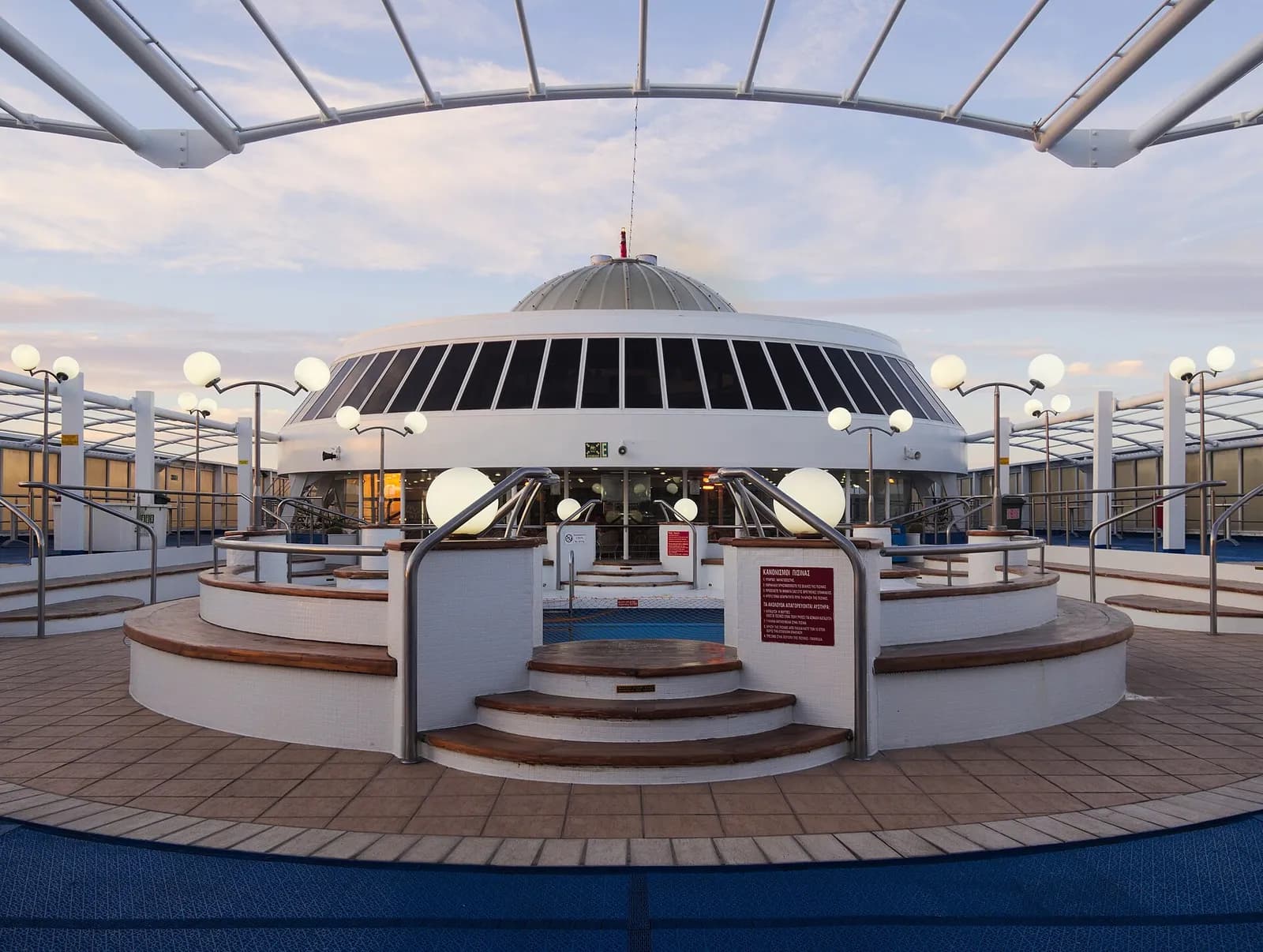
Deck is the bohemian option: you sleep on a bench, in a lounge or out on deck in your sleeping bag. It is doable in summer for one night, but the lounges stay lit and the air conditioning is often freezing. A numbered seat gives you a little more peace. For a proper night's sleep, a cabin changes everything: a shower, sheets and a real bed. For two people, a double cabin often costs less than a night in a hotel in August in Athens or Crete, so it pays for itself as soon as you compare.
Booking your ticket: where and when
You can book directly on the companies' websites (minoan.gr, anek.gr, bluestarferries.com, seajets.com) or use a booking platform such as Ferryhopper, which shows several companies for the same date and lets you pay in one go. Both work; the official website sometimes has the company's own promotions, while the platform saves time when comparing timetables and prices.
- July and August: book at least two months ahead if you want a cabin or to take a car. Deck places generally remain available until later.
- May, June, September, October: two to three weeks is usually enough, except around 15 August and Greek holiday weekends (Orthodox Easter in particular).
- Winter: little pressure, but fewer sailings: check the days the ships run before fixing your dates.
Most companies now issue e-tickets: a QR code on your phone is enough, along with ID. The companies also offer child discounts (free under 5 without an allocated seat, about 50% from 5 to 10 depending on the conditions shown in 2026). If you are travelling in low or shoulder season, the lowest fares are often midweek.
Taking a car on board, and the rental car trap
If you are coming with your own vehicle, the ferry is the obvious choice: Minoan Lines and ANEK Superfast ships carry cars, motorbikes and campervans. Turn up at the port at least 1h30 before departure; vehicle boarding generally closes 30 to 45 minutes before the ship sails. Once parked, you no longer have access to the car deck during the crossing, so take everything you will need for the night up with you.
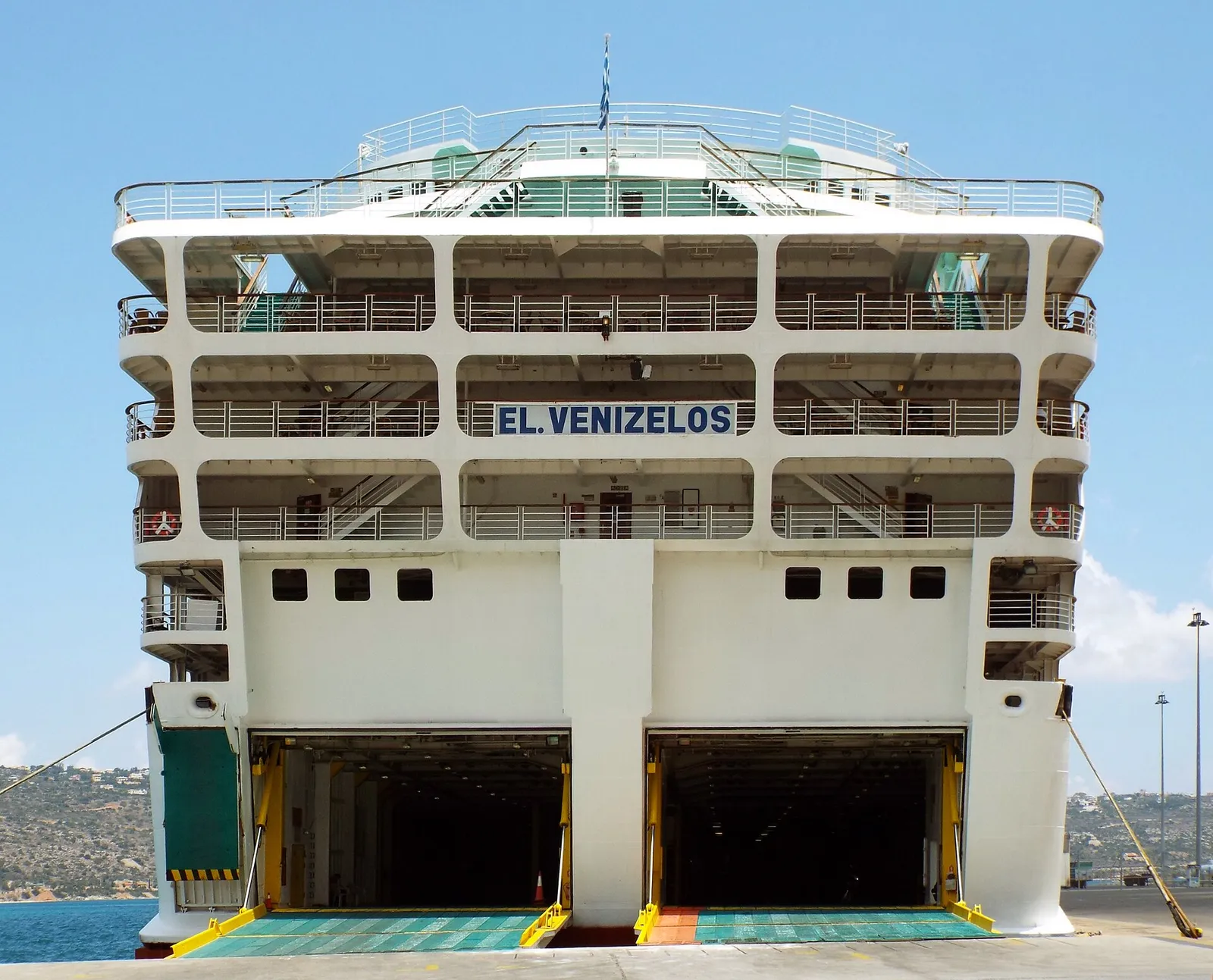
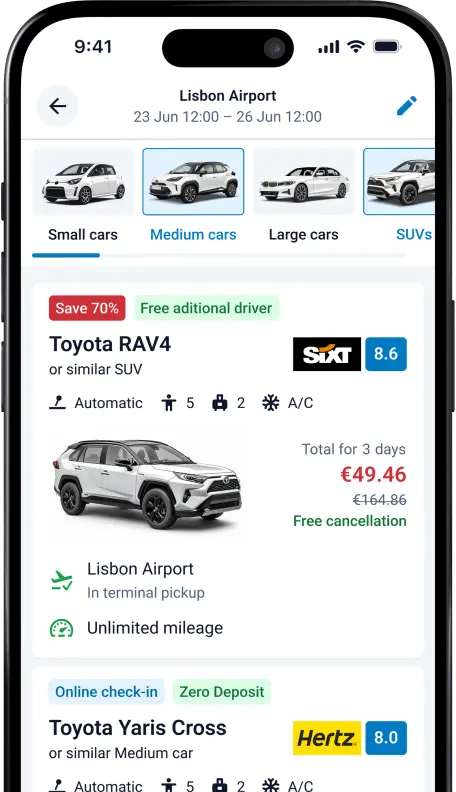
In the vast majority of cases, I recommend returning the car in Athens and renting directly in Crete, at the port or when you reach town: it is simpler, often cheaper than the vehicle ticket, and there is no insurance grey area. All my tips for choosing well are in the guide to renting a car in Crete.
DiscoverCars
Car rental comparison in 150+ countries
Compare prices from Hertz, Avis, Sixt and local providers. All fees included, free cancellation. Rated 4.6/5 on Trustpilot.

Getting to Piraeus port and finding your gate
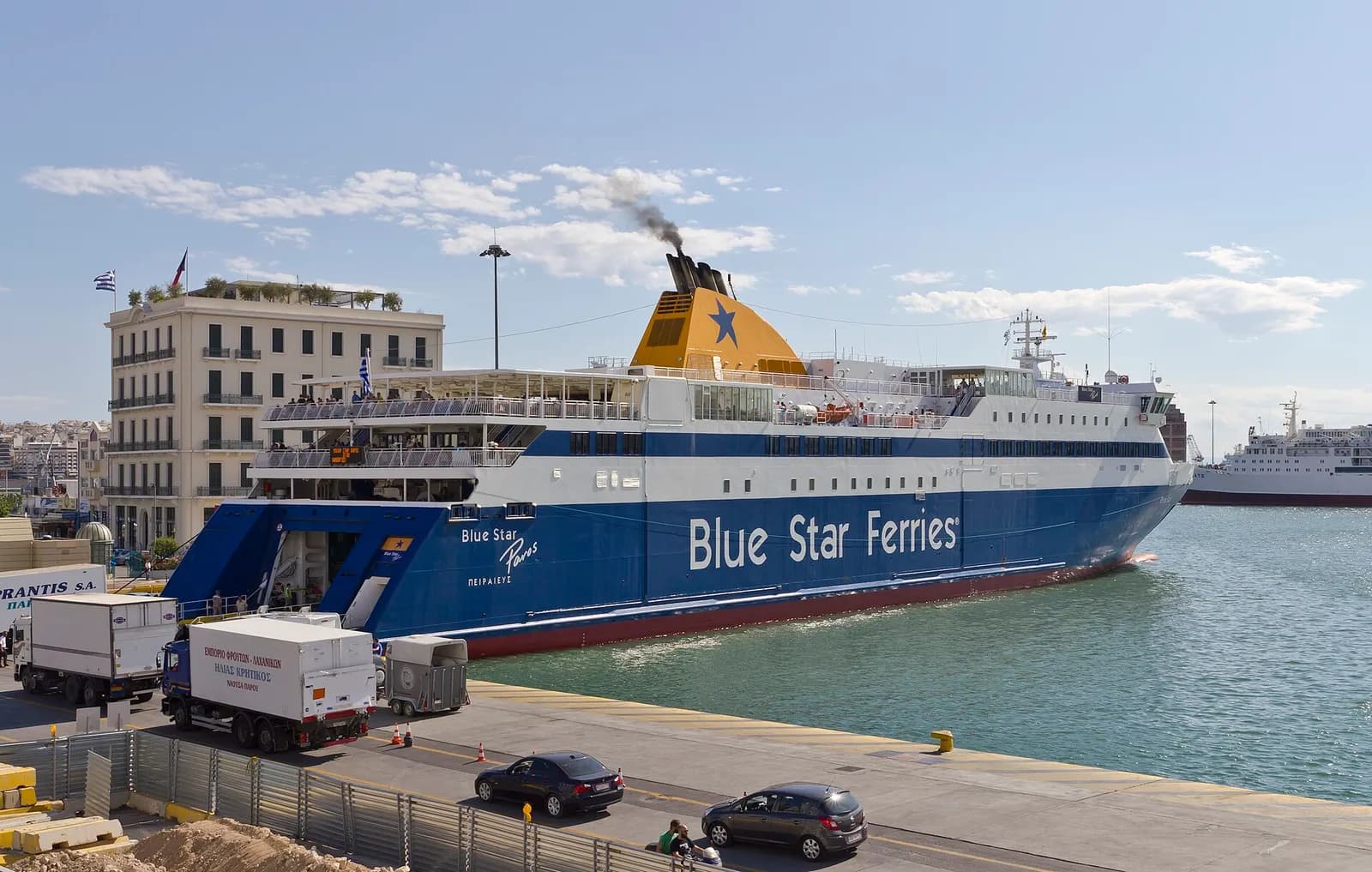
Piraeus is Greece's busiest passenger port, and it is huge: more than ten gates stretch along the quays. Ferries to Heraklion and Chania usually leave from gates E2 and E3, with E2 mainly for foot passengers and E3 for vehicles. The exact gate is on your ticket: check it the day before, as it can change depending on the ship.
From central Athens
The easiest option is metro line 1 (the green line) from Monastiraki or Omonia to the Piraeus terminus: about 20 minutes, a train every 10 to 15 minutes, and a 90-minute ticket for €1.20. Gates E2 and E3 are roughly a ten-minute walk from the station, so leave some leeway if you have heavy luggage. By taxi from Syntagma, allow about €20 by day and €25 at night.
From Athens airport
- X96 bus: a direct airport to Piraeus service running 24 hours a day, every 20 to 30 minutes, €5.50. The journey can take up to 1h30 depending on traffic.
- Metro line 3: the blue line runs directly from the airport to Piraeus in about an hour (a train roughly every 36 minutes), with the €9 airport ticket.
- Taxi: convenient with luggage, but expect a considerably higher fare and allow extra time for rush-hour traffic in the late afternoon.
Arriving in Crete: Heraklion or Souda
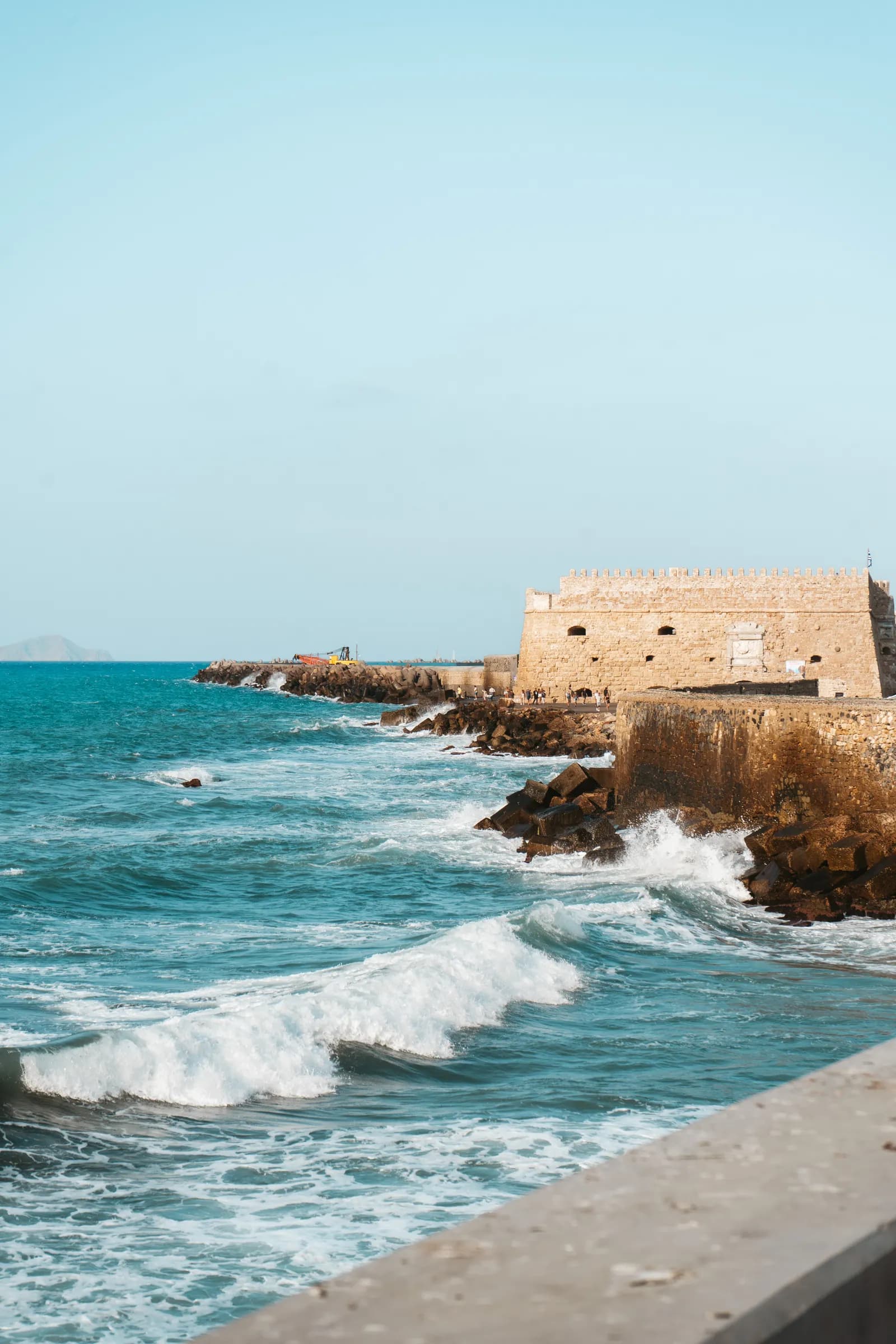
In Heraklion, the port is right next to the centre: the Venetian Koules fortress and the old harbour are a few minutes' walk away, with the KTEL bus station just beside it. Car rental companies often deliver to the port, so you can head east or south as soon as you step off the boat.
At Souda, you are about 6.5 km from Chania. A city bus (line 13, according to the available information) links the port to the centre in about 20 to 25 minutes, for €1.80 (ticket bought before boarding); the timetable is set around the morning ferry arrivals. A taxi takes about 20 minutes. Many places to stay also offer a transfer: ask for it in advance. For what comes next, my Chania guide covers neighbourhoods, beaches and addresses.
The golden rule: choose the port closest to your first place to stay. Heraklion for Knossos, the centre and the east (Agios Nikolaos, Elounda, Spinalonga), Chania for the west (Balos, Elafonissi, Samaria). Between the two, allow about 2h15 by road.
Tips for a smooth crossing
Seasickness
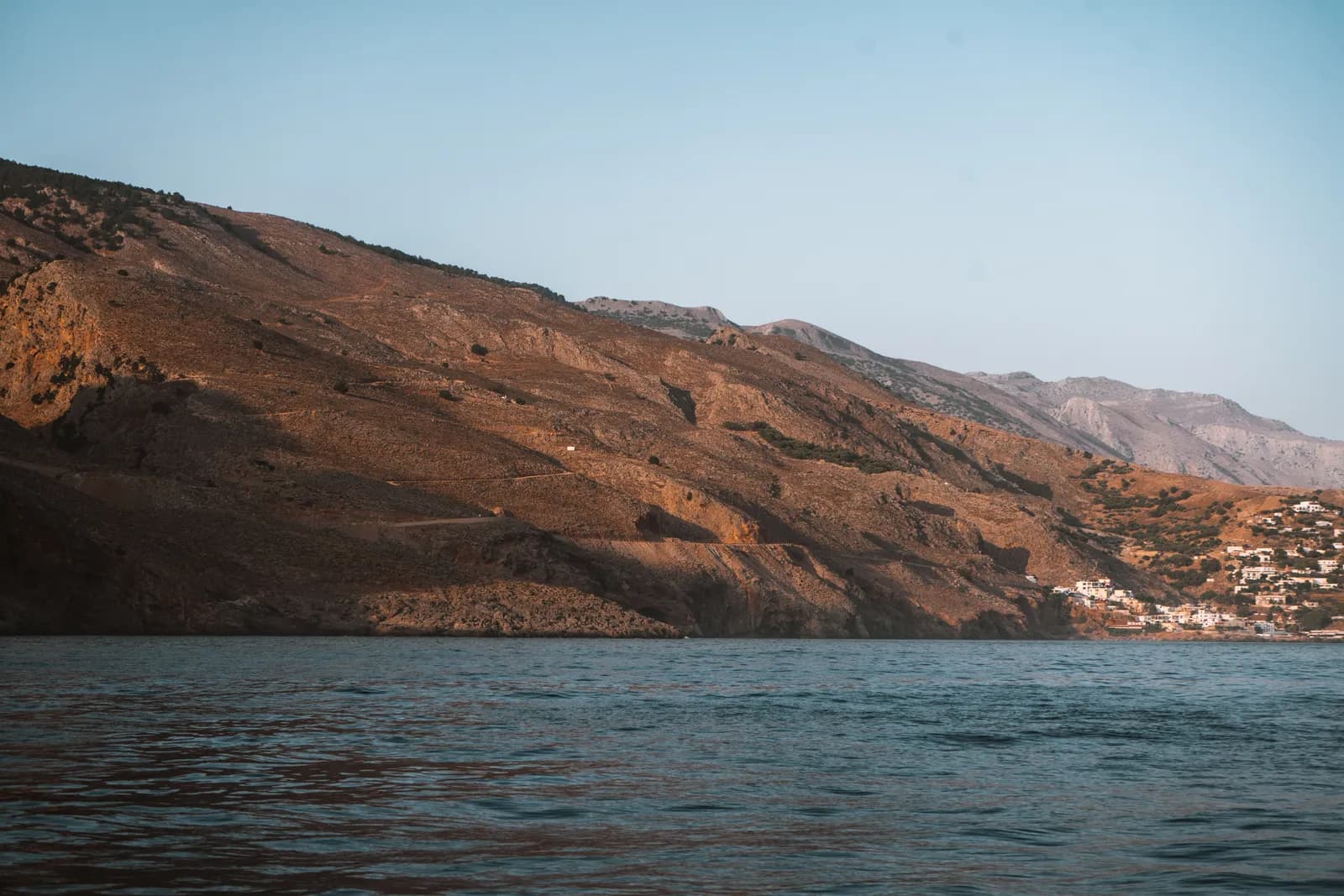
The big overnight ferries are stable in normal weather. If you are prone to seasickness, choose a cabin in the middle of the ship and on a low deck, where you feel the movement less, and avoid the fast boats in strong winds. Taking a travel sickness remedy before boarding is still the best insurance (ask your pharmacist for advice).
Eating on board
The ships have a self-service restaurant, a bar and sometimes an à la carte restaurant. Prices are higher than on land and the choice shrinks late in the evening. Nothing stops you bringing your own picnic: something from a Piraeus bakery or a souvlaki before boarding does the job nicely, with a big bottle of water for the night.
Travelling with a pet
Pets are allowed, provided you declare them when booking. With Minoan Lines, free kennels are available on all ships, and pet-friendly cabins exist on the Knossos Palace, Festos Palace and Kydon Palace (two animals maximum per cabin). Outside these cabins, dogs can stay on the outer decks, on a lead and muzzled. The rules differ between companies, so check them before buying your ticket.
Your overnight bag
- A warm layer (a jumper or light jacket): the air conditioning in the lounges is often strong, even in August.
- Earplugs and an eye mask, especially on deck or in a seat.
- A charger and power bank: sockets are rare in the lounges.
- A wash bag and a change of clothes, since your luggage often stays in the luggage room or in the car.
Combining Athens, Santorini and Crete
The ferry also lets you build a loop itinerary: Athens, then Santorini, then Crete, or the other way round. Seajets fast boats link Heraklion and Santorini in a few hours in season, and in 2026 Seajets offered 50% off the return ticket between Heraklion and the Cyclades when the outward and return tickets were issued together. All the timetables and companies for this route are in my article on the ferry between Crete and Santorini. And if you are still torn between the two islands, my Crete or Santorini comparison will help you decide.
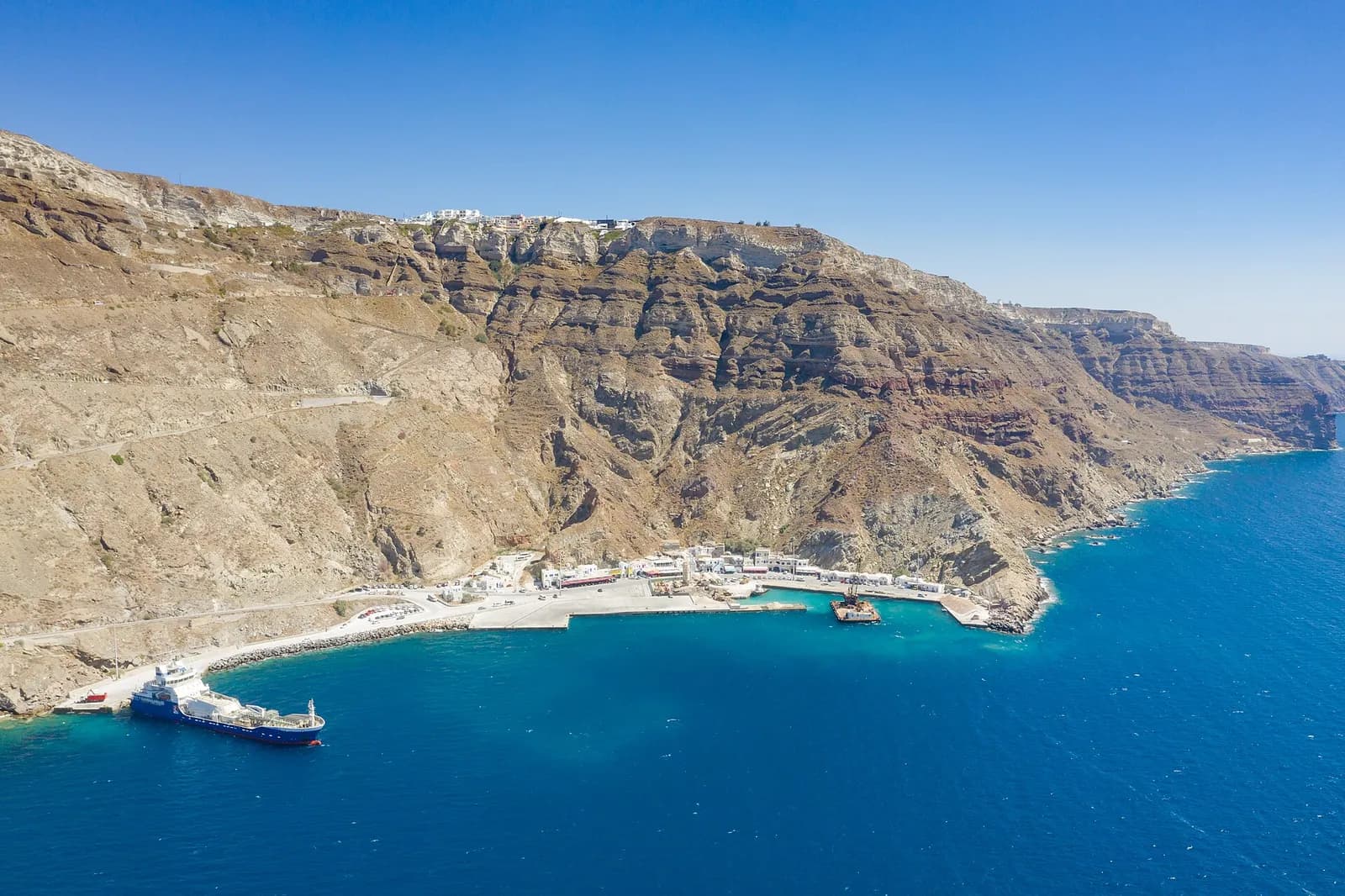
A night on the ferry to Crete is still the best transition between the city and the island: you fall asleep in Athens and wake up somewhere else entirely.
Frequently asked questions
Allow 8 to 9.5 hours to Heraklion or Chania (Souda) on a conventional ferry, and around 7h50 on a Seajets fast boat, which calls at the Cyclades on the way. The routes to Sitia (about 14 hours) and Kissamos (about 10h30) take considerably longer.
Deck tickets start at around €33 out of season and are more like €40 to €80 in summer. A cabin costs extra, and a car is roughly €100 to €300 depending on the date and the company.
Ferries to Heraklion and Chania usually leave from gates E2 and E3, with E3 mainly used for vehicle boarding. Always check the gate shown on your ticket, as it can change depending on the ship.
It is often forbidden or requires written permission from the rental company, and the insurance generally does not cover the car during the crossing. The simplest option is to return the car in Athens and rent another one when you arrive in Crete.
Heraklion is ideal for the east and centre of the island (Knossos, Agios Nikolaos, Elounda), Chania for the west (Balos, Elafonissi, Samaria). Choose the port closest to your first place to stay so you avoid a two-hour drive first thing in the morning.
In summary
For most travellers, the right choice is an overnight ferry to Heraklion or Chania, in a cabin if your budget allows, booked two months ahead in summer. Sitia and Kissamos remain niche options, and a rental car is best picked up on the island. Once you have landed, my complete guide to Crete will help you plan your road trip, from the palace of Knossos to the beaches of the west.
Sources and fact-checkingInformation checked on 7 October 2026 · 14 sources consulted
- Ferryhopper : lignes de ferry en Grèce 2026 (Pirée-Crète)
- Ferryhopper : port du Pirée (portes, accès métro et bus)
- Netferry : Pirée-Héraklion (compagnies, durées)
- Netferry : Pirée-La Canée (compagnies, navires)
- Netferry : Pirée-Sitia
- Netferry : Pirée-Kissamos
- Minoan Lines : site officiel
- Minoan Lines : animaux à bord
- Seajets : offres été 2026 (ligne Pirée-Cyclades-Héraklion)
- Wikipedia : ANEK Lines (fusion avec Attica Group, 2023)
- Wikipedia : Grimaldi Group (Minoan Lines)
- Greeka : ports de La Canée (Souda, bus, taxi)
- Athens Tourism : transports aéroport-centre et tarifs
- Crete Direct : guide du ferry vers la Crète 2026 (fourchettes de prix)

Âme Bohème exists thanks to you
Some links in this article are affiliate links. This means that if you book or purchase a product through these links, we receive a small commission, at no extra cost to you. It's thanks to this support that we can continue creating free, quality content.
You can also buy us a coffee, or follow us on Instagram and Facebook.