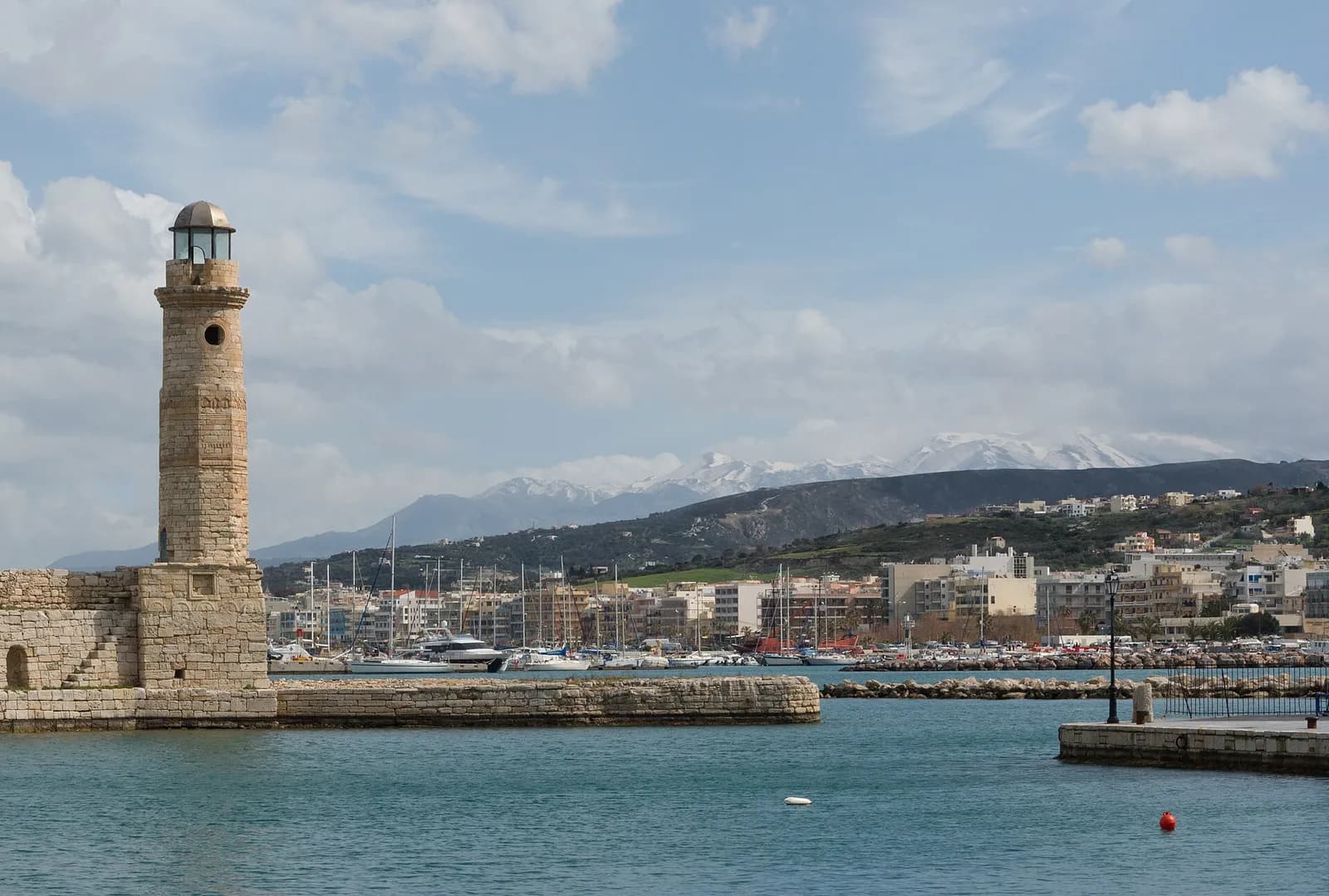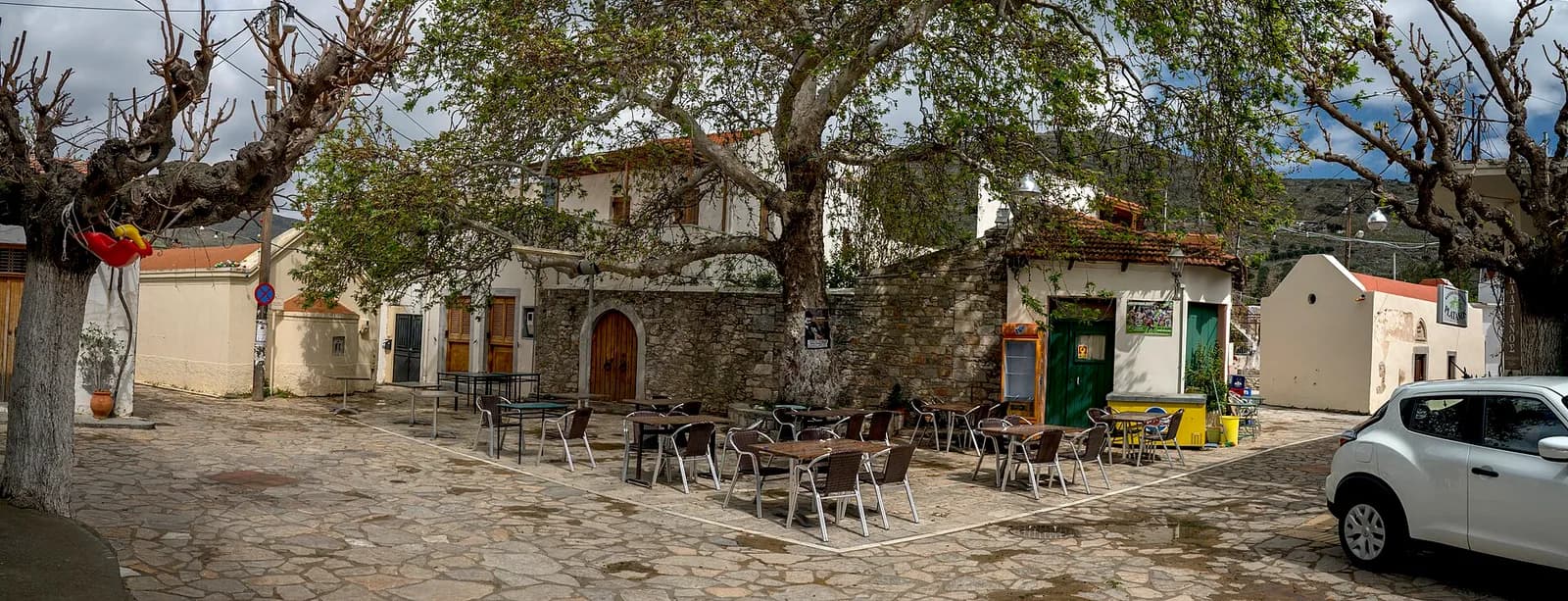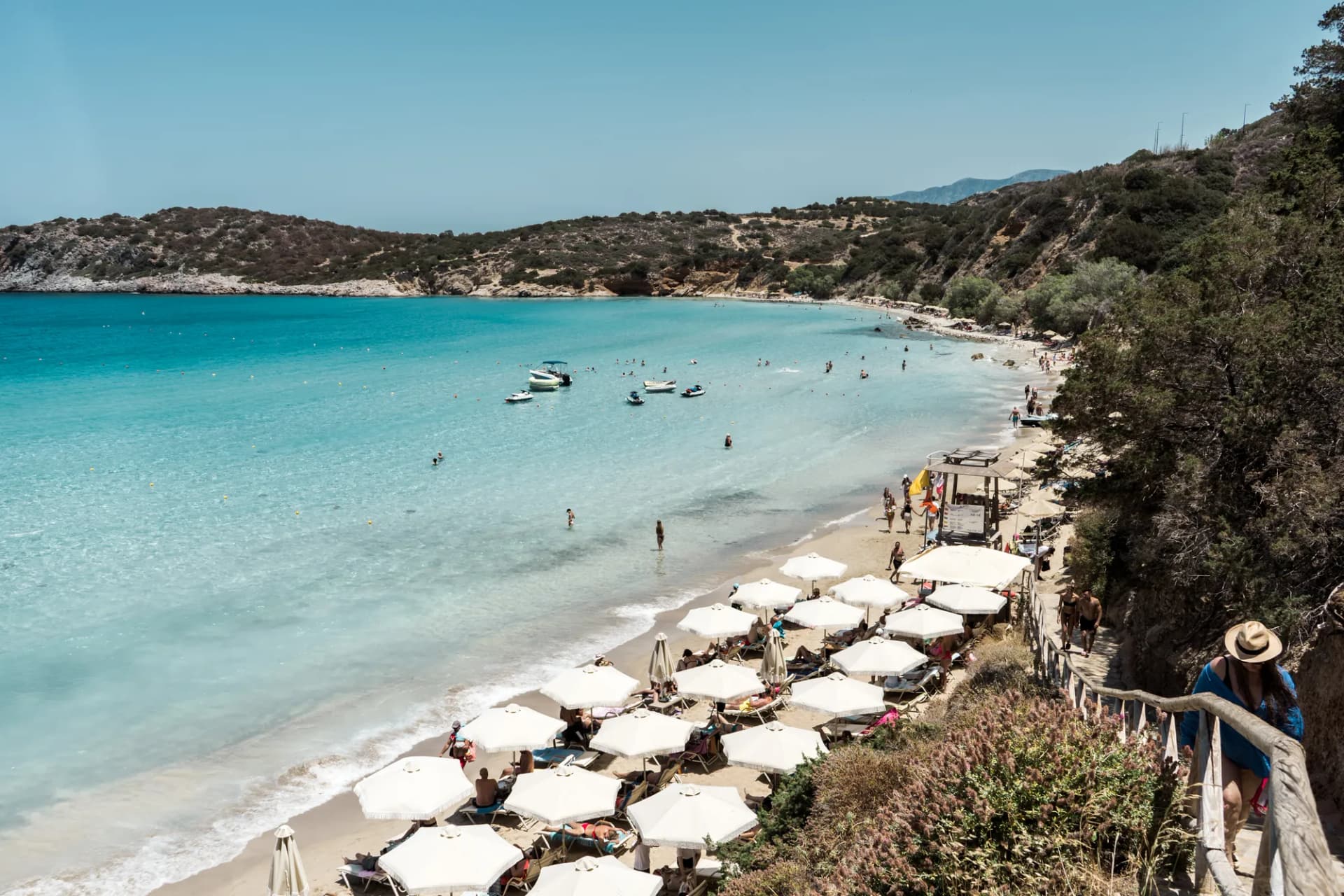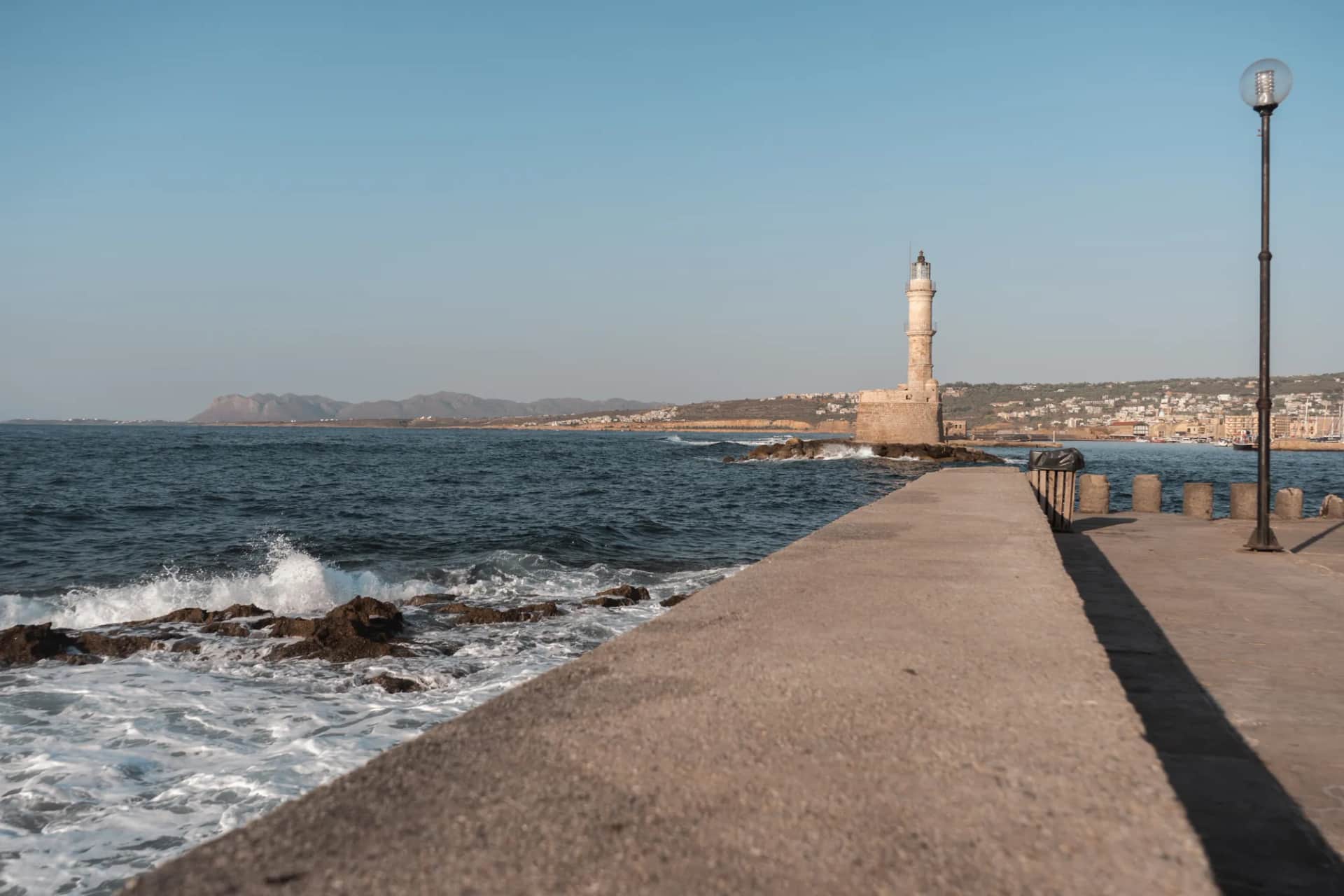

Crete is not a little Greek island you can cross in an hour. From end to end it stretches for about 260 km, and the northern road, from Kissamos to Sitia, runs to more than 300. Pick the wrong base and you will spend your holiday behind the wheel.
This guide answers a simple question: where to stay in Crete depending on the length of your trip, the season and the way you like to travel. I go through the four main regions, from west to east, with the places that make sense in each, who they suit, their limits and a rough idea of prices. I don't name any hotels here: for a selection of addresses, see instead our pick of the best seafront hotels.
One rule guides everything that follows: in Crete, you are almost always better off changing base once than making three hour round trips. And, apart from a few specific cases, a car remains the key to a successful trip.
How to choose your base in Crete
A 260 km island with one main road
Crete is about 260 km long from west to east, 60 km at its widest and barely 12 km at its narrowest. Almost all traffic uses the northern national road, the VOAK (Voreios Odikos Axonas Kritis, also numbered A90), which links Kissamos to Sitia via Chania, Rethymno, Heraklion and Agios Nikolaos. Only the stretches through Chania, Rethymno and Heraklion are proper dual carriageways; elsewhere it is a two lane road, busy in summer, with sections under roadworks.
These roadworks are the reality in 2026: the stretch between Hersonissos and Neapoli has been under reconstruction since 2024, and the Chania to Heraklion section was put out to concession in 2025 for an upgrade to motorway, due in the early 2030s. Expect diversions, speed limits and traffic jams on the way into towns.
Real driving times
The times below are route planner estimates, excluding breaks and traffic jams. In July and August, easily add 20 to 30% to any journey that goes through Heraklion.
| Route | Distance | Driving time (approx.) |
|---|---|---|
| Chania → Rethymno | 72 km | 1 hr 15 |
| Rethymno → Heraklion | 78 km | 1 hr 20 |
| Chania → Heraklion | 150 km | 2 hrs 30 |
| Heraklion → Agios Nikolaos | 65 km | 1 hr |
| Agios Nikolaos → Sitia | 62 km | 1 hr 15 |
| Heraklion → Matala | 62 km | 1 hr 10 |
| Agios Nikolaos → Ierapetra | 35 km | 35 min |
| Chania → Agios Nikolaos | 210 km | 3 hrs 30 |
| Kissamos → Sitia (the whole island) | 300 km | 5 hrs or more |
Why two bases from 10 days
With a single base in the middle, in Rethymno for example, you are more than an hour from everything that matters in the west (Balos, Elafonisi, Falassarna) and in the east (Spinalonga, Mirabello Bay). With two bases, each excursion fits into half a day. For 10 to 14 days, I therefore recommend splitting your stay between the west (Chania or Kissamos) and the east (Mirabello Bay or the hinterland), possibly with a stopover night on the south coast.
Ideally, fly into one airport and out of the other. The island has two main airports, at Chania and Heraklion, plus a small one at Sitia. Open jaw flights (arriving in Chania and leaving from Heraklion, or the other way round) save you crossing the island again on your last day. Worth knowing: the new Kastelli airport, south east of Heraklion, is due to replace the current one, with opening announced for late 2028.
Staying in the west: Chania and its region
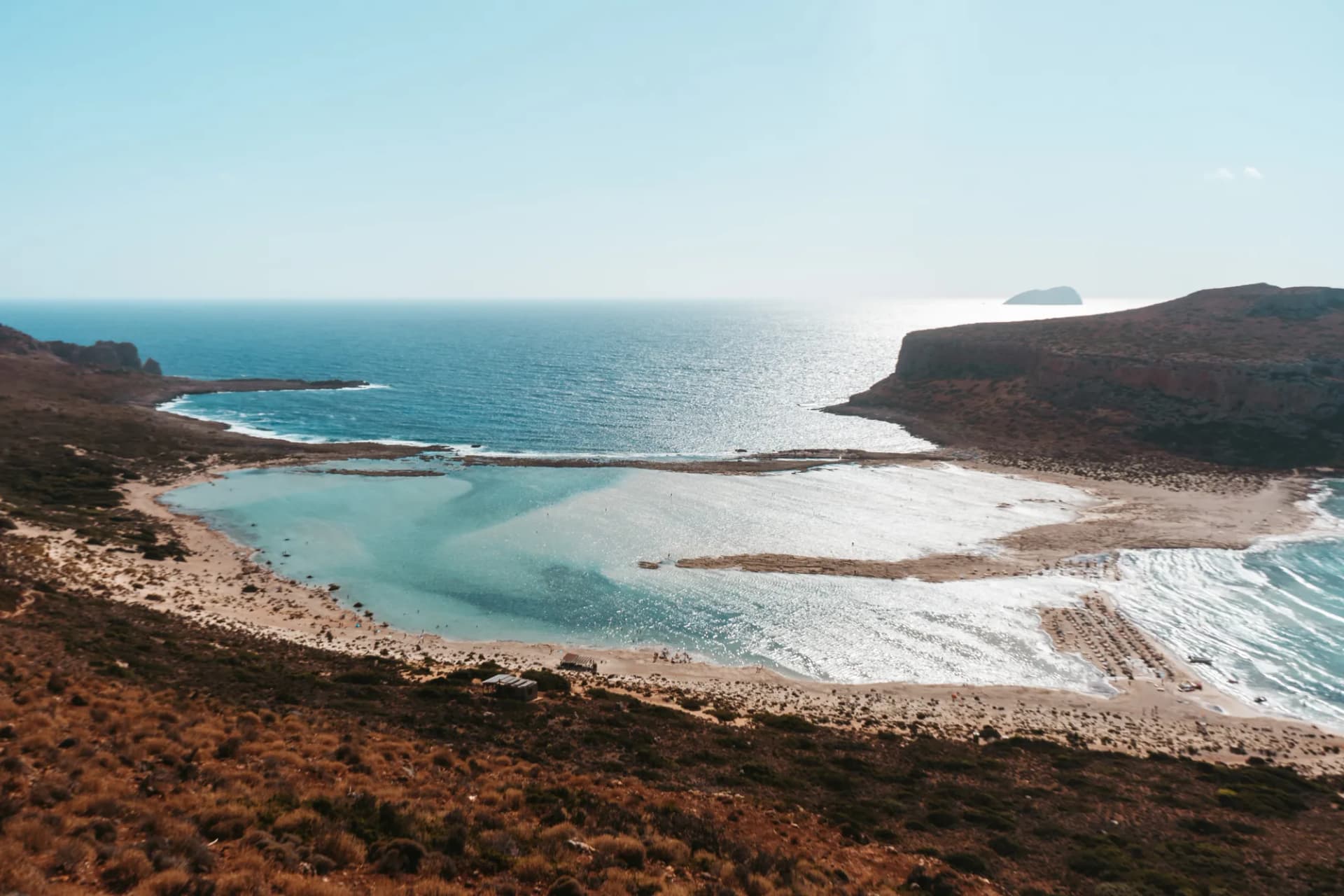
The west is the Crete of grand landscapes: Balos lagoon, Elafonisi beach, Samaria Gorge, the White Mountains. It is also the region most in demand with independent travellers. To find out all about the town, read our complete guide to Chania.
Chania old town
Who for: couples, first timers, travellers without a car for the first few days. The Venetian harbour, the lanes of Topanas and the Jewish quarter, restaurants within walking distance: it is the most enjoyable base on the island for evenings. The airport is about 16 km away.
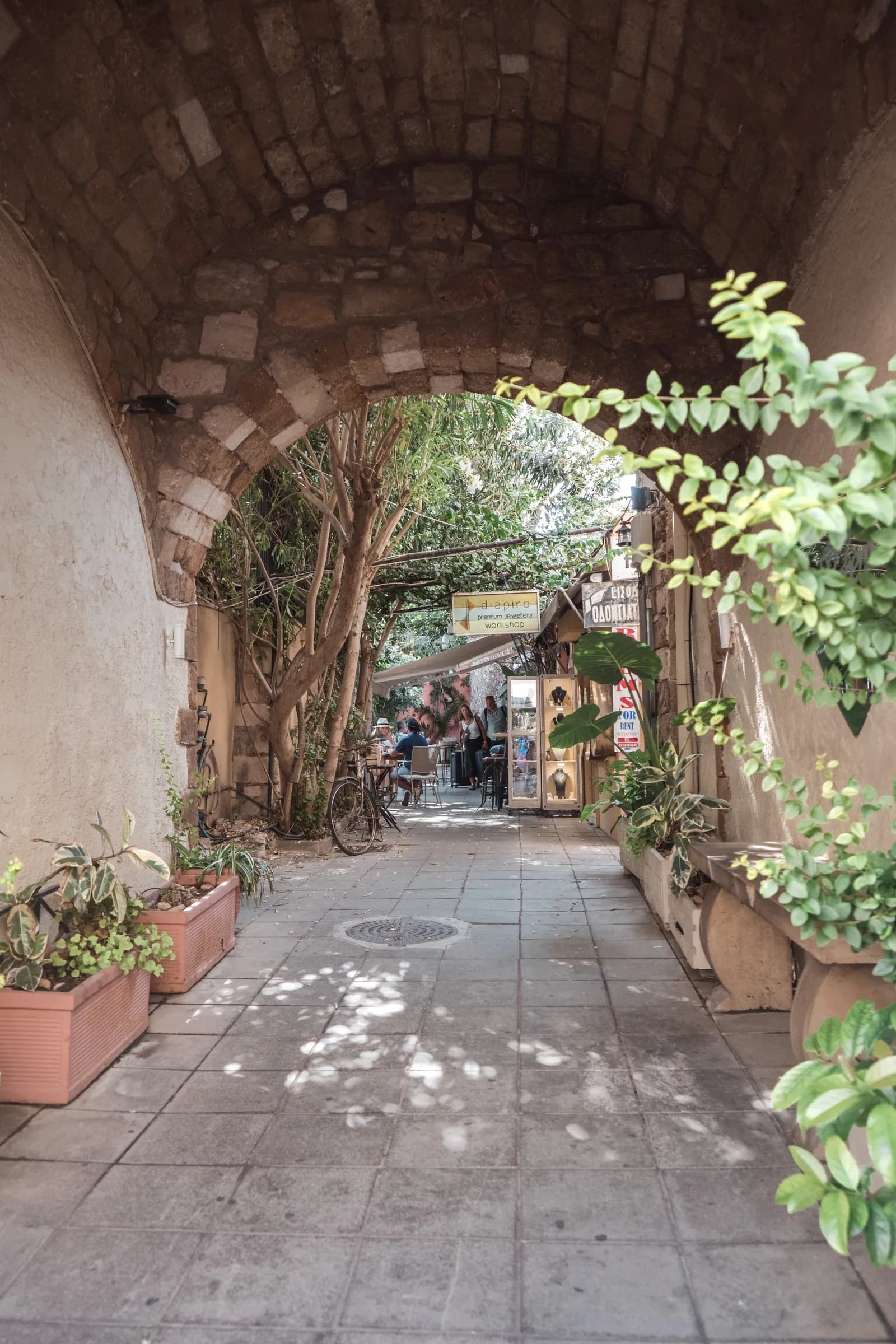
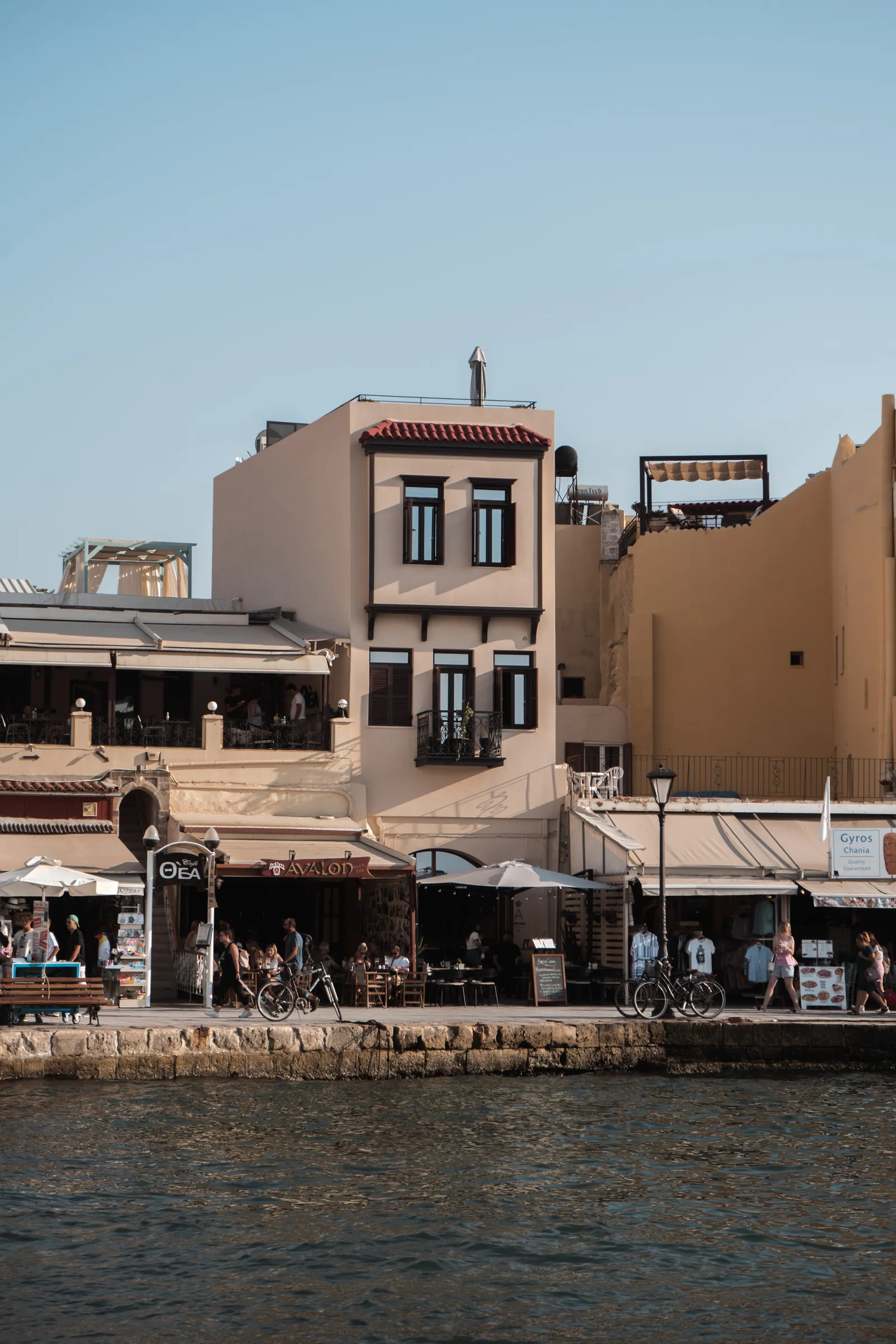
Photos : Pierre Bouyer
Limits: no beach in the old town (Nea Chora is a 15 minute walk away), difficult parking, noise from the bars around the harbour. Prices are among the highest in the west: you will often pay €120 to €250 a night in summer for a charming room in a restored Venetian house. Always ask where to park the car.
Platanias and Agia Marina
Who for: families who want the beach on the hotel's doorstep and Chania 15 minutes away. This coastal strip, west of the town, is lined with hotels, apartments, tavernas and supermarkets along a long sandy beach.
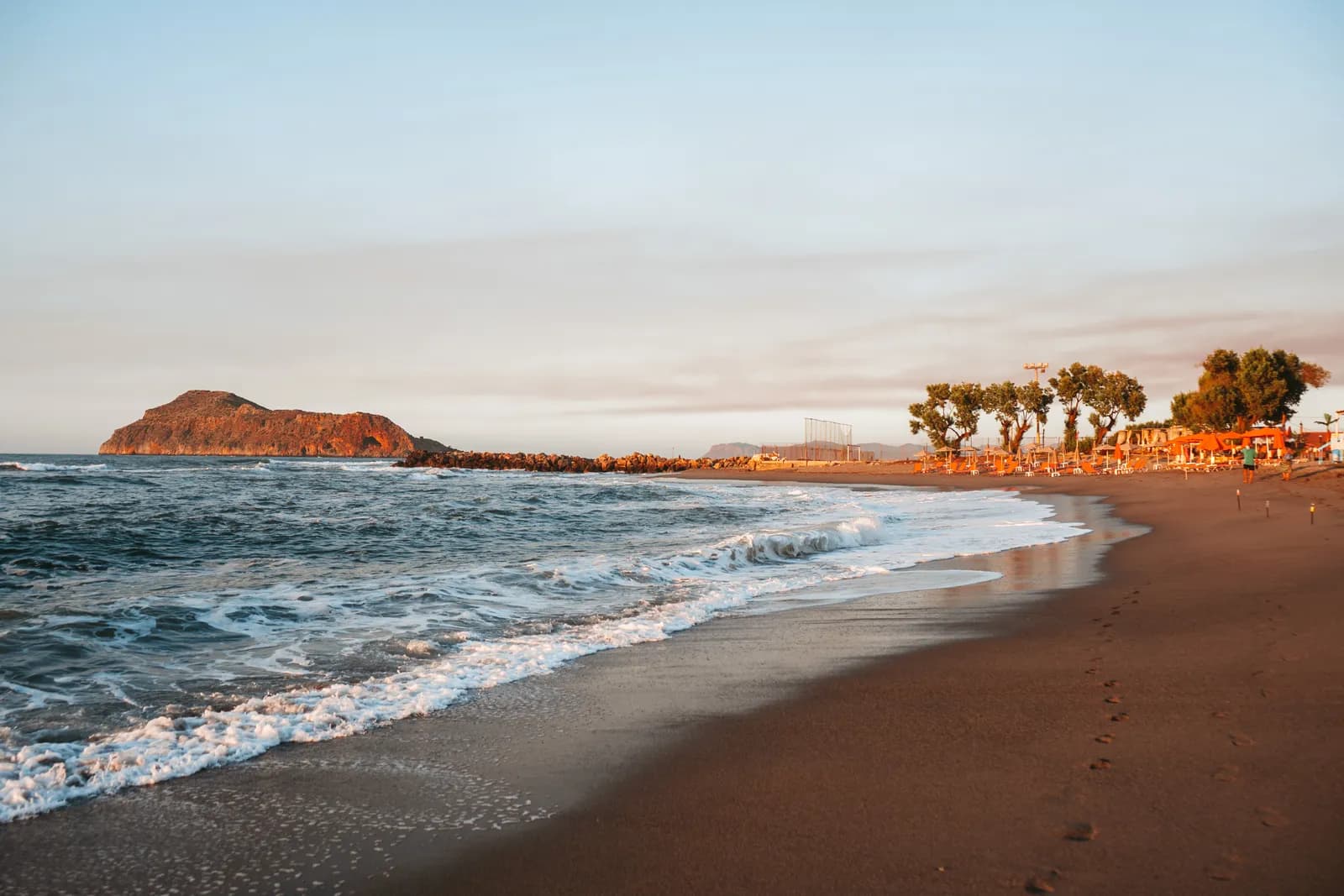
Limits: it is a resort without much character, heavily built up, and lively in the evenings in Platanias.
Kissamos
Who for: those who want to see Balos, Gramvousa and Falassarna without a 1 hr 30 drive every morning. A real small town, the port where the boats to Balos leave from, and gentler prices than Chania. It is all covered in our guide to Kissamos.
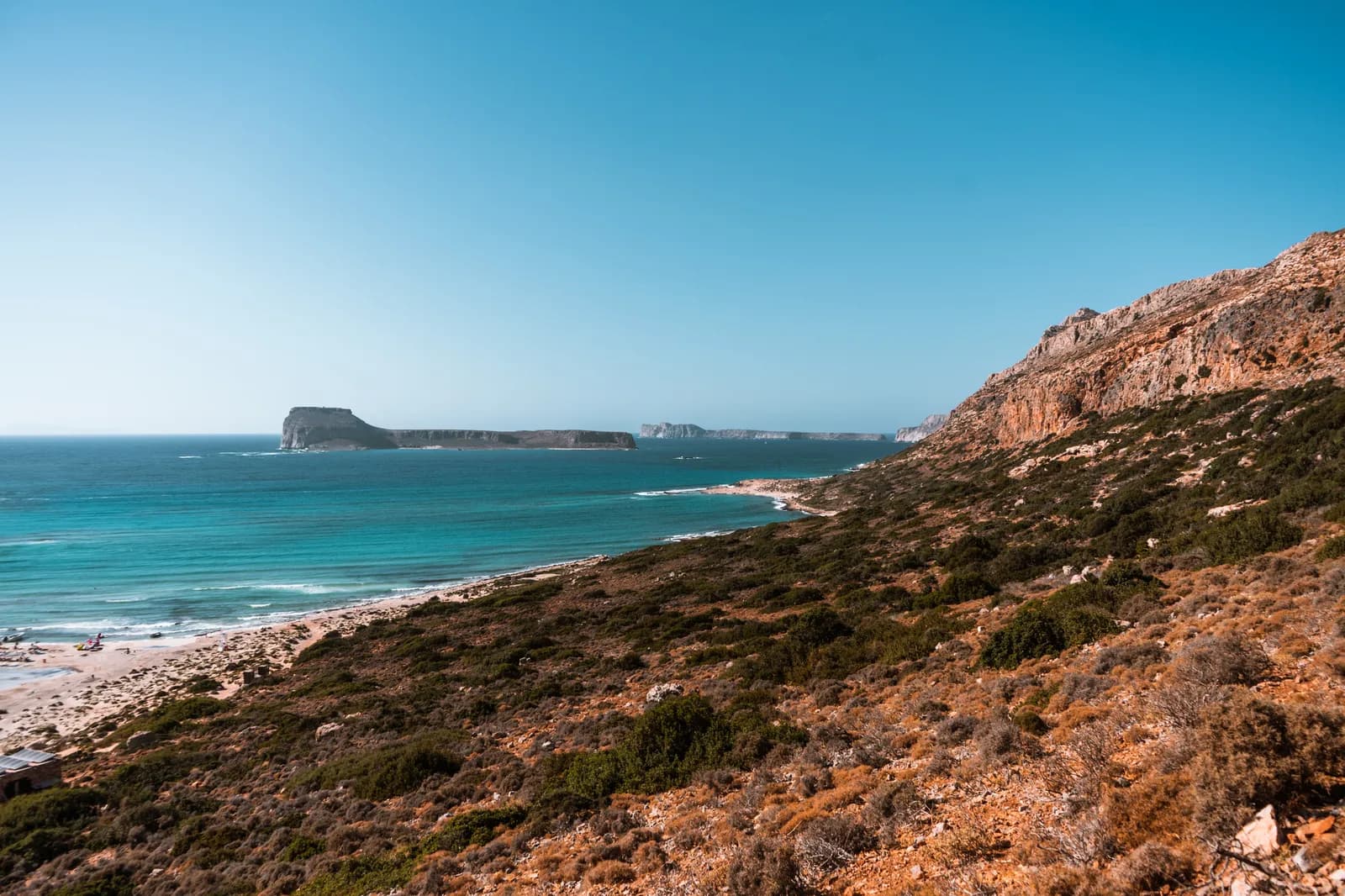
Limits: little nightlife, a town beach that is fine but nothing more, and Elafonisi is still about an hour's drive away.
Paleochora
Who for: travellers who love small southern towns, a slow pace and coastal walks. Paleochora, home to about 2,200 people, sits on a peninsula on the Libyan Sea, about 70 km south of Chania (1 hr 15). It has a sandy beach on one side, a pebble beach on the other, and boats to Sougia, Agia Roumeli, Loutro and Gavdos.
Limits: the road from the north is winding, and it is an out of the way base for the rest of the island. Perfect for three or four nights, not for a whole trip if you want to see a lot.
Sfakia and Loutro
Who for: those who want to get away from it all. Chora Sfakion is about 1 hr 40 from Chania via the mountain road. From there, a boat takes a quarter of an hour to reach the village of Loutro, which you cannot reach by car or bus: white and blue houses, crystal clear water, coastal paths.
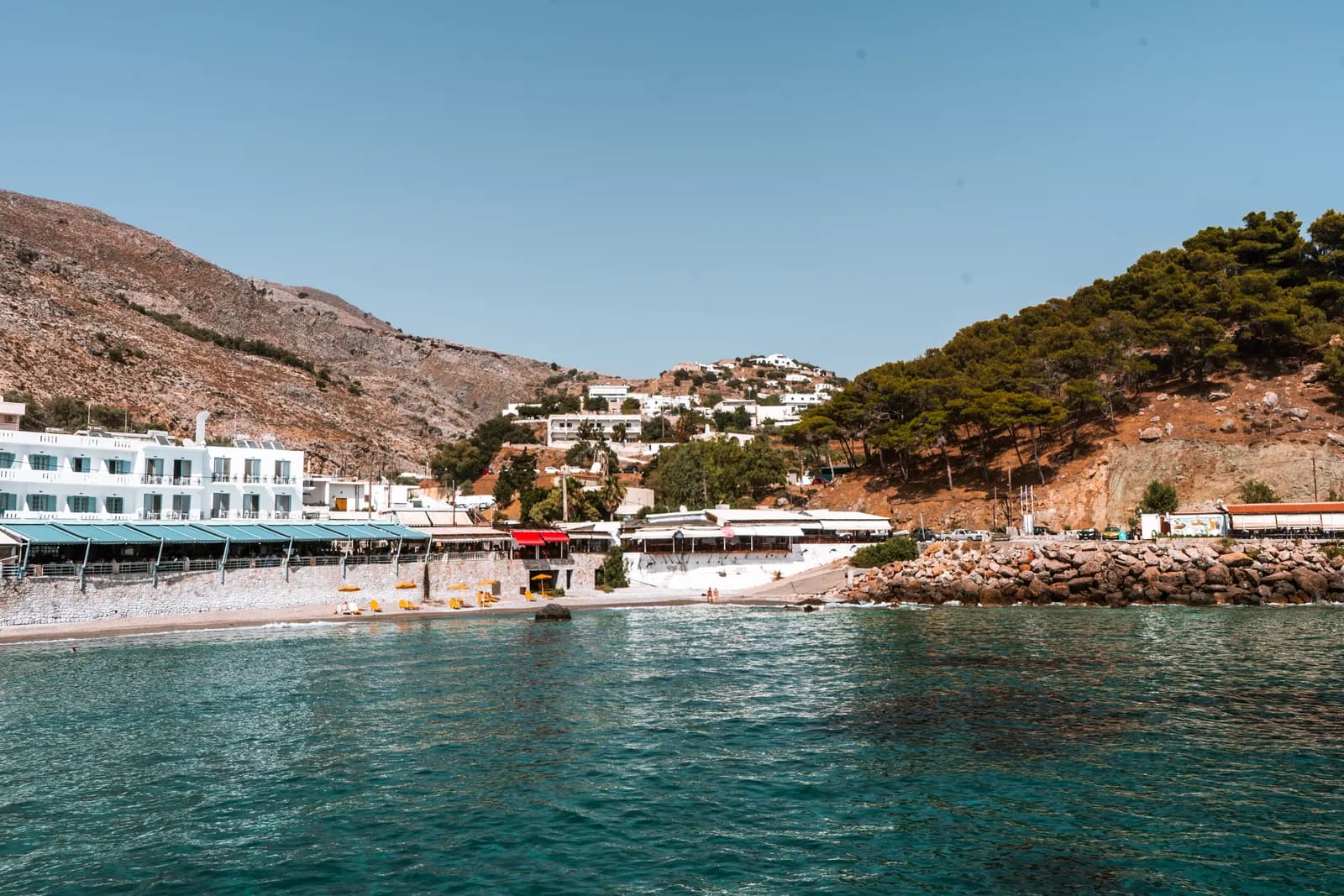
Limits: no cars in Loutro, so no excursions other than on foot or by boat. Connections are frequent from June to September, much rarer out of season. Accommodation is mostly rooms and small family run hotels, often full in August: book early.
Staying in the Rethymno region
Rethymno is the region in the middle. It is the compromise if you want a single base for a week and don't mind driving a little in both directions.
Rethymno old town
Who for: lovers of human scale towns. The Venetian and Ottoman old town, overlooked by the Fortezza, is easy to explore on foot, and a long sandy beach runs right alongside the centre. It is often a little cheaper than Chania for a similar atmosphere.
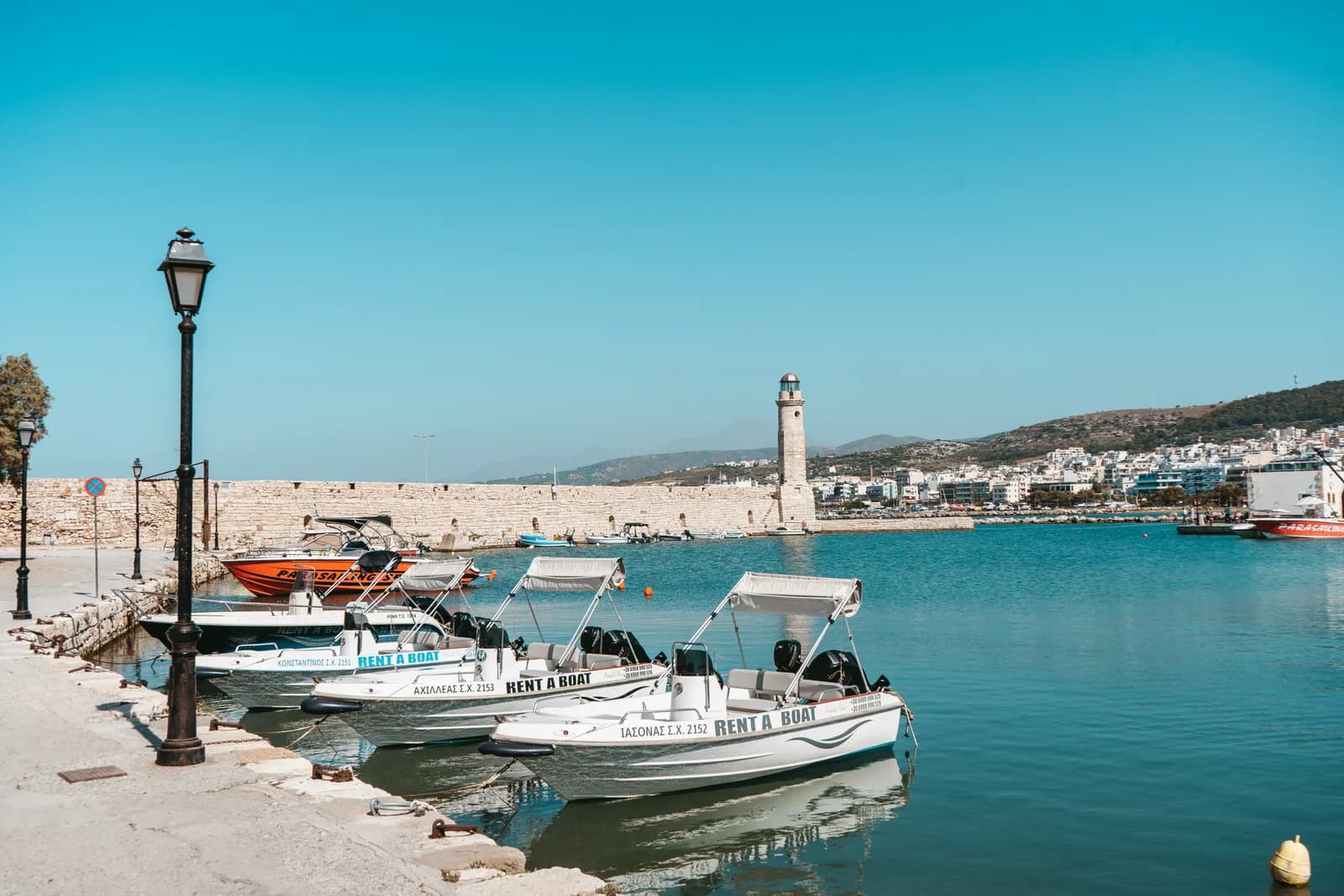
Limits: the town beach is lined with hotels east of the centre, and you are more than an hour from both the wild west and Knossos.
Bali
Who for: families and couples who want small coves and a hillside village, halfway between Rethymno (about 30 min) and Heraklion airport (about 50 min). See our article on the village of Bali.
Limits: the village is built on a slope (steep streets) and very busy in summer for its size. Good for a beach week, less so for exploring the whole island.
Plakias
Who for: hikers and lovers of southern beaches. About 45 minutes south of Rethymno, Plakias is a quiet little resort with a big beach, close to the beaches of Damnoni and Preveli.
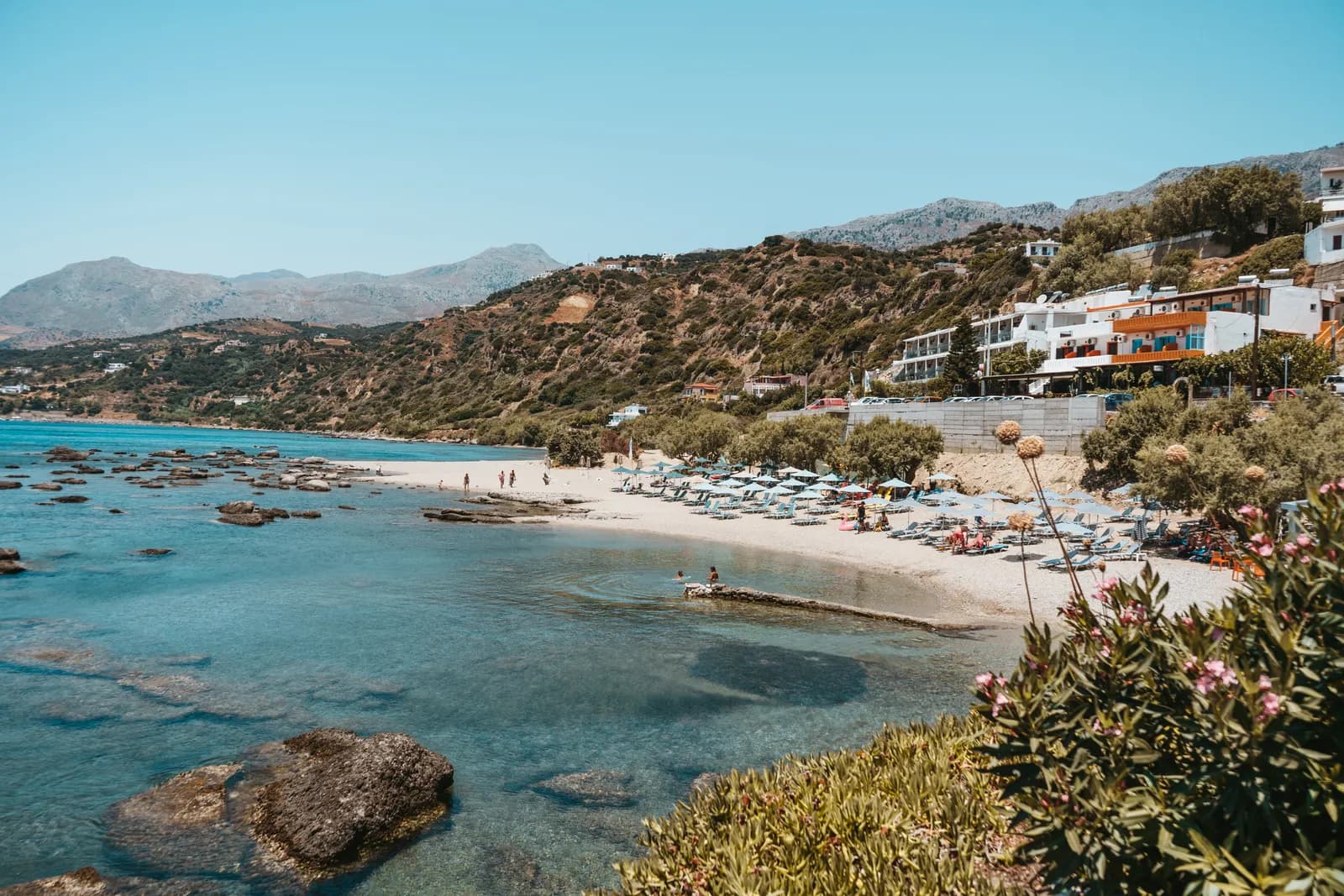
Limits: the wind can blow hard here, and the nightlife amounts to a few bars. Out of season, many places close.
Agia Galini
Who for: those who want a lively but human scale southern harbour, terraced above the water, and a base for visiting Phaistos and Matala. Allow about an hour from Rethymno.
Limits: the village beach is small, and the houses are stacked up a slope: lots of steps.
Staying in the Heraklion region
Heraklion is the gateway for most flights. It is also the most built up region on the north coast, so you need to choose carefully.
Heraklion city
Who for: short, culture focused trips (Knossos is about twenty minutes away, the archaeological museum is in the city centre), or a first and last night before a flight. A lively city, good restaurants, prices often more reasonable than in the resorts. Our guide to Heraklion covers the neighbourhoods in detail.
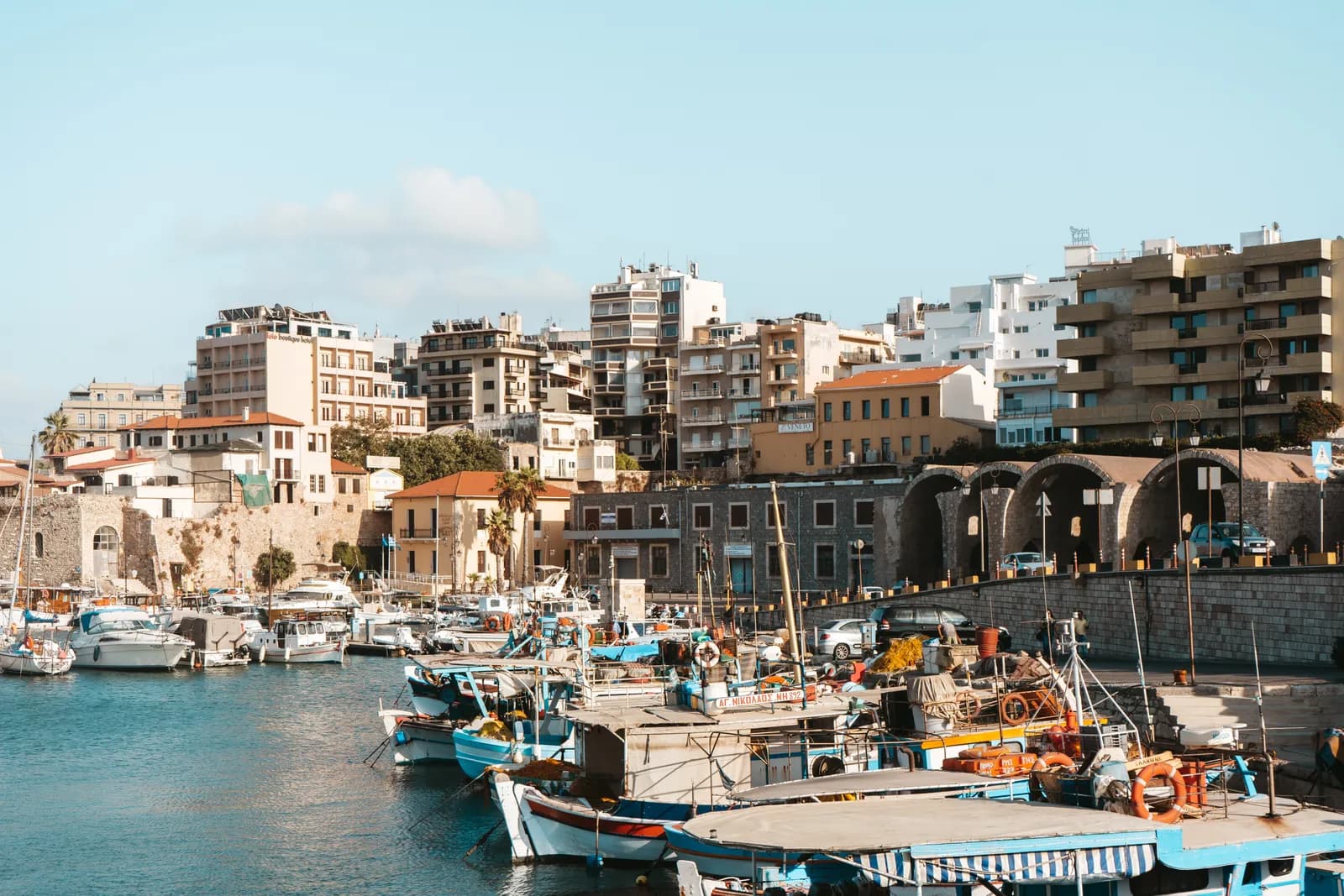
Limits: it is a real city of more than 170,000 people, with traffic, noise and little seaside charm. Few travellers spend more than two or three nights there.
Hersonissos and Malia: party resorts
Let's be frank: Hersonissos and especially Malia are seaside resorts built for mass tourism and partying. Since the late 1980s, Malia has been the island's main “party” destination, hugely popular with British 18 to 30 year olds, with bars and clubs open until morning along the beach road. Hersonissos is a little more mixed, but its main street is still all pubs and nightclubs.
Who for: groups of friends out to party, families on all inclusive deals in the big seafront complexes, travellers who want to be 25 to 30 minutes from the airport. Who not for: those looking for peace and authenticity. If you stay in the area, the hill villages of Koutouloufari and Piskopiano, above Hersonissos, or Malia's old village are quieter than the seafront. The Minoan palace of Malia, east of the resort, is well worth a visit.
Matala, in the south
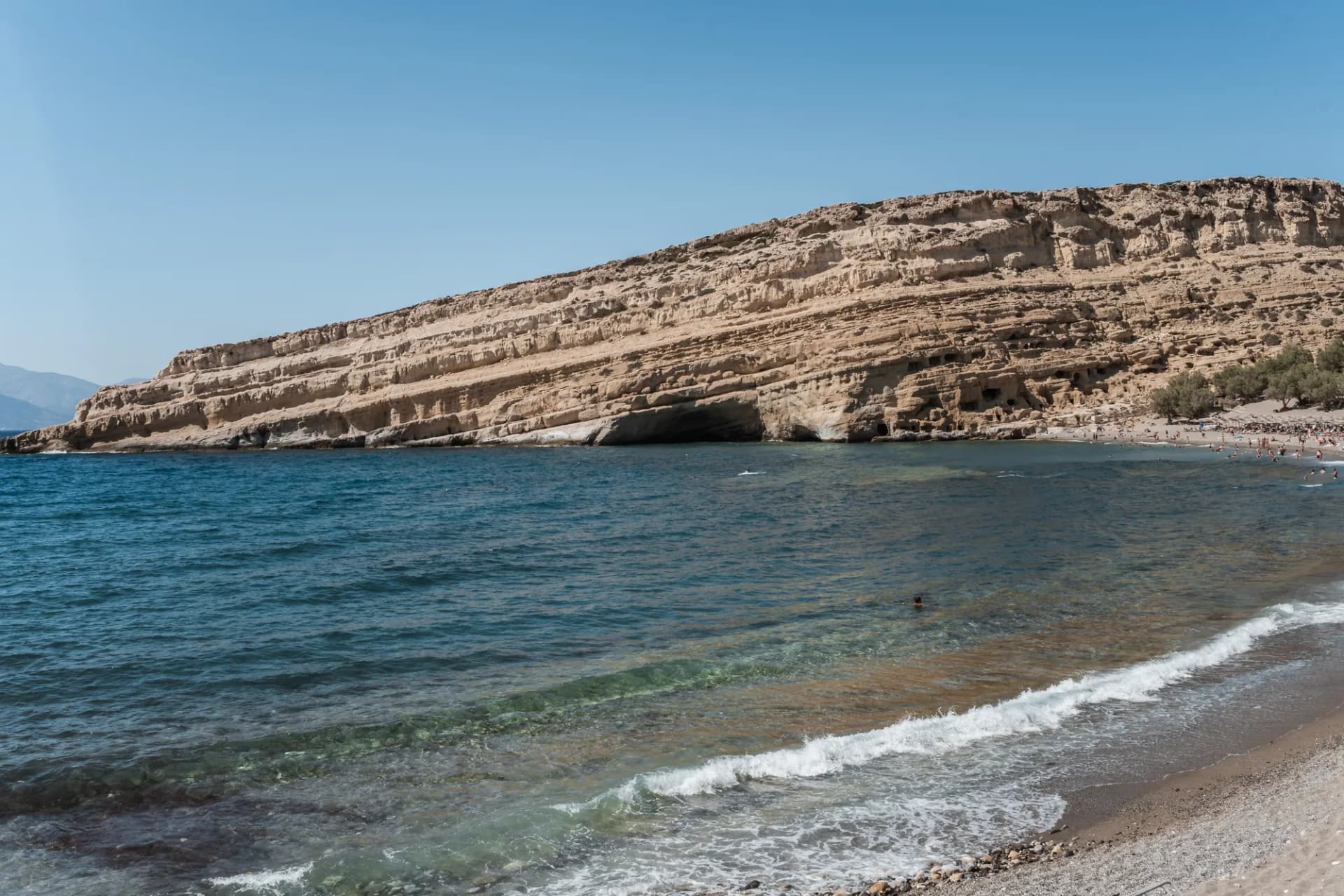
Who for: free spirits and history lovers. Once the port of Phaistos, about 60 km south west of Heraklion (1 hr 10 by road), Matala is famous for its caves carved into the cliff, occupied by hippies in the 1960s. A three day festival has celebrated this heritage every June since 2011.
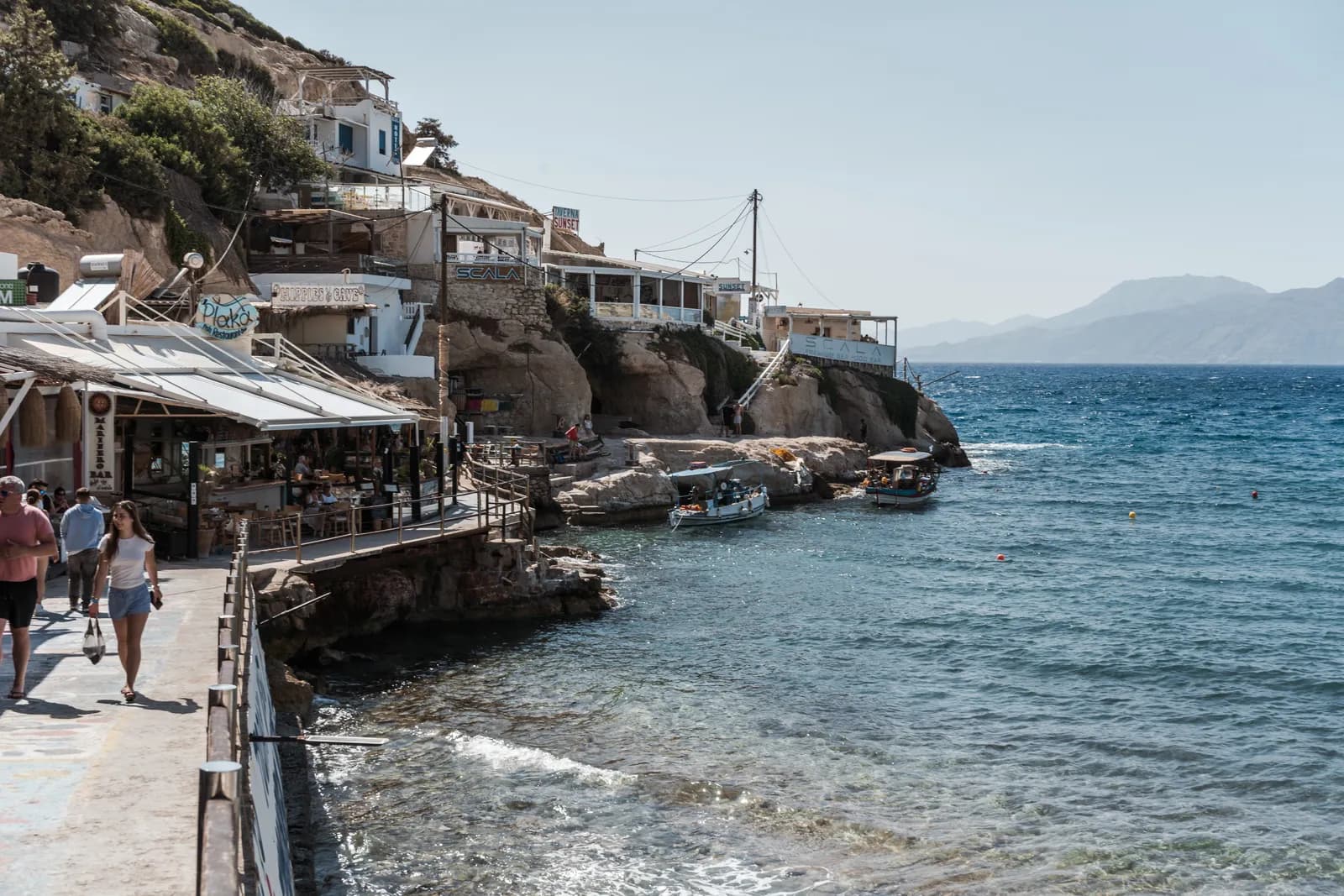
Limits: a small village crowded with day trippers, and a beach that fills up fast in summer. A lovely base for two or three nights on the south coast, with Phaistos and Kommos beach nearby.
Staying in the east: Lassithi and Mirabello Bay
The east is quieter and less visited than the west, apart from Elounda in summer. Here you will find Spinalonga, Mirabello Bay, the Lassithi Plateau and, further on, the beaches of Vai and Xerokampos. To choose your base, read our guides to Agios Nikolaos, Elounda, Plaka, Fourni, Ierapetra and Sitia, Vai and Toplou.
Agios Nikolaos
Who for: those who want a lively little town by the water, set around its lake linked to the sea, with restaurants, small town beaches and every amenity. Allow about an hour from Heraklion airport. It is a central base for Spinalonga, Kritsa, Lato and the Lassithi Plateau.
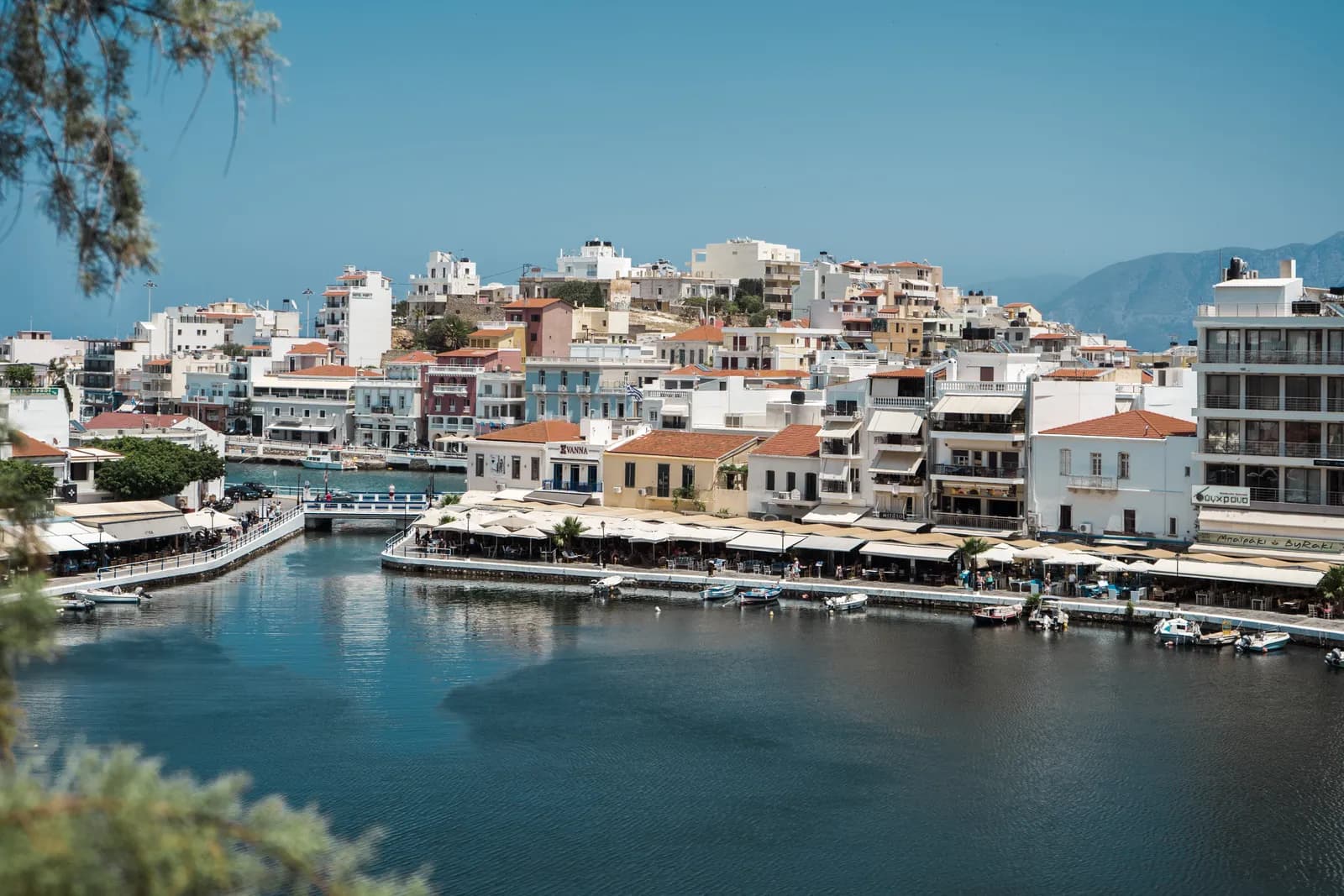
Limits: modest town beaches and heavy traffic in the centre in summer.
Elounda
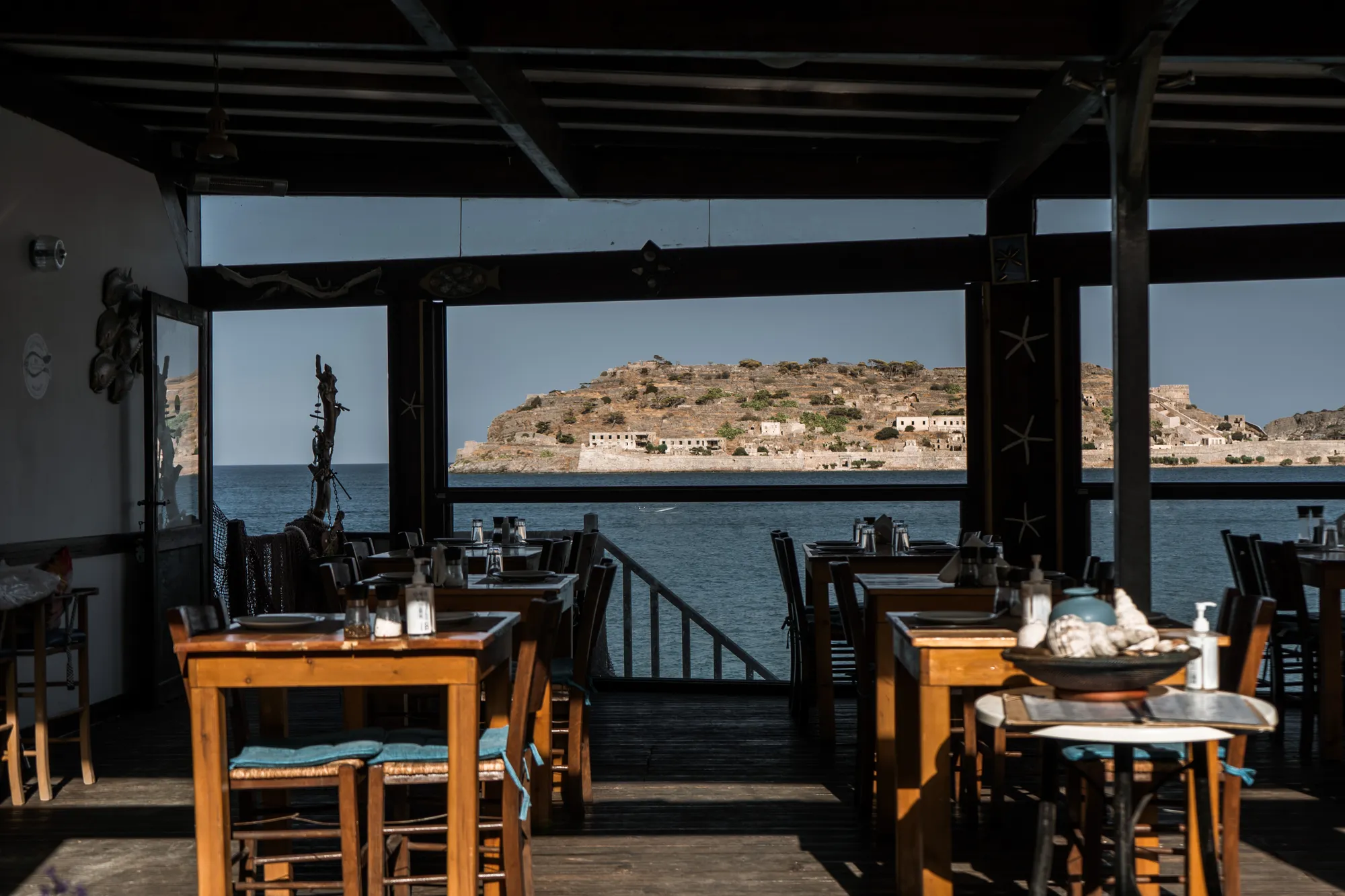
Who for: travellers looking for comfort and calm sea. Elounda is home to several of the most upmarket resorts on the island, but also simpler apartments and hotels around the harbour. The boat to Spinalonga leaves from here (about 20 minutes, about €14 return).
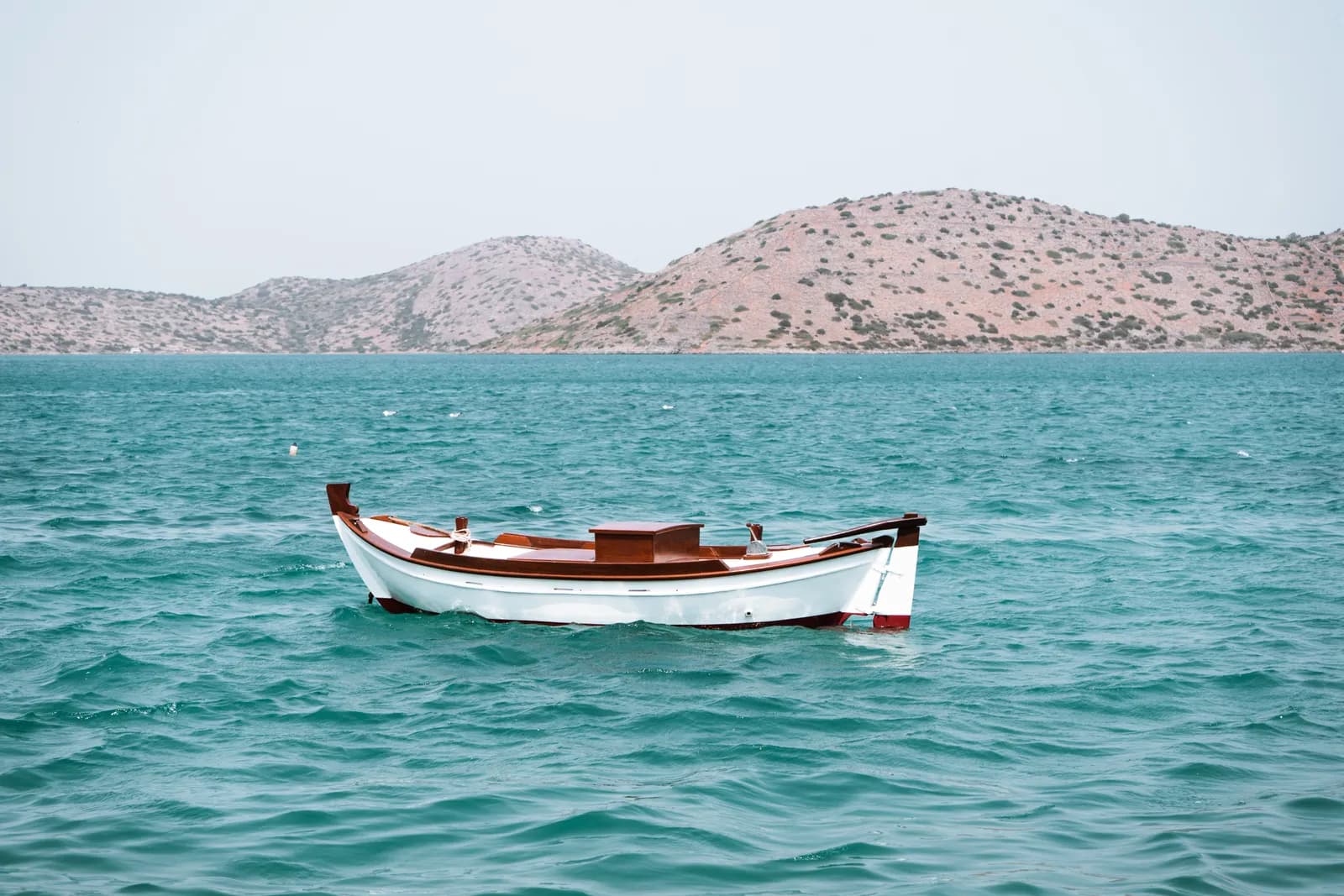
Limits: prices climb fast: the big resorts commonly charge several hundred euros a night in summer. Few long sandy beaches, mostly coves and bathing platforms.
Plaka
Who for: those who want peace by the water, facing Spinalonga, about 10 minutes away by boat (about €12 return). A small village of tavernas on a pebble beach, a few kilometres north of Elounda.
Limits: few services on site and limited accommodation: you need to book early.
Hinterland villages, such as Fourni
Who for: travellers who prefer a lived in village to a resort. Fourni, a listed village of 197 inhabitants at 320 m above sea level, is about 11 km from Elounda and 17 km from Agios Nikolaos by road. You gain peace, cooler evenings and generally gentler prices than on the coast, in exchange for a 15 to 20 minute drive to the beach.
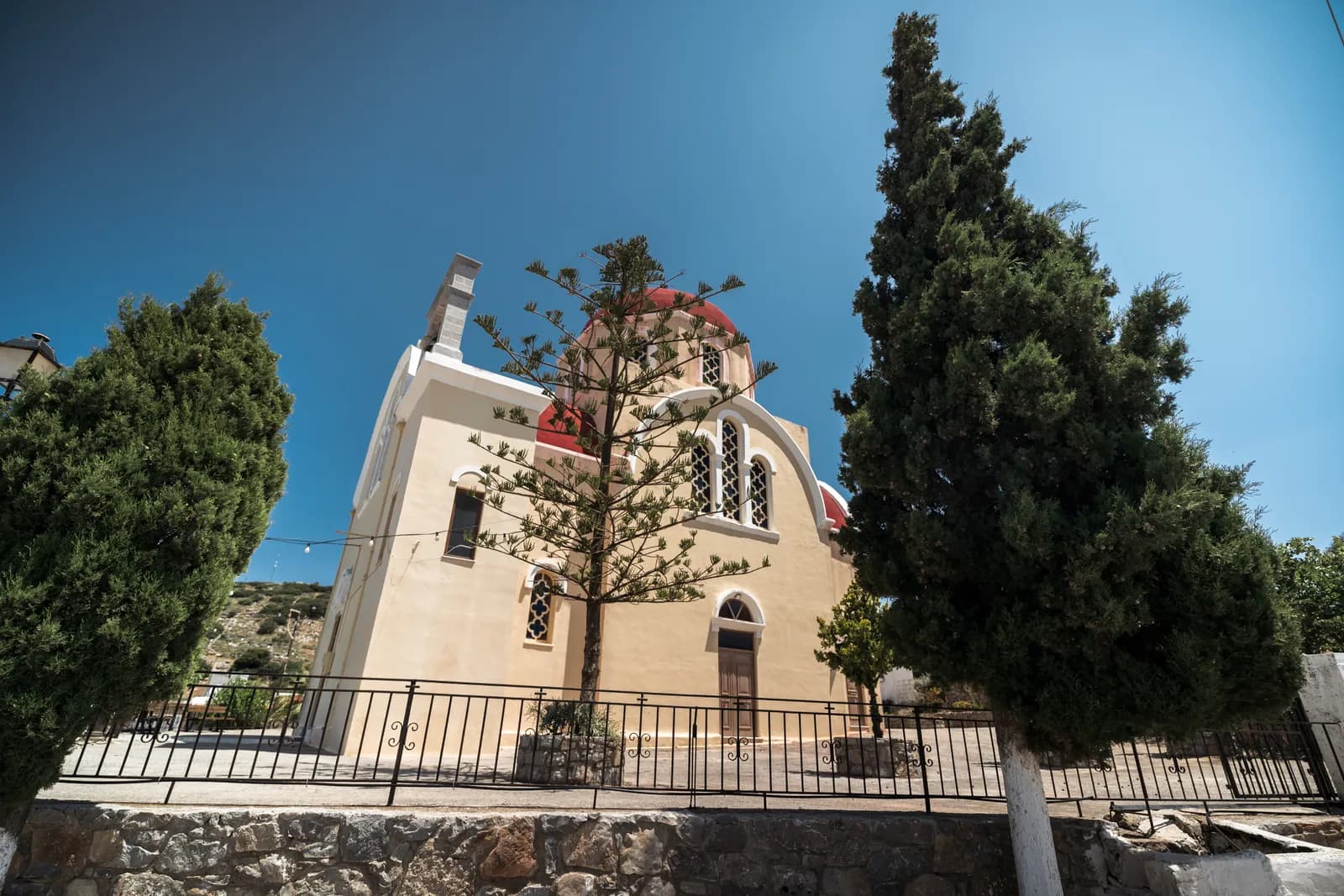
In full transparency: I rent out a house in this village myself, Ntoukiani, the old kafeneio (village café). That doesn't change my advice: the hinterland only suits those who have a car and don't need evening entertainment.
Sitia, Ierapetra and Makrygialos
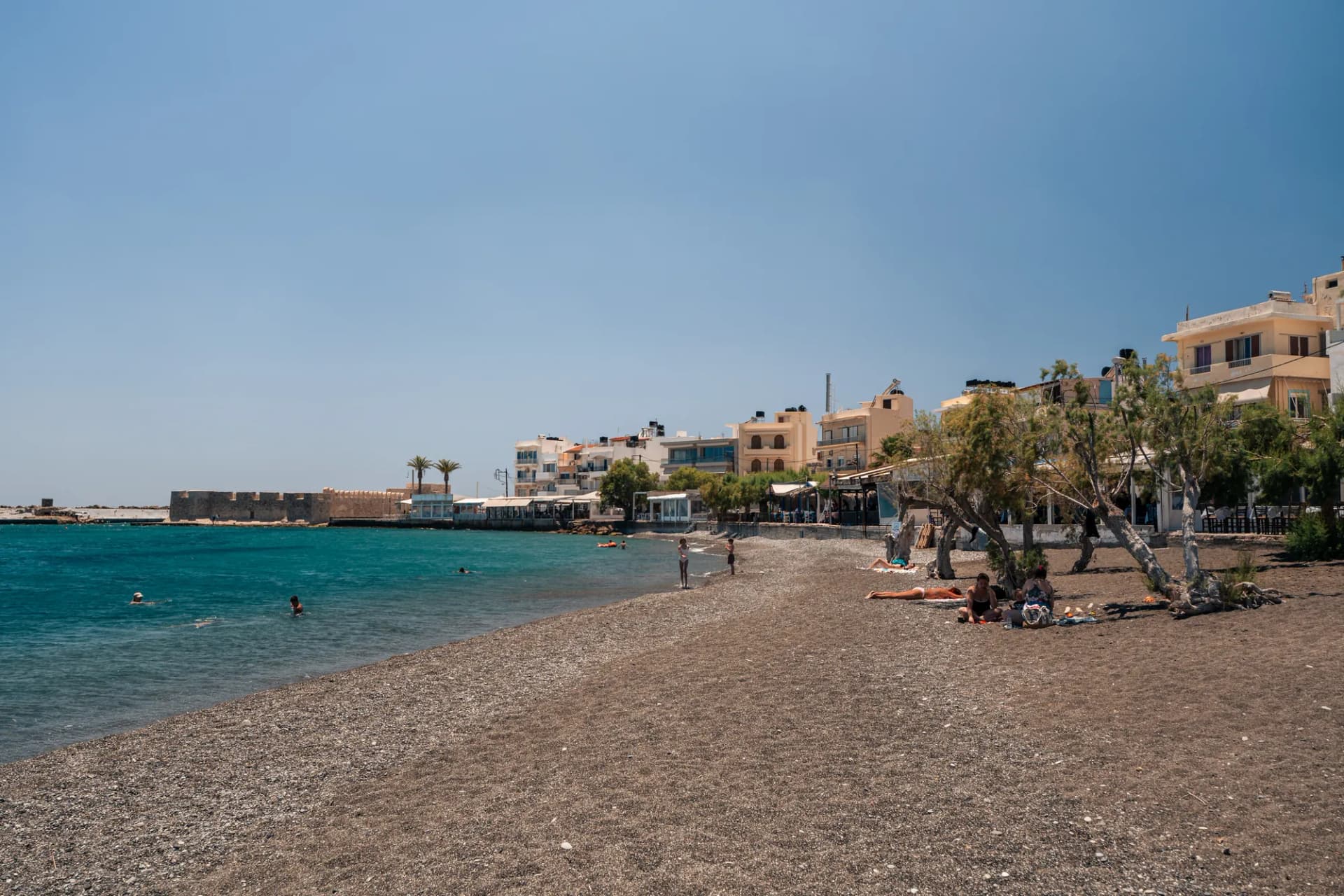
Sitia (about 1 hr 15 from Agios Nikolaos) is a quiet port town, a base for Vai beach, Toplou Monastery and the far east. Few tourists, reasonable prices, a small airport. Ierapetra, on the south coast about 35 minutes from Agios Nikolaos, is the southernmost town on the island and the departure point for boats to Chrissi (where landing has been banned since 2025: you swim from the boat). Makrygialos, about 30 minutes east of Ierapetra, has a shallow sandy beach popular with families.
Limits: these bases are far from the rest of the island. They suit a second trip to Crete, or the last leg of a road trip, more than a first discovery.
Summary table: which region for whom
The budgets shown are rough figures for a double room in July and August, to be checked when you book. They often drop by 30 to 50% in May, June, late September and October.
| Region | Who for | Atmosphere | High season budget |
|---|---|---|---|
| Chania | Couples, first timers, no car at first | Old town, harbour, restaurants | €120 to €250 |
| Platanias, Agia Marina | Families | Practical beach resort | €80 to €180 |
| Kissamos | Balos and Falassarna trips | Simple small town | €60 to €120 |
| Paleochora, Loutro | Walkers, slow travellers | South coast, quiet | €60 to €130 |
| Rethymno, Bali | Single base for a week | Old town or small coves | €80 to €180 |
| Plakias, Agia Galini | South coast, hiking | Quiet little resorts | €60 to €120 |
| Heraklion city | Culture, night before a flight | Big city | €70 to €150 |
| Hersonissos, Malia | Partying, all inclusive | Party resorts | €60 to €200 |
| Elounda, Plaka | Comfort, calm sea, Spinalonga | Seafront, resorts | €100 to more than €500 |
| Lassithi hinterland | Peace and quiet, travellers with a car | Lived in village | €70 to €150 |
| Sitia, Ierapetra, Makrygialos | Second trip, far east and south | Quiet towns and beaches | €60 to €130 |
Towns or villages: which to choose
The towns (Chania, Rethymno, Heraklion, Agios Nikolaos) offer restaurants, evening life and everything within walking distance, at the cost of noise, tricky parking and higher prices.
Seaside villages (Plaka, Paleochora, Plakias) are a good compromise: the beach, a few tavernas, a slow pace. Inland villages are quieter still, often cheaper and cooler at night in summer, but you need a car for almost everything. I often recommend mixing the two: a few nights in town at the start, then a village.
Hotel or holiday rental: the differences to know
A hotel suits short stays, families who want a pool and breakfast, and those who don't want to organise anything. All inclusive is mainly found around Hersonissos and Malia and in some resorts in the east. A rental (apartment, village house, villa) is better suited to stays of a week or more, to families and to groups: a kitchen, space, often a terrace.
One budget item to plan for: the climate resilience tax, paid on site for each night. From April to October, it is €2 per night in a 1 or 2 star hotel or a furnished room, €5 in a 3 star, €10 in a 4 star, €15 in a 5 star, and €8 per night for a short term rental (€15 for a detached house of more than 80 m²). From November to March, it drops to between €0.50 and €4.
When to book your accommodation
For July and August, and for small places with limited accommodation (Loutro, Plaka, Chania old town), book several months ahead: the best addresses go as early as winter. For May, June, September and October, two or three months is usually enough, and prices are noticeably gentler.
From November to March, many resort hotels close; the towns and lived in villages stay open. To choose your dates, read our guide on when to go to Crete. Go for refundable rates.
The car question
Without a car, three options work: an old town (Chania, Rethymno) with the KTEL buses and organised excursions, Heraklion for a short cultural break, or Loutro, where you get around on foot and by boat. Everywhere else, a car is the key to your freedom: buses link the northern towns well, but the villages and beaches poorly.
If you change base, keep the same car and drop it off at the other airport if the one way fees are reasonable. Practical advice (insurance, excess, road conditions) is in our guide to renting a car in Crete.
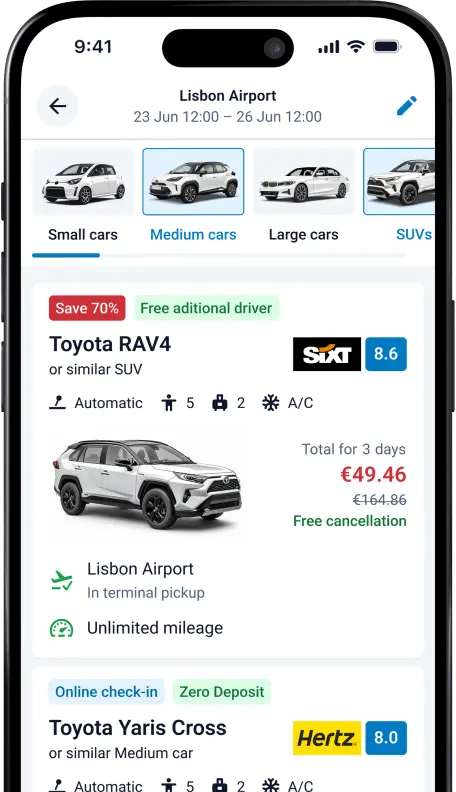
DiscoverCars
Car rental comparison in 150+ countries
Compare prices from Hertz, Avis, Sixt and local providers. All fees included, free cancellation. Rated 4.6/5 on Trustpilot.

Frequently asked questions
For a week, choose a single base close to your airport: Chania or Rethymno in the west, Agios Nikolaos, Elounda or Plaka in the east. Beyond 10 days, combine two bases, one in the west and one in the east, to avoid drives of more than two hours.
Rethymno is the best geographical compromise, about 1 hr 15 from Chania and 1 hr 20 from Heraklion. It is still more than an hour from the major sights of both the west and the east, though: a single base really suits trips of a week or less.
Not necessarily, but you need to know what you are choosing: they are heavily built up party resorts, popular with young people and all inclusive packages. If you want peace and quiet, go for the hill villages above Hersonissos or another region altogether.
Yes, in the old town of Chania or Rethymno, in Heraklion for a short cultural break, or in Loutro, which you can only reach by boat or on foot. Elsewhere, buses serve the villages and beaches poorly, and a car becomes essential.
The climate resilience tax applies throughout Greece. From April to October, it ranges from €2 per night (1 or 2 star hotel, furnished room) to €15 (5 star), and reaches €8 for a short term rental. It is much lower from November to March.
In short: where to stay for your trip
For a first one week trip, I recommend Chania or Rethymno if you arrive in the west, and Mirabello Bay if you land in Heraklion. Beyond ten days, combine a base in the west with one in the east, plus one or two nights in the south if you have time. Save Hersonissos and Malia for partying, and the hinterland for peace and quiet.
To go further, our complete guide to Crete offers itineraries and road trips, and our Crete page brings together all our articles on the island.
Sources and fact-checkingInformation checked on 7 October 2026 · 11 sources consulted
- Wikipedia (anglais) : Crete (dimensions, aéroports, autoroute A90)
- Wikipedia (anglais) : A90 motorway (Greece), VOAK (longueur, travaux Hersonissos-Neapoli, concession La Canée-Héraklion 2025)
- OSRM / OpenStreetMap : calculs d'itinéraires routiers (distances et temps de route)
- Greek City Times : montants de la taxe de résilience climatique (depuis le 1er janvier 2025)
- Crete.direct : aéroport de Kastelli, ouverture prévue en 2028
- Wikipedia (anglais) : Palaiochora (population 2021, distance, liaisons maritimes)
- Ferryscanner : liaison Chora Sfakion-Loutro (durée, fréquences, opérateur ANENDYK)
- Wikipedia (anglais) : Malia, Crete (station festive)
- Discover Greece : Hersonissos et Malia
- Wikipedia (anglais) : Matala, Crete (grottes, hippies, festival depuis 2011)
- Wikipedia (grec) : Φουρνή Λασιθίου (population 2021, altitude)
Âme Bohème exists thanks to you
Some links in this article are affiliate links. This means that if you book or purchase a product through these links, we receive a small commission, at no extra cost to you. It's thanks to this support that we can continue creating free, quality content.
You can also buy us a coffee, or follow us on Instagram and Facebook.