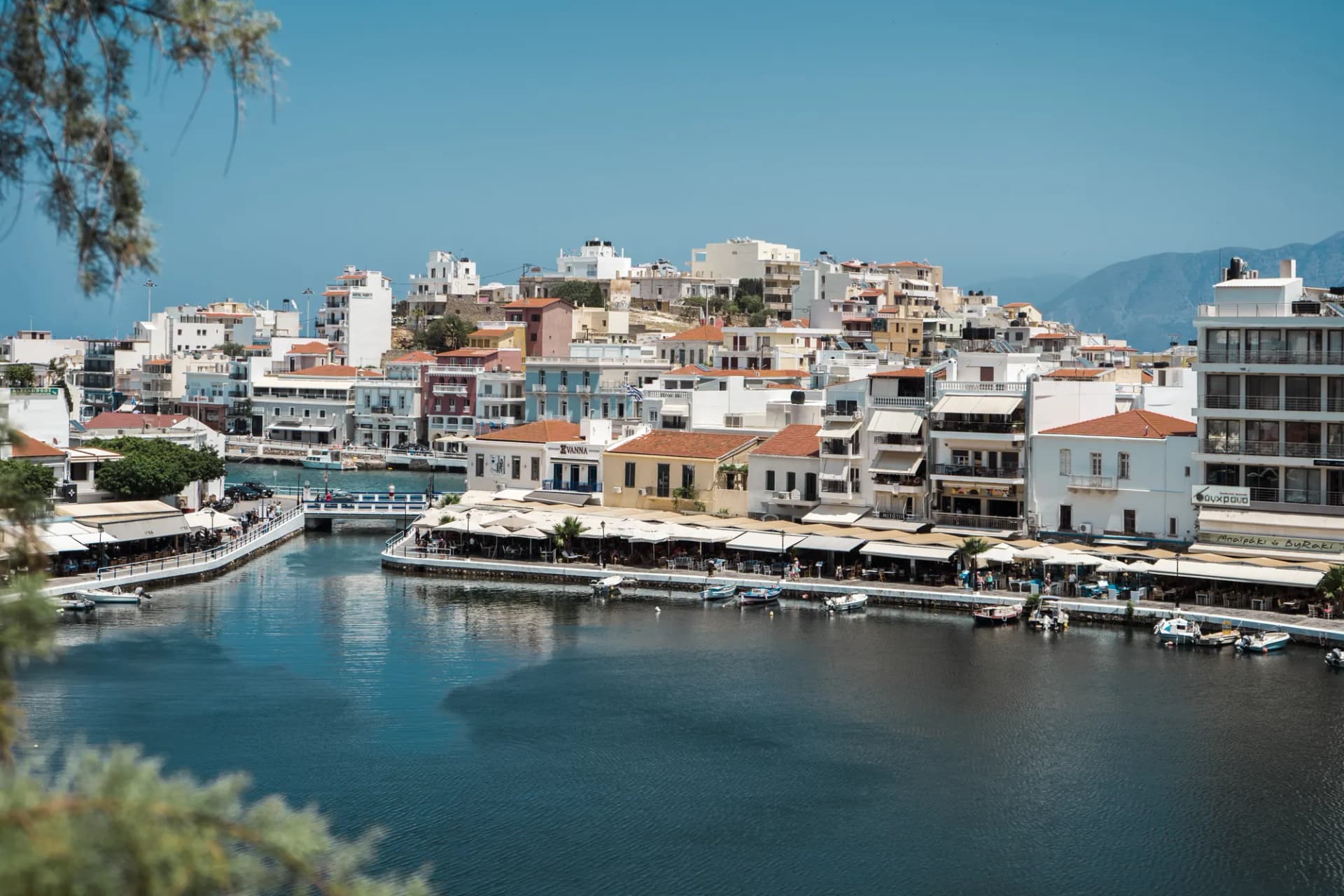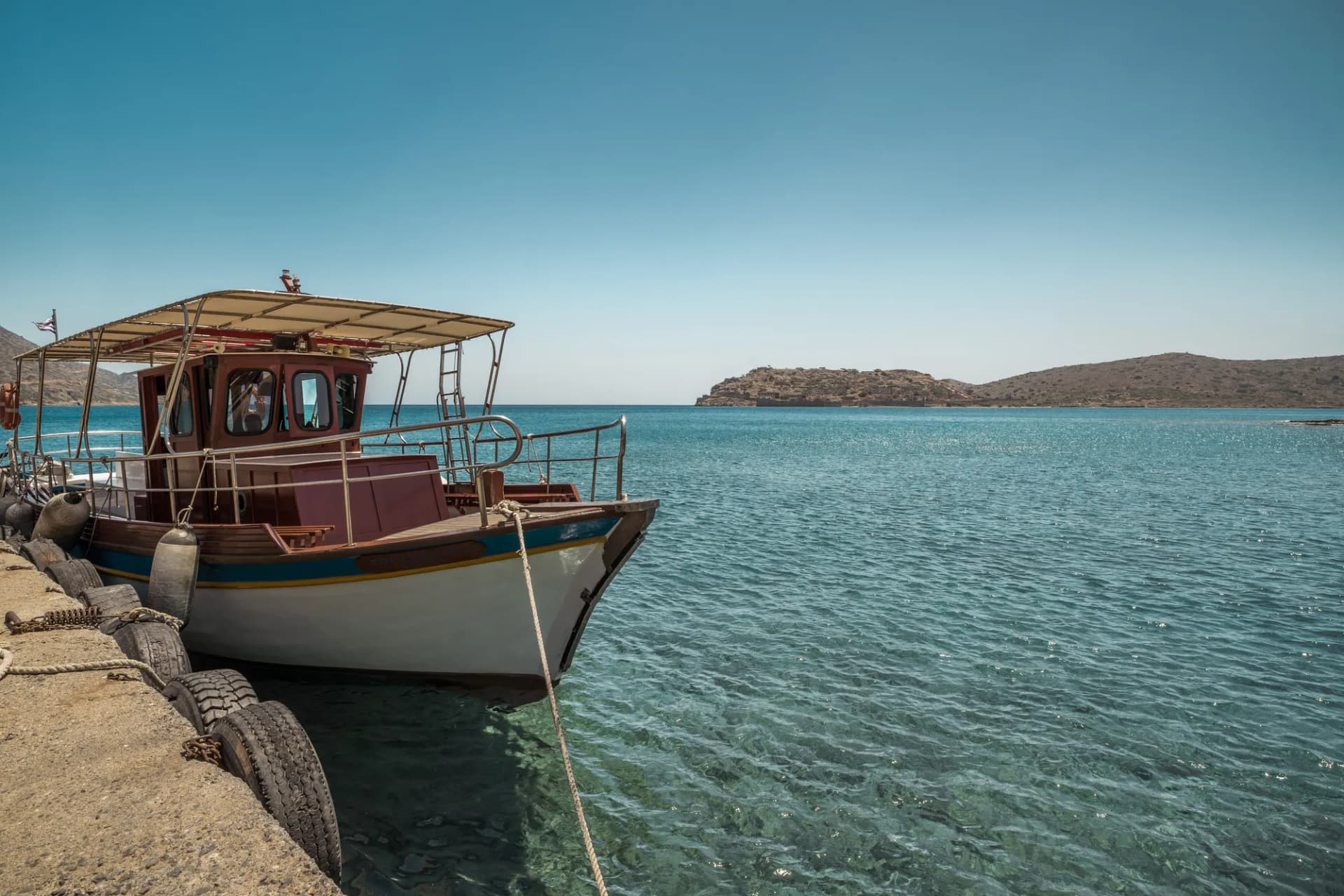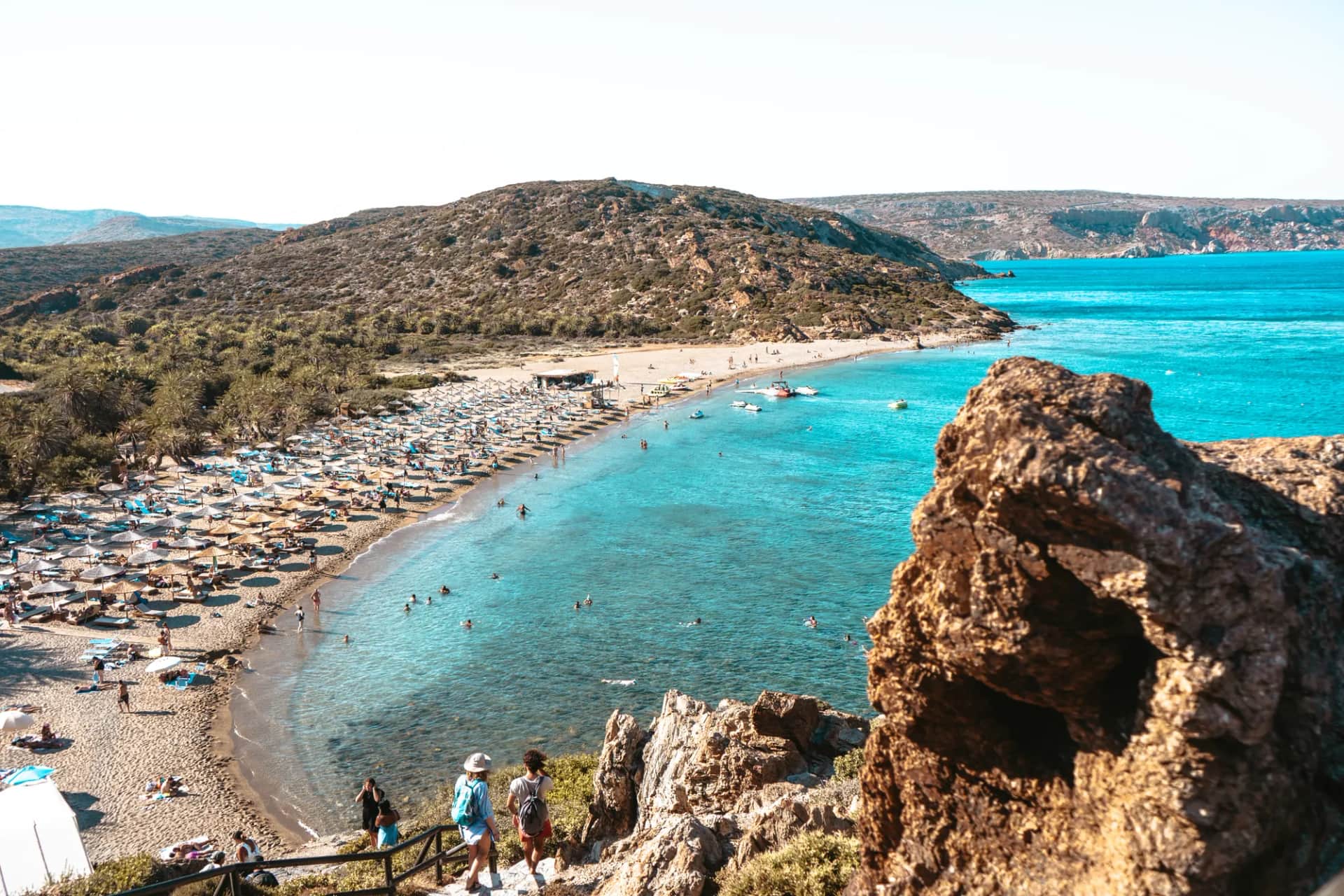

East of Agios Nikolaos, the road follows Mirabello Bay and then heads into hills covered with olive groves. An hour and a quarter later, Sitia appears at the end of its bay: a fishing port, white houses stacked up the slope and hardly any big hotels. It is the gateway to the far east of Crete, a drier, windier and far less visited region than the west of the island.
The Sitia, Vai and Toplou trio can easily be done in a day, but I recommend giving it two days if you like to take your time: the loop is only about fifty kilometres, but it strings together a Minoan museum, a fortified monastery, the largest natural palm forest in Europe and a few beaches swept by the meltemi wind.
Sitia, the quiet port of the east
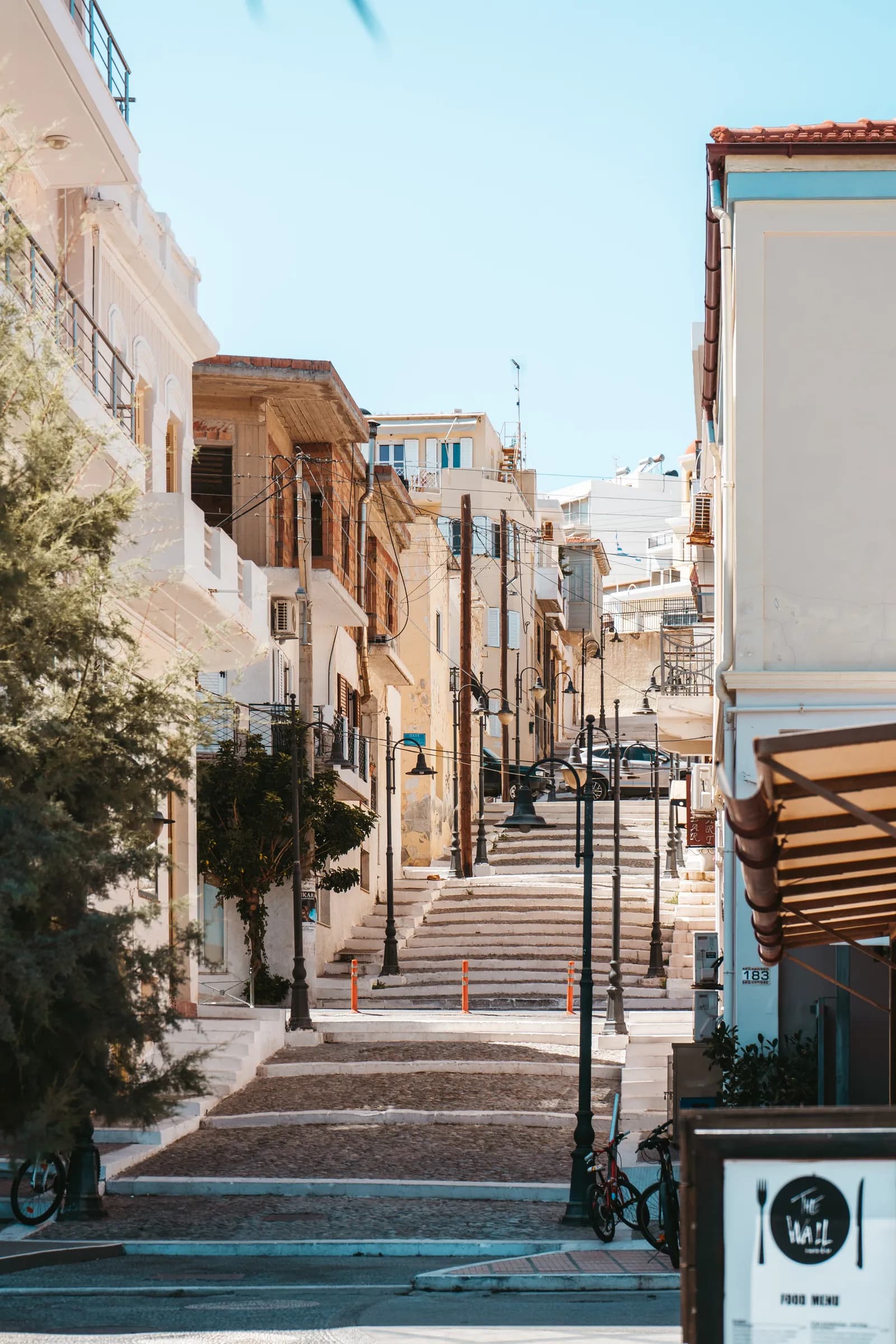
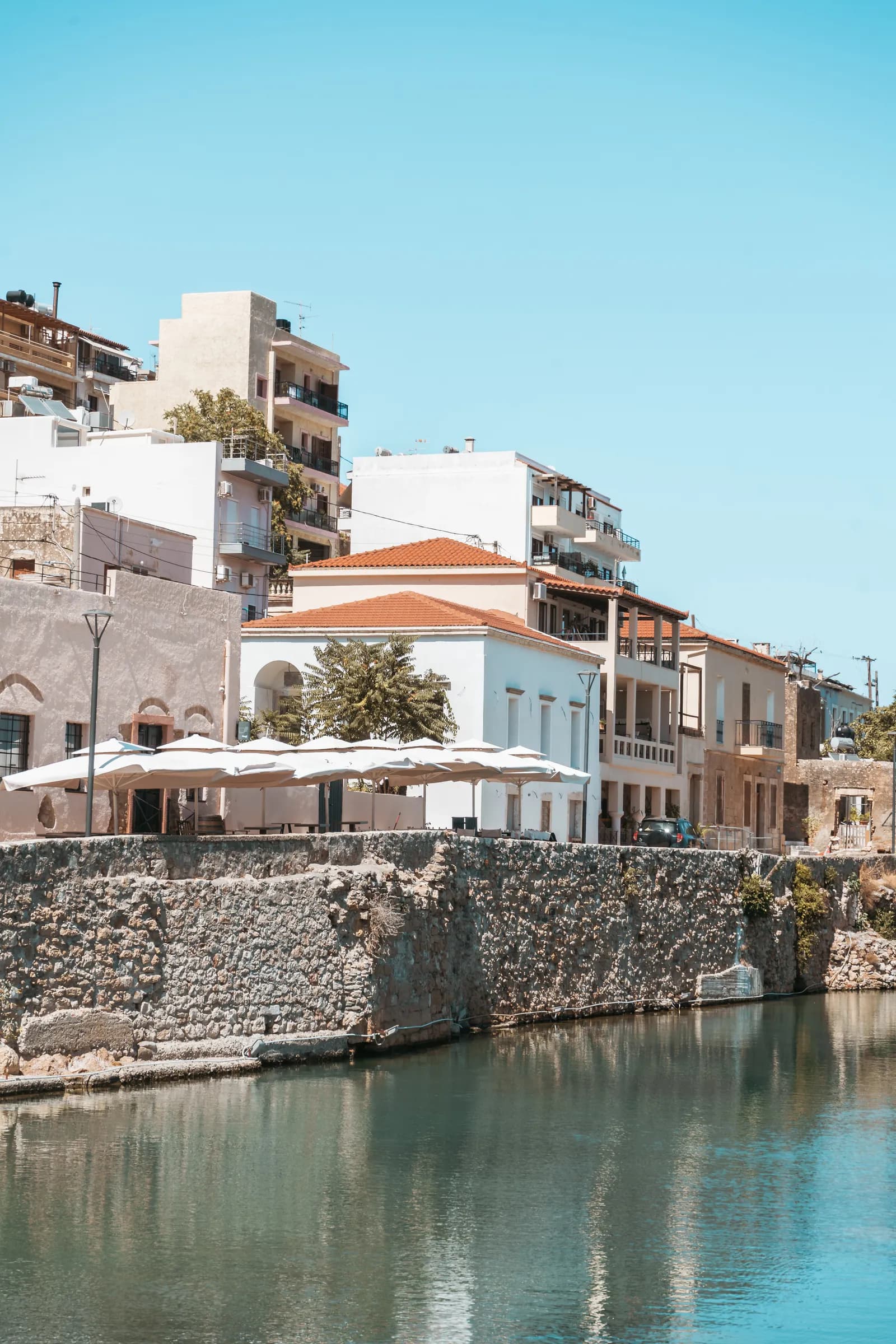
Sitia has about 11,000 inhabitants (11,166 in the 2021 census, 20,438 for the whole municipality). The site has been inhabited since the late Neolithic: excavations in the Petras district have uncovered remains dating back to around 3000 BC. The Venetian town was destroyed three times: by an earthquake in 1508, by the corsair Barbarossa in 1538, and then by the Venetians themselves in 1651 so as not to leave it to the Ottomans. Abandoned for more than two centuries, it was only rebuilt from 1870 onwards.
Photos : Pierre Bouyer
Seafront and Kazarma fortress
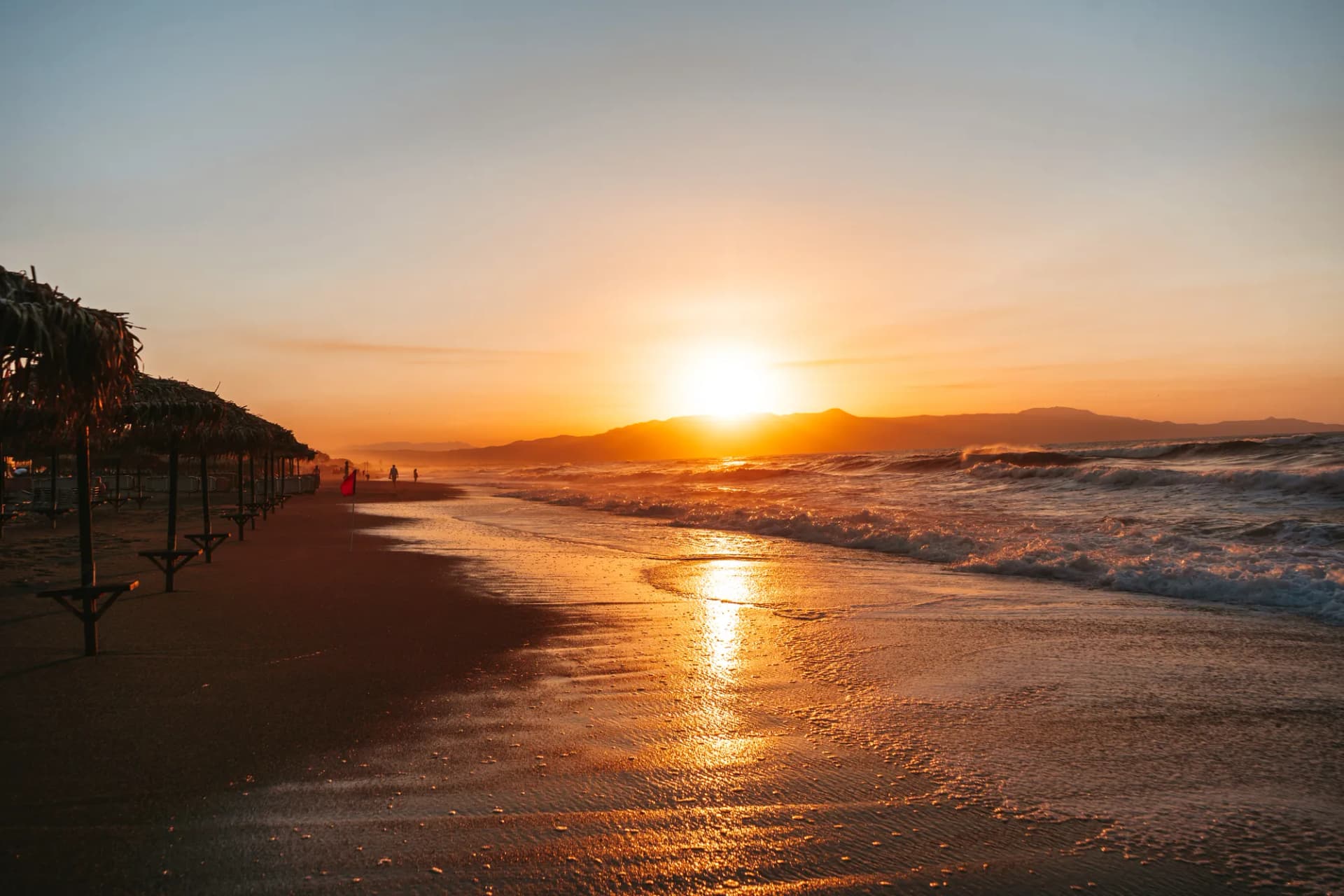
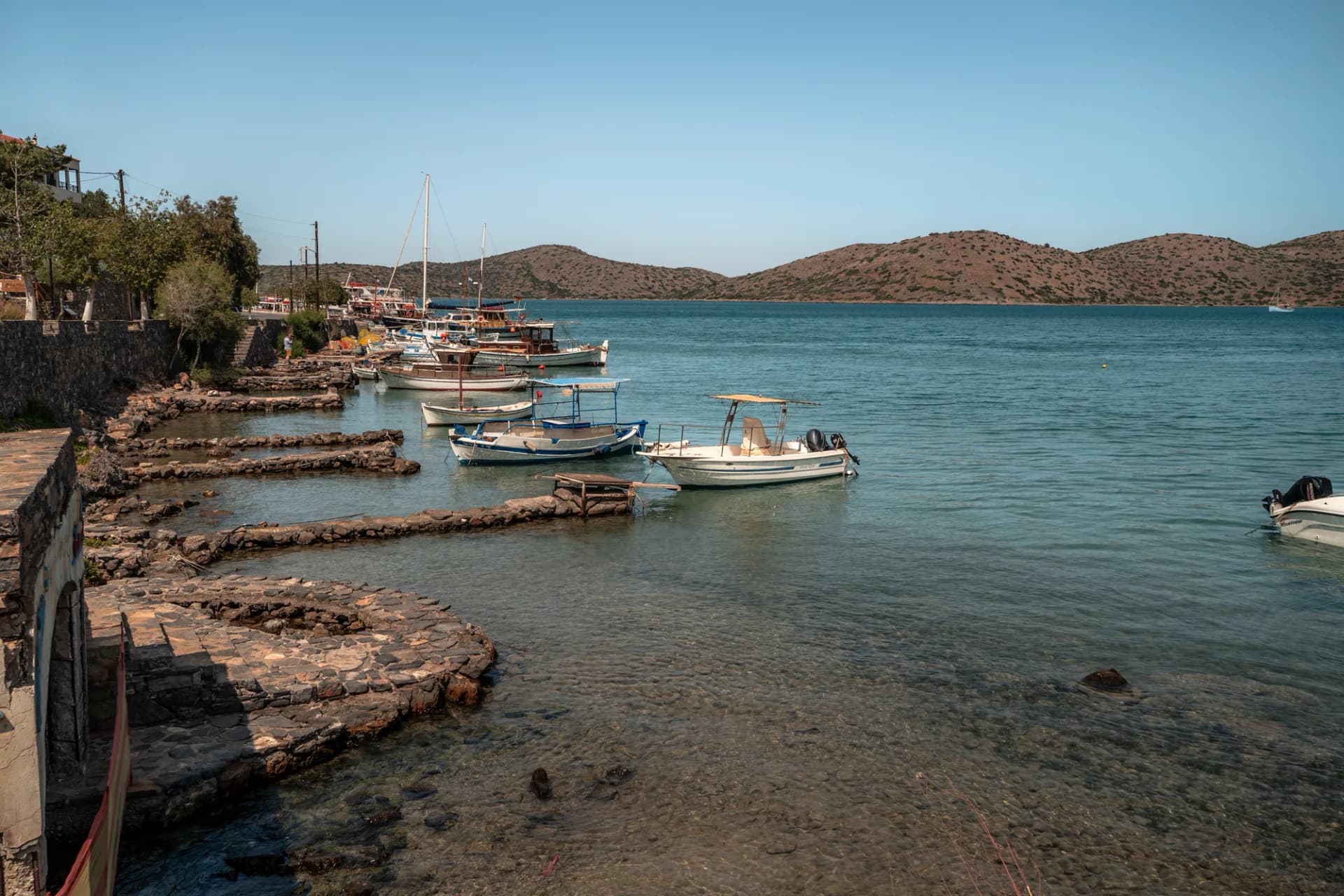
The seafront is the heart of the town: a long promenade lined with cafés and fish tavernas, facing the caiques in the harbour. To the east, a sandy beach several kilometres long stretches towards the airport; it is handy for a late-afternoon swim, without being the most beautiful in the area.
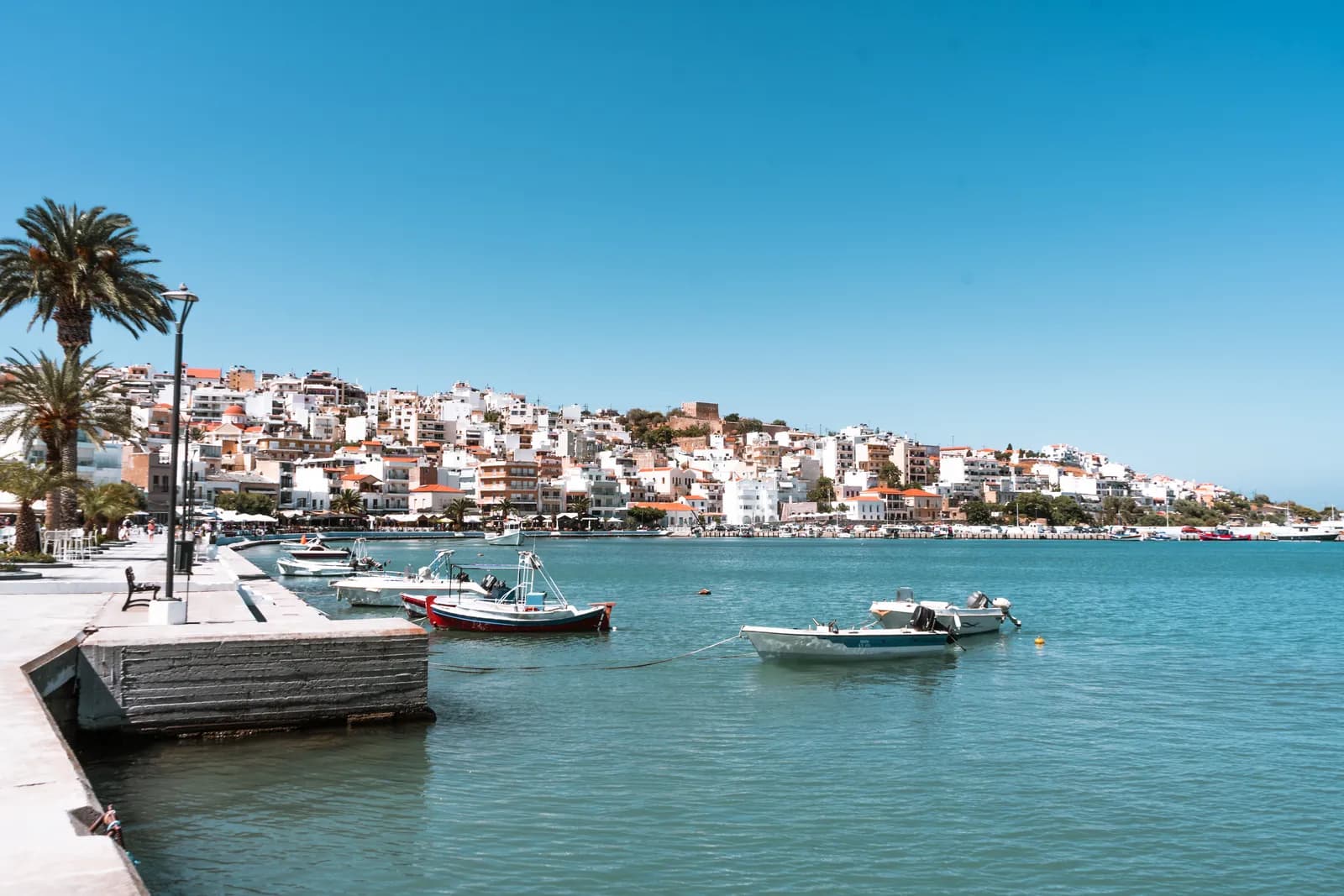
On the hill above the harbour stands the Kazarma fortress, whose name is thought to come from the Italian casa di arma. It is the main remnant of the Venetian fortifications. The inside is modest (a courtyard and restored ramparts), but the view over the bay is worth the 10-minute walk from the centre. The published opening hours vary from source to source: expect it to be open in the morning and early afternoon, with one closing day a week, and an entry fee of about €5 (€3 reduced), to be confirmed on site.
The archaeological museum and the Palaikastro Kouros
Opened in 1984, Sitia's archaeological museum brings together finds from eastern Crete, from the late Neolithic to Roman times: objects from the palace of Zakros (the only Minoan palace found unlooted), Palaikastro, Mochlos, Pseira and Petras. A visit takes about 45 minutes.
The star piece is the Palaikastro Kouros, a statuette of about 50 cm dated to around 1450 BC. Its body is carved from hippopotamus tooth covered in gold leaf, its head from grey-green serpentine, with eyes of rock crystal. Found in fragments between 1987 and 1990, burnt and deliberately smashed when the Minoan town was destroyed, it took years to reconstruct.
The museum is open from 8.30am to 3.30pm and closed on Tuesdays. The price shown in 2025 was €5 (€3 reduced), with free entry on certain days (6 March, 18 April, 18 May, the last weekend of September, 28 October, and the 1st and 3rd Sundays of the month from November to March). If you have already seen the palace of Knossos, this visit rounds off the picture of Minoan Crete very nicely, from a provincial angle.
PDO olive oil and Sitia airport
The Sitia area produces an extra virgin olive oil protected by a designation of origin, “Sitia Lasithiou Kritis”, recognised in Greece by ministerial decision in 1993 and then registered at European level. It comes overwhelmingly from the koroneiki variety, with a strong fruity flavour and a peppery finish. It is the most useful souvenir to bring home from the region. If olive trees fascinate you, the ancient olive tree of Vouves, at the other end of the island, is also well worth a detour.
Sitia also has a small airport. In 2026, Aegean and Olympic Air operate flights to Athens (about 1 hour 10 min flying time), with a daily flight scheduled from 29 March to 24 October, plus a few rare seasonal routes. There is no regular direct flight from France: the simplest option is still to land in Heraklion. Finally, the port links Sitia to the Dodecanese islands (Kasos, Karpathos, Rhodes) and to Piraeus, with Blue Star ferries.
Toplou Monastery, a fortress facing the wind
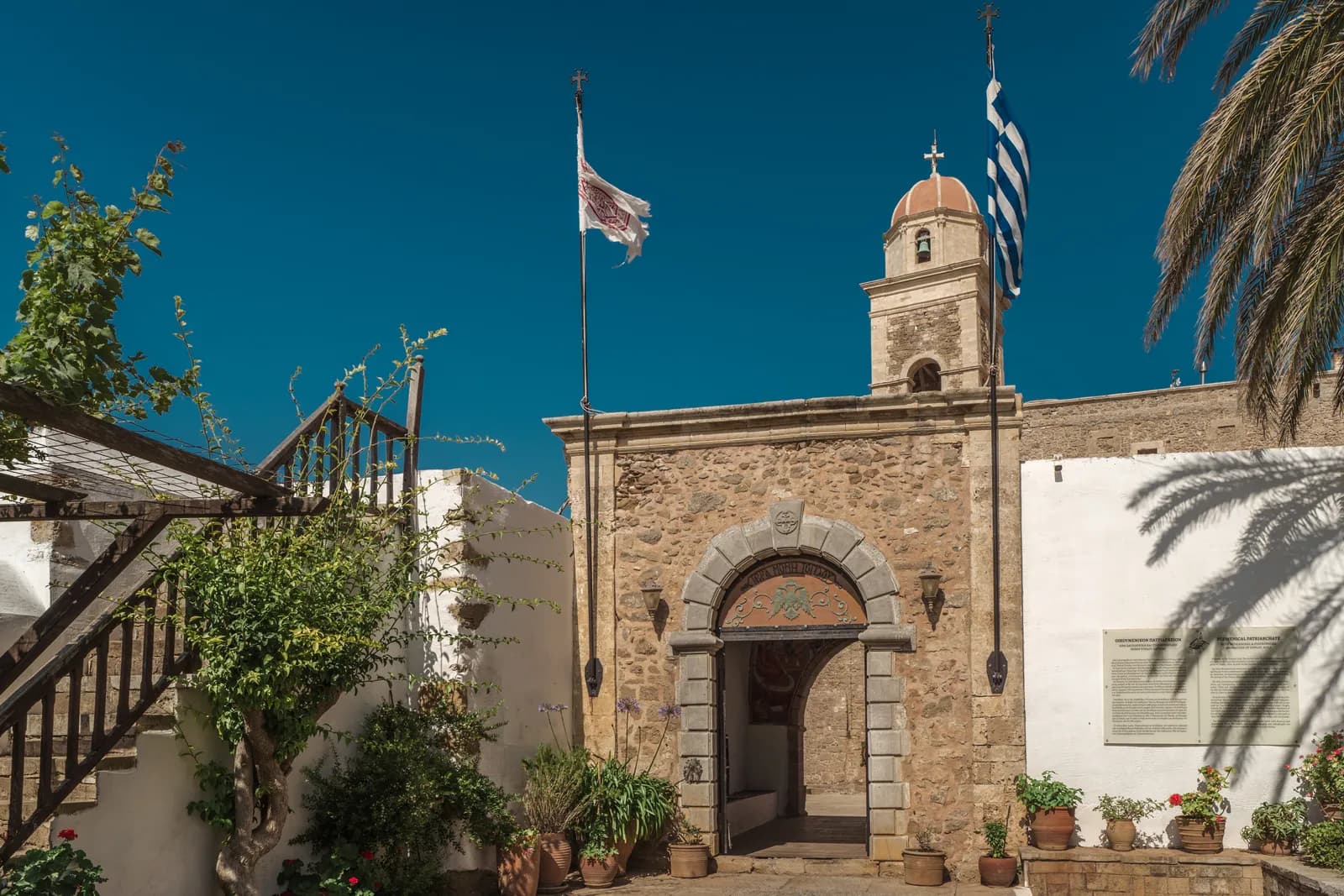
16 km from Sitia (a 25-minute drive), Moni Toplou stands alone on a bare plateau, enclosed by walls that give it the look of a castle. Its official name is Panagia Akrotiriani, “Our Lady of the Cape”. The name Toplou comes from Turkish and means “the one with the cannon”, a reference to the artillery piece once mounted above the gate.
A turbulent history
Probably founded in the 14th century, the monastery was plundered by corsairs in 1498, then ruined by an earthquake in 1612. Venice paid for its reconstruction and strengthened its defences, hence its fortress-like appearance. The monks were massacred in 1821, at the start of the Greek War of Independence, and the monastery suffered again during the Cretan revolt of 1866. During the German occupation, it housed a resistance radio transmitter: when it was discovered, the abbot and two monks were tortured and executed.
The Kornaros icon and the museum
The museum of ecclesiastical art, housed in the monastery buildings, is richer than you would imagine as you walk through the gate. Its treasure is the icon “Megas ei Kyrie” (“Great art thou, O Lord”), painted in 1770 by Ioannis Kornaros, then aged 25. It illustrates the prayer of the Great Blessing of the Waters in around sixty small scenes filled with hundreds of figures: allow plenty of time to take in the detail.
Wine, oil and practical information
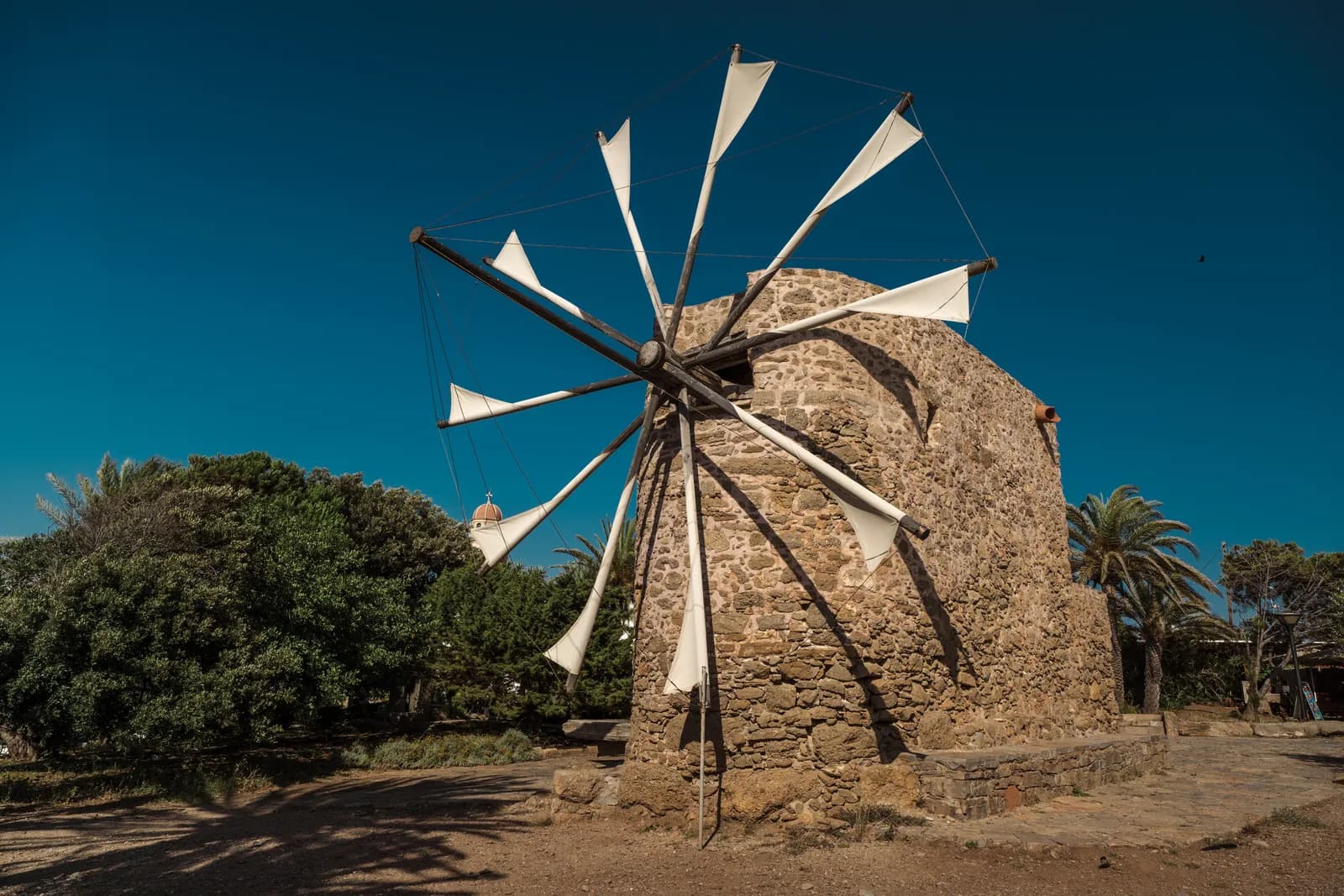
Toplou is a working monastery and also a farming estate: it produces its own wine, from organically grown vines, as well as olive oil, both sold in the shop. It also owns a large part of the Cape Sidero peninsula, including the land around Vai, where a plan for a large tourist resort has been controversial for years because of the area's Natura 2000 status.
Allow about €4 to €5 for entry, with opening hours usually from 9am to 1pm and then from 2pm to 6pm. Shoulders and knees must be covered. Try to come before 11am: coach tours to Vai often stop here mid-morning. If Cretan monasteries interest you, this one makes a fine contrast with Arkadi Monastery, the symbol of the 1866 resistance, or with Chrysoskalitissa Monastery, perched above the sea in the west of the island.
Vai, the Phoenix theophrasti palm forest
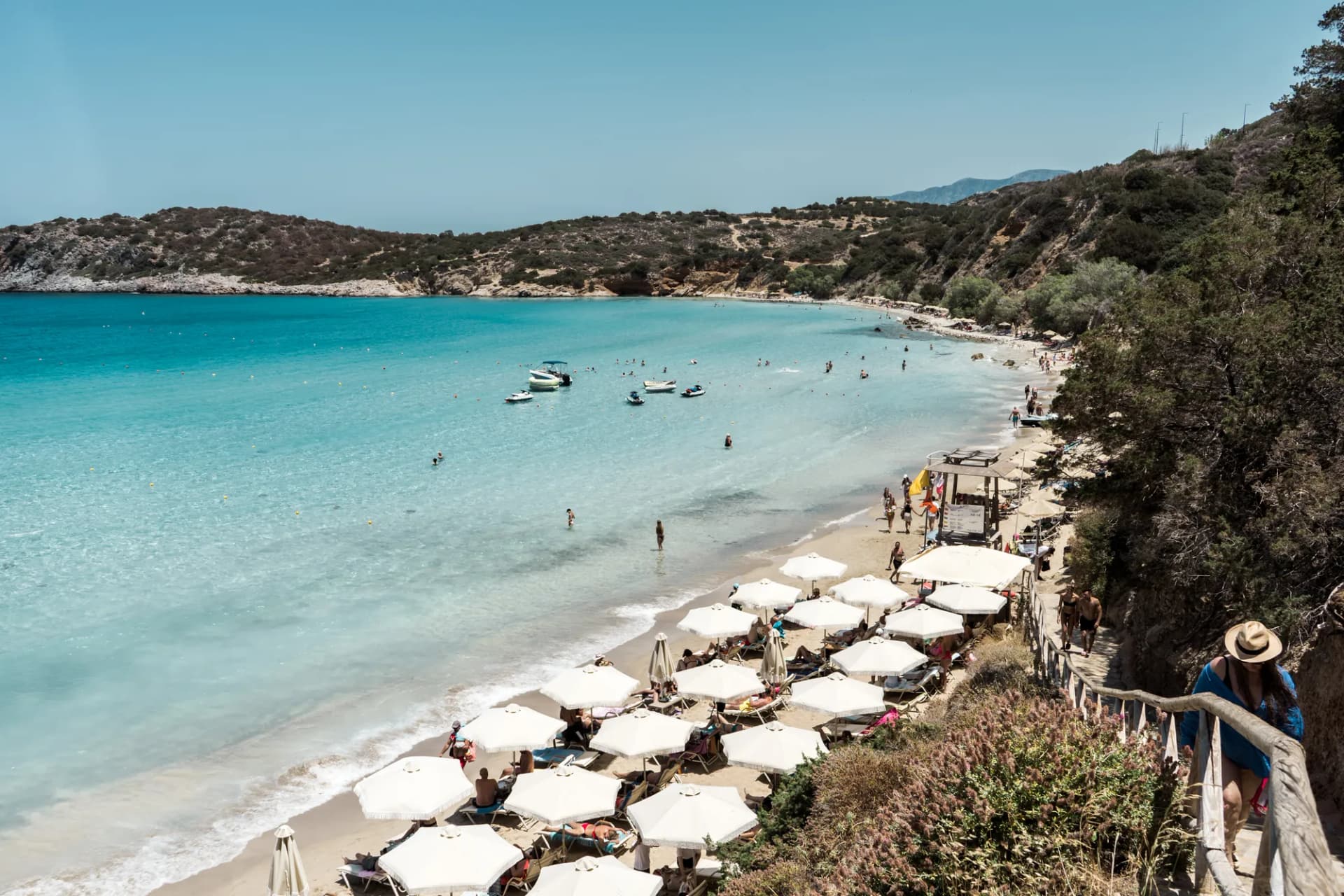
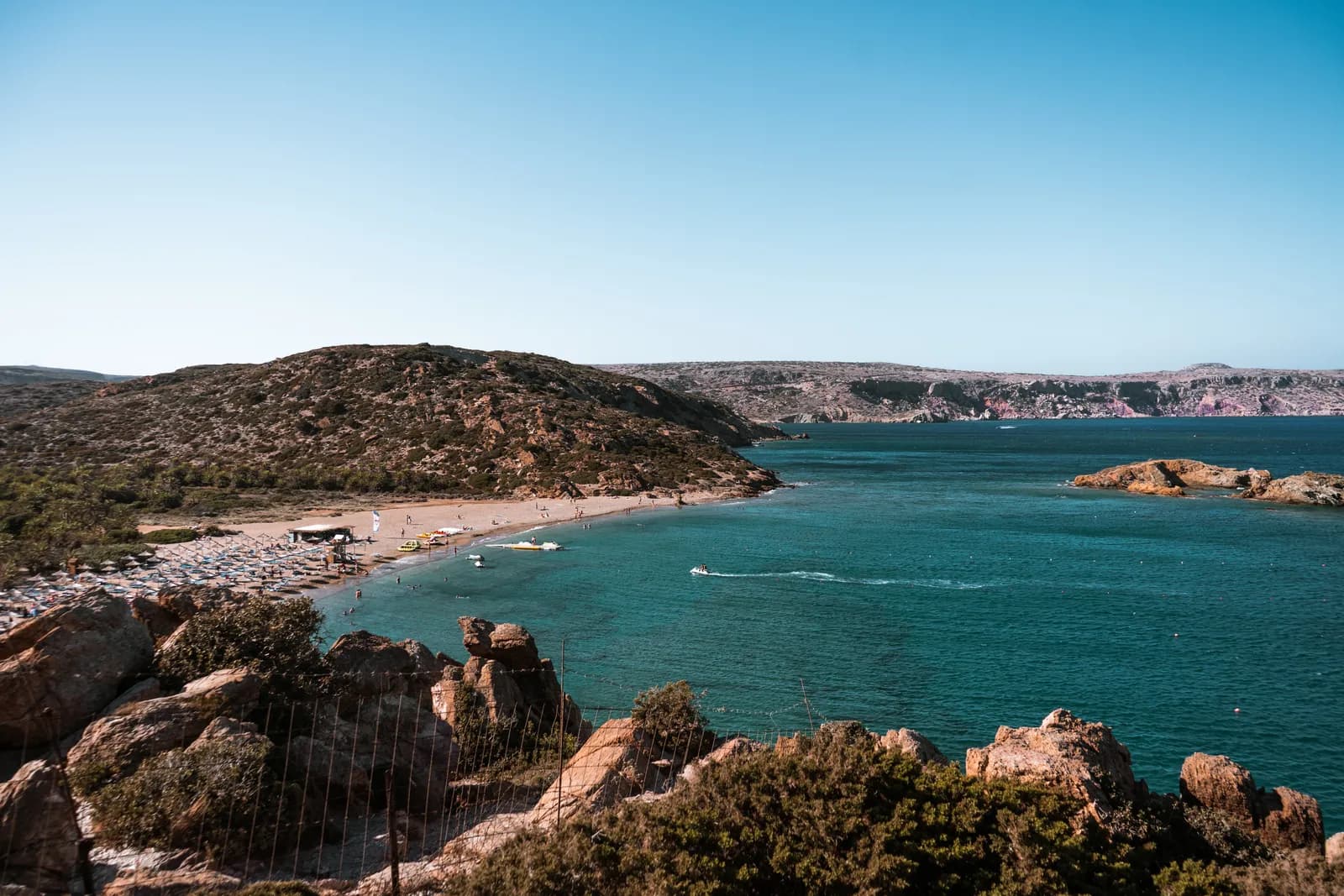
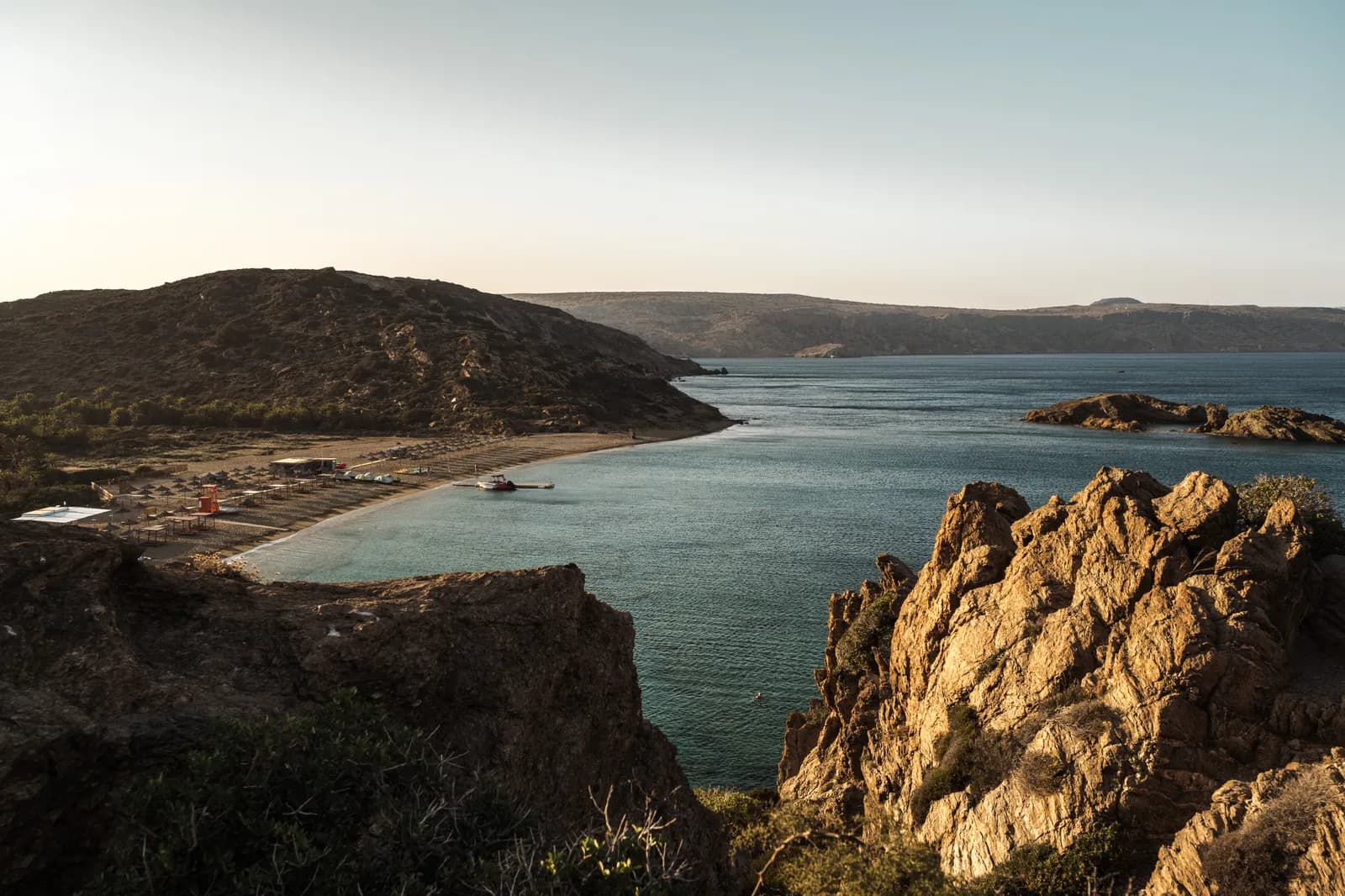
8 km from Toplou (and 24 km from Sitia, 35 to 40 minutes), the road drops down to a small bay lined with thousands of palm trees. Vai is home to the largest natural palm forest in Europe, made up of Phoenix theophrasti, the Cretan date palm. This species, endemic to the eastern Mediterranean, was only described in 1967 by the botanist Werner Greuter, who named it in honour of Theophrastus, the botanist of antiquity.
Photos : Pierre Bouyer
A protected forest
The palm forest now covers about 20 hectares, in a small valley at right angles to the beach. Declared a national park in 1985, it is now part of the Natura 2000 network and of the Sitia UNESCO Global Geopark, created in 2015. A European restoration programme was carried out between 1999 and 2002. Camping, climbing the palms and picking the dates are forbidden, and spending the night on the beach is banned.
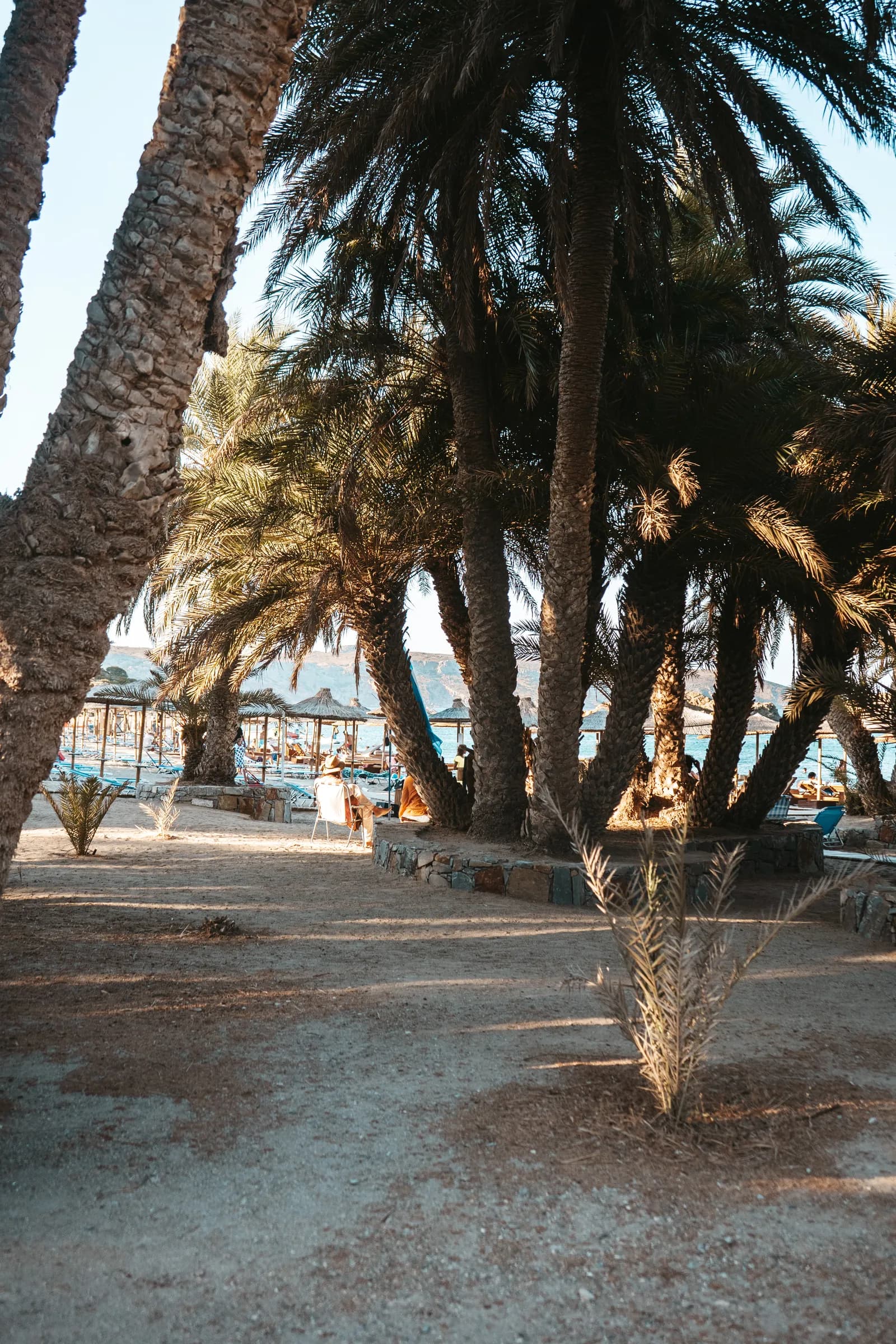
The beach, parking and crowds
The beach itself is small: about 250 m long and 57 m wide, with fine sand and very clear water. It has sunloungers and umbrellas (around €10 to €12 a pair in season) and a restaurant. Access to the beach is free, but parking is not: about €4 per car according to 2026 reports.
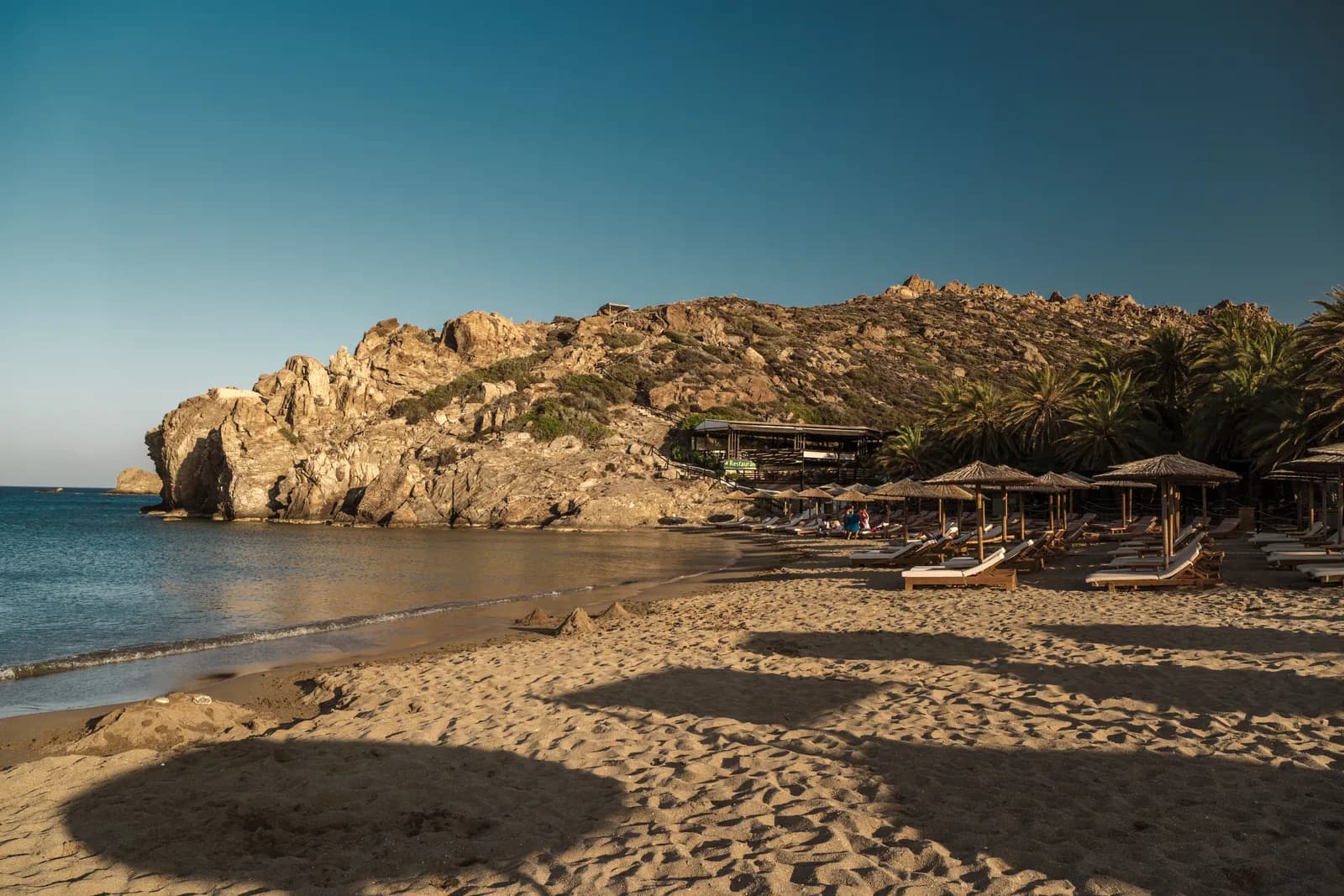
In July and August, Vai can get very busy from mid-morning, as the coach tours all converge on it. I recommend arriving before 9.30am or after 4.30pm. For photos, climb the hill south of the beach along the footpath: the view down over the palm forest and the bay is the finest on the site. If you like palm forests, the one at Preveli, on the south coast has a very different feel, around a river.
Itanos, Palaikastro and Kouremenos
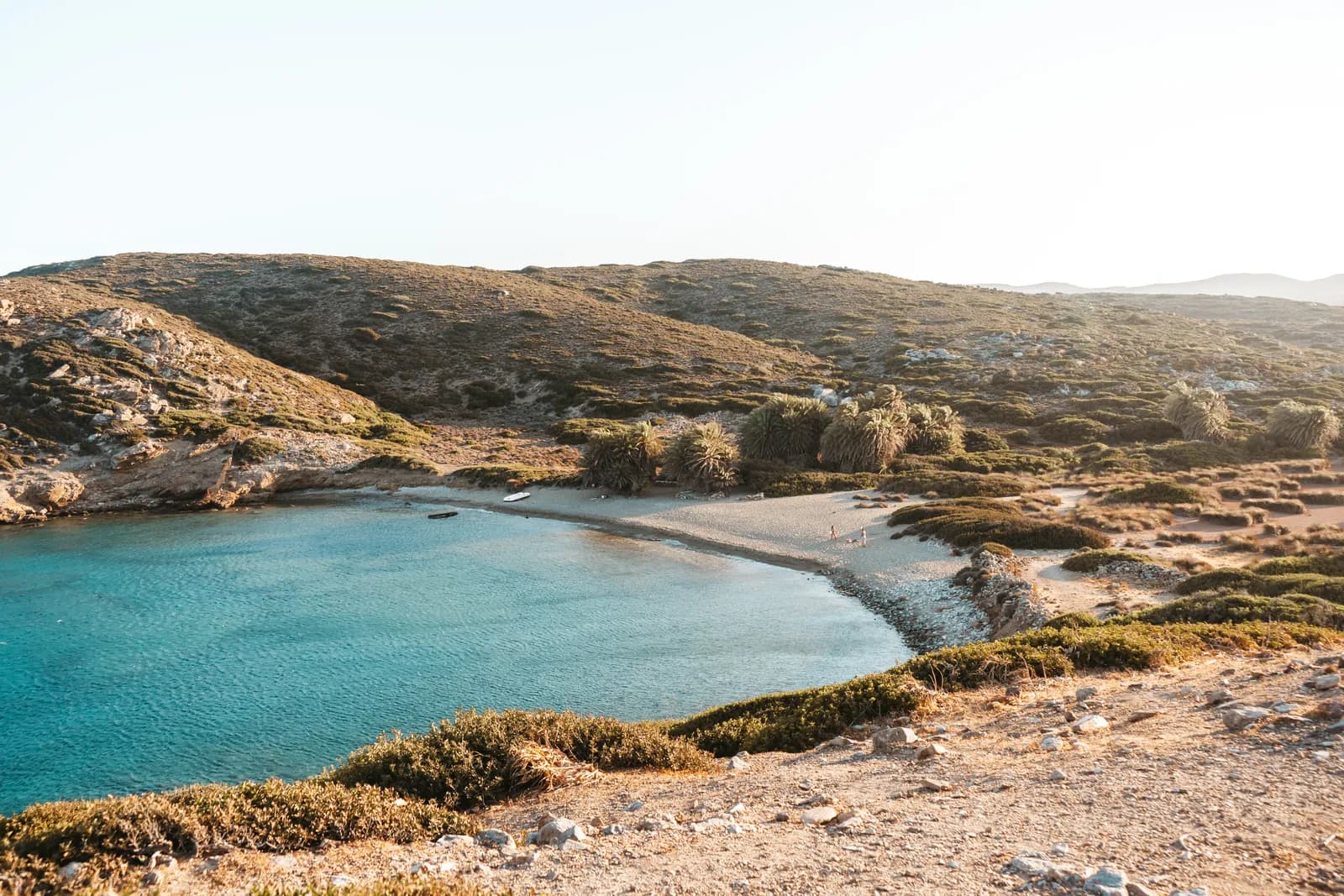
Itanos, an ancient city by the water
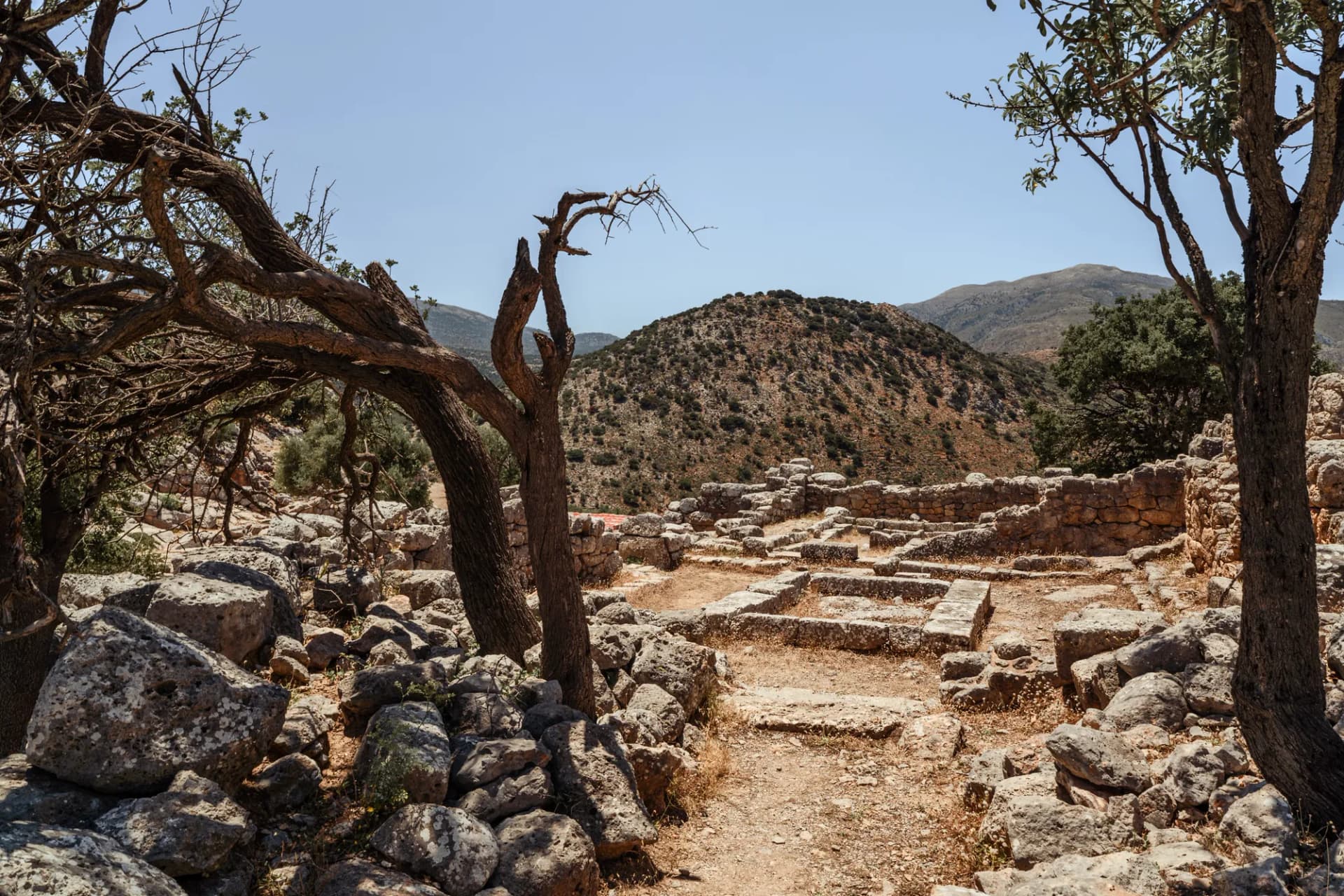
2.5 km north of Vai along a small road, Itanos is an ancient port city inhabited from the 8th century BC. It became one of the most powerful cities in Crete in the Hellenistic period, and for a time came under the protection of Ptolemaic Egypt, before being abandoned in the 7th century AD, after some 1,400 years of occupation. Today you can see two acropolises, sections of ramparts, residential quarters and the remains of early Christian basilicas. Access is usually free, but check on site.
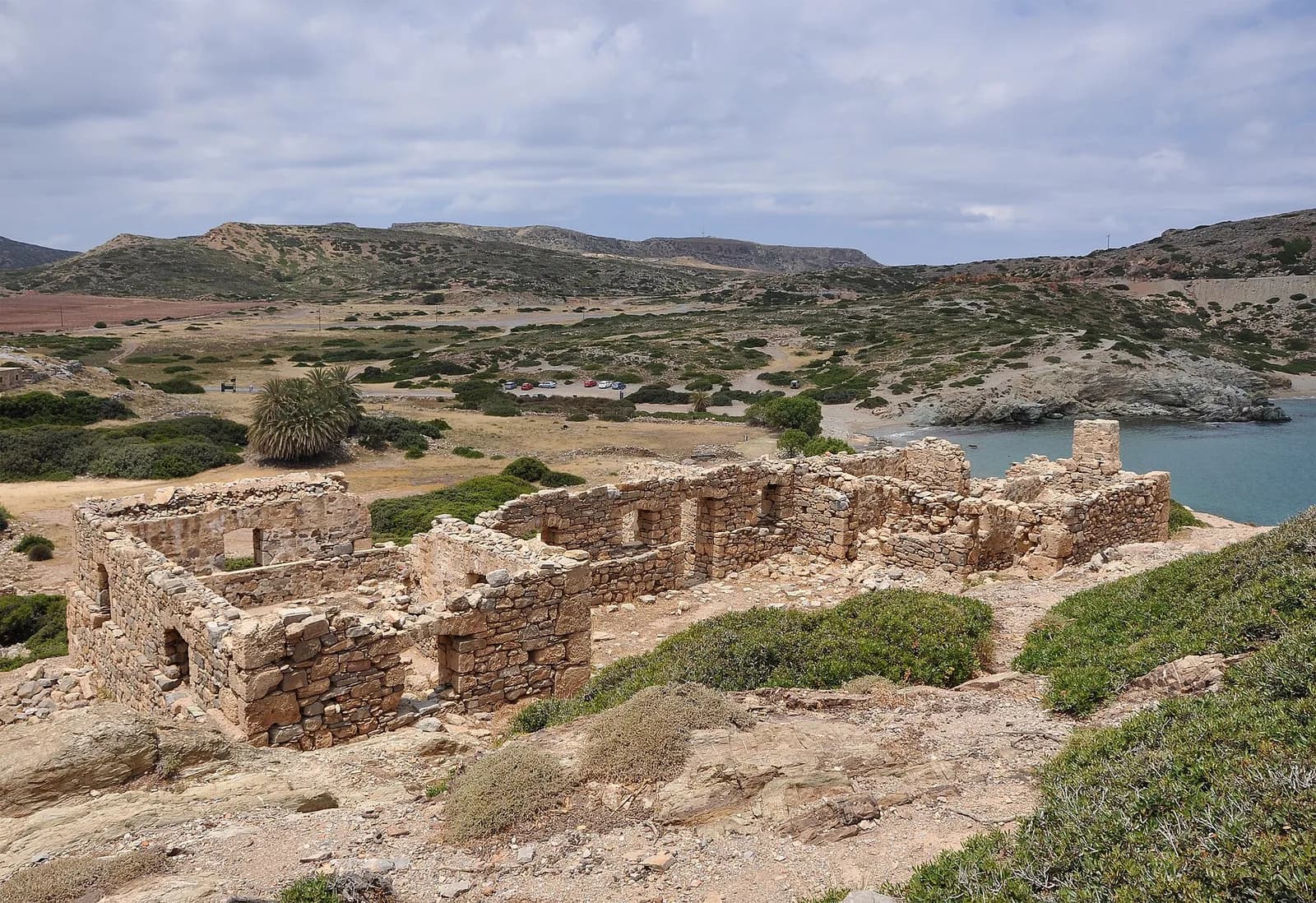
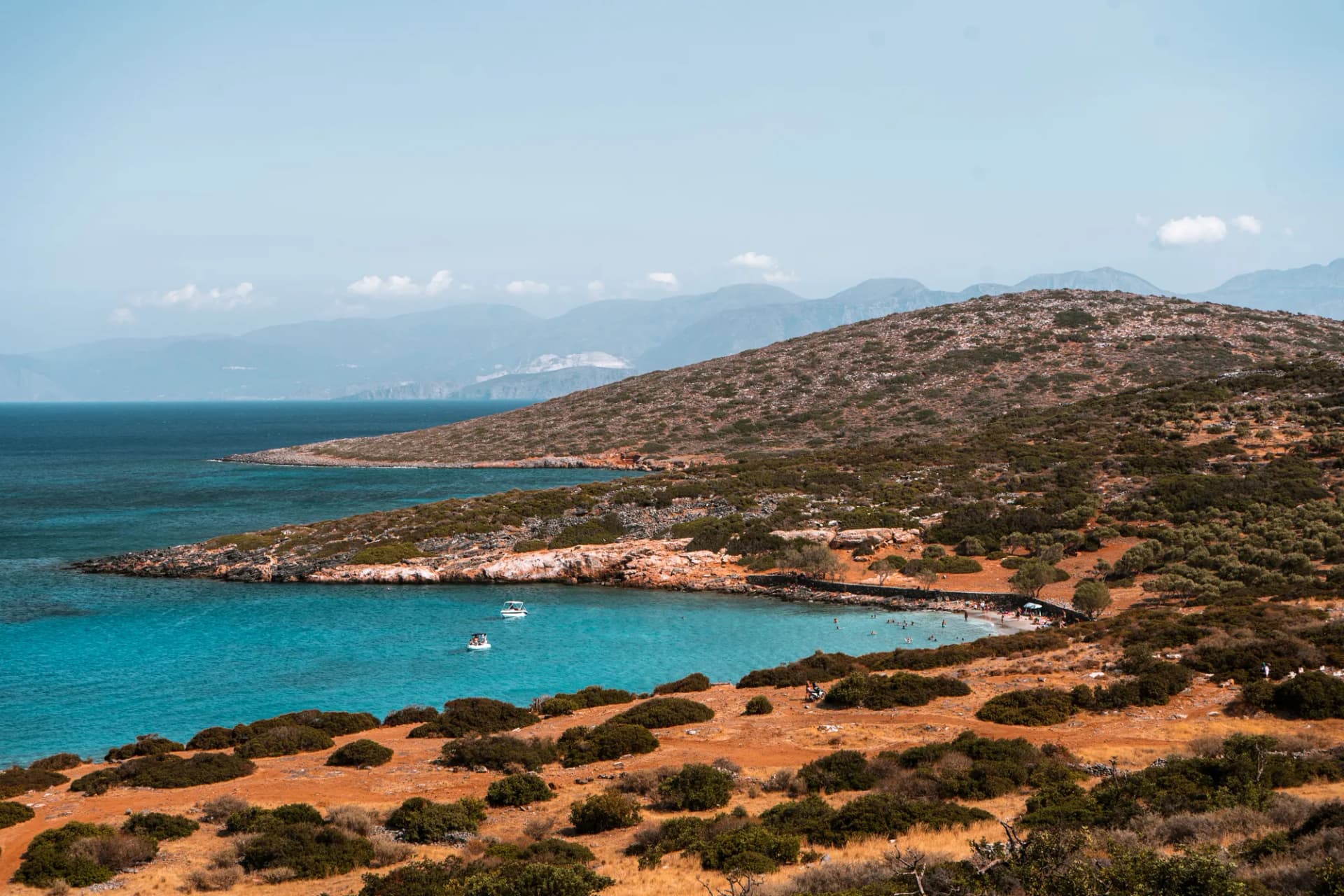
The real bonus at Itanos is its beaches: Itanos beach to the south and Erimoupoli to the north, more rustic than Vai, with few facilities and far fewer people. Bring water and shade, as there are almost no services.
Palaikastro and Kouremenos beach
Palaikastro, 9 km south of Vai, is a large farming village of about 1,250 inhabitants (2021). Its name means “old castle”, a reference to the Venetian fort built on the Kastri headland. Nearby, the Minoan site of Roussolakkos bears witness to one of the great trading centres of the Bronze Age: this is where the Kouros in Sitia's museum was found. Above the village, Mount Petsofas holds the remains of a Minoan peak sanctuary.
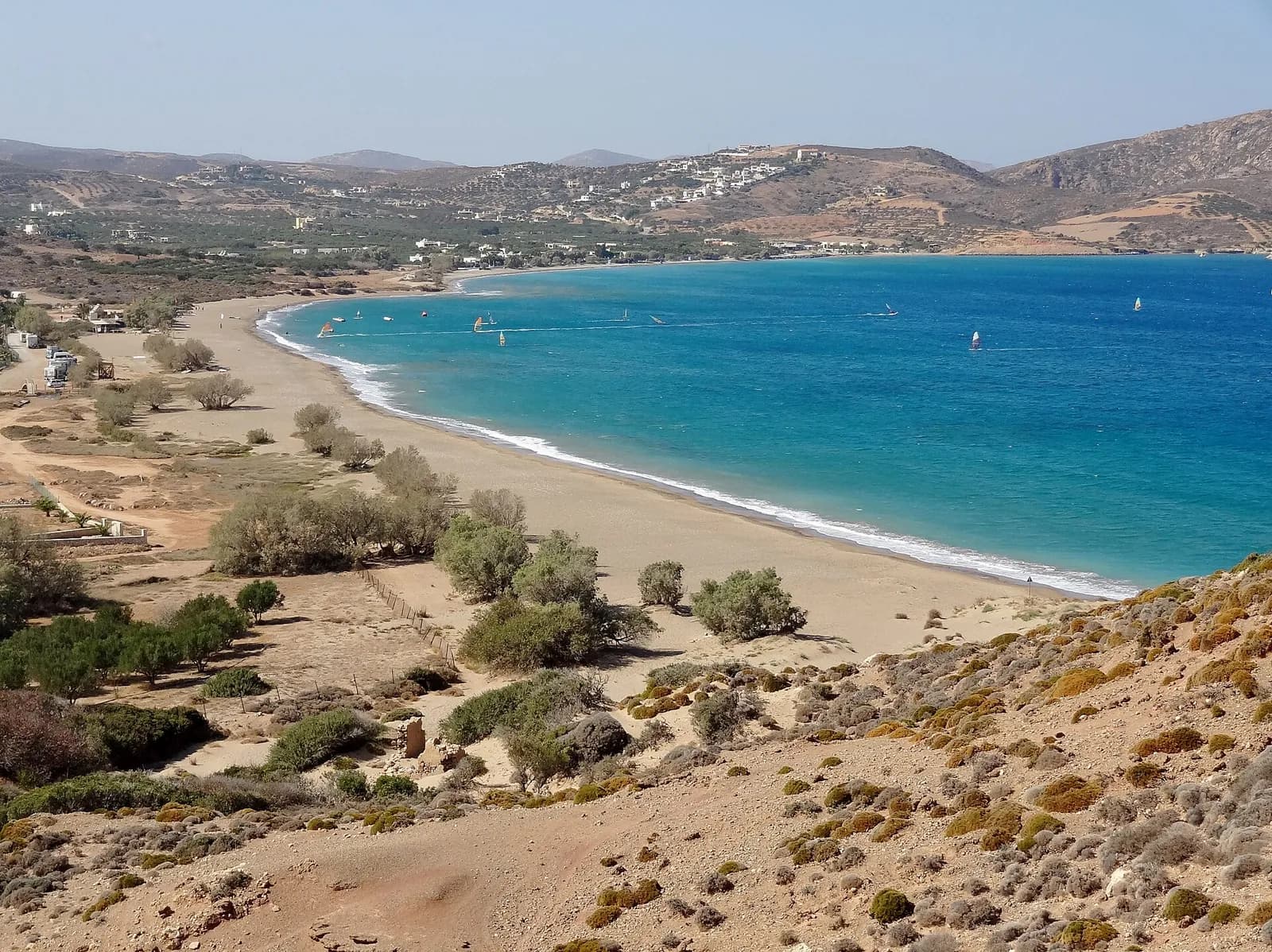
3 km from the village, Kouremenos is a long beach of grey sand and pebbles, with shallow water. It is best known for its wind: the meltemi, strengthened by a funnel effect, often blows at force 4 to 7 on the Beaufort scale in summer. Two windsurfing centres rent equipment and give lessons, including wing foiling. For a peaceful swim, pick a day without wind.
Xerokambos and Zakros, to carry on south
From Palaikastro, a winding road leads down to Kato Zakros (about 24 km, 40 minutes): its seaside Minoan palace and its gorge, nicknamed the Valley of the Dead because of the tombs cut into the cliffs, would deserve a day on their own. We will cover them in a dedicated article, coming soon. Further south still, Xerokambos is an isolated hamlet surrounded by pale sandy beaches, 15 km from Kato Zakros along a mountain road. Allow about 1 hour from Sitia via the inland route.
Suggested itinerary for one or two days
In one day from Agios Nikolaos or Elounda
- 018am: leave Agios Nikolaos (or 7.45am from Elounda), about 1 hour 15 min by road to Sitia, then 25 minutes to Toplou.
- 029.45am: visit Toplou and its museum (45 minutes to 1 hour).
- 0311am: Vai, viewpoint over the palm forest, then a swim.
- 041.30pm: lunch in Palaikastro, then Itanos or Kouremenos depending on the wind.
- 055pm: stroll along Sitia's seafront and a fish dinner before heading back.
With this plan, Sitia's museum (closes at 3.30pm) is hard to fit in. If the Kouros interests you, reverse the order: start with the museum when it opens, then Toplou and Vai in the late morning, at the risk of finding Vai busier.
In two days with a night in Sitia
On day one, arrive in Sitia around midday, visit the archaeological museum, walk up to the Kazarma fortress and enjoy the seafront in the evening. On day two, set off early for Toplou, go on to Vai before 10am, then Itanos, Palaikastro and Kouremenos in the afternoon. If you have a third day, head down to Zakros and Xerokambos.
Practical information: access, opening hours and budget
Distances and driving times
| Route | Distance | Driving time |
|---|---|---|
| Heraklion → Sitia | about 125 to 135 km | about 2 hours 15 min |
| Agios Nikolaos → Sitia | about 62 km | about 1 hour 15 min |
| Elounda → Sitia | about 72 km | about 1 hour 30 min |
| Fourni → Sitia | about 78 km | about 1 hour 30 min |
| Ierapetra → Sitia | about 60 km | about 1 hour 10 min |
| Sitia → Toplou | about 16 km | about 25 min |
| Toplou → Vai | about 8 km | about 15 min |
| Vai → Itanos | about 2.5 km | about 5 min |
| Vai → Palaikastro | about 9 km | about 15 min |
| Palaikastro → Kato Zakros | about 24 km | about 40 min |
Distances were calculated on OpenStreetMap; the times include some leeway, as the coast road between Agios Nikolaos and Sitia is winding for long stretches. A car is almost essential: KTEL buses link Sitia with Vai and Palaikastro, but with very few departures, especially outside summer. All my booking tips are in the guide to renting a car in Crete.
DiscoverCars
Car rental comparison — 150+ countries
Compare prices from Hertz, Avis, Sixt and local providers. All fees included, free cancellation. Rated 4.6/5 on Trustpilot.


Opening hours and prices
| Site | Opening hours | Price | Good to know |
|---|---|---|---|
| Sitia Archaeological Museum | 8.30am to 3.30pm, closed on Tuesdays | €5 (€3 reduced), 2025 price | Palaikastro Kouros |
| Kazarma fortress | morning and early afternoon, varies | about €5 (€3 reduced) | check opening hours on site |
| Toplou Monastery | 9am to 1pm and 2pm to 6pm | about €4 to €5 | modest dress |
| Vai beach | free access | parking about €4 | sunloungers €10 to €12 |
| Itanos | usually free access | free (to be checked) | little shade |
| Kouremenos | free access | free | windsurf rental on site |
When to go and how much to budget
May, June and September are the best months: the sea is already or still warm, Vai stays bearable and the wind has not yet reached its peak. In July and August, the east is hotter and windier, and you need to plan your timing to avoid the crowds at Vai. To compare the seasons, see our guide on when to visit Crete.
Frequently asked questions
One day is enough to take in Toplou, Vai and Itanos from Sitia, as the loop is about 50 km. With Sitia's museum, the Kazarma fortress and a swim at Kouremenos, I recommend two days instead, with a night in Sitia or Palaikastro.
Access to the beach is free, but parking is not: allow about €4 per car, with amounts reported online ranging from €2.50 to €5 depending on the year. Sunloungers and umbrellas cost extra, around €10 to €12 a pair in season.
The palm forest is a protected forest: you can walk alongside it and through it on the marked paths, but climbing the palms, picking the dates and camping are forbidden. The best viewpoint is on the hill south of the beach, reached by a footpath.
Yes, but mostly domestic ones: in 2026, Aegean and Olympic Air link Athens and Sitia, with a daily flight scheduled from late March to late October. A few seasonal routes to other cities exist, but there is no regular direct flight from France: most travellers arrive via Heraklion.
Entry to the monastery and its museum costs about €4 to €5 according to recent sources. The monastery is usually open from 9am to 1pm and then from 2pm to 6pm; clothing that covers shoulders and knees is required.
Final thoughts
If you are staying around Mirabello Bay, in Elounda, Agios Nikolaos or a village like Fourni, this is the perfect getaway for a change of scenery. To plan the rest of your stay, our complete guide to Crete will help you split your days between the east and west of the island.

Âme Bohème exists thanks to you
Some links in this article are affiliate links. This means that if you book or purchase a product through these links, we receive a small commission — at no extra cost to you. It's thanks to this support that we can continue creating free, quality content.
You can also buy us a coffee, or follow us on Instagram and Facebook.