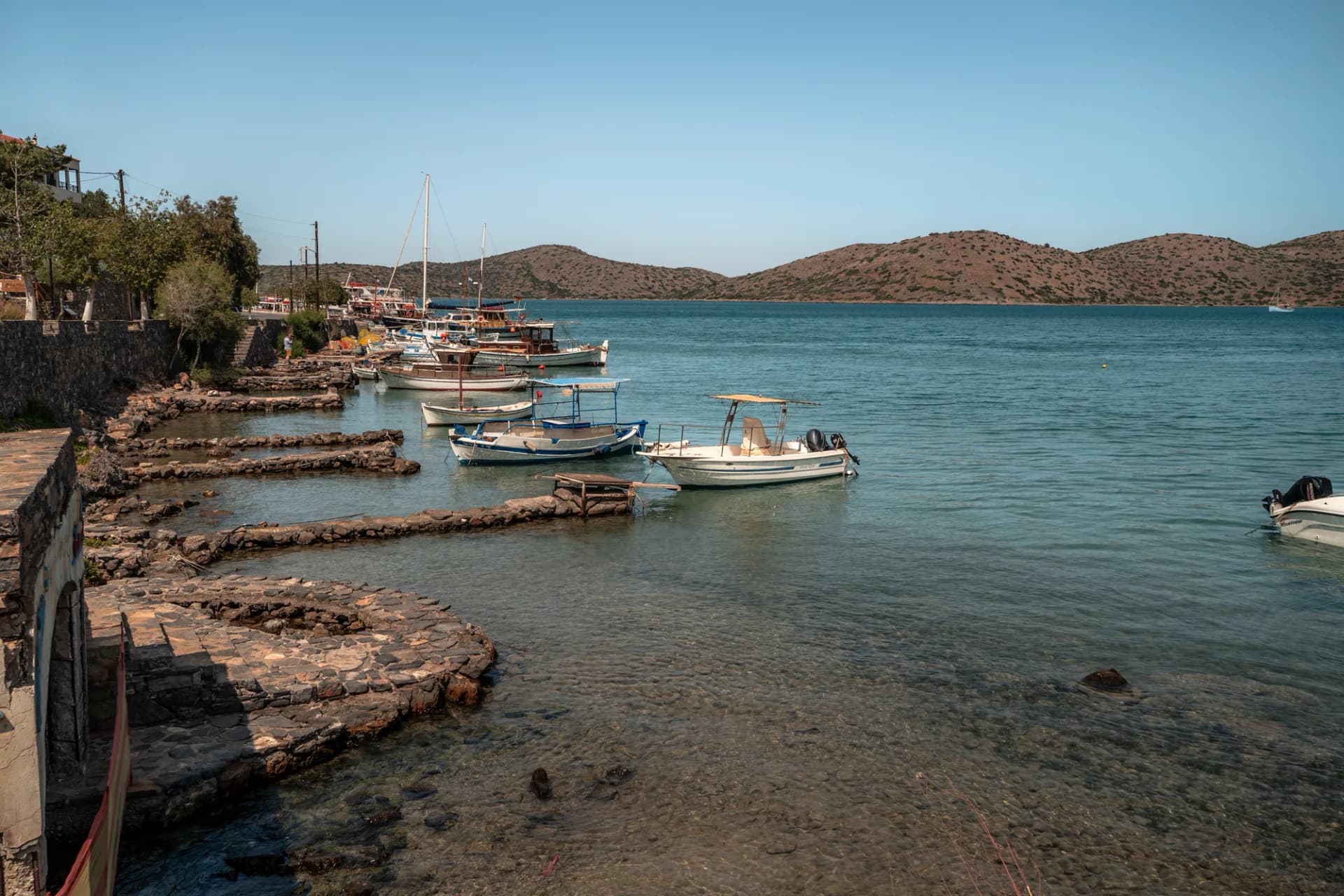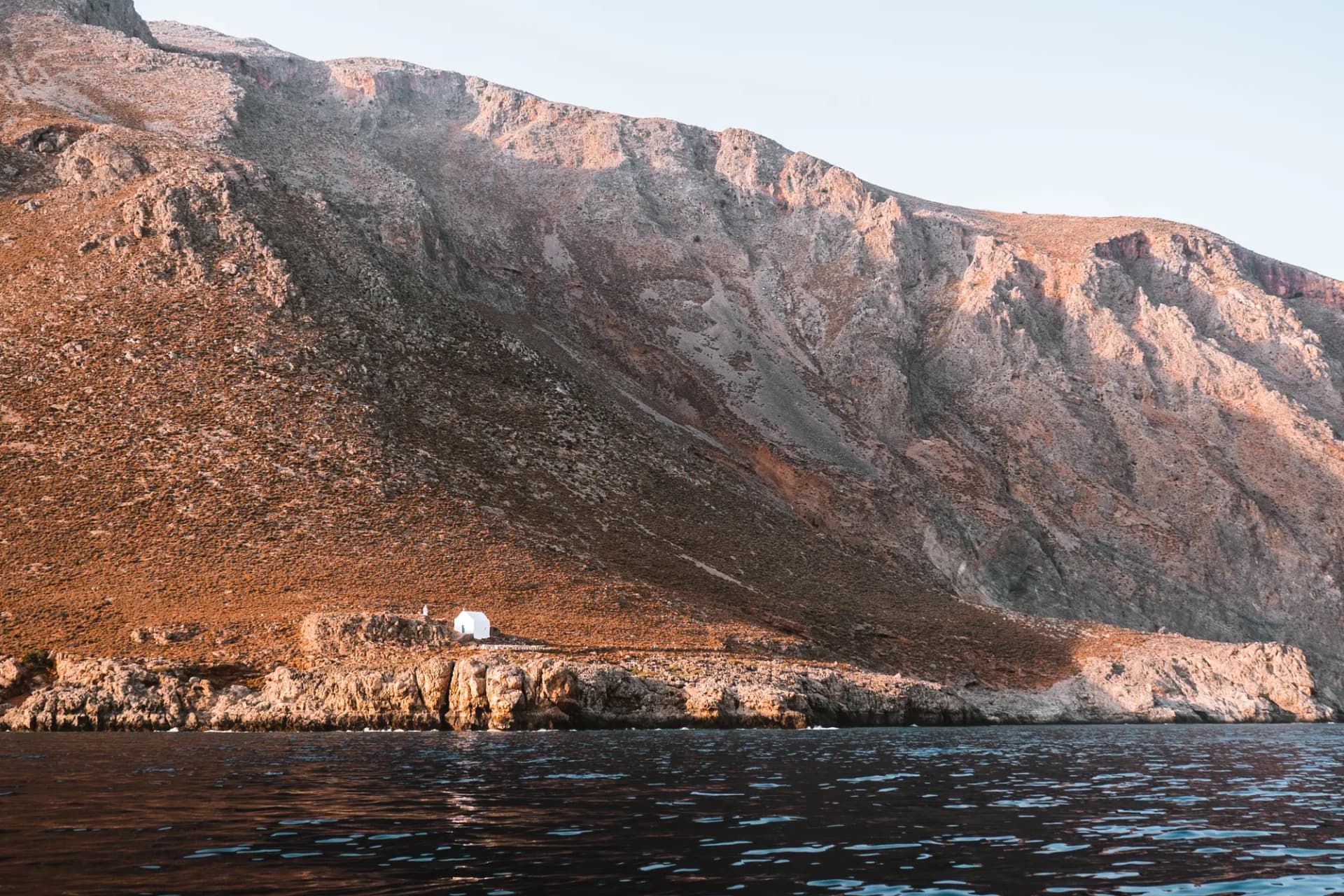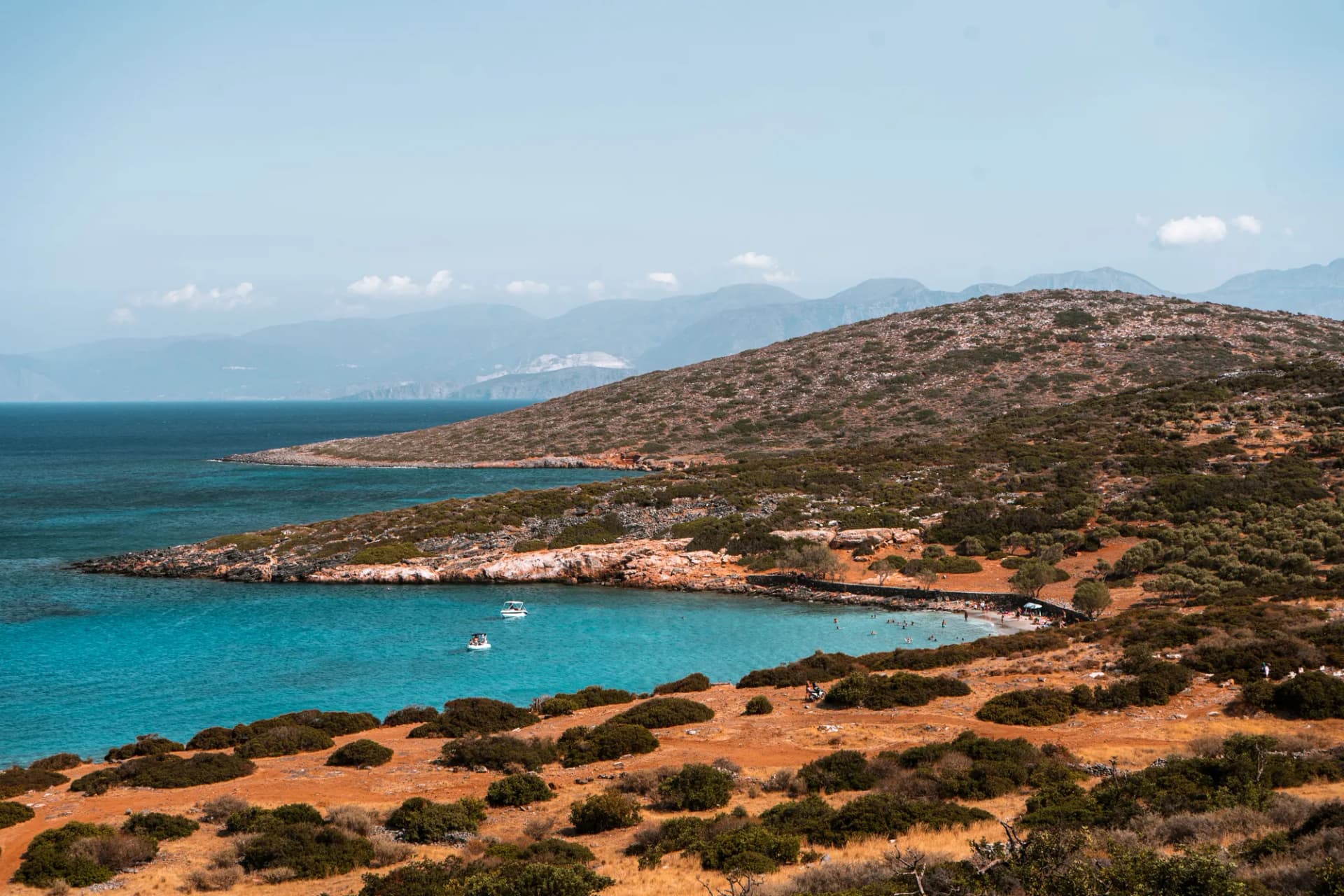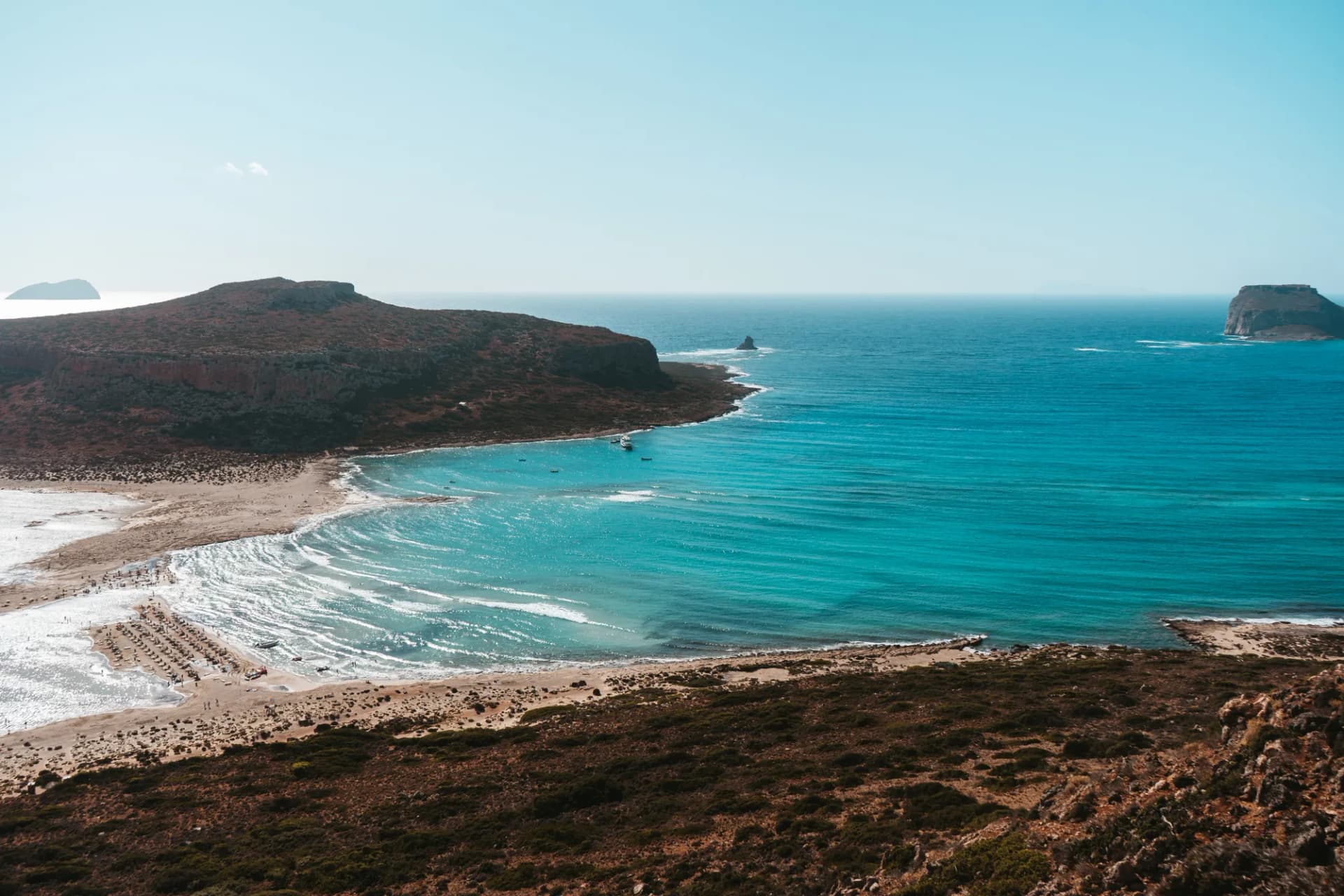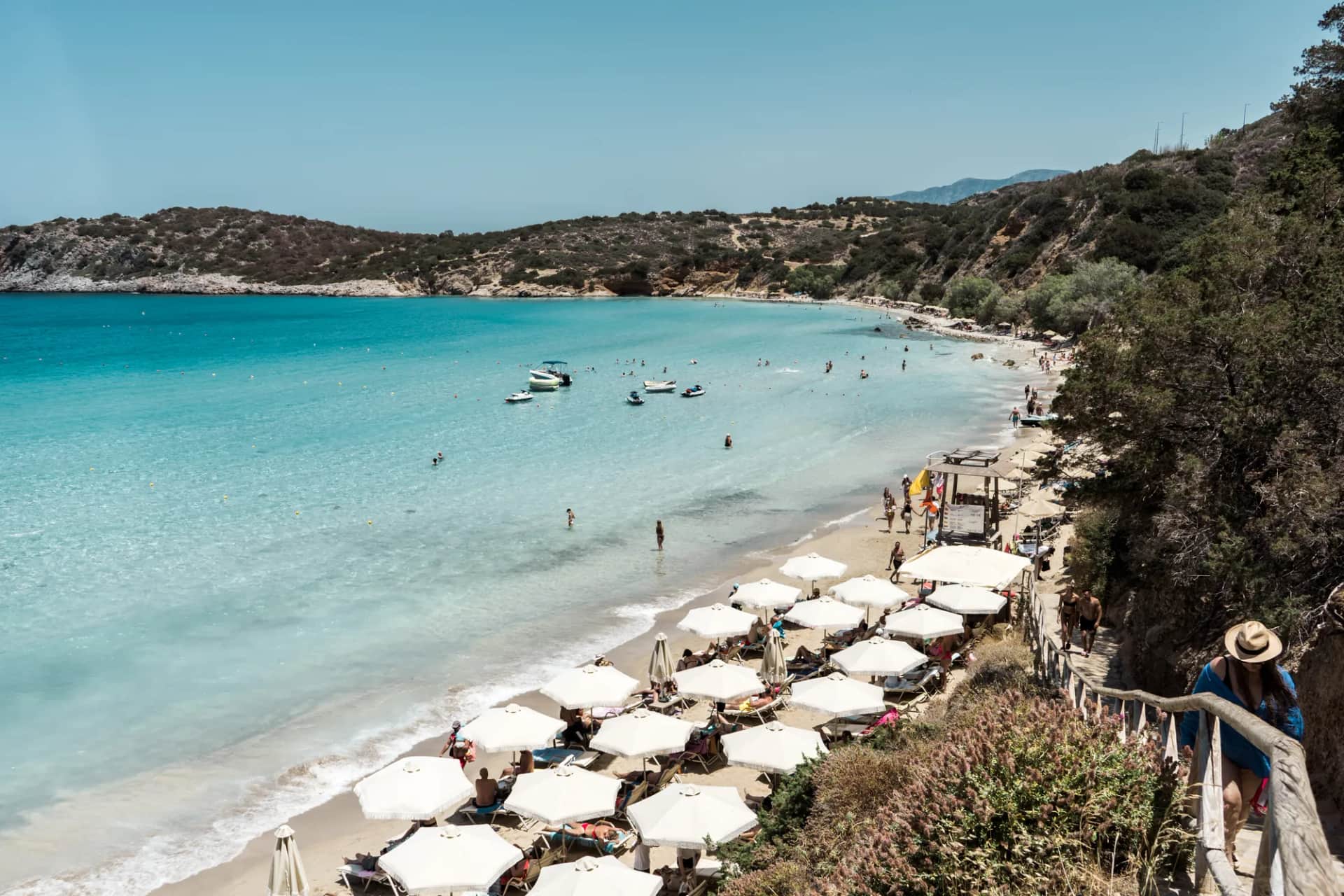

From the hills above Kritsa, the lie of Mirabello Bay makes sense straight away: a vast bay opening to the north, Agios Nikolaos on the western shore, the Spinalonga peninsula closing off the Elounda side, and opposite, the Sitia mountains plunging into the sea. Between the two shores sit a dozen very different beaches, from the fine sand of Istro to the pebbles of Tholos.
The catch is that they are not all equal, depending on the wind, the time of day and what you are after. Voulisma is glorious at 9am and packed by noon in August. Kolokytha has neither sunbeds nor a snack bar. Pacheia Ammos is often rough when the meltemi blows. So I have gone through the bay's beaches one by one, with the type of seabed, facilities, access, parking and how busy they get.
All distances are given from Agios Nikolaos, the most convenient base for exploring the bay. To place this region in the context of the rest of the island, our guide to Crete gives you the big picture.
Mirabello Bay at a glance
Mirabello Bay covers the north-east coast of Crete, in the Lassithi region. It is often described as the largest bay in the Greek islands. Its western shore runs from Elounda to Agios Nikolaos and on to Istro, its head reaches Pacheia Ammos, where the island is at its narrowest, and its eastern shore climbs towards Tholos and Mochlos, at the foot of the Sitia mountains. Offshore, the island of Pseira was once home to a Minoan harbour.
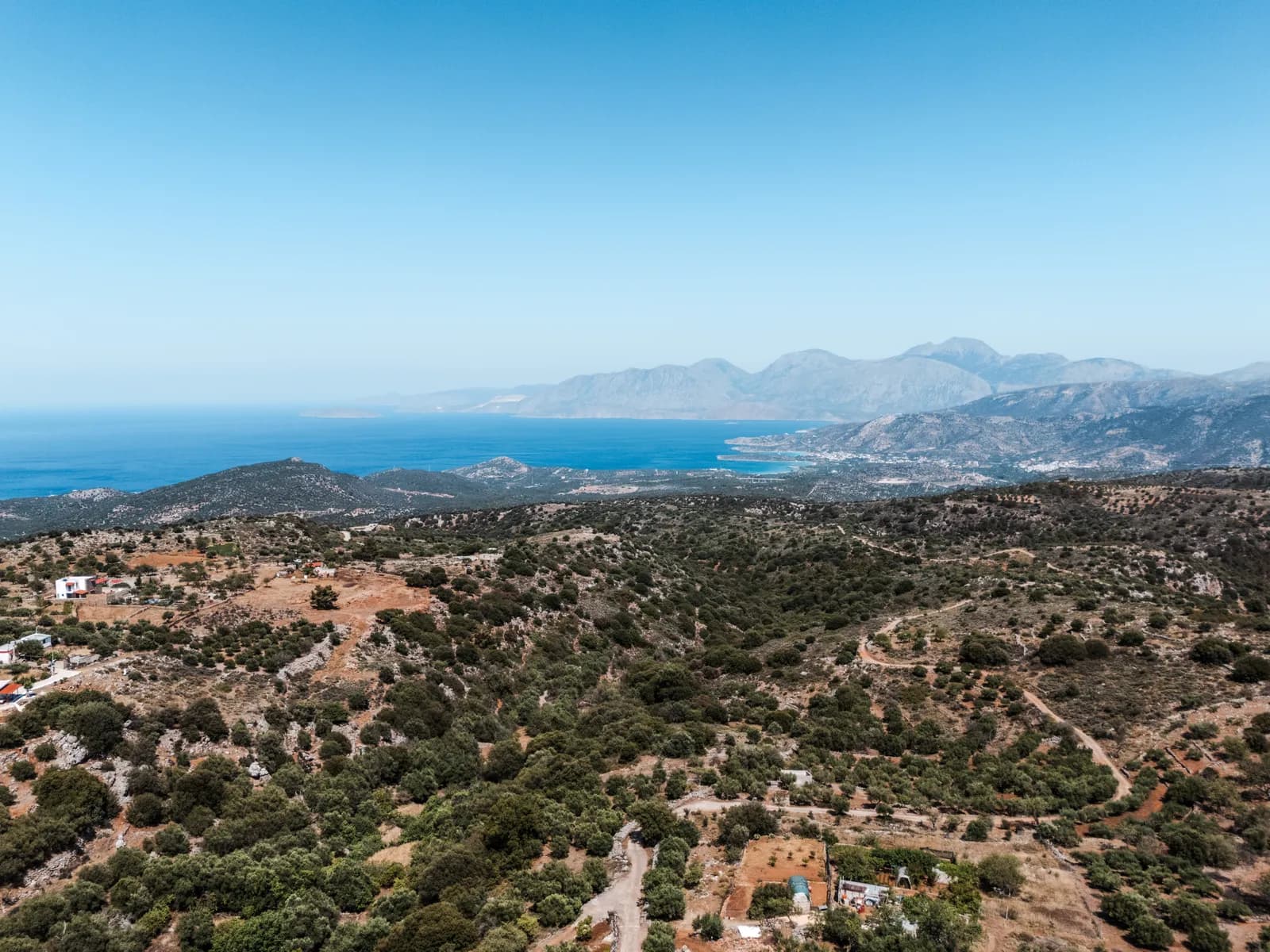
The name comes from Castel Mirabello, a fort probably built in the early 13th century on the hill that now holds the Lassithi prefecture buildings in Agios Nikolaos. The fort was damaged by pirates in 1537, then destroyed during the Cretan War in the 17th century; its stones were used to build the modern town. It gave its name to the province, and then to the bay. In Italian, mirabello literally reads as 'beautiful view', which suits the landscape rather well.
Where to admire the bay
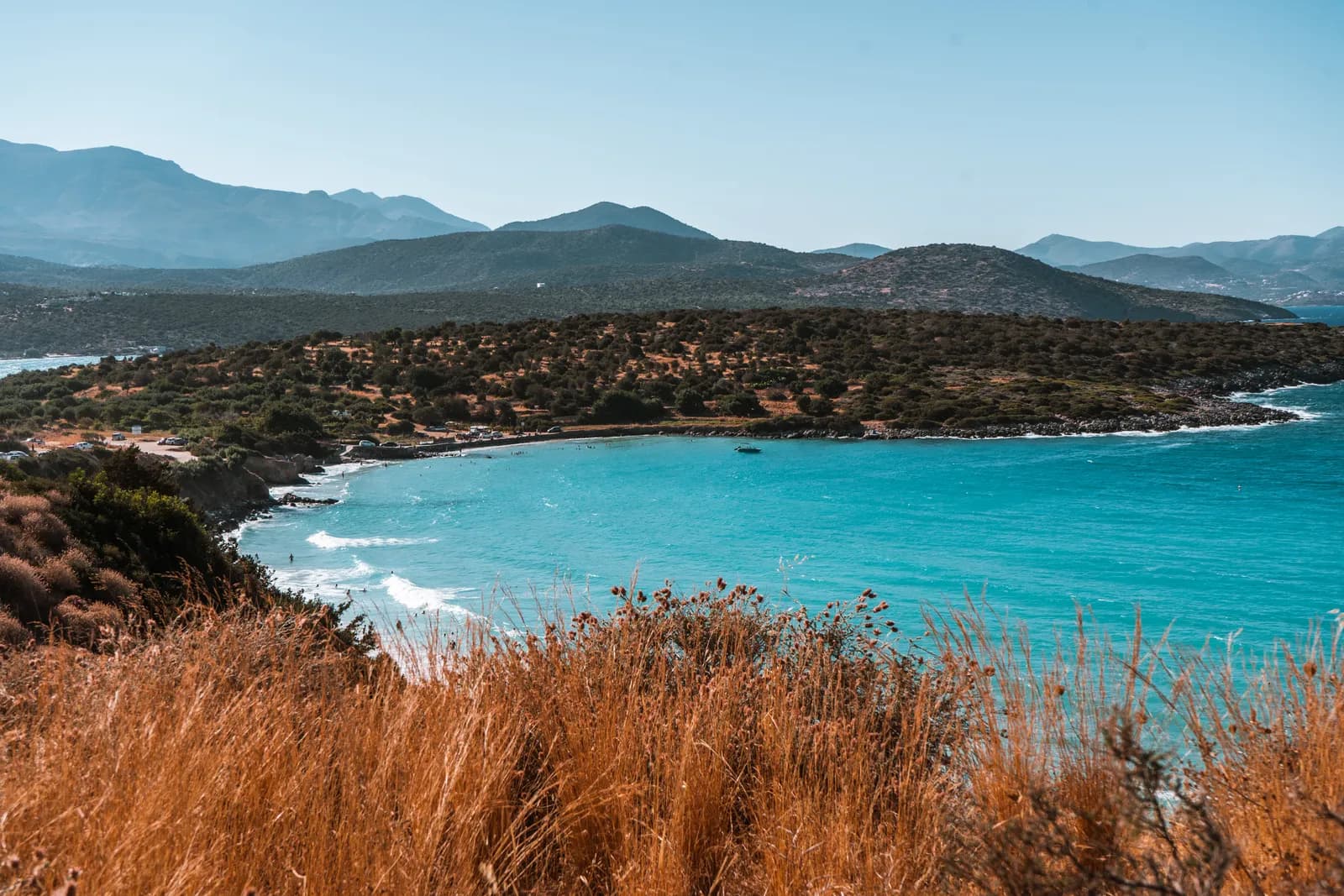
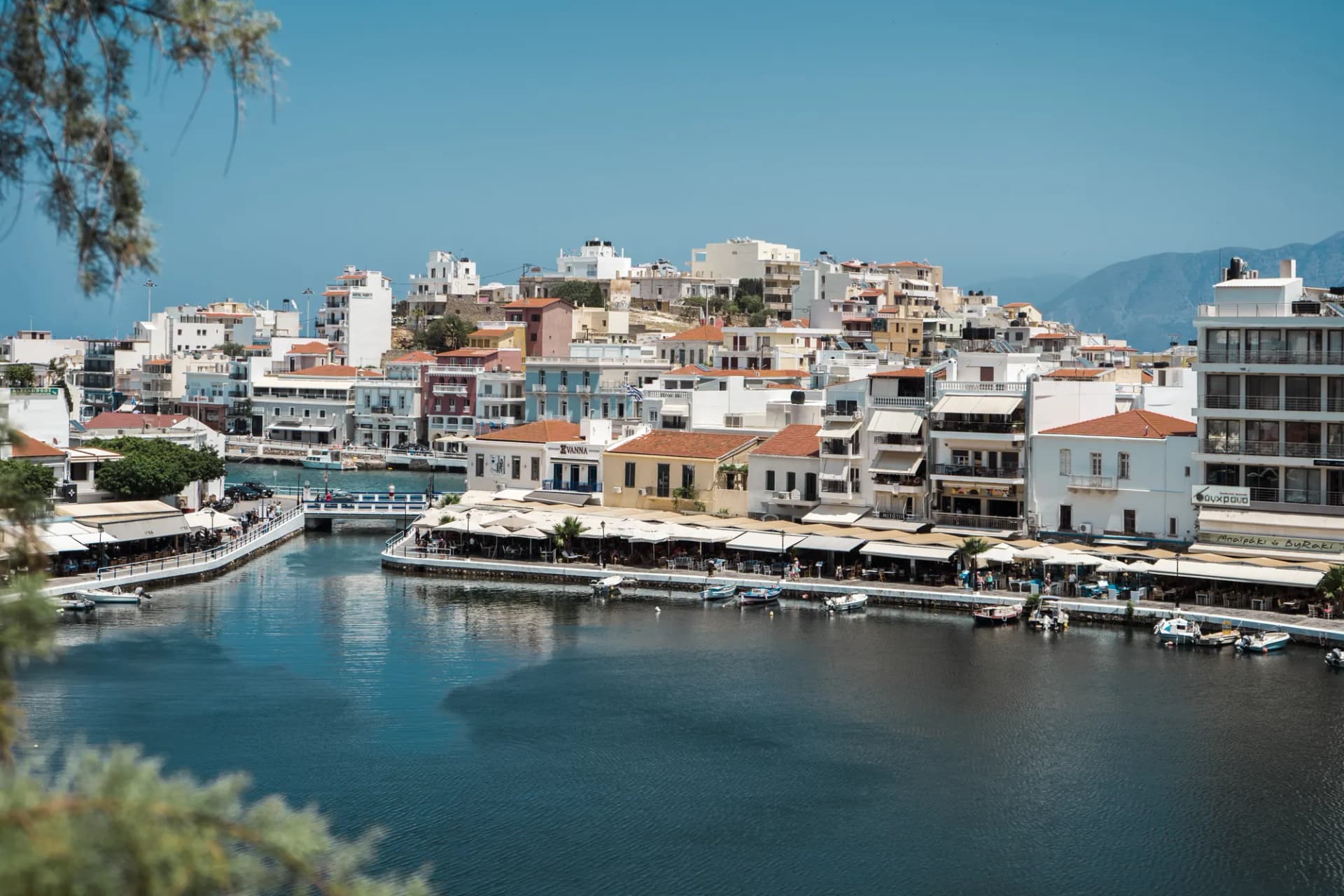
- Agios Nikolaos: from the steps above Lake Voulismeni and from the hill of the old fort, you can see the harbour and the whole bay.
- Elounda: the road down from Agios Nikolaos gives you a bird's-eye view of Elounda Bay and the Spinalonga peninsula, best enjoyed from the bends leading down to the village.
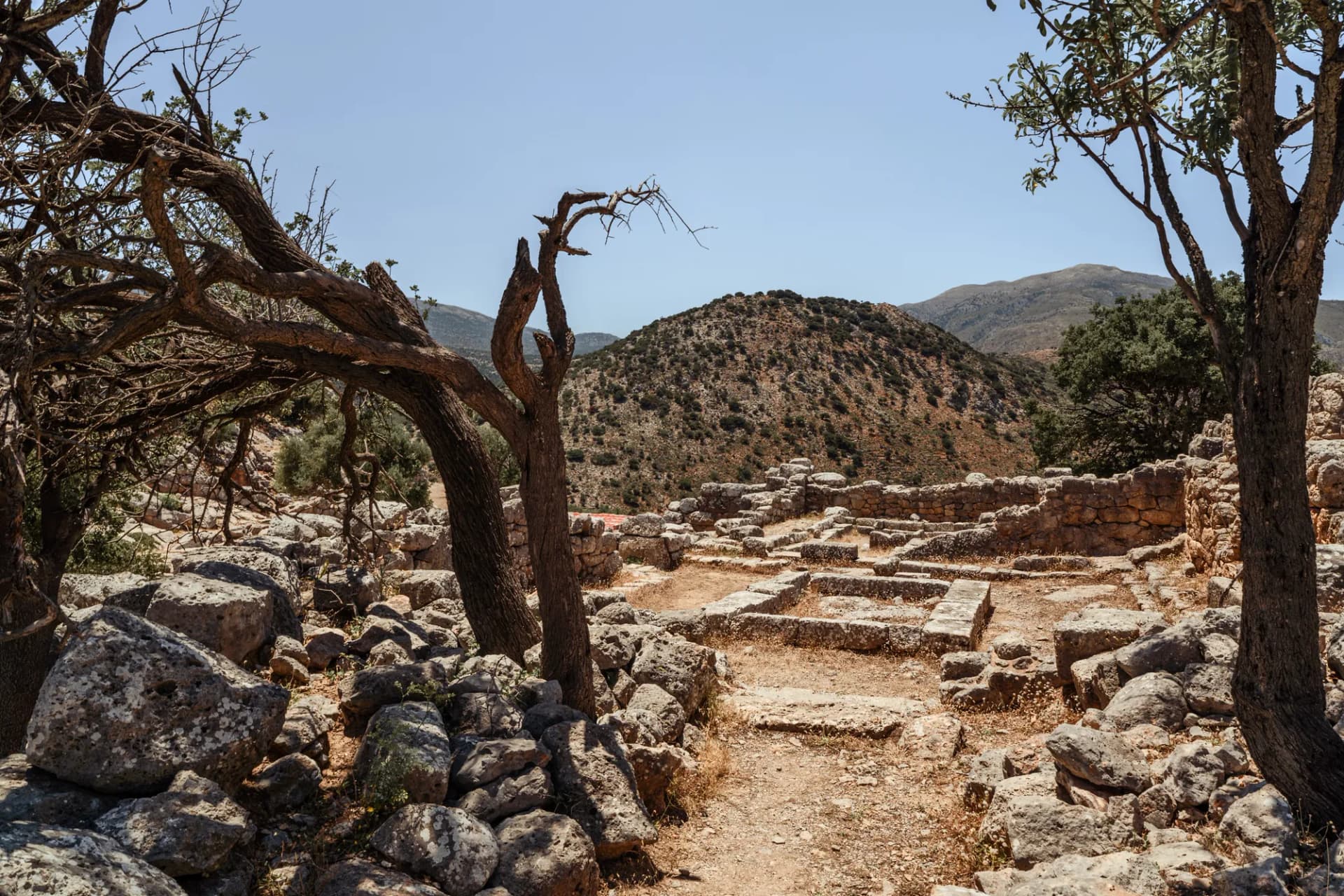
- Kritsa and Lato: from the ancient site of Lato (€5, closed on Tuesdays), the bay spreads out beyond the olive trees all the way to Agios Nikolaos.
Voulisma (Golden Beach), Istro's star beach
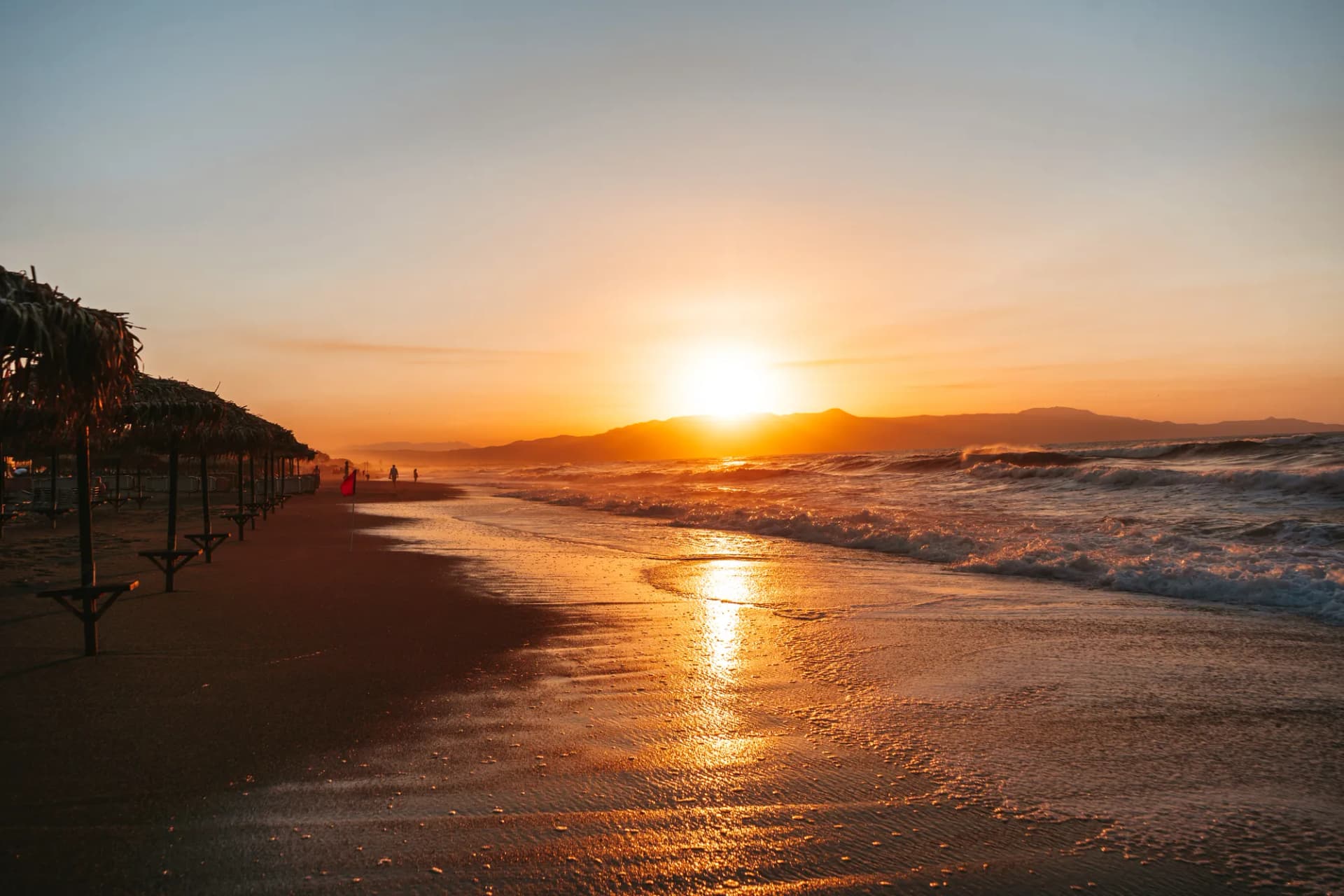
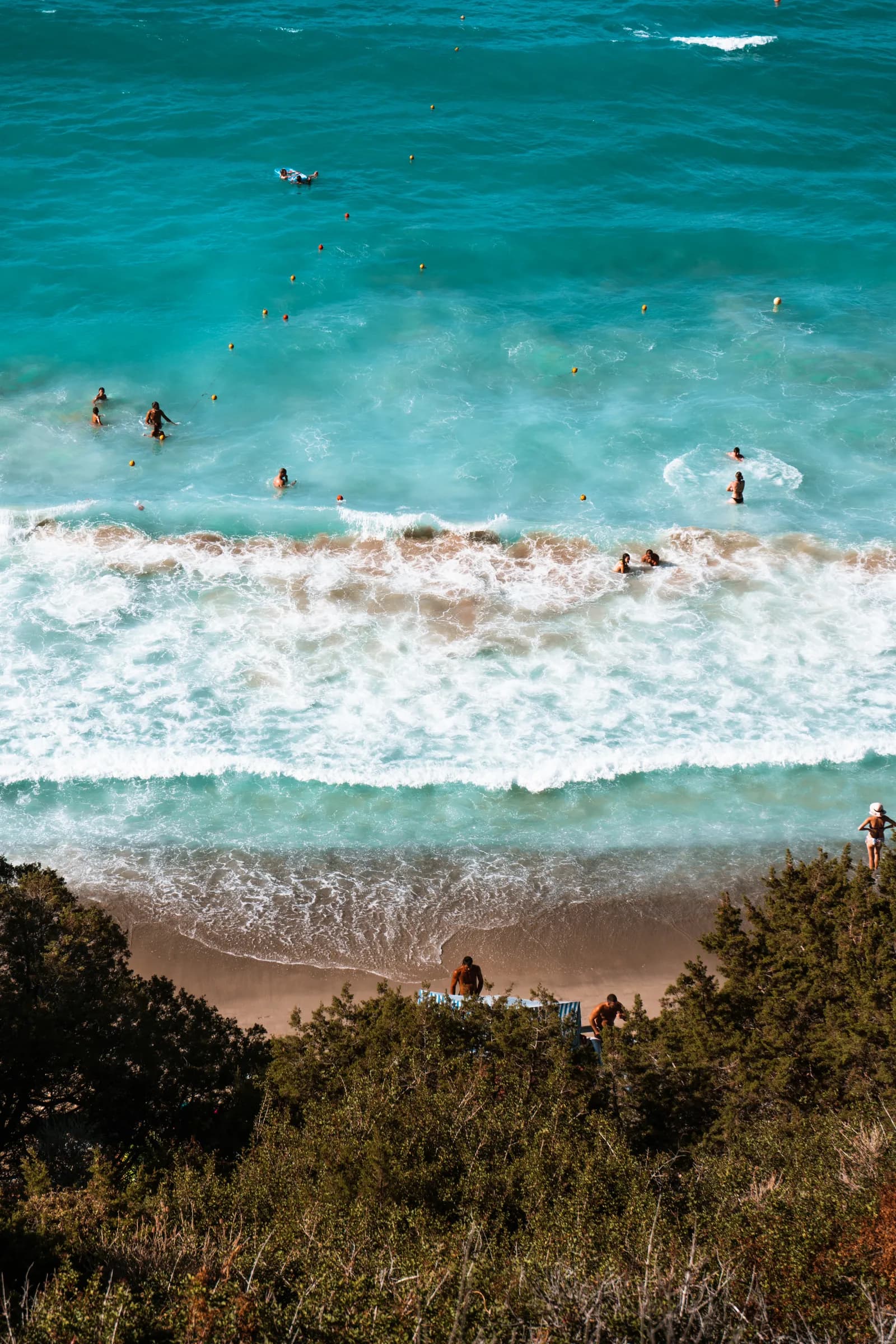
Voulisma, also known as Golden Beach, is in Istro, about 12 km east of Agios Nikolaos and 22 km north of Ierapetra. It is a beach of pale sand with turquoise water that is usually calm and stays shallow for quite a distance. A small secondary bay to the west offers a little more shelter when the wind picks up.
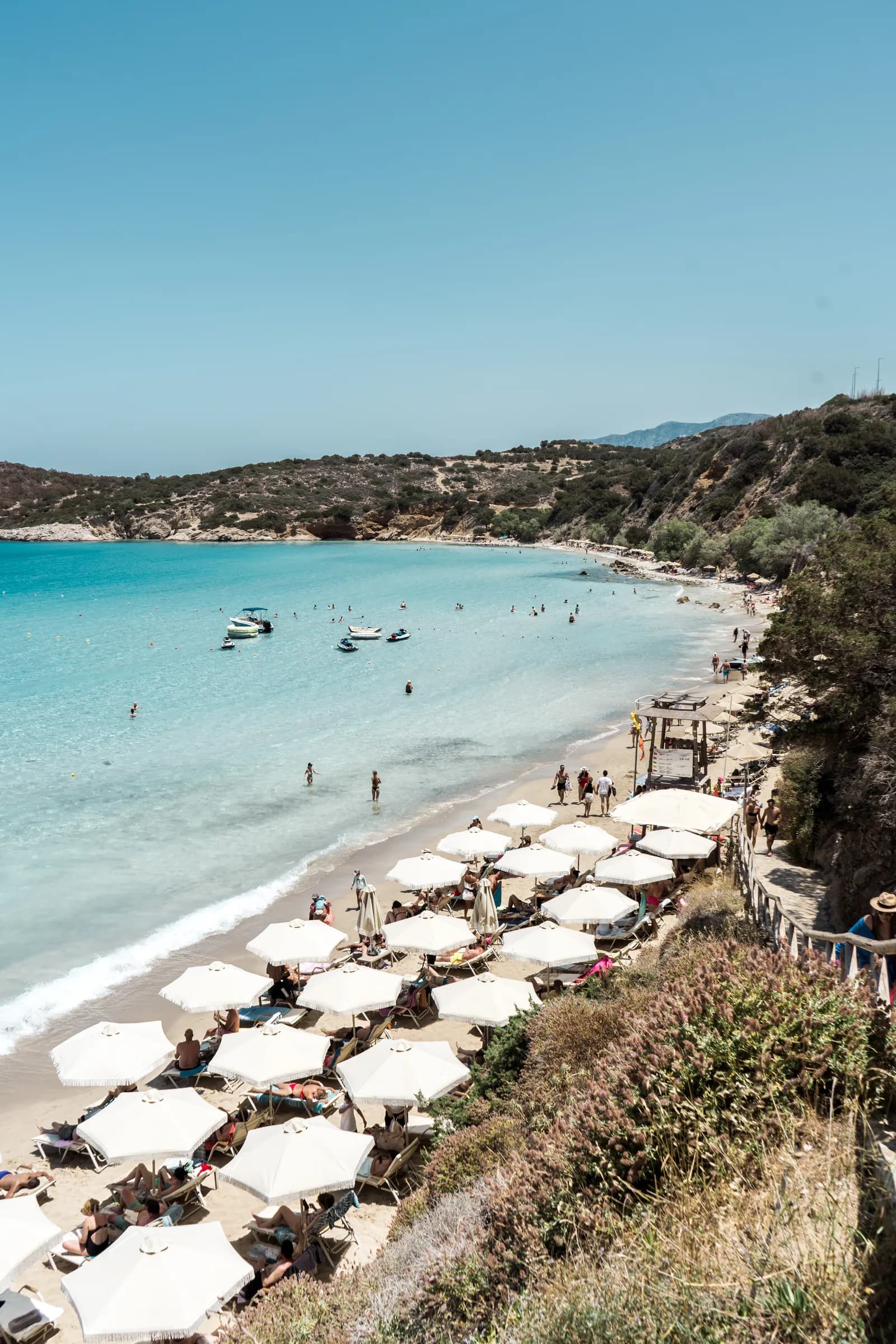
Photos : Pierre Bouyer
- Type: sand, with a gently sloping entry into the water.
- Facilities: sunbeds and umbrellas, showers, lifeguard in season, water sports hire, snack bars and tavernas nearby.
- Access: tarmac road, then a few steps down from the coast road; buses between Agios Nikolaos and Ierapetra stop in Istro.
- Parking: no large dedicated car park, just spaces along the road and near the hotels, which fill up quickly in summer.
- Crowds: heavy, especially in July and August. The beach is fairly narrow and fills up by late morning.
- Best for: families, leisurely swimmers, anyone who wants sand and crystal-clear water without a walk.
Istro and Kalo Chorio: three quieter beaches
Around Voulisma, the Istro and Kalo Chorio coastline strings together several beaches within 2 km of each other. They are often less overrun and make good fallback options.
Agios Panteleimon
This is the longest beach in the area, about 700 m from Voulisma, named after the little church built at the water's edge. Sand, calm shallow water, sunbeds, showers, water sports and a lifeguard: it works well for families. The Kalos Potamos wetland opens out at its western end. The beach was awarded a Blue Flag for 2026.
Pilos (Istron Bay)
About 1 km east of Istro, this sandy beach is tucked away at the back of a small, steep-sided bay, below the Istron Bay hotel that gives it its nickname. Calm blue water, umbrellas and a snack bar run by the hotel, and a small jetty for boats. Access remains public, but the setting is clearly that of a hotel: come for a peaceful swim rather than a full day.
Karavostasi
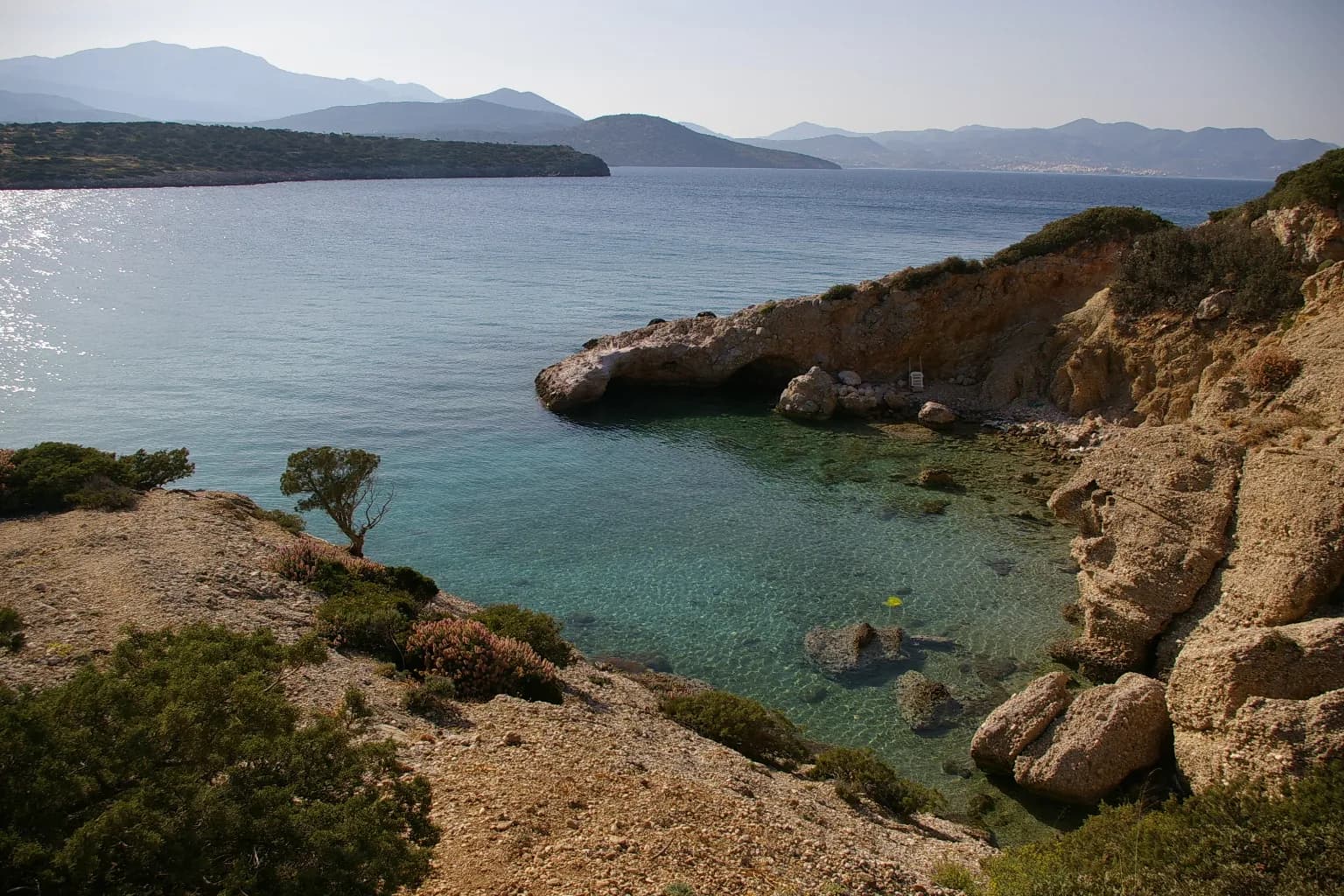
The westernmost of the Kalo Chorio beaches is also the least developed. It is a fairly long stretch of pebbles and sand, rocky underfoot in places, with plenty of tamarisk trees for shade and little in the way of tourist facilities. Bring water shoes. This is the beach I recommend if you want peace and quiet 15 minutes from Agios Nikolaos.
Agios Nikolaos beaches: Almyros, Ammoudara, Havania
If you are staying in Agios Nikolaos, there is no need to drive anywhere for a swim. In town, Kitroplatia and Ammoudi will do for an hour, but the three beaches below are much nicer for a proper half day.
Almyros
About 2.5 km south of the centre, Almyros is the town's largest beach. It stretches across the mouth of the Almyros river, fed by karst springs, below a protected wetland where many birds nest. The sand is fine and the water shallow and usually calm, which makes it one of the best beaches on the bay for young children.
Full facilities: sunbeds, umbrellas, showers, toilets, water sports and snack bars. Parking is along the wetland and the road, with no reported charge. Almyros was awarded a Blue Flag for 2026.
Ammoudara
Just south of Almyros, about 4 km from the centre, Ammoudara is a sandy beach lined with tavernas and small hotels. It is organised and holds a 2026 Blue Flag, but gets very busy at weekends in July and August.
Havania
North of town, on the Elounda road, Havania (or Chavania) is a municipal beach of sand and small pebbles, with clear, calm water. It is fully organised, with a snack bar, a lifeguard and a fairly large car park. It is a good option if you are staying on the north side of town or heading on to Elounda afterwards. Two sections of Havania are on the 2026 Blue Flag list.
Elounda and the Kolokytha cove
Elounda beach (Schisma)
About 11 km from Agios Nikolaos, Elounda's municipal beach runs alongside the harbour at Schisma. Sand, water that is always calm thanks to the Korfos lagoon and the Spinalonga peninsula, sunbeds, showers, a beach volleyball court, a playground and water sports. There is a free municipal car park a few minutes' walk away. Schisma is one of the beaches holding a Blue Flag in 2026.
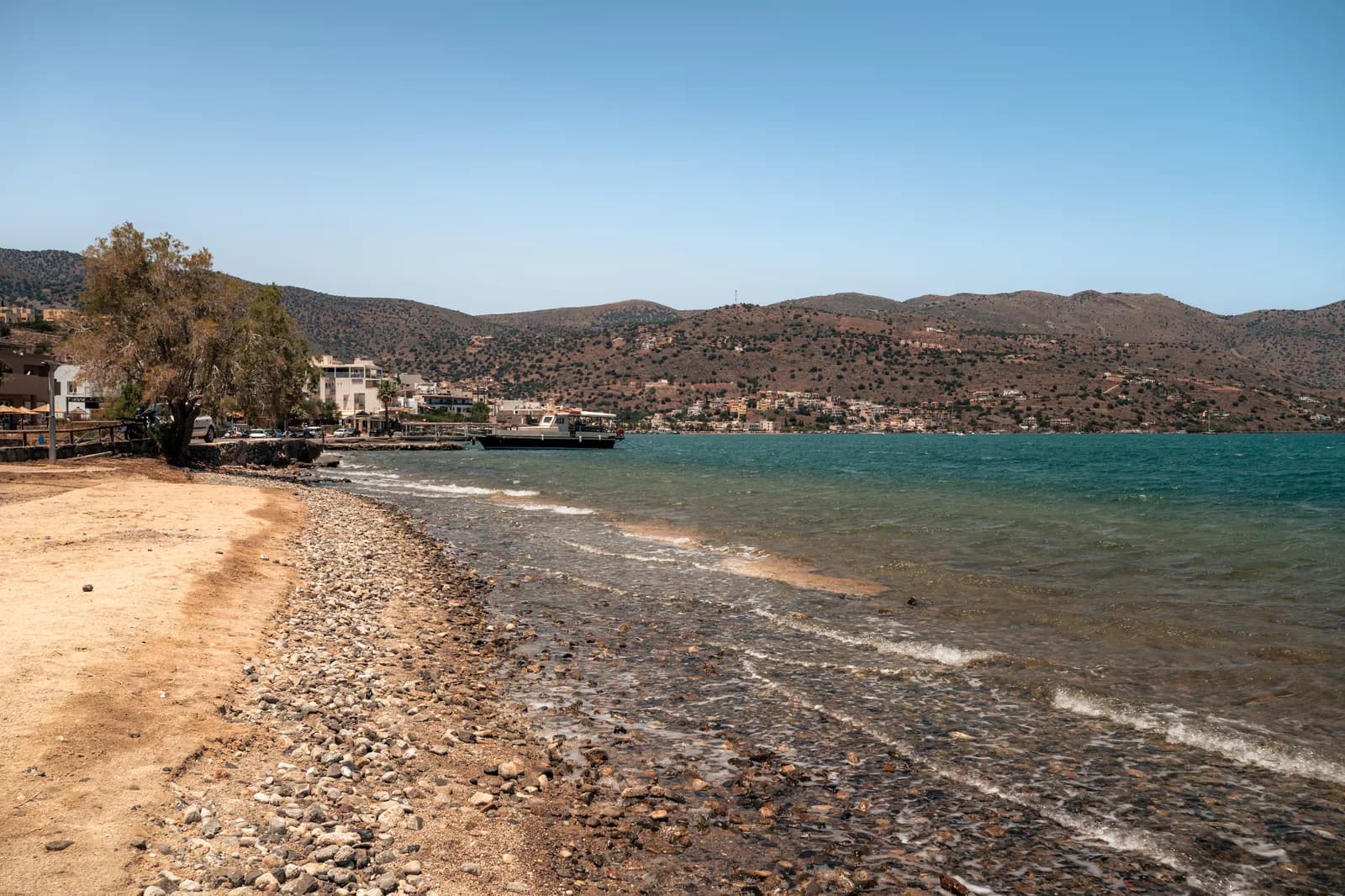
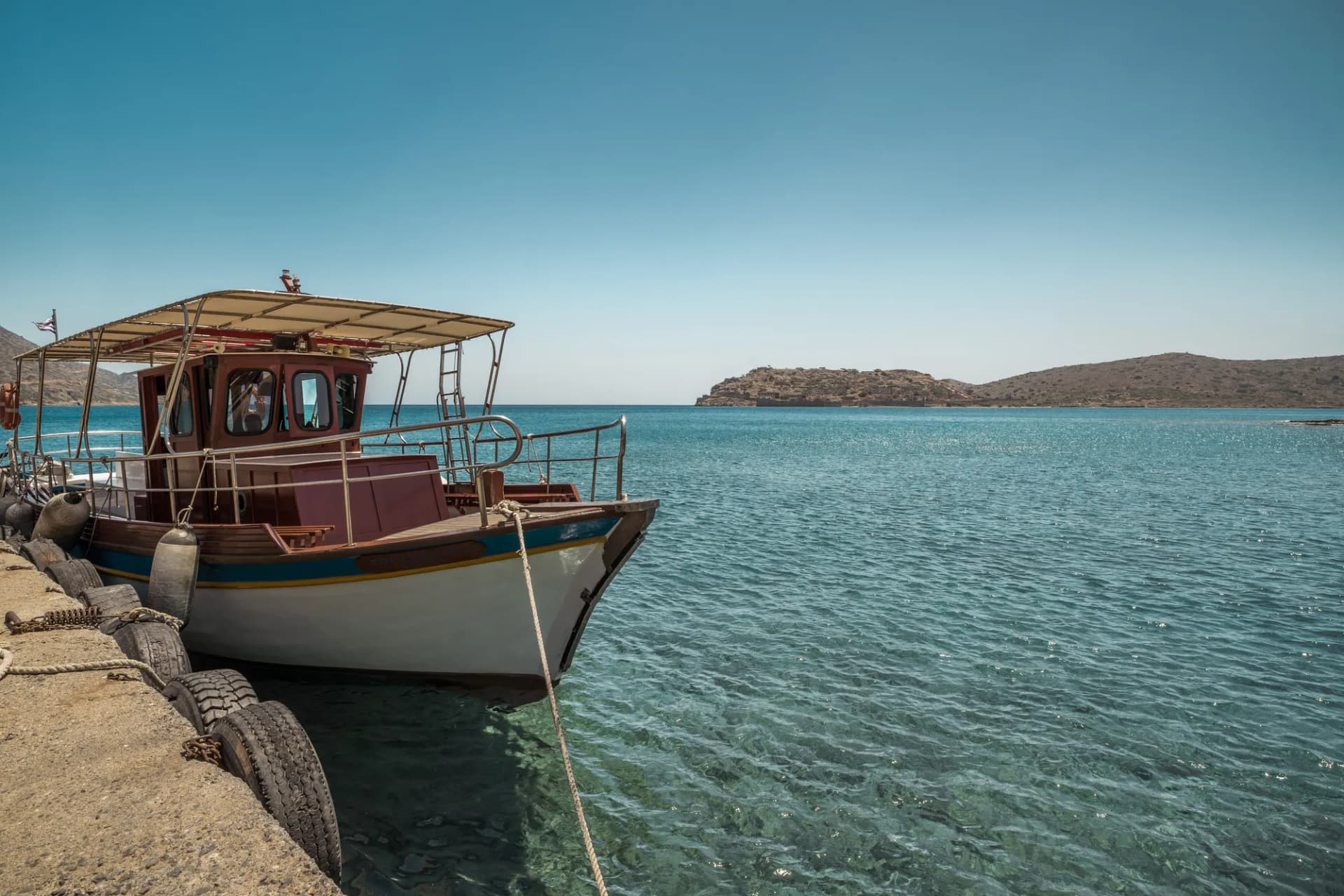
It is a village beach, practical rather than spectacular. Its real advantage is that you can combine a swim with a boat trip: this is where the crossings leave to visit Spinalonga (about €14 return, a 20-minute crossing, plus €20 entry to the islet).
Kolokytha
On the inner side of the Spinalonga peninsula, Kolokytha is a white-sand cove with turquoise water, shallow and usually calm, surrounded by old olive trees. To get there from Elounda, you cross the causeway over the old salt pans, pass the little canal dug by the French army in 1897, then follow a dirt track for about 3 to 4 km to the chapel of Saint Luke (Agios Loukas). From there it is a 5 to 10 minute walk down a path.
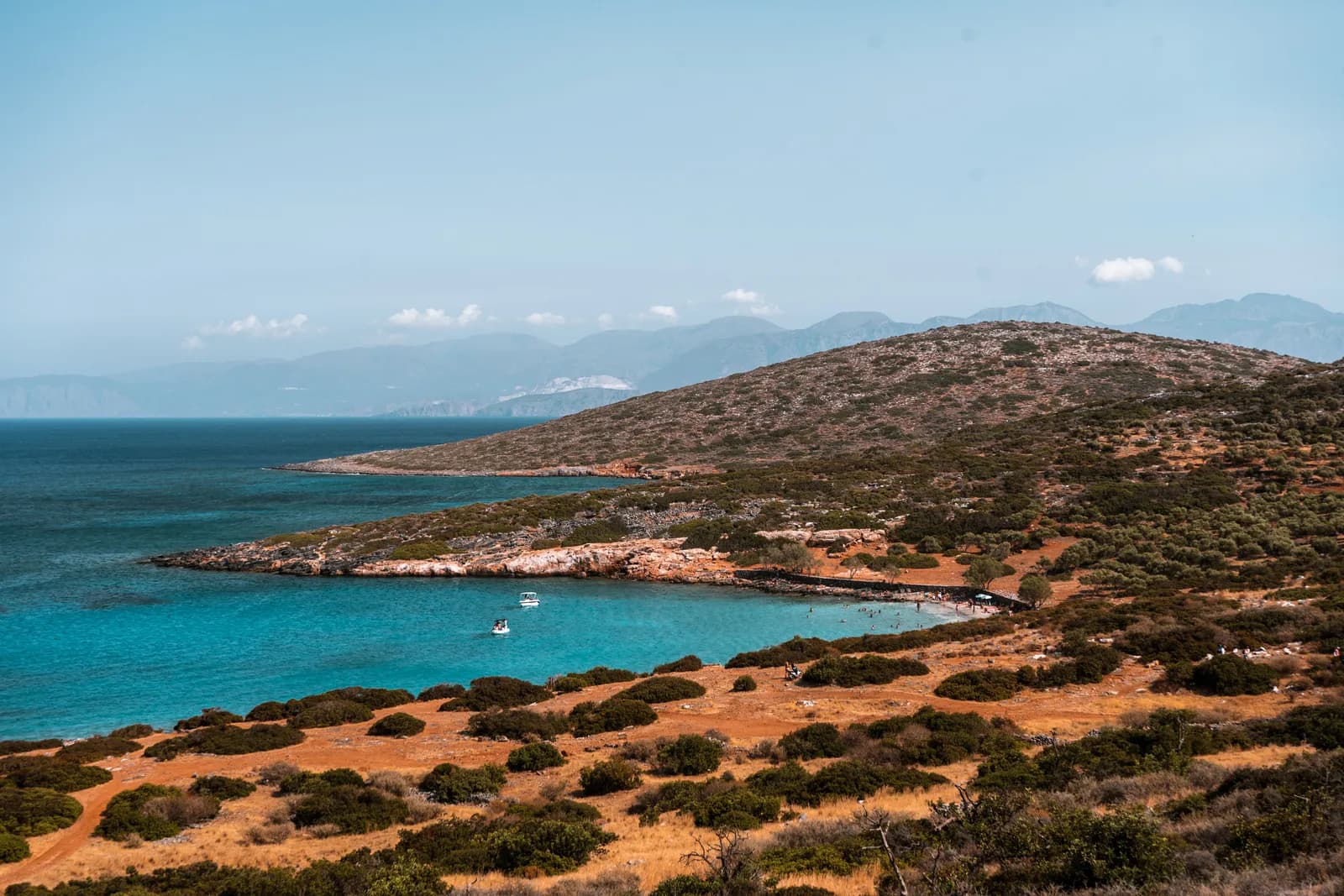
There are no facilities on site: no sunbeds, no snack bar, no toilets. The cove is small and has become famous; in August, excursion boats drop their passengers here too. Come early in the morning or late in the afternoon, with water, sun protection and shoes for the path. Near the beach you can see the remains of an Early Christian basilica from the 5th and 6th centuries.
The head and east shore of the bay: Pacheia Ammos, Tholos, Mochlos
Beyond Istro, the main road skirts the head of the bay, then climbs towards Sitia. The beaches here are less developed and more exposed to the wind, but far less crowded.
Pacheia Ammos
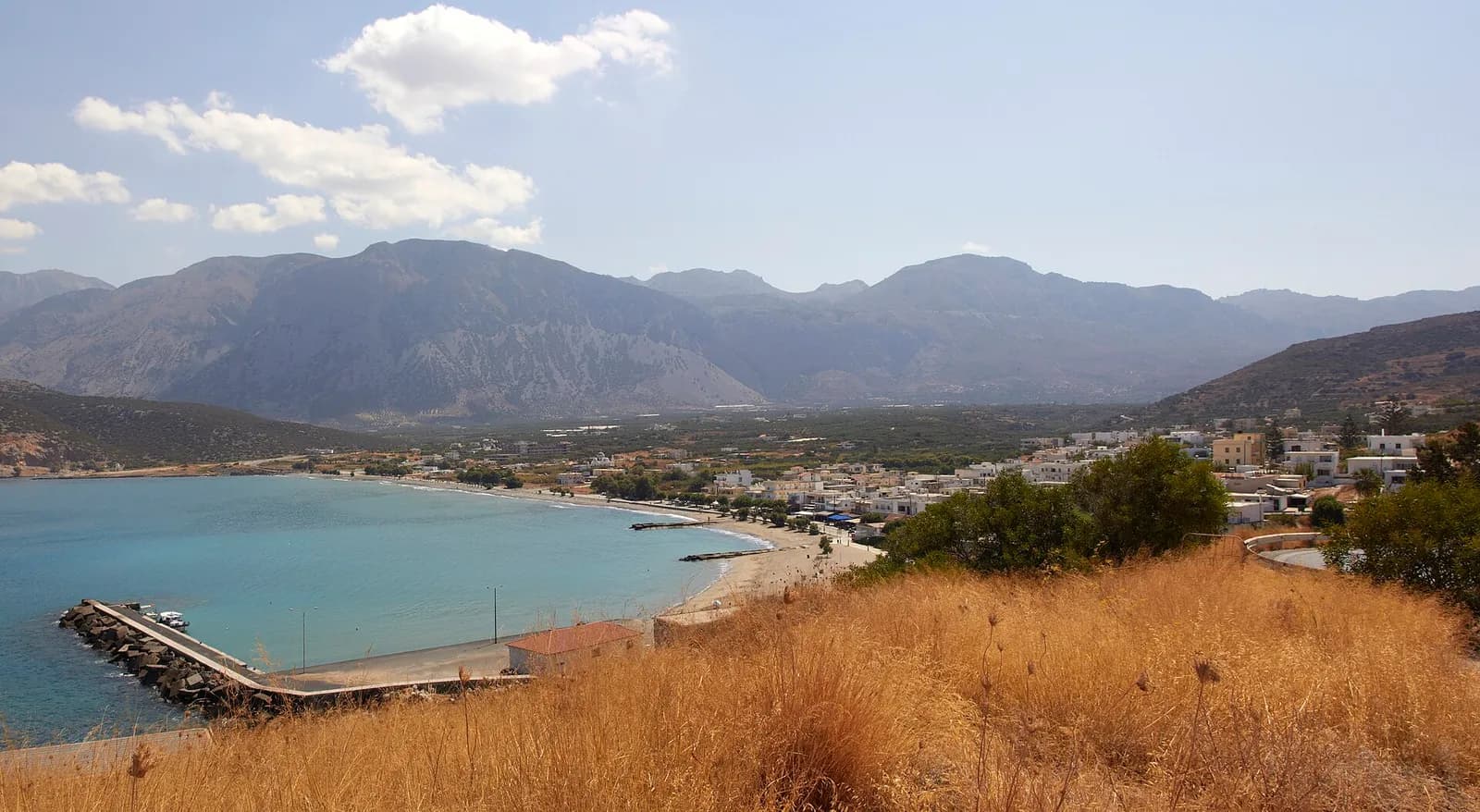
About 20 km from Agios Nikolaos and 14 km from Ierapetra, the village of Pacheia Ammos sits at the narrowest point of Crete, at the head of the bay. Its long beach of coarse sand and pebbles is open to the north winds and the sea is often rough. The western section, sheltered by a breakwater, is the calmest and the only part with sunbeds and umbrellas. The village has its own tavernas, cafés and shops. It makes a handy stop on the way to Ierapetra, where boats leave for Chrissi (landing on the island has been banned since 2025, so swimming is done from the boat).
Tholos (Kavousi)
About 26 km from Agios Nikolaos, Tholos lies 4 km north of the village of Kavousi along a tarmac road, where a valley of olive groves and vines meets the sea. The beach mixes pebbles and sand, especially on the western side, with tamarisk trees for shade and a small harbour. There are a few rooms and tavernas, but tourism remains low-key.
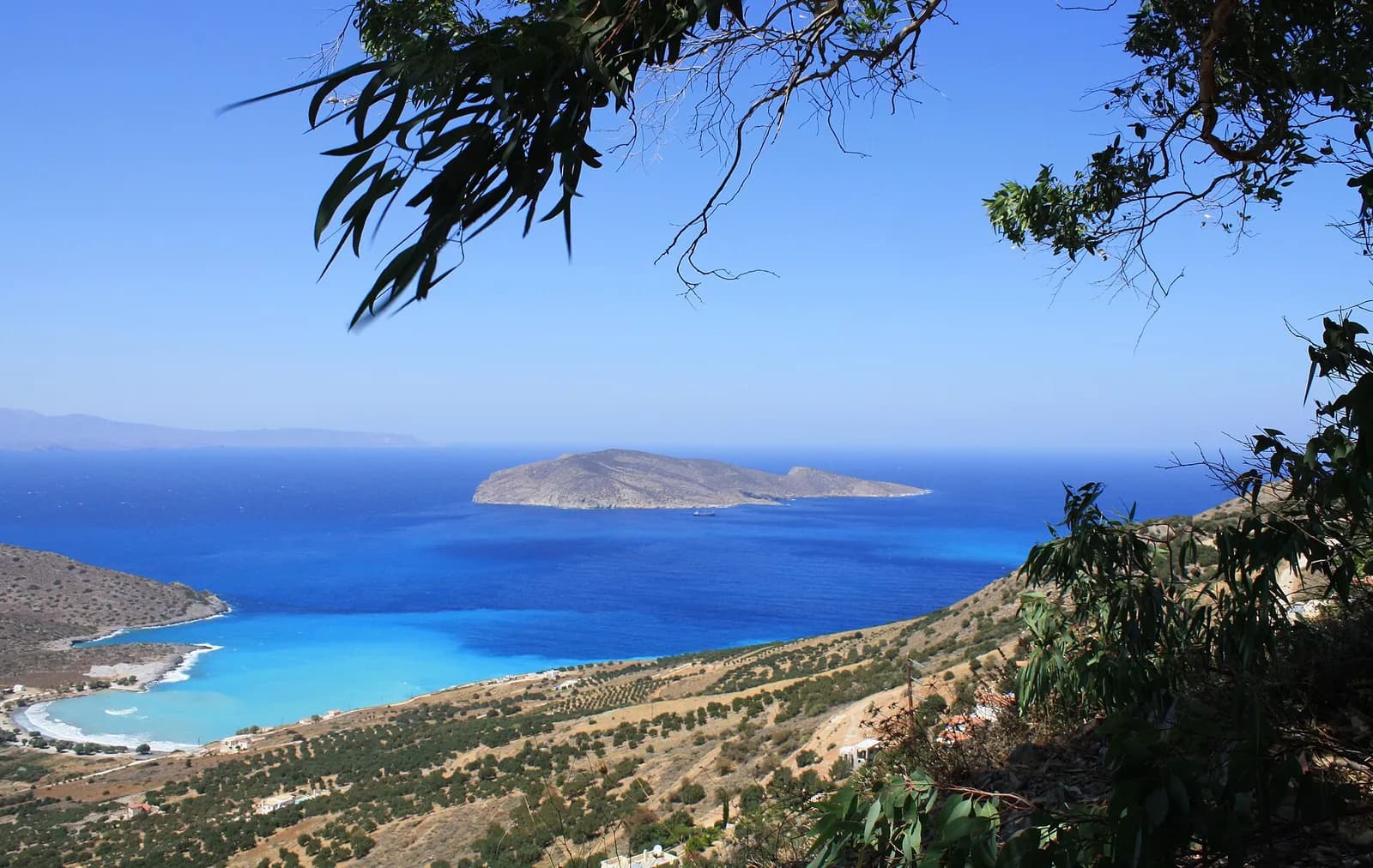
To be honest, the water is often slightly cloudy here, because of the underwater freshwater springs flowing down from the Thripti massif, and the sea is rough more often than on the western side of the bay. You come to Tholos for the peace and the atmosphere, not for postcard water. Opposite, the islet of Pseira was once home to a Minoan harbour.
Mochlos and its Minoan islet
Mochlos is a small fishing village about 38 km from Agios Nikolaos and 35 km from Sitia. The beach is small and undeveloped, a mix of sand, pebbles and rocks, with deep and very clear water. The harbour tavernas serve fish looking out at the islet, just 150 m from the shore.
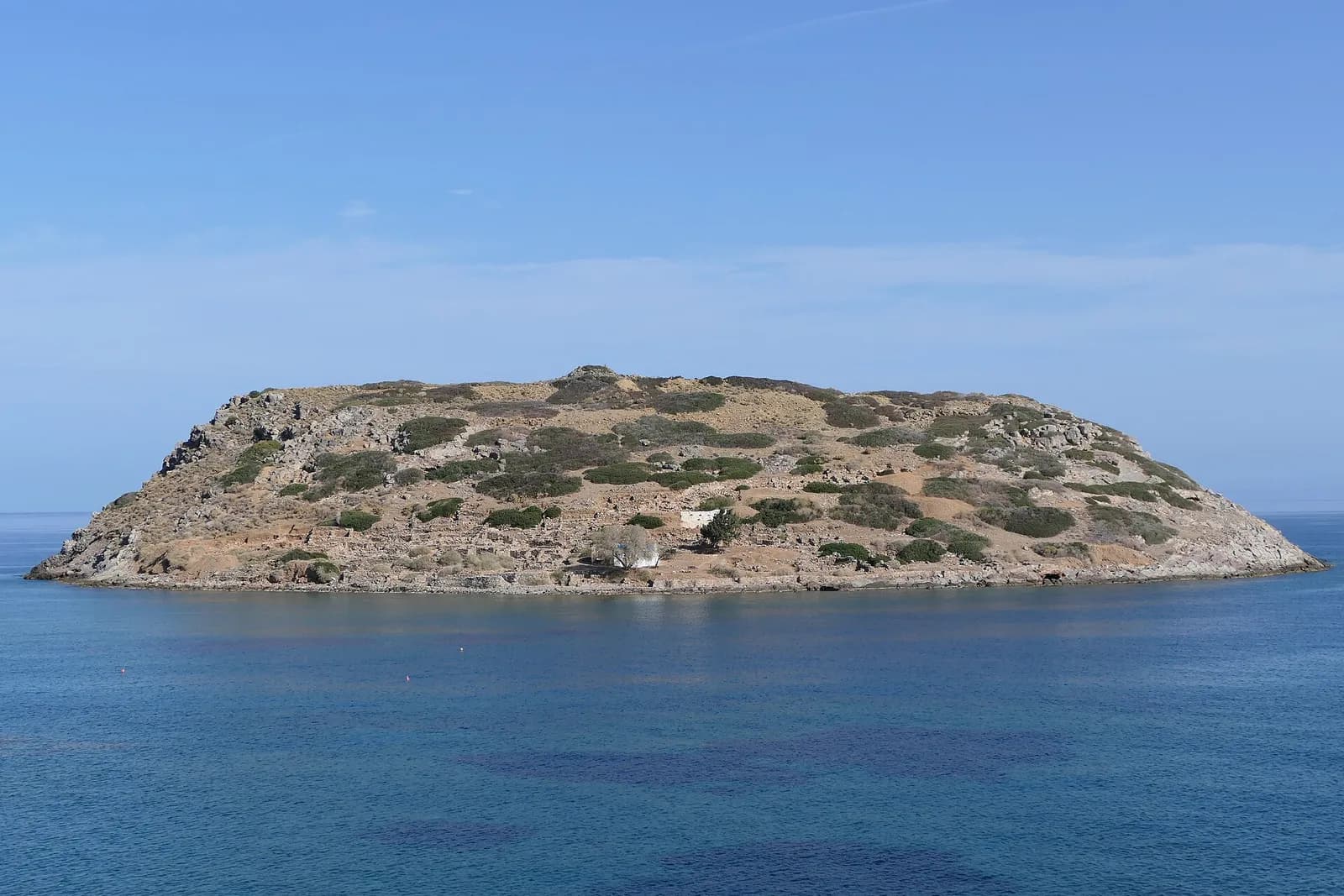
The islet holds the remains of a Minoan settlement occupied from around 3100 BC, excavated by Richard Seager in 1908 and, since 1989, by a Greek-American team. Archaeologists believe it was joined to Crete in Minoan times and served as a harbour. Confident swimmers do make the crossing, but it is not a supervised swim: check the sea and the boat traffic before you set off.
Comparison table of the bay's beaches
Road distances from the centre of Agios Nikolaos; journey times are approximate and exclude summer traffic jams.
| Beach | Distance | Time | Seabed | Facilities | Crowds | Best for |
|---|---|---|---|---|---|---|
| Almyros | about 2.5 km | about 5 min | sand | full | heavy | families, no car |
| Havania | about 3 km | about 5 min | sand and small pebbles | full | moderate | families, staying on the north side |
| Ammoudara | about 4 km | about 10 min | sand | full | heavy at weekends | families |
| Elounda (Schisma) | about 11 km | about 20 min | sand | full, playground | heavy | children, combine with Spinalonga |
| Kolokytha | about 15 km | about 35 min including the walk | sand | none | heavy in August | snorkelling, nature |
| Voulisma | about 12 km | about 15 min | sand | full | very heavy | everyone, early morning |
| Agios Panteleimon | about 12 km | about 15 min | sand | full | moderate | families, windsurfing |
| Pilos (Istron Bay) | about 13 km | about 15 min | sand | the hotel's | moderate | a calm swim |
| Karavostasi | about 12 km | about 15 min | pebbles and sand | few or none | light | peace and quiet, natural shade |
| Pacheia Ammos | about 20 km | about 25 min | coarse sand and pebbles | western section | light | a stop on the way to Ierapetra |
| Tholos | about 26 km | about 35 min | pebbles and sand | a few tavernas | light | peace and quiet, village feel |
| Mochlos | about 38 km | about 50 min | sand, pebbles, rocks | tavernas | light | snorkelling, fish at the harbour |
When to swim, wind, snorkelling and children
Sea temperature
On the north-east coast, the sea is around 19 to 20°C in May, 22 to 23°C in June, 24 to 25°C in July, 25 to 26°C in August, about 25°C in September and 22 to 23°C in October. It drops back to 17 to 19°C from December to April. My favourite time for the bay is still September: the water is still warm, the beaches empty out and the wind eases. The month-by-month detail is in our guide on when to go to Crete.
The meltemi, and why the bay is fairly sheltered
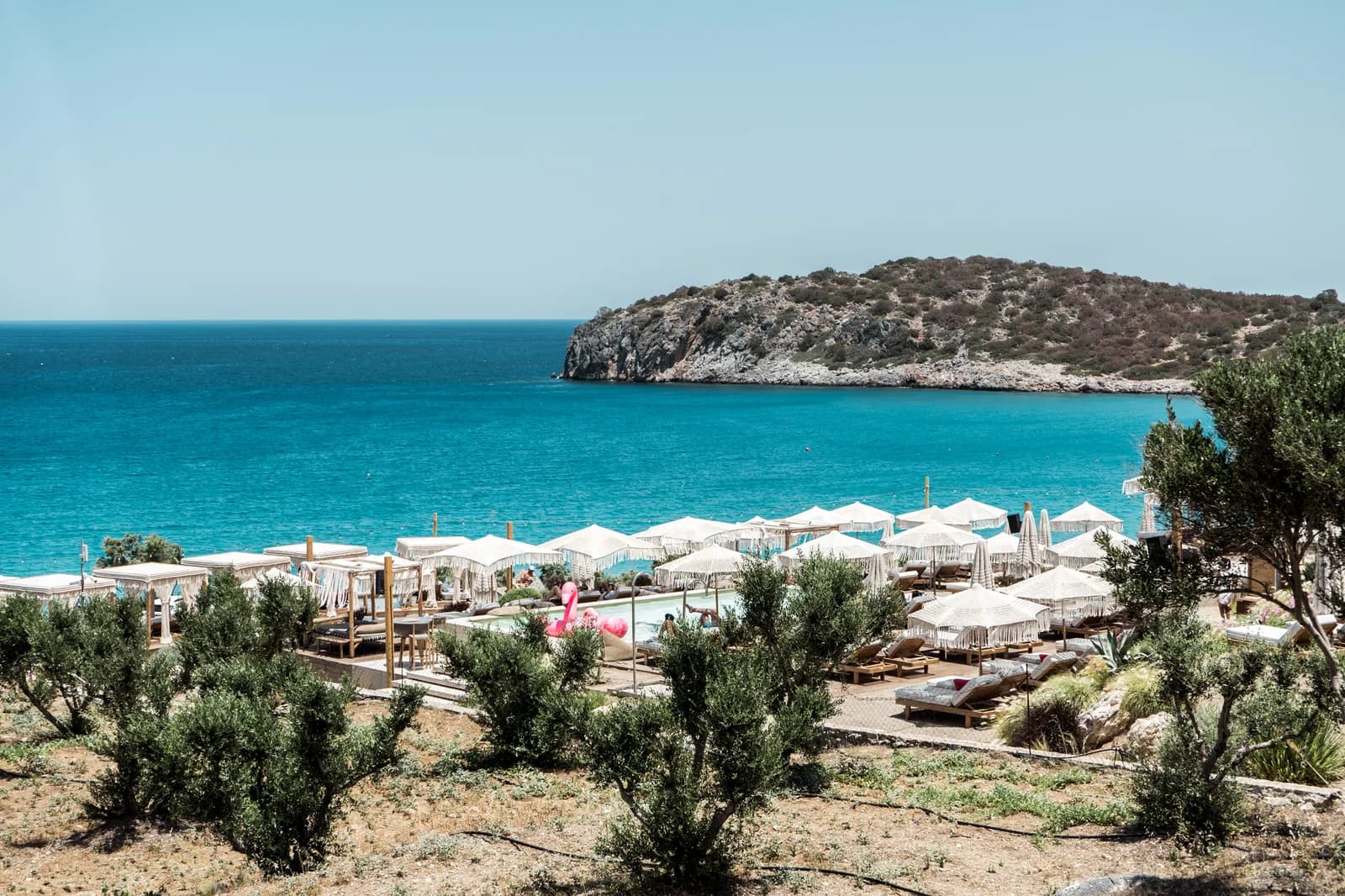
The meltemi is the north wind that blows across the Aegean in summer, peaking in July and August, battering the beaches of Crete's north coast before easing off at the end of September. Mirabello Bay opens to the north, but its shape limits the damage: the western shore (Agios Nikolaos, Havania, Almyros) has land at its back, and Elounda Bay is closed off by the Spinalonga peninsula, which explains its almost always flat water. By contrast, the north-facing beaches at the head and on the east side of the bay, such as Pacheia Ammos or Tholos, take the full force of the wind and waves.
On days of strong meltemi, I recommend Elounda, Kolokytha or the small western bay at Voulisma, and saving Pacheia Ammos and Tholos for calm days. For planning a trip in high season, see also our article on Crete in summer.
Snorkelling
The best places to put your head underwater are the rocky ends of the coves: the rocks framing Kolokytha, the edges of Pilos bay and the waters around the Mochlos islet, where the sea is deep and clear. On the big sandy beaches such as Almyros or Ammoudara, the seabed is more monotonous. For other spots around the island, see our pick of the best snorkelling spots in Crete.
Child-friendly beaches
- Almyros: sand, shallow water and every service, 5 minutes from town.
- Elounda (Schisma): flat water, a playground, with the harbour and restaurants a stone's throw away.
- Voulisma and Agios Panteleimon: gentle slope and lifeguards in season, but very crowded in summer.
- Havania: supervised municipal beach, with parking right next to it.
Blue Flags 2026
In 2026, the municipality of Agios Nikolaos has 27 Blue Flag beaches, putting it top in Crete. Of the beaches in this article, the list published in May 2026 includes Almyros, Ammoudara, two sections of Havania (Chavania), Schisma in Elounda, Agios Panteleimon, Pilos (Istron Bay) and Karavostasi. Voulisma is not on it this year. The label mainly covers water quality and services; it says nothing about how beautiful or how busy a beach is.
Practical info: getting there, parking, budget
Agios Nikolaos is about 65 km from Heraklion, roughly an hour's drive, and is the most logical base for touring the bay. Without a car, you can walk to Almyros (about 30 minutes) and take the KTEL buses towards Elounda or towards Ierapetra, which stop in Istro. For Kolokytha, Tholos or Mochlos, a car becomes almost essential; our guide to hiring a car in Crete covers the pitfalls to avoid.
DiscoverCars
Car rental comparison — 150+ countries
Compare prices from Hertz, Avis, Sixt and local providers. All fees included, free cancellation. Rated 4.6/5 on Trustpilot.


- Parking: usually free, along the road or in municipal car parks (Almyros, Havania, Elounda). At Voulisma and Kolokytha, spaces are scarce in summer: arrive early.
- Budget: access to the beaches is free. Only sunbed and umbrella hire costs money on the organised beaches, with prices that vary by beach and season: ask the rate before you settle in.
- What to bring: water shoes for the pebbles (Karavostasi, Tholos, Mochlos), mask and snorkel, and water and shade for Kolokytha.
- When to come: June and September for the best balance between warm sea and crowds; in July and August, swim before 10am or after 5pm.
If you want to sleep with your toes in the water, several hotels on the bay feature in our selection of the best beachfront hotels in Crete. You will also find more detail on the neighbouring town and village in our upcoming guides to Agios Nikolaos and Elounda.
If I could keep only one day on Mirabello Bay: Voulisma as it opens, lunch in Istro, then Elounda and Kolokytha in the late afternoon, once the boats have gone.
Frequently asked questions
Voulisma, also known as Golden Beach, near Istro, about 12 km east of Agios Nikolaos, is the best known for its pale sand and shallow turquoise water. It is also very busy in July and August. For a wilder setting, the Kolokytha cove, across the water from Elounda, is the other great classic.
Partly. The meltemi blows from the north in summer: the beaches on the western shore, around Agios Nikolaos and Elounda, are the best sheltered. Beaches at the head of the bay and on the eastern shore, such as Pacheia Ammos or Tholos, are more exposed and the sea there is more often choppy.
Almyros, Voulisma, Havania and Elounda's municipal beach (Schisma) have shallow water, lifeguards in season and facilities. Elounda beach also has a playground. Kolokytha, with no services at all, is less practical with young children.
The islet is only about 150 metres from the village and some confident swimmers do make the crossing. It is not a supervised swim: check the sea conditions and boat traffic, or ask in the village about a crossing by small boat.
From June to October the sea sits at around 22 to 26°C, peaking at about 25 to 26°C in August. September combines still-warm water, fewer people and a meltemi that eases off towards the end of the month.
Âme Bohème exists thanks to you
Some links in this article are affiliate links. This means that if you book or purchase a product through these links, we receive a small commission — at no extra cost to you. It's thanks to this support that we can continue creating free, quality content.
You can also buy us a coffee, or follow us on Instagram and Facebook.