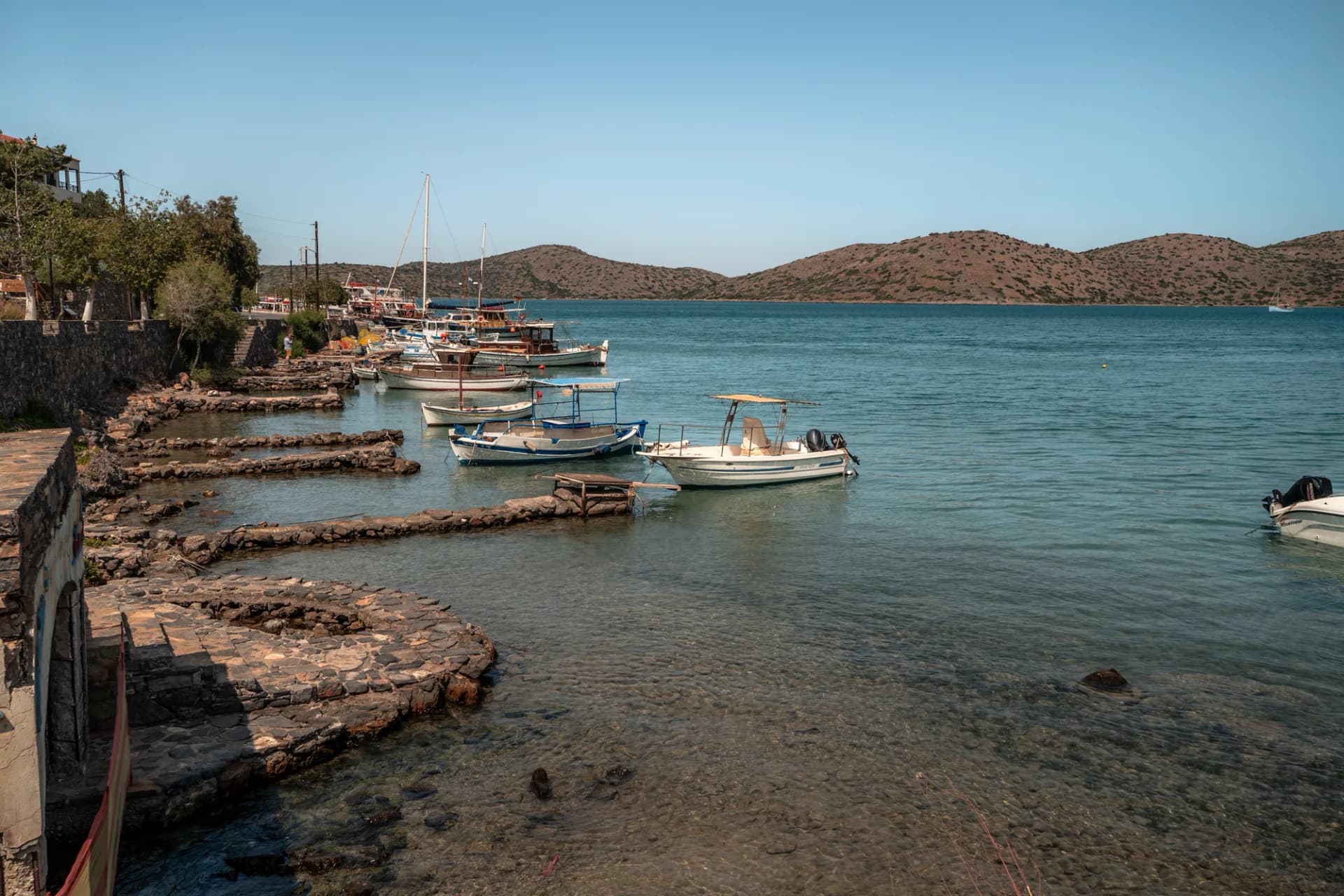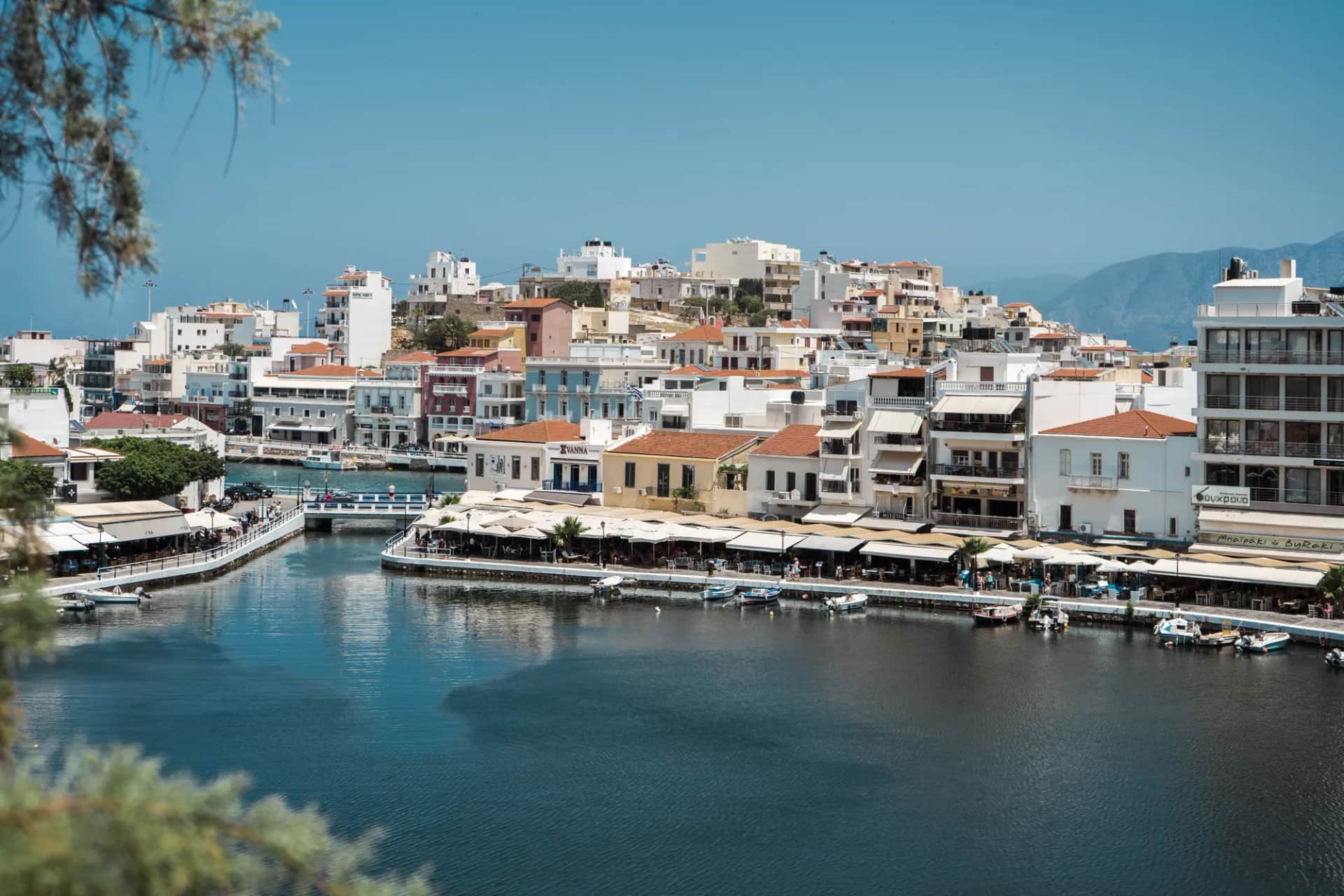

Agios Nikolaos fits into a pocket handkerchief: a round lake 137 metres across, linked to the sea by a canal, a fishing harbour turned marina, and a town rising like an amphitheatre above Mirabello Bay. It is the capital of Lassithi, the easternmost regional unit of Crete, and yet you can walk all the way around it in a morning.
Many travellers only pass through, somewhere between Heraklion airport and the hotels of Elounda. That is a shame: the town has a proper, renovated archaeological museum, a few beaches you can reach without a car, a local life that carries on out of season, and it makes a very handy base for Spinalonga, Kritsa, Lato or the Lassithi Plateau.
Here is what you need to know to visit Agios Nikolaos: what to see, where to swim, which day trips to take, where to stay and how to get there.
Why visit Agios Nikolaos
Agios Nikolaos is a mid-sized town, not a picture-postcard village. People come for its setting: a lake right in the centre, waterfronts that stay lively until late in the evening, and a sheltered, often calm bay, Mirabello Bay. On Venetian maps, the anchorage already appeared as “Porto di San Nicolo”, named after the little church that watches over the entrance to the bay.
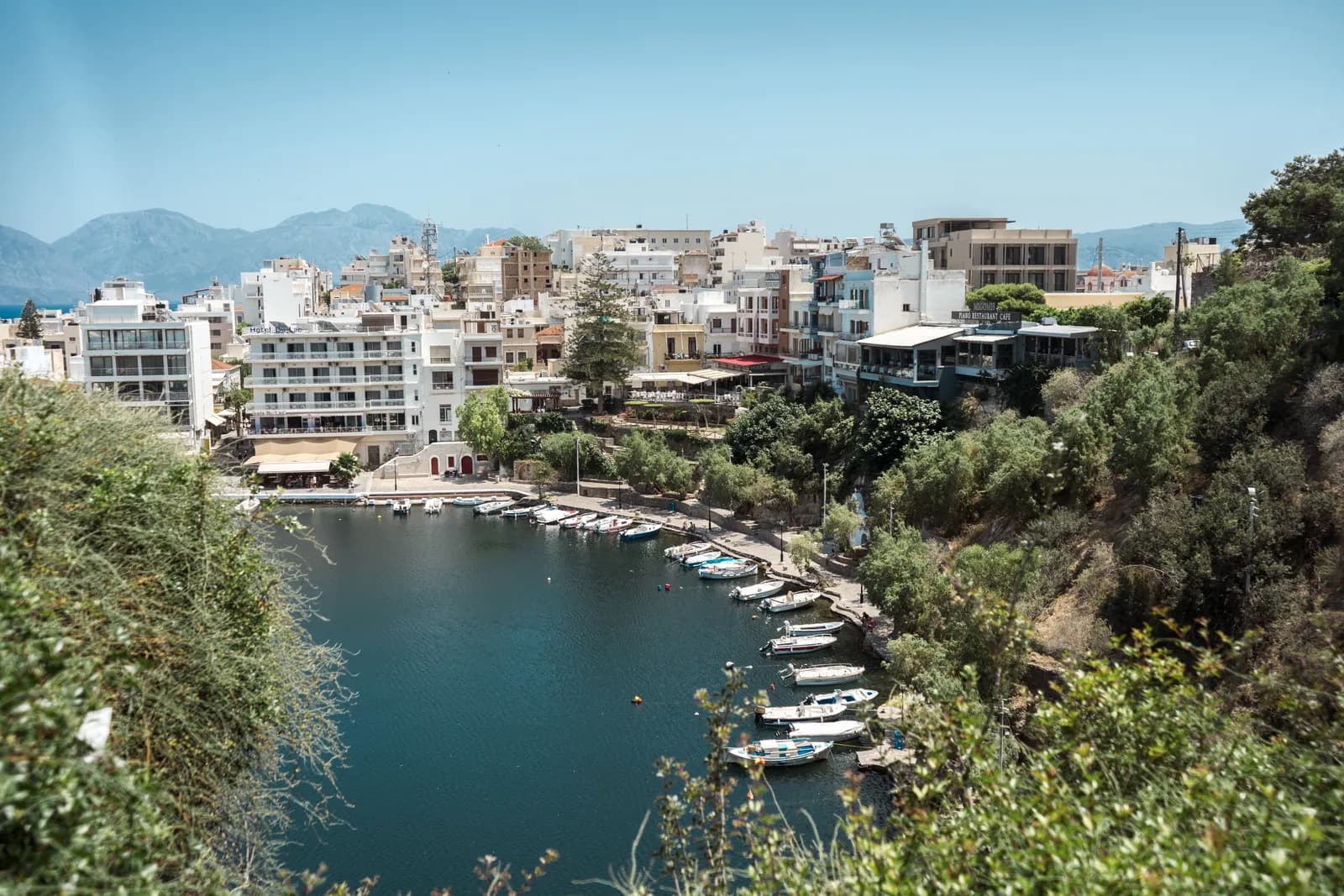
Its main asset is its location. All of eastern Crete is less than an hour and a half away by car: Elounda and Plaka to the north, Kritsa in the hills, Ierapetra and the south coast about 36 km away, Sitia to the east. If you do not want to change accommodation every couple of days, it is one of the most logical bases in the region.
Let's be honest: in July and August, the loop around the lake is very touristy, with restaurant touts and excursion boats jostling for space on the quay. The charm works best early in the morning, at the end of the day, or in spring and autumn.
Lake Voulismeni, between legend and reality
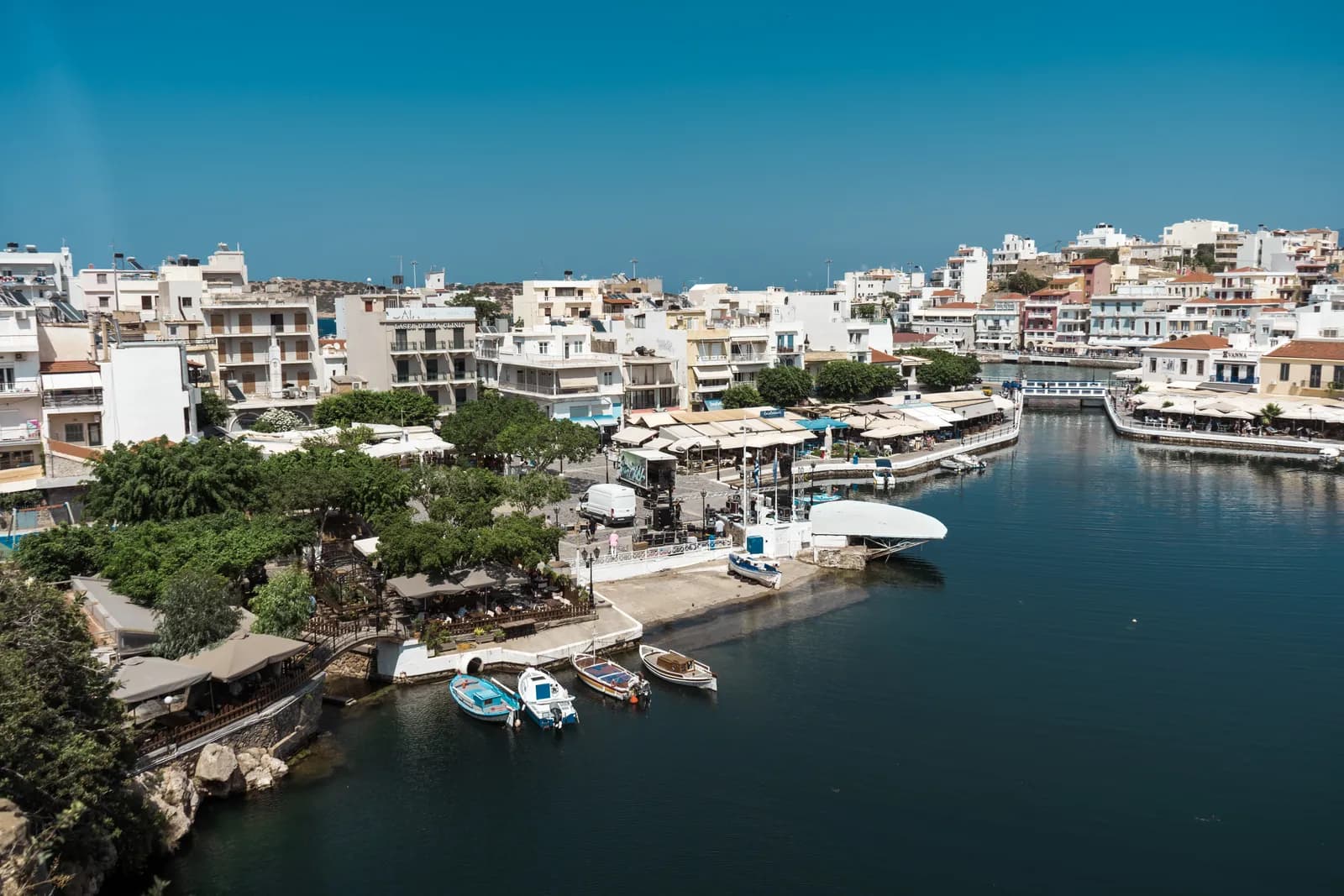
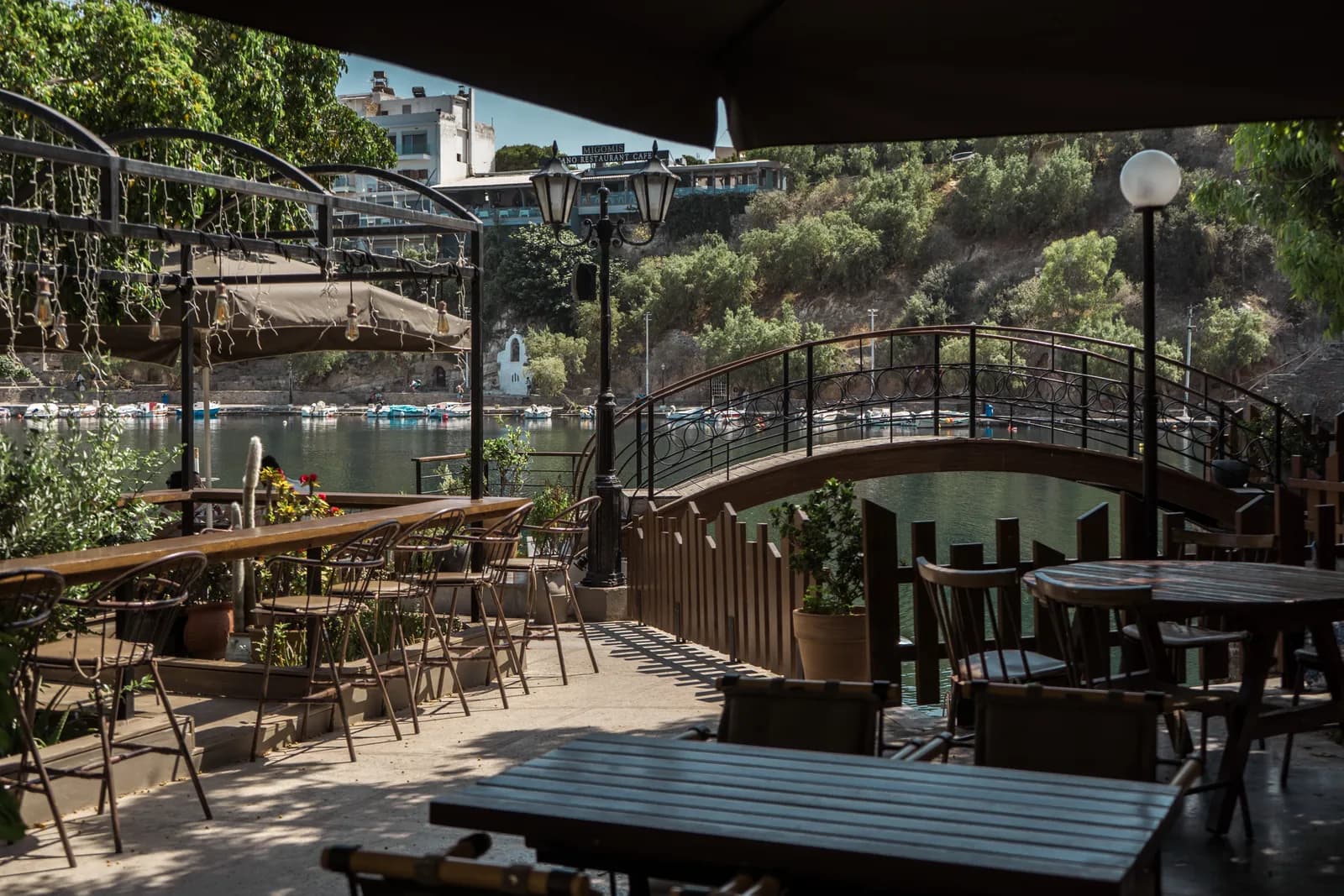
Lake Voulismeni is the heart of the town. It is a small, almost circular basin about 137 metres across, framed by limestone cliffs on one side and cafés on the other. Its water is now salty: it connects to the harbour through a narrow canal spanned by a bridge, where small boats pass through.
The legend of the bottomless lake
For a long time, locals said it was bottomless, or that it had formed in an old volcanic crater. Another tradition has it that the goddess Athena came here to bathe. The reality is more prosaic: in 1852, the British captain Thomas Spratt sounded it at 64 metres, a figure that has been repeated almost everywhere ever since. A University of Athens study carried out in 2000 measured a maximum depth of 48.8 metres. That is a lot for such a small body of water, which explains the legend, but the lake definitely has a bottom, and the local geology (a limestone breccia, with no volcanic rock) rules out the crater theory.
A lake linked to the sea
Originally, the lake was fed by a spring of fresh and brackish water. According to the historical sources gathered on Wikipedia, the 1856 earthquake is said to have dried up this spring, and the stagnant water earned the lake the unflattering nickname “Vromolimni”, the smelly lake. A first canal to the sea was dug from 1867, then the current channel was completed between 1905 and 1907 by soldiers of the French army, which was stationed in Crete at the time. Since then, the water has been renewed by the harbour.
What to see in Agios Nikolaos
The harbour and the promenade
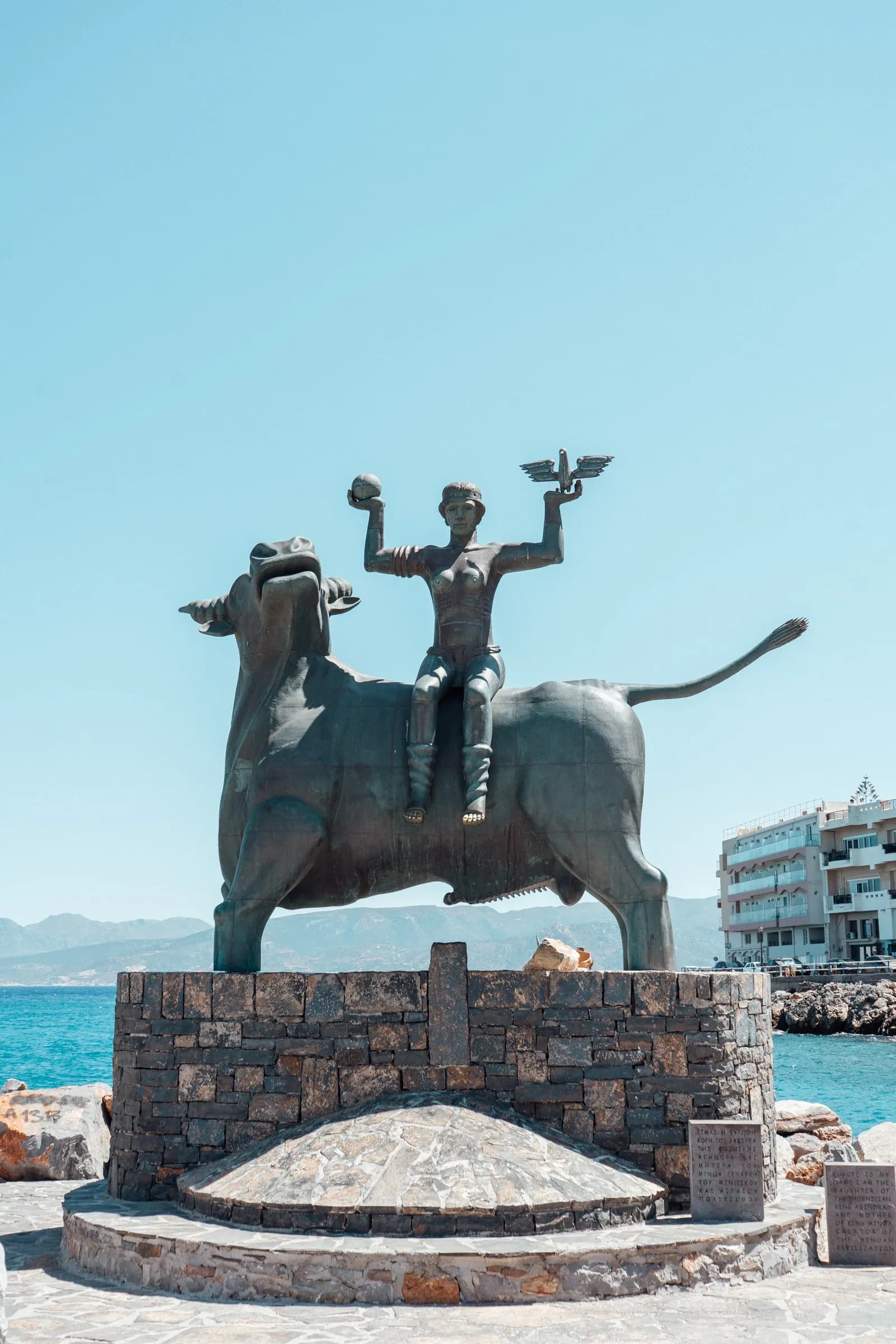
From the canal bridge, the promenade runs along the harbour where the excursion boats to Spinalonga moor, then continues towards the marina and Kitroplatia beach. At the harbour entrance, the large sculpture of Europa riding the bull recalls the founding myth of Crete: it is the town's classic photo spot.
The Archaeological Museum of Agios Nikolaos
This is the one visit not to miss. The museum reopened in 2024 after a major renovation and extension (€6.5 million of funding, according to the Greek Ministry of Culture). The exhibition, spread over several rooms, covers eastern Crete from the Neolithic to the Roman period, including grave goods from the Early Minoan cemetery of Agia Fotia, near Sitia (3000 to 2300 BC), and pieces from the Minoan palace of Malia.
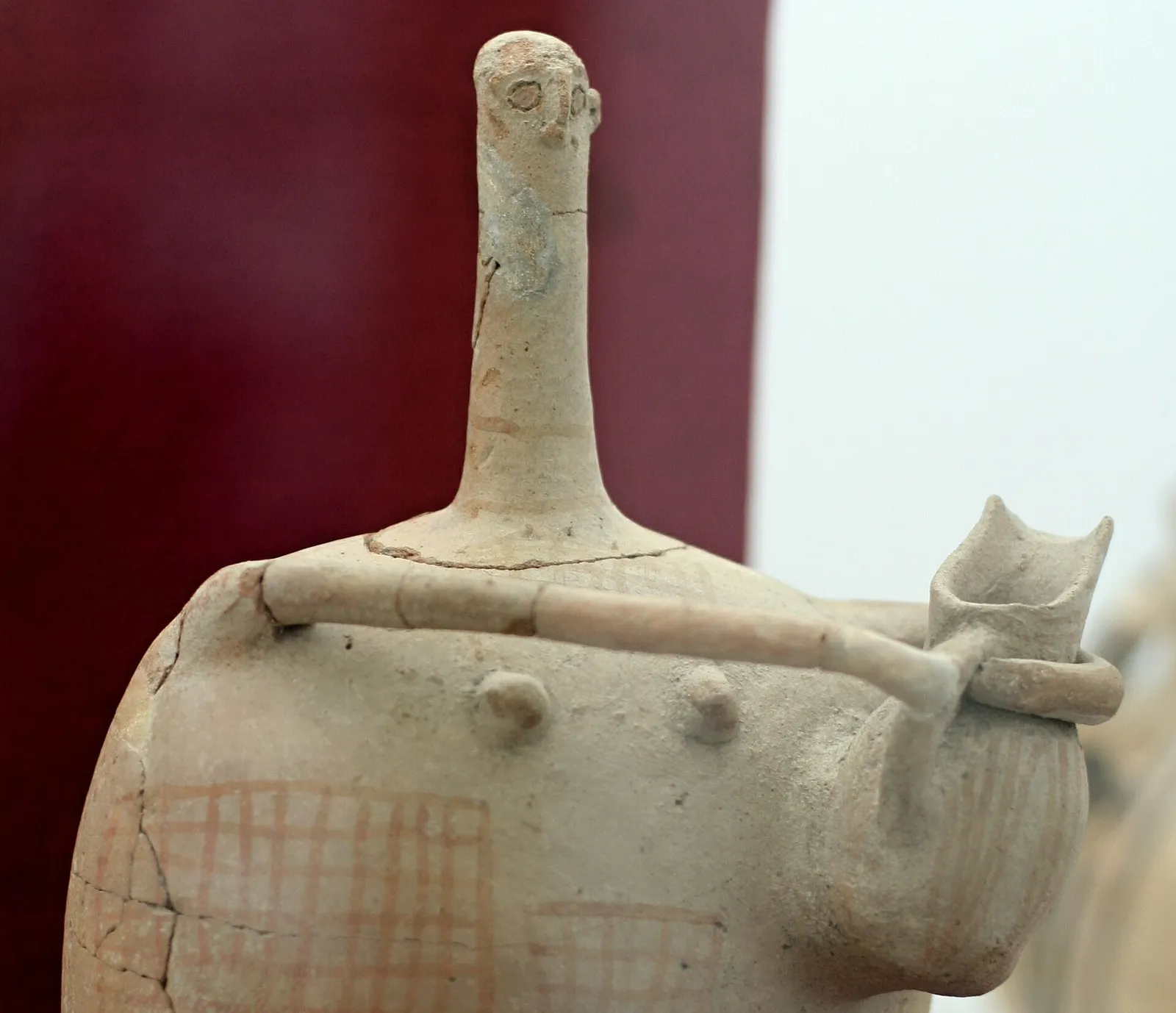
The star of the show is the Goddess of Myrtos, a terracotta ritual vessel (2500 to 2300 BC) shaped like a long-necked female figure clutching a jug. It was found in the Early Minoan settlement of Fournou Korifi, near Myrtos, on the south coast. Do not miss the Roman-era skull (1st century AD) still crowned with a wreath of gold leaves and accompanied by the coin intended for Charon, nor the larnakes (terracotta sarcophagi) decorated with octopuses.
- Address: 74 Konstantinou Palaiologou Street, north of the lake (about a 10-minute walk).
- Opening hours 2026: daily from 8.30am to 3.30pm, closed on Tuesdays.
- Price: €10 full price according to the official website of the Greek archaeological museums; the usual reduced rates and free entry for EU citizens under 25.
- Time needed: allow 1 hour to 1 hour 30.
The Folklore Museum
Housed in the old harbour master's building on the lakeside, next to the tourist office, this small museum founded in 1978 brings together Cretan weaving and embroidery, everyday objects, icons, traditional musical instruments and farming tools. The visit takes half an hour. It mainly opens from May to October, in the mornings, for a few euros: check the opening hours on site, as they change from one season to the next.
The Byzantine chapel of Agios Nikolaos
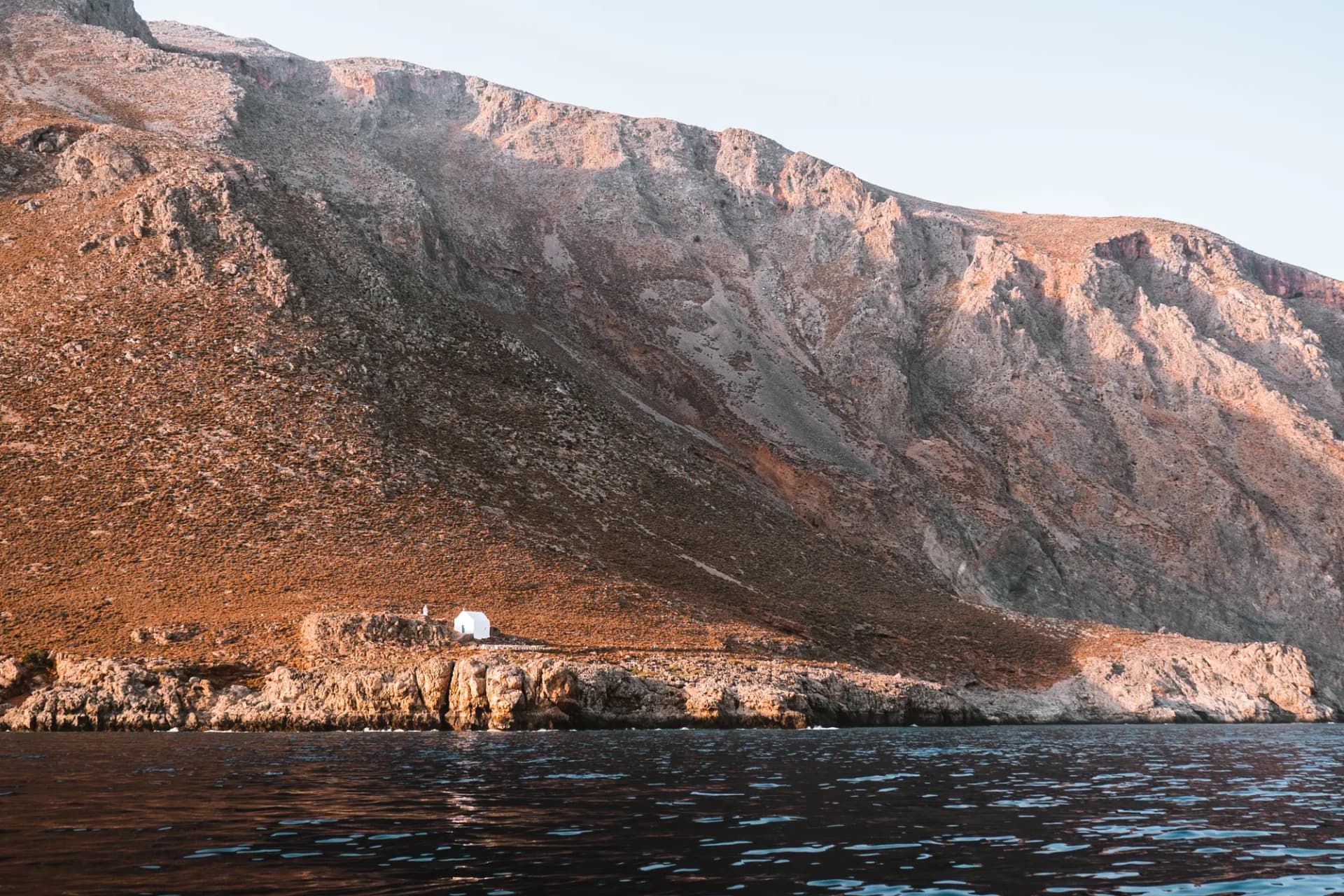
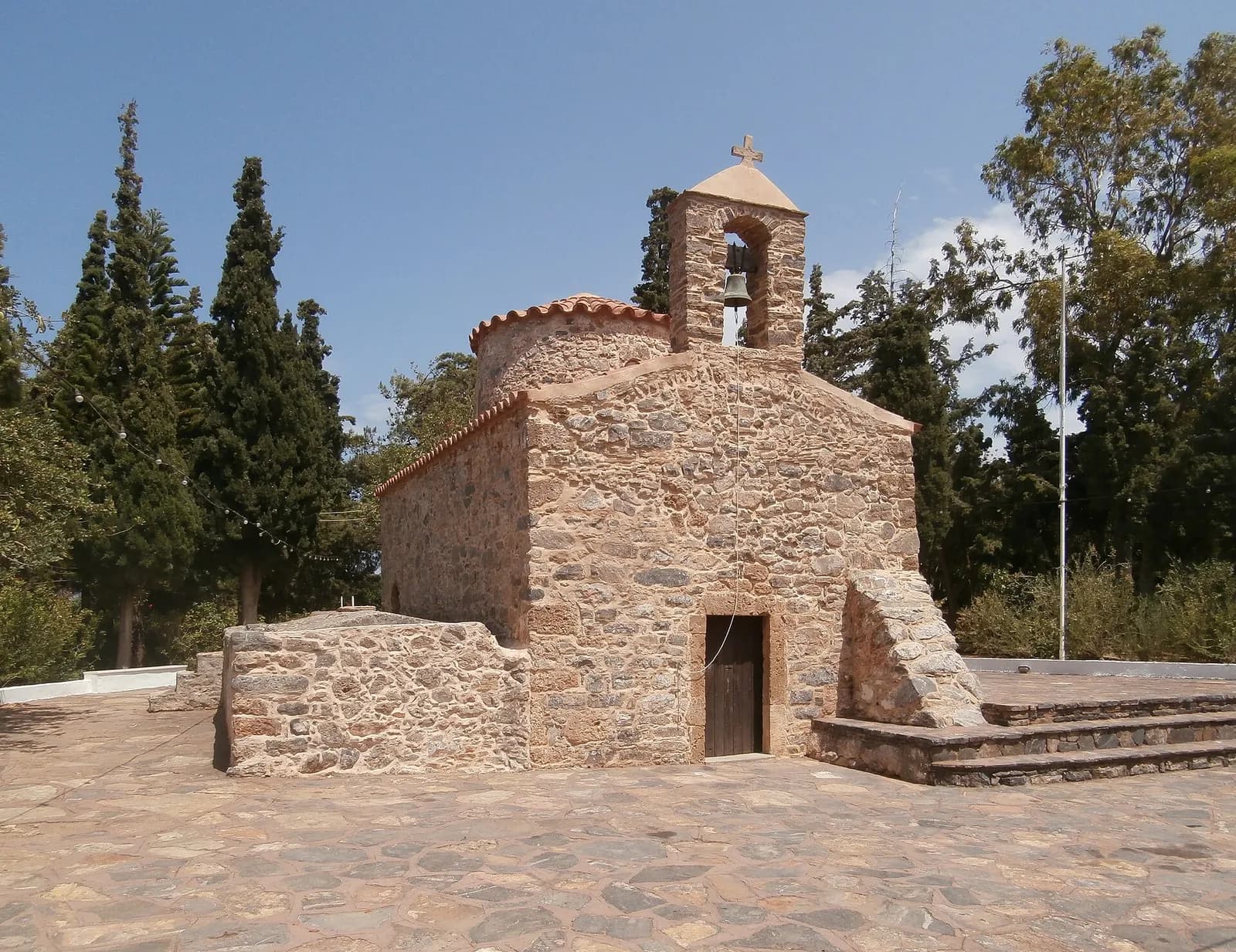
This is the church that gave the town its name. The small chapel with its squat dome stands on the Nissi peninsula, north of the centre, towards Elounda. Built after the 7th century, it is one of the oldest churches in Crete. Part of it dates from the Iconoclast period, which explains its first decoration without figures, made up of geometric and plant motifs. After the 1303 earthquake, it was restored and adorned with frescoes of saints, including a Pantocrator and an Ascension.
Beaches in and around Agios Nikolaos
Agios Nikolaos is not a seaside resort with one big beach, but it is easy to go for a swim on foot from the centre. Several of the municipality's beaches regularly fly the Blue Flag.
Town beaches
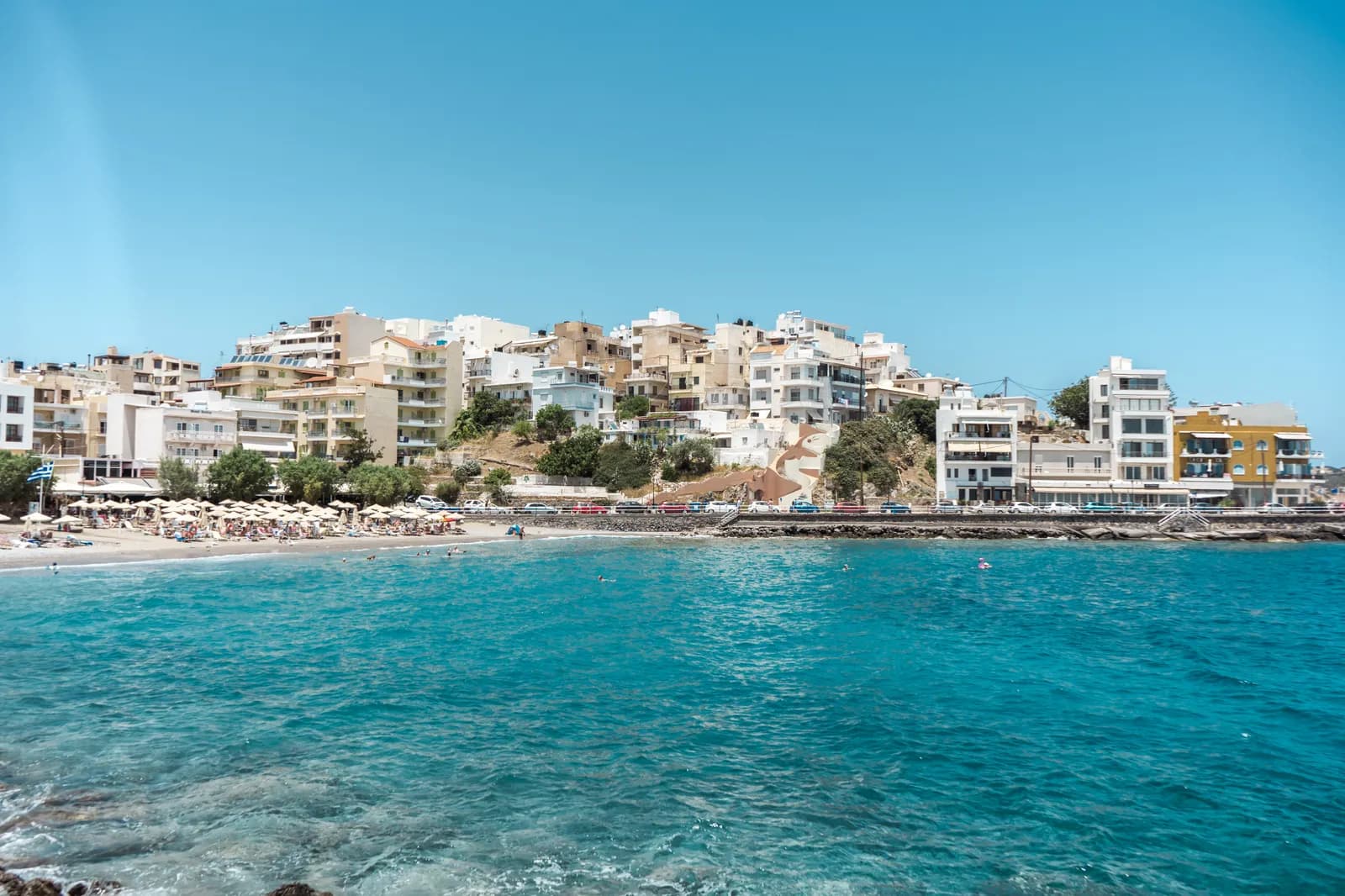
- Kitroplatia: a five-minute walk south of the lake, a small sand and pebble beach in front of a square lined with tamarisks and tavernas. Handy for a dip between two visits, but it fills up quickly in summer.
- Ammoudi: a small sandy cove north of the centre, sheltered from the north winds, with facilities and surrounded by hotels.
- Municipal beach and Ammos: south of the marina, a pebble beach with a lawn and shady trees, followed by an organised sandy beach.
- Almyros: about 2.5 km to the south, the largest beach in town. Sand and shallow water, ideal with children. It lies at the mouth of a small river whose wetland is protected.
- Ammoudara: about 4 km to the south, on the road to Sitia and Ierapetra. An organised sandy beach, very popular with locals at summer weekends.
Around town
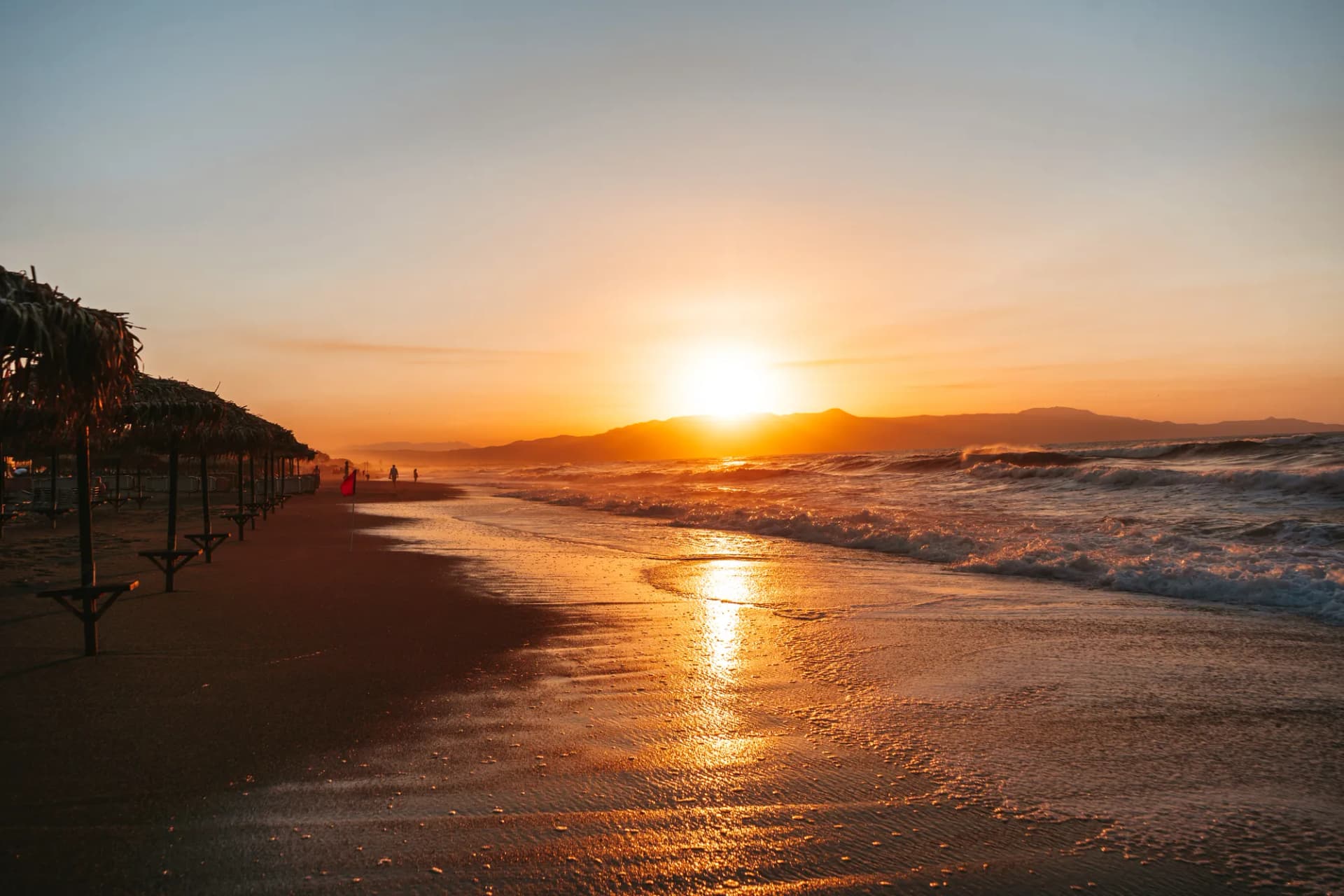
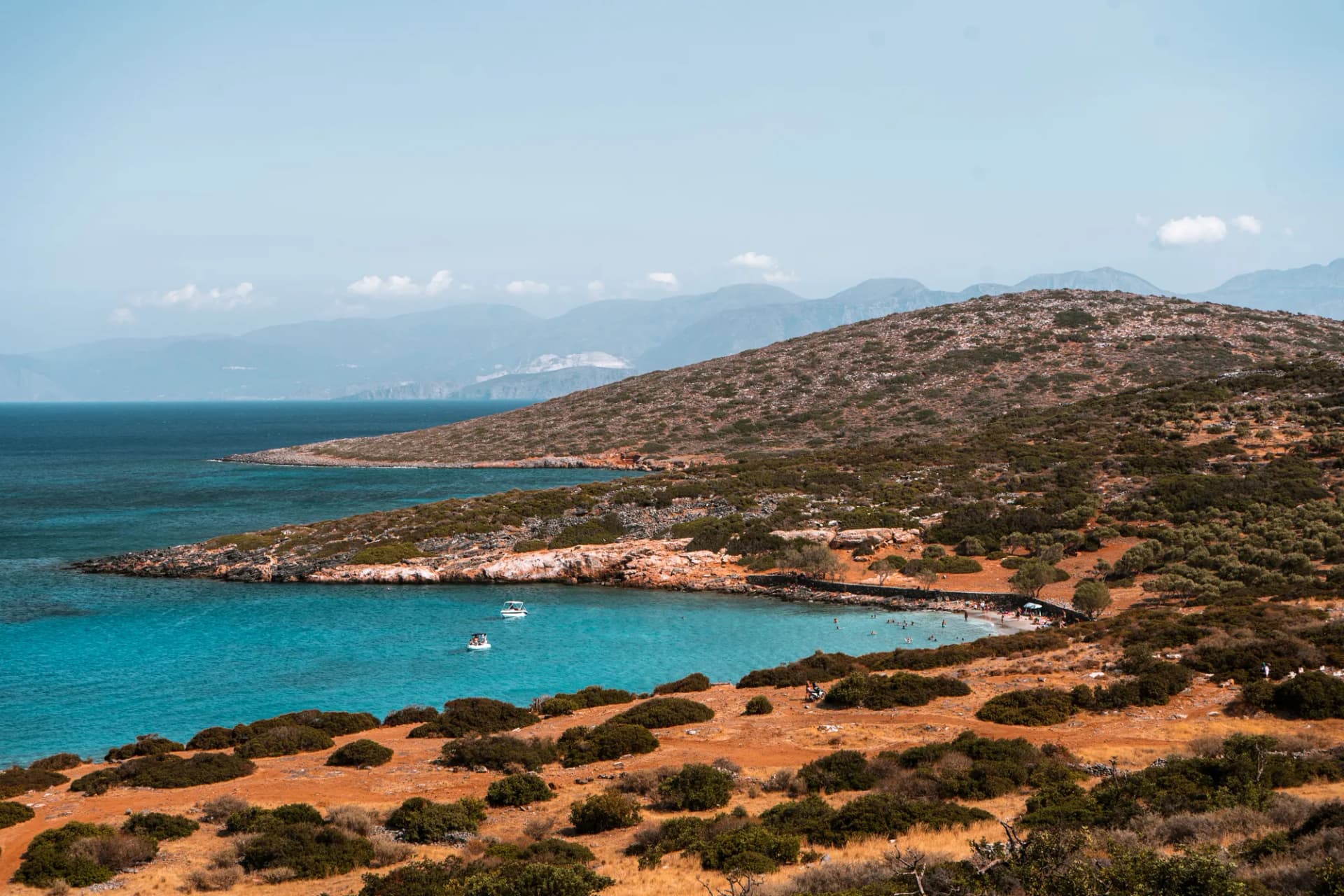
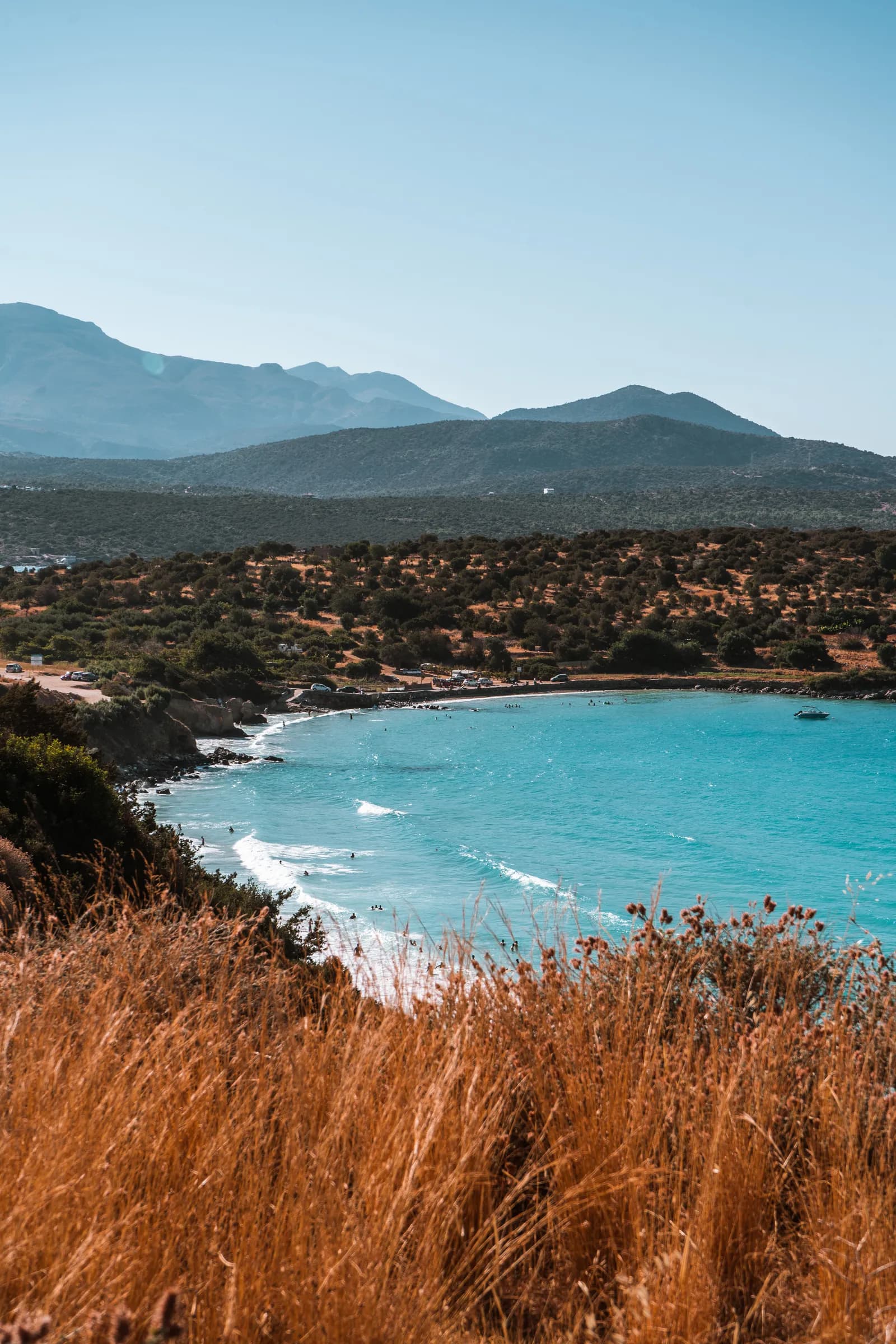
The most beautiful beach nearby is Voulisma, also known as Golden Beach, near the village of Istro, about twelve kilometres to the east. Pale sand and turquoise water, but very busy in summer: get there before 10am. To the north, Havania beach, on the road to Elounda, is another quick option.
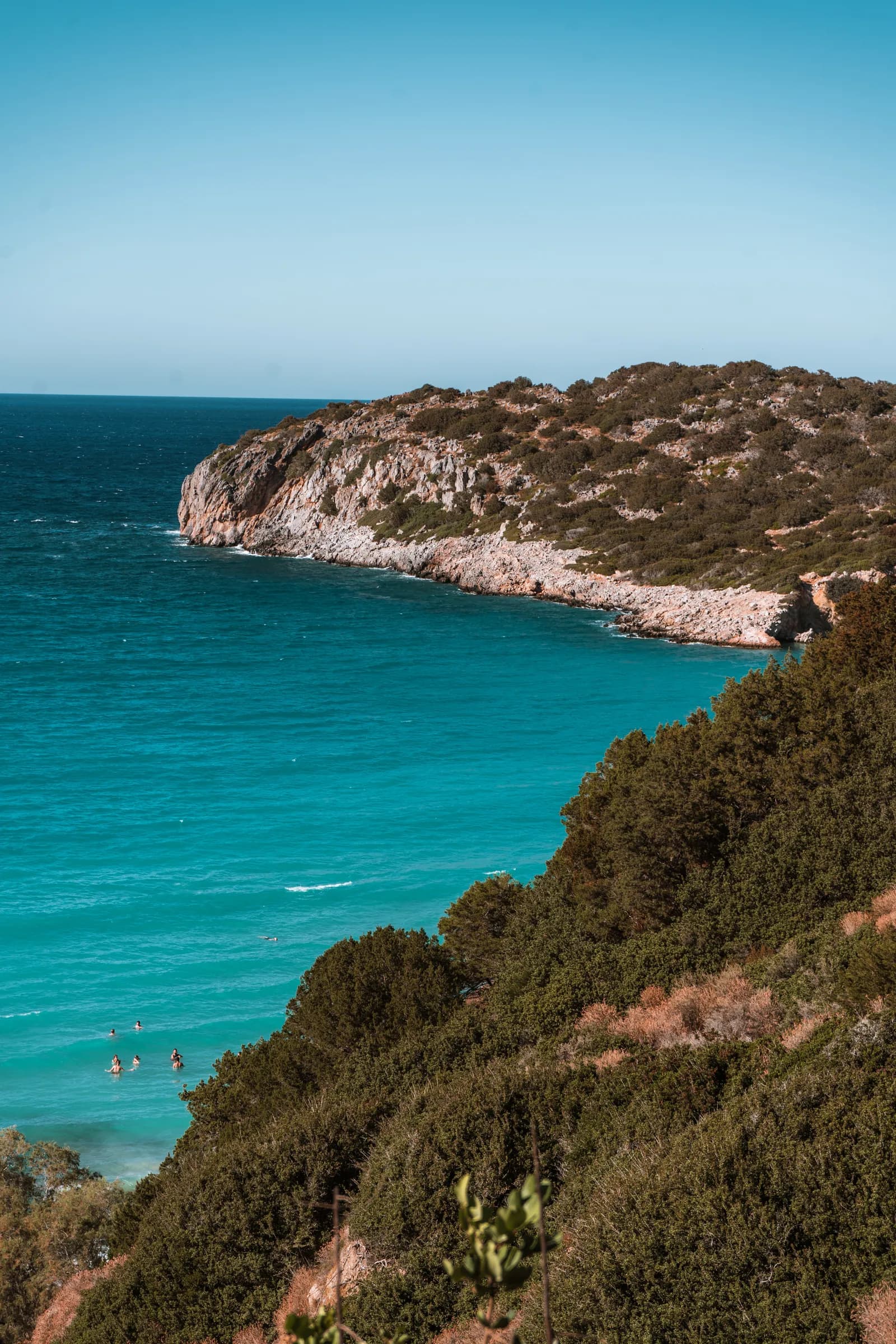
Photos : Pierre Bouyer
Day trips from Agios Nikolaos
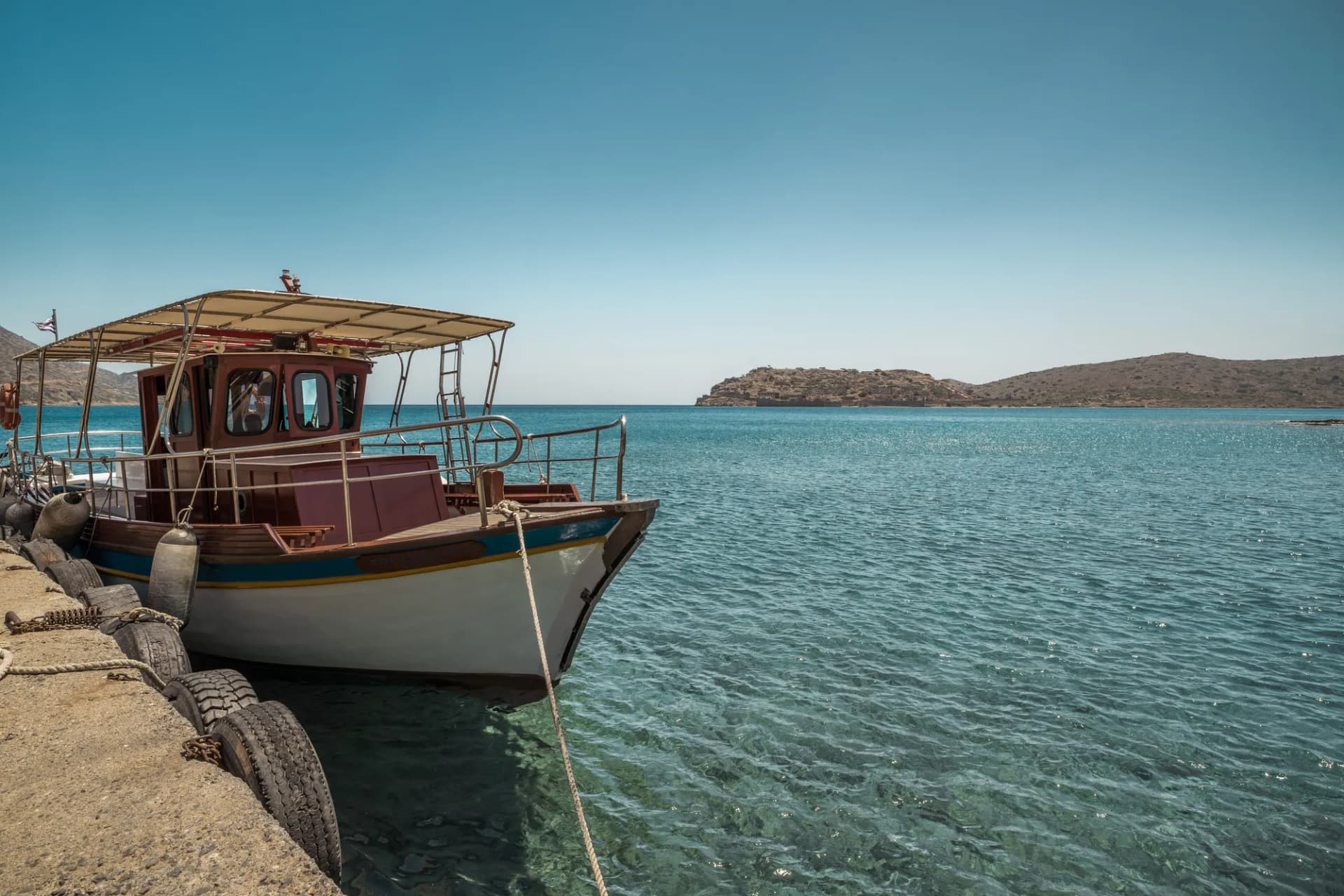
Spinalonga by boat from the harbour
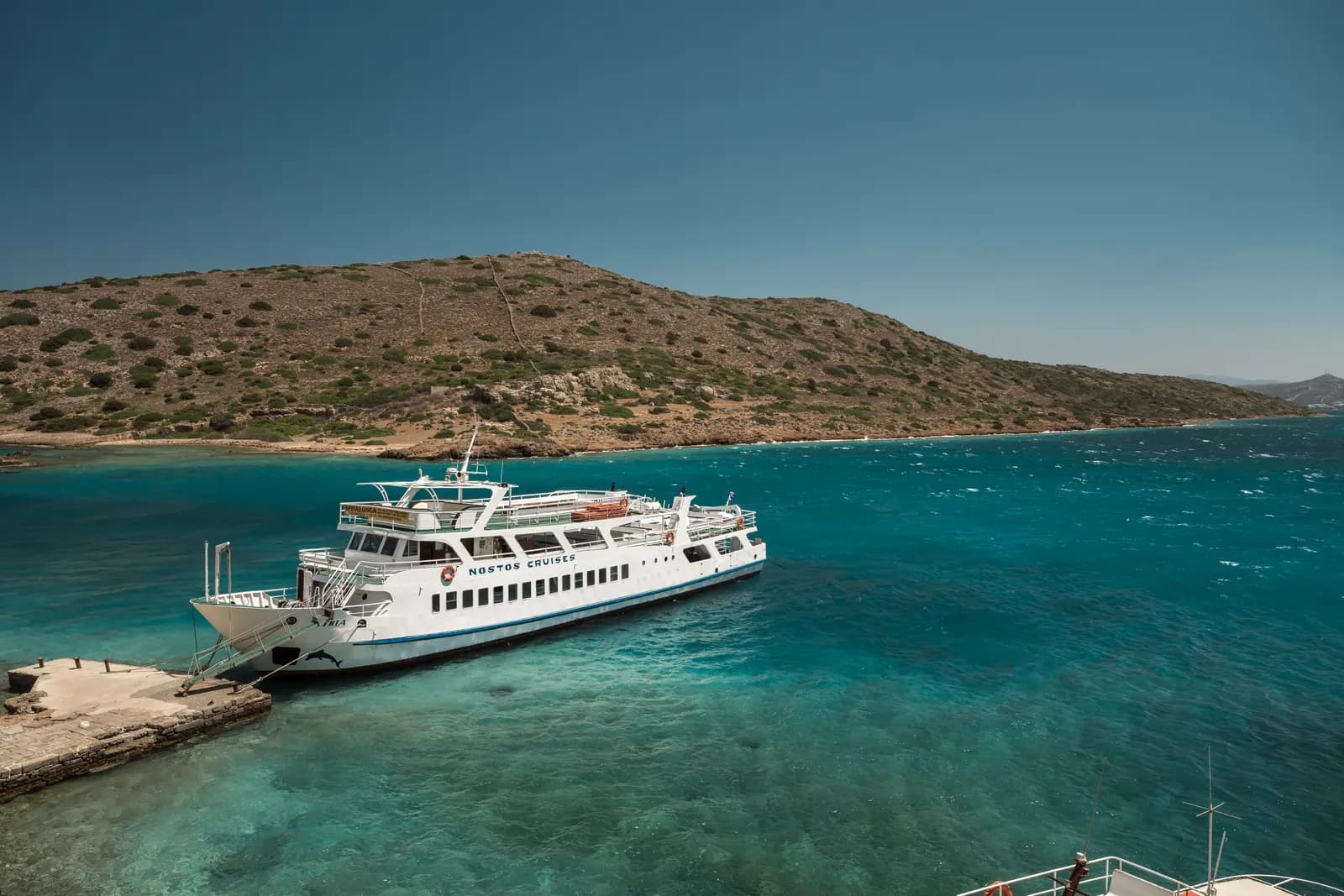
Boats leave Agios Nikolaos harbour every day for the island of Spinalonga, a former Venetian fortress that later became a leper colony until 1957. The crossing is longer than from Plaka (about 10 minutes) or Elounda, but it follows the whole coastline of the bay. Expect to pay from around €20 for a simple transfer, more for a cruise with a swimming or meal stop (often 4 hours 30 to 5 hours 30 in total). Bear in mind that the entry ticket to the island is €20 per adult since 2025, payable on top. You will find all the details in our guide to visiting Spinalonga.
Kritsa and the ancient site of Lato
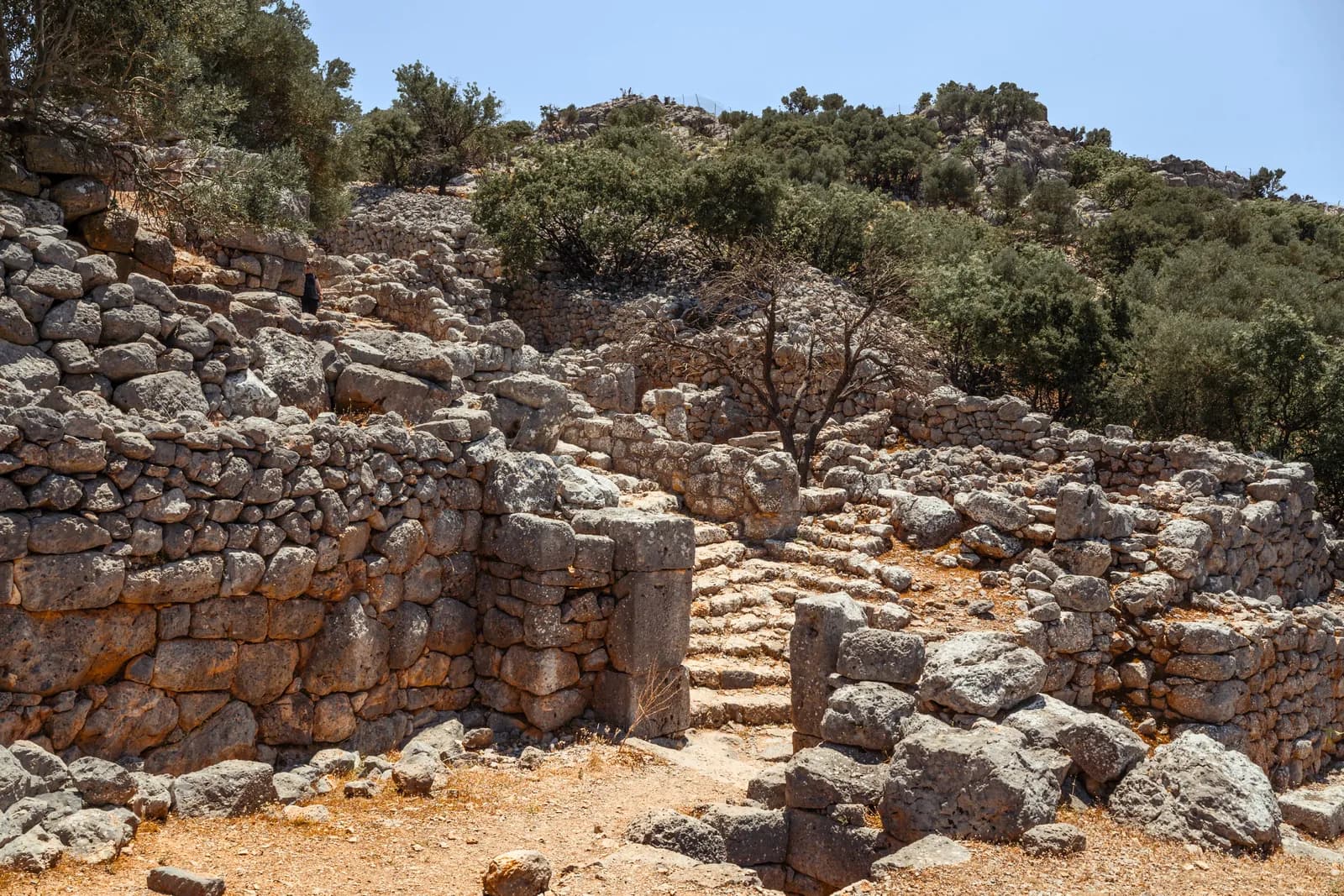
About 11 km away in the hills, Kritsa is a large village known for its weaving and for the church of Panagia Kera, whose Byzantine frescoes (13th and 14th centuries) are among the best preserved on the island. About 3 km above the village, the site of Lato is a Dorian city perched between two hills, with a magnificent view over Mirabello Bay. Entry to Lato costs €5 (€3 reduced) and the site is open from 8.30am to 3.30pm, closed on Tuesdays (check before you go, as Greek admission prices changed a lot in 2025). The two are easy to combine in half a day.
The Lassithi Plateau and the Cave of Zeus
Via Neapoli and then a mountain road, the Lassithi Plateau is about 1 hour 15 away by car. It is a farming plain more than 800 metres above sea level, ringed by mountains and dotted with old windmills. On its southern edge, the Cave of Zeus at Psychro reopened in May 2026 after two years of works. Allow a full day so you can enjoy it without rushing.
Elounda, Ierapetra and Chrissi
Elounda is about 11 km to the north, and the inland village of Fourni about 17 km by road. To the south, Ierapetra is only 36 km away: this is where boats leave for Chrissi island, where landing has been banned since 2025 (you swim from the boat).
Where to stay in Agios Nikolaos for every budget
I am not giving you a list of hotels here, but rather the areas to look in depending on how you like to travel. Prices vary enormously between May and August: book early for the summer.
| Area | Best for | Highlights | Good to know |
|---|---|---|---|
| Centre (lake and harbour) | No car, short stays | Everything on foot, buses and boats nearby | Noisy in the evening in summer, parking is difficult |
| Kitroplatia and the marina | Couples, low to mid budget | Beach on foot, calmer atmosphere | Sloping streets up to the higher parts of town |
| Ammoudi and the Elounda road | Mid to high budget | Seafront hotels, sunsets | A car is useful to reach the centre |
| Almyros and Ammoudara | Families | Large sandy beaches, shallow water | 2.5 to 4 km from the centre |
| Elounda | Luxury stays | Luxury resorts, views of Spinalonga | About 11 km away, more secluded feel |
If you are after real luxury, the coast between Agios Nikolaos and Elounda is home to several of the places in our selection of the best seafront hotels in Crete. On a tight budget, the studios and apartments in the streets above the harbour and Kitroplatia remain the best option.
Where to eat in Agios Nikolaos
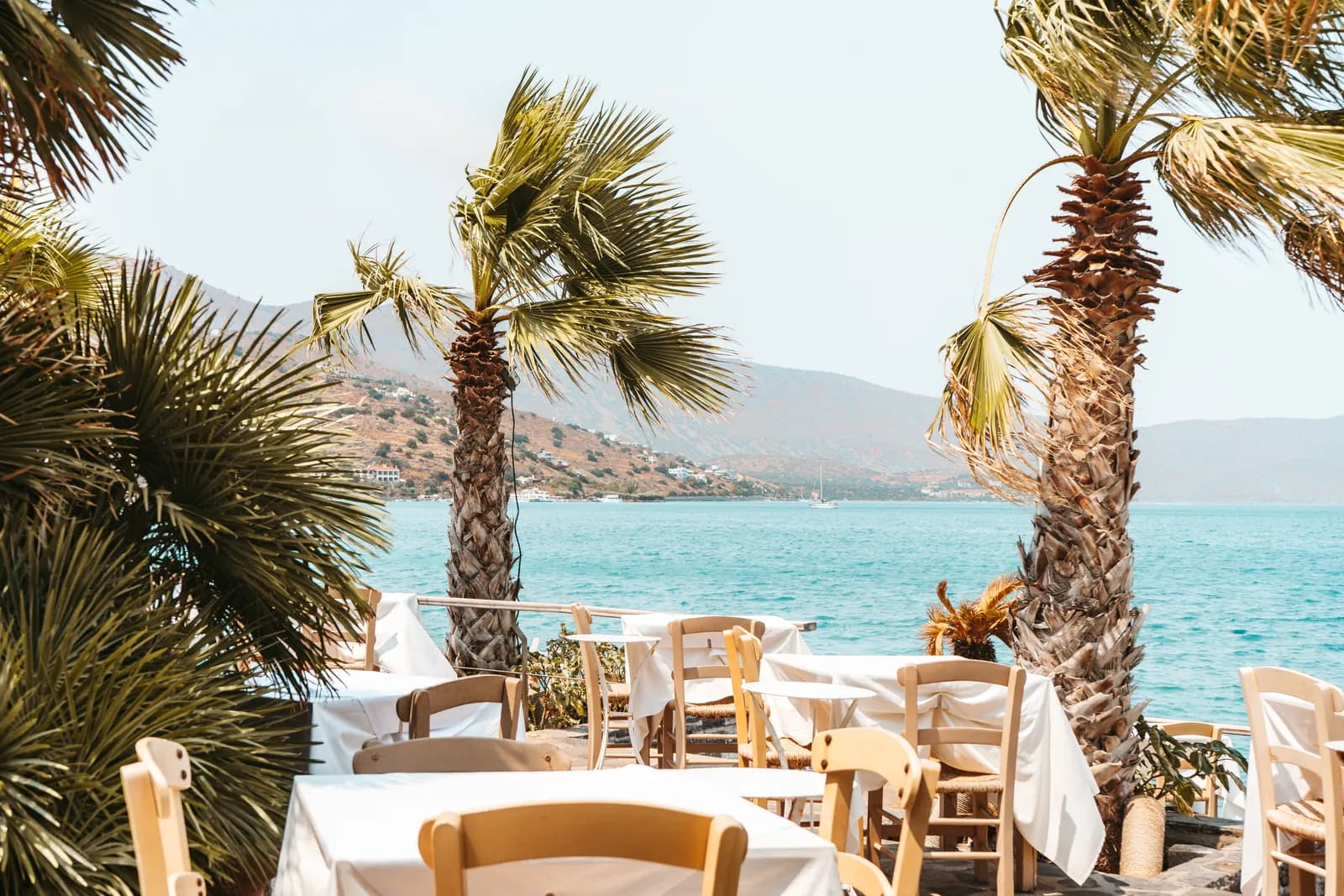
The terraces around the lake have the best view, but they are also the most expensive and the most hit-and-miss. I recommend settling in there for a coffee or a sunset drink, then heading elsewhere for dinner.
- Around Kitroplatia: tavernas almost on the water's edge, with the catch of the day sold by weight. Always ask the price per kilo before ordering.
- In the higher streets behind the harbour: tavernas and mezedopolia (small-plate restaurants) more popular with locals, with gentler prices.
- Must-tries: dakos (barley rusk, tomato, cheese), kalitsounia (fresh cheese pastries), oven-baked lamb or kid, snails (chochlioi) and, for dessert, loukoumades. Raki is often offered on the house at the end of the meal.
Practical information: getting there, parking, when to go
Distances and driving times
| From Agios Nikolaos | Distance | Driving time (approx.) |
|---|---|---|
| Heraklion (centre) | 65 km | 1 hr |
| Heraklion airport | 62 km | 55 min |
| Elounda | 11 km | 15 to 20 min |
| Plaka (boats to Spinalonga) | 16 km | 25 min |
| Fourni | 17 km | 25 min |
| Kritsa | 11 km | 15 to 20 min |
| Istro (Voulisma beach) | 12 km | 15 min |
| Ierapetra | 36 km | 40 min |
| Lassithi Plateau (Psychro) | about 50 km | 1 hr 15 |
By KTEL bus
KTEL Heraklion-Lassithi buses link Heraklion and Agios Nikolaos several times a day, from early morning until the evening. The journey takes about 1 hour 30 depending on the stops, and a ticket costs around €7.80 (price noted in 2026, to be confirmed on ktelherlas.gr). From the Agios Nikolaos bus station, local lines serve Elounda, Plaka, Kritsa, Ierapetra and Sitia. The bus is fine for the town and Elounda, but for Lato, Voulisma or the Lassithi Plateau, a car is far more practical.
By car and where to park
The road from Heraklion follows the island's northern highway: drive carefully, as traffic is heavy in summer. To book a vehicle, my guide to hiring a car in Crete covers the pitfalls to avoid.
In the centre, on-street parking is paid (blue lines, pay-and-display machines) and spaces become scarce around the lake. The simplest option is to aim for a paid public car park on the edge of the centre, often a few euros for the day, then finish on foot: the town is compact.
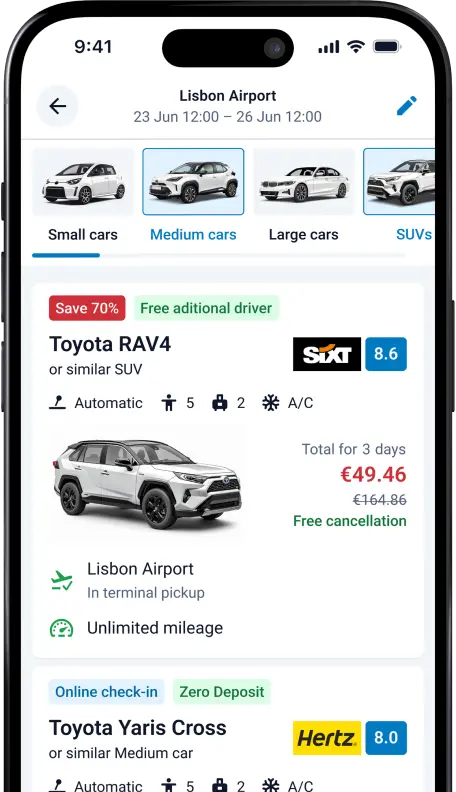
DiscoverCars
Car rental comparison — 150+ countries
Compare prices from Hertz, Avis, Sixt and local providers. All fees included, free cancellation. Rated 4.6/5 on Trustpilot.

When to go to Agios Nikolaos
May, June, September and early October are the best months: the sea is already or still warm, the quays are less crowded and accommodation is more affordable. July and August are hot and very busy. In winter, the town stays lively because people live here all year round, but some restaurants and boat trips close. To compare the months in detail, see our guide on the best time to visit Crete.
Frequently asked questions
Half a day is enough for the lake, the harbour and the archaeological museum, and a full day if you add a beach. To make the most of day trips to Spinalonga, Kritsa and the Lassithi Plateau, plan on three to five days in the area.
No. Captain Spratt sounded it at 64 metres in 1852, and a University of Athens study measured 48.8 metres in 2000. Its considerable depth for a diameter of just 137 metres explains the legend.
By car, it is about 65 km and 1 hour's drive. KTEL Heraklion-Lassithi buses run the route several times a day, taking about 1 hour 30 for around €7.80; check on ktelherlas.gr.
Yes, boats leave Agios Nikolaos harbour every day, either as a simple transfer (from around €20) or as a cruise with a swimming stop. Entry to the island costs €20 per adult since 2025, on top of the boat fare.
Yes, several beaches are within walking distance or a few minutes' drive: Kitroplatia, Ammoudi, Almyros and Ammoudara. The most beautiful one nearby, Voulisma, is near Istro, about twelve kilometres to the east.
My verdict on Agios Nikolaos
Agios Nikolaos does not try to compete with Chania or Rethymno for old-town charm. Its strength is the combination of a lively centre, a good museum, beaches within walking distance and an ideal position for exploring the east of the island. I recommend spending at least one night, walking around it early in the morning, then branching out to Spinalonga, Kritsa and the plateau.
You can see Agios Nikolaos in a morning, but it is by staying the night that you understand why eastern Crete is best discovered from here.
To keep planning your trip, read our guide to discovering Heraklion, your likely point of arrival, then our Spinalonga guide to plan the crossing.

Âme Bohème exists thanks to you
Some links in this article are affiliate links. This means that if you book or purchase a product through these links, we receive a small commission — at no extra cost to you. It's thanks to this support that we can continue creating free, quality content.
You can also buy us a coffee, or follow us on Instagram and Facebook.