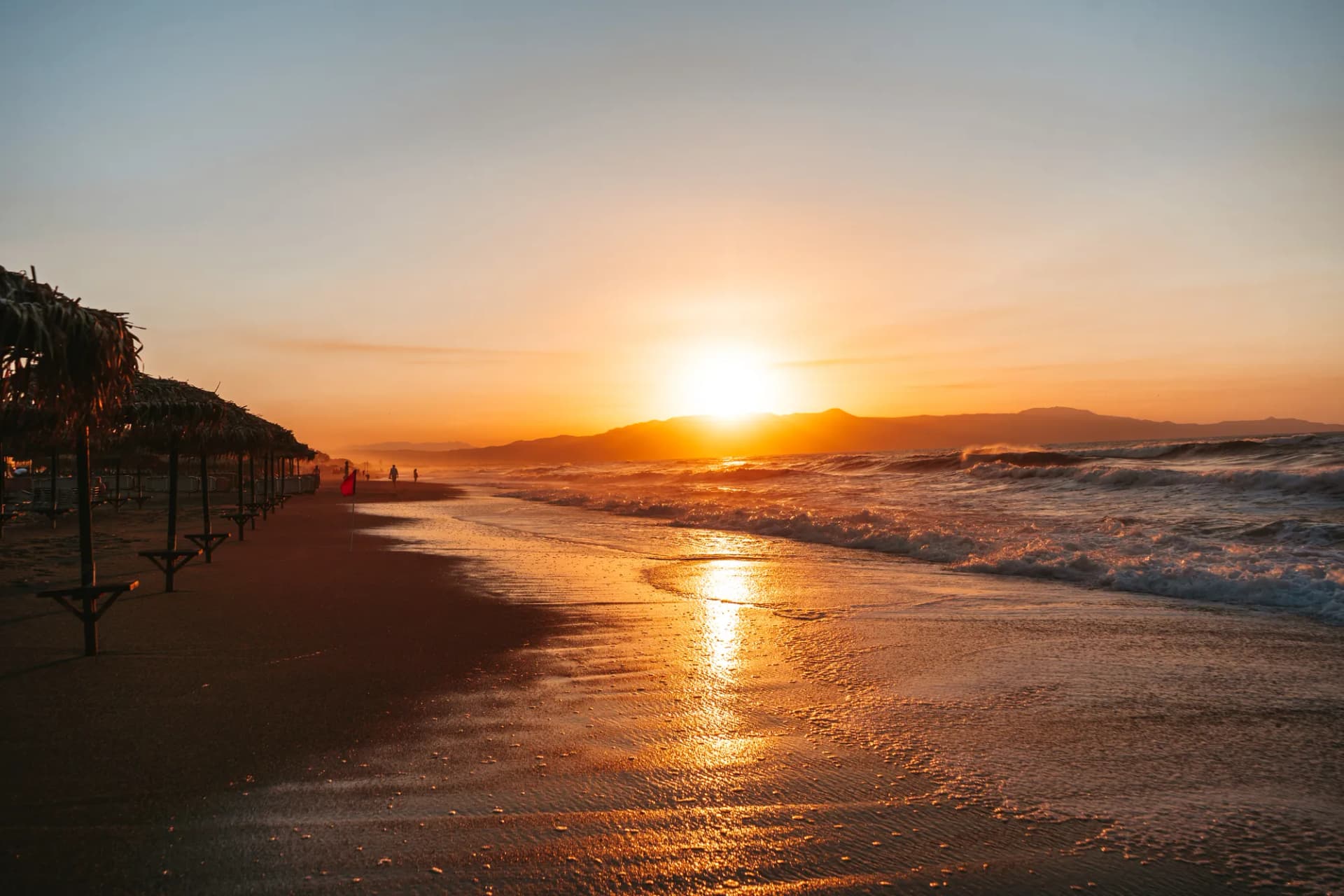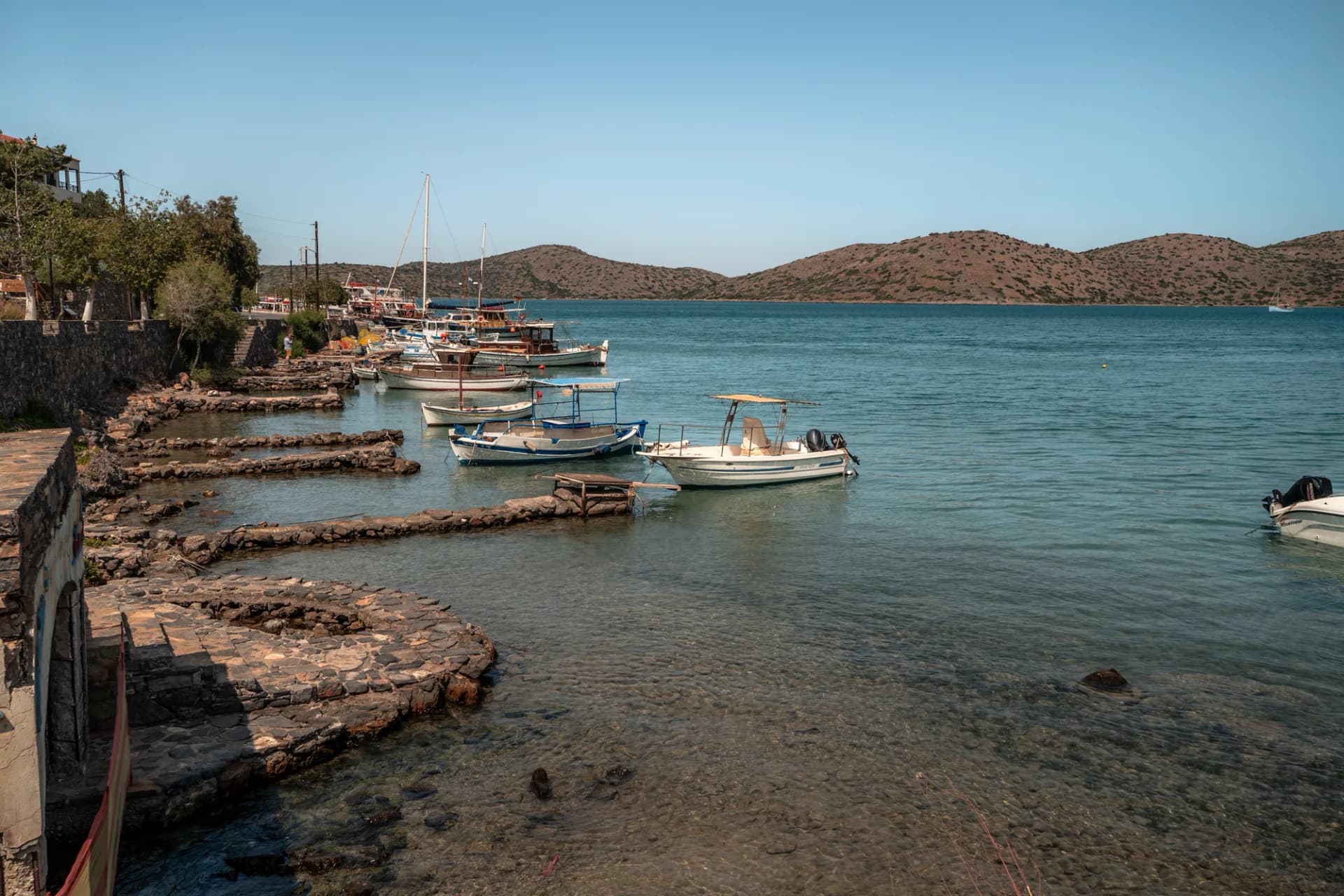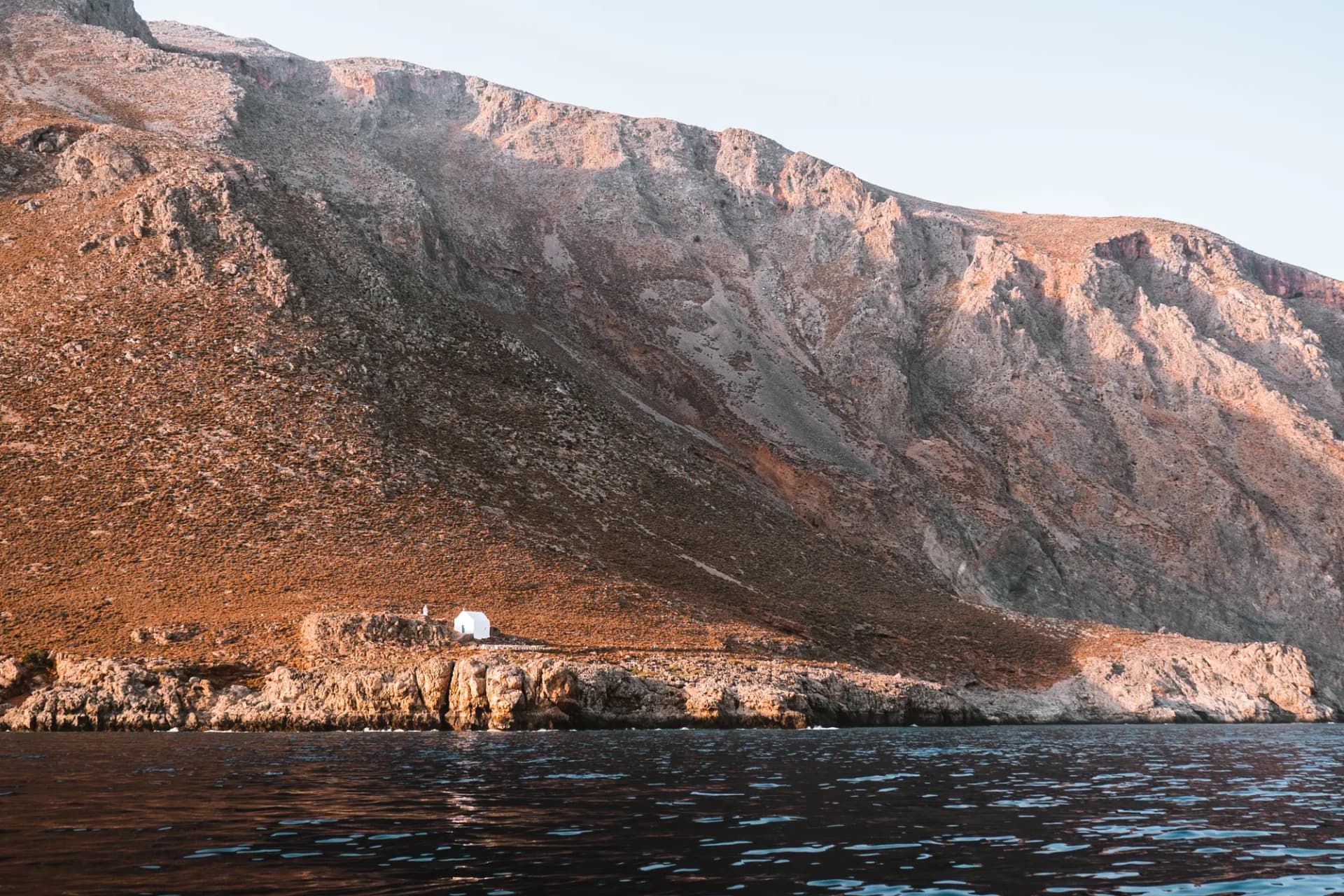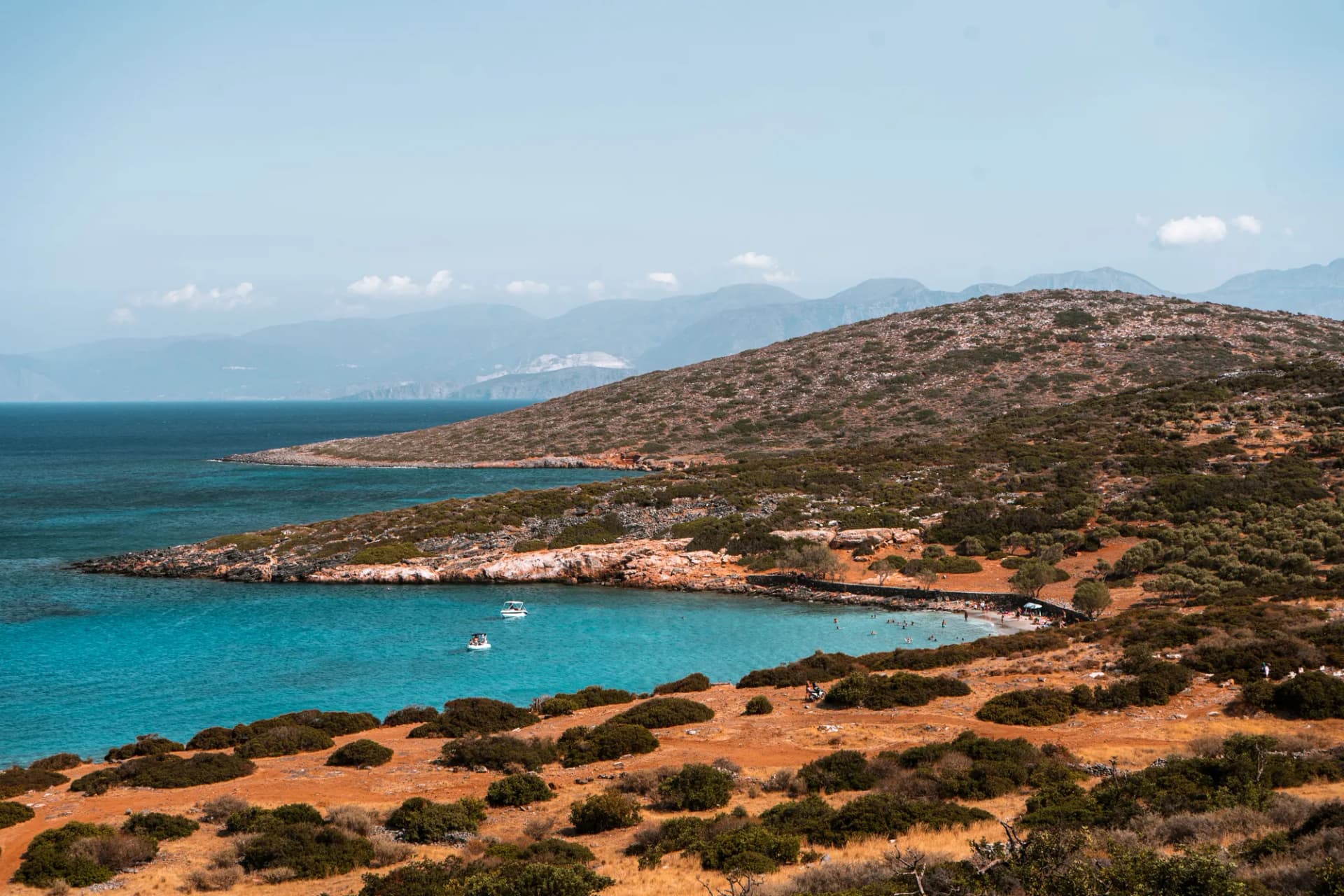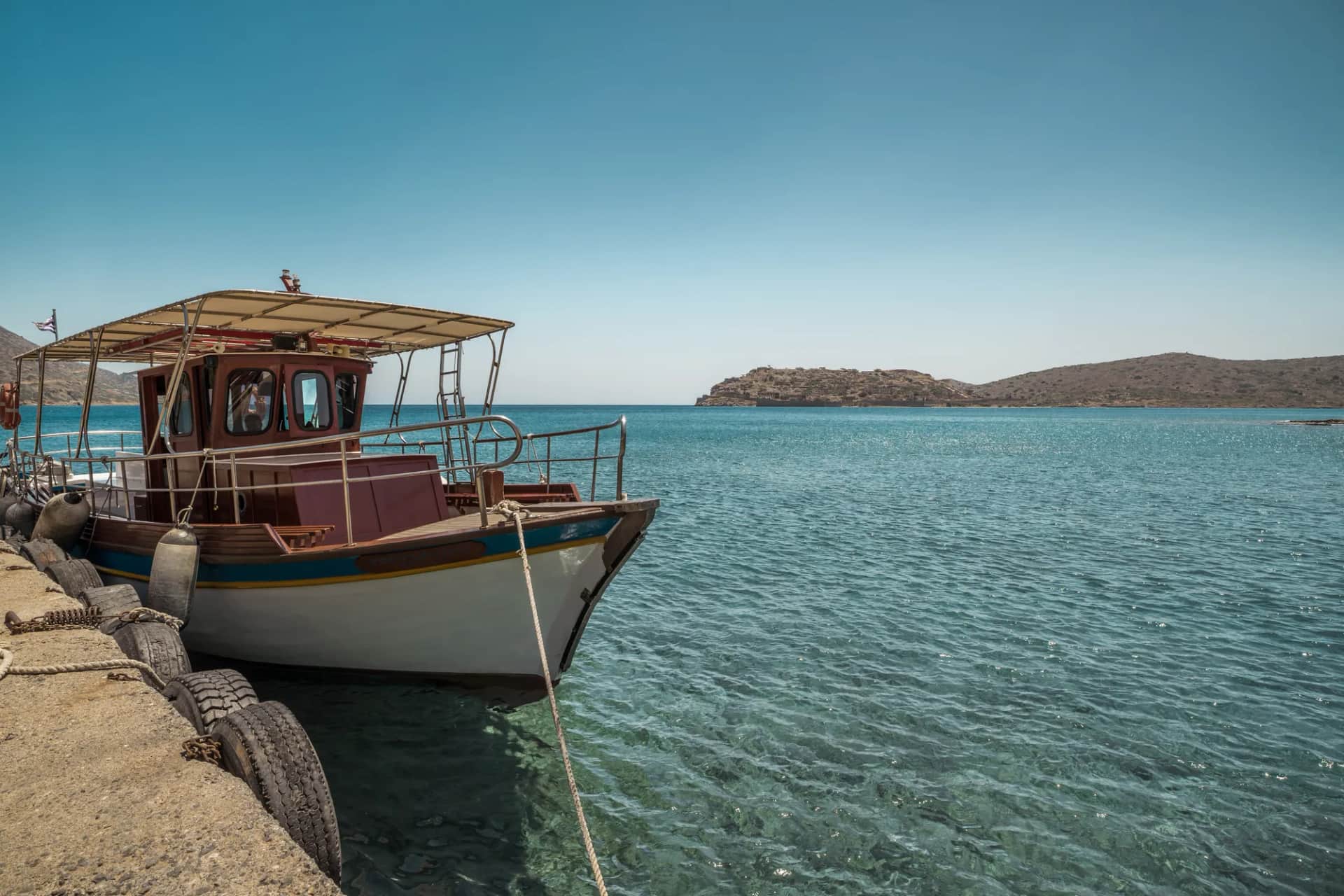

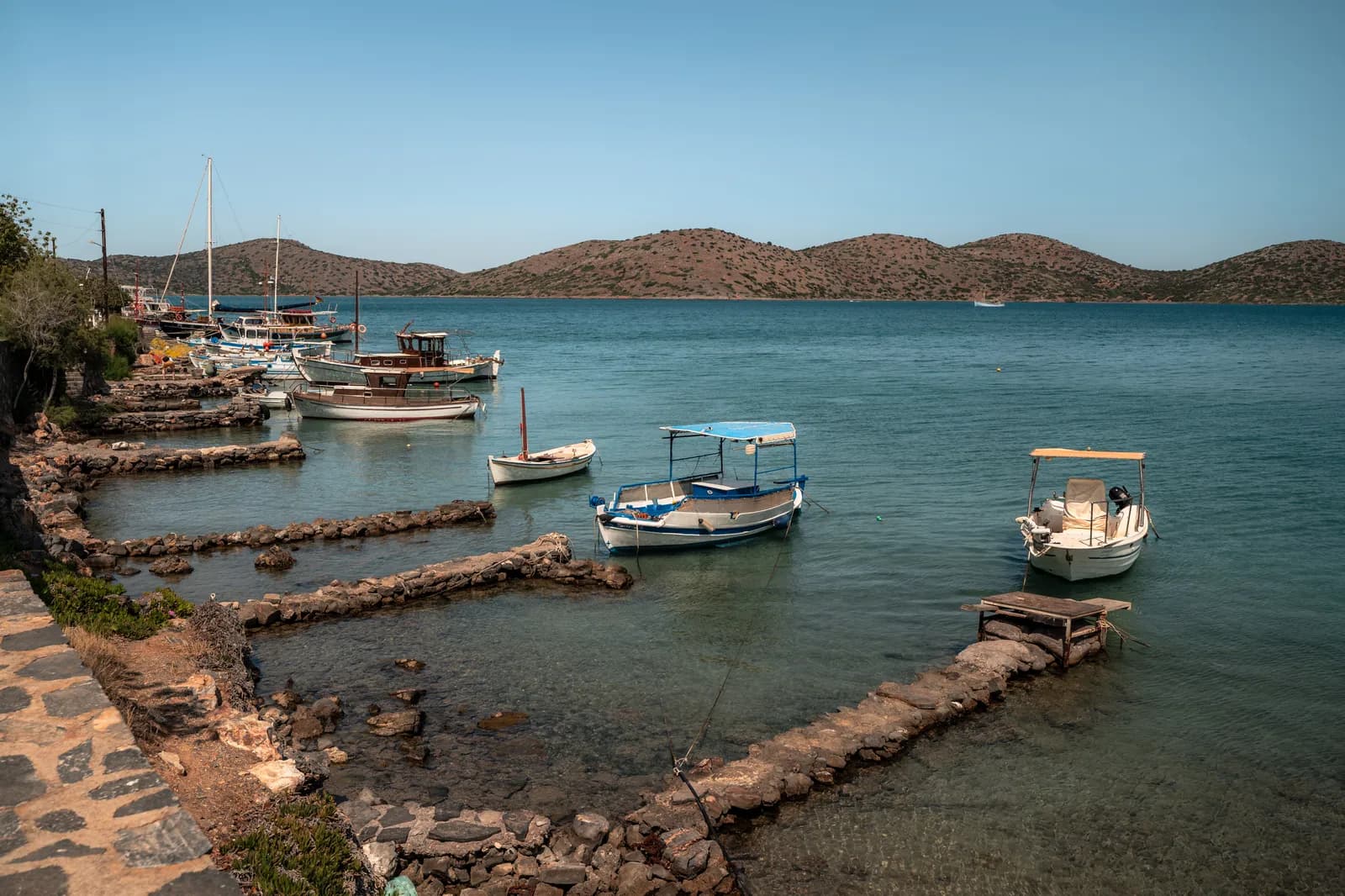
From the Plaka seafront, the Venetian ramparts of Spinalonga are so close that you can make out the arrow slits with the naked eye. Less than a kilometre of turquoise water separates this little fishing village from the islet that was, from 1903 to 1957, Greece's main leper colony. For half a century, this is where the water, the food and the patients set off from.
A useful clarification before going any further: I'm talking here about Plaka in Crete, in Lassithi, about 5 km north of Elounda. Nothing to do with the old Plaka quarter at the foot of the Acropolis in Athens, nor with the villages of the same name on Milos or Naxos. If you're planning a trip to the east of the island, our guide to Crete will help you place Plaka in relation to the rest of the island.
In this guide, I've gathered everything you need to know to spend half a day or a few nights in Plaka: the village's history, the boats to Spinalonga, the pebble beach, the waterside tavernas, the walks nearby, and the practical details for parking and avoiding the crowds.
Plaka, a village facing Spinalonga
Administratively, Plaka belongs to the community of Vrouchas, in the municipality of Agios Nikolaos. The village stretches for a few hundred metres along the sea, where the Gulf of Elounda opens out. Opposite, the islet of Spinalonga (officially called Kalydon) closes off the entrance to the lagoon. Plaka's whole identity lies in this face-to-face.
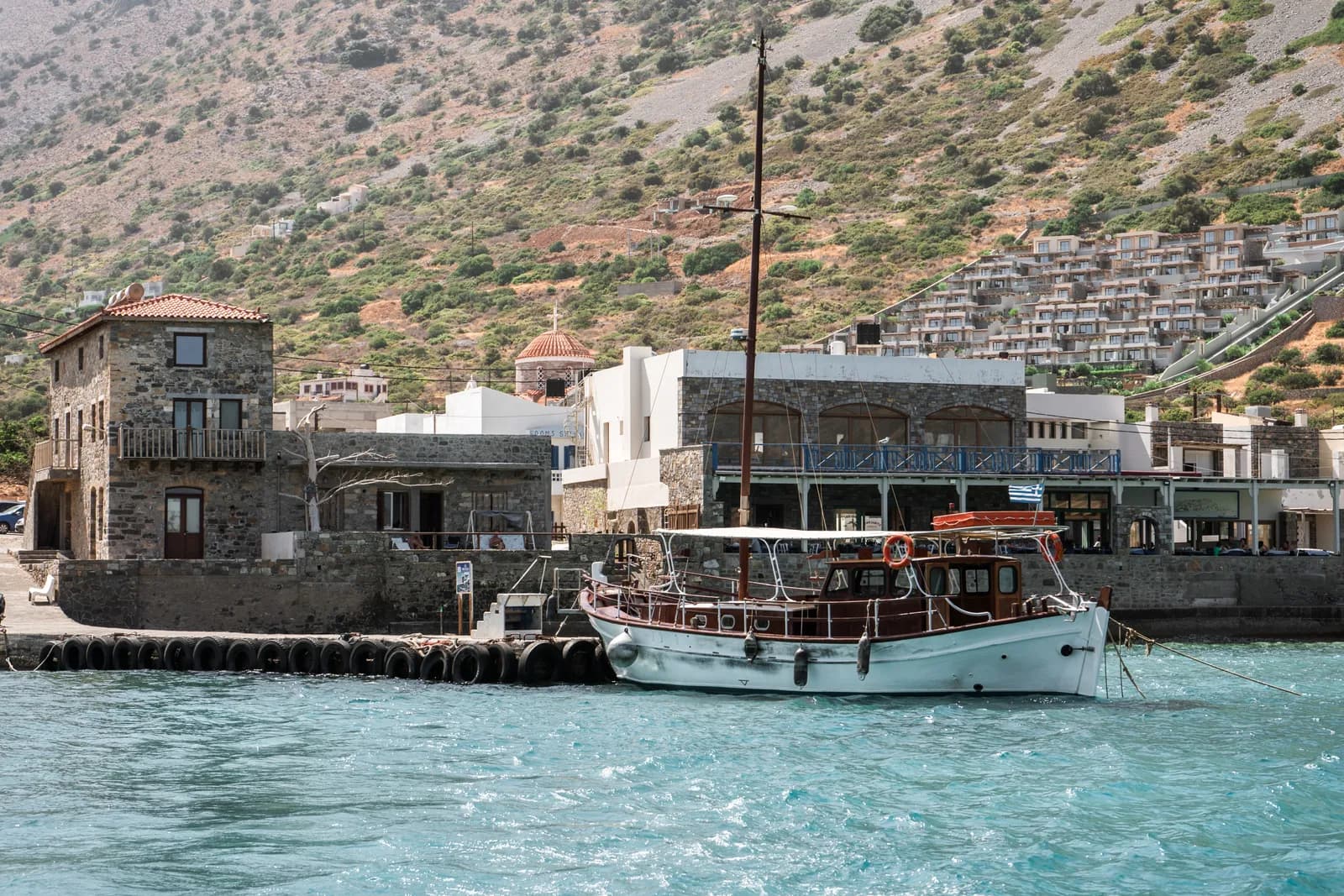
The supply base for the leper colony
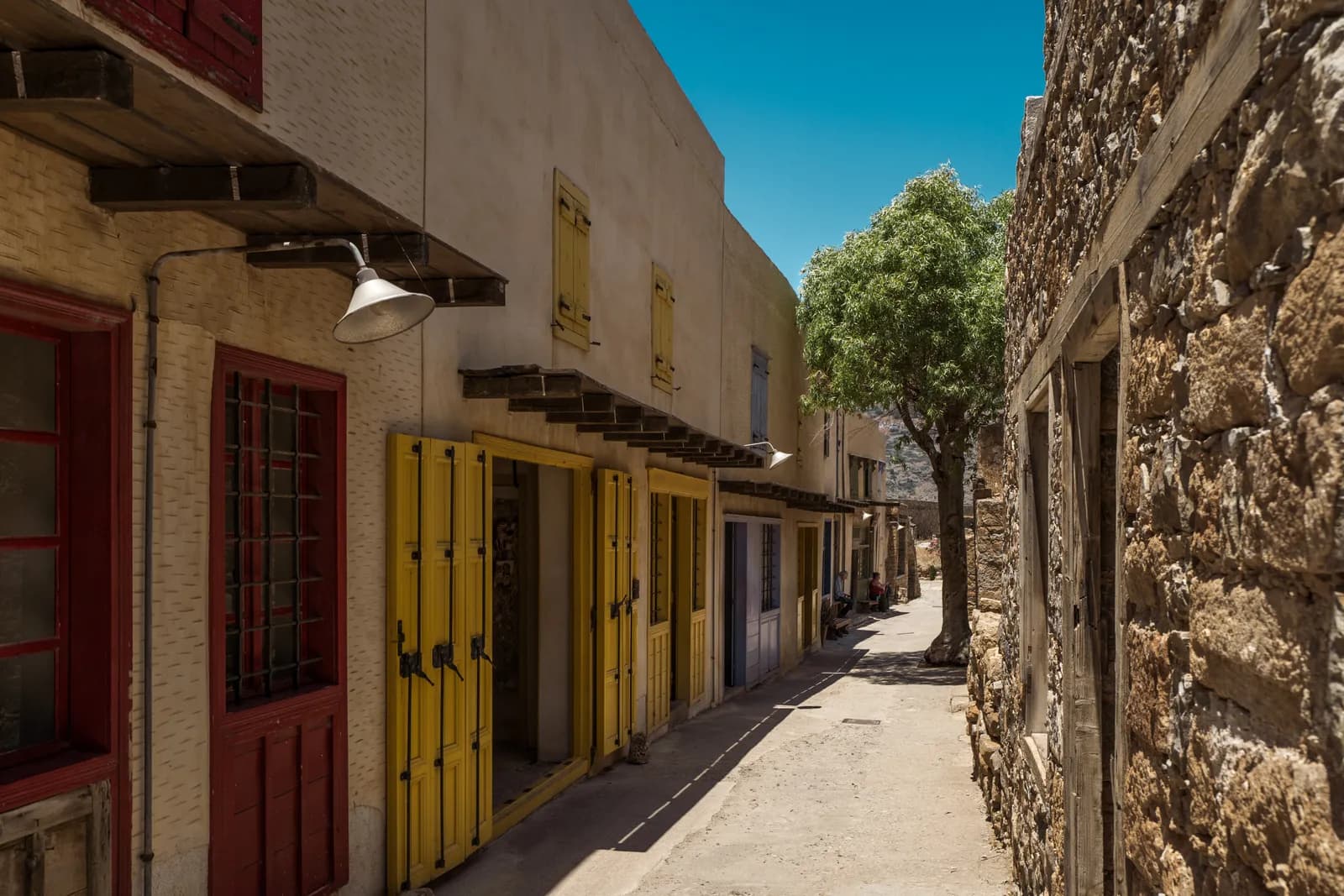
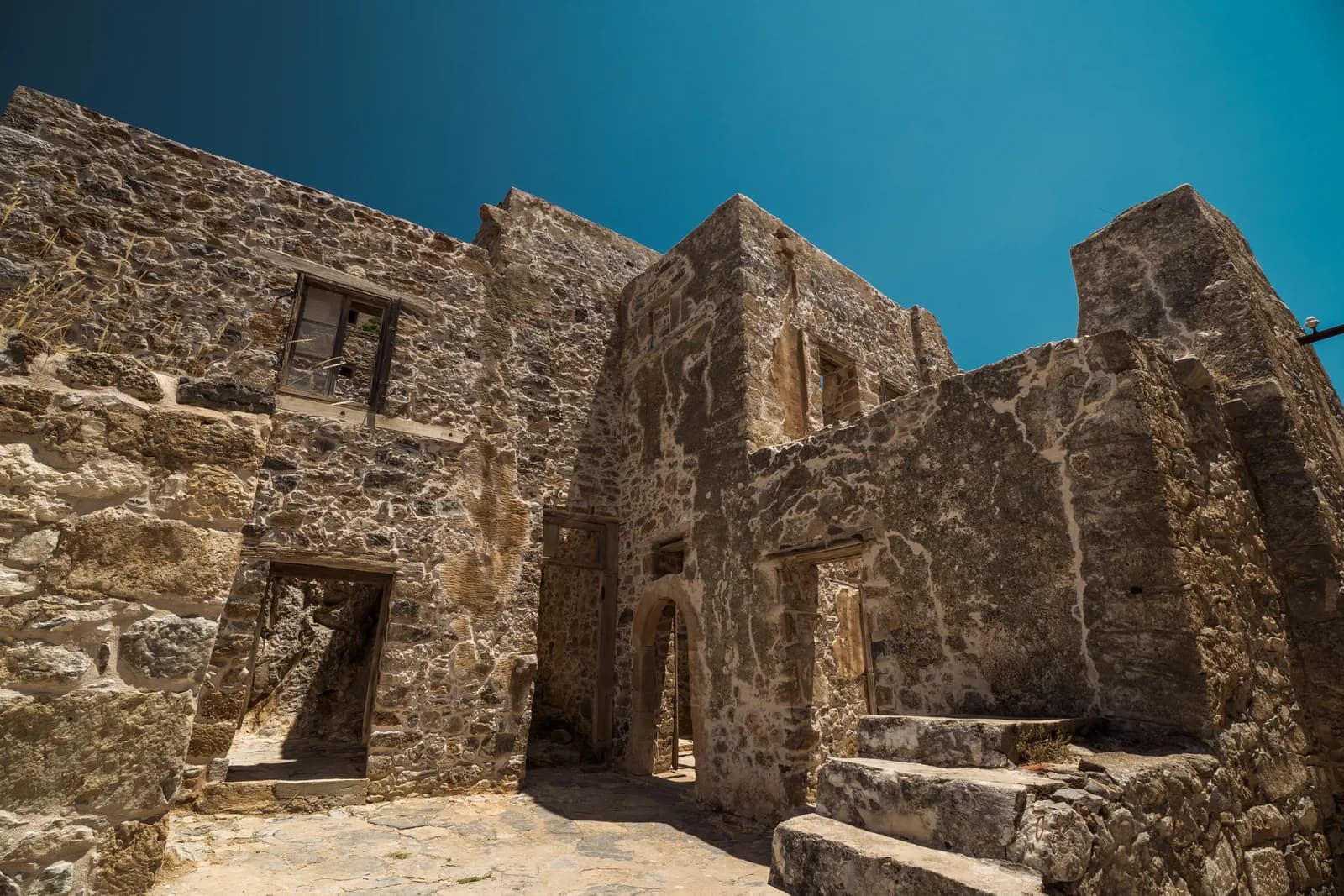
The Venetians laid the first stone of the Spinalonga fortress in 1579. The islet remained Venetian long after the Ottoman conquest of the rest of Crete, then passed to the Ottomans in 1715. In 1903, it was declared a compulsory place of isolation for people with leprosy, and the first 251 patients landed there in October 1904. The leper colony closed in 1957, when the last patients were transferred to Athens.
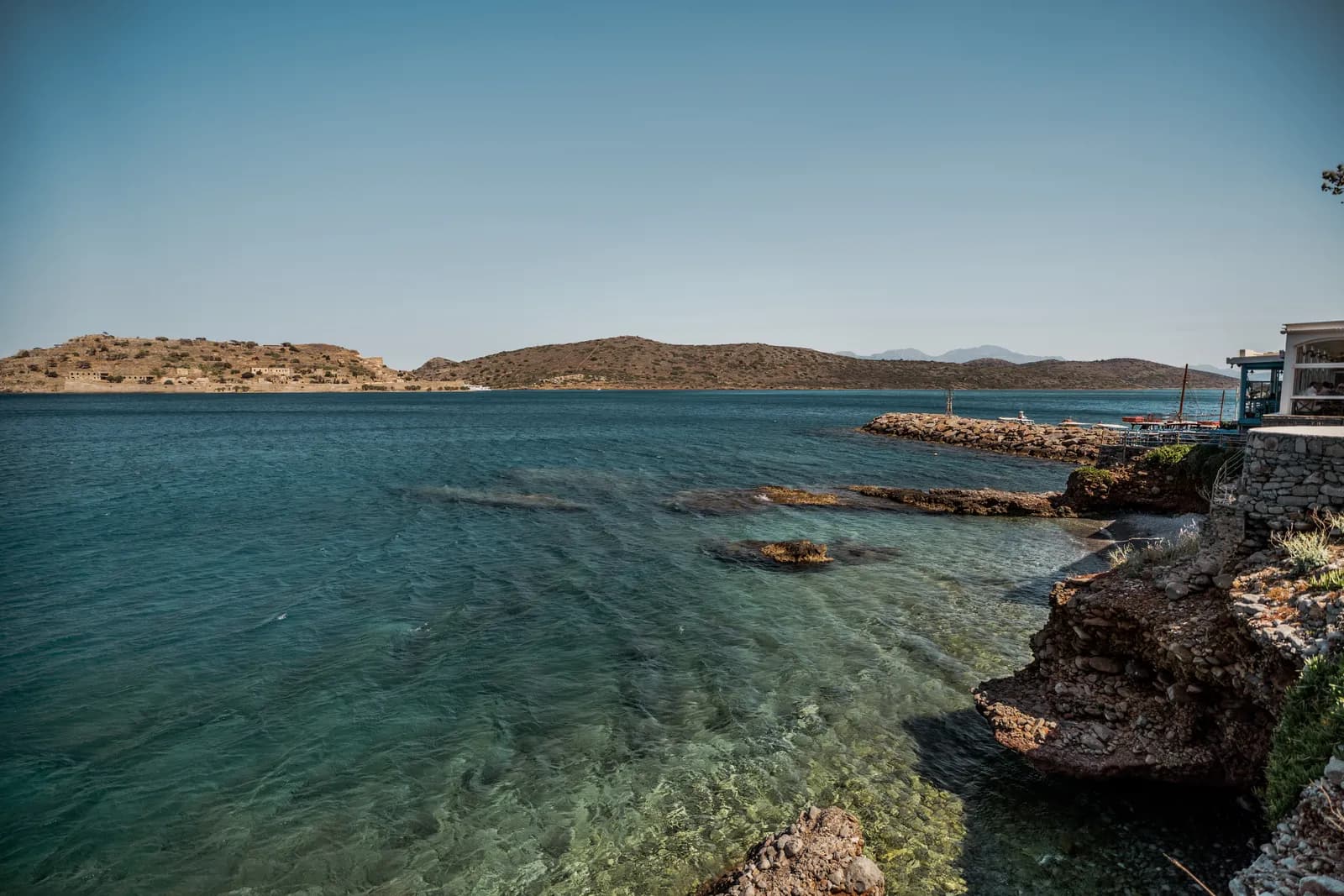
There was no spring on the islet: the inhabitants collected rainwater in cisterns. The rest, like food and supplies, came by boat from Plaka. It was also from this shore that many patients made their final crossing. The villagers therefore made a living from this supply trade while keeping a cautious distance from a deeply stigmatised disease. For the detailed history of the islet, take a look at our guide to visiting Spinalonga.
From Victoria Hislop to “To Nisi”
In 2005, the British novelist Victoria Hislop published The Island. Its heroine, Alexis, sets out to trace her mother, who was born in Plaka, and uncovers her family's history, closely bound up with Spinalonga. The book became an international bestseller.
Photos : Pierre Bouyer
The Greek channel Mega Channel then adapted it as a TV series: To Nisi, 26 episodes broadcast from October 2010 to May 2011, directed by Theodoros Papadoulakis. It was filmed entirely in Crete, notably in Plaka, on Spinalonga, in the hills above Elounda and in Agios Nikolaos. It was a huge success in Greece, and visitor numbers on Spinalonga rose sharply in its wake. Reading the novel before you come really changes the way you see the village.
In Plaka, people don't look at Spinalonga as a backdrop: they look at it as a neighbour whose story they know.
Getting to Spinalonga from Plaka: boats, prices and times
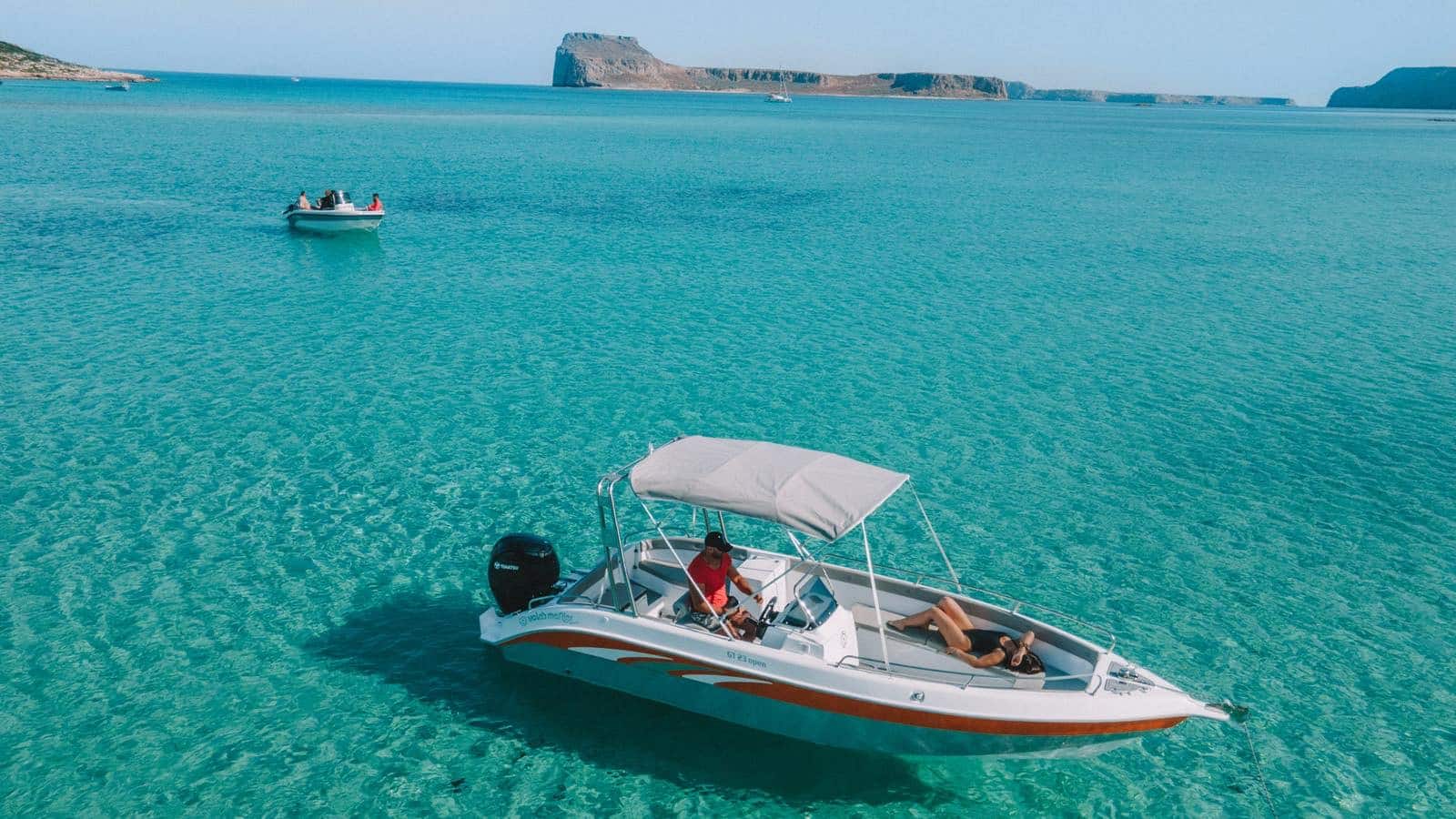
This is why most visitors stop in Plaka: the crossing to Spinalonga is the shortest in the whole bay. The local boatmen's boats leave from the little harbour in the centre of the village, where tickets are sold from a kiosk. No need to book: you buy your ticket on the spot and board the next departure.
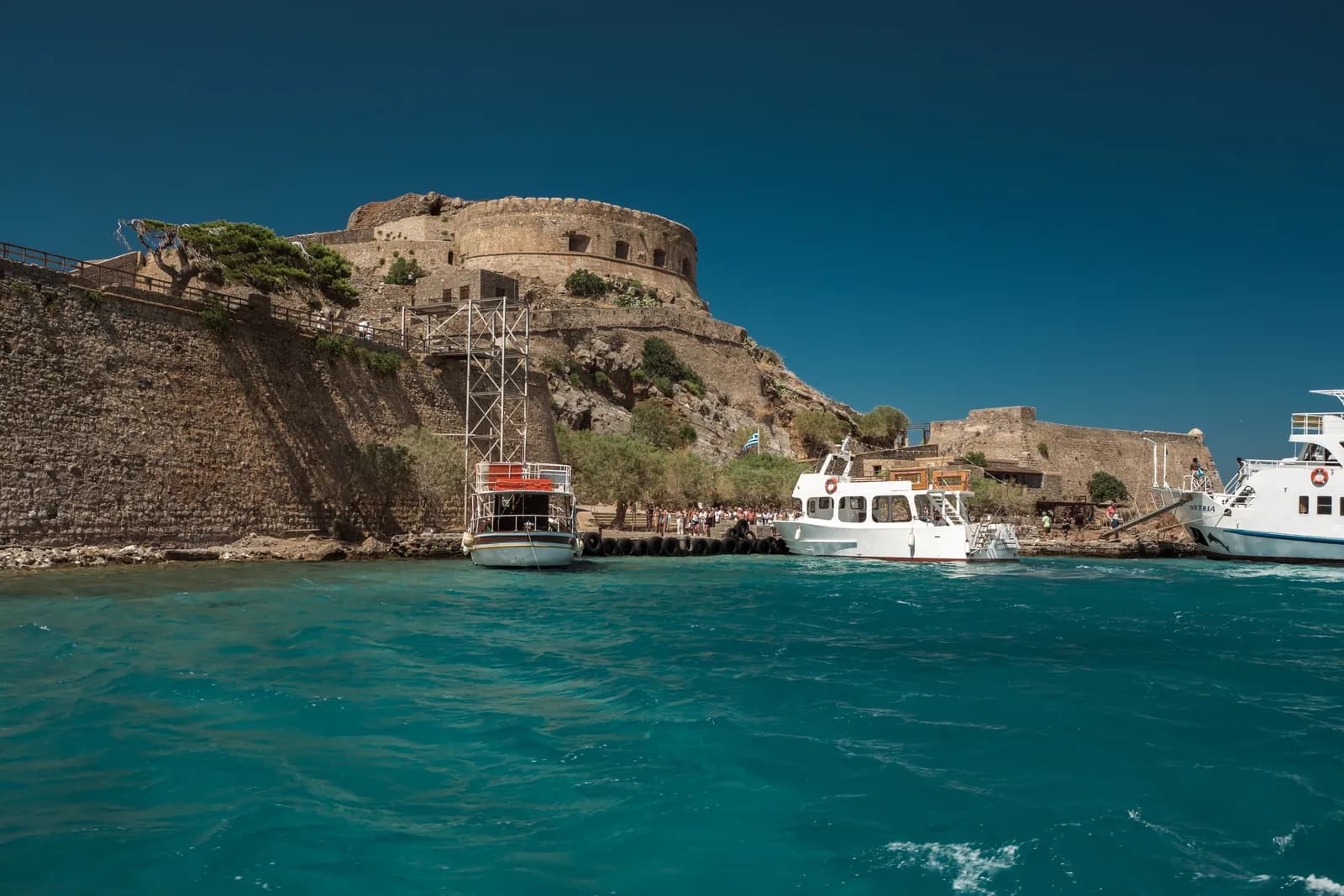
- Duration: a crossing of around ten minutes.
- Price: about €12 return per adult (the 2025 fare, to be confirmed at the kiosk for 2026).
- Frequency: in season, a departure roughly every 20 to 30 minutes, more often when it's busy.
- Times: allow roughly 9am to 5:30pm, as the site closes at 6pm. You can come back on any of the cooperative's boats, with no fixed return time.
- Season: April to October. In winter, the site is not normally open to independent visitors.
| Departure point | Crossing time | Boat fare (return) | Best for |
|---|---|---|---|
| Plaka | about 10 min | about €12 | A quick trip, maximum time on the islet |
| Elounda | 20 to 30 min | about €14 to €15 | If you're staying in Elounda |
| Agios Nikolaos | half-day excursion | price varies by operator | A cruise with a swimming stop |
Once there, allow an hour and a half to two hours to walk around the islet: the main street of the leper colony, the church of Agios Panteleimon, the Venetian bastions and the rampart walk on the open-sea side. There's hardly any shade: a hat, water and closed shoes are essential.
Plaka beach: why the water is so clear
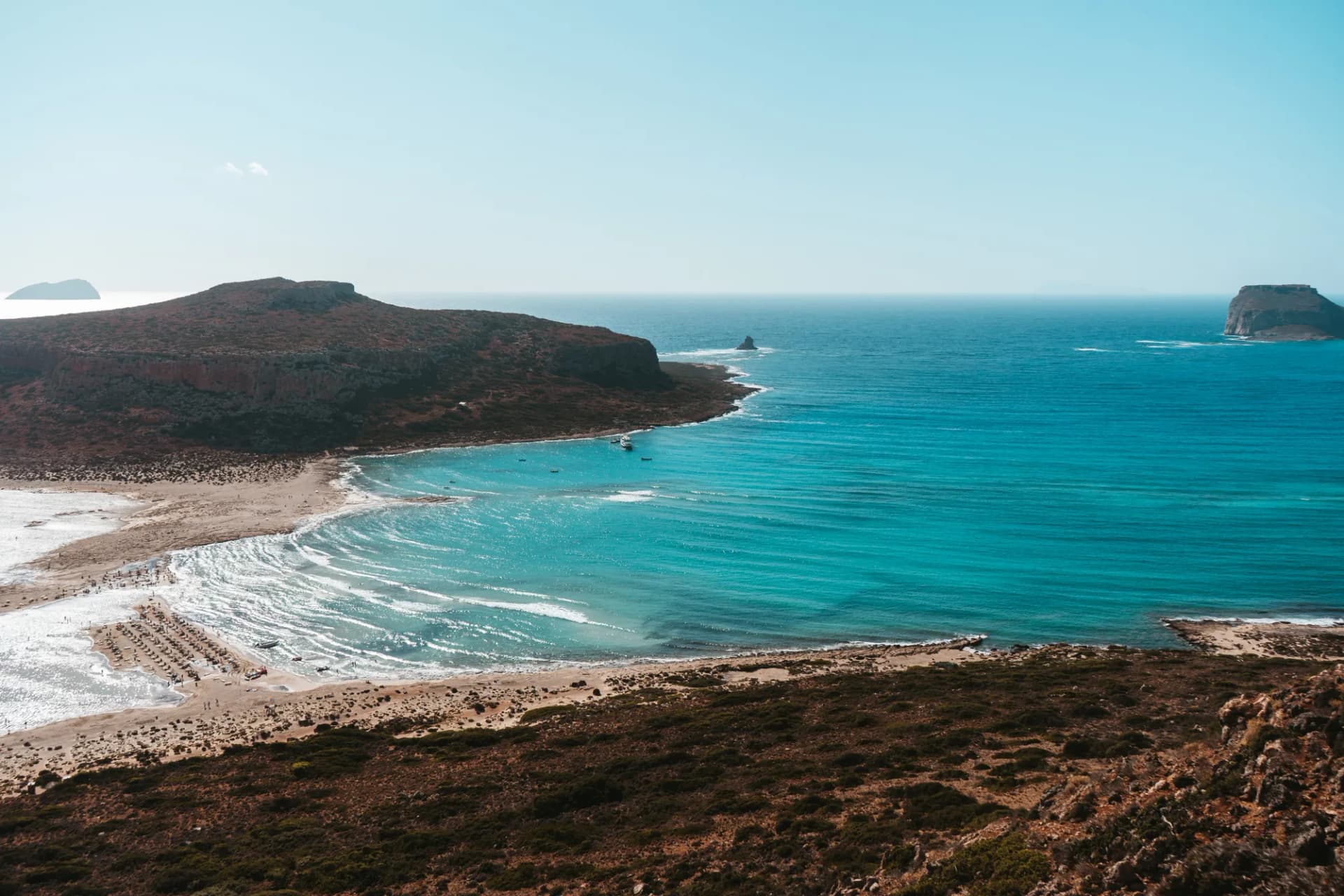
Plaka has two main beaches. To the north-west, the village beach, lined with tamarisk trees, with sunbeds and parasols for hire and the tavernas a few steps away. To the south-east, Agia Marina beach, named after a small Byzantine church, made of large pebbles and reached by a path that runs past the cemetery. In between, a few rocky coves that you reach down steps.
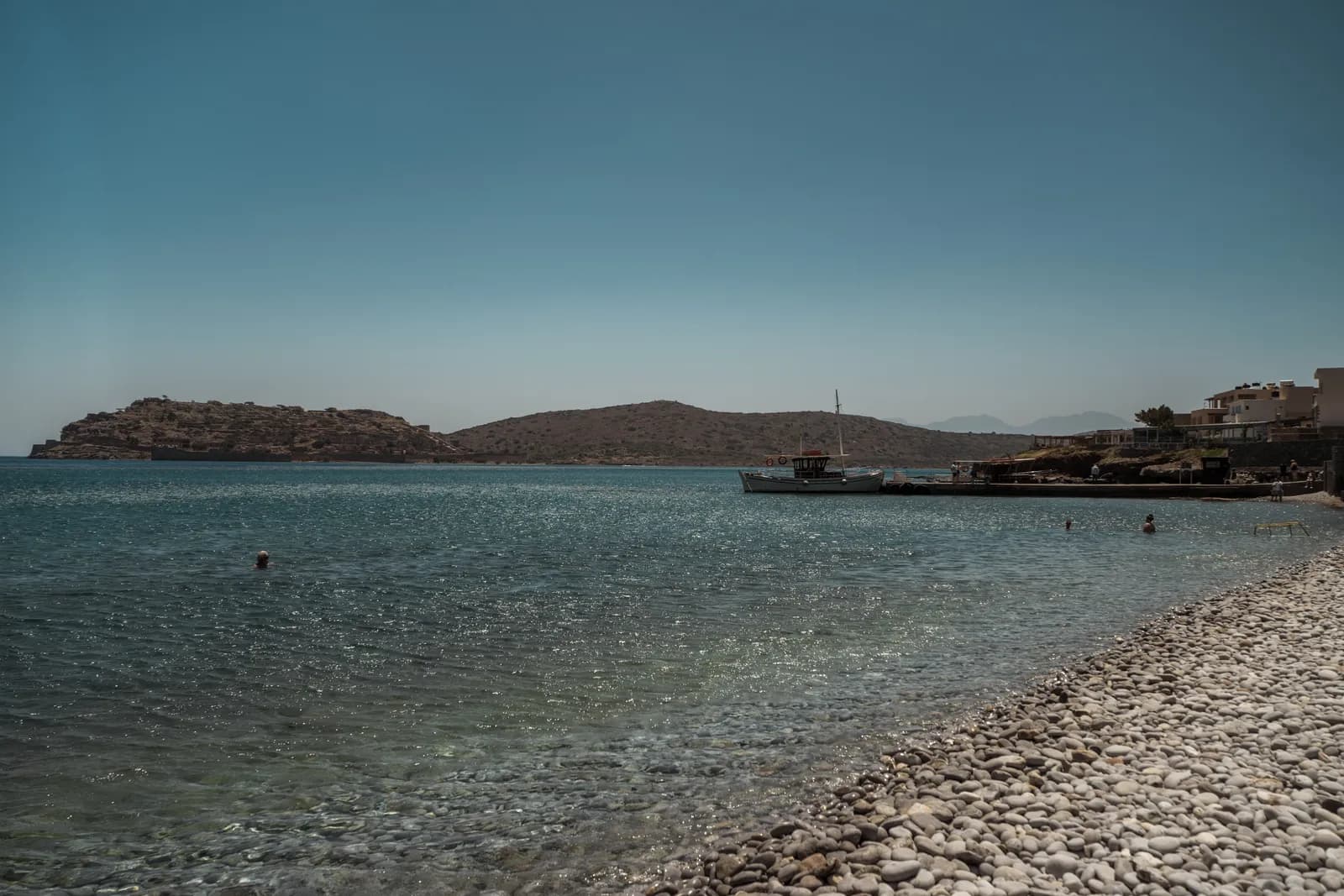
What strikes you here is how transparent the water is. There are several reasons for this:
- Pebbles rather than sand: there are no fine particles for the waves to stir up, so the water stays crystal clear even after a lively swim.
- A seabed that drops away quickly: after a few metres, you're out of your depth. The depth gives the bay its typical deep blue.
- A sheltered bay: the hills around the Gulf of Elounda protect Plaka from much of the wind, so the sea is generally calm.
- Little run-off from the land: no river or large port close by to cloud the water.
The rocky seabed is full of marine life: with a mask and snorkel, you can easily watch fish along the rocks, always keeping well away from the channel used by the boats. If underwater exploring appeals, our selection of the best snorkelling spots in Crete pairs nicely with this stop.
Eating in Plaka: the seafront fish tavernas
Plaka's seafront is lined with a handful of family-run tavernas, almost all facing Spinalonga, and a few cafés. Some have their own fishing boats. Rather than give you a list of names that sometimes change hands, here's how to choose well:
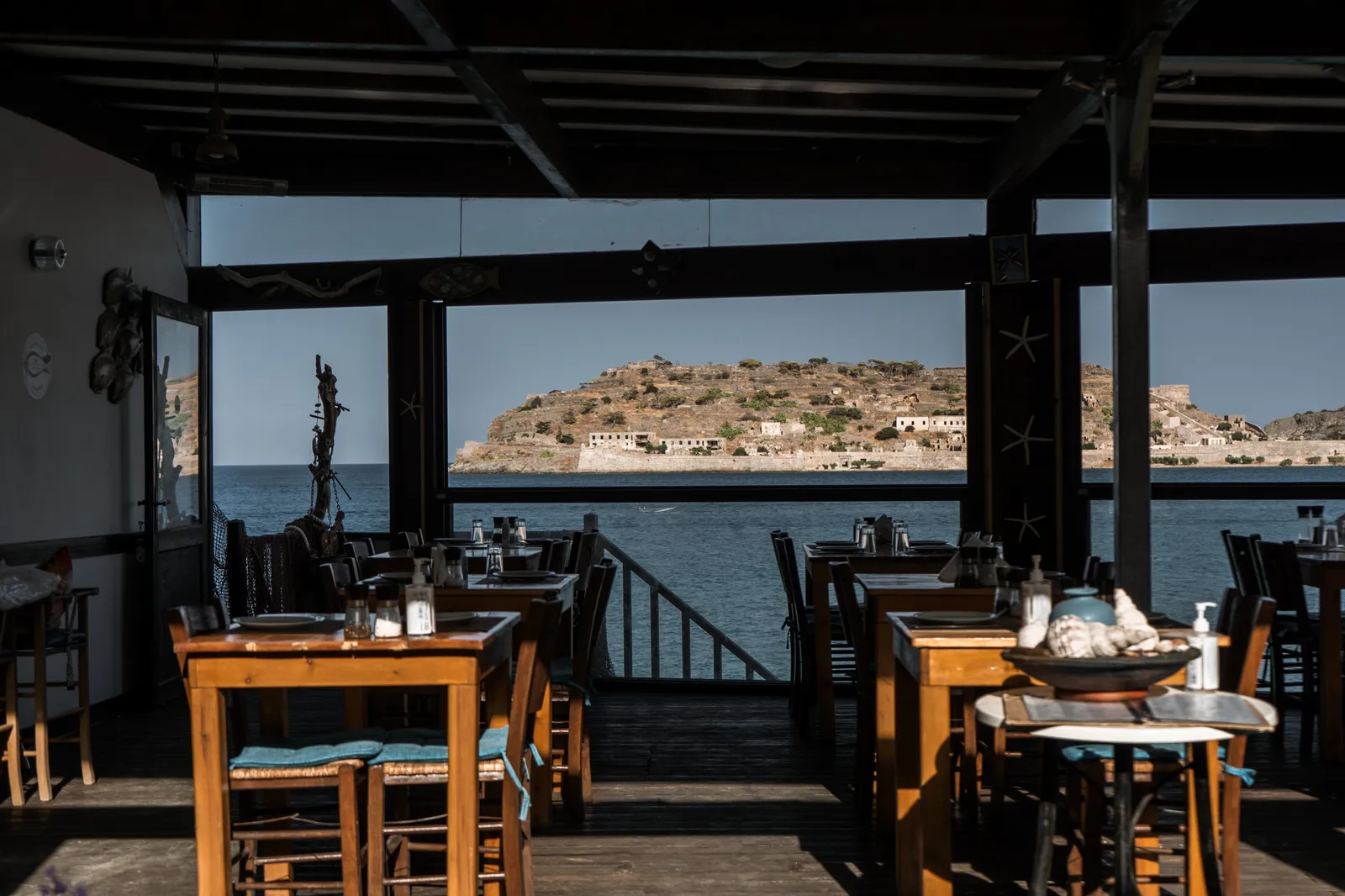
- Ask to see the catch of the day: in Greece, fresh fish is sold by the kilo. Have your fish weighed before it's cooked and ask for the total price, to avoid surprises on the bill.
- Look out for the word “κατεψυγμένο” or an asterisk on the menu: it means the product is frozen, which is common for squid and perfectly legal as long as it's indicated.
- Go for the Cretan classics: grilled octopus, small fried fish, dakos salad and a plate of seasonal vegetables. These are often the most consistent dishes.
- Pick your table: some terraces sit on the rocks, right at the water's edge. For dinner, book ahead in July and August, especially for a front-row table at sunset.
Budget-wise, a fish meal by the water costs considerably more than a meal of grilled meat inland. Premium fish sold by the kilo can quickly push the bill up: always ask the price when you order.
Walks around Plaka
Along the coast to Elounda
The 5 km between Plaka and Elounda take about an hour to an hour and a quarter on foot. The route alternates between stretches of path by the water and sections along the coast road, with uninterrupted views over the lagoon and the Spinalonga peninsula (not to be confused with the islet). Set off early in the morning: there's almost no shade. On the way back, a taxi or the bus saves you retracing your steps in the sun.
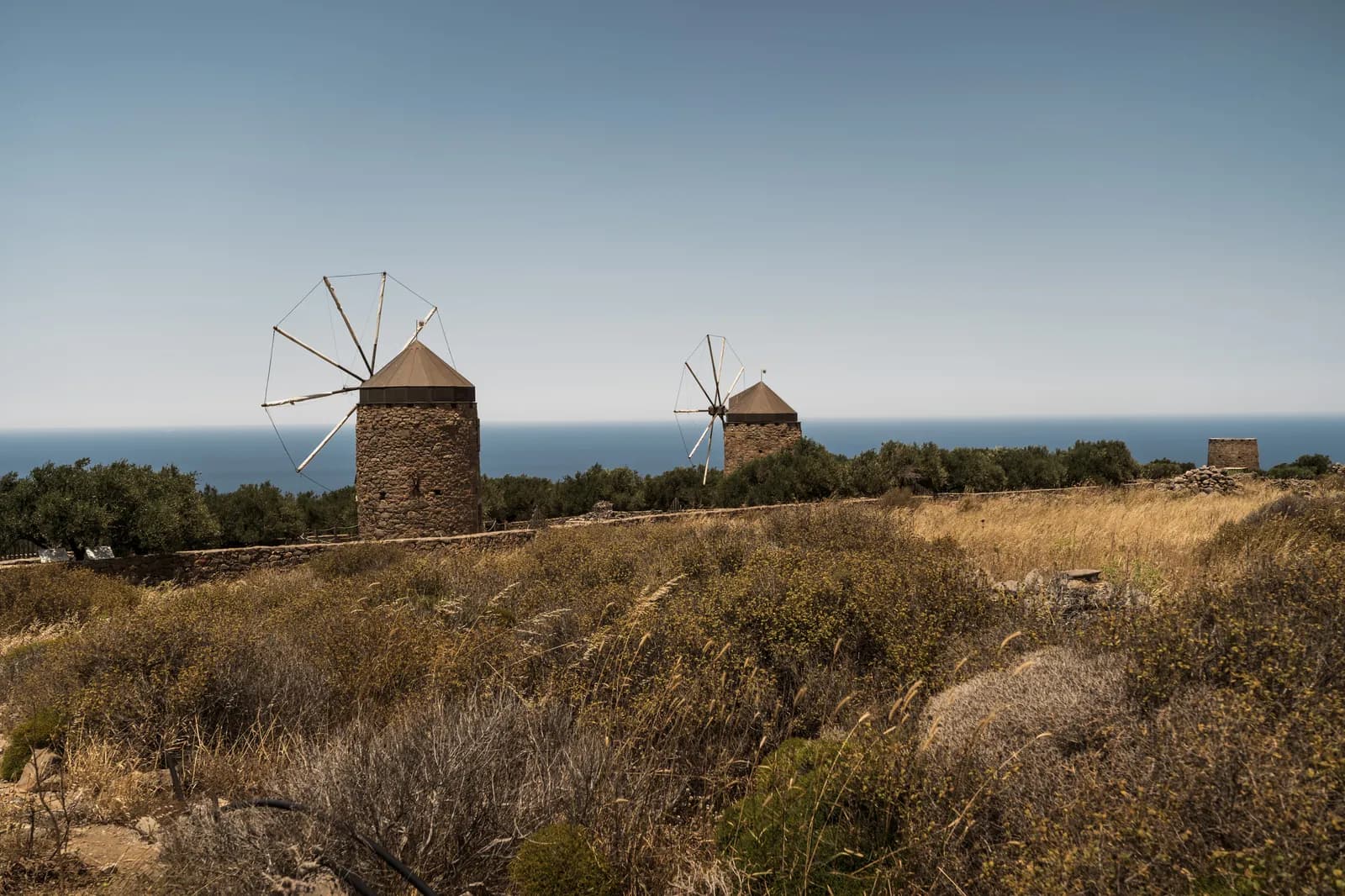
Vrouchas, its windmills and the Aforesmenos lighthouse
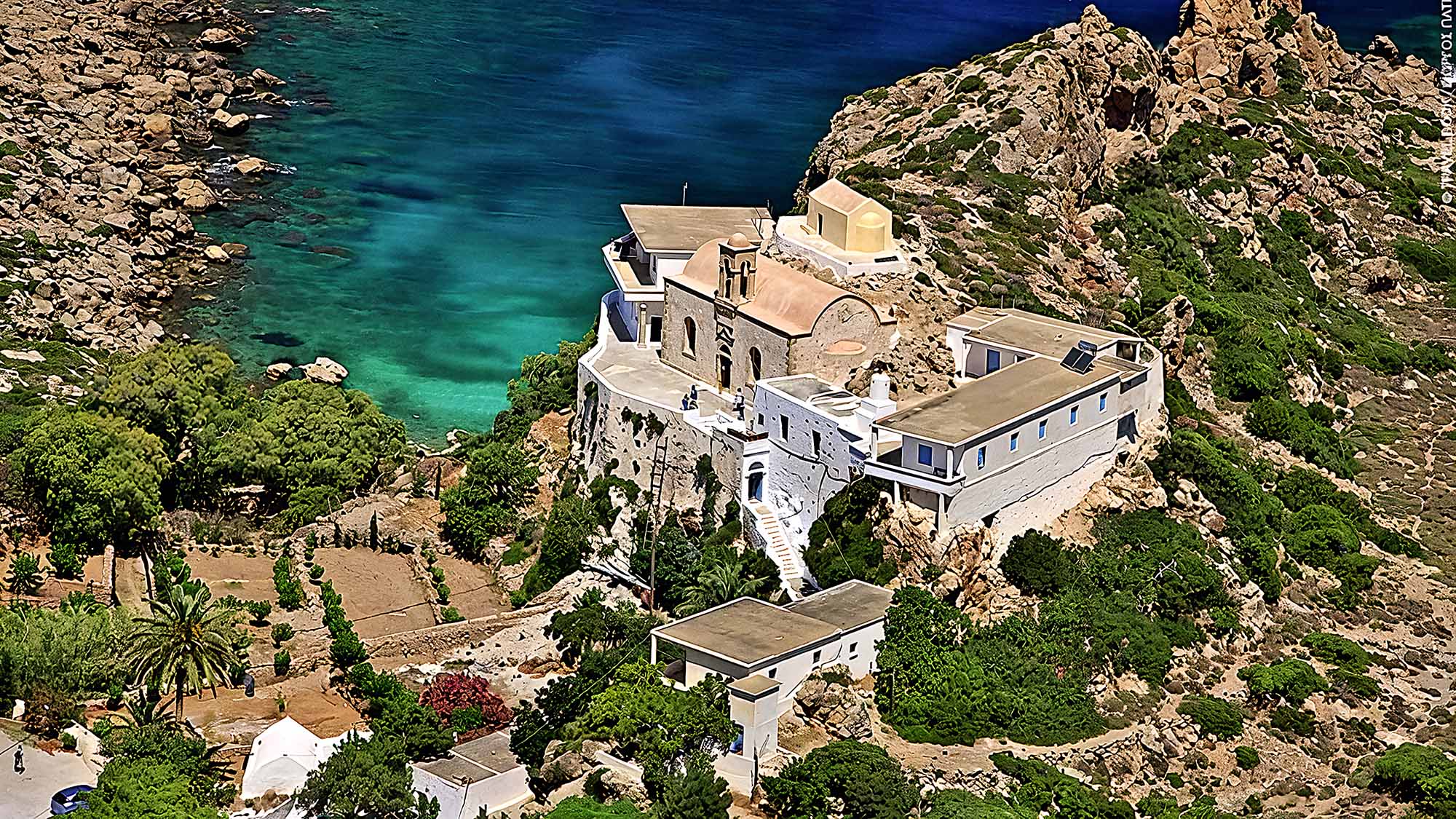
About 4 km above Plaka, the village of Vrouchas overlooks Mirabello Bay. At its entrance stands one of the largest groups of windmills in the region: nine “axetrocharis” mills, rectangular in shape with one rounded side, designed to turn with the north-westerly wind. The village has kept its traditional architecture and a few small churches.
Walkers can then follow the waymarked T3 trail, which starts at the church of Agios Ioannis and leads to the Cape Aforesmenos lighthouse, built in 1864 by the French lighthouse company. The terrain is dry, stony and exposed to the wind: good shoes, water and an early start are a must in summer.
The old stone quarries of Pelekiti
The stones for the Spinalonga fortress were quarried very close by, on the north coast of the large Spinalonga peninsula (also called Kolokitha), opposite Plaka. The whole slope between Pelekiti, whose name comes from stone cutting, and Skoureto served as a quarry for porous limestone. What remains are carved terraces and cut blocks that run straight into the sea. No road leads there: you reach it by sea, by boat or kayak from the Plaka coast, ideally when the sea is calm.
When to visit Plaka
The Spinalonga site is open every day from April to October, from 8:30am to 6pm. This is also the period when the boats are running and all the seafront tavernas are open.
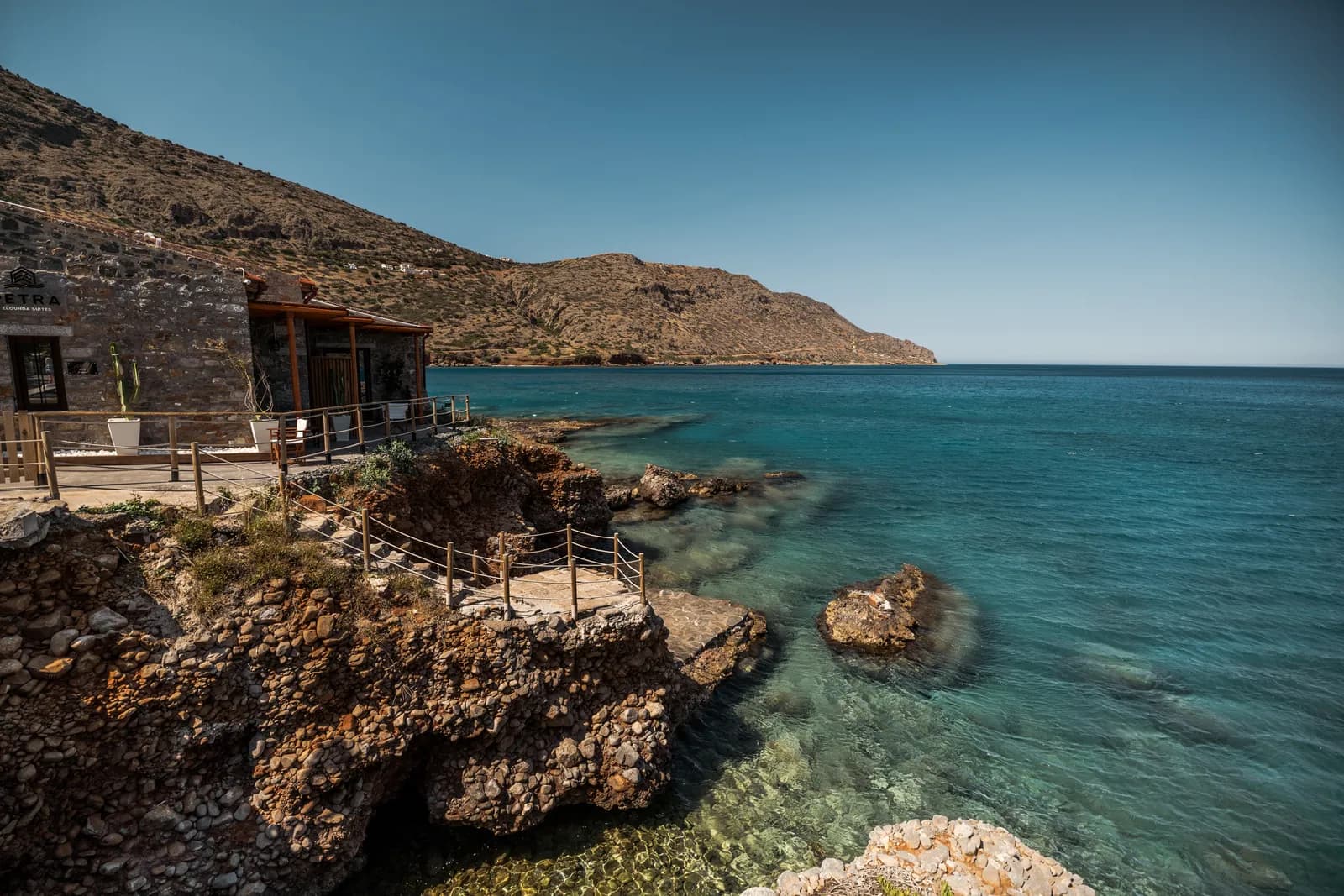
- May and June: my pick. The sea is already pleasant from late May, the light is soft and the islet isn't too crowded.
- July and August: intense heat, parking full by mid-morning and crowds on Spinalonga in the middle of the day. If that's your only window, our guide to Crete in summer gives you the right habits.
- September and October: the water is still warm, there are fewer people, and boat times get shorter towards the end of the season.
- November to March: a very quiet village, many tavernas closed, and visiting Spinalonga is normally not possible for independent visitors.
To compare with the rest of the island, our article on the best time to visit Crete covers the weather and crowds month by month.
Practical info: getting there, parking, budget
Distances and driving times
| From | Distance (approx.) | Driving time (approx.) |
|---|---|---|
| Elounda | 5 km | 10 min |
| Fourni | 11 km by road | 20 min |
| Vrouchas | 4 km | 10 min |
| Agios Nikolaos | 16 km | 25 min |
| Heraklion airport | 75 km | 1 hr 10 to 1 hr 20 |
A car is still the most flexible way to combine Plaka with Elounda, Vrouchas, Kritsa or the Lassithi Plateau. If you haven't booked yet, our guide to hiring a car in Crete explains the insurance options and the pitfalls to avoid.
DiscoverCars
Car rental comparison — 150+ countries
Compare prices from Hertz, Avis, Sixt and local providers. All fees included, free cancellation. Rated 4.6/5 on Trustpilot.


By bus from Agios Nikolaos
The KTEL Heraklion-Lassithi bus company links Agios Nikolaos with Elounda, and some departures continue on to Plaka. The journey takes about thirty minutes, but services are limited: check the seasonal timetable on the KTEL website or at the Agios Nikolaos bus station before you set off.
Parking in Plaka
Parking is free, along the road through the village and in the designated areas at either end. The problem is space: in July and August, everything around the harbour is taken by mid-morning. Arrive before 9:30am, or park a little further away and walk five to ten minutes. Never park in front of house entrances or in the delivery areas reserved for the tavernas.
Budget for a day
| Item | Guide price |
|---|---|
| Plaka-Spinalonga boat | about €12 return |
| Spinalonga entry (April to October) | €20 (€10 reduced) |
| Sunbeds and parasol | varies by beach, ask on the spot |
| Parking | free |
| Meal at a fish taverna | varies, fresh fish sold by the kilo |
Staying in Plaka or Elounda?
Plaka mainly offers apartments, studios and a few houses to rent, plus one large luxury hotel south of the village, above Agia Marina beach. No nightlife, no big seafront resorts: in the evening, the action comes down to the tavernas.
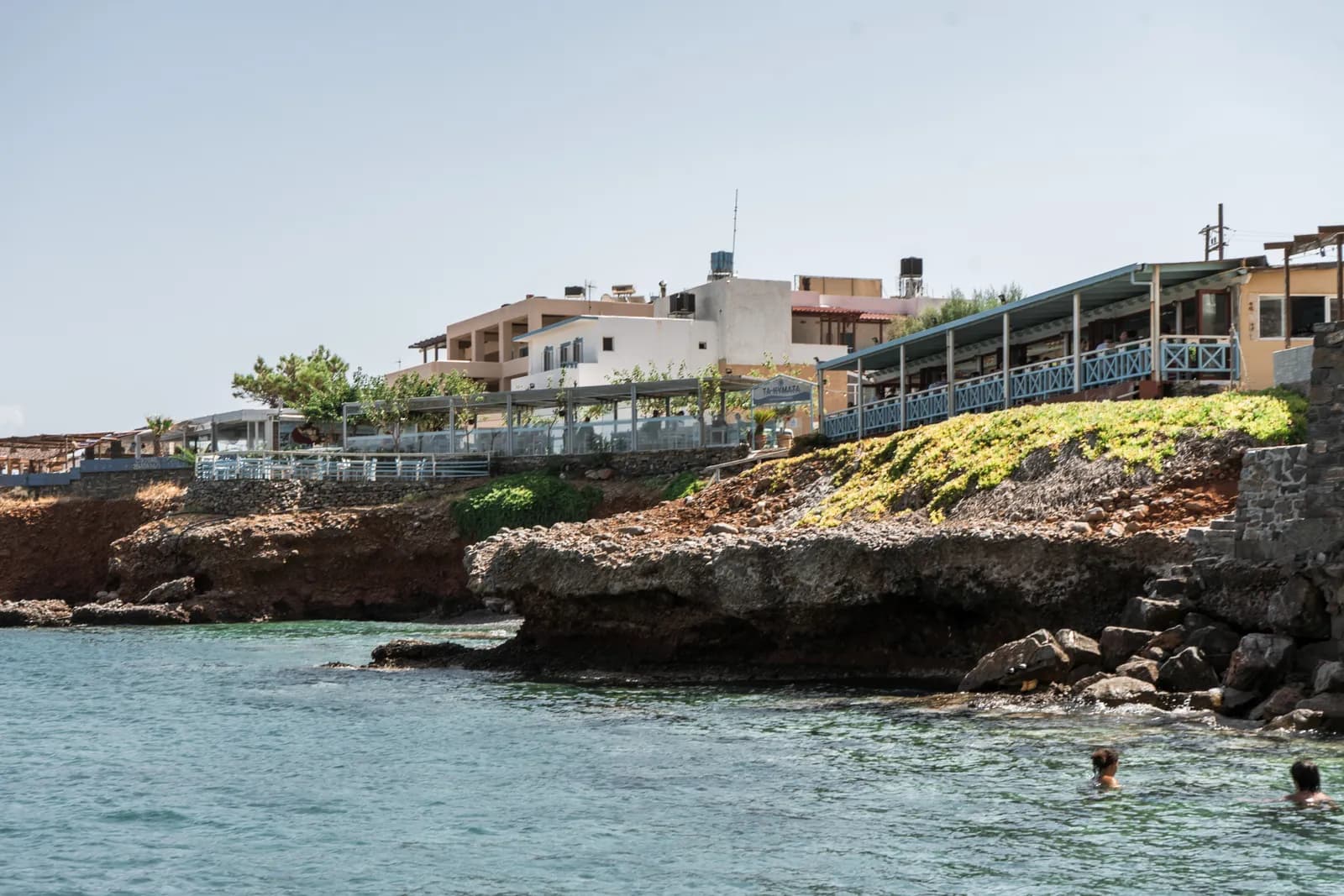
- Choose Plaka if you're after peace and quiet, swimming right below your accommodation and immediate access to Spinalonga before the excursions arrive.
- Choose Elounda if you want more shops, restaurants and a wider choice of accommodation, while staying 10 minutes from Plaka.
- Choose Agios Nikolaos if you're travelling without a car and relying on buses to explore the east of the island.
Frequently asked questions
The fare in 2025 was €12 return per adult, paid at the kiosk by the little harbour, with no booking needed. The entrance ticket for the archaeological site is extra: €20 full price and €10 reduced from April to October.
Around ten minutes. It's the shortest route to Spinalonga, compared with 20 to 30 minutes from Elounda; from Agios Nikolaos, you'll usually go on a half-day excursion.
Yes, but with care: the beach is made of pebbles and the seabed drops off quickly. Water shoes and constant supervision are recommended for little ones.
Parking is free along the access road and in the designated areas at the entrance to the village. In July and August, the spaces near the harbour are taken by mid-morning: arrive early or take the bus from Agios Nikolaos.
Plaka in Athens is the old quarter at the foot of the Acropolis. Plaka in Crete is a small fishing village in Lassithi, on the island's north-east coast, facing the islet of Spinalonga.
In a nutshell
Plaka deserves more than a quick stop at the boat kiosk. Take the first boat to Spinalonga, come back for a swim in the clear water of the pebble beach, then head up to see the Vrouchas windmills before dinner facing the fortress. To plan the rest of your itinerary, our complete guide to Crete brings together the beaches, the villages and road trip ideas across the whole island.

Âme Bohème exists thanks to you
Some links in this article are affiliate links. This means that if you book or purchase a product through these links, we receive a small commission — at no extra cost to you. It's thanks to this support that we can continue creating free, quality content.
You can also buy us a coffee, or follow us on Instagram and Facebook.