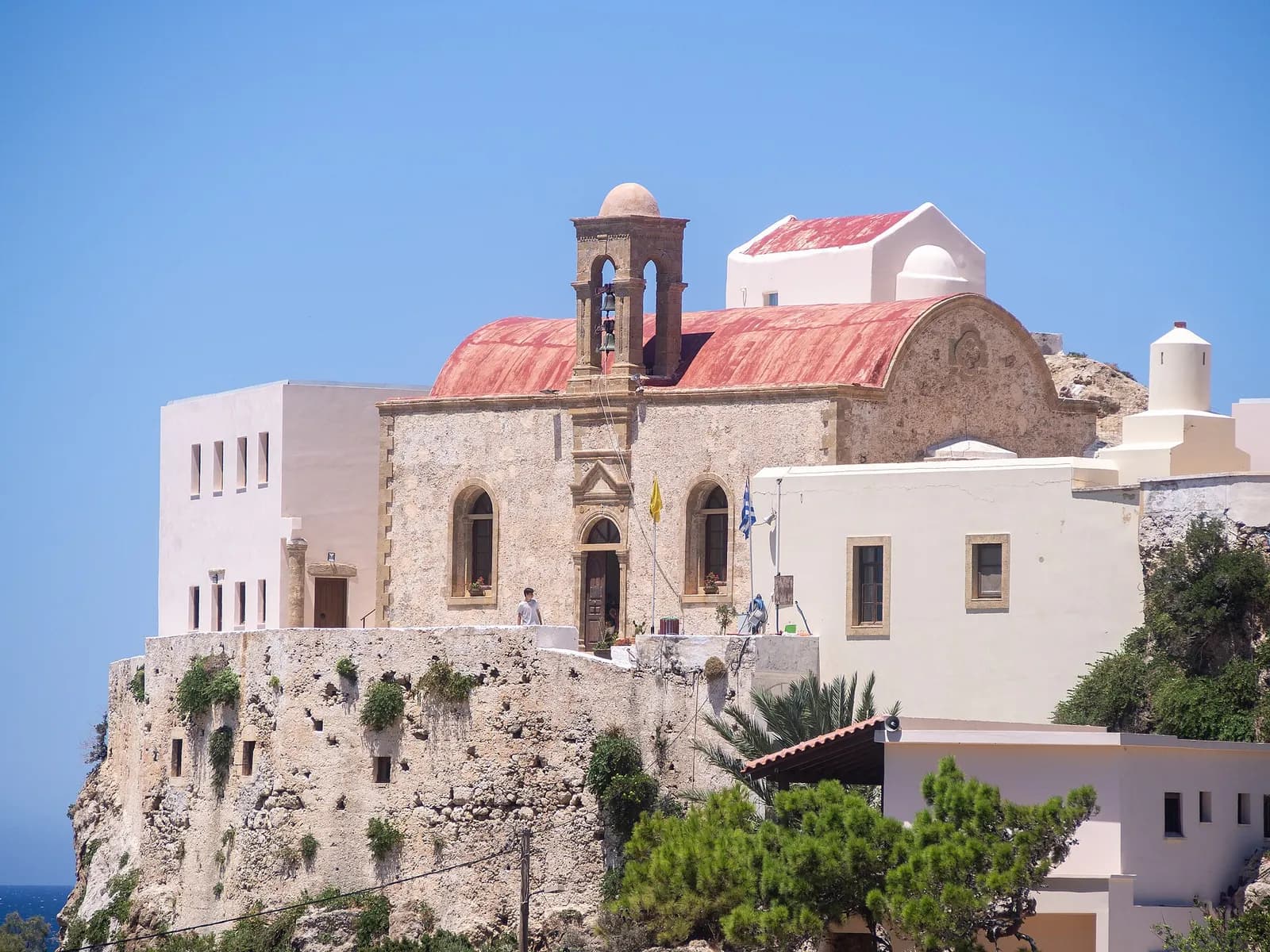
At the edge of the Cretan world, where the land plunges into the Mediterranean Sea, stands a sanctuary of striking beauty. The Chrysoskalitissa Monastery, perched on its 35-metre cliff, jealously guards the secret of its golden staircase. This architectural marvel, located just a few kilometres from the famous Elafonisi lagoon, deserves far more than a quick tourist stop. Between millennia-old legends and historical reality, this Orthodox gem reveals the deep soul of Crete in all its spiritual splendour.
Essential Practical Information
Getting to the Chrysoskalitissa Monastery requires a little advance planning. Located about 72 kilometres from Chania, the journey follows a winding but perfectly drivable coastal road. Allow about one and a half to one and three-quarter hours of driving from Chania city centre.
Planning your trip? Find all the essentials in our complete guide to Crete and check when to visit Crete with our month-by-month weather guide.
A Sanctuary Between Sky and Sea
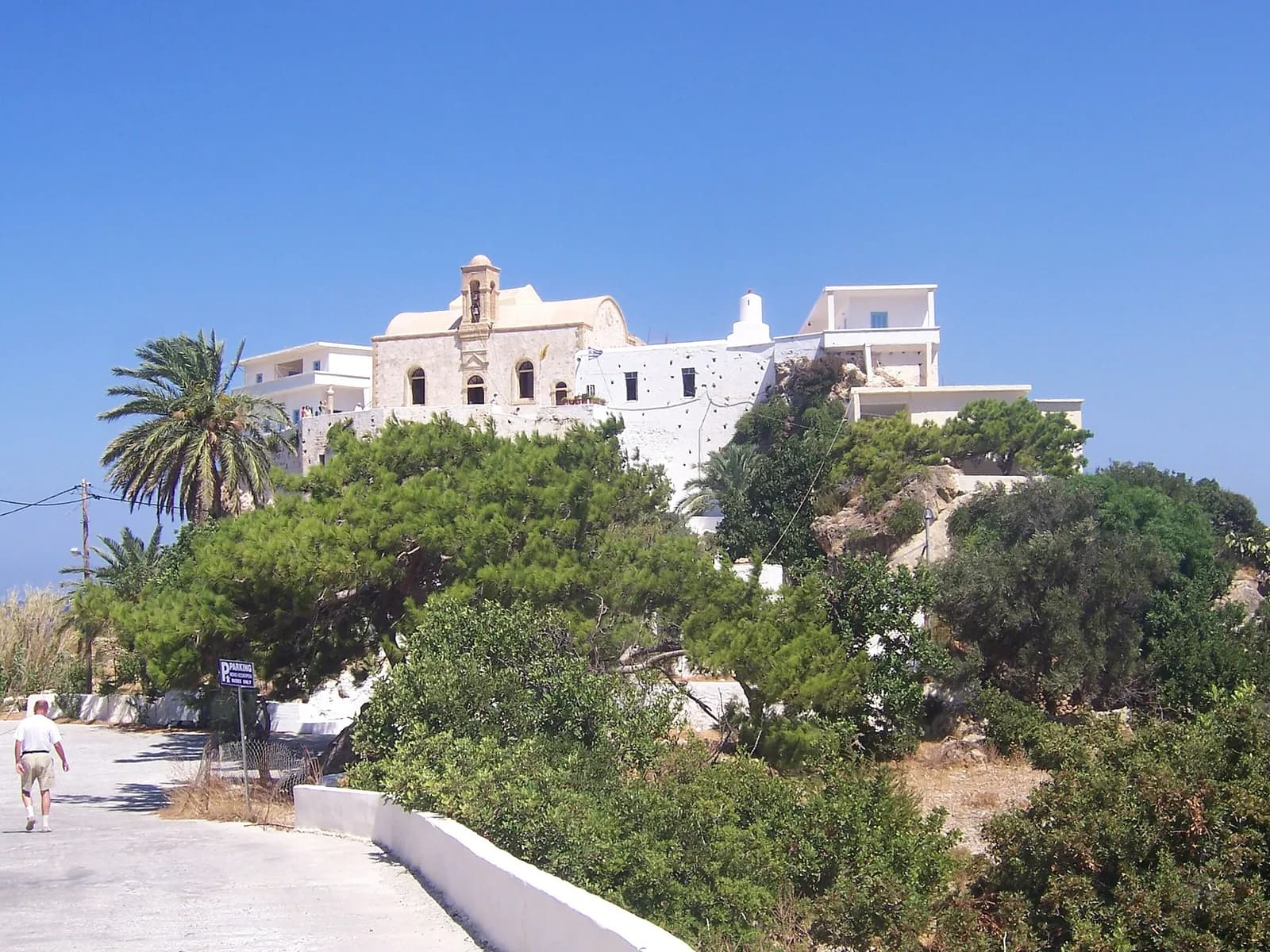
The approach to the Chrysoskalitissa Monastery is already a spectacle in itself. From the winding road leading to Elafonisi, you suddenly catch sight of this immaculate white silhouette standing out against the ochre rocks. The contrast is immediately striking: this small monastic complex seems to defy gravity, clinging to its rocky spur facing the marine vastness.
The surrounding natural setting reinforces this impression of mystical isolation. We are here at the extreme south-west of Crete, in a region where civilisation is scarce. Only a few centuries-old olive trees and wild aromatic herbs punctuate this landscape of raw beauty. The deep blue sea stretches as far as the eye can see, reminding visitors that they truly stand at the edge of the known world.
The Emotion of Discovery
From the first steps on the access path, the atmosphere changes imperceptibly. The noise of the modern world fades, replaced by the song of the wind in the rocks and the distant murmur of the waves. This transition naturally prepares you for an encounter with a place outside of time.
Visiting the Monastic Complex
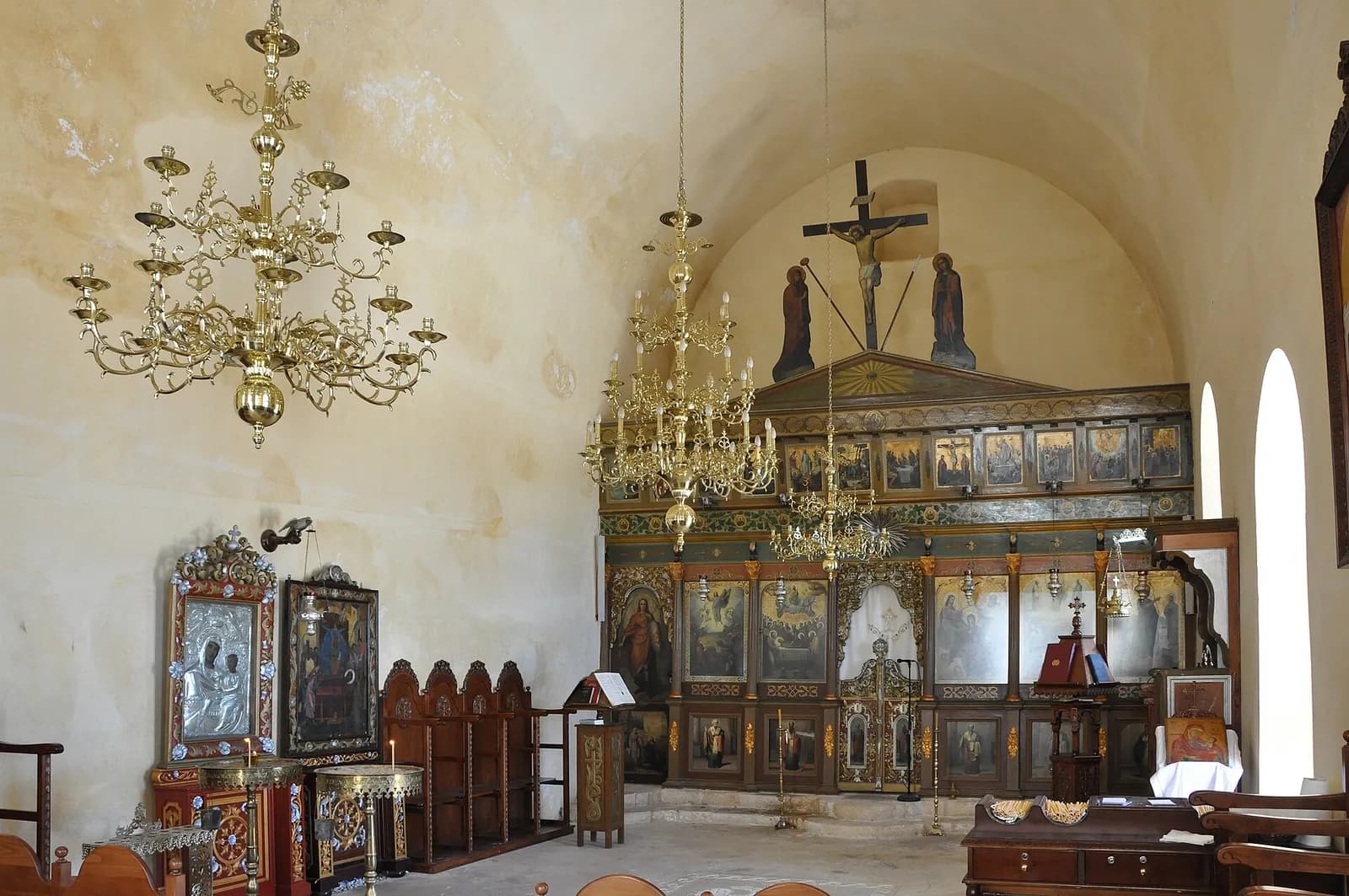
The Chrysoskalitissa Monastery comprises several buildings harmoniously integrated into the rocky terrain. The architectural ensemble, with its typically Orthodox sobriety, favours functionality over ornamentation, a characteristic of Cretan religious art.
The main church, dedicated to the Holy Trinity and the Dormition of Mary, forms the spiritual heart of the complex. Its modest dimensions do nothing to diminish the intensity of the atmosphere within. The whitewashed walls contrast with the gilded iconostasis, creating a play of light of remarkable beauty.
The folk museum occupies a former monastic cell converted to display objects of everyday Cretan life from times past. This collection, modest though it may be, offers an authentic glimpse of local traditions. You will discover a still-functional weaving loom and various agricultural tools testifying to peasant ingenuity.
The Byzantine museum houses a collection of icons and liturgical objects from various periods. Despite its small size, this exhibition reveals the richness of Cretan Orthodox religious art. Some pieces date back to the 17th century and deserve particular attention for their refined pictorial technique.
The Folk Museum and Its Treasures
The folk museum visit reveals the ingenuity of past generations in facing the challenges of island life:
- 01Ancient liturgical objects: Bronze censers, ornate candlesticks and illuminated manuscripts testify to religious continuity
- 02Traditional agricultural tools: Sickles, ploughs and olive presses illustrate ancestral Cretan rural economy
- 03Cretan textiles and embroideries: Traditional costumes with complex geometric patterns reveal exceptional craftsmanship
- 04Historic weaving loom: The centrepiece, still operational, a living demonstration of local textile techniques
To better understand travel costs in Greece, check our guide on the Santorini budget which details the prices charged at Greek tourist sites.
This is a place that pierces your soul. The beauty of the panorama rivals the serenity of the setting. You understand why the monks chose this spot to draw closer to the divine.
The Art of Visiting Chrysoskalitissa
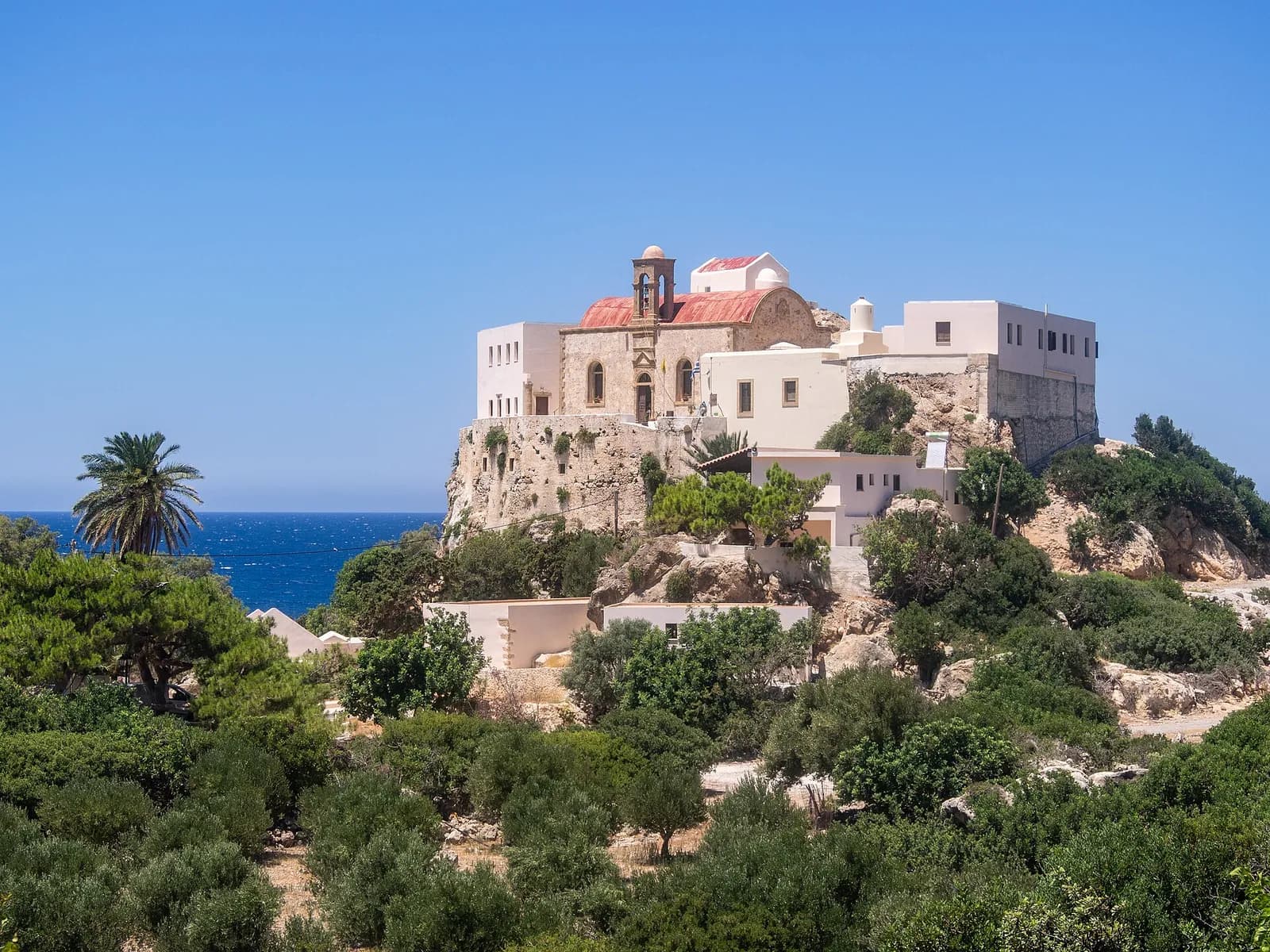
The success of your visit to the Chrysoskalitissa Monastery largely depends on when you go and your preparation. The early morning hours offer the advantage of exceptional golden light and fewer visitors. Sunset is also a privileged moment, when the white stones of the monastery glow red under the last rays.
Respecting the dress code is absolutely essential. The site staff graciously provide shawls to insufficiently covered visitors, but this thoughtfulness is a courtesy that should not be relied upon. Dressing appropriately also shows respect for an active place of worship.
Photography is permitted within the monastery grounds, with the notable exception of the interior of the main church. This restriction, common to most Orthodox sanctuaries, preserves the sacred dimension of the liturgical space. The outdoor terraces, however, offer spectacular shooting angles over the sea and surrounding cliffs.
Chapka Insurance
Travel with peace of mind with the best travel insurance
Stay covered in every situation with the best insurance for your next trip.

The Legend of the Golden Staircase
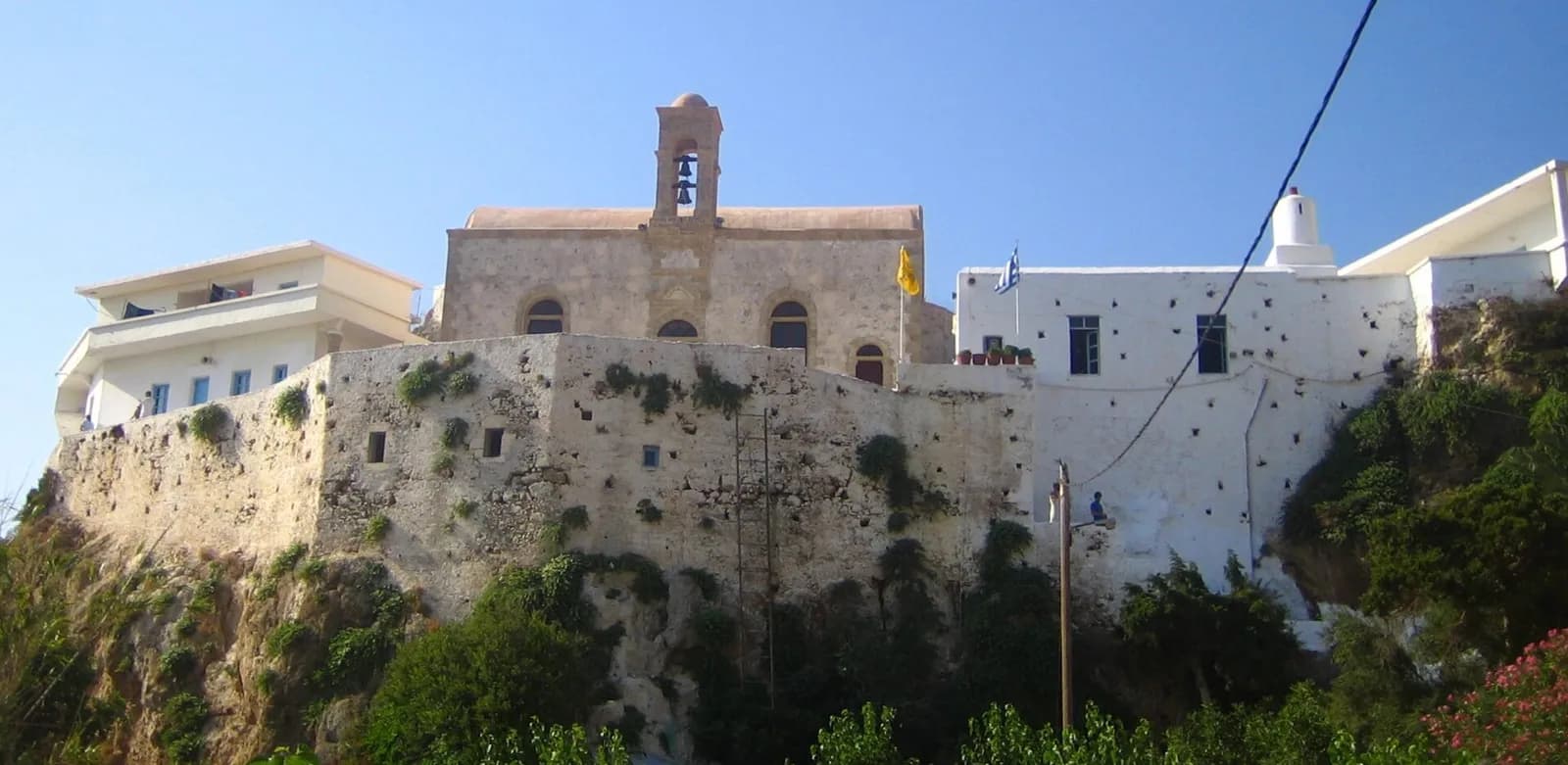
The name 'Chrysoskalitissa' finds its origin in a legend as fascinating as it is mysterious. Literally translated from Greek, it means 'of the golden staircase'. According to local tradition, among the 98 steps leading to the monastery, one is made entirely of pure gold. But here is the marvel: only pure souls and truly believing hearts can distinguish it from the others.
This popular belief has crossed the centuries without ever weakening. Pilgrims reverently climb each step, carefully scrutinising every stone in the hope of glimpsing the famous golden step. For many, the invisible treasure represents far more than a simple precious object: it symbolises the spiritual reward promised to those who undertake their quest with faith and humility.
The symbolic dimension of this legend goes well beyond tourist folklore. It reflects the Orthodox conception of divine revelation, accessible only through inner purification and spiritual elevation. From this perspective, the staircase becomes a metaphor for the journey towards transcendence.
Between History and Mystery
Two main versions of this legend coexist in Cretan oral tradition:
- Historical version: The golden step actually existed but was sold by an abbot in the 19th century to pay the heavy taxes imposed by the Ottoman administration
- Mystical version: The step remains present but invisible to the uninitiated, revealing its golden nature only to truly pious souls
- Modern interpretation: Some theologians see it as an allegory of faith itself, an invisible treasure but infinitely precious to those who know how to recognise it
This deliberate ambiguity feeds the allure of the place and keeps alive the spirit of mystery that characterises the great pilgrimage sites of the Mediterranean.
Chronicle of a Millennial Monastery
The history of the Chrysoskalitissa Monastery is rooted in the most turbulent centuries of Crete. Its original construction supposedly dates back to the 16th century, when the island was under Venetian rule. Orthodox monks sought isolated refuges to preserve their faith and traditions against the pressures of Western Catholicism.
The current building dates from 1894, however, the result of a complete reconstruction that modernised the structures while respecting the traditional architectural spirit. This renaissance coincided with the period of Greek cultural revival that preceded Cretan independence. The monastery then became a symbol of identity resistance as much as a place of worship.
The most famous episode in its history dates to 1824, during the uprisings against the Egypto-Ottoman occupation. According to local chronicle, when Mehmet Ali's troops attempted to loot the monastery, they were miraculously repelled by a swarm of particularly aggressive bees. This legend, whether factual or symbolic, perfectly illustrates the spirit of resistance that characterises this place.
The Scars of History
The Second World War left indelible marks on the monastery. The German occupation temporarily turned the holy place into a military guard post. Wehrmacht soldiers had no respect for the sacred character of the premises, as evidenced by the bullet impacts still visible on several icons today.
The image of Saint Basil bears a tear caused by a German machine gun shot. More troubling still, the icon of the Dormition of Mary also shows similar damage. This latter holds particular importance because, according to tradition, it appeared miraculously to a local shepherd, a founding event that motivated the construction of the original temple.
Chrysoskalitissa in Your Cretan Itinerary
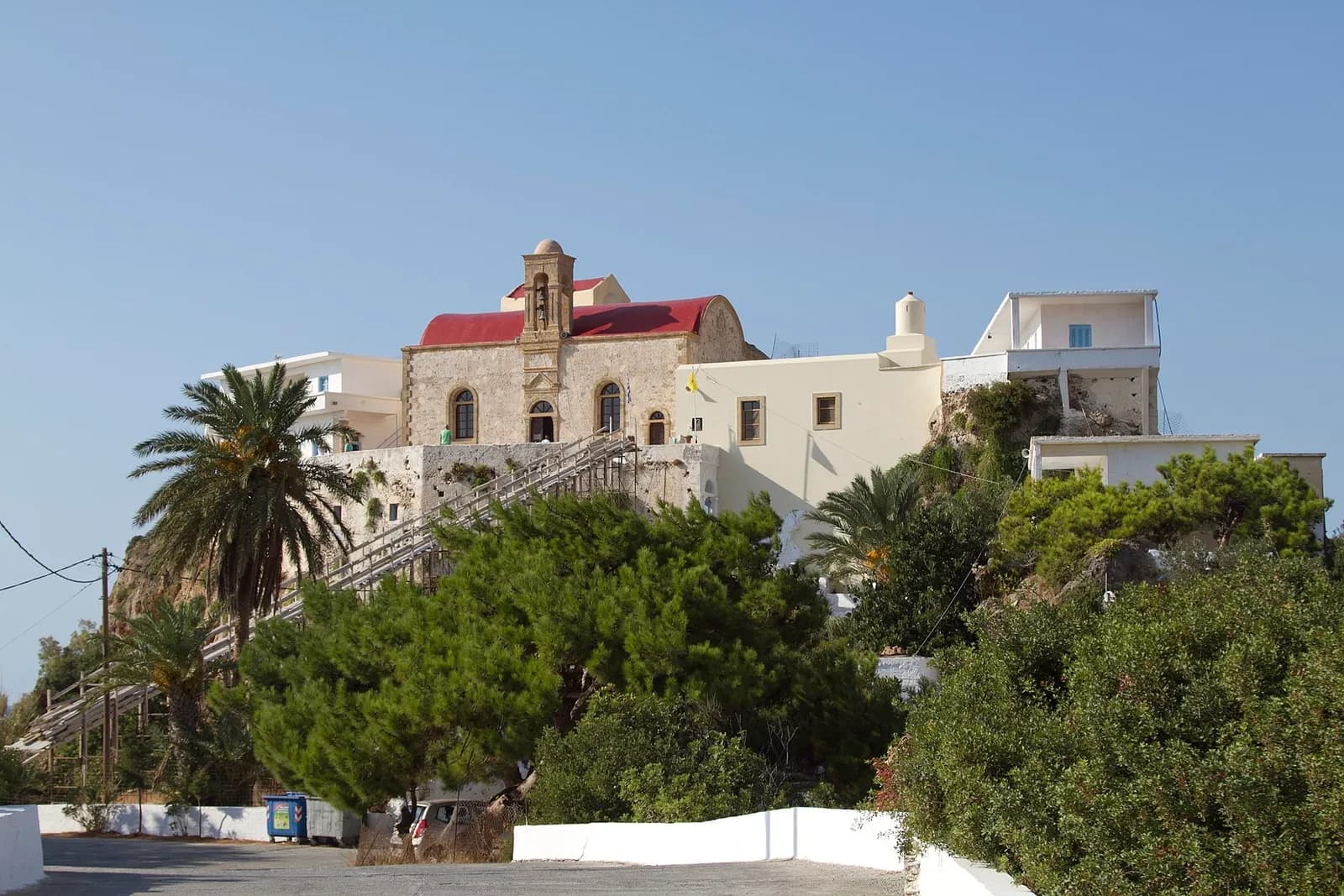
The monastery's strategic location makes it a natural stop on the way to the famous Elafonisi beach, about five kilometres away. This proximity allows you to combine cultural discovery and beach relaxation in a single excursion. Many visitors take advantage of this layout for a full day blending spirituality and leisure.
Western Crete is home to several other remarkable monasteries worth the detour. The famous Arkadi Monastery near Rethymno and the Gouverneto Monastery on the Akrotiri peninsula offer complementary experiences for lovers of Orthodox religious art.
Integrating Chrysoskalitissa into a broader Cretan discovery circuit proves particularly wise. Archaeology enthusiasts can combine this visit with the Palace of Knossos, a major testimony to Minoan civilisation.
Organised Tours vs Self-Guided Visit
The choice between an organised excursion and independent discovery largely depends on your travel priorities:
- Organised tour advantages: Transport included, historical guide, no logistical worries, often combined with Elafonisi
- Charm of independent discovery: Schedule freedom, personal pace, possibility to linger as inspiration strikes
- Recommendations by profile: Families with children will prefer organised tours, couples and photographers will prefer independence
Wise Card
Travel smart with the best exchange rate
Say goodbye to banking hassles abroad with Wise, the multi-currency card with superpowers!

Our Curious Soul Verdict
The Chrysoskalitissa Monastery amply deserves its reputation as a Cretan spiritual gem. Beyond the folkloric anecdote of the golden staircase, this site offers an authentic immersion into the Orthodox soul of the island. The modest admission fee (around €2.50) contrasts pleasantly with the richness of the experience.
We particularly recommend this visit to travellers sensitive to religious architecture, lovers of exceptional panoramas, and all those seeking a moment of serenity far from the tourist hustle. Families with children will appreciate the brevity of the visit and the playful aspect of searching for the golden step.

Âme Bohème exists thanks to you
Some links in this article are affiliate links. This means that if you book or purchase a product through these links, we receive a small commission — at no extra cost to you. It's thanks to this support that we can continue creating free, quality content.
You can also buy us a coffee, or follow us on Instagram and Facebook.