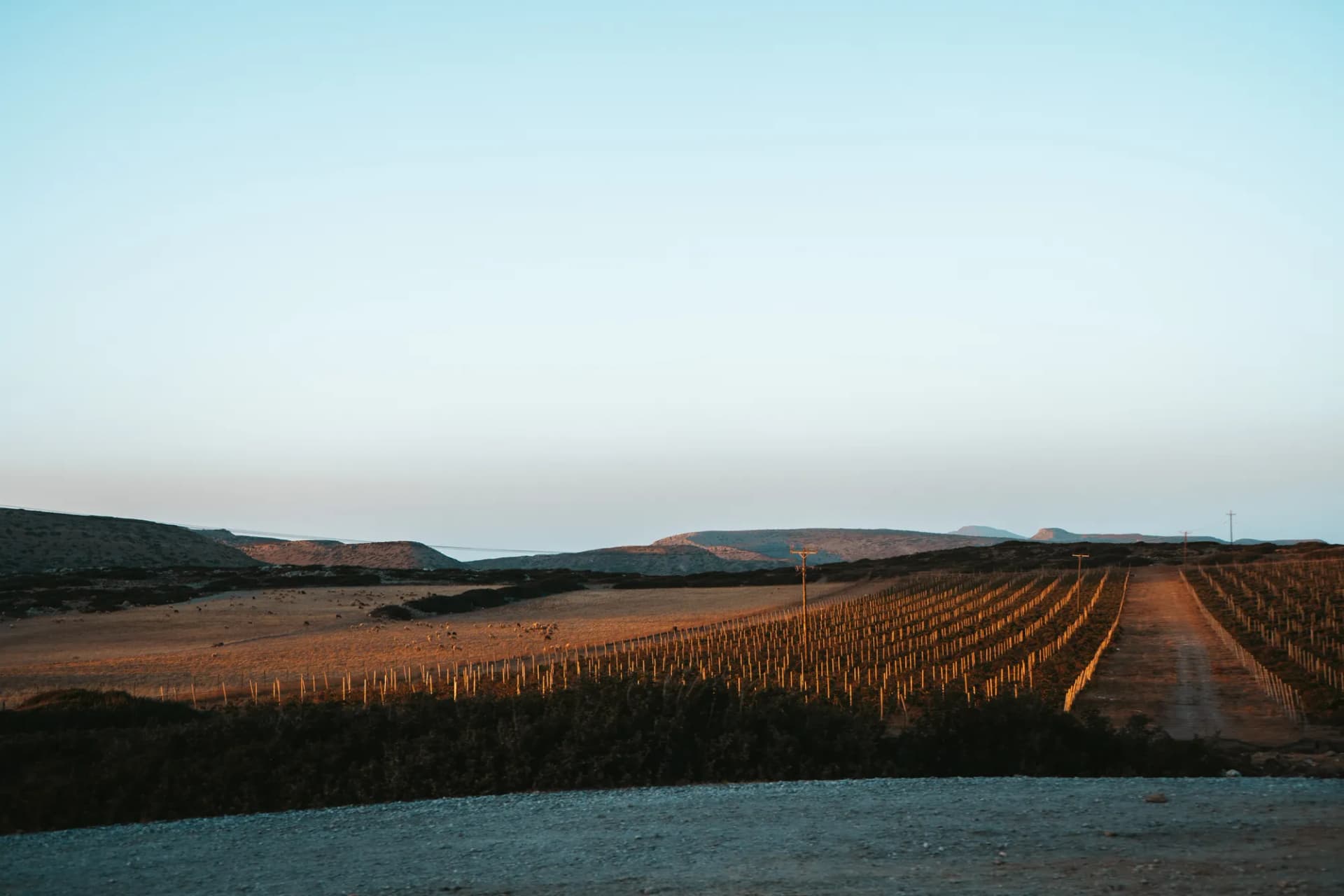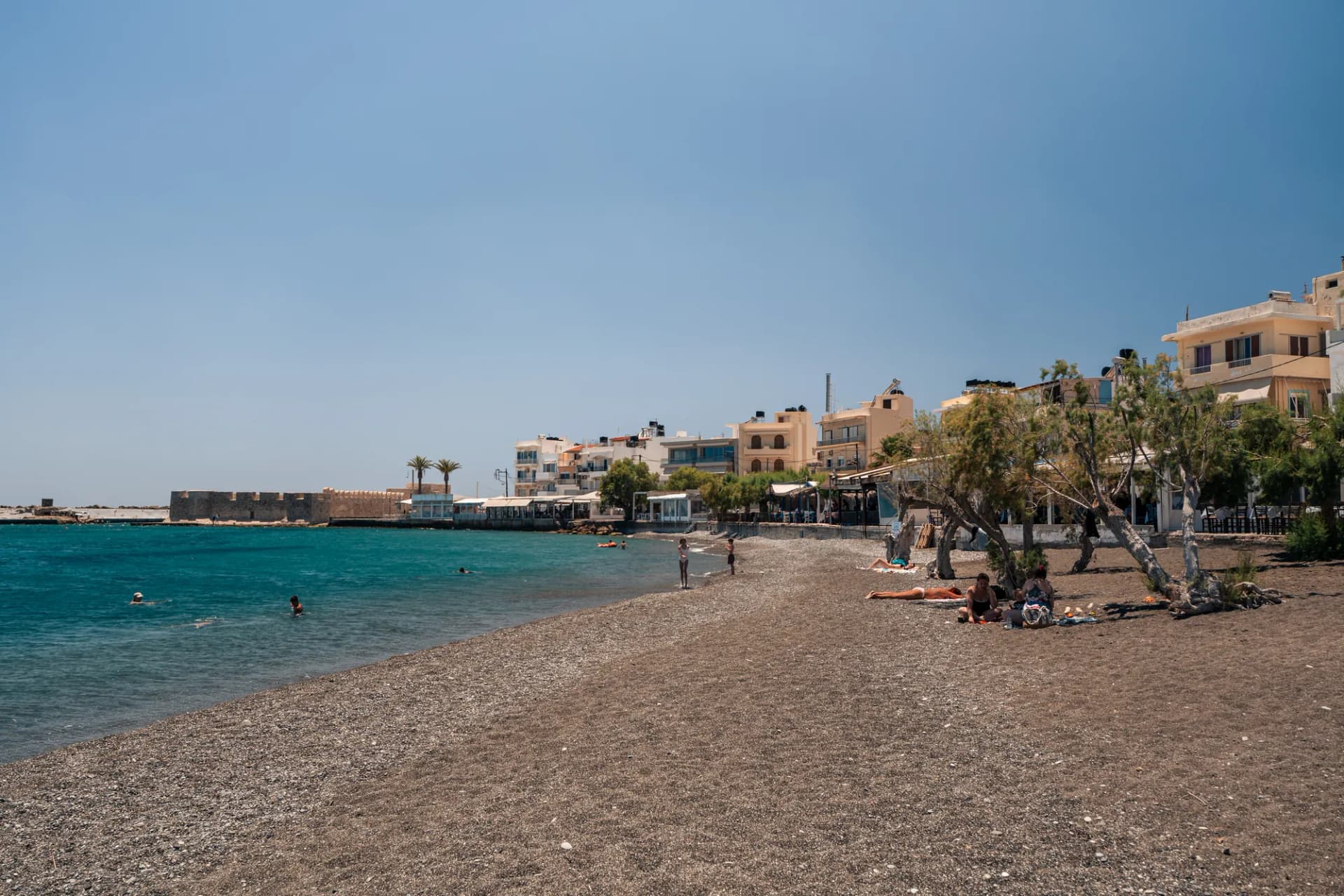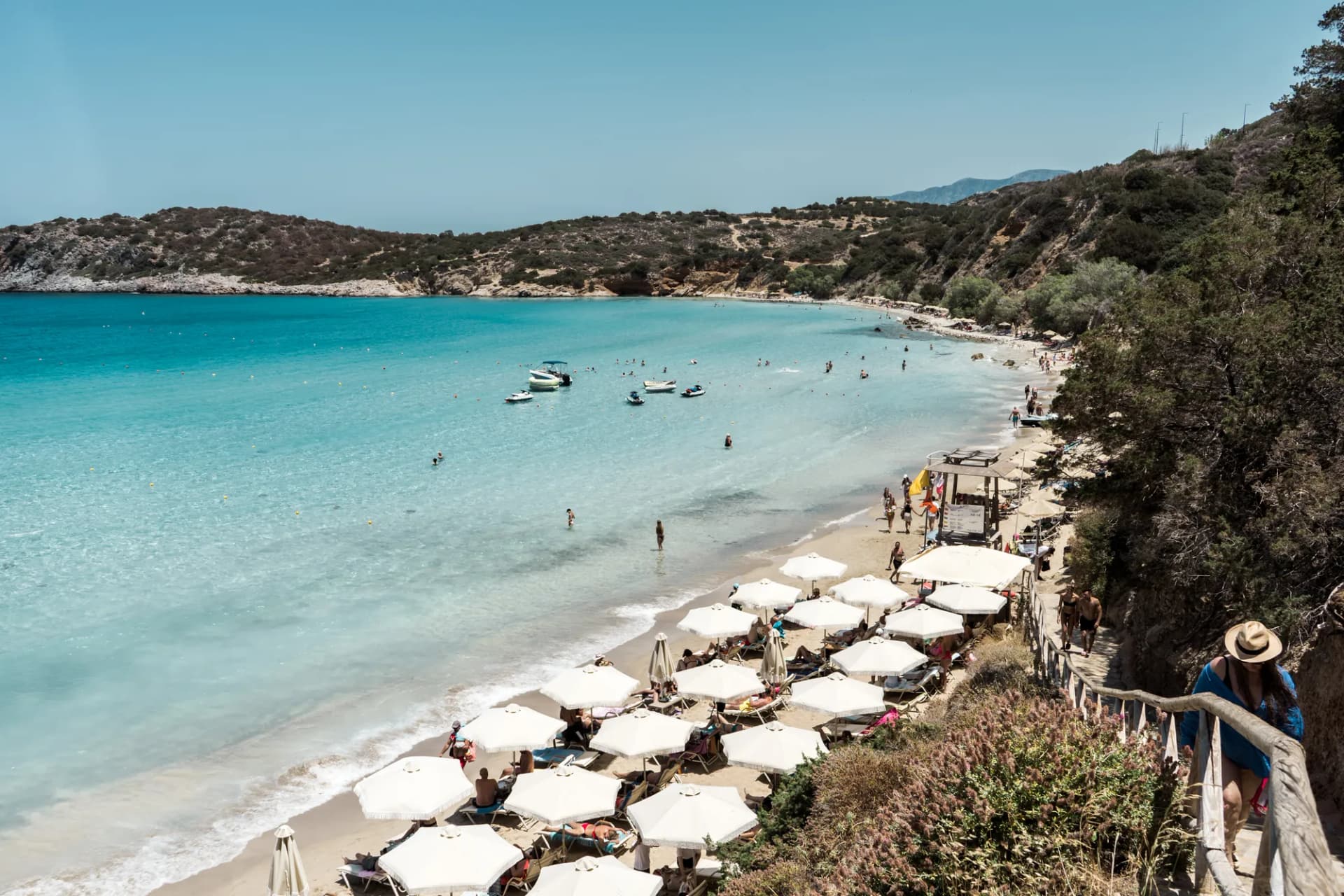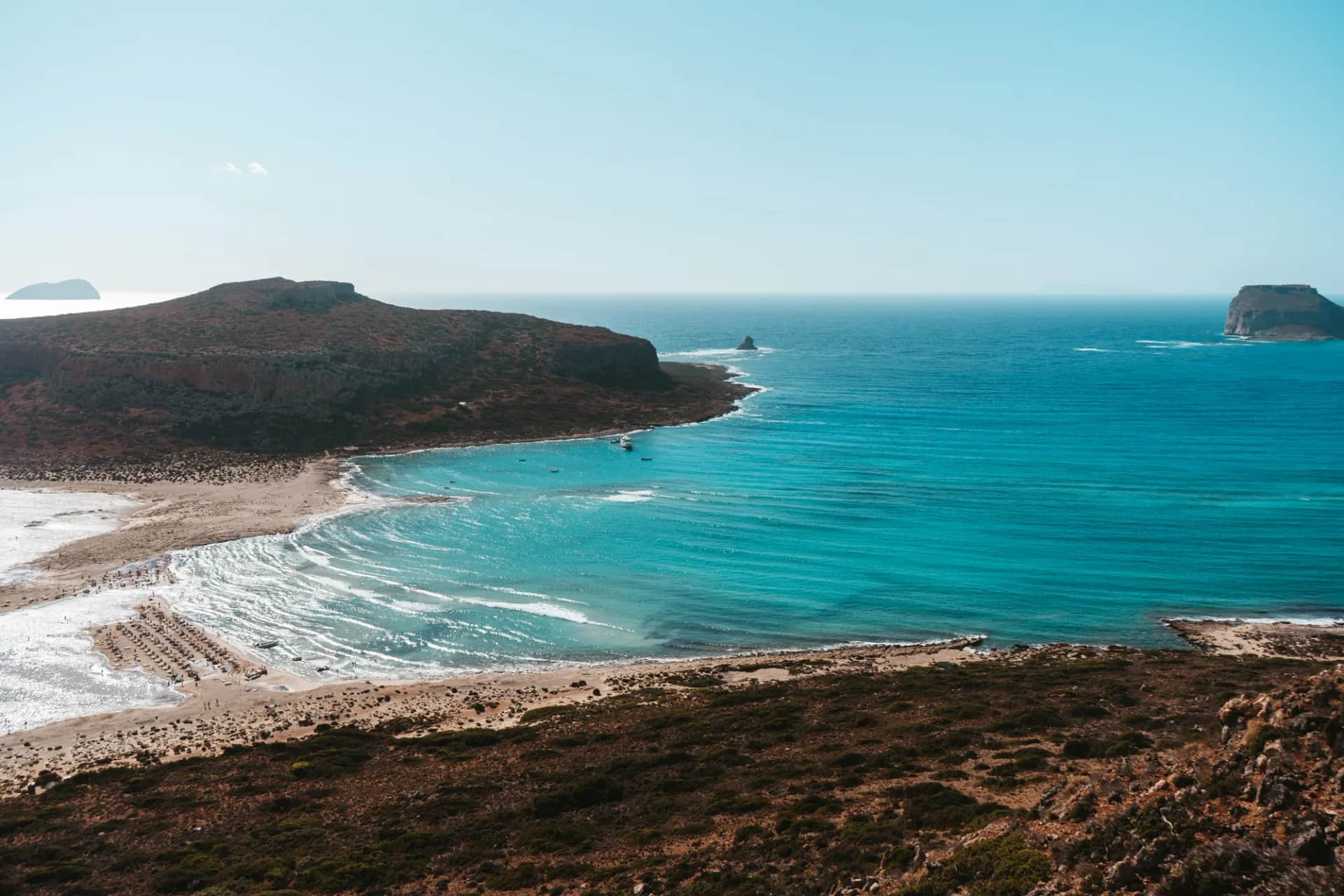

The first time I set foot in Crete, it was the smell that struck me. A blend of wild thyme, sea salt and sun-scorched earth. Then the light: that distinctive Mediterranean light that gilds the mountains and makes a sea of almost unreal blue shimmer. Visiting Crete means discovering much more than a Greek island. It means diving into a small continent.
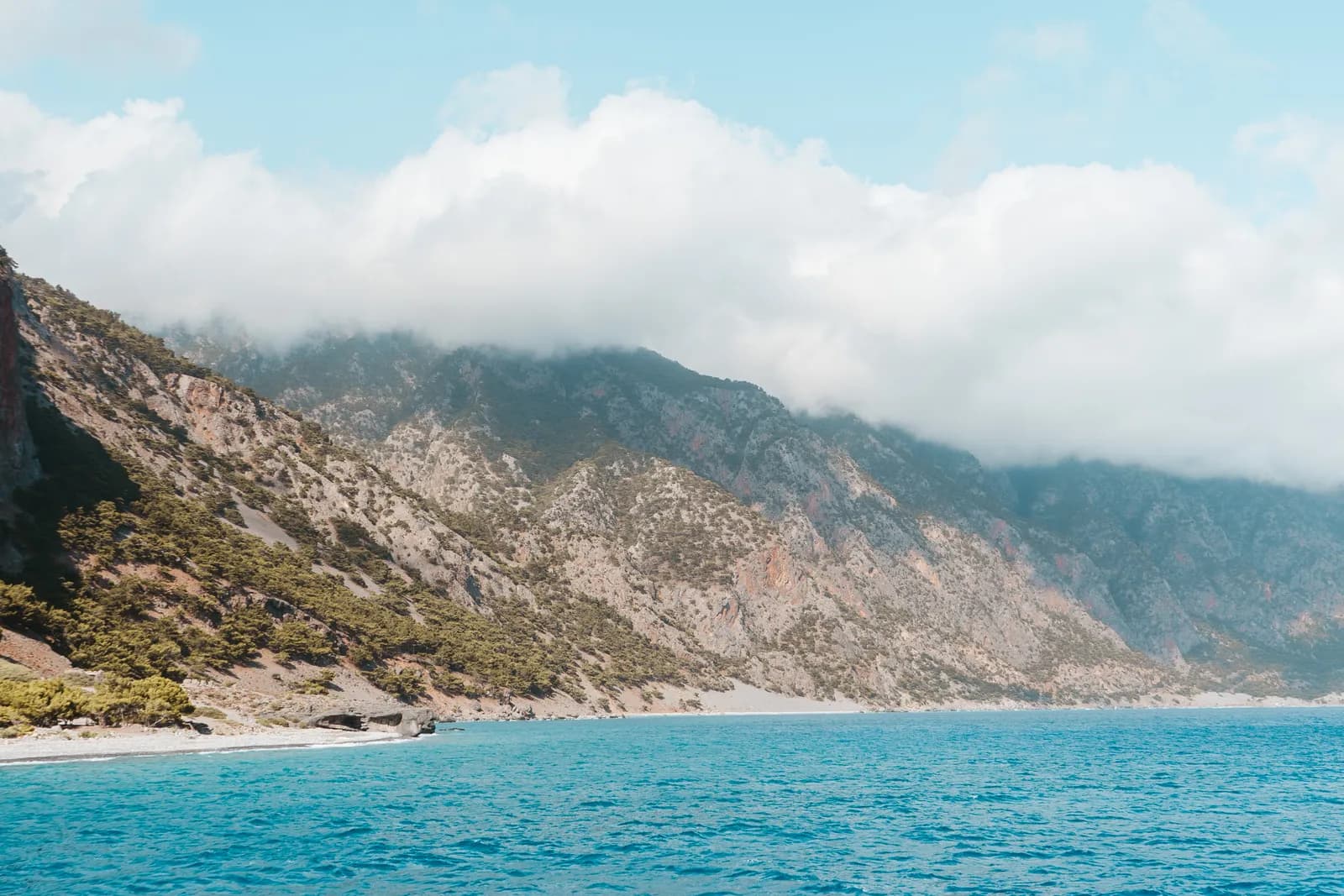
With its 8,336 km² and 260 km from west to east, Crete is the largest island in Greece. Four regions make it up, Chania, Rethymno, Heraklion and Lassithi, each with its own character, landscapes and secrets. From the pink sand beaches of the West to the vertiginous gorges of the South, from 4,000-year-old Minoan palaces to mountain villages where time seems to stand still, the island has enough to fill a week or a whole month.
This guide is your starting point. Whether you're planning a 7-day road trip, searching for the best beaches or still deciding between Crete and Santorini, you'll find everything you need to plan your trip in 2026.
Why Visit Crete? What Makes the Island Unique
Crete is not just another beach destination. It's a land of contrasts that surprises travellers who came looking for "just" a beach and some sun.
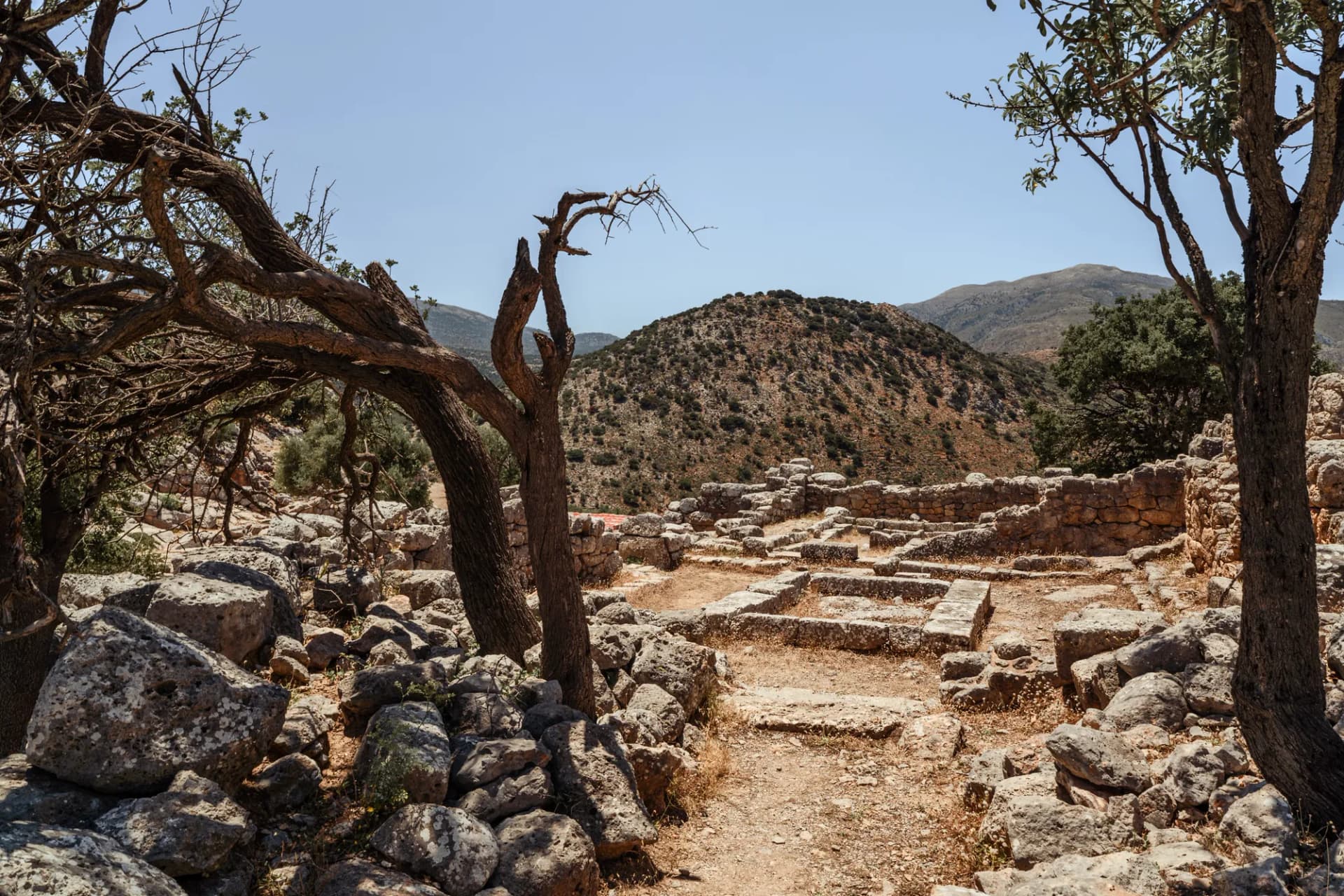
4,000 years of living history. Birthplace of the Minoan civilisation, the first great European civilisation, Crete bears the traces of every era that shaped it. Minoans, Romans, Byzantines, Venetians, Ottomans: each conqueror left their mark in stone, cuisine and traditions.
Landscapes of rare diversity. Three mountain ranges (the White Mountains peak at 2,453 m), spectacular gorges, isolated plateaus, wild southern coasts and tropical-like lagoons in the west. You go from an alpine landscape to a Caribbean-style cove in an hour's drive.
Cuisine that nourishes the soul. The Cretan diet is one of the healthiest in the world. Cold-pressed olive oil, mountain cheeses, wild herbs, thyme honey, snails cooked in raki. Every meal is a journey in itself.
Cretan hospitality. Cretans have a word for it: philoxenia, the love of strangers. Don't be surprised if a taverna owner offers you dessert or a glass of raki "for the road". It's sincere, not commercial.
Unbeatable value for money. Compared to the Cyclades or the Dodecanese islands, Crete remains affordable. You can eat heartily for €12-15 per person, and charming accommodation won't break the bank. For those wanting to explore other Greek islands, Crete is the best base to start from.
Planning your trip? Check when to visit Crete with our month-by-month weather guide.
The Most Beautiful Beaches in Crete: Our Selection
Crete has over 1,000 km of coastline and dozens of beaches that regularly rank among the most beautiful in Europe. Here are the ones truly worth a visit, organised by region.
Western Beaches: The Stars
This is where the most photographed beaches on the island are found. And for good reason: the lagoons of western Crete rival the Caribbean.
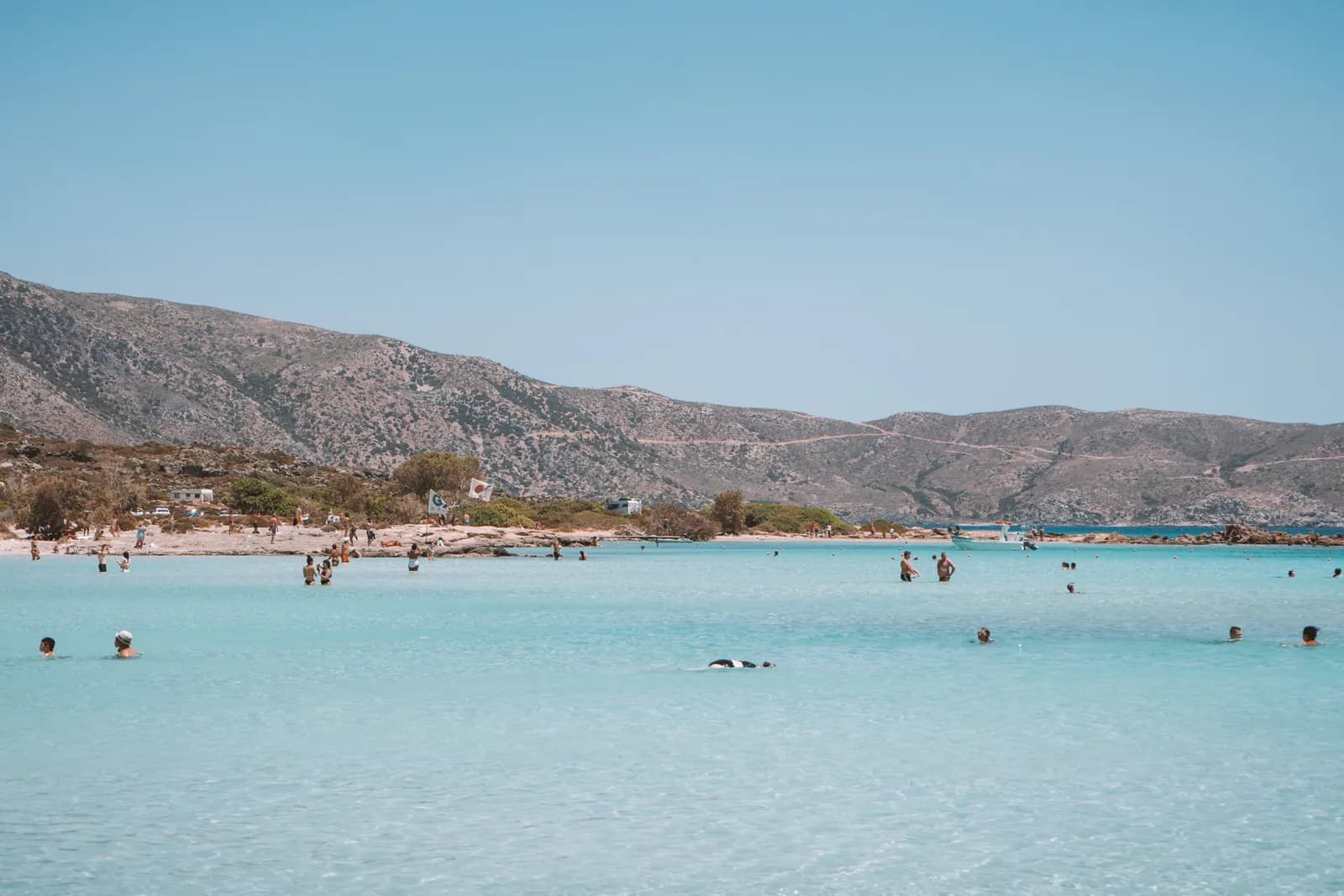
Elafonisi 🐚: The pink sand beach. A shallow lagoon with translucent waters, bordered by dunes where crushed shells tint the sand in shades of pink. The sight is breathtaking, especially early in the morning before the tourist buses arrive. In July-August, the crowds can spoil the experience. Come before 9 AM or after 5 PM. I've written a complete guide to Elafonisi to help you make the most of it.
Balos, The postcard lagoon. Accessible via a rough 7 km track (30 min at walking pace) or by boat from Kissamos, this turquoise lagoon is surrounded by arid hills. The descent to the beach takes 20-25 minutes on foot. The panorama from the trail alone is worth the trip. Find all the details in our Balos lagoon guide. For a unique approach, consider renting a boat without a licence from Kissamos, you'll avoid the crowds and also discover the island of Gramvousa.
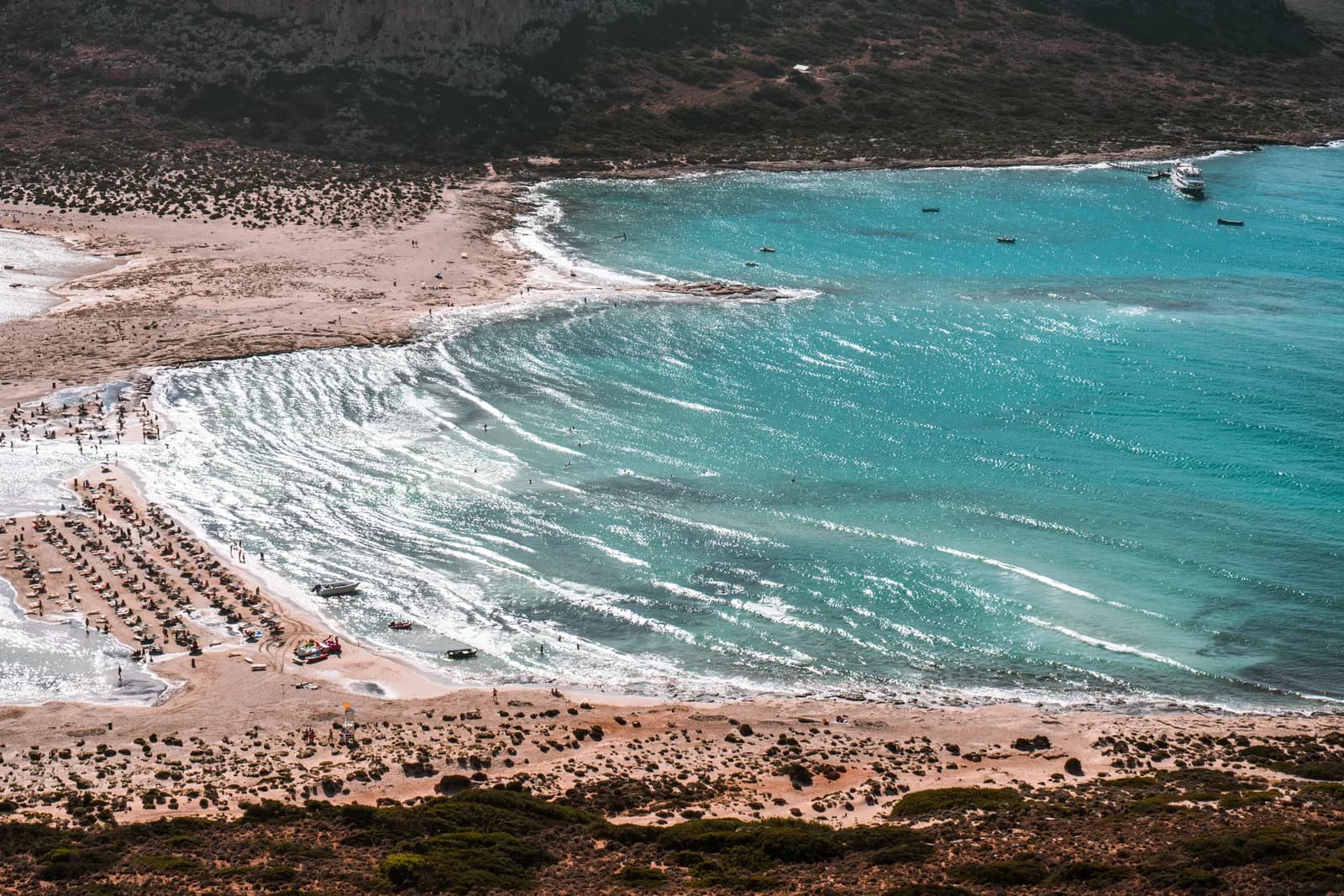
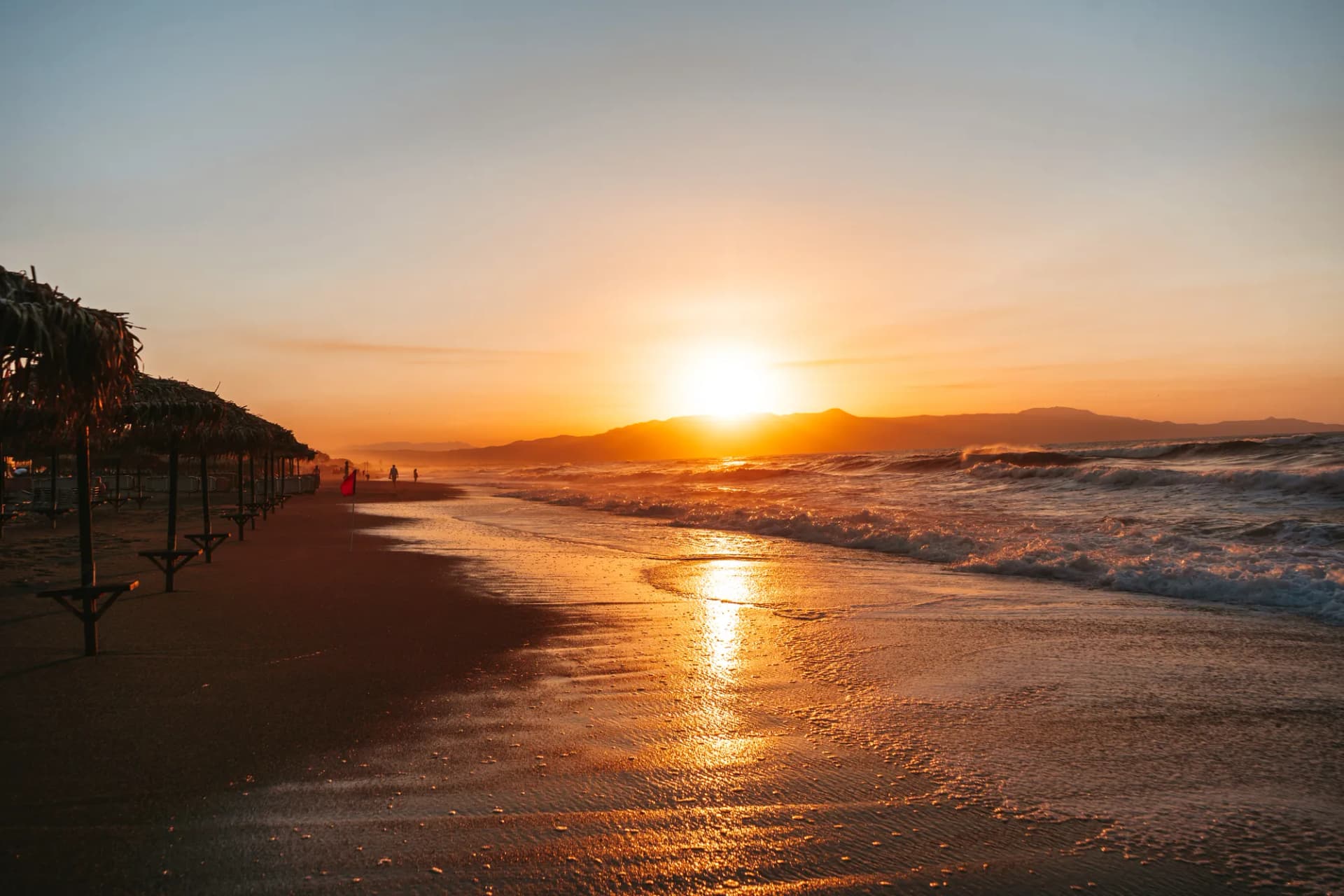
Falassarna, The big sunset beach. Less crowded than Elafonisi and Balos, this wide strip of golden sand offers the most beautiful sunsets on the island. The water is crystal-clear, the setting is wild, and there's room for everyone. Our Falassarna guide tells you everything.
Southern Beaches: The Wild Ones
The south coast of Crete, facing the Libyan Sea, is wilder, less accessible and infinitely more authentic.
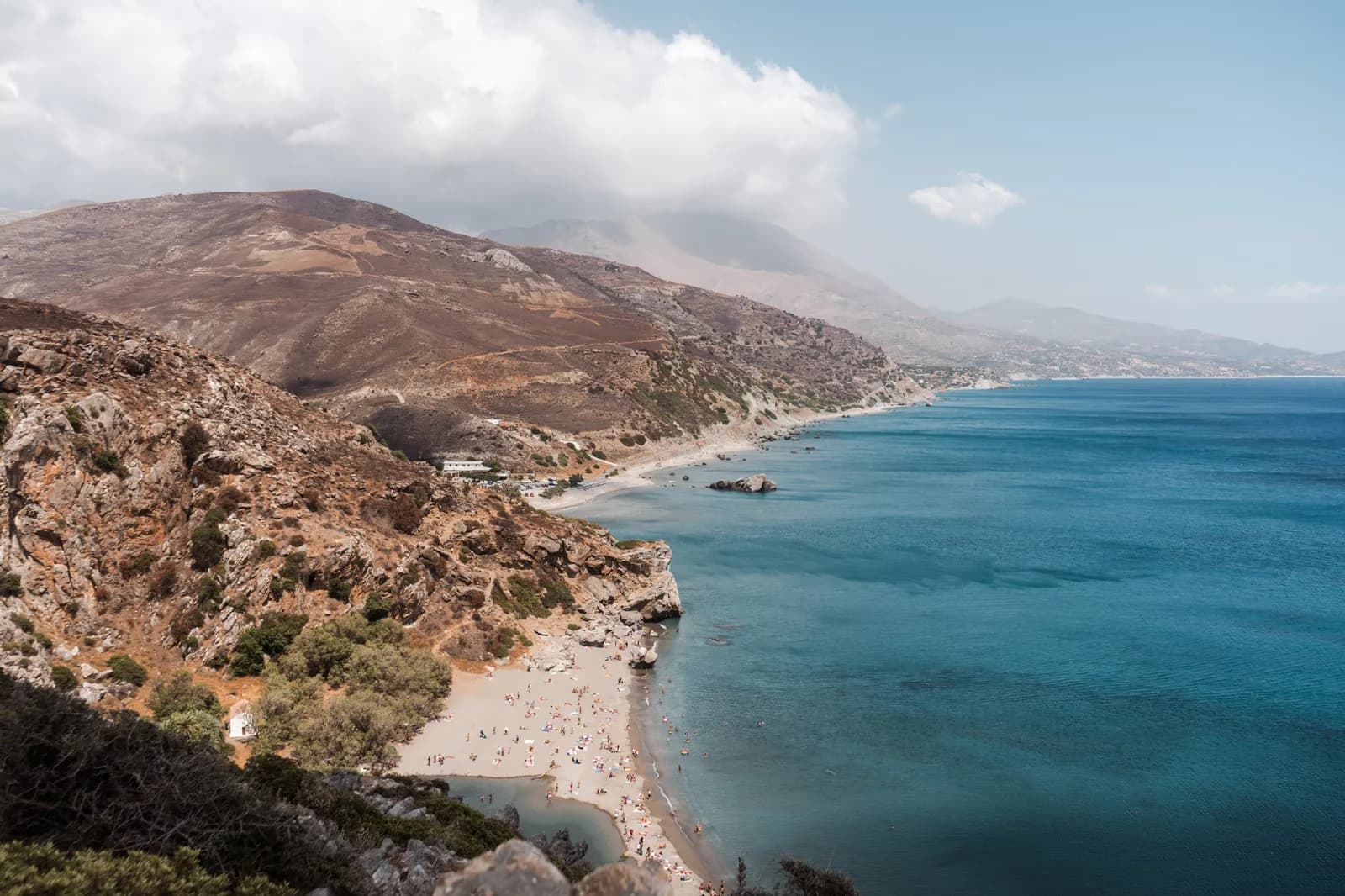
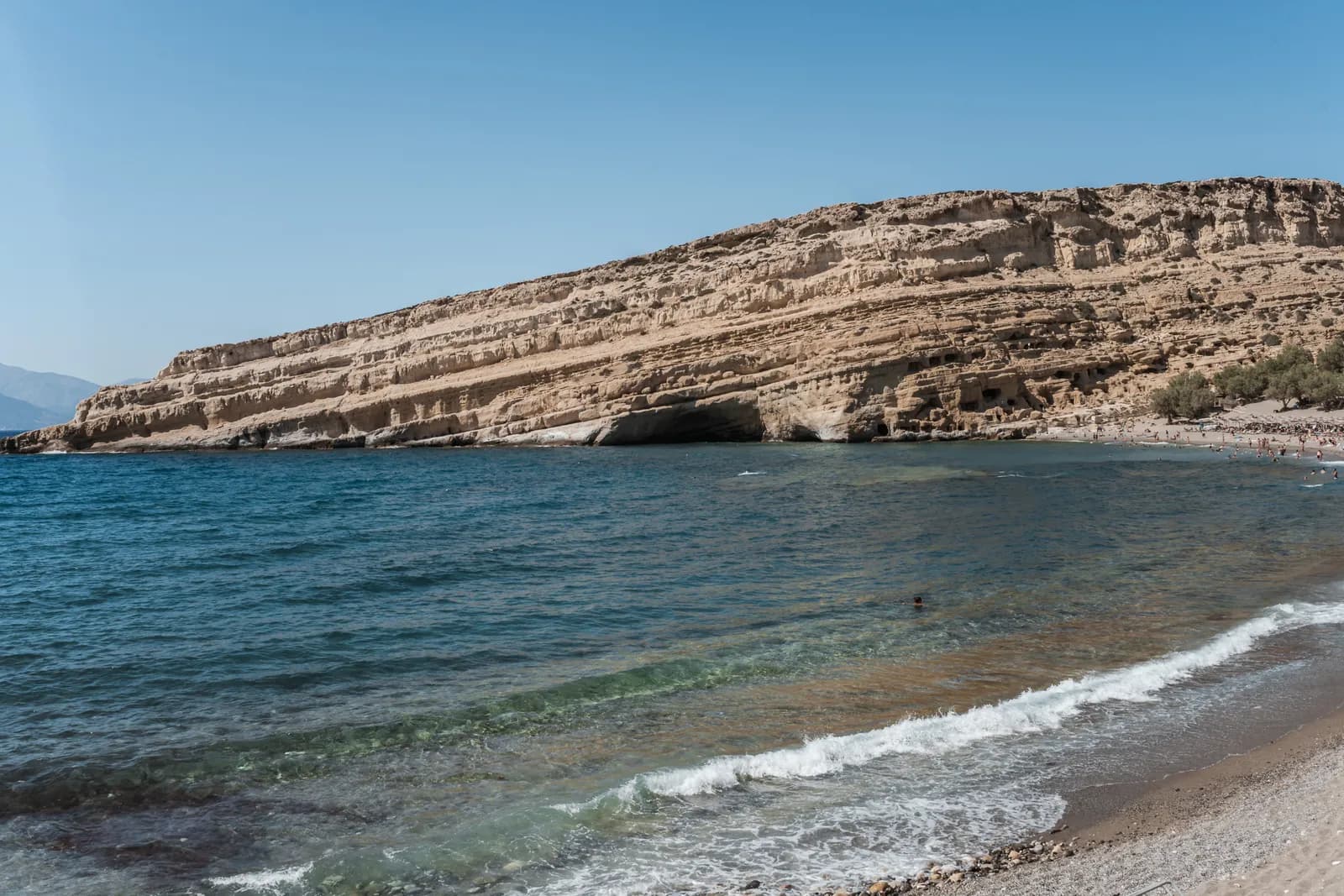
Photos : Pierre Bouyer
Preveli, The palm tree oasis. A river lined with palm trees flows into the sea, creating a landscape unique in the Mediterranean. You descend via a steep trail (15-20 min) to reach this secluded beach. The effort is rewarded. Read our Preveli beach guide to prepare your visit.
Matala, The hippie caves. This beach is famous for its Neolithic caves carved into the cliff, taken over by hippies in the 60s and 70s. The vibe is laid-back, the village behind is pleasant, but the beach itself is small and crowded in summer.
Loutro, The village with no road. Accessible only by boat or on foot, this little Cretan haven is a well-kept secret. Crystal-clear waters, seaside tavernas, zero cars. Paradise for travellers seeking absolute tranquillity.
Eastern Beaches: The Hidden Gems
Eastern Crete is often overlooked by hurried visitors. That's a mistake.
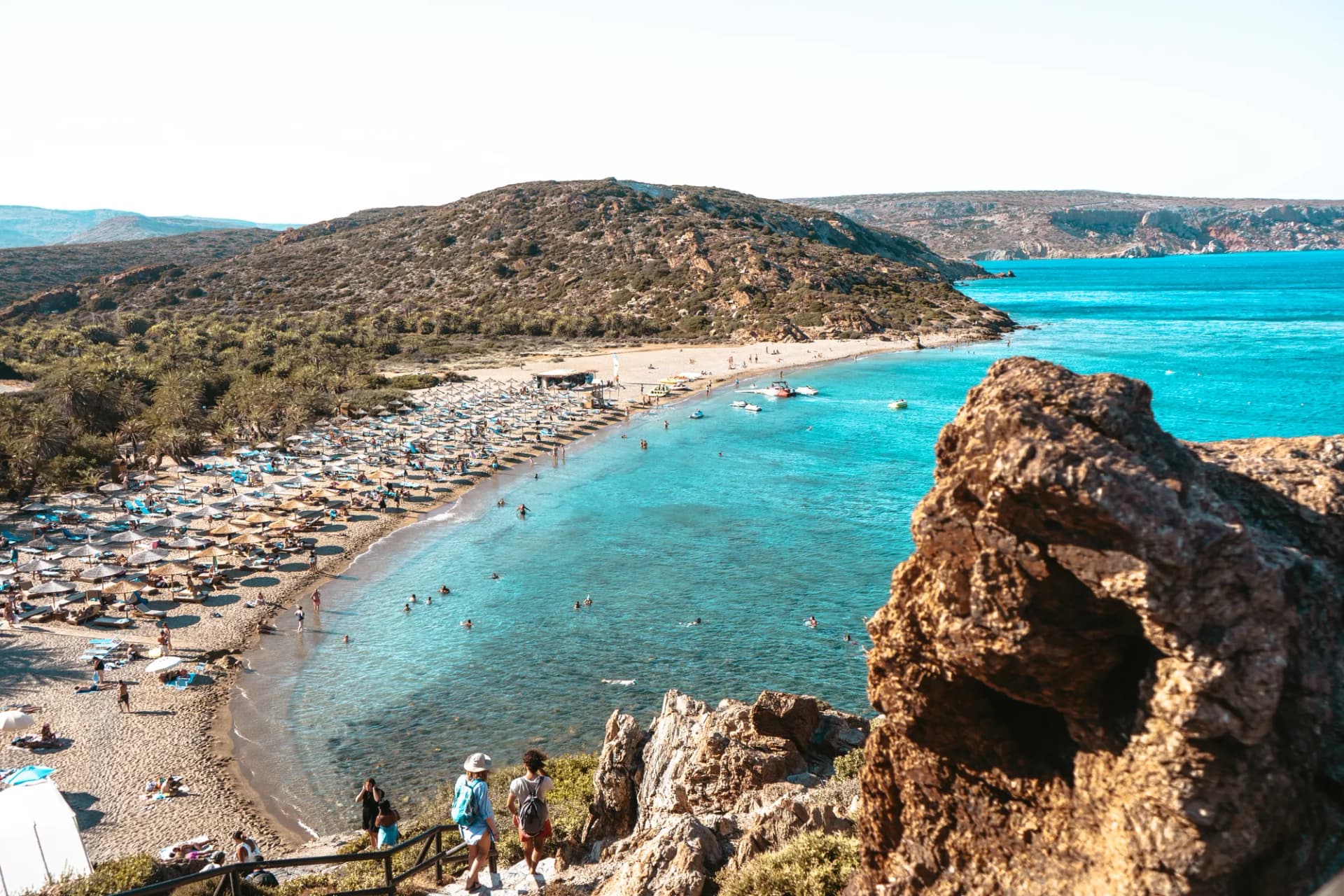
Vai, The natural palm grove. The largest natural palm grove in Europe borders this exotic beach. The setting is unique, almost tropical. Arrive early: parking is limited and tourist buses flood in around noon.
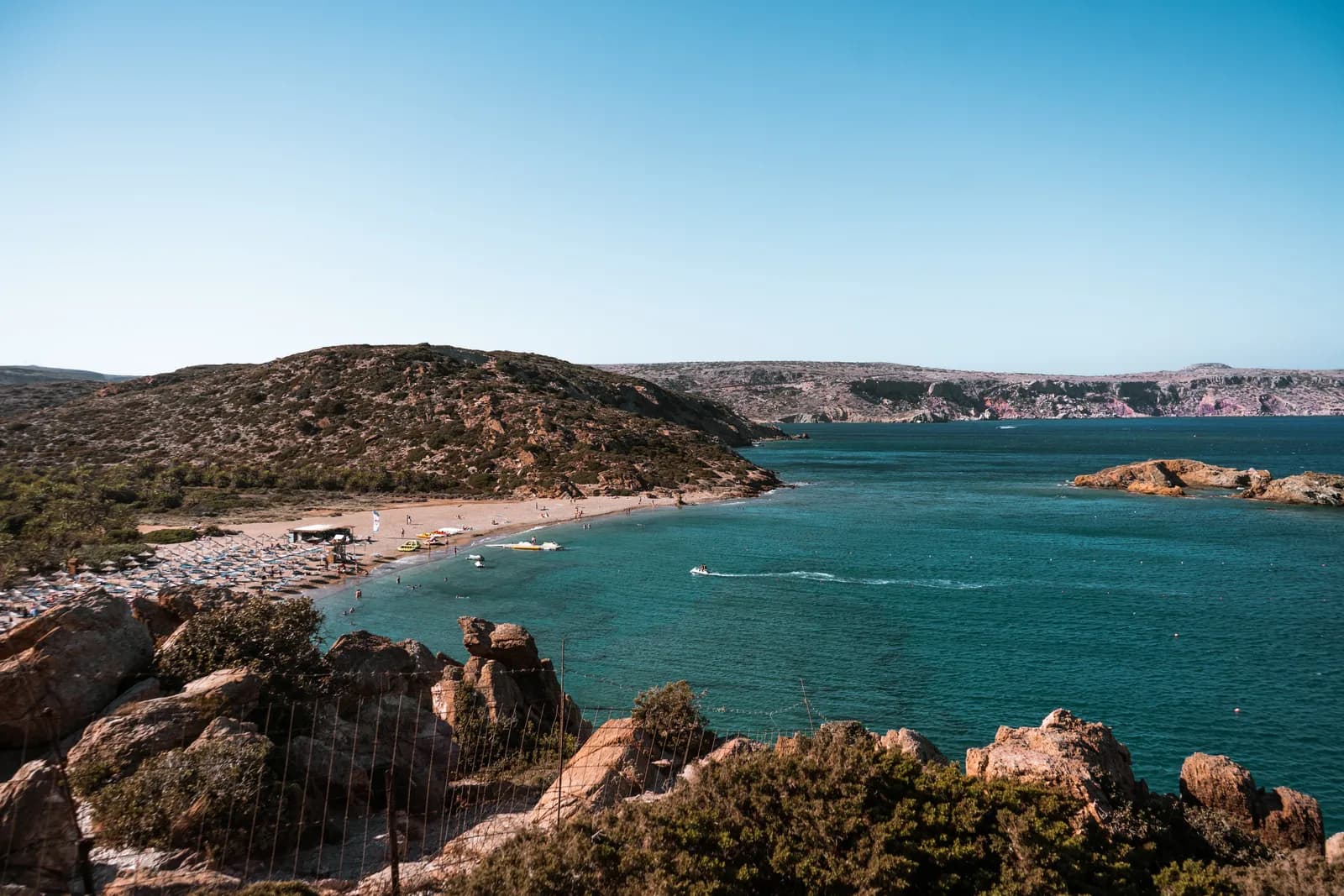
Chrissi Island, The island with Caribbean waters. 15 km south of Ierapetra, this uninhabited little island offers surreally blue waters and fine sand. You get there by boat from Ierapetra (about 1 hour); since 2025 landing is forbidden, so the boat anchors offshore and you swim from it. I've written a complete guide to Chrissi Island to help you plan this excursion.
Authentic Crete Villages: Away from the Crowds
If the beaches draw visitors, it's the villages that reveal the soul of Crete. Far from the seaside resorts, the island's interior hides treasures of authenticity.
Mountain Villages
Argiroupoli, Built on the ruins of ancient Lappa, this village is threaded with waterfalls and springs that feed shaded tavernas. You literally eat under the trees, feet at the water's edge. I've rarely felt such calm in Crete. Our Argiroupoli guide covers everything you need to know.
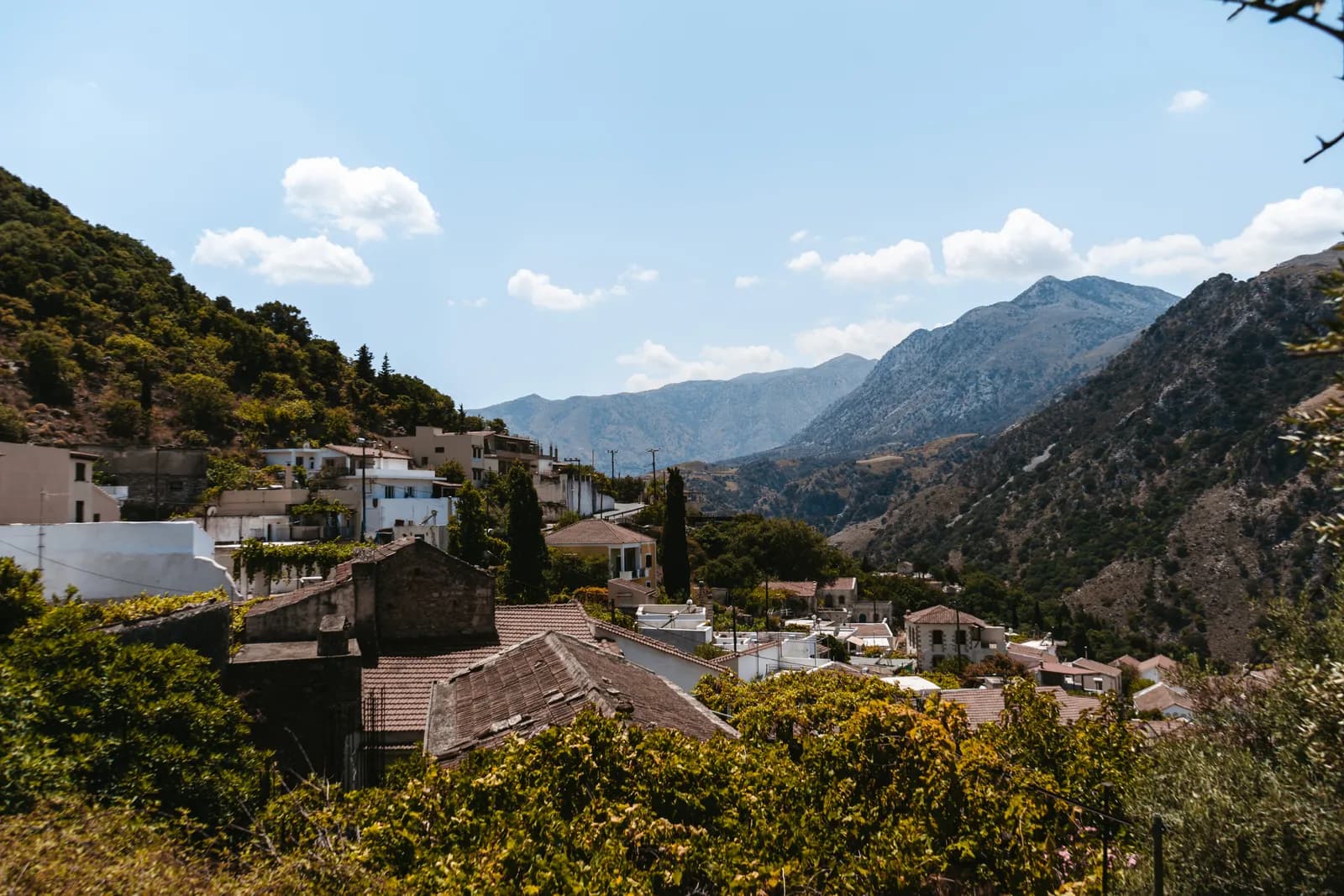
Archanes, Just 15 km from Heraklion, this wine-producing village is a concentrate of Cretan charm. Cobbled lanes, shaded squares, vineyards to visit. It's the perfect stop for a wine tasting after visiting Knossos.
Zaros, At the foot of Mount Psiloritis (2,456 m, the highest in Crete), Zaros offers a tranquil lake and the Rouvas Gorge for hikers. Zaros spring water is the most famous in Crete: you'll see it on every restaurant table on the island.
Coastal Villages
Bali, No, not the Indonesian Bali! This little Cretan village is nestled in a succession of turquoise coves on the north coast. Photogenic but increasingly busy. Visit out of season if you can.
Loutro, I mentioned it in the beaches section, but Loutro is first and foremost a village. No road, no cars, just a tiny harbour, white houses and the sound of the waves. The perfect place to disconnect.
Paleochora, On the south-west coast, this small town has a bohemian, laid-back vibe. Two beaches (one sandy, one pebbly), unpretentious tavernas, a ruined Venetian castle. It's the kind of place where you stay longer than planned.
Inland Villages
Lassithi Plateau, At 850 m altitude, this fertile plateau ringed by mountains once housed thousands of windmills. Today, a few remain. This is where you'll find the Cave of Zeus (Psychro), mythical birthplace of the king of the gods. Our Lassithi Plateau guide accompanies you on this exploration.
Kritsa, Clinging to the mountainside, this village is known for its handwoven textiles and the Church of Panagia Kera, adorned with 13th-century Byzantine frescoes among the best-preserved in Crete.
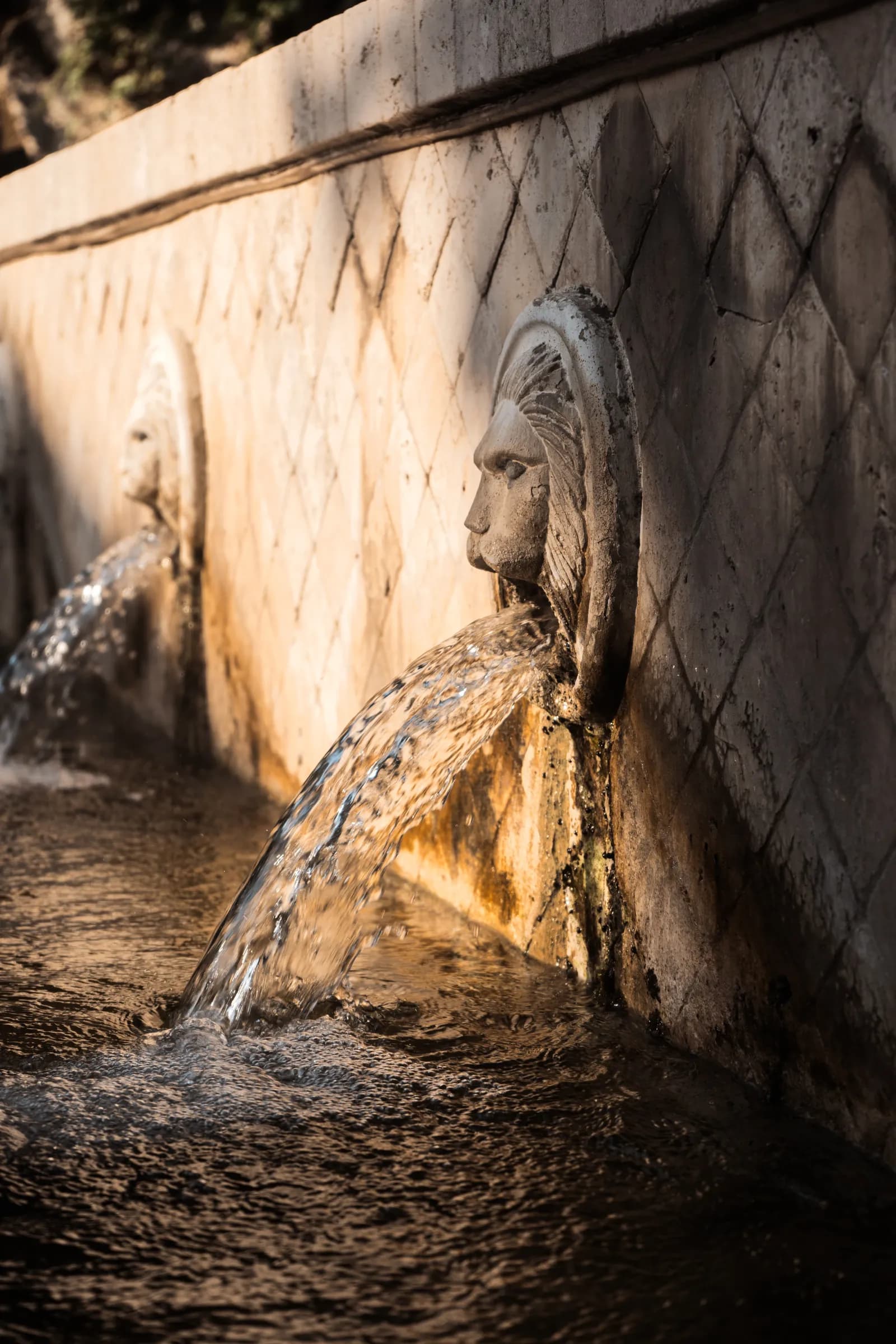
Spili, A shaded square, a Venetian fountain adorned with 25 lion heads from which drinkable water flows, and time standing still. Spili is the perfect stop between Rethymno and the south coast.
The scent of wild thyme followed me along every Cretan mountain trail. That warm, heady fragrance, mingled with the song of the cicadas and the silence of summer afternoons, may well be the real memory Crete leaves with you. Not a photo, not a monument: a scent.
Things to Do in Crete: Must-Do Activities and Experiences
Archaeological Sites and Culture

The Palace of Knossos, The most visited archaeological site in Crete, and for good reason. This 4,000-year-old Minoan palace is the birthplace of the legend of the Minotaur and the thread of Ariadne. The restored frescoes (controversial but fascinating) bring a vanished civilisation to life. Allow 1h30 to 2h for the visit. I recommend starting with the Heraklion Archaeological Museum for context, then following up with Knossos. The combined ticket with Knossos no longer exists: budget €20 per site.
Arkadi Monastery, This 16th-century monastery is the symbol of Cretan resistance against Ottoman occupation. In 1866, hundreds of Cretans sheltering here chose to blow themselves up rather than surrender. The place is deeply moving. Our Arkadi Monastery guide recounts this poignant history.
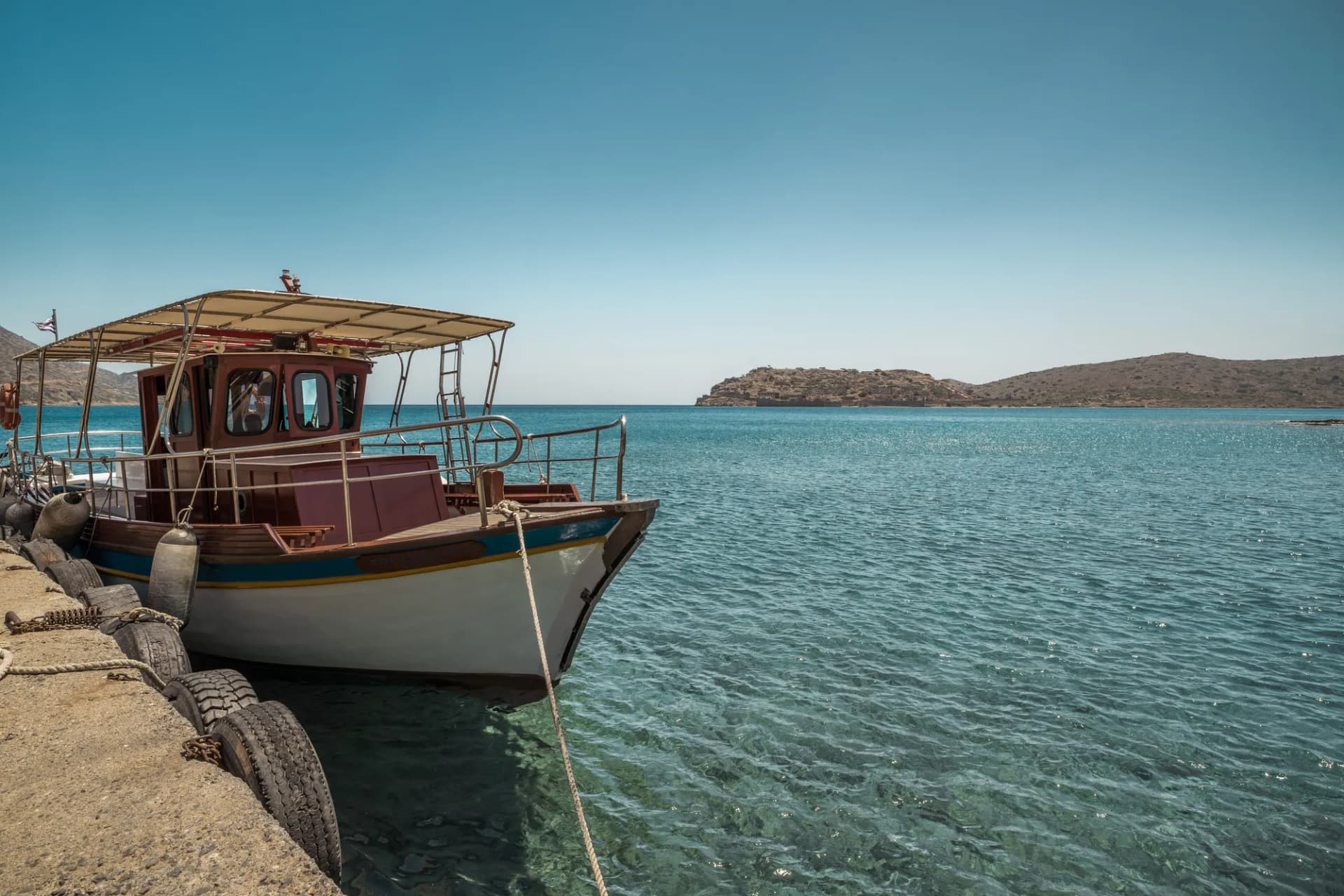
Spinalonga, This small fortified island off Agios Nikolaos served as a leper colony until 1957. The visit is moving and the setting, with Venetian ramparts and views over the Gulf of Mirabello, is spectacular. Check our Spinalonga guide to plan your boat excursion.
Heraklion, The island's capital deserves more than a stopover. The Venetian harbour, the Koules fortress, the 1866 Street market, the museums. Our Heraklion guide helps you miss nothing.
Hiking and Nature
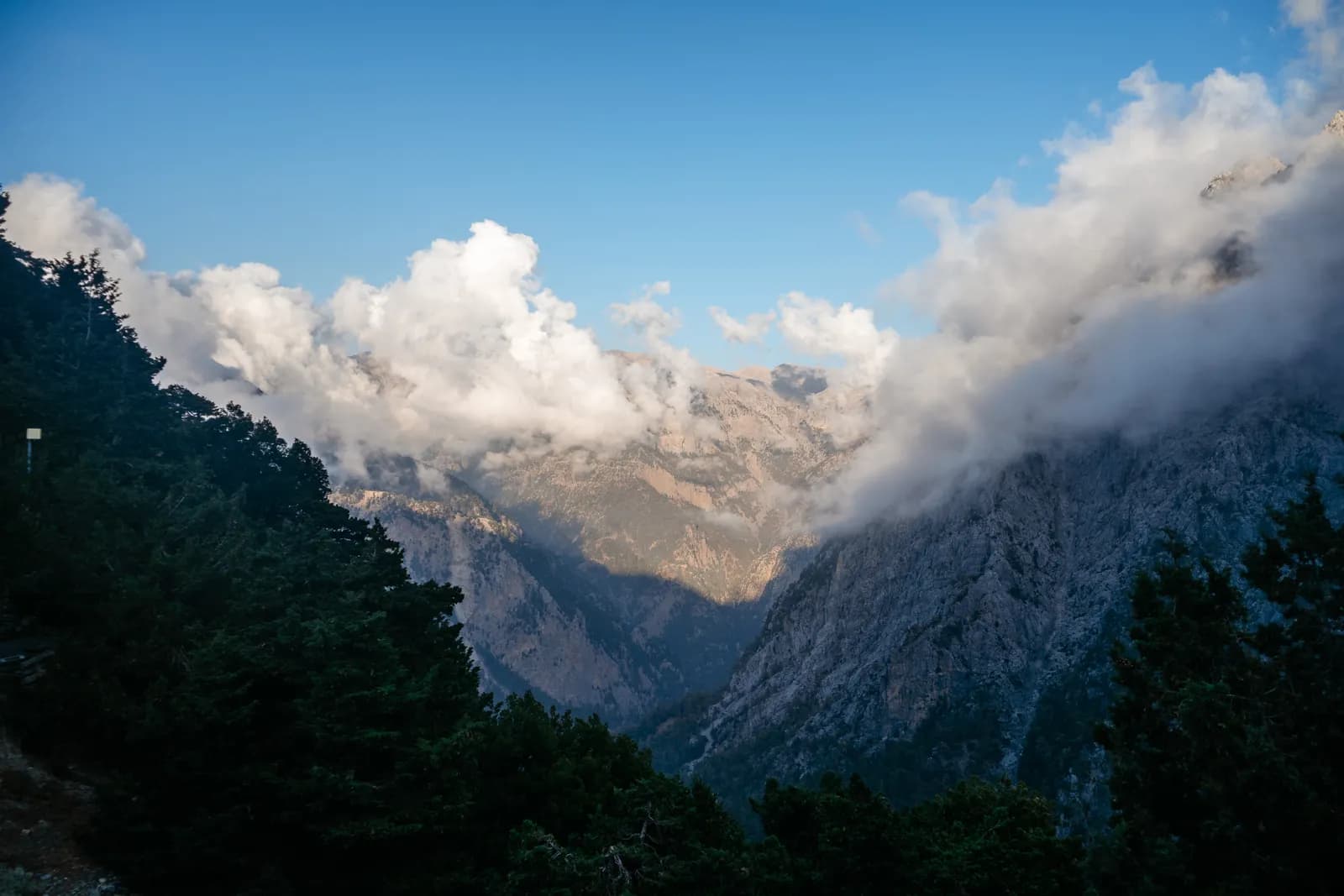
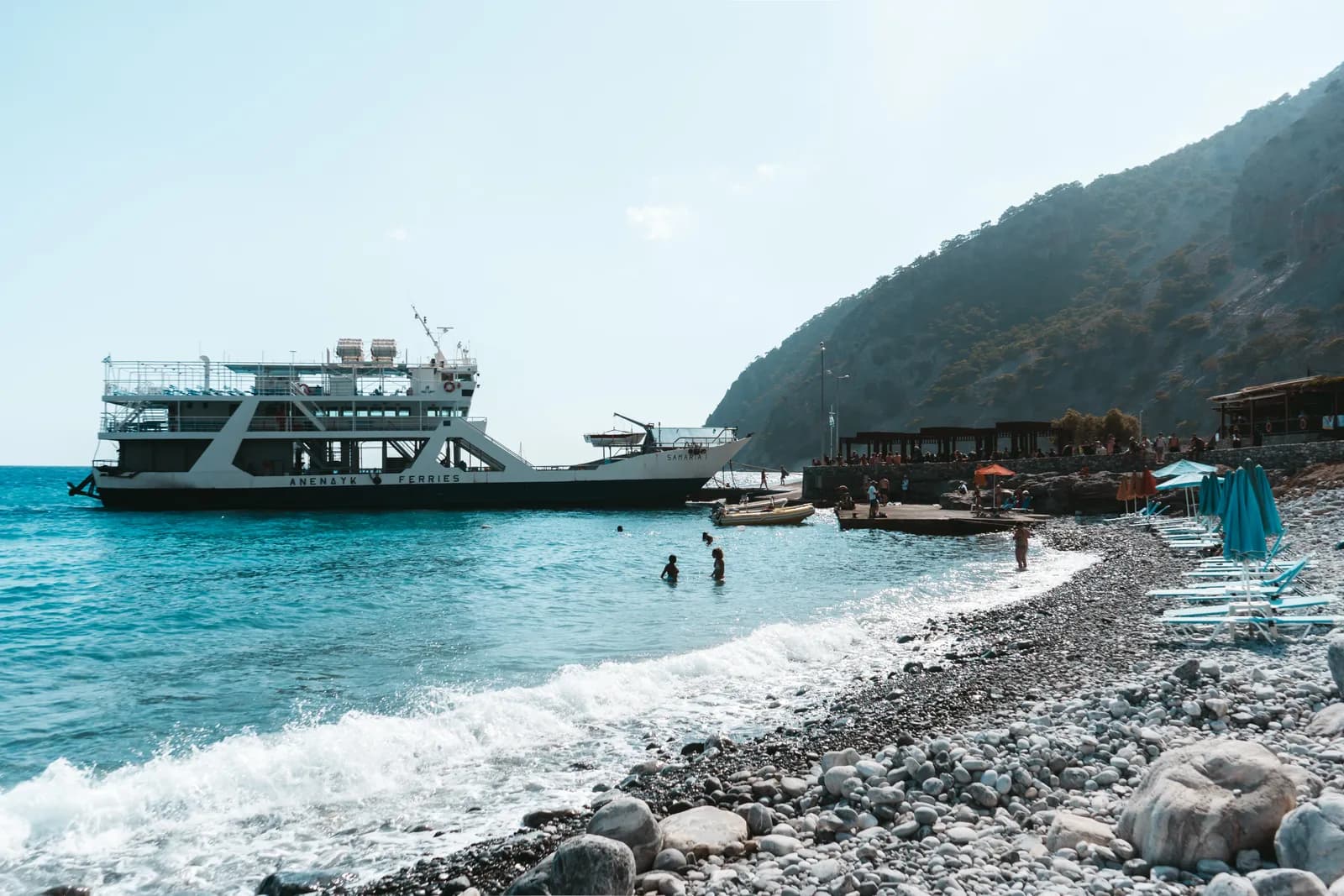
The Samaria Gorge, Crete's legendary hike: 16 km through one of the longest canyons in Europe, from the White Mountains down to the Libyan Sea. Allow 4 to 7 hours depending on your pace. The passage through the "Iron Gates", where the walls narrow to just 3 metres wide, is breathtaking. Our complete Samaria Gorge hiking guide covers everything: access, gear, difficulty, return by boat.


Photos : Pierre Bouyer
Lake Kournas, The only natural freshwater lake in Crete, nestled between the hills. Pedalos, swimming, lakeside tavernas. A peaceful break in a busy itinerary. Everything is in our Lake Kournas guide.
The Cave of Zeus (Psychro), On the Lassithi Plateau, this stalactite-adorned cave is said to be the birthplace of Zeus according to mythology. The descent is steep (stone-cut stairs) but manageable. Our Cave of Zeus guide prepares you for the visit.
Melidoni Cave, Lesser known but more intimate. This cave also hides a tragic history: in 1824, 370 Cretans perished here, asphyxiated by the Ottomans. A memorial stands inside.
The Botanical Garden of Crete, Born from the ashes of a forest fire, this garden is a remarkable success. Endemic plants, Mediterranean fruit trees, educational trails. A refreshing visit away from the beaches.
Water Activities
Snorkelling and diving, Crete's crystal-clear waters are perfect for underwater exploration. The best snorkelling spots in Crete are often coves accessible on foot.
Quad rental, A fun way to get off the beaten track. The back-country trails of Crete are made for adventure. Our Crete quad rental guide covers prices, routes and safety tips.
Boat excursions, From Kissamos, boats without a licence take you to Balos and Gramvousa at your own pace. From Agios Nikolaos, excursions head to Spinalonga. From Paleochora, local ferries run along the south coast inaccessible by road.
The 4 Main Cities of Crete
Heraklion: The Cultural Capital
Heraklion doesn't win beauty prizes at first sight. Traffic is heavy, the urban landscape sometimes brutal. But beneath the surface, the city hides treasures: the archaeological museum (one of the most important in Greece), the Palace of Knossos 5 km away, the Venetian fortress of Koules, and a vibrant central market. It's a cultural stopover, not a holiday base. One to two days is enough. Find the essentials in our Heraklion guide.
Chania: The Pearl of the West
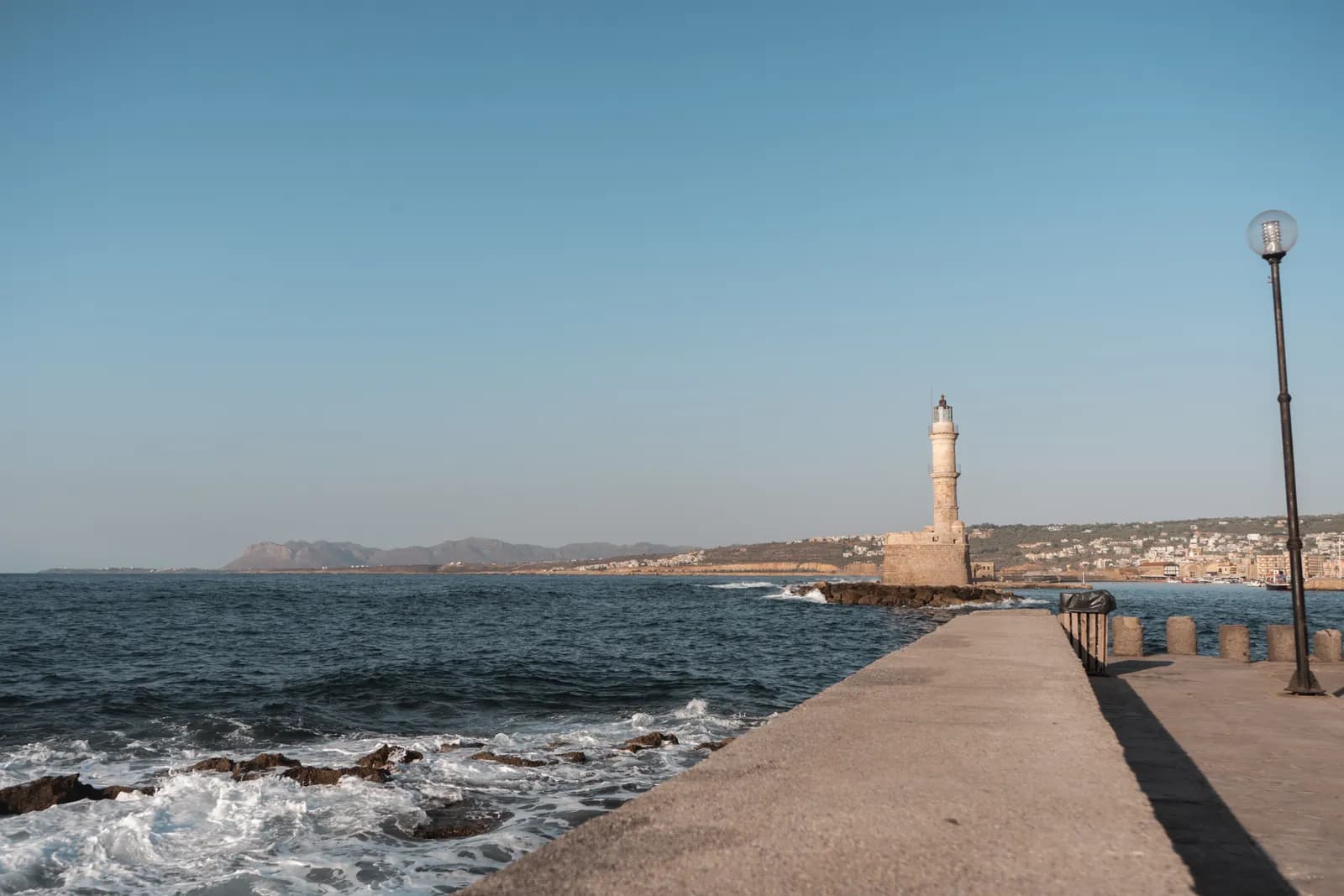
The most beautiful city in Crete, without hesitation. Its Venetian harbour with colourful houses, its old lighthouse, its alleyways where Venetian and Ottoman influences blend, its seaside terrace restaurants. Chania is the ideal base for exploring western Crete: Elafonisi, Balos, Falassarna and the Samaria Gorge are all within 1h30's drive. Our complete Chania guide has you covered.
Rethymno: The Charm of Central Crete
Halfway between Heraklion and Chania, Rethymno offers a compact and charming old town dominated by an imposing Venetian fortress (the Fortezza). The Venetian-Ottoman architectural blend is everywhere: minarets, fountains, carved doorways. The town is smaller and quieter than Chania, and its long sandy beach is just steps from the historic centre.
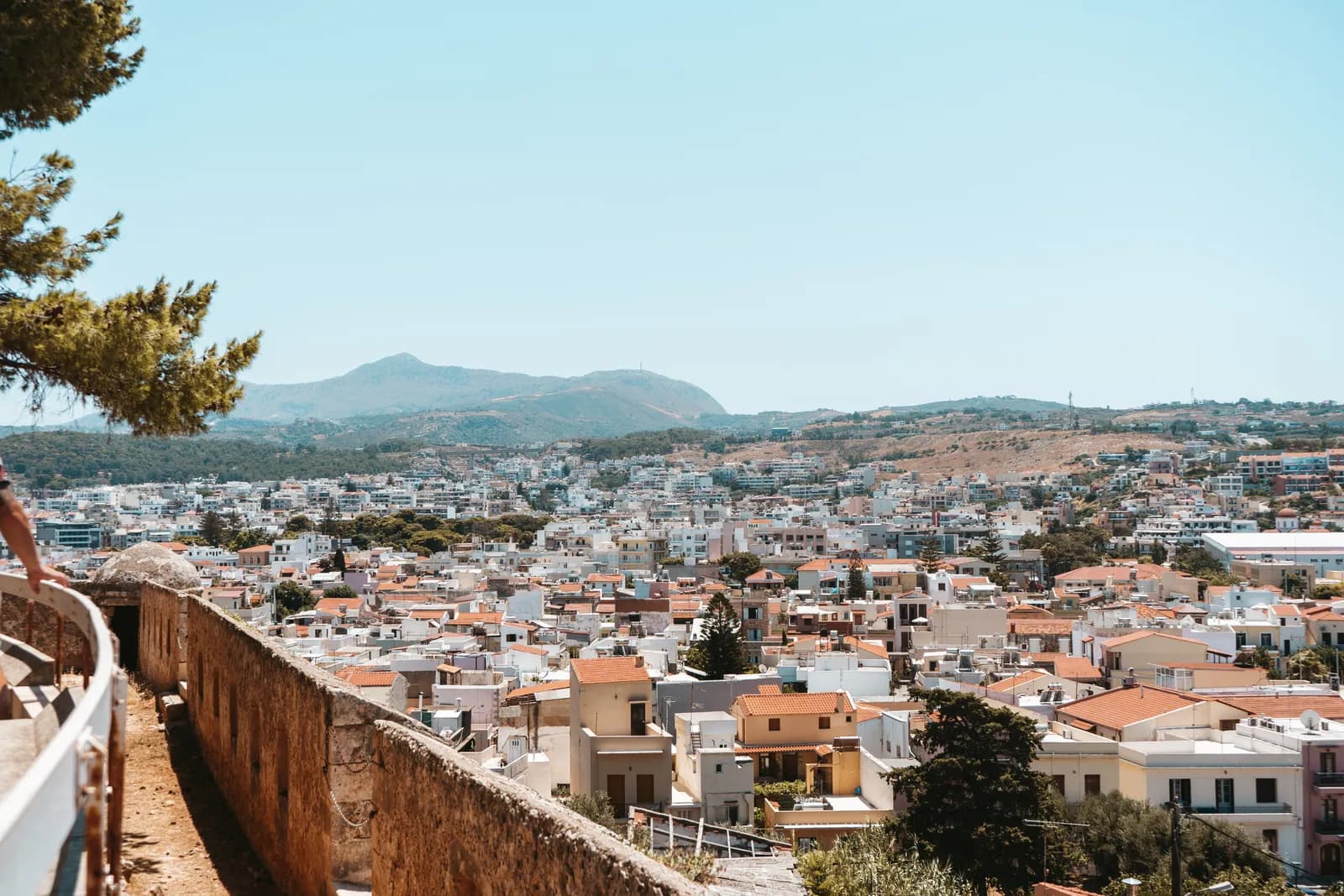
What sets Rethymno apart is its ideal strategic position for exploring in both directions. Within an hour's drive, you can reach Chania, the southern beaches (Preveli, Plakias) or Arkadi Monastery. It's also a lively university town with a café and bar scene that stays alive even out of season. The old port, more intimate than Chania's, hides good fish tavernas that are less touristy.
Agios Nikolaos and Kissamos: Gateways East and West
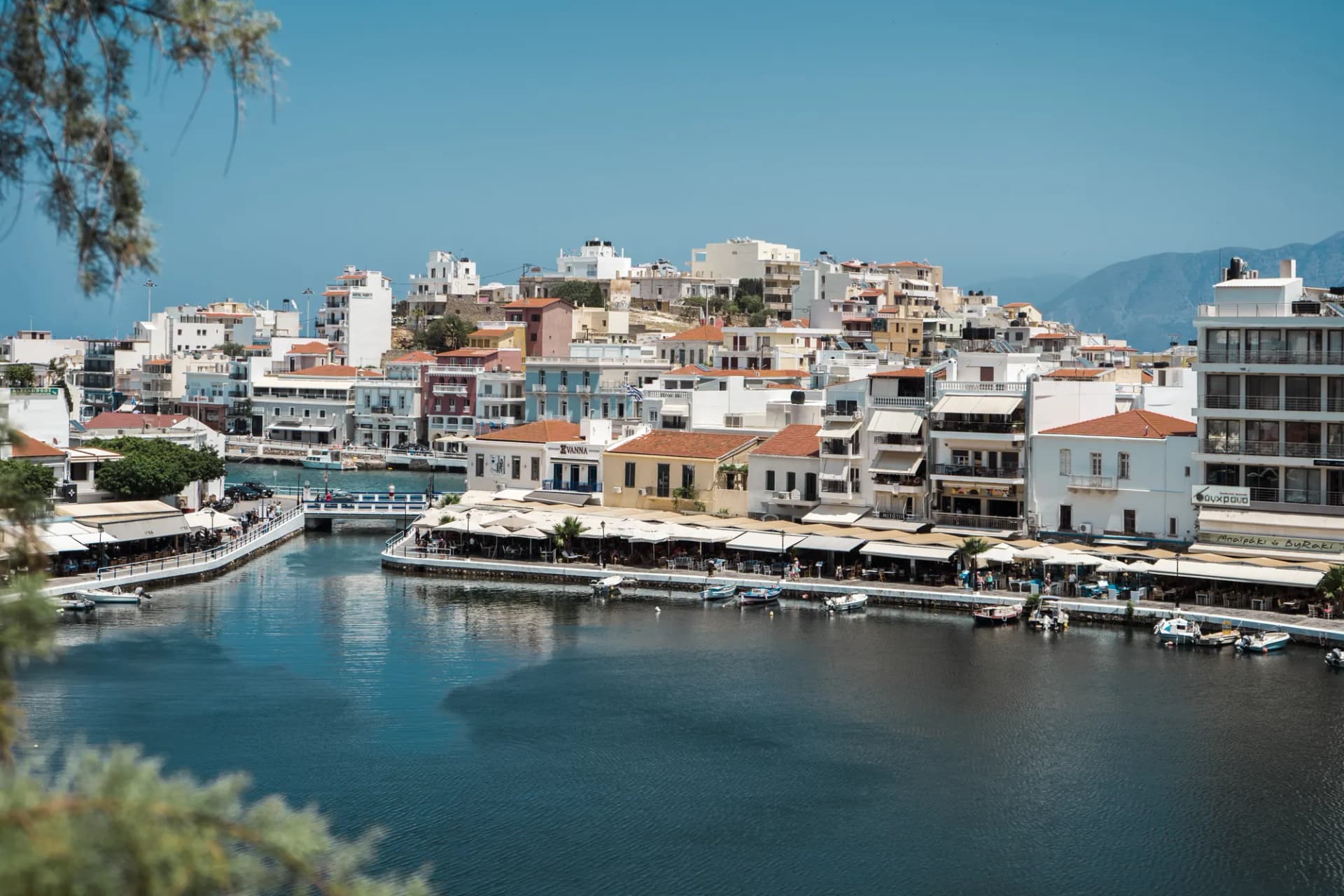
Agios Nikolaos, with its Lake Voulismeni connected to the sea, is the gateway to eastern Crete: Spinalonga, the Lassithi region, Vai, Sitia. The atmosphere is calmer, more local.
Kissamos, at the far west, is the departure point for Balos and Gramvousa. A small authentic town, without Chania's crowds, with good tavernas and an underrated archaeological museum.
Road Trip in Crete: 3 Itineraries by Duration
A car is essential for discovering Crete. Public transport (KTEL buses) connects the main cities but doesn't serve remote beaches, mountain villages or the south coast. Rent one at the airport and explore at your own pace.
DiscoverCars
Car rental comparison in 150+ countries
Compare prices from Hertz, Avis, Sixt and local providers. All fees included, free cancellation. Rated 4.6/5 on Trustpilot.


For details on renting, insurance and driving in Crete, check our complete Crete car rental guide.
Google Maps sets cookies when the map is displayed.
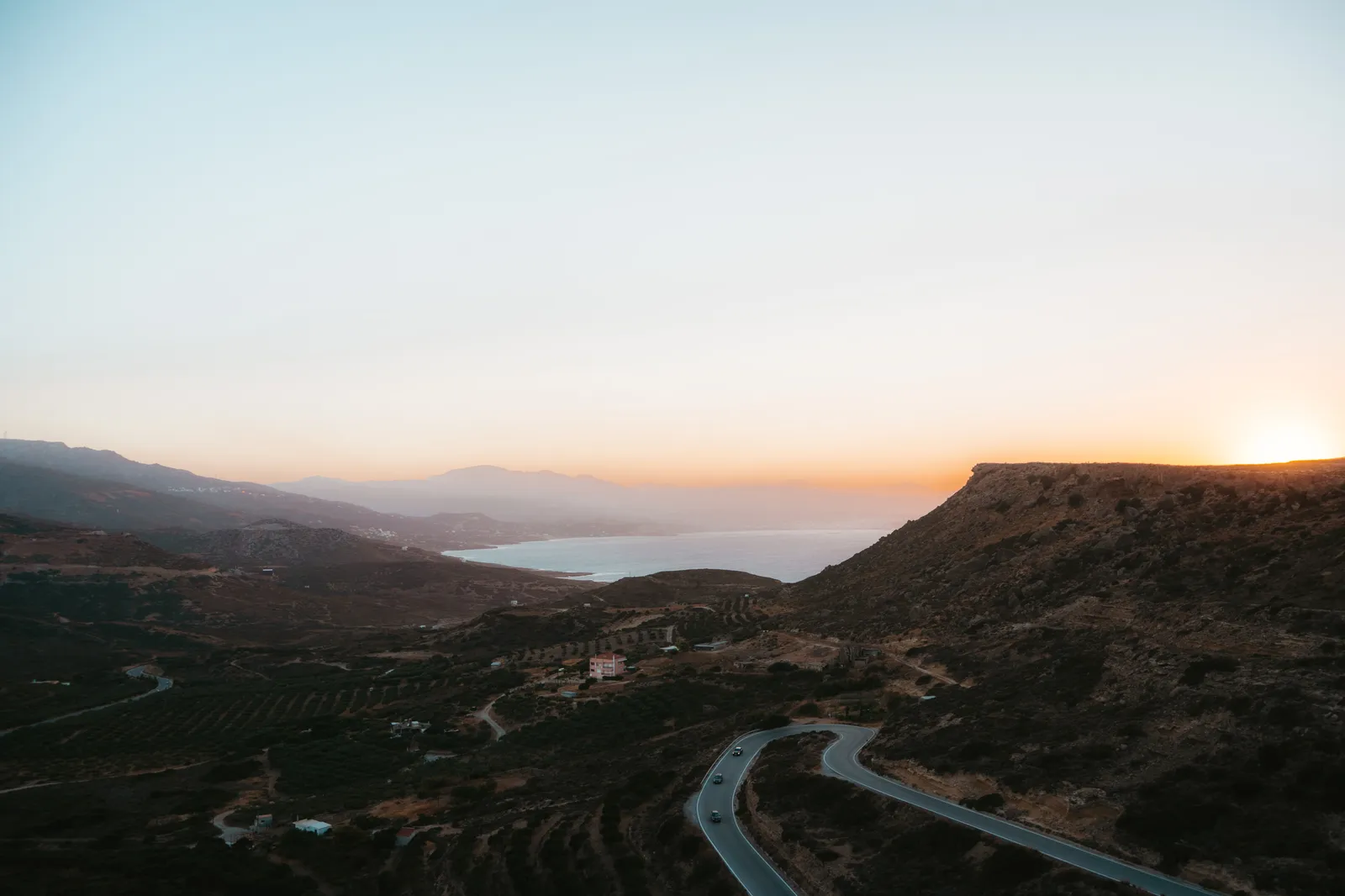
The freedom of a Cretan road trip means being able to stop on a whim at a deserted cove that appears around a bend, order a frappé in a village whose name you don't know, and get back on the road as the sun begins to sink. Here, the journey is part of the trip.
7-Day Itinerary: The Essential West
The West has the most spectacular beaches, the most beautiful city and the most impressive gorges. If you only have a week, this is where to go.
Day 1: Arrival in Chania. Pick up your rental car at the airport (20 min from the centre) and settle into the old town. In the late afternoon, lose yourself in the alleyways of the Topanas quarter: patinated Venetian facades, overflowing bougainvillea, golden light on the harbour. First dinner at a seaside taverna, first raki offered by the house. The tone is set.
Day 2: Chania in depth. The covered market (Agora), under restoration since 2022, is not due to reopen until December 2026: for local products (graviera, mizithra, mountain herbs, thyme honey), head instead to the delis of the Splantzia quarter. Walk to the Venetian lighthouse at the end of the jetty (panoramic view of the city), then visit the Mosque of the Janissaries and the Maritime Museum. Free afternoon on the small beach of Nea Chora, 10 min walk from the port. Evening aperitif on the harbour with a freddo espresso (Greek iced coffee: you'll become addicted).
Day 3: Balos and Gramvousa. Depart at 7 AM for Kissamos (40 min). From there, take the famous 7 km dirt track (30 min at a crawl, any vehicle can manage) to the Balos car park. Walk down to the lagoon (20 min). Bring water, a hat and closed shoes for the trail. Spend the morning at the lagoon, then head back up. If energy permits, stop at Falassarna for sunset on the big beach: the colours are among the most intense on the island.
Day 4, Elafonisi. Depart before 8 AM (the road from Chania takes 1h30 via a winding but paved road). Arrive before the tourist buses to enjoy the pink sand and lagoon almost deserted. Wade across the shallow ford to reach Elafonisi islet, which is wilder. On the way back, stop at Chrysoskalitissa Monastery perched on its white cliff facing the sea: legend has it the last step is made of gold, but only the pure of heart can see it.
Day 5: Samaria Gorge. A long but unforgettable day. Early bus from Chania to Omalos (1h, departing around 6-7 AM). 16 km hike through the canyon: cypress forests, river crossings, 300 m rock walls, and the famous "Iron Gates" passage just 3 metres wide. Arrival in Agia Roumeli on the Libyan Sea shore. A well-earned swim, then ferry to Hora Sfakion (1h) and bus back to Chania. Pack good shoes, at least 2 litres of water, and a picnic.
Day 6: Rethymno. Drive east (1h from Chania). Morning in the old town: Venetian Fortezza with 360° views from the ramparts, Rimondi fountain, Ottoman minarets, narrow alleyways with wooden balconies. Fresh fish lunch in the old port. Afternoon excursion to Arkadi Monastery 30 min south: a history-charged place that illuminates Cretan pride.
Day 7: Return. Depending on your departure airport (Chania or Heraklion), make the most of the drive for one last stop. If flying from Chania, pass through Argiroupoli for lunch under the waterfalls. If flying from Heraklion (2h30 drive), stop at Lake Kournas for a morning swim in its emerald waters.
10-Day Itinerary: West to East
Ten days lets you cover two-thirds of the island, combining the western classics with the cultural treasures of the centre and the east.
Days 1 to 5: The West (same itinerary as above).
Day 6: Rethymno and the south coast. Morning in Rethymno old town if you haven't explored it the day before. Then drive south through the Kourtaliotiko Gorge (compulsory photo stop at the bridge) to Preveli beach and its palm tree oasis. The descent to the beach is steep (15-20 min) but the sight of the river flowing into the sea between the palm trees is unique in the Mediterranean. Night in Plakias or Agia Galini, two quiet coastal villages with good tavernas.
Day 7: The hinterland and Heraklion. Drive to Zaros at the foot of Mount Psiloritis. If you're hikers, the Rouvas Gorge (2-3h return) offers a rare kermes oak forest. Otherwise, lunch by Zaros lake and visit the archaeological site of Gortyn (the famous laws carved in stone, the oldest legal code in Europe). Continue to Heraklion (1h). Settle in late afternoon.
Day 8: Heraklion and Knossos. Start with the Heraklion Archaeological Museum to understand the Minoan civilisation (frescoes, Phaistos Disc, jewellery). Then head to the Palace of Knossos 5 km away for a 1h30-2h visit. In the afternoon, browse the 1866 Street market, try a bougatsa (cream-filled pastry) and walk down to the Venetian harbour and Koules fortress.
Day 9: Lassithi Plateau and Agios Nikolaos. Drive to the Lassithi Plateau at 850 m altitude (1h from Heraklion). Visit the Cave of Zeus at Psychro: the donkey ride up is charming if you'd rather not walk. Stroll through the plateau villages (Tzermiado, Avrakontes), then descend to Agios Nikolaos. Late afternoon, if time allows, take a boat to Spinalonga (boats also depart from Elounda, 10 km north).
Day 10: Return to Heraklion. Free morning in Agios Nikolaos: walk around Lake Voulismeni, café on a terrace. Drive back to Heraklion (1h15) with a possible stop at Sissi for a swim in its little cove. Flight from Heraklion.
14-Day Itinerary: The Full Tour
Two weeks is the ideal format to tour Crete without rushing. You add the wild East, beach rest days, and the luxury of improvisation.
Days 1 to 9: The 10-day route at a more relaxed pace. Add a beach day at Falassarna between days 3 and 4, and a rest day in Loutro between days 5 and 6 (ferry from Hora Sfakion, 30 min). Loutro is the perfect place to recover after the Samaria Gorge: no cars, just the sea, tavernas and silence.
Day 10: The wild East. From Agios Nikolaos, drive to Sitia (1h30). This part of Crete is the least touristy: arid landscapes dotted with sleepy villages, olive groves stretching to the horizon. Stop at Toplou Monastery, an isolated fortress in the middle of nowhere, then head to Vai beach and its natural palm grove of 5,000 palms: the largest in Europe. Night in Sitia, a quiet little port town.
Day 11: Ierapetra and Chrissi Island. Head down to the south coast. Ierapetra claims to be the southernmost city in Europe. The historic centre is pleasant (Venetian fortress, mosque, old lanes), but the highlight is the boat trip to Chrissi Island (1-hour crossing, swimming from the boat: landing has been banned since 2025). Translucent waters, white sand, centuries-old juniper forest. Return in the late afternoon.
Day 12: Makry Gialos and the south-east coast. Lazy day on one of Crete's longest beaches. The sand is fine, the water shallow, the atmosphere family-friendly. The seafront tavernas serve fish caught that very morning. It's the kind of day when you do nothing, and it's perfect.
Day 13: Return via the interior. Scenic route through the Lassithi villages. Stop in Kritsa for its Byzantine frescoes and textile craft shops, then in Archanes for a Cretan wine tasting at a vineyard (the white Vidiano is a revelation). Night in Heraklion or the surrounding area.
Day 14: Heraklion and departure. Last hours to complete any missed visits, buy olive oil and thyme honey at the 1866 Street market, or simply savour one last freddo espresso on a terrace. Flight home.
Cretan Cuisine: What You Must Try
Cretan cuisine is not a simple offshoot of Greek cooking. It's a culinary tradition in its own right, recognised for its health benefits and part of the Mediterranean diet, listed as UNESCO Intangible Cultural Heritage (2010, extended to Greece in 2013). The Cretan diet, rich in olive oil, legumes, wild herbs and vegetables, is one of the most studied in the world for its longevity benefits.
Dakos, The Cretan bruschetta: barley rusk soaked in grated tomato, topped with mizithra (fresh cheese) and drizzled with olive oil. Simple, fresh, addictive. Order it as a starter everywhere. It's the dish that sums up the Cretan philosophy: quality ingredients, minimal processing.
Snails (chochlioi boubouristoi), Pan-fried upside down in scorching olive oil, then deglazed with vinegar. Cretans are crazy about them, and it's a speciality you won't find anywhere else in this form. Try them at least once: the crunch and acidity are a pleasant surprise.
Boureki, Gratin of courgettes, potatoes and mizithra cheese. A typical summer dish from Chania, slow-baked in the oven. Every family has their recipe.
Staka, Slowly cooked butter cream, a Cretan speciality served with pasta or scrambled eggs. Rich, decadent, comforting. Best saved for hiking days.
Mountain cheeses, Cretan graviera (similar to Gruyère), fresh or aged mizithra, and anthotyro. Shepherds in the White Mountains still produce these cheeses by hand.
Thyme honey, Crete produces some of the best honey in the world thanks to its hills covered in wild thyme. With thick Greek yoghurt, it's the perfect dessert. Buy some directly from beekeepers on the mountain roads.
Raki (tsikoudia), The grape marc spirit, served free at the end of a meal in any self-respecting taverna. Refusing would be almost rude. Raki is much more than a drink: it's a gesture of hospitality, a social ritual.
Cretan wines, Crete is one of the oldest wine regions in the world. Indigenous grape varieties (Vidiano, Vilana, Kotsifali, Mandilari) produce surprisingly high-quality wines. The Archanes area south of Heraklion has several estates open for visits and tastings. The white Vidiano, in particular, is gaining well-deserved international recognition.
For olive oil lovers, a detour to the ancient olive tree of Vouves is a must: this 3,000-year-old tree still produces oil.
Where to eat? The golden rule in Crete: the further the taverna is from the main road, the better it is. Mountain villages hide the best tables. In Chania, move away from the touristy harbour to find local spots in the Splantzia quarter. In Heraklion, the 1866 Street market is a feast for the senses. And everywhere, beware of restaurants with photos on the menu: it's almost always a red flag.
When to Visit Crete? Seasons and Weather
Crete enjoys a Mediterranean climate with 300 days of sunshine a year. But when you visit will radically change your experience.
April-May, Cretan spring is an explosion of colour. Nature is in bloom, temperatures are mild (18-24°C), prices are low and sites are deserted. The water is still cool for swimming (19-21°C) but hiking conditions are ideal. This is my favourite time.
June and September, The sweet spot. Warm enough for the beach (25-30°C, water at 23-25°C), less crowded and cheaper than July-August. The Samaria Gorge is open, the tavernas are in full swing. If you must pick one month, go for September. Everything about Crete in September in our dedicated guide.
July-August, Full Mediterranean summer. Intense heat (30-35°C, peaks of 40°C inland), crowds on the main beaches, highest prices. Great for swimming and nightlife, but tough for hiking or visiting archaeological sites.
October-November, The shoulder season is mild and pleasant. The sea is still warm (22-24°C in October), prices drop, villages regain their calm. Some showers possible, especially in November, but nothing deal-breaking. It's harvest season for grapes and olives: if you're staying in the hinterland, you'll see families beating the olive trees and pressing fresh oil. The Samaria Gorge generally closes at the end of October, but other hikes remain doable.
December-March, Off season. Many tourist facilities closed, cool temperatures (10-16°C), frequent rain. But Crete in the rain has its charm: deserted archaeological sites, snow-capped mountains, cosy tavernas. For travellers who love absolute quiet.
Good to know in 2026: Greece is part of the Schengen Area. Since April 2026, the new EES (Entry/Exit System) replaces passport stamps with biometric checks at borders. Allow a few extra minutes at airports for the initial registration.
Saily eSIM
Stay connected with the best secure eSIM
With Saily, the secure eSIM with superpowers, say goodbye to roaming abroad! -5% with code AMEBOHEME.

Crete Travel Budget: How Much to Plan for 2026?
Crete is one of the most affordable destinations in Greece. Here's a realistic breakdown by traveller profile, per day and per person.
| Item | 🎒 Backpacker | 🧳 Comfortable | ✨ Premium |
|---|---|---|---|
| Accommodation | €25-40/night | €60-120/night | €150-300+/night |
| Meals | €15-20/day | €30-50/day | €60-100/day |
| Car rental | €20-30/day | €35-55/day | €60-100/day |
| Activities | €10-20/day | €30-50/day | €50-100+/day |
| Total per day | €70-110 | €155-275 | €320-600+ |
Flights: Expect €100-250 return from France if booked 2-3 months ahead. Direct flights to Heraklion and Chania run frequently from April to October from Paris, Lyon, Marseille, Nantes and Bordeaux.
Paying on the spot: Bank cards are accepted almost everywhere, but always keep cash for small village tavernas and beach car parks. ATMs are available in all towns.
Travel insurance: Crete is safe, but a hike in the Samaria Gorge or a quad excursion can go wrong. Good travel insurance is essential.
Chapka Insurance
Travel with peace of mind with the best travel insurance
Stay covered in every situation with the best insurance for your next trip.
Practical Info: Getting to Crete and Getting Around
How to Get There
By air, Two international airports: Heraklion (HER) in the centre-east and Chania (CHQ) in the west. Direct flights from France from April to October (3h30-4h). Heraklion receives more flights, but Chania is closer to the western beaches. A third airport in Sitia (JSH) serves some domestic routes.
By ferry, From Piraeus (Athens), ferries reach Heraklion and Chania in 7 to 9 hours (overnight crossings available). From Santorini, the trip takes about 2 hours. Check our Crete-Santorini ferry guide for timetables and fares.
Getting Around the Island
By car, Essential. The national road connects Kissamos to Sitia along the north coast. Secondary roads heading south and inland are often winding and narrow but paved. Driving is on the right, a French licence is sufficient. Rent at the airport to avoid transfers.
DiscoverCars
Car rental comparison in 150+ countries
Compare prices from Hertz, Avis, Sixt and local providers. All fees included, free cancellation. Rated 4.6/5 on Trustpilot.
Our Crete car rental guide covers everything: comparison sites, insurance, pitfalls to avoid, driving tips.
By bus (KTEL), The network connects the main cities (Heraklion, Rethymno, Chania, Agios Nikolaos) with good frequency. Useful for non-drivers or for the Samaria Gorge hike (bus + return ferry). Limited for remote beaches and mountain villages.
By boat, Local ferries along the south coast (Paleochora → Sougia → Agia Roumeli → Loutro → Hora Sfakion). Excursions to Balos/Gramvousa from Kissamos, to Spinalonga from Agios Nikolaos, to Chrissi Island from Ierapetra.
Accommodation: Where to Stay
Your choice of base depends on your itinerary.
For the West: Chania or Kissamos. Venetian harbour, restaurants, proximity to the star beaches.
For the centre: Rethymno. Strategic position, charming old town, easy access west and east.
For the East: Heraklion (culture) or Agios Nikolaos (beach). Base for Knossos, Lassithi, Spinalonga.
For a road trip, change base every 2-3 days rather than radiating from a single point. Distances are deceptive and round trips eat up time. Discover our selection of the best seaside hotels in Crete.
Day Trip from Crete: Santorini by Ferry
Crete is just 2 hours by ferry from Santorini. If you have 2 to 3 spare days in your itinerary, the excursion is absolutely worth it.
From Heraklion, SeaJets catamarans reach the port of Athinios in Santorini in 1h30 to 2h15 (around €50 to €100 depending on the date), while Blue Star Ferries offers a much cheaper conventional option taking 4h to 4h30, a few days a week. In high season, there are at least 2 daily departures. Book ahead, especially in July-August.
In one day? It's doable but tight. Early departure from Heraklion, arrival mid-morning, visit Fira and Oia, return in the late afternoon. Our 1 day in Santorini guide gives you an optimised itinerary.
In 2-3 days? That's ideal. You'll have time to enjoy the sunset in Oia, do the Fira to Oia hike, and explore the villages beyond the beaten path.
To help you choose between the two islands or combine both, read our Crete vs Santorini comparison. And if budget is a concern, our Santorini budget guide gives you the concrete numbers.
Check timetables and fares in our Crete-Santorini ferry guide.
FAQ: Frequently Asked Questions About Crete
A minimum of 7 days to discover one half of the island (West or East). 10 to 14 days for a complete, stress-free tour. If you only have 5 days, focus on Chania and the beaches of the West.
June and September offer the best balance between weather, crowds and prices. April-May is ideal for hiking and cultural visits. July-August is perfect for the beach but crowded and expensive. More details in our guide to visiting Crete in September.
Yes, strongly recommended. Buses link the main towns, but remote beaches, mountain villages and the south coast are not served. Check out our guide to car rental in Crete.
Allow €70 to €110 a day on a backpacker budget, €155 to €275 for a comfortable stay, and €320 to €600 or more for premium. Crete remains one of the most affordable destinations in Greece.
Crete is a family destination par excellence. The beaches are often shallow (Elafonisi, Balos), the food appeals to children, and activities are varied (aquariums, caves, boat trips, villages). Driving on the main roads poses no particular difficulty.
The two islands are very different. Crete offers diversity (beaches, mountains, villages, culture, gastronomy) and good value for money. Santorini offers unique volcanic landscapes and a romantic atmosphere, but at a higher cost and over a much smaller area. The ideal: start with Crete, then take the ferry for 2-3 days in Santorini. Our detailed comparison will help you decide.
Tap water is technically safe in the big towns (Heraklion, Chania, Rethymno), but it doesn't always taste great. In rural areas and on the small islands, stick to bottled water. The local brand Zaros, drawn from the springs of Mount Psiloritis, is excellent and available everywhere.
Crete doesn't reveal itself in a single trip. It's an island that rewards slowness, curiosity and improvisation. Every bend in the road reveals a new landscape, every village taverna hides a speciality you haven't tried yet, every conversation with a Cretan opens a door to a story you weren't expecting.
Take your time. Leave the marked trails. Get lost in the mountains. Swim in coves whose names you'll never know. And come back: because you always come back to Crete.
To continue your exploration, discover our selection of the best Greek islands to visit and plan your next trip with Âme Bohème.
Sources and fact-checkingInformation checked on 14 April 2026 · 1 source consulted

Âme Bohème exists thanks to you
Some links in this article are affiliate links. This means that if you book or purchase a product through these links, we receive a small commission, at no extra cost to you. It's thanks to this support that we can continue creating free, quality content.
You can also buy us a coffee, or follow us on Instagram and Facebook.