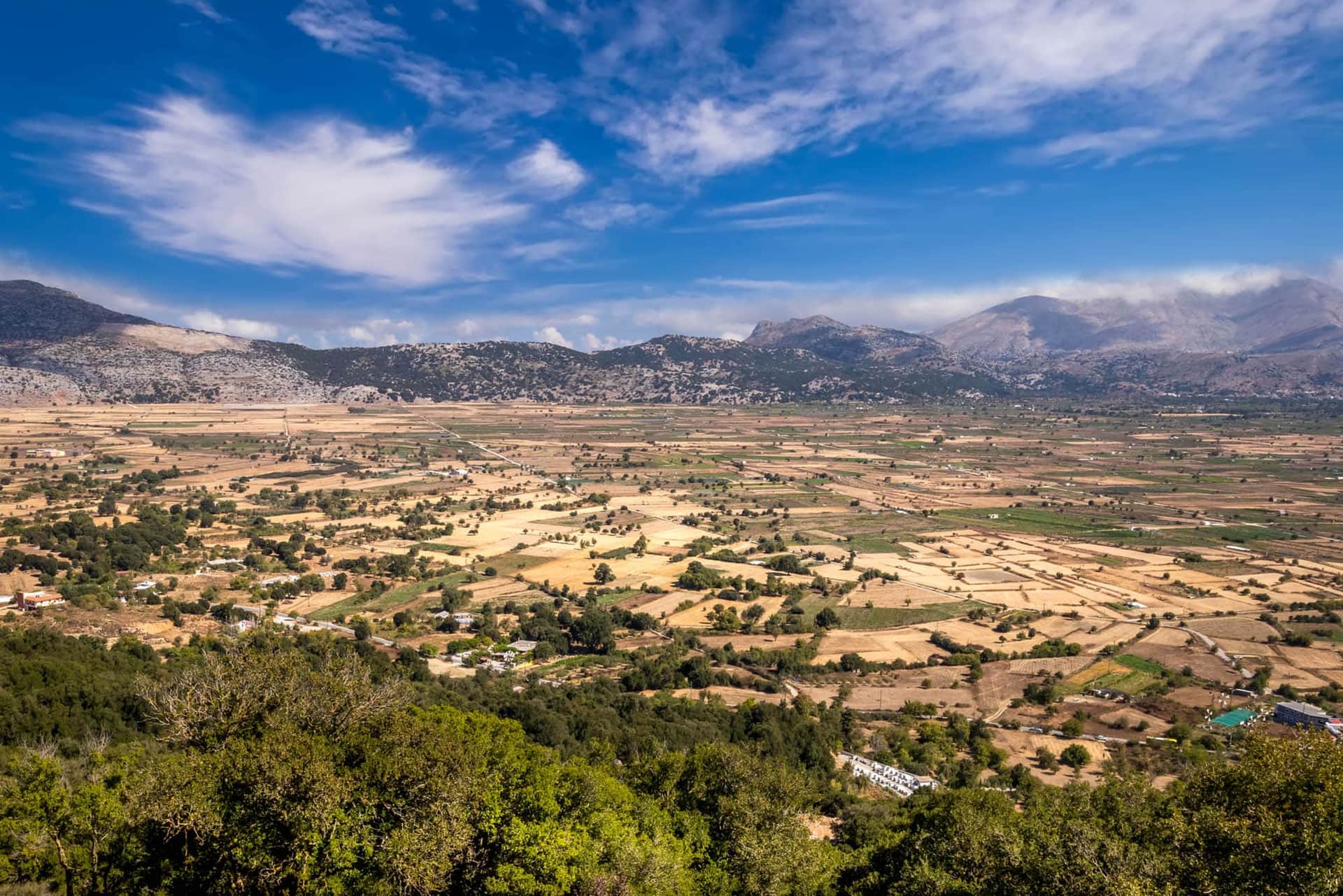

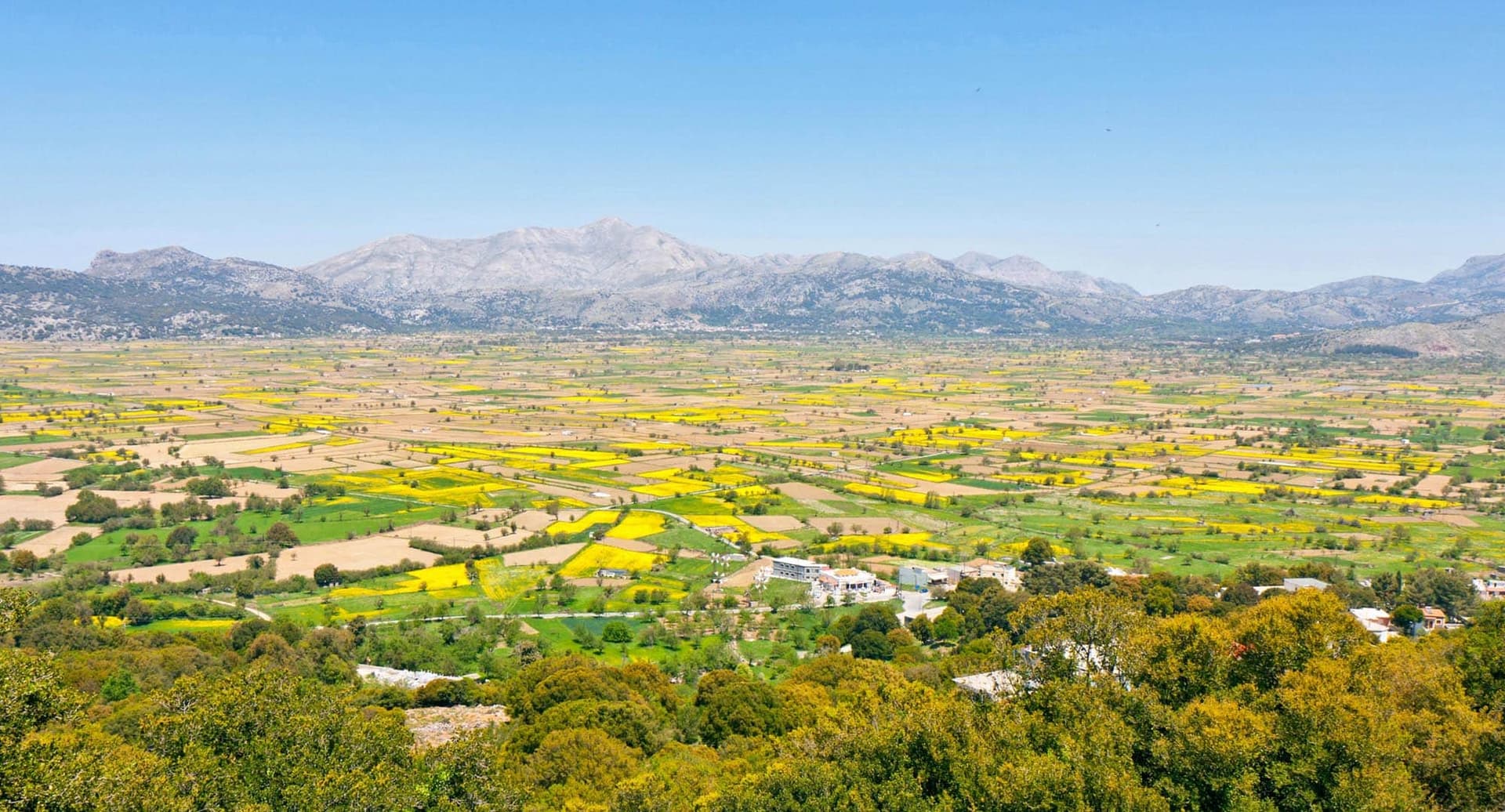
Nestled in the heart of the Dikti mountains, the Lassithi Plateau is a natural wonder that's well worth the detour during your stay in Crete. At an altitude of 850 metres, this fertile high plateau covers nearly 25 km² and is home to some twenty picturesque villages where time seems to have stood still.
A true green oasis surrounded by majestic peaks, the Lassithi Plateau offers a complete change of scene and an immersion in traditional Crete. Whether you love hiking, are passionate about history or are simply looking for peace and quiet, you'll be won over by the wild beauty of the landscapes and the authentic charm of the villages.
How to get to the Lassithi Plateau
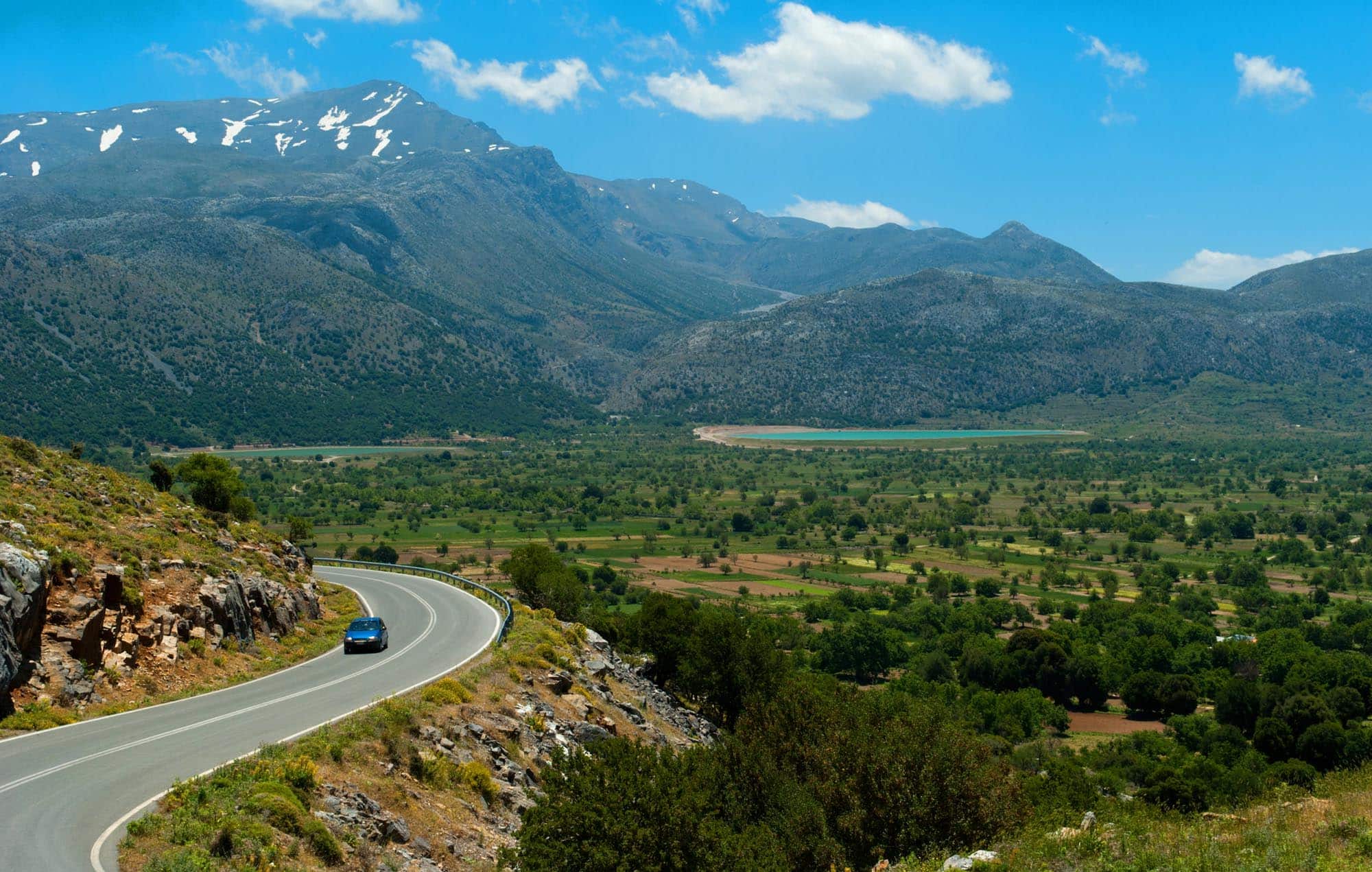
The Lassithi Plateau is easily accessible by car from Crete's main towns. It's the most practical and flexible way to get there, letting you explore the different villages at your own pace.
Here are the recommended routes:
- From Heraklion: allow approximately 1h15 of driving (70 km) via Kasteli and Kastamonitsa. The road is well maintained but has plenty of bends on the climb up to the plateau.
- From Agios Nikolaos: the drive takes approximately 45 minutes (36 km) via Neapoli and the Seli pass. It's the quickest and most spectacular route, with a sweeping view down over the plateau.
- From Malia or Elounda: allow approximately 1 hour of driving via Mohos and Krasi. A scenic road that winds through charming mountain villages.
Remember to check your tyres and fluid levels before setting off, as petrol stations are rare on the plateau. And don't forget your camera to capture the superb scenery!
If you don't have a car, you can also visit the Lassithi Plateau on an organised tour departing from Heraklion, Agios Nikolaos or Malia. It's a good option if you don't want to worry about driving and route-finding. Ask at your hotel or at local agencies.
Planning your trip? Find all the essentials in our complete guide to Crete and check when to visit Crete with our month-by-month weather guide.
Prices and tickets
Access to the Lasithi Plateau is free. Only the Cave of Zeus charges admission: it reopened on 29 May 2026 after two years of works and is open 8:30am–3:30pm (closed on Tuesdays). Check the new price on site.
Some of the plateau's museums and monasteries may also ask for a small contribution.
Traditional villages to discover
During your visit to the Lassithi Plateau, you'll get to discover some twenty typical Cretan villages where time seems to have stood still. Each has its own identity and deserves a little time to appreciate its authentic charm.
Tzermiado, the capital of the plateau
Tzermiado is considered the capital of Lassithi. This picturesque village will charm you with its cobbled lanes, stone houses and many tavernas serving traditional Cretan cuisine. Don't miss the beautiful Byzantine church of Agios Dimitrios and its carved wooden iconostasis dating from the 19th century.
Tzermiado is also home to the Lassithi Folklore Museum, which displays a rich collection of traditional objects and costumes. A fascinating dive into rural life in days gone by. 🫕
Agios Georgios, old-world charm
Not far from Tzermiado, Agios Georgios is another must-see village on the plateau. Its white houses with blue shutters, stone fountains and narrow flower-filled lanes make it a real little gem.
The village is also home to an interesting folklore museum, set in an old traditional house. You'll discover how the Cretans of Lassithi lived several centuries ago, among farming tools, pottery and handwoven textiles.
Psychro and the Cave of Zeus
The village of Psychro is best known as the starting point for visiting the famous Cave of Zeus (Dikteon Andron). But it's also worth a stop for its well-preserved traditional architecture and idyllic setting at the foot of the mountains.
Take time to wander its peaceful streets, admire the little Byzantine churches and enjoy the breathtaking view over the plateau. And if you're lucky, you might even catch a colourful village festival!
Kera and its windmills
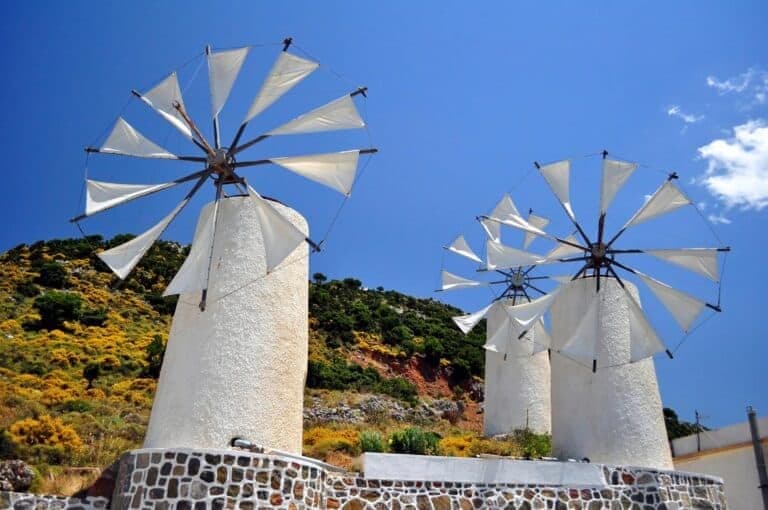
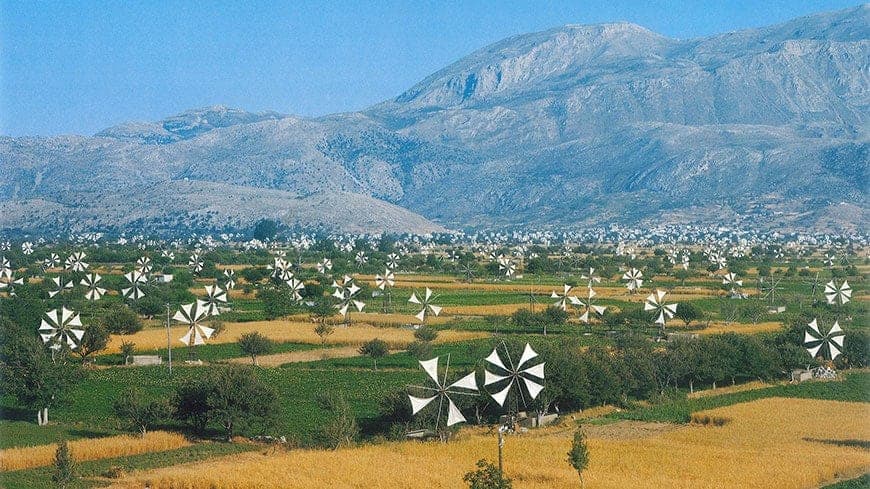
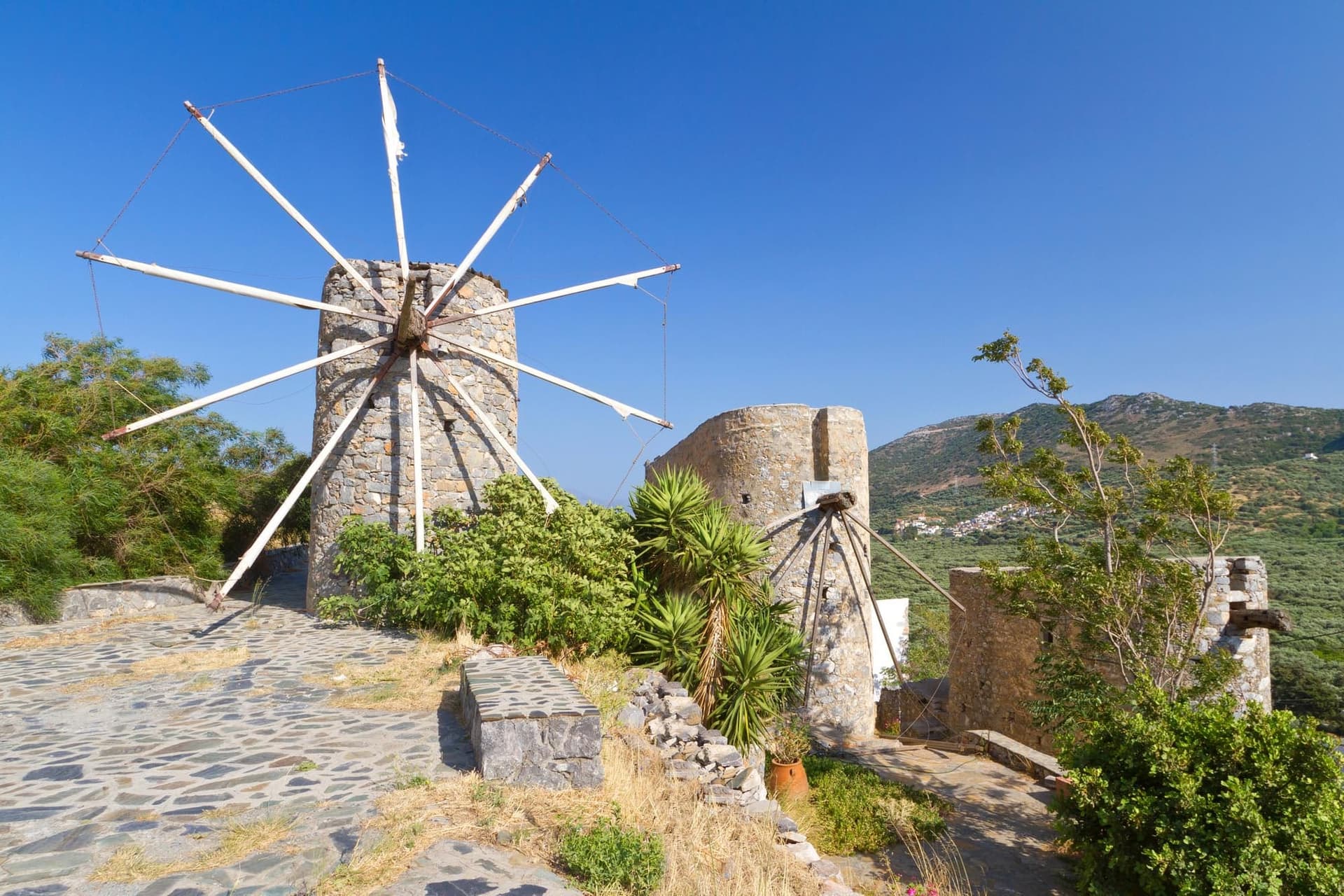
Head to Kera, high up in Lassithi, to admire a local curiosity: its imposing stone windmills. Built in the 19th century, they were once used to grind the grain harvested on the plateau.
Today they are a unique heritage site and offer superb photo opportunities, especially at sunset. From Kera, you'll also get an exceptional panoramic view over the whole plateau and the surrounding mountains.
Agios Konstantinos and its monastery
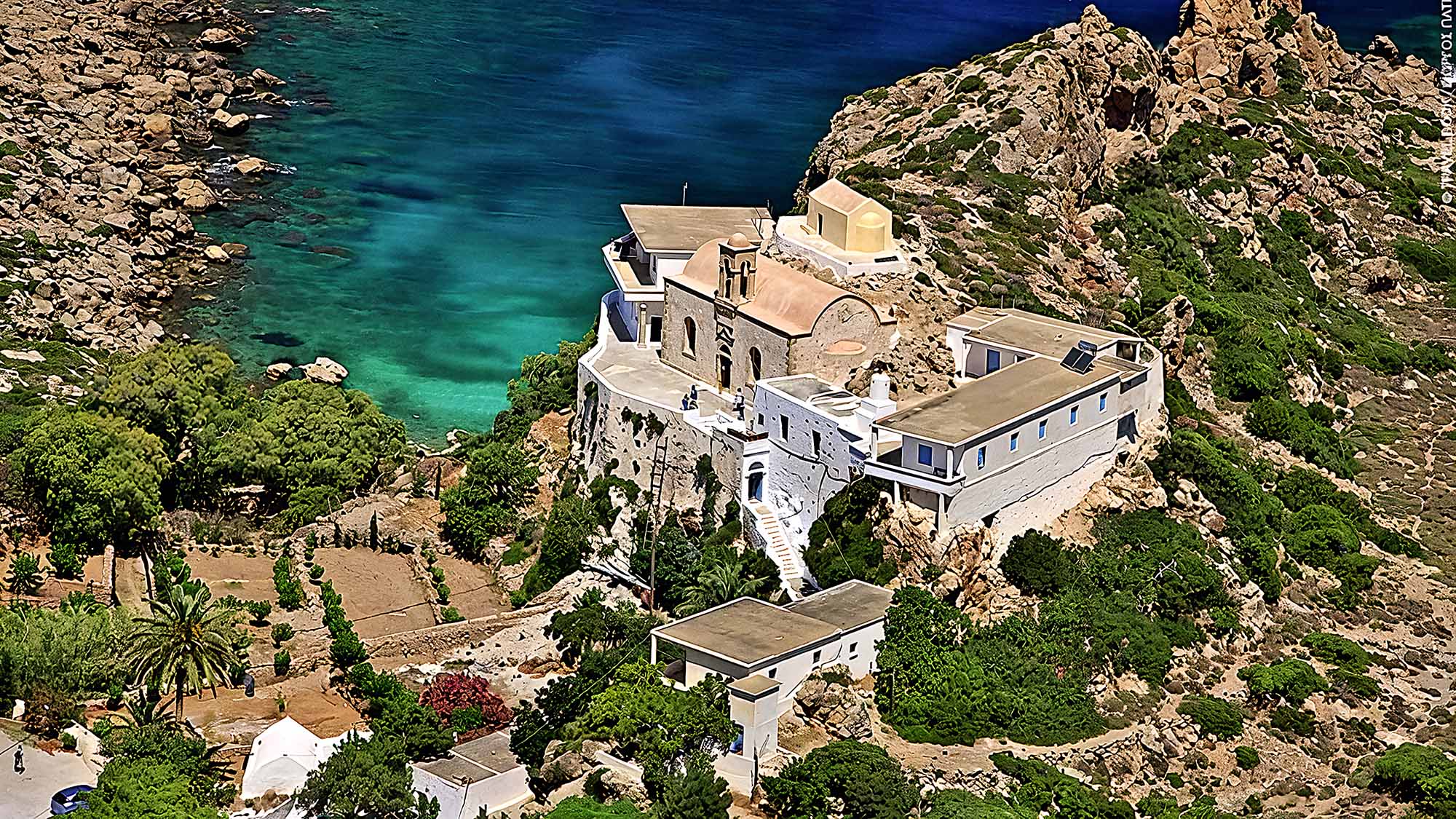
The village of Agios Konstantinos is worth a stop for its magnificent monastery of the same name. Founded in the 16th century and clinging to the cliffside, it houses superb Byzantine frescoes and offers a breathtaking panorama.
It's also a haven of peace, perfect for contemplation and meditation. Even if you're not religious, you'll appreciate the beauty and serenity of the place. ⛪
Other villages on the plateau are worth a detour too, such as Marmaketo with its square shaded by century-old plane trees, Mesa Lasithi and its narrow medieval lanes, or Plati surrounded by colourful fields.
Each village has its own little hidden treasures, whether it's a Byzantine church, an old restored mill or a traditional café where you can sip raki with the locals. So take your time, let your curiosity guide you and set off to discover this authentic village side of Crete.
What to do and see on the Lassithi Plateau?
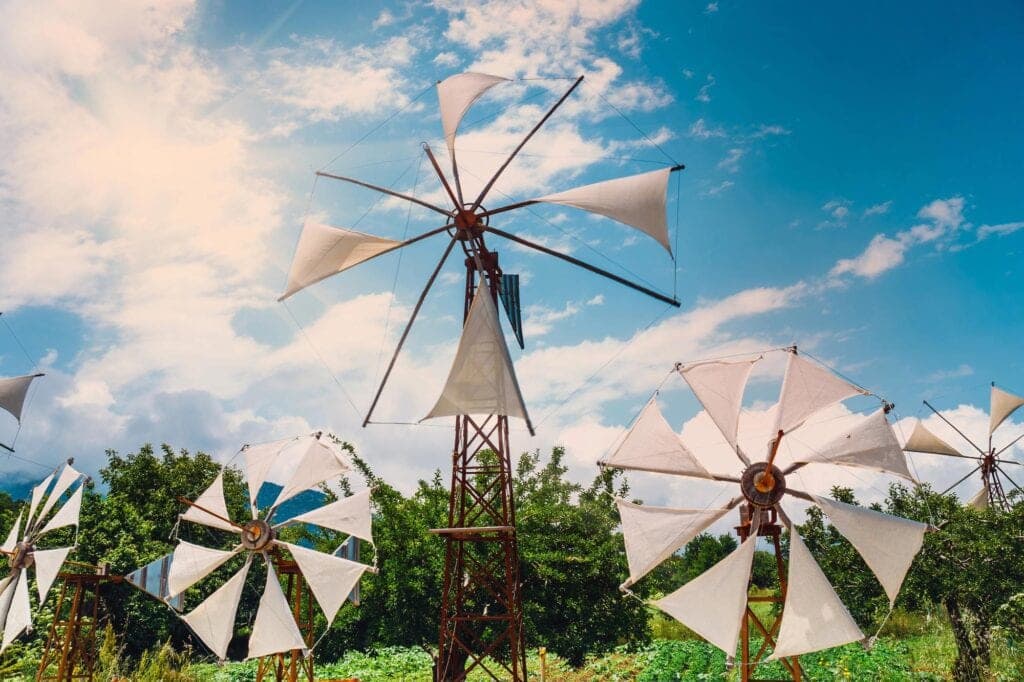
The Lassithi Plateau is full of activities and wonders to discover, whether you love nature, hiking, history or Cretan traditions. Here are a few suggestions to make the most of your visit.
Hikes and walks
With its lush landscapes and rugged mountains, Lassithi is a true paradise for hikers. Many waymarked trails criss-cross the plateau, offering stunning views of the villages, fields and surrounding peaks.
Among the most popular hikes, don't miss:
- The climb up Mount Karfi (1116 m), which offers a 360° panorama over the plateau and all the way to the sea.
- The “Seli mills” loop, an easy walk among the old windmills and blossoming orchards.
- The Havga Gorge trail, a more challenging hike through a breathtaking rocky landscape.
Even if you're not a keen walker, you'll enjoy the many walks starting from the villages, between colourful fields and peaceful mountain pastures. It's the best way to soak up the bucolic atmosphere of Lassithi.
Cultural and historical visits
The Lassithi Plateau also has plenty to offer history and heritage lovers. As well as the traditional villages with their well-preserved architecture, several sites are worth a visit:
- The Cave of Zeus (Dikteon Andron), where, according to mythology, the god Zeus was born and hidden by his mother to escape his father Cronus. A place steeped in mystery and legend. ⚡
- Vidiani Monastery, founded in the 14th century and famous for its exceptional Byzantine frescoes.
To learn more about the history and traditions of Lassithi, don't miss the interesting folklore museums in Tzermiado and Agios Georgios either. You'll discover the way of life of Cretans of old through rich collections of objects, costumes and period photos.
Expériences authentiques
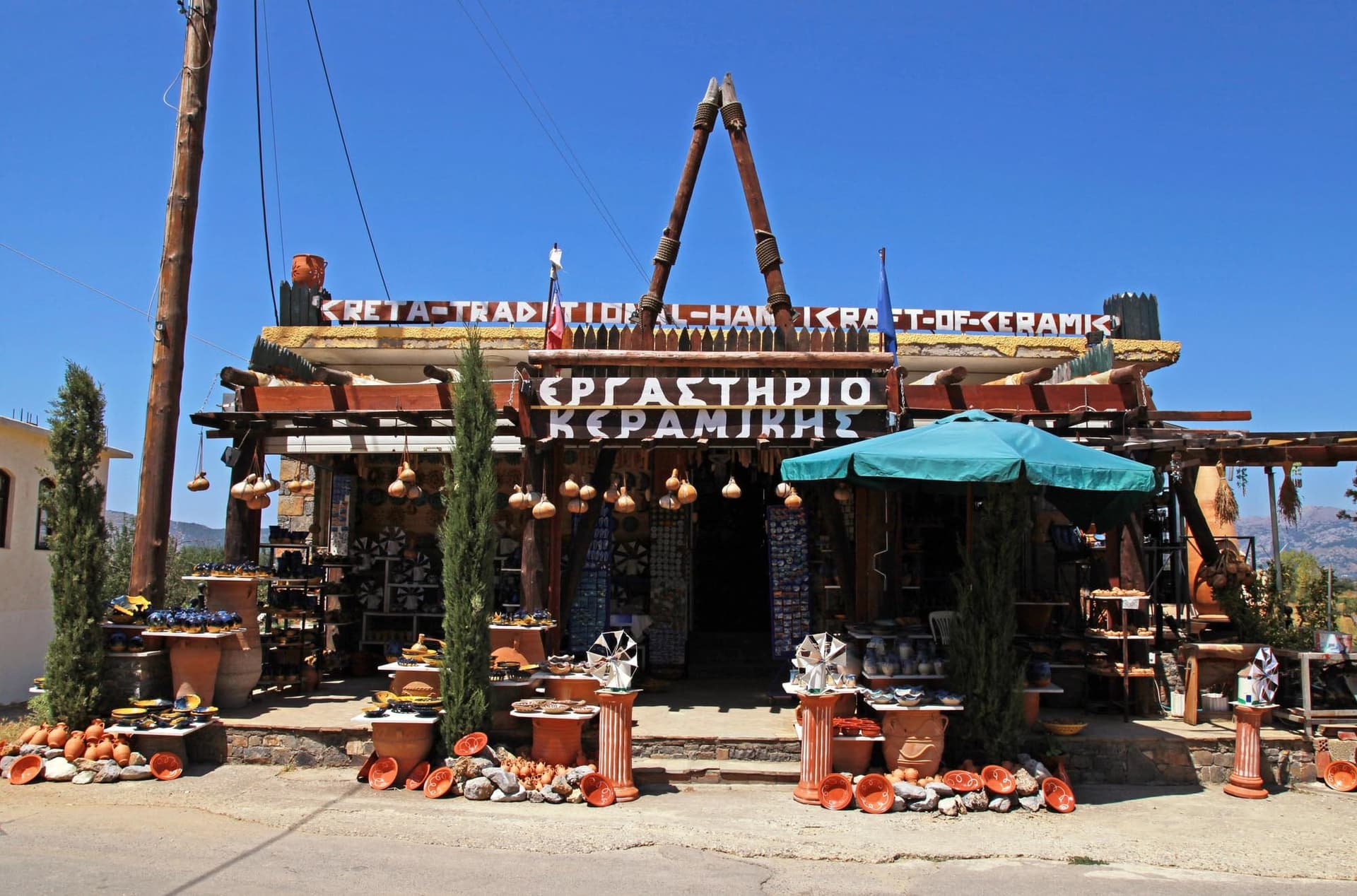
Your visit to the Lassithi Plateau is also a chance to have authentic experiences and share special moments with the locals.
In the villages' traditional tavernas, you'll enjoy generous, flavourful Cretan cuisine made with local produce: sheep's cheese, fragrant honeys, aromatic herbs, vegetables from the garden, grilled meat… A real treat for the taste buds!
If you visit the plateau in spring, you may catch the “May Festivals”, joyful village gatherings with big banquets, traditional music and dancing. An unforgettable, warm and festive atmosphere.
You can also meet local artisans keeping ancestral skills alive: pottery, weaving, leatherwork… A chance to find beautiful souvenirs and support Cretan craftsmanship. 🪁
As the seasons go by, other farming activities bring the plateau to life: apple and walnut picking in September, the olive harvest in November, moving the sheep to summer pastures in June… So many authentic moments of local life to share.
Finally, astronomy fans won't be left out: far from any light pollution, the Lassithi Plateau offers truly magical starry nights. Perfect for dreaming under the Milky Way after a lovely day full of discoveries.
As you can see, the Lassithi Plateau has no shortage of wonders to discover and unique experiences to enjoy. Between nature, history, traditions and gastronomy, it will delight visitors looking for authenticity and a change of scene. So, ready to be charmed by this rural, unspoilt side of Crete?
A rich historical and religious heritage
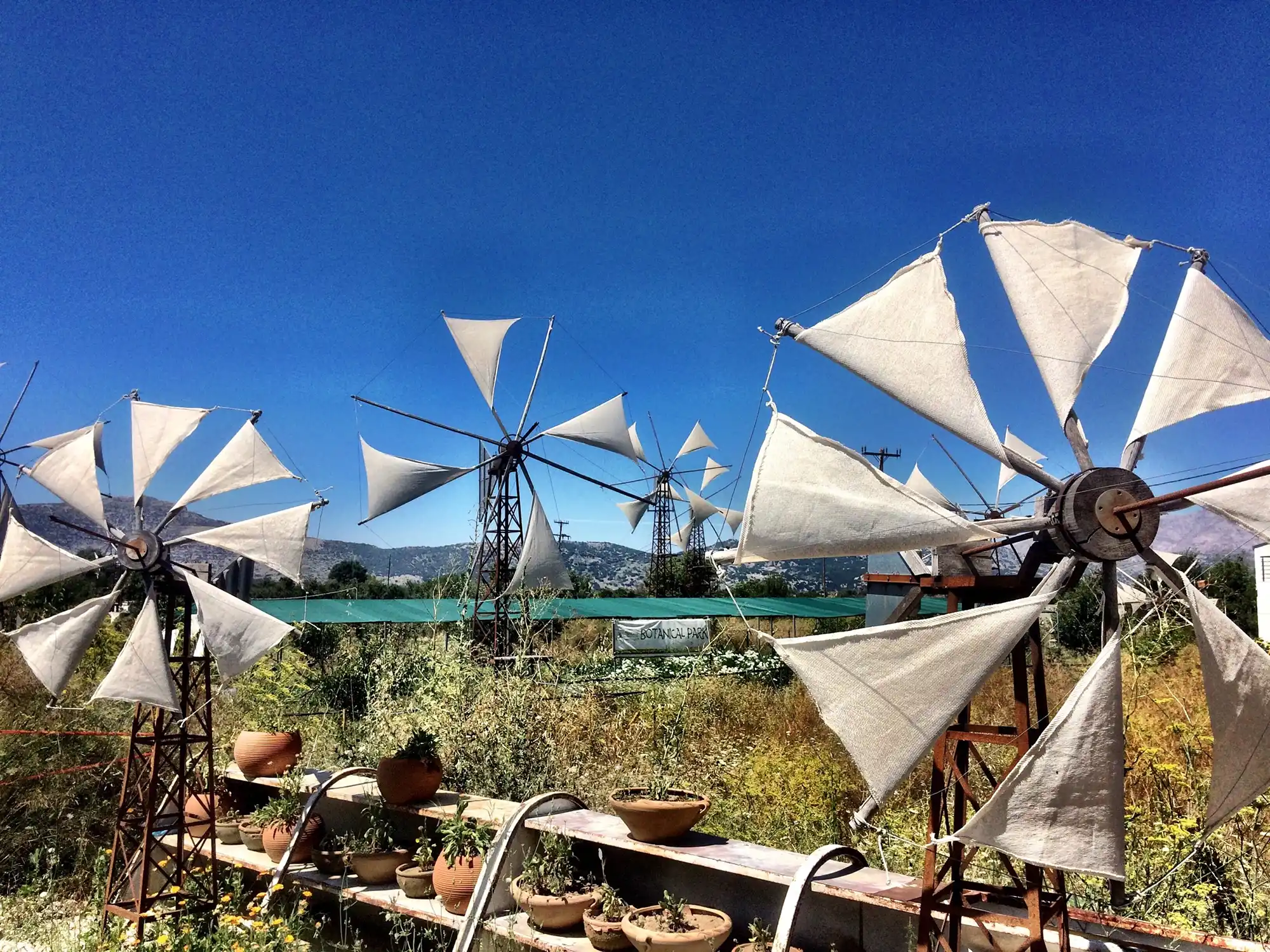
The Lassithi Plateau also holds many historical and religious treasures. The Orthodox monasteries, many dating from the Venetian period, are worth a visit both for their remarkable architecture and for the frescoes adorning their walls.
Among the most iconic are the monasteries of Vidiani and Kroustallenia. The latter, built on the cliffside, offers a breathtaking view over the plateau.
History lovers will also enjoy visiting Minoan archaeological sites such as Karphi or Papoura, evidence of the plateau's ancient occupation.
Unspoilt nature to explore
Beyond its villages and heritage, the Lassithi Plateau is above all a stunning natural setting. Here, cultivated fields sit alongside pastures where sheep graze, all against a backdrop of rugged mountains.
The hiking possibilities are endless, whether on waymarked trails or off the beaten path. The panoramas are breathtaking, especially from Mount Karfi, which rises to over 1100 metres.
For the less active, a simple drive or bike ride is another way to fully enjoy the plateau's green landscapes. In spring, the fields of apple trees in blossom are a fairytale sight.
The Cave of Zeus, a must-see

You can't talk about the Lassithi Plateau without mentioning the legendary Cave of Zeus (Dikteon Andron). According to mythology, this is where Rhea hid her son Zeus to protect him from his father Cronus, who devoured his children.
Located at an altitude of 1025 metres near the village of Psychro, part of the cave is open to visitors. After a climb of about twenty minutes, you can explore this maze of stalactites and stalagmites and soak up the mystical atmosphere of the place. A unique experience!
Where to stay on the Lassithi Plateau
Lassithi Plateau FAQ
The plateau can be visited all year round, but each season has its advantages. In spring (April-May), nature is in bloom and temperatures are mild. In summer (June-August), it's hotter but the altitude makes the heat bearable. Autumn (September-October) brings beautiful colours and a peaceful atmosphere. In winter (November-March), the plateau is sometimes covered in snow, which gives it a fairytale charm but can make access more difficult.
Allow at least a full day to discover the plateau's main attractions: traditional villages, the Cave of Zeus, the Seli mills, monasteries… But to really take the time to explore and hike, 2 to 3 days would be ideal.
Yes, the Lassithi Plateau is a very family-friendly destination. Children will love visiting the Cave of Zeus, donkey rides, apple picking… Many villages also have playgrounds. Only some of the more difficult hikes aren't recommended with young children.
Not at all! Although hikers will be delighted, it's perfectly possible to visit the plateau at a gentle pace, by car or by wandering through the villages. And for easy walks, the trails are accessible to all levels.
Conclusion: an unforgettable trip to the heart of authentic Crete
As you've seen, the Lassithi Plateau is a unique destination that's well worth the detour during your stay in Crete. This vast fertile plain nestled in the heart of the Dikti mountains offers a complete change of scene and an immersion in traditional Crete.
With its picturesque villages where time seems to have stood still, its green landscapes dotted with old windmills, its Byzantine monasteries steeped in history and the mysterious Cave of Zeus, the plateau is full of treasures to discover.
It's also an ideal destination for nature lovers and hikers, with many trails offering stunning views of the surroundings. And for those who prefer peace and quiet, strolls through the orchards and mountain pastures invite you to savour the slow pace of life.
The Lassithi Plateau also promises authentic encounters with locals who are proud of their traditions and their land. In a taverna or at a village market, you'll discover a warm and generous Crete, far from the tourist crowds.
So if you're looking to recharge in unspoilt nature while discovering a little-known side of Crete, don't hesitate: the Lassithi Plateau is waiting for you! Rain or shine, in spring as in winter, this little corner of paradise will give you a big breath of fresh air and a journey out of time.

Âme Bohème exists thanks to you
Some links in this article are affiliate links. This means that if you book or purchase a product through these links, we receive a small commission — at no extra cost to you. It's thanks to this support that we can continue creating free, quality content.
You can also buy us a coffee, or follow us on Instagram and Facebook.