Among Crete's treasures, the Monastery of Moni Arkadiou shines with a special glow. Set a short distance from Rethymno, this monastery is far more than a simple religious building. It is a symbol of resistance, faith and Cretan identity.
On my last trip to Crete, after exploring wonders such as Elafonisi and the Balos lagoon, I made my way to Moni Arkadiou. And I can tell you that the experience was unforgettable. As you step through its gates, you are instantly carried back in time, to an era when Crete was fighting for its freedom.
But why is this monastery so special to Crete? Why does it draw visitors from all over the world? And above all, why should you absolutely put it on your list of destinations in Crete? Hold on tight, because we are about to dive into the fascinating history of this emblematic place.

- A 16th-century Venetian church with a Renaissance façade.
- Includes a historic refectory, cellars and a powder magazine.
- Artworks inspired by the monastery's history.
- Relics and objects on display from various periods.
- Interactive IT navigation systems for visitors.
- Opening hours (2026): 9am-8pm in summer, shorter hours in spring and autumn
- Price: €8 per adult
- Recommended time: 2 to 3 hours
History of the monastery

The origin and founding of the monastery
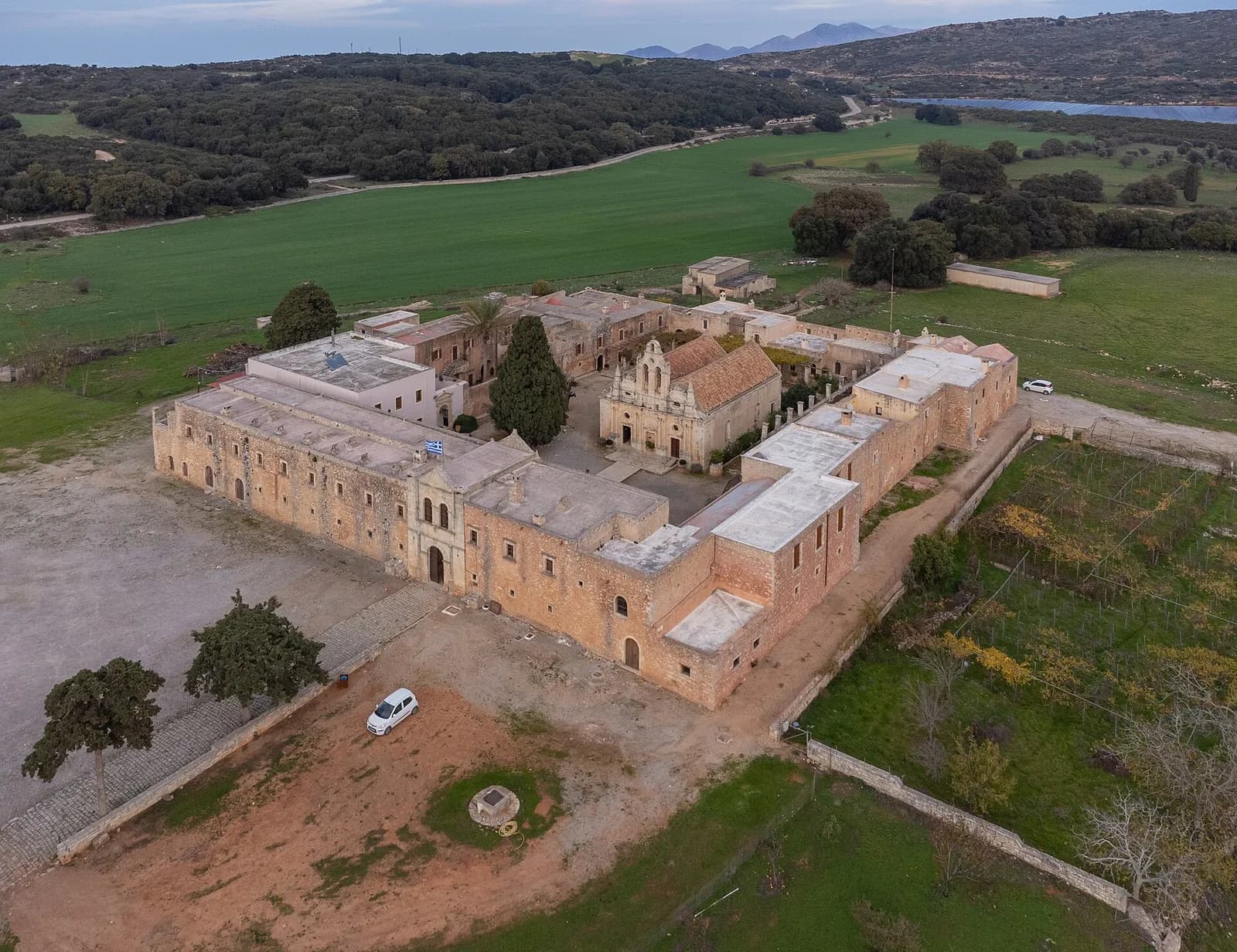
Moni Arkadiou is a silent witness to Crete's rich and turbulent history. Founded, according to tradition, in Byzantine times (the earliest records date from the 14th century), this monastery has weathered the ages, withstanding invasions, earthquakes and the trials of time. I was struck by the mystical aura that surrounds this place. The thick walls, the majestic arches and the ancient frescoes tell a story stretching back centuries. Wandering along its corridors, you can almost hear the echoes of the prayers of the monks who once lived in these sacred surroundings.
The monastery's role in the Cretan resistance
But it is not only its great age that has made Moni Arkadiou famous. Its role in the Cretan resistance against the Ottoman occupation is engraved in the heart of every Cretan. In 1866, during the famous siege, the monks and the local inhabitants joined forces to defend their land and their faith. Compared with the heroic resistance of Spinalonga and the historical importance of the Palace of Knossos, the siege of Moni Arkadiou is a crucial chapter in Cretan history.
The self-sacrifice of the locals
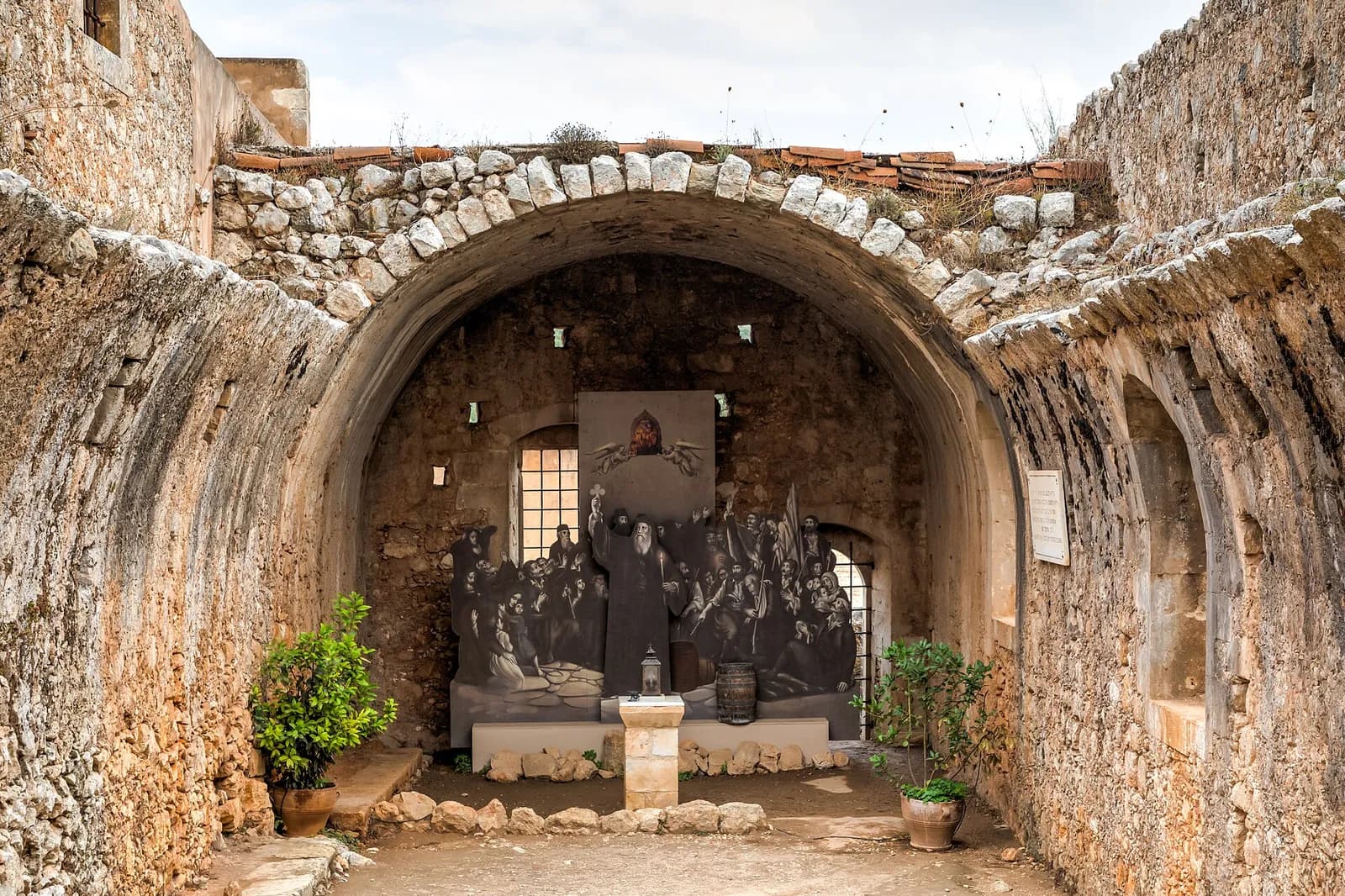
The story of the siege is both tragic and inspiring. Faced with an overwhelming Ottoman force, the monastery's defenders chose self-sacrifice rather than submission. Instead of surrendering, they decided to blow up the ammunition store, preferring death to capture. That bravery moved me deeply during my visit. It is a powerful reminder of the indomitable spirit of the Cretan people.
Planning your trip? Find all the essentials in our complete guide to Crete and check when to visit Crete with our month-by-month weather guide.
Architecture and features of the monastery

The 16th-century Venetian church
At the heart of Moni Arkadiou stands a majestic Venetian church dating from the 16th century. With its Renaissance façade, it is a genuine architectural masterpiece. I was amazed by the carved details and the frescoes adorning its walls. Every stone, every column tells a story. Compared with Crete's other architectural wonders, such as the Palace of Knossos, this church is a one-of-a-kind gem.
The different parts of the monastery
The monastery is not limited to its church. As you explore its nooks and corners, you discover a historic refectory where the monks once shared their meals. The cellars, once used to store wine and provisions, give off a welcome coolness on hot summer days. And then there is the powder magazine, a silent witness to the monastery's turbulent history. Walking through these spaces, you can feel a deep connection with the past, a sensation reinforced by visiting other historical sites on the island.


Monastic life today
But Moni Arkadiou is not only a monument of the past. It is a living place, home to devoted monks who keep centuries-old traditions alive. Their day is shaped by prayer, meditation and manual work. Watching them, I was touched by their devotion and their serenity. They are the guardians of this sacred place, making sure it remains a haven of peace for generations to come. If you have the chance to visit Crete, I warmly recommend spending time at Moni Arkadiou, not only for its history and architecture, but also to feel the spirituality that permeates every stone.
The monastery's museum and art gallery

Artworks inspired by the monastery
Moni Arkadiou is not only a place of prayer and meditation, it is also a true artistic treasure. The monastery's art gallery houses an impressive collection of works inspired by its rich and turbulent history. From vibrant paintings to detailed sculptures, every piece tells a story, capturing the essence of this sacred place. There is, for instance, a painting depicting the siege of 1866, a poignant work that reminded me of the bravery of the monastery's defenders.
Relics and objects on display
The monastery's museum is a journey through time. It houses a fascinating collection of relics and objects that trace different periods of the monastery's history. From ancient manuscripts to liturgical ornaments, each object has its own story to tell. The collection includes a 17th-century silver cross, an eloquent testament to the unshakeable faith of the monks of Moni Arkadiou. If you are a history enthusiast like me, you will certainly appreciate the richness of this collection.
Interactive IT navigation systems
Modernity has also found its place at Moni Arkadiou. To give visitors an enriching experience, the monastery has installed interactive IT navigation systems. These tools allow visitors to immerse themselves in the monastery's history, to learn more about the objects on display and to follow virtual guided tours.
Celebrations and rituals

The monastery's main celebrations
Moni Arkadiou, with its rich spiritual heritage, is the setting for many celebrations throughout the year. Three of them stand out in particular for their importance and their fervour.
- 21 May: This date marks a special celebration for the monastery. You can witness solemn processions, liturgical chants and an atmosphere filled with devotion. It is a moment when the faithful gather to pray and meditate, renewing their faith.
- 6 August: Another memorable date for Moni Arkadiou. That day's festivities are a real feast for the eyes and the ears. The monastery bells ring out across the valley, inviting everyone nearby to join the celebration.
- 8 November: This day carries particular significance, as it commemorates the heroic self-sacrifice of the locals in 1866. The day's ceremonies are filled with emotion and respect for those who gave their lives for freedom.
Daily religious ceremonies
Life at Moni Arkadiou is shaped by daily religious ceremonies. Every day, at sunrise and at sunset, the monks gather for prayer. If you visit the monastery early in the morning or in the late afternoon, you will have the chance to attend these sacred moments. The monks' chants, accompanied by rising incense, create a peaceful, meditative atmosphere. On my last visit, I took a moment to sit down and lose myself in the serenity of these rituals, an experience I warmly recommend to every visitor.
Practical information

Opening hours
Moni Arkadiou welcomes visitors all year round. In 2026 the monastery opens 9am-8pm from June to August, 9am-7pm in April, May and September, 9am-6pm in March and October, and 9am-5pm in November. I suggest arriving early in the morning to avoid the crowds and the heat.
How to get there from Rethymno
Getting to Moni Arkadiou from Rethymno is child's play. You can opt for a short drive, which takes approximately 30 minutes. Follow the national road eastwards until the exit for Arkadi. From there, clearly marked signs will guide you to the monastery.
If you don't have a vehicle, several organised excursions leave from Rethymno and include a visit to the monastery. On my last trip, I chose to rent a quad bike to add a touch of adventure to the journey, and I must say it was a memorable experience!
Recommended length of visit
The ideal length for a full visit to Moni Arkadiou is approximately 2 to 3 hours. That gives you enough time to explore the monastery and the museum, attend a religious ceremony and even sit down to meditate or pray. Personally, I like to take my time to soak up the peaceful atmosphere of the place, wandering through the historic corridors, sitting in the gardens and chatting with some of the monks.
Conclusion: Visiting Moni Arkadiou in Crete
Moni Arkadiou is not simply a monastery. It is a living symbol of the resistance, determination and pride of the Cretan people. Every stone, every fresco, every corner of this sacred place tells a story of courage, sacrifice and hope. As you walk its corridors, you can almost hear the echoes of the chants, the prayers and the battles that shaped Crete's history.
So I invite you, dear readers, to make the journey and discover the magic of Moni Arkadiou for yourself. Let yourself be carried away by its history, feel the depth of its spirituality and understand why it holds such a special place in Cretan hearts. And if you have the chance to visit other jewels of Crete, such as the mysterious island of Spinalonga or the majestic Palace of Knossos, you will understand even better the richness and diversity of this magnificent island.
References
FAQ: Moni Arkadiou
Moni Arkadiou is located 25 kilometres south of Rethymno, in Crete. You can get there by car, by bus or by taxi. If you are coming by car, take the E75 national road east to the Platanias exit, then follow the mountain road south (about 17 km). If you are coming by bus, KTEL runs a direct Rethymno-Arkadi service (around three return trips a day, 45 minutes). If you are coming by taxi, the journey from Rethymno takes approximately 30 minutes.
The monastery is open every day, 9am-8pm in summer (shorter hours off-season).
Admission costs €8 per adult in 2026.
Moni Arkadiou is a Greek Orthodox monastery recorded since the 14th century. It stands on a plateau at around 500 m. The monastery is known for its beautiful architecture, its frescoes and its icons. The monastery's main church (1587), a double-nave church dedicated to the Transfiguration of the Saviour and to Saints Constantine and Helen The monks' cells The monastery museum, which houses historical and religious objects The monastery garden, planted with olive trees, fig trees and cypresses
Moni Arkadiou is first recorded in the 14th century, under Venetian rule (tradition dates its foundation to Byzantine times). The monastery played an important role in the Greek resistance against the Ottoman occupation. In November 1866, the monastery was besieged by the Ottomans for three days (7 to 9 November). Rather than surrender, the defenders blew up the powder magazine, costing hundreds of lives on both sides.
Âme Bohème exists thanks to you
Some links in this article are affiliate links. This means that if you book or purchase a product through these links, we receive a small commission, at no extra cost to you. It's thanks to this support that we can continue creating free, quality content.
You can also buy us a coffee, or follow us on Instagram and Facebook.