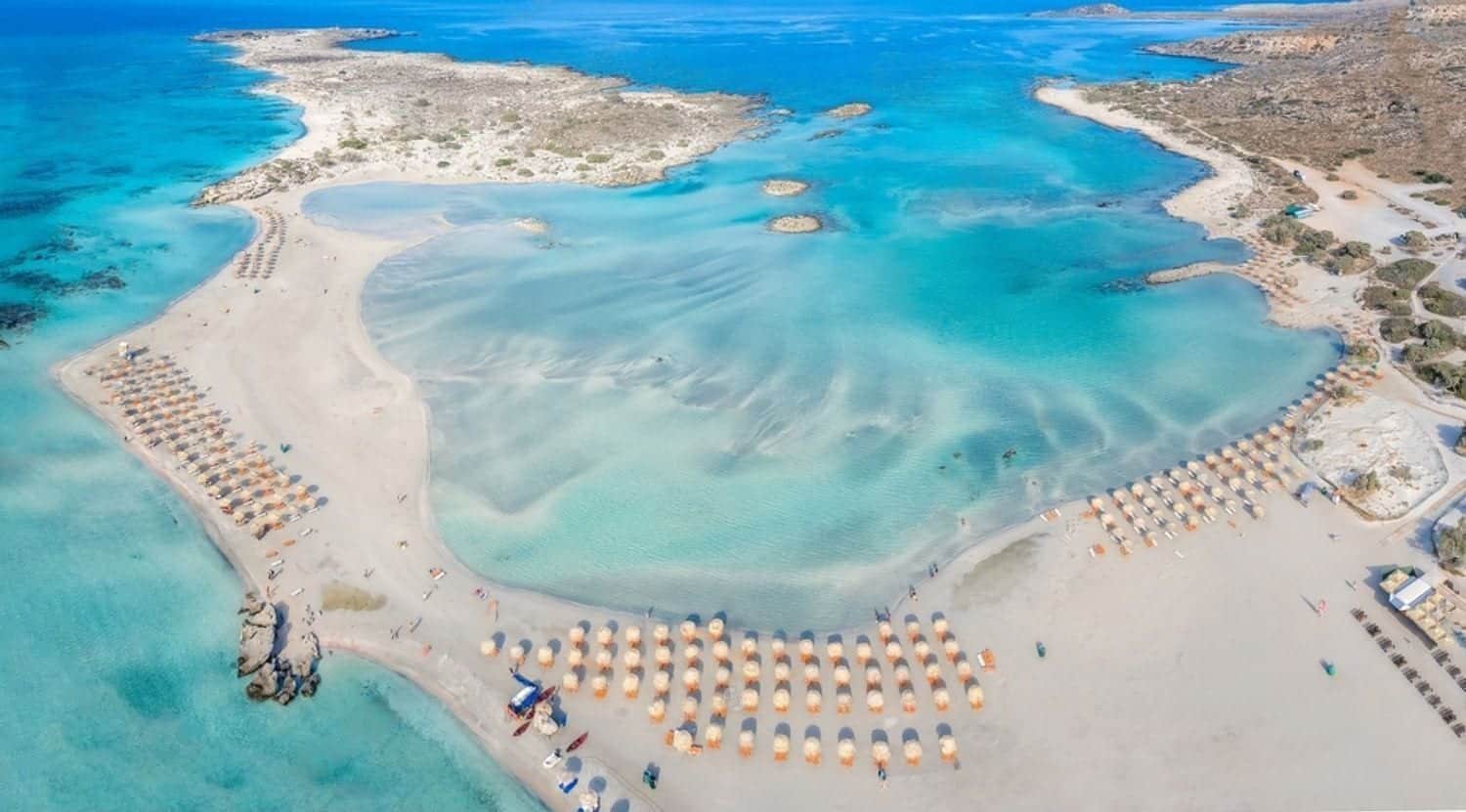

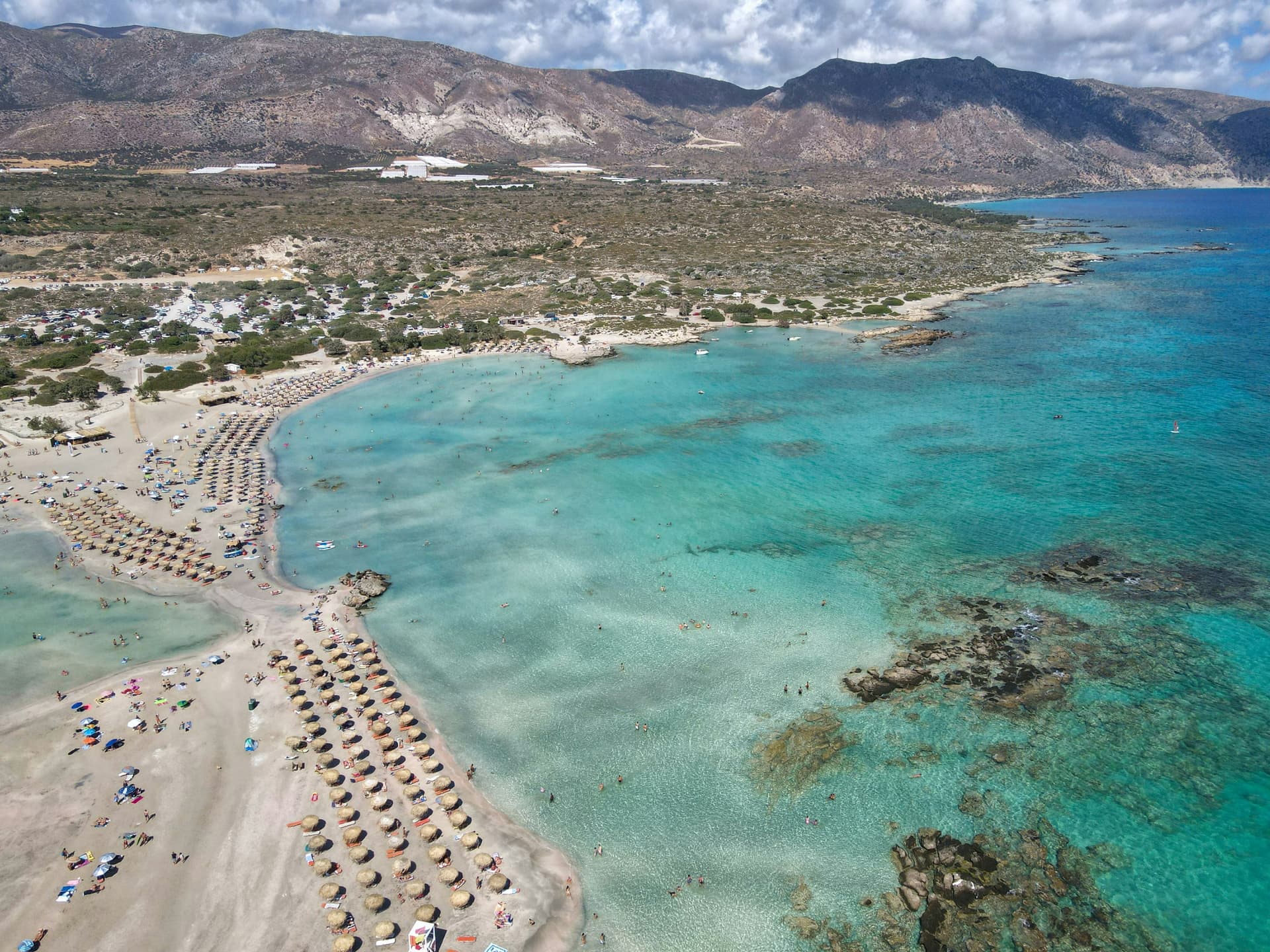
The famous Elafonisi Beach, often ranked among the most beautiful beaches in Europe, is one of the main attractions of Crete. It is renowned for its endless palette of blues, its unique vegetation, its extraordinary cedars and its incredible pink sand!
Throughout this article you will discover the secrets of this pink sand beach that is Elafonisi. You will learn a bit more about this unique landscape in the world.
I will tell you about the different ways to get to Elafonisi Beach from the main cities of Crete. But I will also share my best tips to help you make the most of one of the most beautiful beaches in Crete. Be warned, this beach is far from flawless, so I want to give you a heads-up about a few things.
Elafonisi Beach, a natural wonder
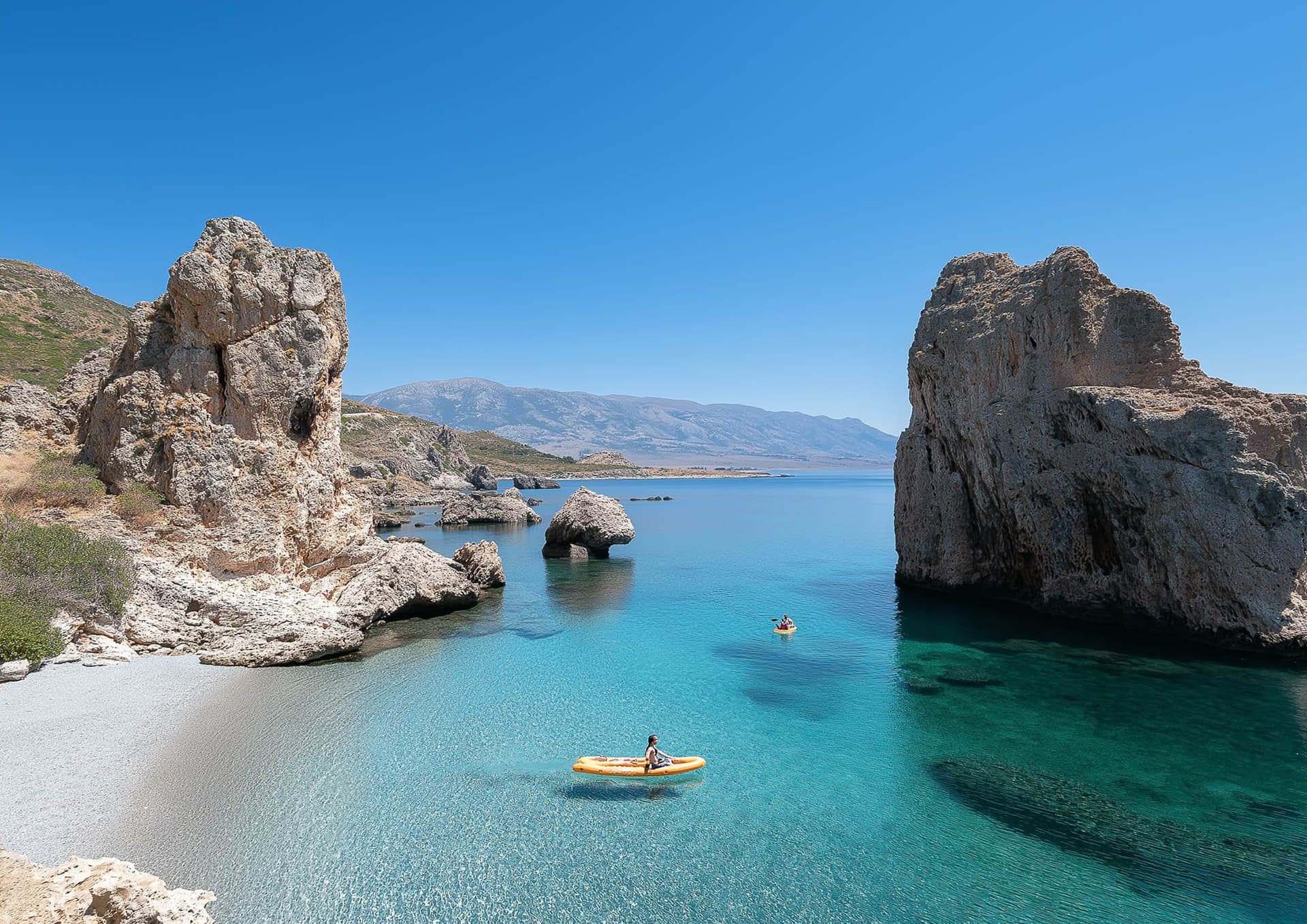
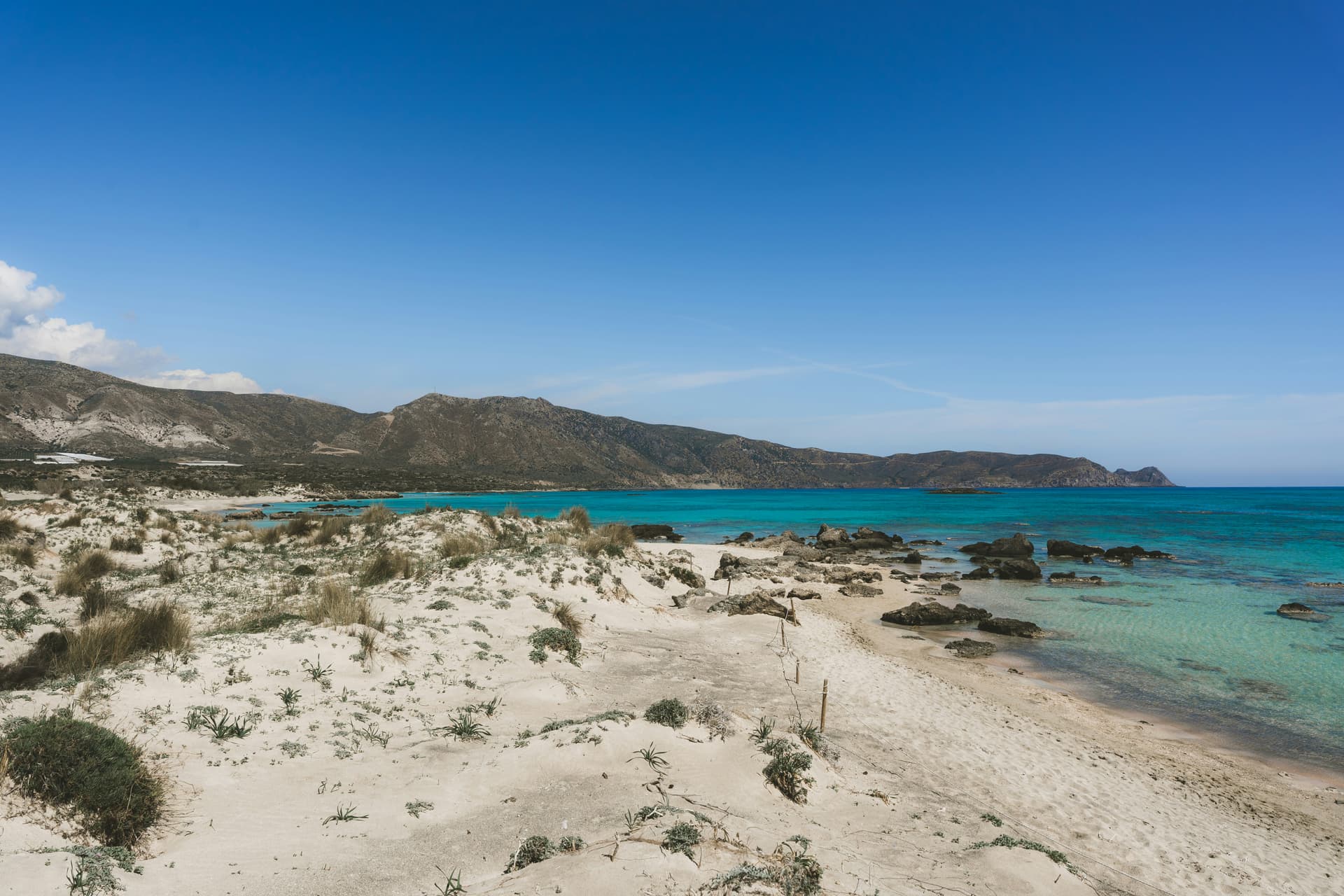
A pristine and stunning beach. An endless palette of blue waters, crystal-clear and warm, blending with the white and pink sand. That is what draws people to Elafonisi. The colour of the sea is the most distinctive feature of this beach. Arguably the most spectacular blue you can find on the south coast of Crete.
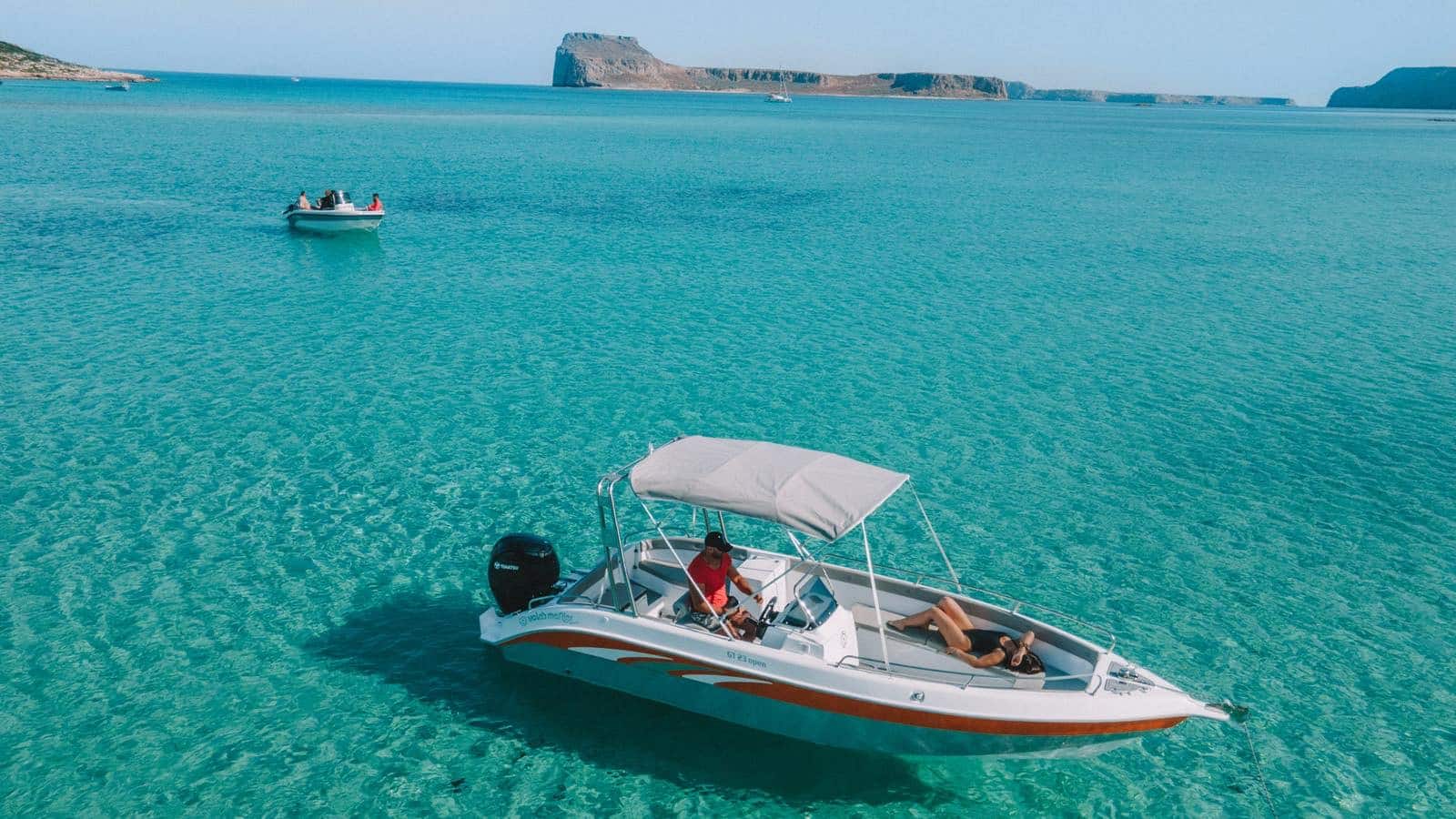
The shades of the Libyan Sea range from a lighter greenish blue near the shore to a bright, dazzling neon turquoise, then to a deep blue further out. Elafonisi Beach is truly breathtaking and beyond compare.
Planning your trip? Find all the essentials in our complete guide to Crete and check when to visit Crete with our month-by-month weather guide.
The Elafonisi islet
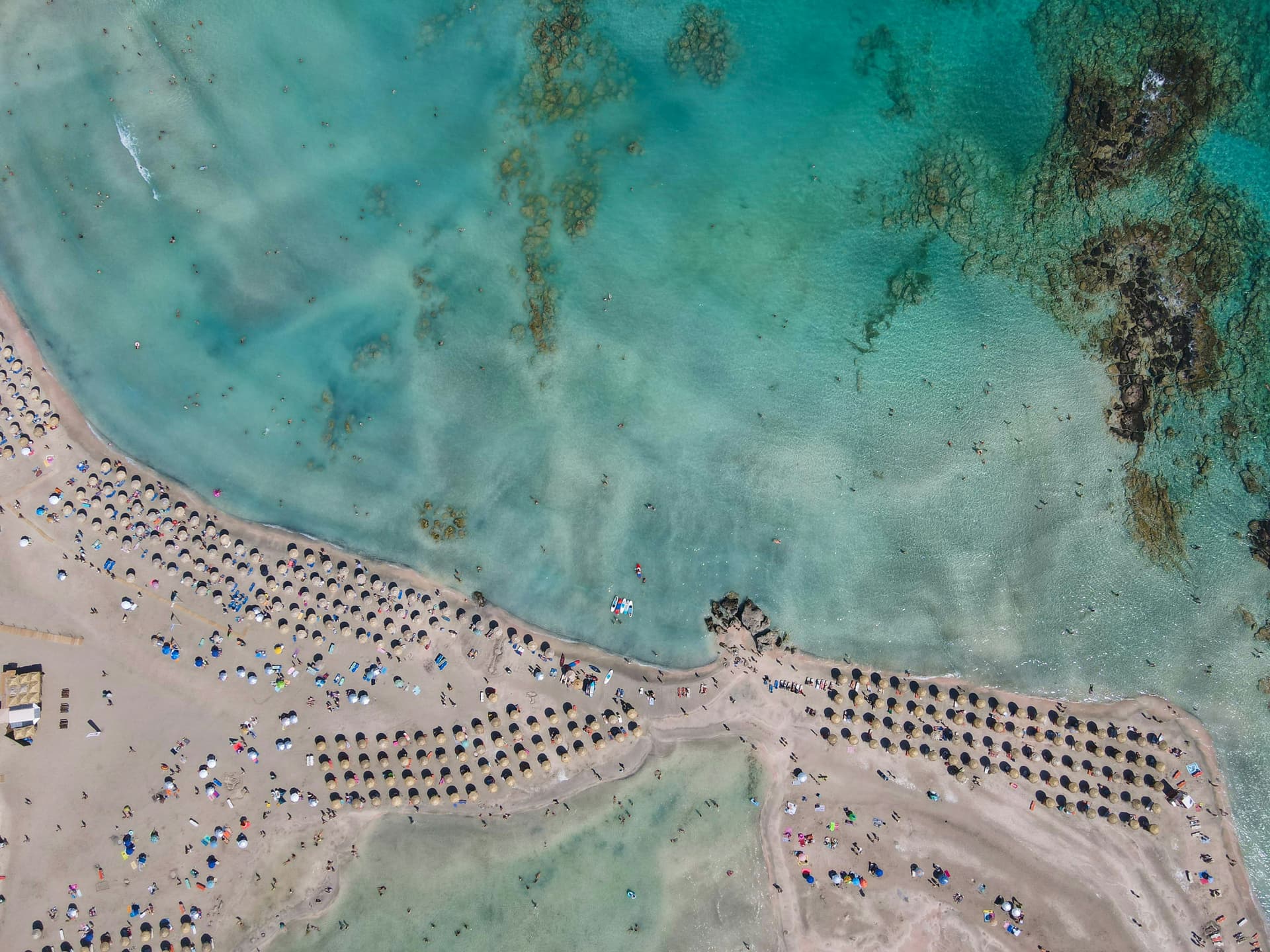
Elafonisi is more than just a beach, it is also a small islet. The island is separated from the mainland by a shallow lagoon and a strip of white sand that is mostly submerged below sea level.
Depending on the time of day and the tide, the lagoon changes depth, ranging from 50 cm at low tide to over a metre at high tide.
Depending on the time of day, you can easily wade across to reach the island. There can sometimes be a slight current, but nothing dangerous. This beach, perfect for your holiday, is accessible to everyone.
Natura 2000 reserve
The islet is an internationally recognised Natura 2000 reserve. It is home to unique plant species and rare endemic plants that you will not find anywhere else.
It is an ideal place for a walk or a relaxing day beside the clear blue waters. I must remind you that camping on the beach is forbidden!
It is strictly forbidden to:
- Light fires
- Camp
- Take sand away
- Cut or pick flowers
- Bring parasols
Among the hundreds of unusual flowers, you will find sea daffodils as well as Androcymbium Rechingeri which only grow in two places in the world: Crete and Libya.
If you keep your eyes open, you might be lucky enough to spot sea turtles, better known by the lovely name Caretta Caretta. This is a rare and protected species that is particularly shy.
Classified as a vulnerable species by scientists, I beg you to leave them alone and absolutely not approach them.
The massacre of 1824
The history of Elafonisi is also marked by a tragic episode. In June 1824, during the Greek War of Independence, around 850 Cretans — mainly women and children — took refuge on the Elafonisi islet to escape the Ottoman troops. The soldiers crossed the lagoon at low tide and massacred nearly all the refugees. The survivors were sold as slaves in the markets of Egypt.
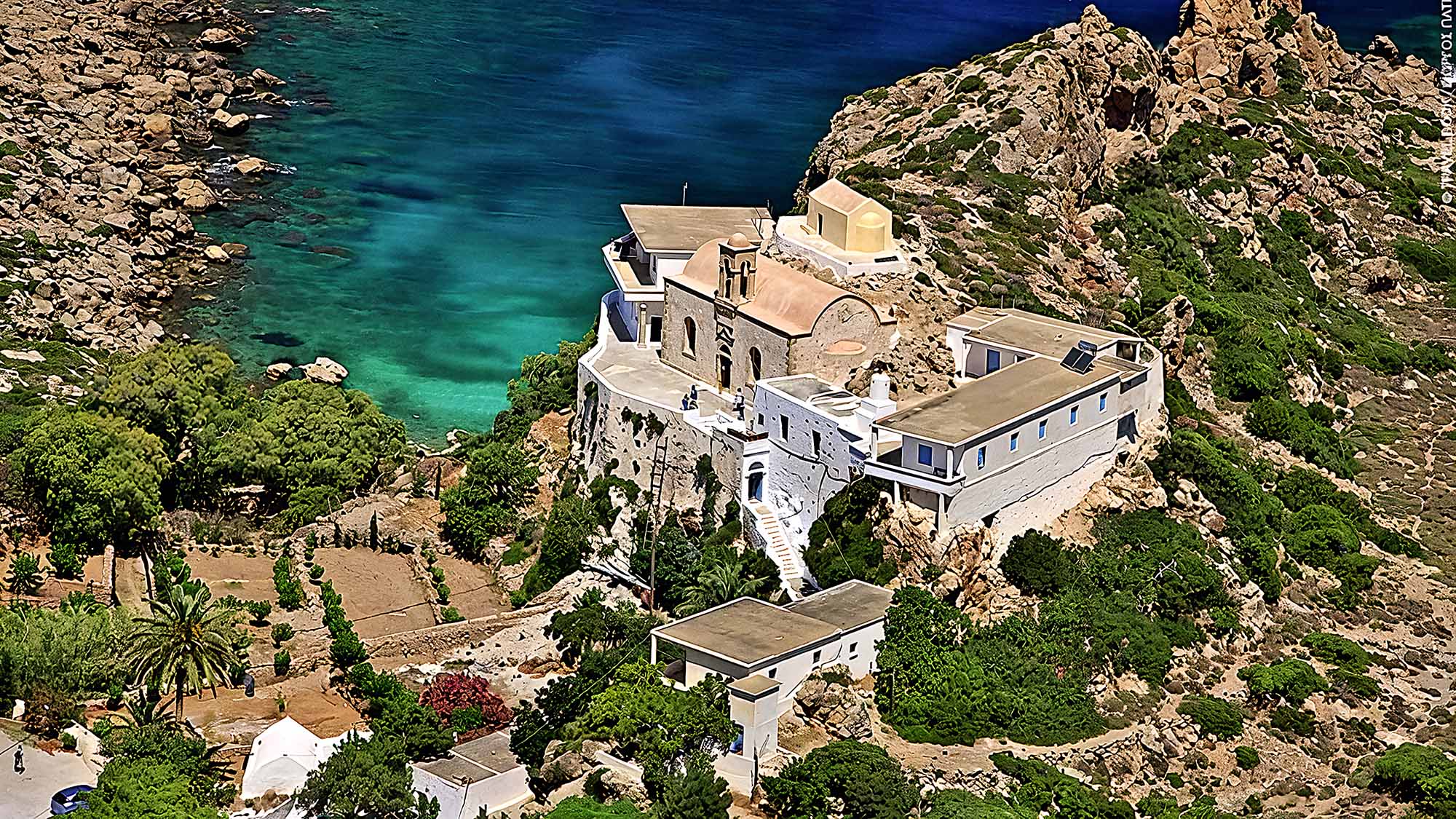
Today, a small memorial chapel stands on the islet in memory of the victims. A local legend says the sand turned pink that day, dyed by the blood of the fallen. While this explanation is poetic, the colour actually comes from micro-organisms (Foraminifera) present in the sand — but the story is a reminder of how much painful history this peaceful place carries.
How to get to Elafonisi Beach?
Located about 75 km from Chania, the pink sand beach of Elafonisi, on the island of Crete, is connected to the rest of the island via several services. As with all of Greece, it is always easier to get there by your own means.
To reach Crete from abroad, you will find many routes, such as a flight to Heraklion.
By bus
The KTEL bus links Chania to Elafonisi in 1h30 to 2 hours for about €10. The service is seasonal (June to September), with one morning departure and a late-afternoon return, so plan to spend the whole day there.
Another option: organised excursions from Chania (around 35 €), Rethymnon or Heraklion. They include return transport and sometimes a stop at the Chrysoskalitissa Monastery.
By car
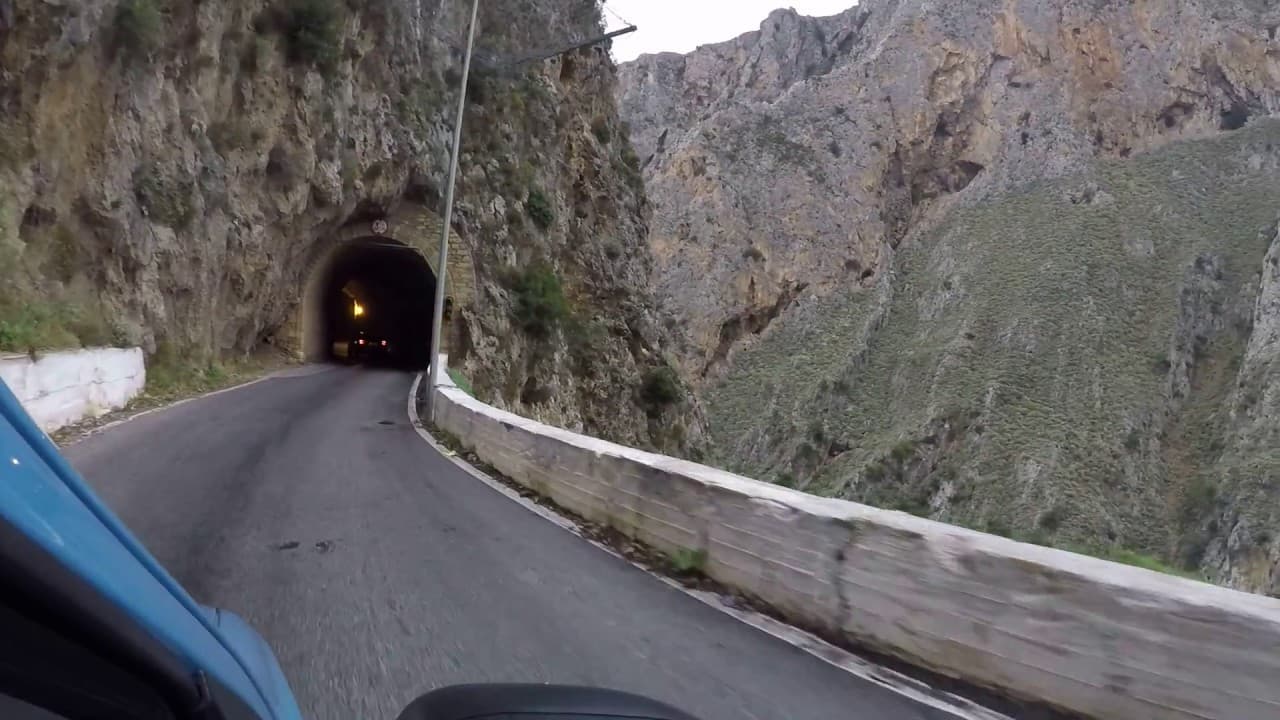
The simplest option and the one I recommend is to rent a car. I consider it the best option because it gives you flexibility, lets you manage your own schedule and is generally more reliable. However, the road from Chania (and basically every other city in Crete) is a bit tricky, as it features quite a few hairpin bends, steep mountain passes and tunnels. Be careful. You could also consider doing it by quad (and it is more fun).
To compare prices, I recommend DiscoverCars which aggregates all local and international agencies in a single comparison tool. It is the tool I systematically use for my car rentals in Greece.
Via the Topolia Gorge
The main route recommended by Google Maps, Waze or Michelin goes through the Topolia Gorge. From Chania, it allows you to reach Elafonisi Beach in just over an hour. However, during peak season, heavy traffic can easily double that estimate.
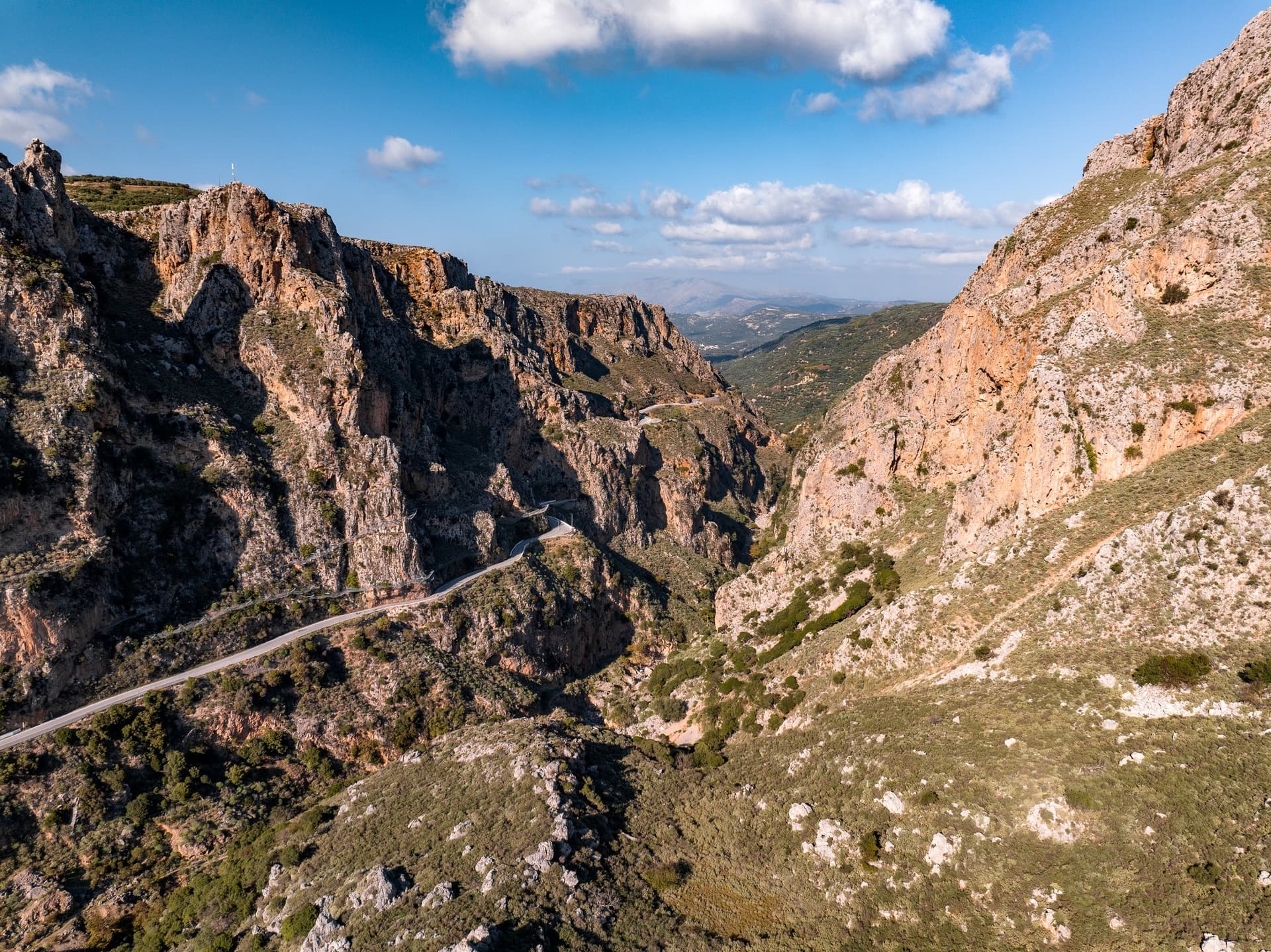
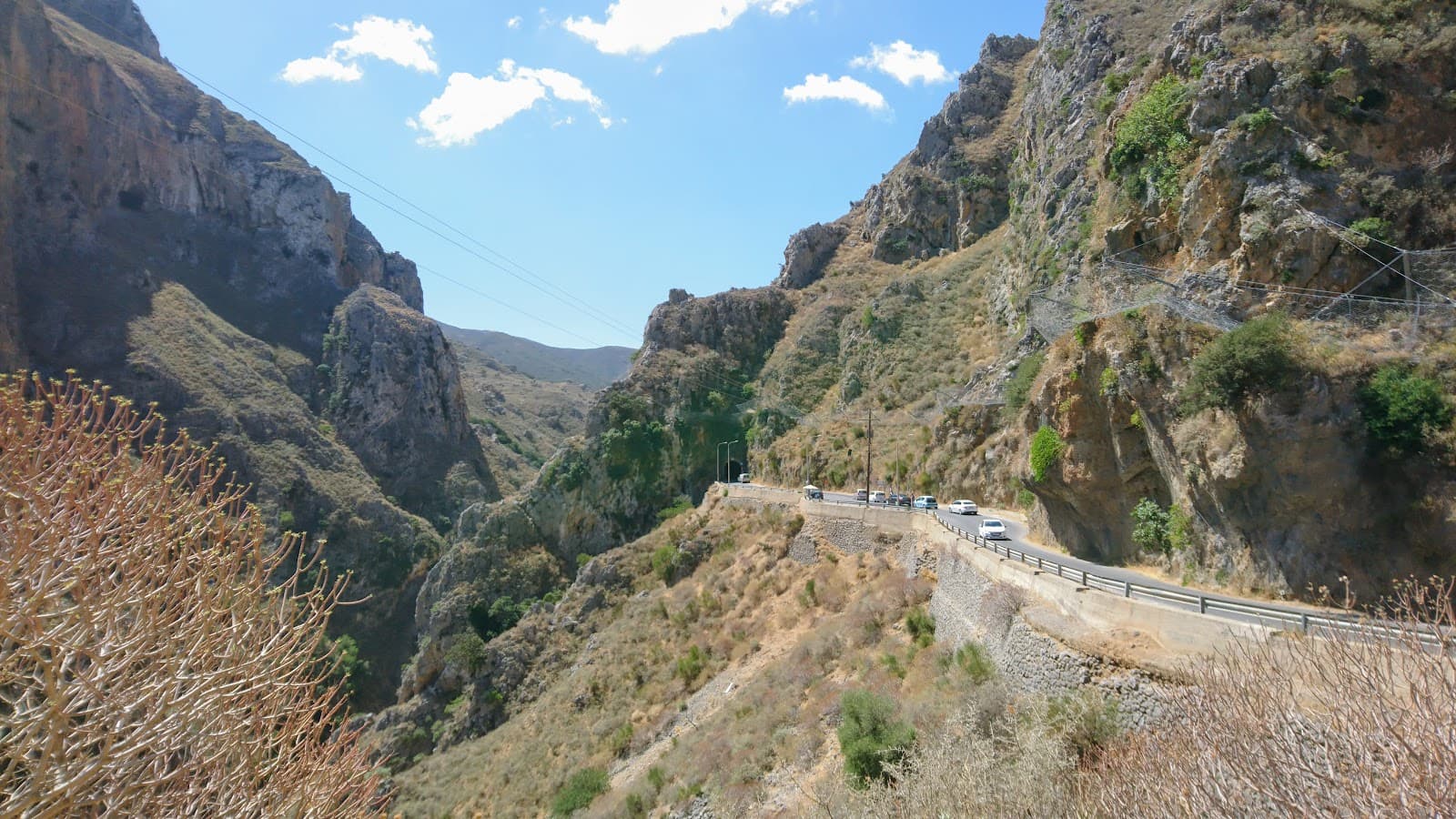
This road is stunning and takes you through beautiful mountain passes, remote villages and breathtaking gorges. It is clearly one of the most beautiful drives in Crete. Particularly the sections around the village of Stroules and Topolia, with its towering rock faces.
However, the road is dangerous, narrow, slippery and full of hairpin bends. Please be careful. Remember to get international insurance to cover yourself in case of trouble! I warmly recommend Chapka Insurance.
Via Sfirani
The road via Sfirani is the second option for reaching Elafonisi Beach. It is a beautiful mountain road that is much less busy than the Topolia Gorge.
You can admire the sea, but you need to stay alert for the many flocks of sheep, goats and rockfalls scattered along the way.
Overall, I advise you to avoid these roads at night, as they can quickly become dangerous. The best approach is to make the outward trip early in the morning to avoid traffic jams, and to head back a little before nightfall.
By boat from Paleochora
In season (generally from May to October), a boat connects Paleochora to Elafonisi along the south-west coast of Crete. Expect around 30 € return. It is a pleasant alternative to the road, with magnificent views of the cliffs and the wild coastline. Timetables vary by season and weather, so check in advance at Paleochora harbour.
Stops along the road to Elafonisi
If you have time, take advantage of the journey to make a few stops. The Chrysoskalitissa Monastery, perched on a rock facing the sea, is only 5 km from Elafonisi — an unmissable stop (see our guide). The charming village of Elos, known for its centuries-old chestnut trees, is worth a coffee on the square. Further north, do not miss the monumental Vouves olive tree, over 3,000 years old (read more). Finally, the Botanical Garden of Crete is an ideal green stop on the way back.
Parking at Elafonisi: prices and practical tips
The main car park is the Mega Parking, located around 700 metres from the beach (about a 10-minute walk). The rate is 5 € per day.
My most important tip: arrive before 9:30 am in high season. After that time, the car park fills up quickly and you may drive around for a long time before finding a space. Leaving early also lets you enjoy the beach before the rush of tourists and the midday heat.
The truth about Elafonisi Beach
The sand is not really pink
Most people come to Elafonisi to find the gorgeous pink sand beach that made it so famous on social media. And that is completely understandable, who would not want to see this marvel?
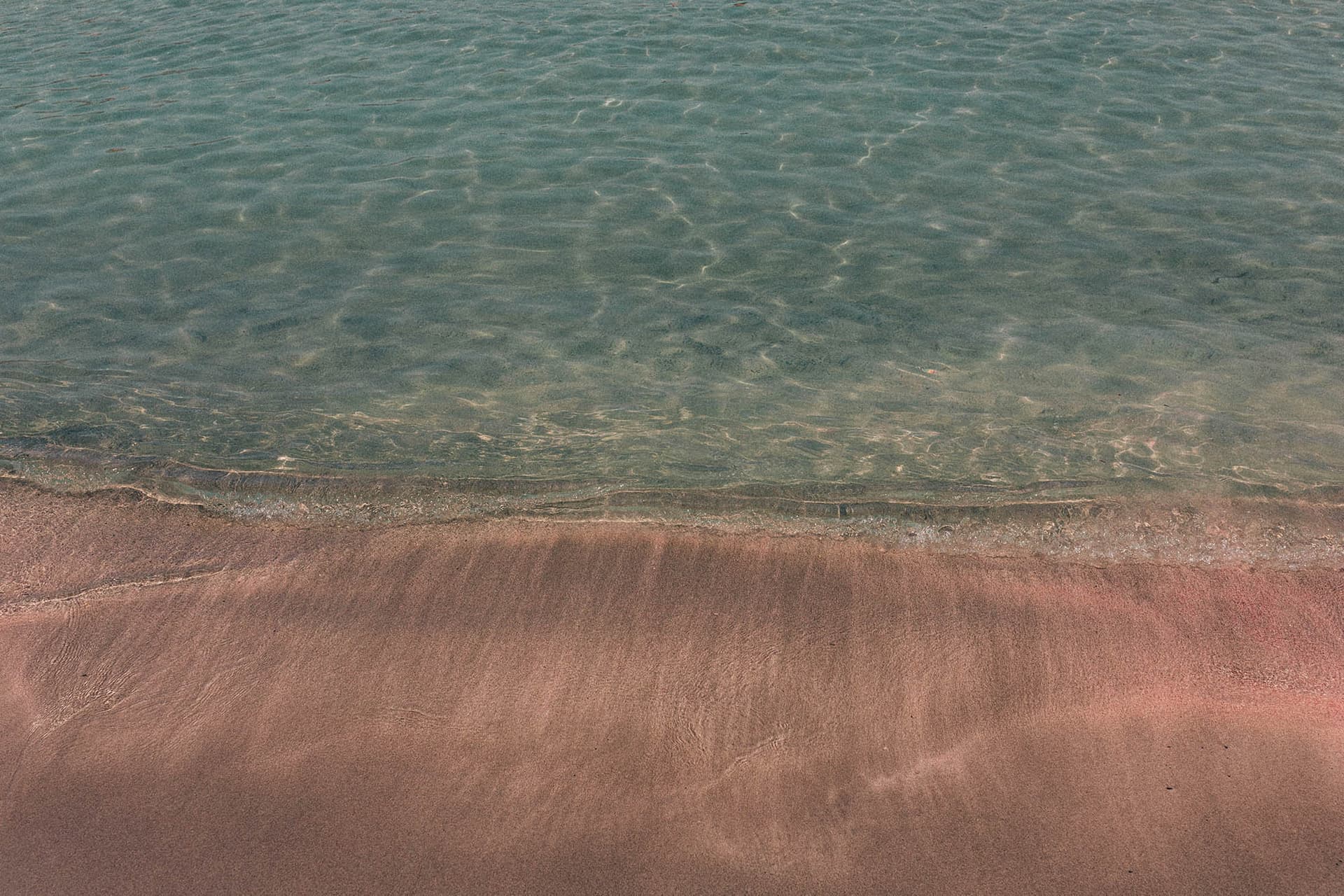
However, it is high time to tell it like it is on this subject. And in any case, you will realise it quickly enough. The sad truth is that most of the photos you see online are extremely edited. First of all, the “pink sand” is NEVER that pink in reality. In fact, the beach sometimes takes on a few pink tints, but it remains subtle.
Elafonisi Beach is by no means pink. The sand is very light and very fine, populated by thousands of micro-organisms with a pinkish tinge on their shells. This is what sometimes gives the sand a slightly pink hue.
Depending on the tide, the time of day, the weather conditions, the atmospheric pressure, etc., the variation in pink tones can simply never appear at all.
It is packed with tourists
One of the things I really loved about Crete is the tranquillity you find in extraordinary places. Elafonisi is clearly not one of them.
Made far too famous on social media, the beach has suffered from a harmful popularity for the past decade. It is an endless parade of thousands of tourists streaming in every day, non-stop. And this is not trivial, because Elafonisi is classified as a protected natural site, yet we are far from that reality.
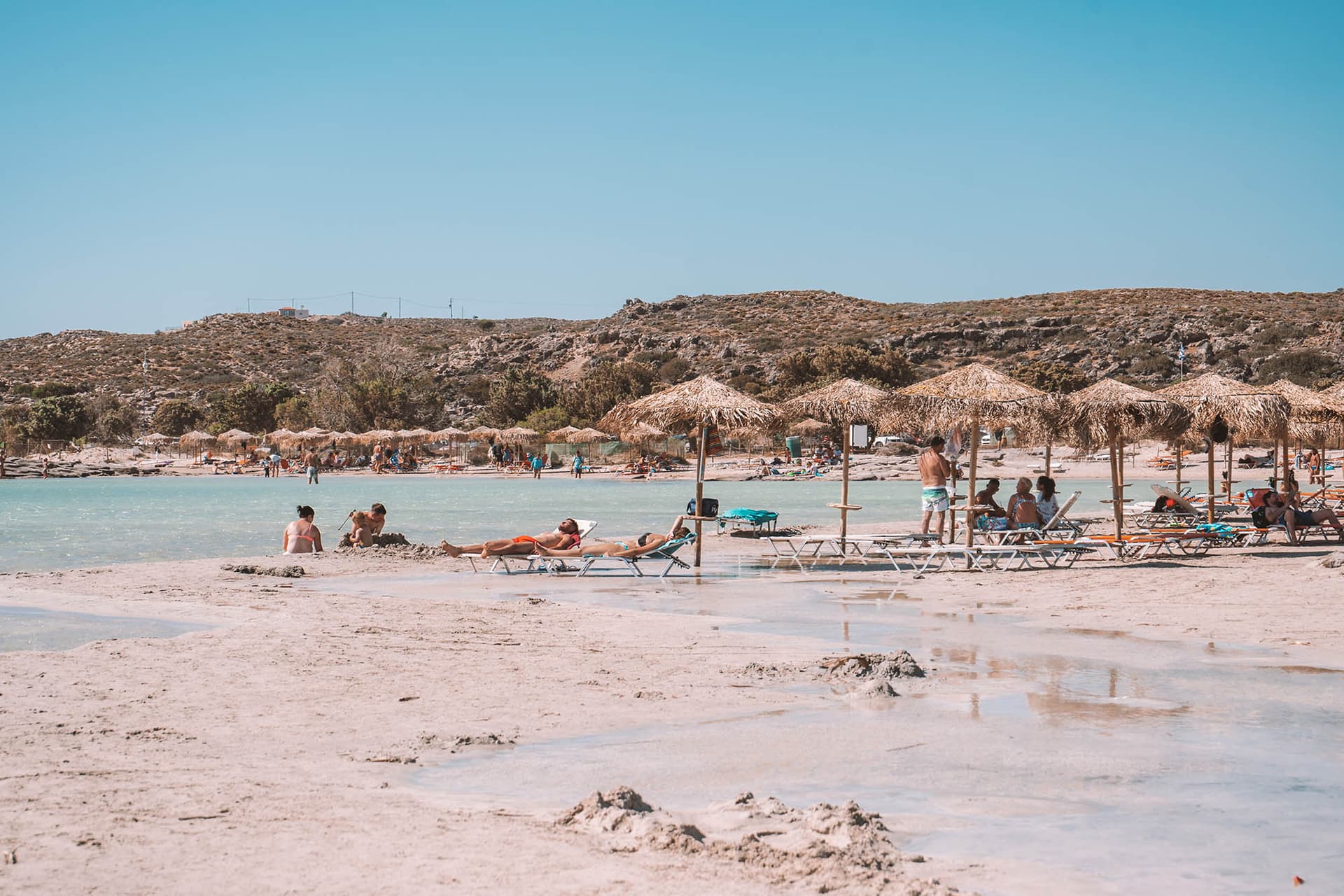
It is truly a sad sight to arrive at a car park the size of several football pitches, and to find the beach monopolised by sun loungers.
The beach is extraordinarily beautiful, and the endless shades of blue in the lagoon are a jewel in my eyes. But the site is spoiled by so much activity. Be prepared.
It is extremely windy!
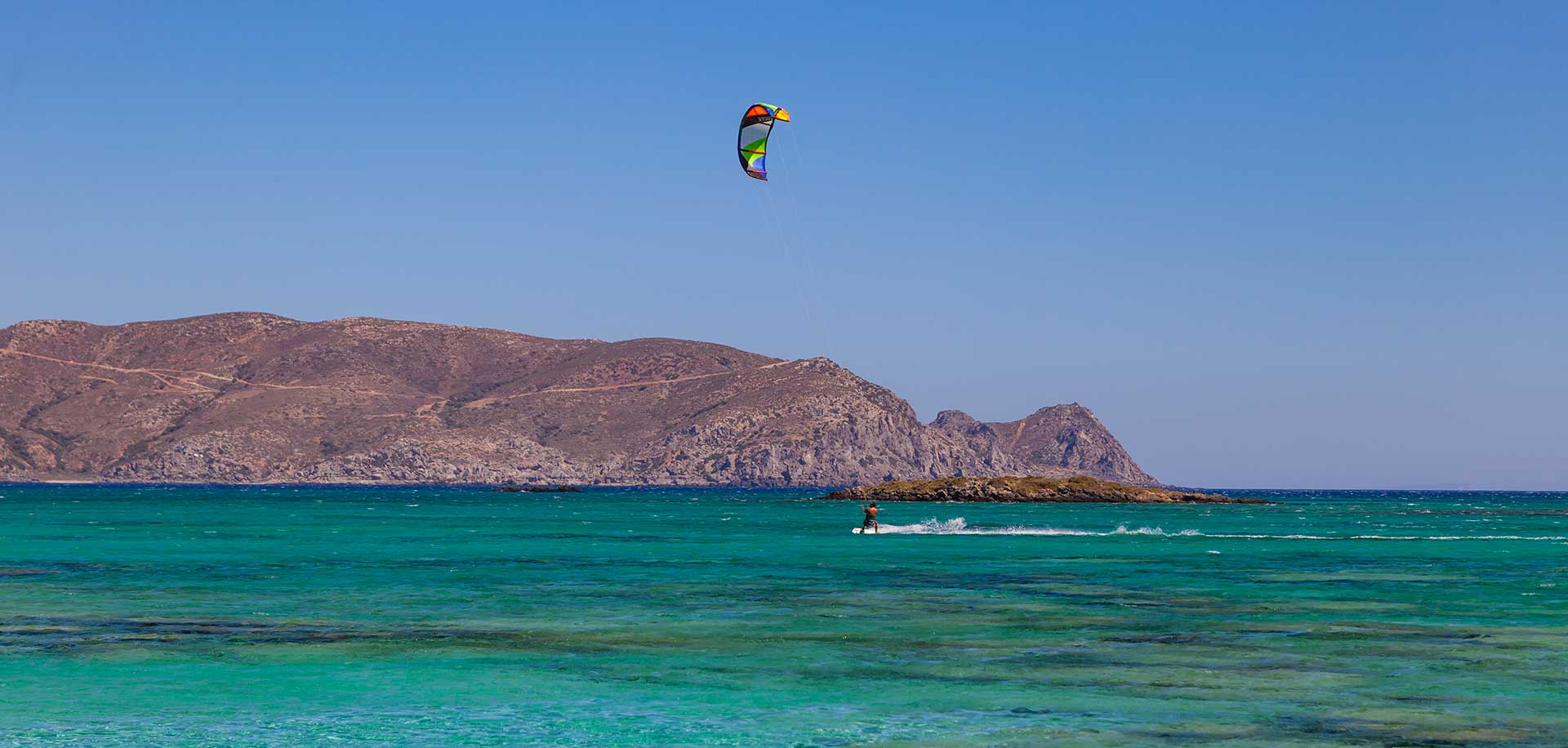
Another thing you will discover on arrival is that Elafonisi Beach is extremely windy. Situated on the west coast of the island, it is exposed to all the gusts coming in from the sea. There is not much you can do to avoid it, other than checking the weather forecast to avoid going on a bad day.
That said, if you enjoy wind sports like windsurfing or kitesurfing, it is a dream spot.
The real treasure of Elafonisi
For me, the real treasure and highlight of Elafonisi is the spectacular colour shades of the sea and the lagoon. From deep blue to light emerald green, it is a feast for the eyes. Focus on that, rather than desperately searching for three grains of pink sand.
Where is Elafonisi?
Elafonisi Beach is a fine, pink sand beach located on the south-west coast of Crete, in the Chania prefecture. It is 74 km from Chania, and 211 km from Heraklion.
Distances in Crete are quickly misleading because of the mountain roads. The drive from Heraklion can easily take 3 to 4 hours!
For a day at Elafonisi
The Elafonisi Beach area is relatively isolated. Unfortunately, you will find a few bars and stalls selling drinks, ice cream and snacks, but nothing of real quality to eat.
You will also find vendors selling sunscreen and other basic items such as beach towels, sunglasses and even cigarettes. But the prices will be well above what you usually find in Crete.
A few restaurants and shops can be found a few kilometres south of the beach. They can be a lifesaver if you forgot your packed lunch.
You can also rent canoes and pedal boats directly on the beach. Stalls selling inflatables can also be found all around.
Toilets are available but they are not free. And I find it appalling how few there are given the number of visitors expected. Remember to bring your Wise card to avoid fees!
Wise Card
Travel smart with the best exchange rate
Say goodbye to banking hassles abroad with Wise, the multi-currency card with superpowers!
Swimming and enjoying the turquoise waters of Elafonisi
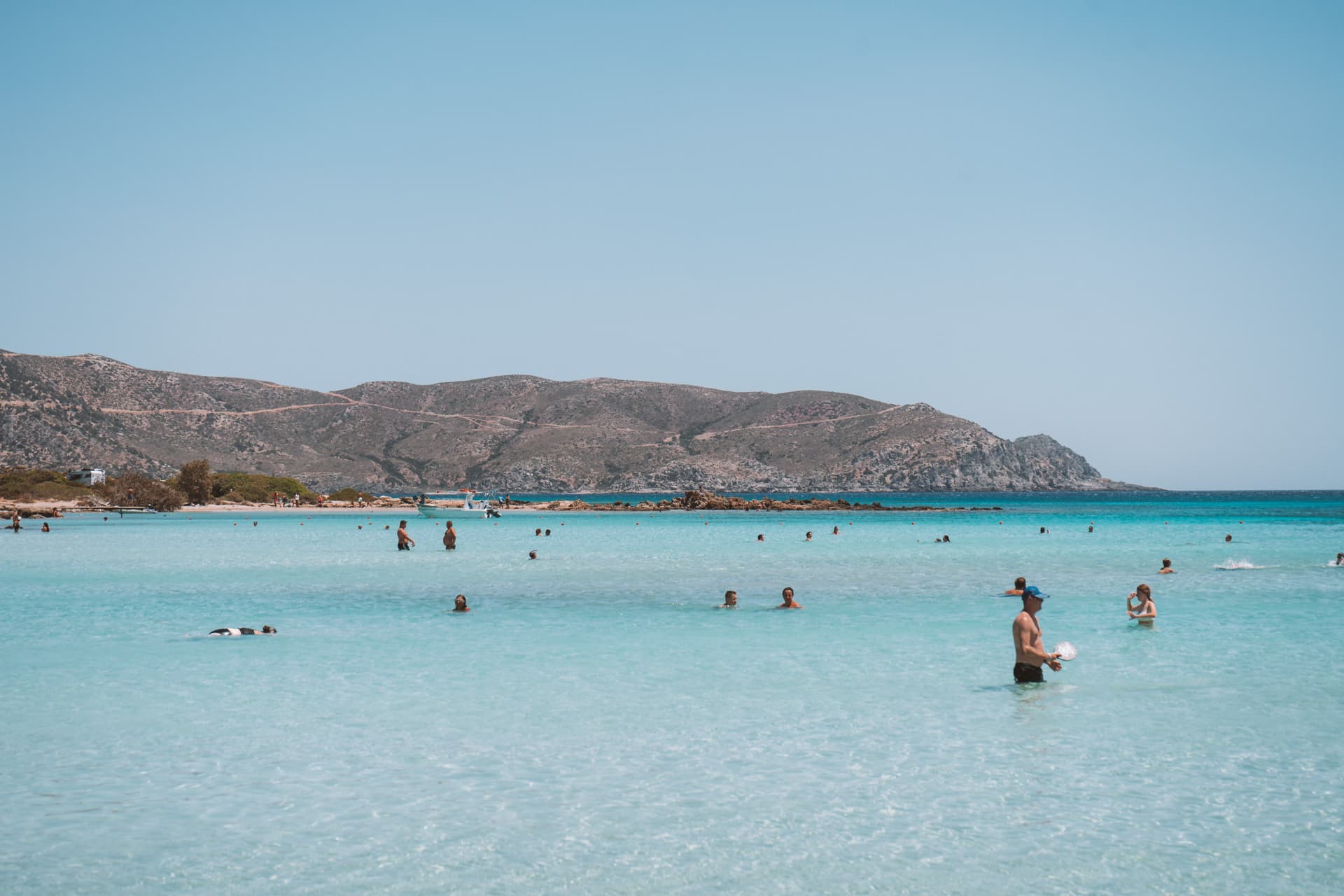
Swimming at Elafonisi is simply exceptional! The turquoise, crystal-clear waters invite you to relax and play in the waves.
First, you can swim and cool off in the lagoon with its calm, shallow waters. The lagoon separates the beach from the Elafonisi islet. Its depth ranges from 50 cm to 1 metre depending on the tides. The crossing is fairly easy and safe. Children love to splash around and play in this huge natural “paddling pool”!
Swimming to the Elafonisi islet
For stronger swimmers, you can venture out into the open water and swim to the islet. This short crossing of about a hundred metres in turquoise water is a real delight. Just watch out for boats and sailboats that may pass through the channel.
Once on the islet, take time to explore the rocky coves and enjoy the panorama over the main beach. You can even swim all the way around the islet if you are sporty!
Enjoy the beach
On Elafonisi Beach, swimming is also very pleasant. The sandy bottom is soft underfoot and the slope is gradual. The water temperature is very pleasant from May to October. It can reach 24 to 26°C in midsummer.
After a swim, I like to settle on the fine sand and simply watch the colours change. The contrast between the white sand, the turquoise water and the blue sky is mesmerising. If you have not rented sun loungers (~15 € per pair), find a spot away from the main area for more peace and quiet.
Honestly, swimming at Elafonisi is one of the best I have experienced in Crete. The water is warm (24–26 °C in summer), the bottom is sandy, and the lagoon is large enough that you can always find a quiet spot, even in high season.
Snorkelling at Elafonisi
Snorkelling at Elafonisi is possible but limited on the main beach side due to the sandy bottom. For better spots, head to the rocks around the islet where the underwater life is richer: small fish, sea urchins and anemones. If you are passionate about snorkelling, check out our guide to the best snorkelling spots in Crete for far more spectacular sites.
Chapka Insurance
Travel with peace of mind with the best travel insurance
Stay covered in every situation with the best insurance for your next trip.
Why is the sand sometimes pink?
The sand at Elafonisi is actually made up of millions of microscopic marine organisms (Benthic Foraminifera), which mix with the white, powdery sand. The more of these little creatures there are, the pinker the sand will be.
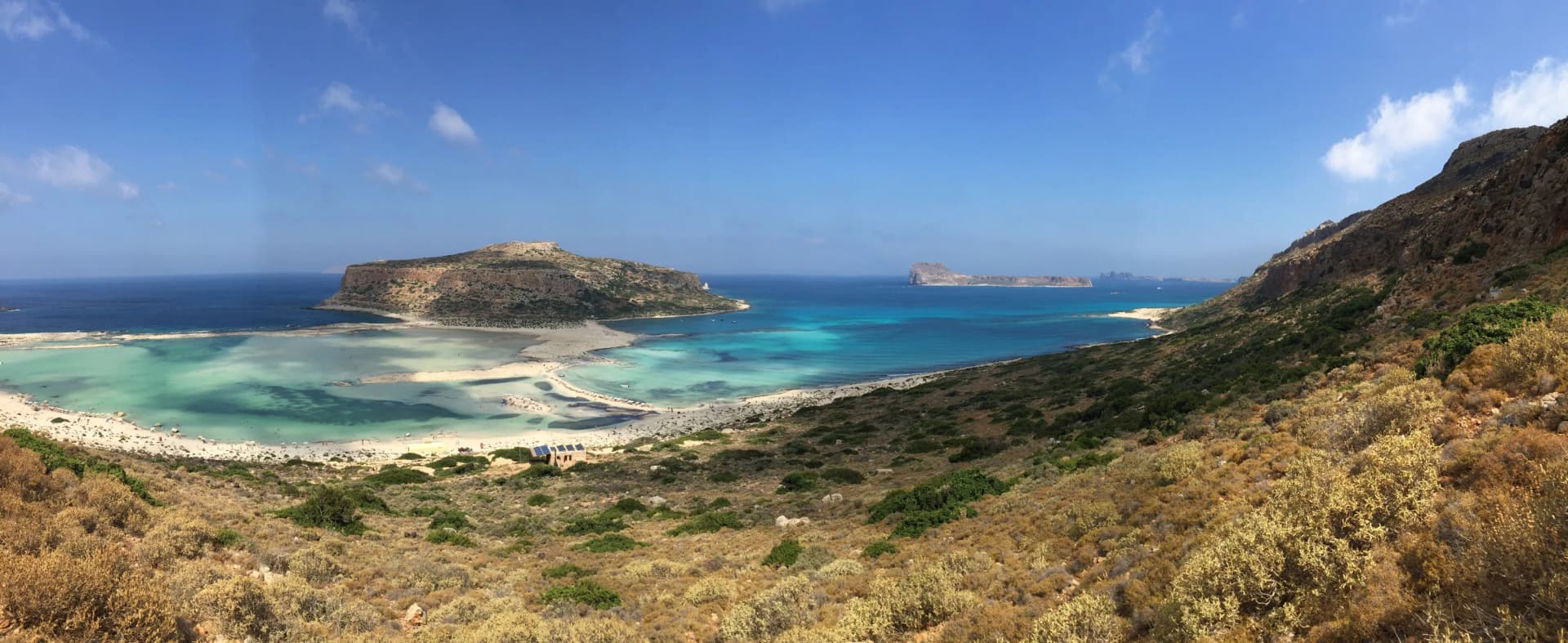
And it is not exclusive to Elafonisi either. You can find other similar beaches in Crete. To name just the most famous ones: Balos, Falasarna and sometimes even Stavros. You just need to keep your eyes open.
Who is Elafonisi Beach for?
Elafonisi Beach is very popular with families with children. It is a beach and lagoon with clear, warm, shallow water. Elafonisi is very safe and a great spot for families with young children… much to the dismay of everyone else.
Young couples looking for a scenic and romantic setting are also in the mix. Backpackers and free spirits love Elafonisi too, and sleep at Kedrodasos, another beach nearby.
Kedrodasos, a quieter beach nearby
Kedrodasos Beach is another stunning beach in Crete. It is located about 1 km from Elafonisi, but is infinitely less known and less crowded. The beach is covered with junipers, cedars and small bushes. The dunes evoke the tropical beaches of Lebanon.
The beach is sheltered from the winds that usually blow across Elafonisi, making it a beautiful spot. It is ideal for camping, and is a favourite spot for naturists. Fortunately, there are no shops or snack bars nearby, making it one of the rare unspoilt paradises in Europe.
Access to the beach is a bit tricky. You need to take a small dirt track with your vehicle, then park in a basic car park. Slightly elevated, the beach is visible from there. You then just need to walk down via the various paths.
Where to stay near Elafonisi
Elafonisi being remote, the choice of accommodation on the spot is limited. Here are the best options depending on your travel style:
Elafonisi Resort by Kalomirakis Family
The only accommodation within walking distance of the beach. Simple but functional rooms, ideal for enjoying the sunset without the crowds. Book well in advance during high season.
Glykeria Hotel
A small family-run hotel a few kilometres from the beach with good value for money. The welcome is warm and the breakfast generous with local produce.
Staying in Kissamos
The small town of Kissamos (40 minutes by car) offers a wider choice of hotels, restaurants and services. It is a good base camp for exploring both Elafonisi and Balos in the same trip.
Staying in Chania
For those who prefer the comfort of a larger city, Chania is the most logical starting point. Allow 1 hour 15 minutes by road. The advantage: restaurants, nightlife and a Venetian harbour waiting for you when you get back from the beach.
What to bring for a day at Elafonisi?
The most important thing is to protect yourself from the sun and the heat. So remember to bring plenty of sunscreen with high UV protection. You do not want to get skin cancer at 50.
Of course, cover your head with a hat, and do not hesitate to wear a long-sleeved top to protect yourself from the sun as well.
And the most important: enough fresh water so you do not get dehydrated during your visit.
Budget: how much does a day at Elafonisi cost?
Here is an estimated budget for a day at Elafonisi for two people:
- Transport: 25–35 € (car rental or KTEL bus)
- Parking: 5 € per day
- Sun loungers + parasol: 15 € (optional)
- Food on site: 8–15 € per person
- Toilets: 1 €
Estimated total: 50–80 € for two. My tip: bring your own picnic and towels to cut the budget to under 35 €.
Wildlife and flora at Elafonisi
Elafonisi is a protected natural site, notably for its unique wildlife and flora. You will find endemic plants such as the sea lily, the Cretan immortelle and the yellow poppy. On the fauna side, keep your eyes peeled for sea turtles, lizards, cicadas and even crabs on the beach. Birds are also plentiful, with species such as the little egret, the European bee-eater and the common raven. The site is a small paradise for nature lovers!
Yes and no. The sand takes on pinkish tones thanks to micro-organisms (Foraminifera) with pink shells. But it is subtle and varies with the tide and the light. Do not expect the pink of Instagram photos — they are heavily edited.
May, June and September are ideal: good weather, pleasant water (22–26°C), manageable crowds. July and August are packed (up to 6,000 visitors per day).
The Mega Parking costs 5 € per day, 700 m from the beach (10-minute walk). Arrive before 9:30 am in high season.
Absolutely. The lagoon is shallow (50 cm to 1 m), the water is calm and warm. The only downside: no natural shade.
KTEL bus from Chania in season (~€10, 2 hours, one morning departure from June to September). Organised excursions (35–50 €). Boat from Paleochora (~30 € return).
Elafonisi is more accessible and ideal for families. Balos offers a more spectacular panorama but access is difficult. If possible, do both.
Water, sunscreen, hat, picnic (snacks are expensive on site). If no sun loungers (15 €), bring a towel and parasol.
Âme Bohème exists thanks to you
Some links in this article are affiliate links. This means that if you book or purchase a product through these links, we receive a small commission — at no extra cost to you. It's thanks to this support that we can continue creating free, quality content.
You can also buy us a coffee, or follow us on Instagram and Facebook.