On a Cretan table, three things almost always appear before you have even ordered: bread or barley rusks, a very green olive oil and, at the end, a small glass of spirit that nobody asked you to pay for. Cretan food is first and foremost village cooking, built on vegetables, herbs gathered on the hillsides, sheep's and goat's cheeses, and a little meat kept for feast days.
It also has a scientific reputation, born of a study launched in 1960 in eleven villages in the centre of the island, and it is very much in the news: Crete is the European Region of Gastronomy 2026. In this guide, I explain what that study really says, which dishes to try and where, how raki works, and which table habits to adopt so you are welcomed like a regular rather than a customer in a hurry.
The Cretan diet: what the Seven Countries Study really says
The phrase “Cretan diet” comes from one specific piece of research: the Seven Countries Study, launched by the American physiologist Ancel Keys between the late 1950s and the early 1960s. It followed around 12,700 men aged 40 to 59, split into 16 cohorts across seven countries: the United States, Finland, the Netherlands, Italy, the former Yugoslavia, Japan and Greece. Greece was represented by two cohorts, one on Corfu and the other in Crete.

The Cretan cohort was formed in 1960: 686 men, or 97.6% of the men aged 40 to 59 in 11 villages in the centre of the island. The most quoted result dates from 1999: after 25 years of follow-up, coronary heart disease mortality ranged from 268 per 1,000 in eastern Finland to 25 per 1,000 in Crete, the lowest of the 16 cohorts. Crete also had the lowest all-cause mortality. The authors linked animal foods (butter, meat, lard) with higher coronary mortality, and vegetables, pulses and fish with lower mortality.
The limitations to know about
- A very specific population: only middle-aged, rural, physically very active men, in the Crete of 1960. You cannot draw direct conclusions for women or for a city dweller today.
- An observational study: it compares populations with one another. It shows associations, not that any particular food, olive oil for example, is enough to protect your heart.
- Orthodox fasting: Professor Antonis Kafatos (University of Crete) has pointed out that Cretans at the time observed the fasts of the Orthodox Church, going without animal products for several months a year, which may have influenced the dietary records.
- A cuisine that has changed: this way of eating was widespread on the island until the 1960s; since then, meat consumption has risen sharply. What you eat in a taverna is often richer than a villager's plate in 1960.
So take away the spirit of it rather than a health promise: plenty of plants, olive oil as the main fat, little meat, and meals eaten slowly and in company.
Olive oil, from Sitia to Kolymvari
In Crete, olive oil is not a dressing, it is an ingredient. It coats the dakos, cooks the vegetables, fries the fritters and preserves food. The island is said to have around 34 million olive trees, the vast majority of the koroneiki variety, a small olive that gives fruity, peppery oils, and it produces around 30% of Greece's olive oil.

Several areas hold a protected designation of origin (PDO). The two you will come across most often are Sitia, in the far east, known for its intense oils with low acidity, and Kolymvari, about 23 km west of Chania, with softer, fruitier oils. Archanes, Peza and Viannos, around Heraklion, also have their own designation. It is in the hinterland of Kolymvari that you will find the olive tree of Vouves, one of the oldest olive trees in the world.
Wild greens and sheep's cheeses
Horta and stamnagathi
Horta are wild herbs and greens gathered in the fields and on the hillsides, served boiled with olive oil and lemon. The most prized is stamnagathi (Cichorium spinosum), a spiny mountain chicory with serrated leaves growing in a small rosette. It is eaten raw in salads, boiled, or stewed with goat. Its slight bitterness is surprising the first time, then you keep coming back to it. It is mostly found in winter and spring; today, some of it is cultivated.
Graviera, mizithra, anthotyros and staka
Forget feta: Crete is an island of shepherds, and its cheeses prove it.

- Graviera of Crete (PDO): a hard cheese, mostly made from sheep's milk and aged for several months, with a mild, buttery, slightly salty flavour. It is eaten in slices, fried (saganaki) or grated.
- Mizithra and anthotyros: whey cheeses, white, fresh and slightly sweet. People tend to say mizithra in the east of the island and anthotyros around Chania; the dried, aged version is dry anthotyros, for grating.
- Xinomizithra (PDO): a fermented, tangy, creamy version, often used on dakos.
- Pichtogalo of Chania (PDO): a fresh cheese with a yoghurt-like texture, made only in the west of the island.
- Staka: not quite a cheese, more a cream of sheep's or goat's milk cooked slowly with a little salt and flour. The clarified butter it yields is called stakovoutiro. It is very rich, and worth trying at least once.
The dishes to try, region by region
Meze and starters
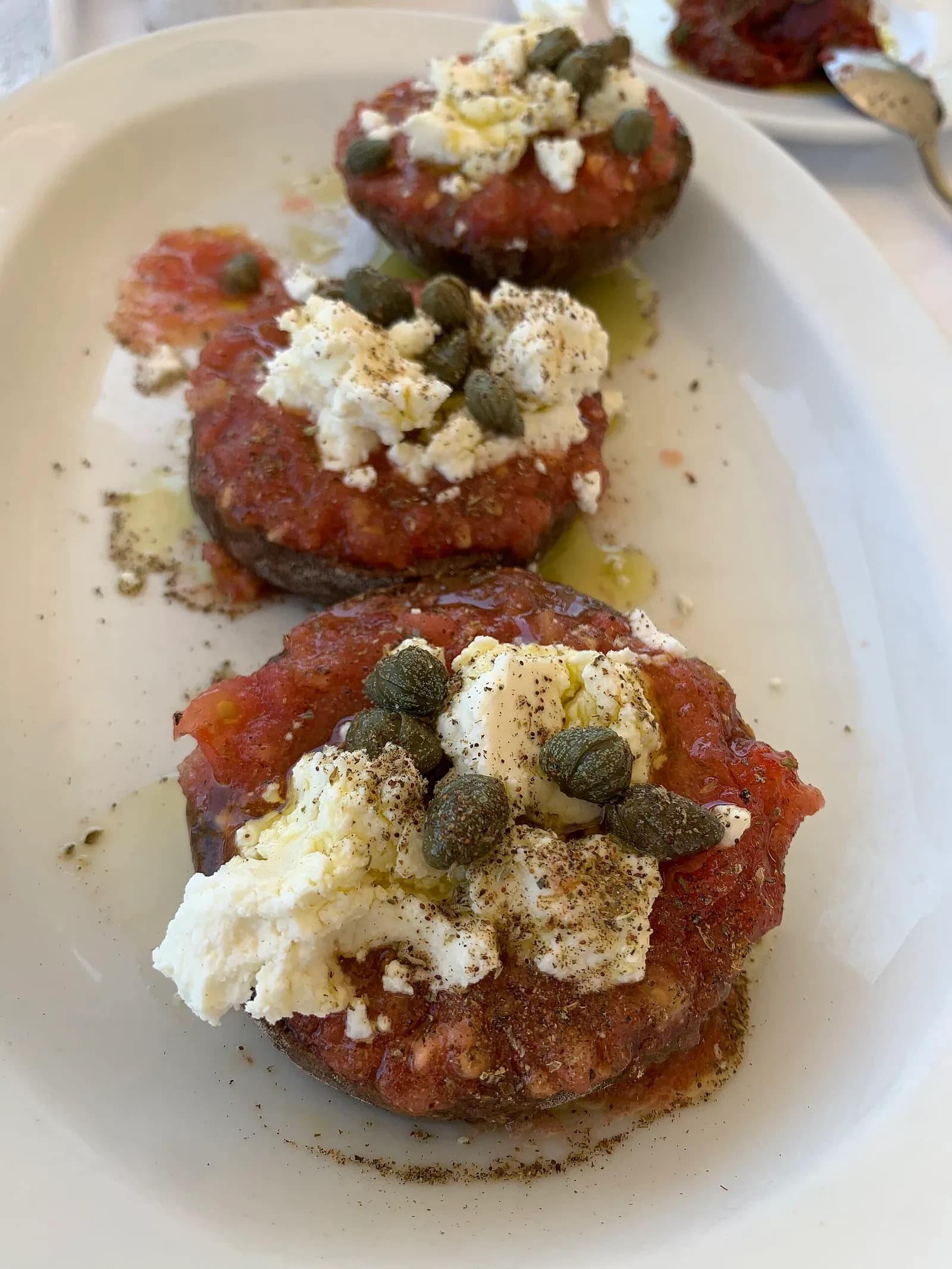
Dakos is the gateway dish: a barley rusk (paximadi) lightly moistened and topped with grated tomato, mizithra or xinomizithra, olive oil and oregano. Kalitsounia are small pastries filled with fresh cheese and herbs, savoury or sweetened with honey, and very much part of Easter. Chochlioi boubouristi are snails placed shell-side down in a pan of salt and oil, then deglazed with vinegar and rosemary: they have been eaten in Crete since antiquity. Finally, apaki is pork marinated in vinegar then smoked over aromatic herbs such as sage and thyme, served in thin slices or pan-fried.
Feast dishes and regional specialities
Boureki is Chania's signature dish: a bake of thinly sliced courgettes and potatoes, layered with mizithra and mint. If you are staying in the west, our Chania guide will help you plan your days around these tables.
Sfakiani pita comes from Sfakia, on the south coast: a flatbread of very thin dough filled with fresh cheese, cooked with almost no fat and drizzled with honey. It is served as a dessert or with raki. You will find it in the villages along the coast, all the way to Loutro.
Antikristo is a shepherds' method from the Psiloritis massif: lamb cut into large pieces, heavily salted, skewered and planted “facing the fire” (that is what the word means), where it roasts slowly for several hours without touching the flames. Gamopilafo, literally “wedding pilaf”, is rice cooked in the broth of the meats (lamb, goat or rooster) served at weddings, finished with staka butter and lemon. Traditionally made for celebrations, today it is served all year round in some tavernas in the Rethymno area. Finally, staka me avga are eggs cooked in staka: simple, rustic and formidably filling.
Sweets
Xerotigana (from “xeros”, dry, and “tigani”, frying pan) are thin ribbons of dough rolled into spirals, fried then dipped in honey or syrup and sprinkled with sesame and walnuts. They are traditionally offered at weddings and christenings; pastry shops sell them all year round. Loukoumades, round doughnuts drizzled with honey and cinnamon, are found all over Greece but are best eaten hot, late in the evening.
| Dish | What it is | Where to try it |
|---|---|---|
| Dakos | Barley rusk, grated tomato, mizithra, olive oil, oregano | All over the island |
| Kalitsounia | Fresh cheese pastries, savoury or with honey | Everywhere, especially at Easter |
| Chochlioi boubouristi | Snails seared in oil, vinegar and rosemary | Traditional tavernas across the island |
| Apaki | Pork marinated in vinegar and smoked over herbs | Everywhere, as a meze |
| Boureki | Bake of courgettes, potatoes, mizithra and mint | Chania and the west |
| Sfakiani pita | Thin flatbread filled with fresh cheese, drizzled with honey | Sfakia and the south-west coast |
| Antikristo | Lamb slow-roasted facing the fire | Psiloritis villages (centre) |
| Gamopilafo | Rice in meat broth with staka butter | Celebrations, tavernas in the Rethymno area |
| Staka me avga | Eggs cooked in staka milk cream | Mountain tavernas |
| Stamnagathi | Spiny wild chicory, raw or boiled | Everywhere, in winter and spring |
| Xerotigana | Fried dough ribbons, honey, sesame, walnuts | Pastry shops, weddings and celebrations |
| Loukoumades | Doughnuts with honey and cinnamon | Pastry shops and cafés, everywhere |
Cretan raki, or tsikoudia
What Cretans call raki is tsikoudia: a pomace spirit, distilled from the grape skins, pips and stalks left after pressing. The name “raki” is a legacy of the Ottoman era, when it referred to any distilled drink. Do not confuse it with Turkish rakı or with ouzo: tsikoudia contains no aniseed and stays clear when you add water. It is generally between 38 and 45% alcohol. The European Union protects the geographical indication: only a spirit produced in Crete may be called tsikoudia, its mainland equivalent being tsipouro.
Kazanemata, the distilling season
After the late summer grape harvest, the pomace ferments for a few weeks in barrels, then goes into the kazani, the copper still. The season generally runs from October to December depending on the village. In the 1920s, Eleftherios Venizelos, a native of Chania, had distillation legalised for licensed farmers, which explains how many small stills are still in use.
The kazanemata (or rakokazana) are evenings around the still: everyone brings food, potatoes or meat are grilled over the embers, the first raki is tasted while still warm, and sometimes the Cretan lyra comes out. These are private gatherings before they are shows: you go when invited. If you are travelling in autumn, ask your host whether they know a distiller who welcomes visitors. If you are unsure about timing, our article on Crete in September covers the grape harvest season that comes just before.
Free raki and rakomelo
In most traditional tavernas, a small carafe of raki arrives with the bill, often with fruit, yoghurt with honey or a slice of cake. It is a kerasma, a gift on the house. You clink glasses (“yamas”), sip it, and never knock it back in one. You can also decline politely, especially if you are driving: in Greece, the legal limit is 0.5 g/l.
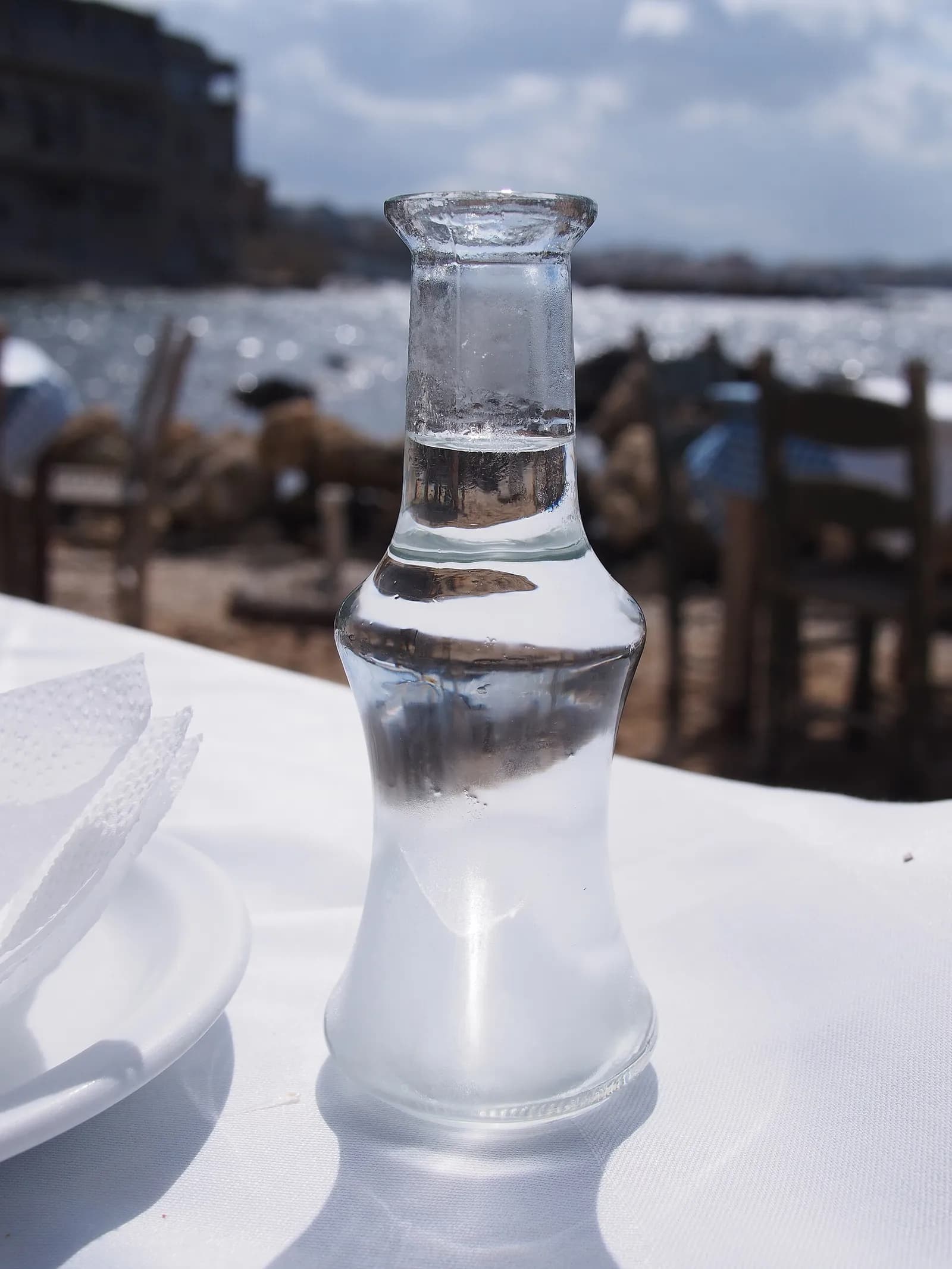
Rakomelo is its winter version: raki gently warmed with honey, cinnamon and cloves, sometimes with a twist of orange zest. It is drunk hot, as a digestif or for a sore throat, and is mostly ordered from November to March.
Crete, European Region of Gastronomy 2026
On 9 October 2024, the International Institute of Gastronomy, Culture, Arts and Tourism (IGCAT) awarded Crete the title of European Region of Gastronomy 2026. The jury, which visited the island from 27 to 31 May 2024, met more than 60 local stakeholders (farmers, researchers, elected officials, tourism professionals) and praised the combination of culinary traditions and sustainable practices.


Photos : Pierre Bouyer
In practice, 2026 brings a fuller calendar of food festivals, cooking workshops and farm visits centred on olive oil, thyme honey, wild greens and cheeses. Dates vary from one municipality to another: I recommend checking with the tourist office in your area or asking locally. To fit these stops into an itinerary, our complete guide to Crete suggests several road trips.
Cretan table etiquette

- Everything is shared. Rather than a starter and a main each, you order several meze dishes for the table, then add more as the meal goes on. Ordering bit by bit is perfectly normal.
- Dinner is late. Lunch is often eaten between 2pm and 3pm, dinner around 9pm, and tavernas are full between 8pm and 10pm. Arriving at 7pm guarantees you a table, but rarely the atmosphere.
- Take your time. Nobody will bring the bill until you ask for it. Staying three hours at the table is nothing unusual.
- Water: no law requires free tap water. A bottle often arrives automatically and appears on the bill for a modest sum; if you would rather have a jug, ask for one at the start.
- Bread: it is often charged as a cover, for one or two euros: check the line on the bill.
- Tipping: it is not compulsory. If you enjoyed the service, leave 5 to 10% or round up, ideally in cash.
- Kerasma: the dessert, fruit or raki offered at the end of the meal is not something you are owed. A heartfelt “efcharistó” (thank you) always goes down well.
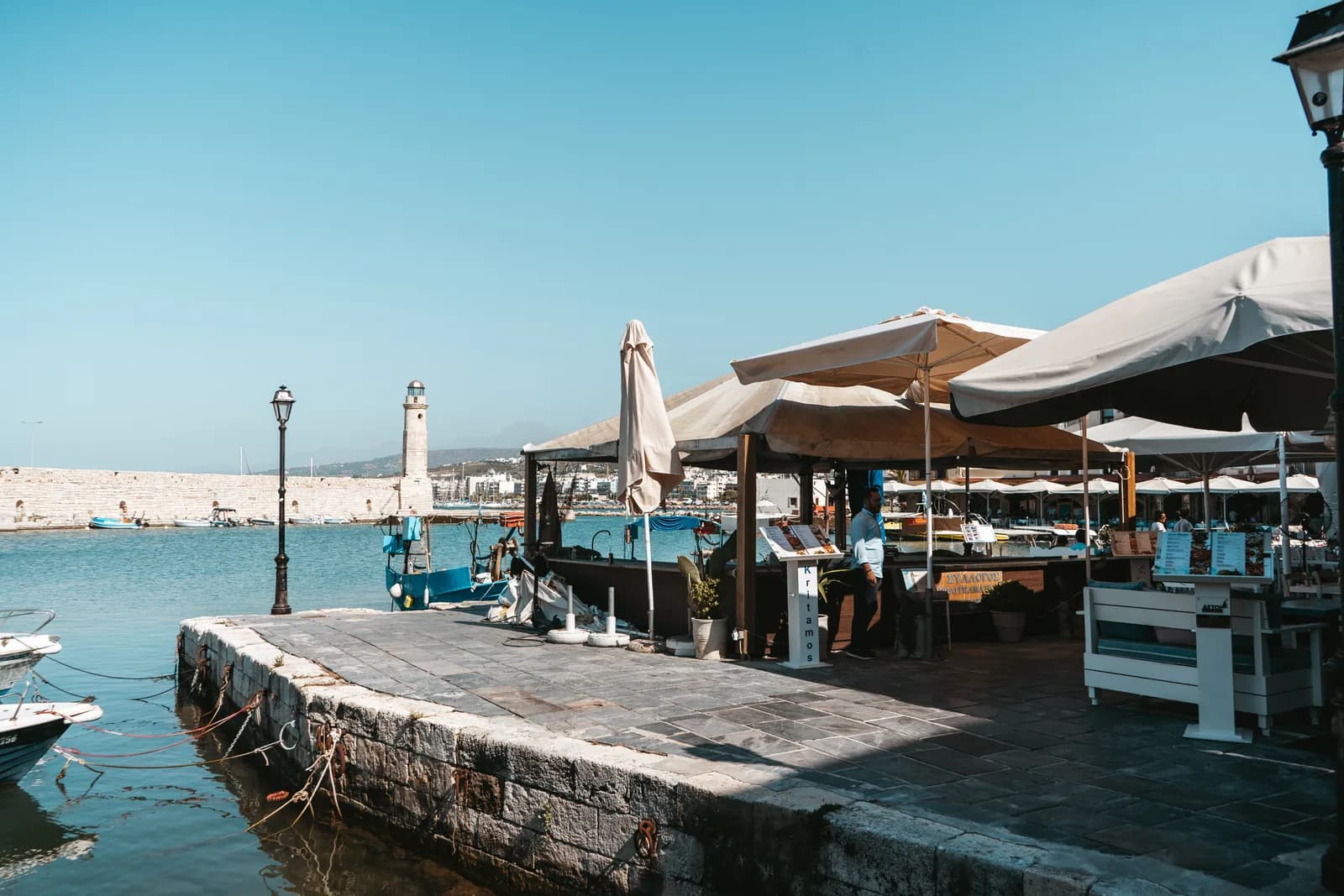
How to spot a good taverna
I am not giving you addresses here: restaurants change hands, chefs and quality from one season to the next. Instead, here are the signs that never lie.
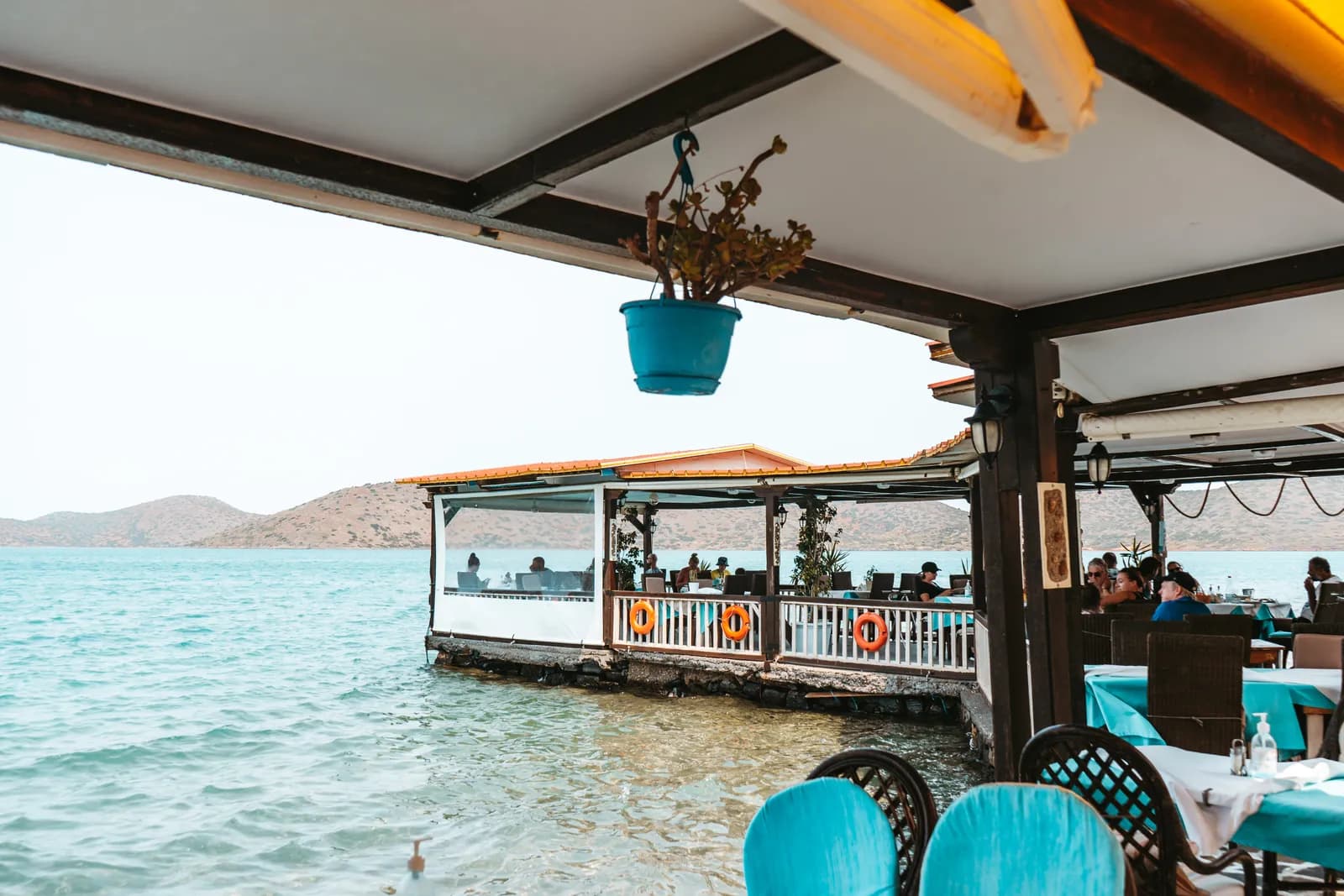
- A short menu that changes with the seasons. Stamnagathi in winter, tomatoes and courgettes in summer. A ten-page menu with laminated photos is rarely a good sign.
- Dishes of the day in the kitchen. In many tavernas, you are invited to look at the slow-cooked dishes (ladera, stews) in their pots. It is a Greek habit, not a show.
- Greek families at 10pm. If the room is full of locals at Sunday lunch or late in the evening, that is the best guide there is.
- No touts. Good restaurants do not need to stop passers-by with a menu in hand.
- House olive oil and house wine. Many tavernas serve their own olive oil and carafe wine from small neighbouring producers: try them before ordering a bottle.
The best experiences are often far from the coast, in the inland villages. The Lassithi Plateau, with its potato and vegetable fields, and Argiroupoli, with its tavernas set beside the springs, are good examples of this inland cooking.
DiscoverCars
Car rental comparison in 150+ countries
Compare prices from Hertz, Avis, Sixt and local providers. All fees included, free cancellation. Rated 4.6/5 on Trustpilot.


The markets: 1866 Street in Heraklion and the Chania Agora
1866 Street in Heraklion
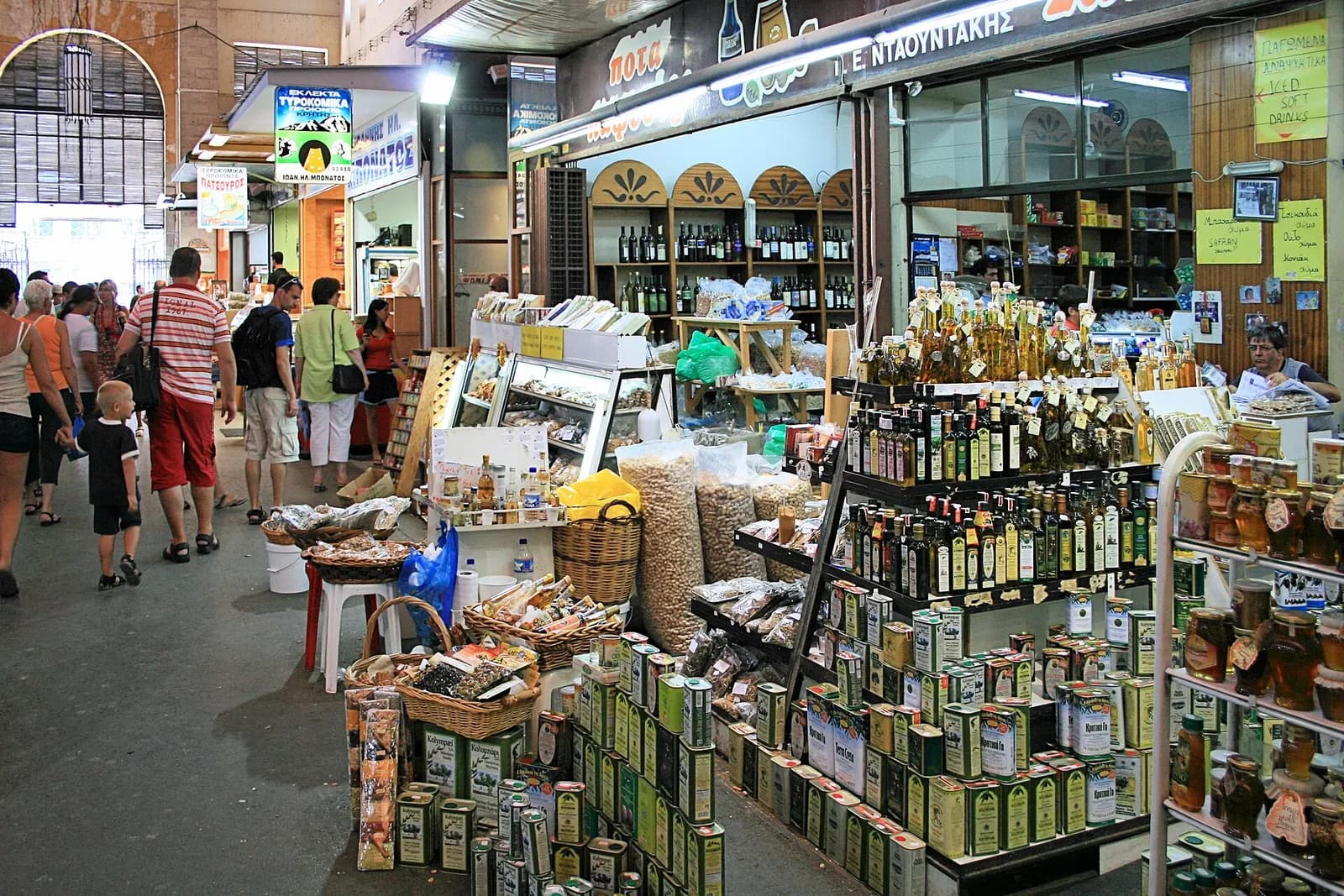
Heraklion's central market fills 1866 Street (odos 1866), named after the Cretan revolt of 1866 against the Ottoman Empire. It runs down from Morosini Fountain square to Kornarou Square. You will find olive oil, graviera, mountain herbs, thyme honey, snails, cured meats, fruit and vegetables, as well as souvenir shops. The fishmongers are nearby, on Karterou Street. Come on a weekday morning, when locals do their shopping. Our Heraklion guide will help you combine the market with the rest of the old town.
The Chania Agora, about to reopen
Chania's covered market, built in the shape of a cross between 1911 and 1913, is closed for a restoration of around 9 million euros that began in 2022. After several delays, the municipality has announced a reopening on 4 December 2026. The new rules reserve the stalls for food and local products, ban chains and limit each trader to a single shop. Check the date before you go: until it actually opens, the building remains a construction site.
Going further
Cretan food makes most sense when you eat slowly, taste what is in season and accept the glass offered at the end. To build your trip around these tables, start with our Crete page, then dip into our Chania and Heraklion guides mentioned above. And if you are visiting the east of the island, our upcoming article on the wines of Lassithi will round off this overview.
Frequently asked questions
Cretan raki, or tsikoudia, is a spirit distilled from grape pomace, with no aniseed: it stays clear when you add water. Turkish rakı is flavoured with aniseed, like ouzo, and turns cloudy when mixed with water. The name tsikoudia is protected by a European geographical indication reserved for Crete.
No. It is a gesture of hospitality (kerasma), often served with fruit or a small dessert. You can take a polite sip or decline it graciously; nobody will be offended, especially if you are driving.
Tipping is not compulsory in Greece. If you enjoyed the service, leave around 5 to 10% of the bill or round it up, ideally in cash so that it actually reaches the staff.
The Seven Countries Study showed that in 1960 Cretan men had the lowest coronary death rate of all the cohorts studied. It is an observational finding about one specific population, not proof that any single food protects you. The Cretan diet has also changed a great deal since the 1960s.
The distillations (kazanemata) take place after the grape harvest, generally from October to December depending on the village. They happen at licensed distillers; the simplest approach is to ask your host whether they know a kazani that welcomes visitors.
Sources and fact-checkingInformation checked on 7 October 2026 · 18 sources consulted
- Menotti et al., Food intake patterns and 25-year mortality from coronary heart disease, Seven Countries Study (1999)
- Hatzis et al., Validity of the cohort of Crete in the Seven Countries Study, Oncology Letters (2013)
- Keys et al., The Seven Countries Study : 2 289 deaths in 15 years (1984)
- Rethymno Guide : Cretan diet and fasting (A. Kafatos)
- Wikipedia EN : Cretan cuisine
- IGCAT : Crete officially awarded European Region of Gastronomy 2026
- Crete Direct : Cretan olive oil guide 2026 (AOP, koroneiki, récolte, prix)
- Greek Gastronomy Guide : fromages et produits laitiers de Crète
- Crete Direct : Greek food in Crete, 15 dishes you must try
- Specialty Produce : stamnagathi (Cichorium spinosum)
- Travel.gr : Crete's making of tsikoudia raki
- Wikipedia EN : Rakia (indication géographique tsikoudia)
- Wikipedia EN : Rakomelo
- Argophilia : Chania municipal market reopening December 2026 (juillet 2026)
- Explore Crete : Central market, 1866 Street in Heraklion
- Greeka : Eating in Greece, useful information (horaires)
- Revolut : Tipping in Greece guide
- Diane Kochilas : xerotigana, fried dough strips with honey

Âme Bohème exists thanks to you
Some links in this article are affiliate links. This means that if you book or purchase a product through these links, we receive a small commission, at no extra cost to you. It's thanks to this support that we can continue creating free, quality content.
You can also buy us a coffee, or follow us on Instagram and Facebook.