
Almost a month. That is how long I spent in Chiang Mai, from 31 March to 26 April 2024, with a two-day escape to Chiang Rai. It left me with thirteen photo albums, from the temples of the old city to the gardens of Doi Pui, from the covered arcades of One Nimman to the giant Buddha of Doi Kham. Enough to know that "what to do in Chiang Mai" has about twenty answers.
Here I have grouped 25 activities by theme, with prices and opening hours checked in October 2026, what I saw there and my view on what really deserves your time. At the end: the best areas to stay, a plan from 3 days to a week, and the question that shapes everything else in the north, the season.
The old city and its temples
The old city is a square roughly 1.5km across, ringed by a moat and stretches of brick ramparts. This is where to start, on foot, ideally early in the morning or late in the afternoon: in April it is often above 35°C, and 40°C was recorded during Songkran 2024.
Photos : Pierre Bouyer
1. Tha Phae Gate and the moat. Tha Phae Gate, on the east side, is the city's landmark, with its rebuilt walls and large square. On 31 March 2024 I followed the eastern moat: a straight canal lined with trees, where the yellow cassias were starting to bloom in early April.
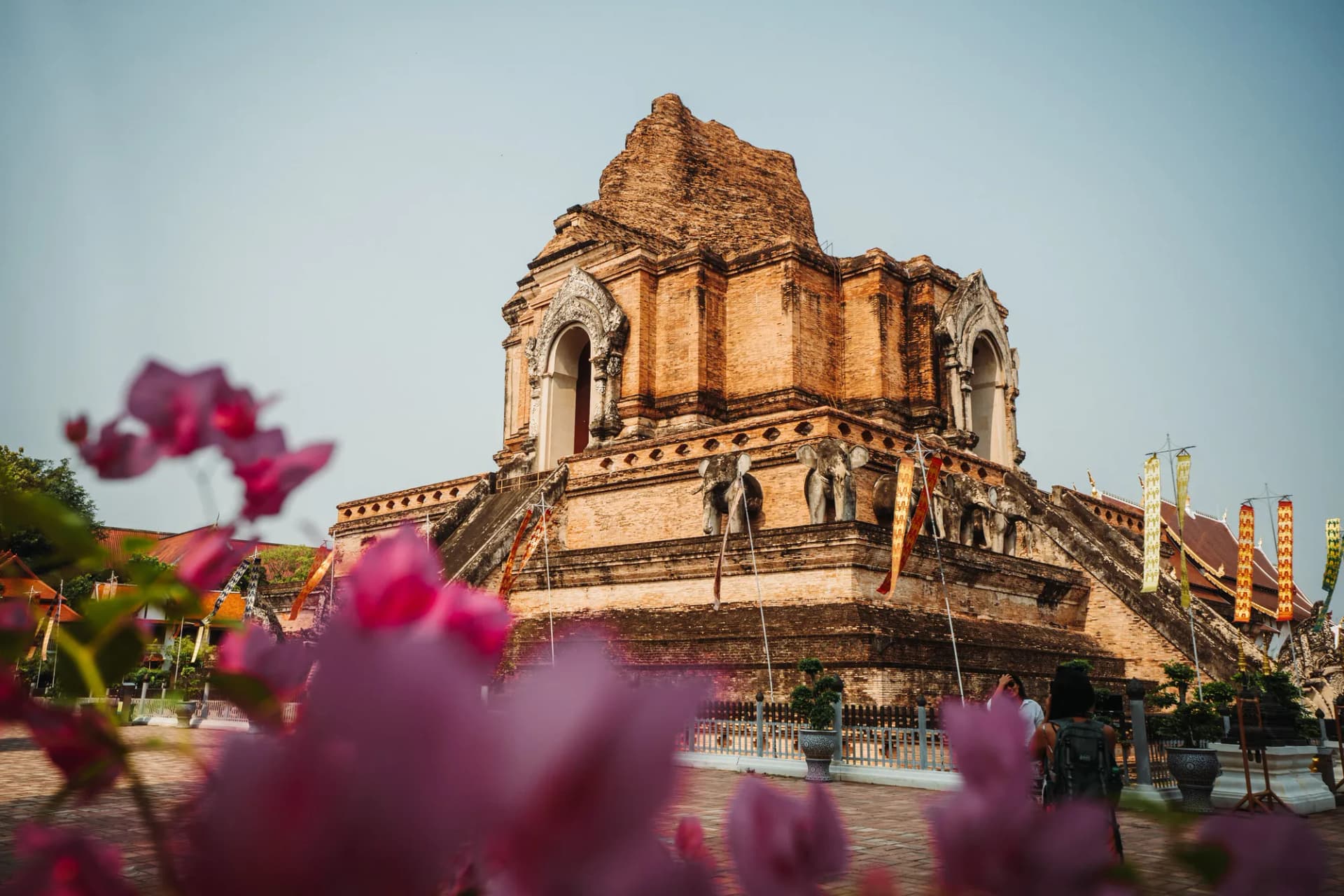
2. The central temples. There are more than thirty inside the walls, and I give them a whole article: see the most beautiful temples in Chiang Mai. Remember three names for a first morning: Wat Chedi Luang and its huge ruined chedi, Wat Phra Singh and its golden chedi, Wat Phan Tao and its all-teak viharn. Some ask for a small contribution at the entrance; in all of them, cover your shoulders and knees.
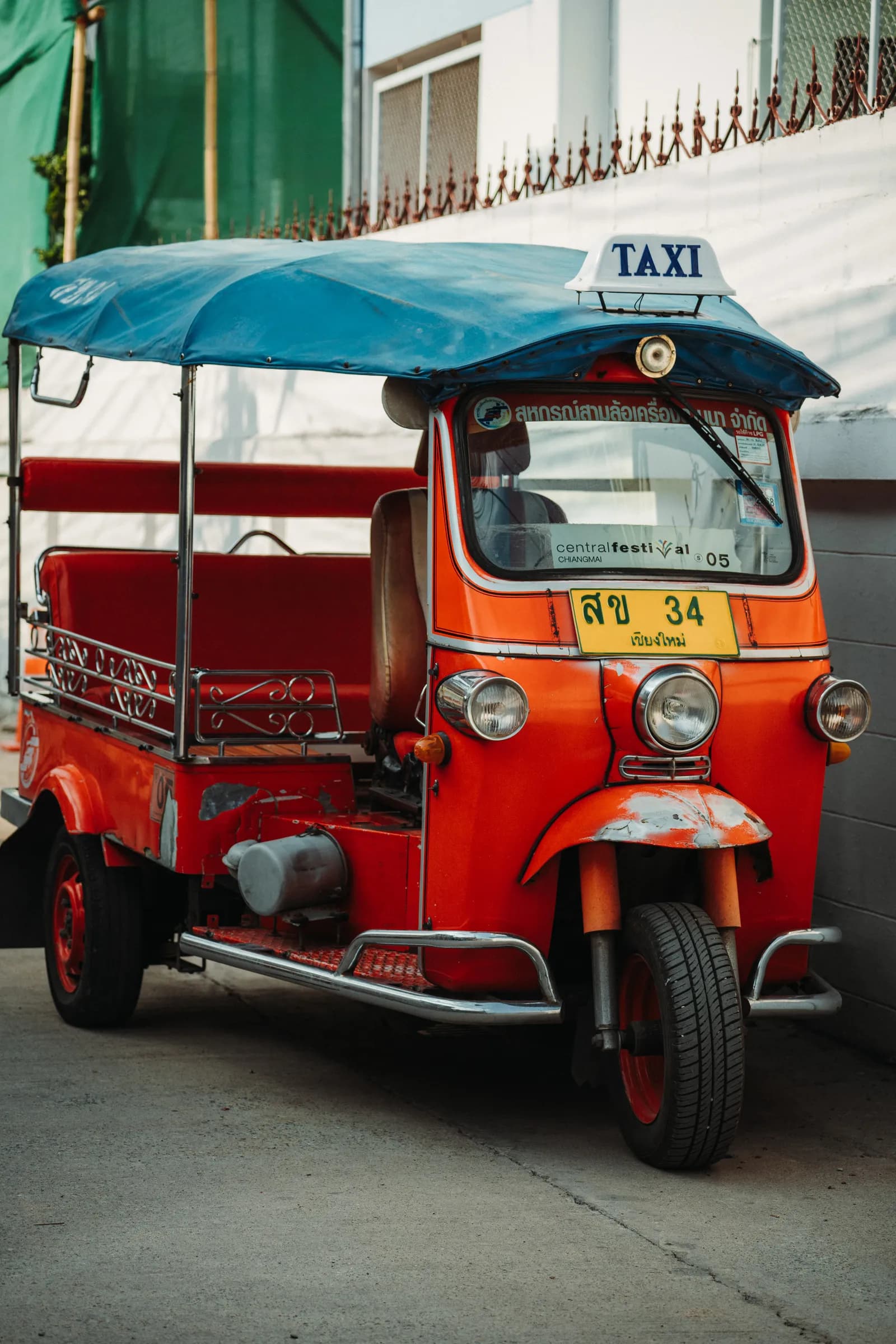
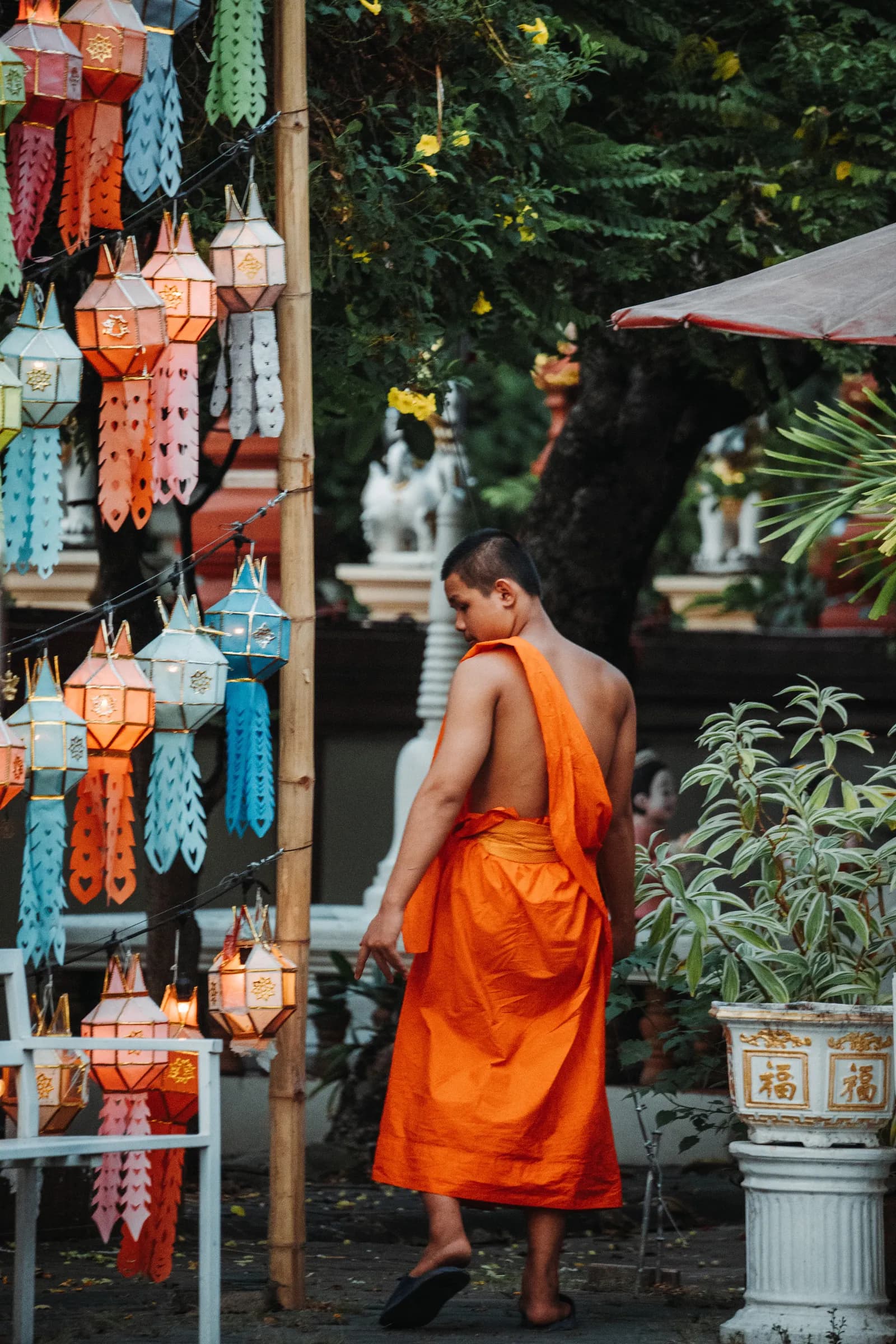
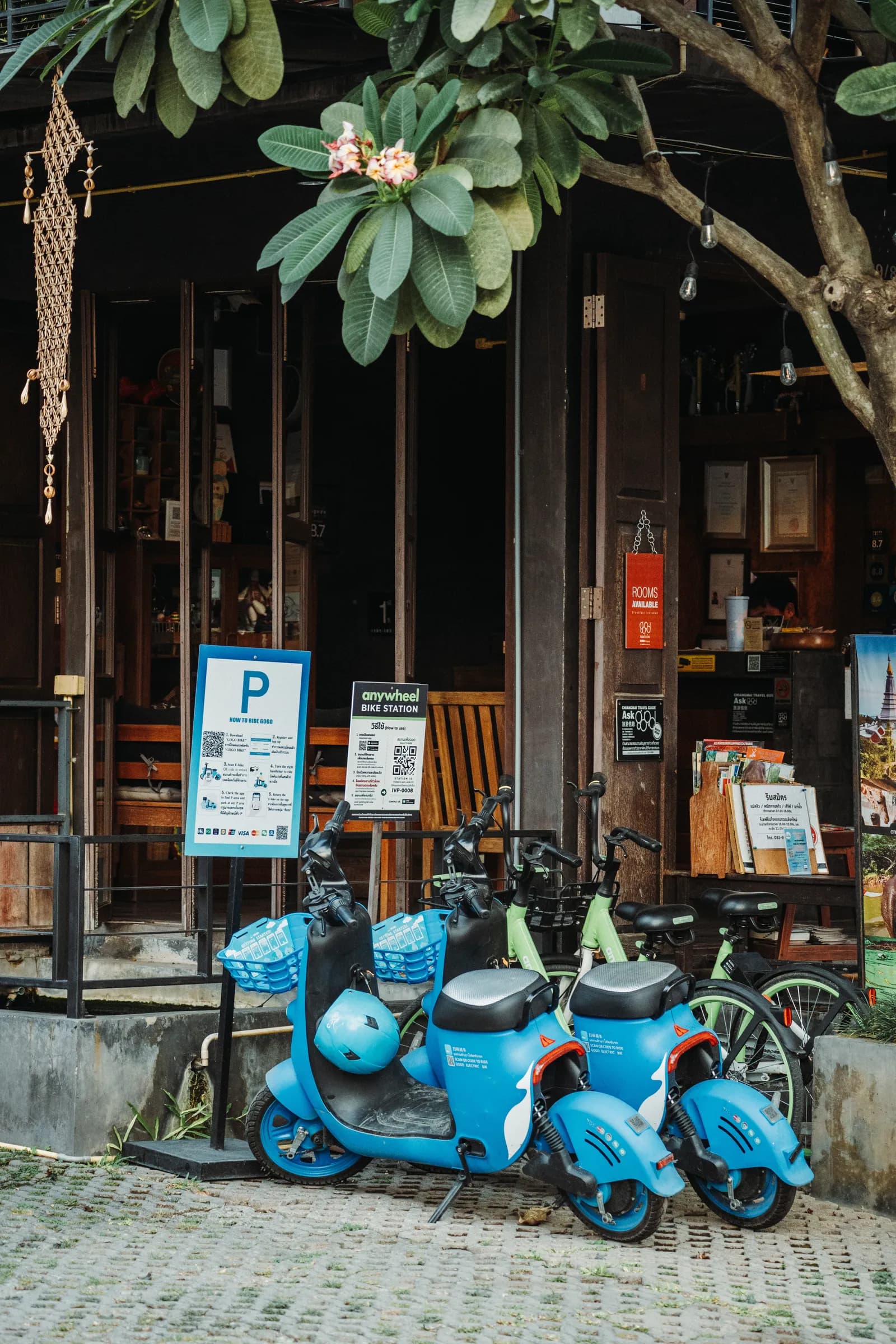
3. The lanes. Between two temples, it is the streets that give the area its charm: red tuk-tuks parked outside the façades, cafés in wooden houses, blue shared scooters, shophouses with faded signs.
Night and day markets
Two markets are worth planning your stay around; the others can be visited in passing.
Sunday Walking Street
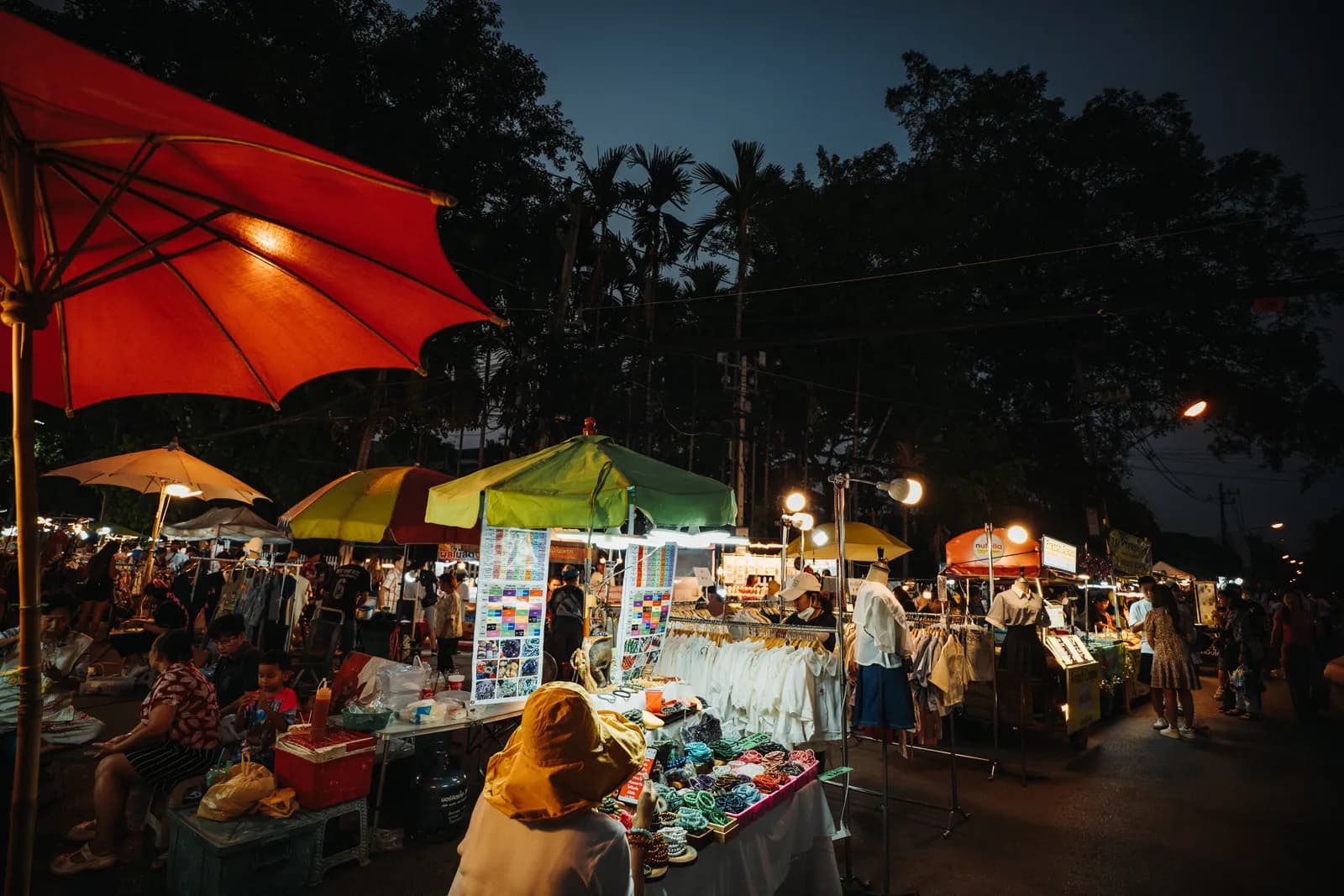
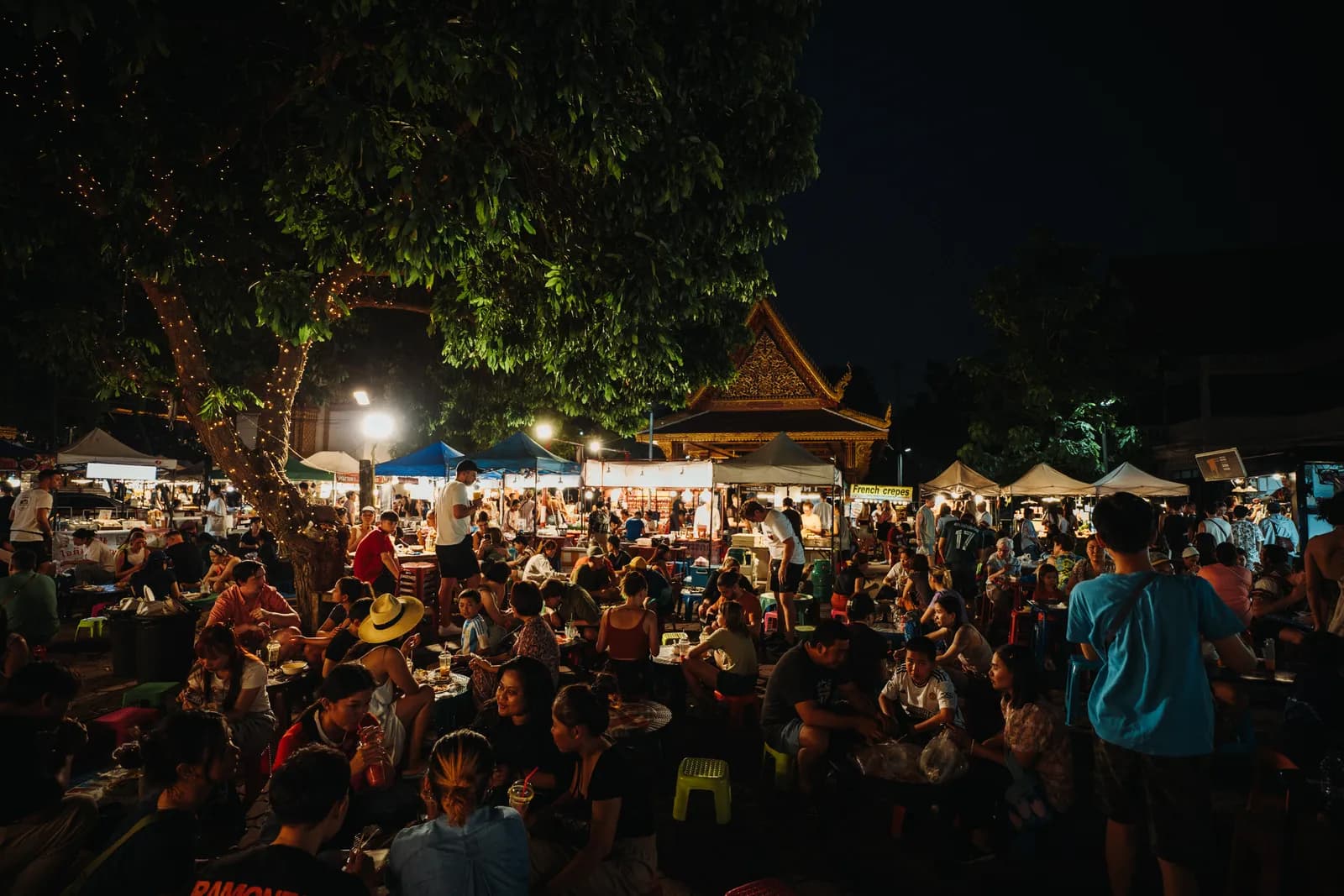
4. On Sundays, from about 4pm to 10pm, Ratchadamnoen Road is closed to traffic from Tha Phae Gate to Wat Phra Singh. I was there on Sunday 31 March 2024, at dusk: bags and embroidered clothes, colourful pompoms, red parasols, and above all temple courtyards turned into food courts. The crowd gets very dense after nightfall: arrive around 5pm to browse, and eat in a temple courtyard rather than standing in the street.
Photos : Pierre Bouyer
Wua Lai Saturday Walking Street
5. On Saturdays, from about 4pm to 10pm, it is the turn of Wua Lai Road, south of Chiang Mai Gate. The market is shorter and a little less crowded than the Sunday one, in the old silversmiths' quarter. Make the most of it to see Wat Sri Suphan, the silver temple, close by: on 11 April 2024, in the late afternoon, its all-silver ubosot was gleaming in the setting sun.
Warorot and the Night Bazaar
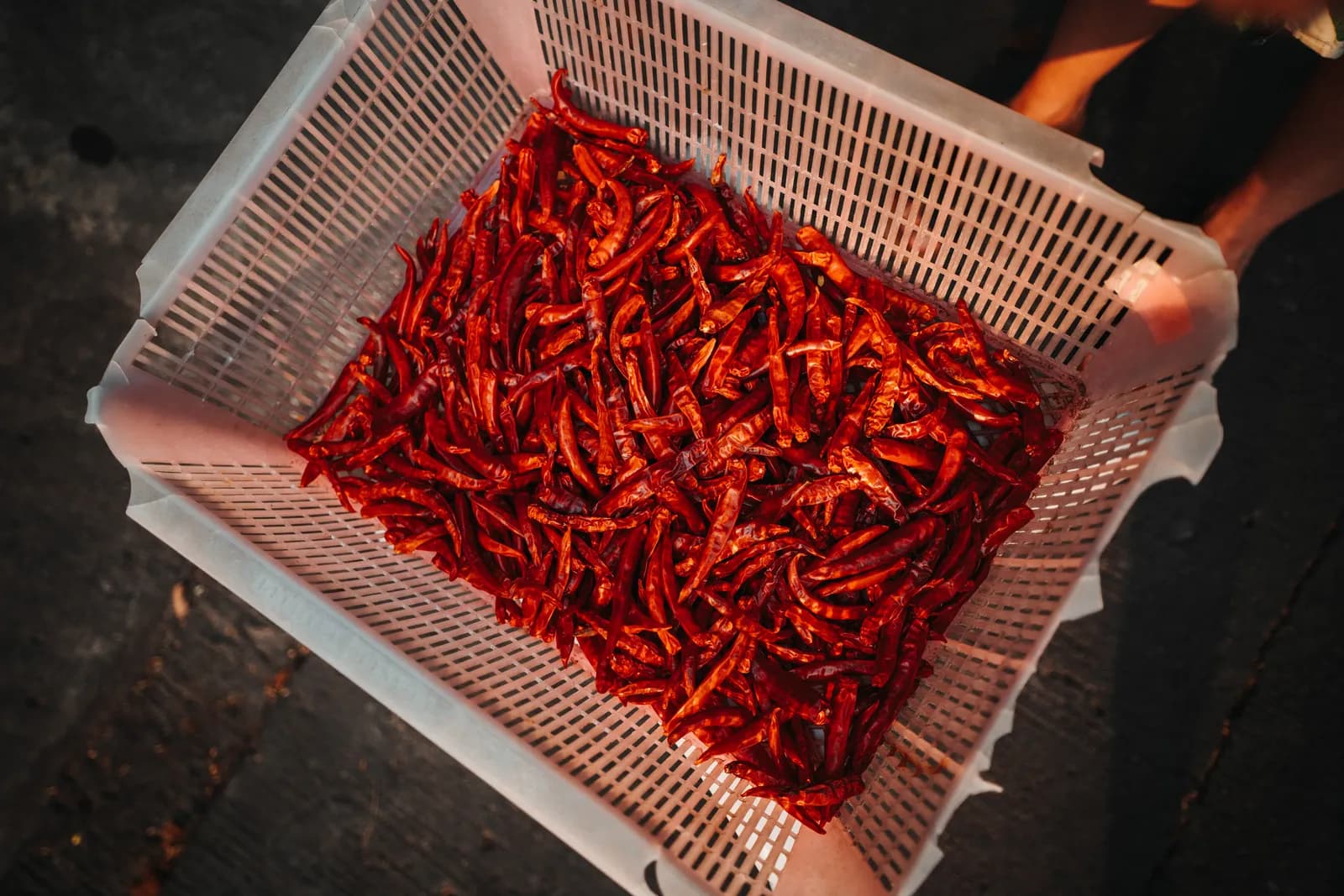
6. Warorot (Kad Luang) is the city's big covered market, near the Ping River, open daily from about 8am to 5pm. Locals come here for dried fruit, chillies, northern sausages and fabric.
7. The Night Bazaar, on Chang Klan Road, opens every evening from about 5pm to 11pm. It is the most touristy: mass-produced souvenirs and inflated prices. Go if you cannot be in town on a Saturday or Sunday; otherwise the two Walking Streets are far more interesting.
Nimman and the garden cafés
8. Nimman (Nimmanhaemin Road and its sois) is Chiang Mai's modern district, west of the old city, at the foot of the university. On 2 April 2024 I wandered from the One Nimman arcade to the evening restaurants: cafés on every corner, designer shops, scooters, and at night restaurants set under big trees lit with lanterns.
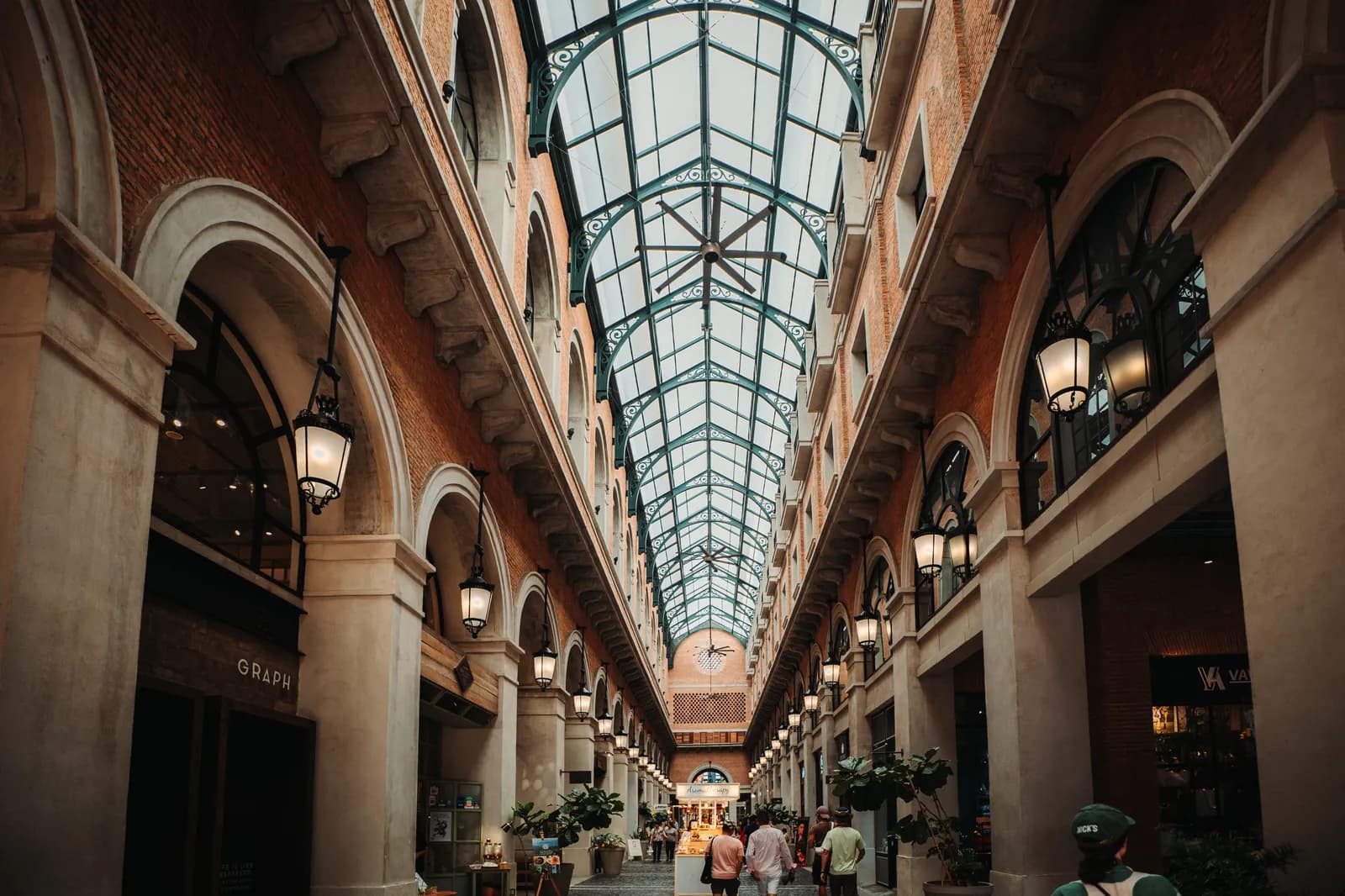
The heart of the area is One Nimman, a red-brick complex built around a European-style glass-roofed arcade, with a covered market, One Market, and shops. In 2026 it remains one of the city's meeting places, and a good starting point for exploring the nearby sois.
Chom Café & Restaurant
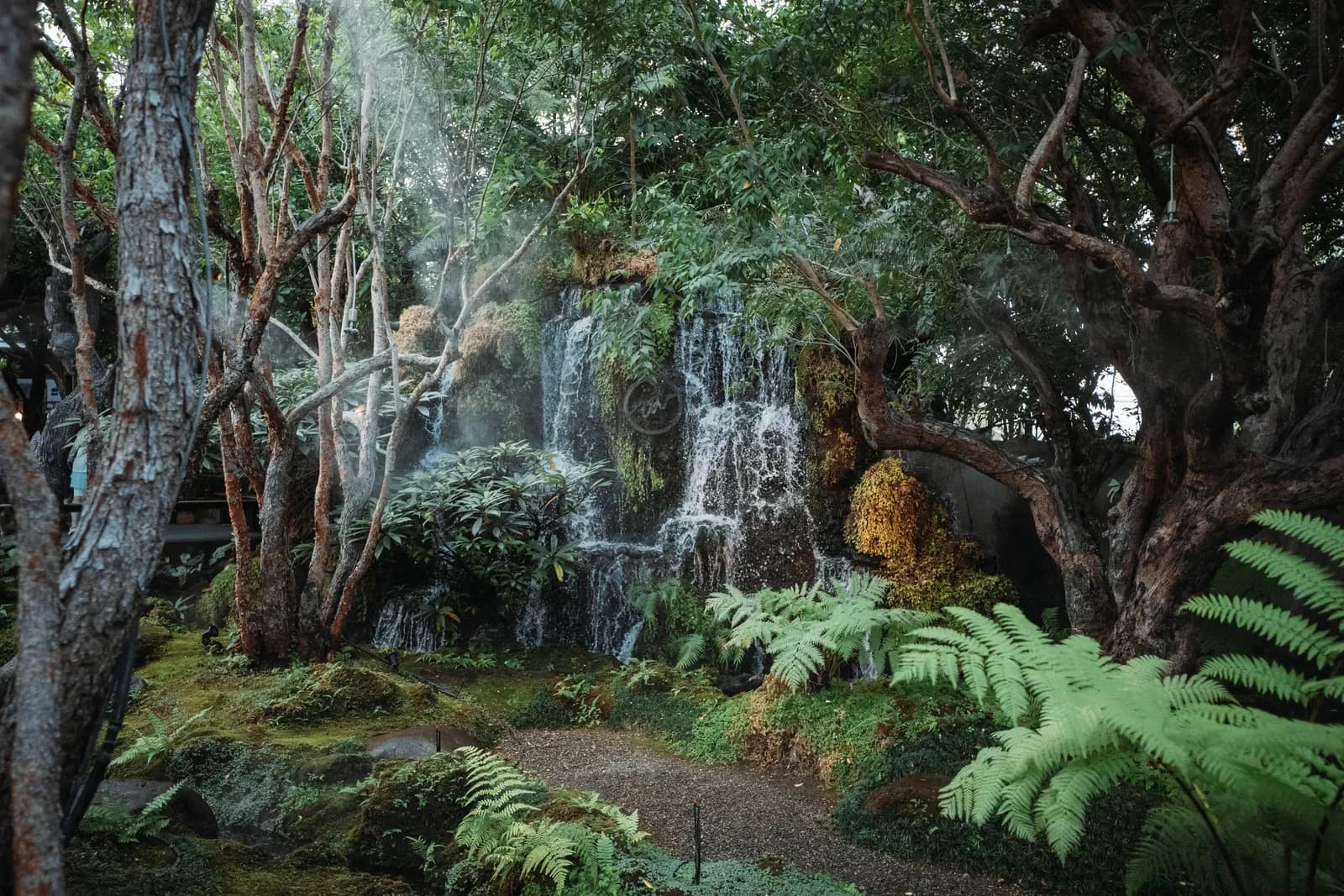
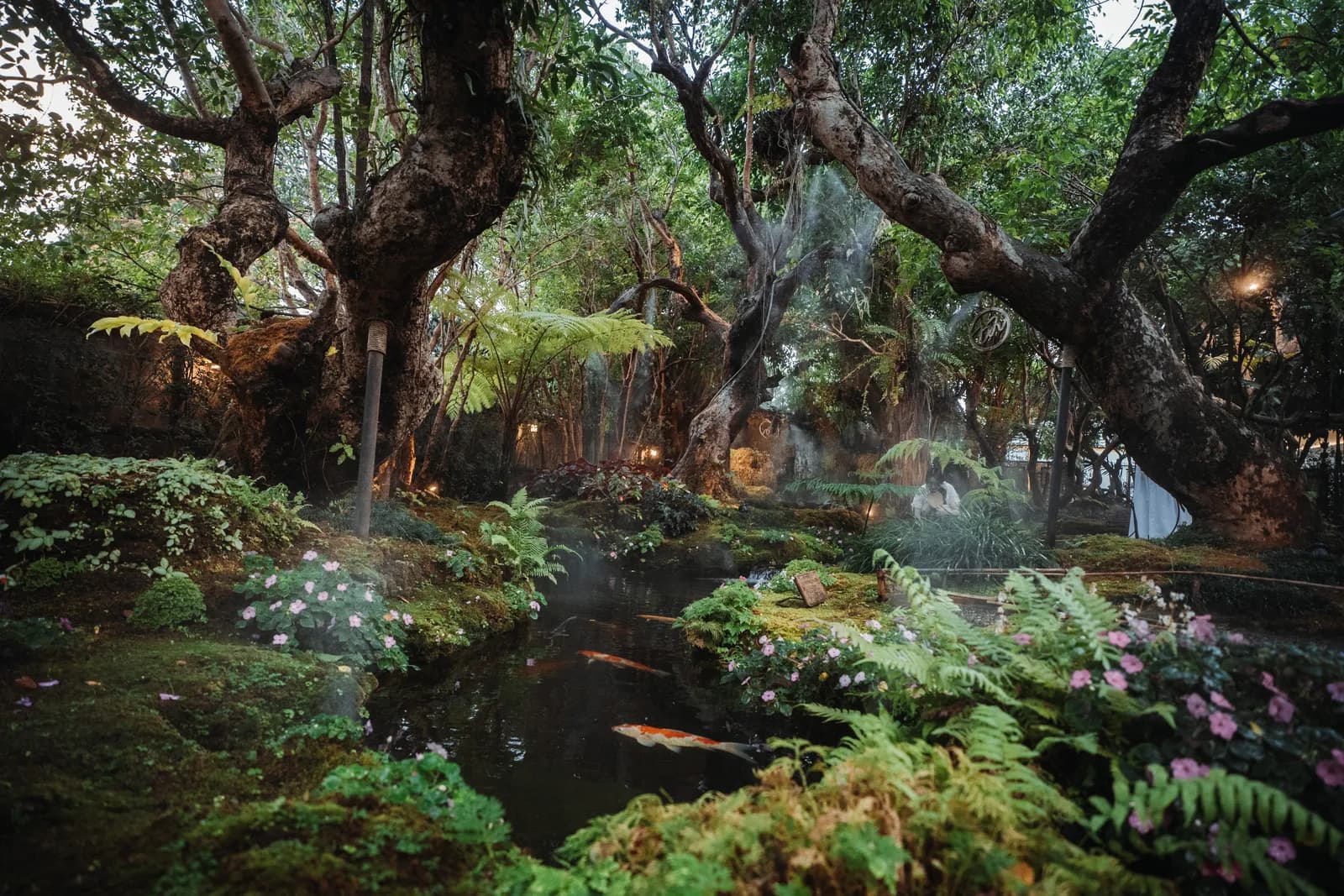
9. Garden cafés are a Chiang Mai speciality, and Chom Café & Restaurant is the most spectacular I have seen. On 12 April 2024, after Wat Umong, I found a recreated tropical forest garden: twisted trees, ferns, artificial waterfalls, misters and koi ponds. It is in the Mae Hia area, not far from Wat Umong, and usually opens from 11am to 10pm. Check that it is open before you go. Prices are much higher than in a neighbourhood café: you are paying for the setting.
Photos : Pierre Bouyer
Museums
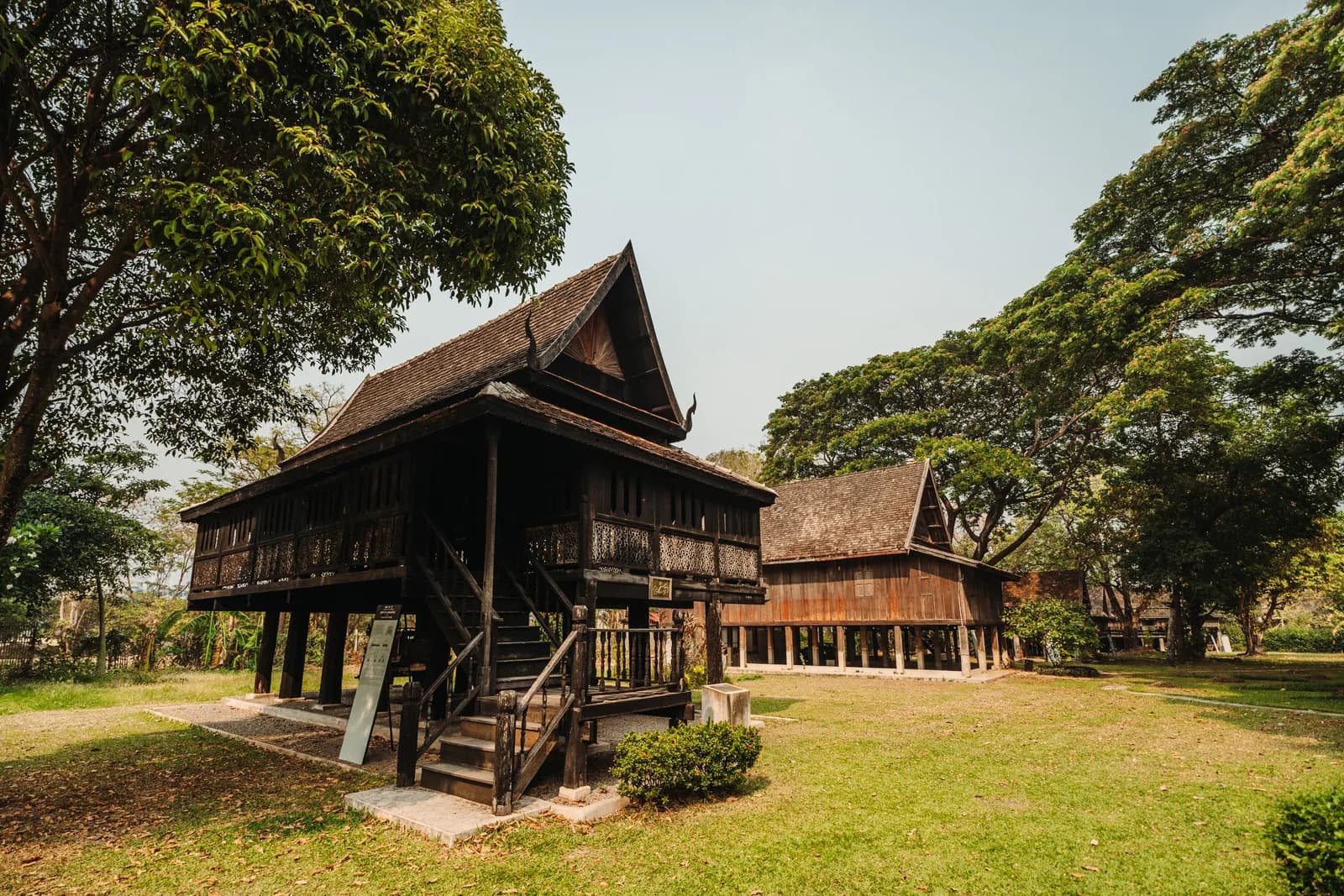
10. The Lanna Traditional House Museum. On the Chiang Mai University campus, at 239 Huai Kaeo Road, the university's Center for the Promotion of Arts and Culture has reassembled about ten traditional teak houses and four rice granaries. My album from 9 April 2024 opens with these stilt houses, their dark wooden interiors and the ox carts stored underneath. The museum is open Tuesday to Sunday, 8.30am to 4.30pm, for about 100 baht. It is the museum I recommend first, a few minutes from Wat Suan Dok.
11. The three city museums. Behind the Three Kings Monument, in the heart of the old city, the Chiang Mai City Arts & Cultural Centre tells the city's history, alongside the Chiang Mai Historical Centre and the Lanna Folklife Museum. They open Wednesday to Sunday, 8.30am to 4.30pm: note that they are closed on Mondays and Tuesdays. Allow 90 baht per museum or 180 baht for the combined ticket, valid for 7 days.
12. MAIIAM. For Thai contemporary art, the MAIIAM museum is in San Kamphaeng, about 30 minutes east. It opens every day except Tuesday, 10am to 6pm, for 200 baht.
Doi Suthep, the Monk's Trail and Doi Pui
The mountain overlooking the city to the west is a national park, Doi Suthep-Pui. It takes 30 minutes to drive up from Nimman, and it is the easiest nature outing from Chiang Mai.
Huay Kaew waterfall
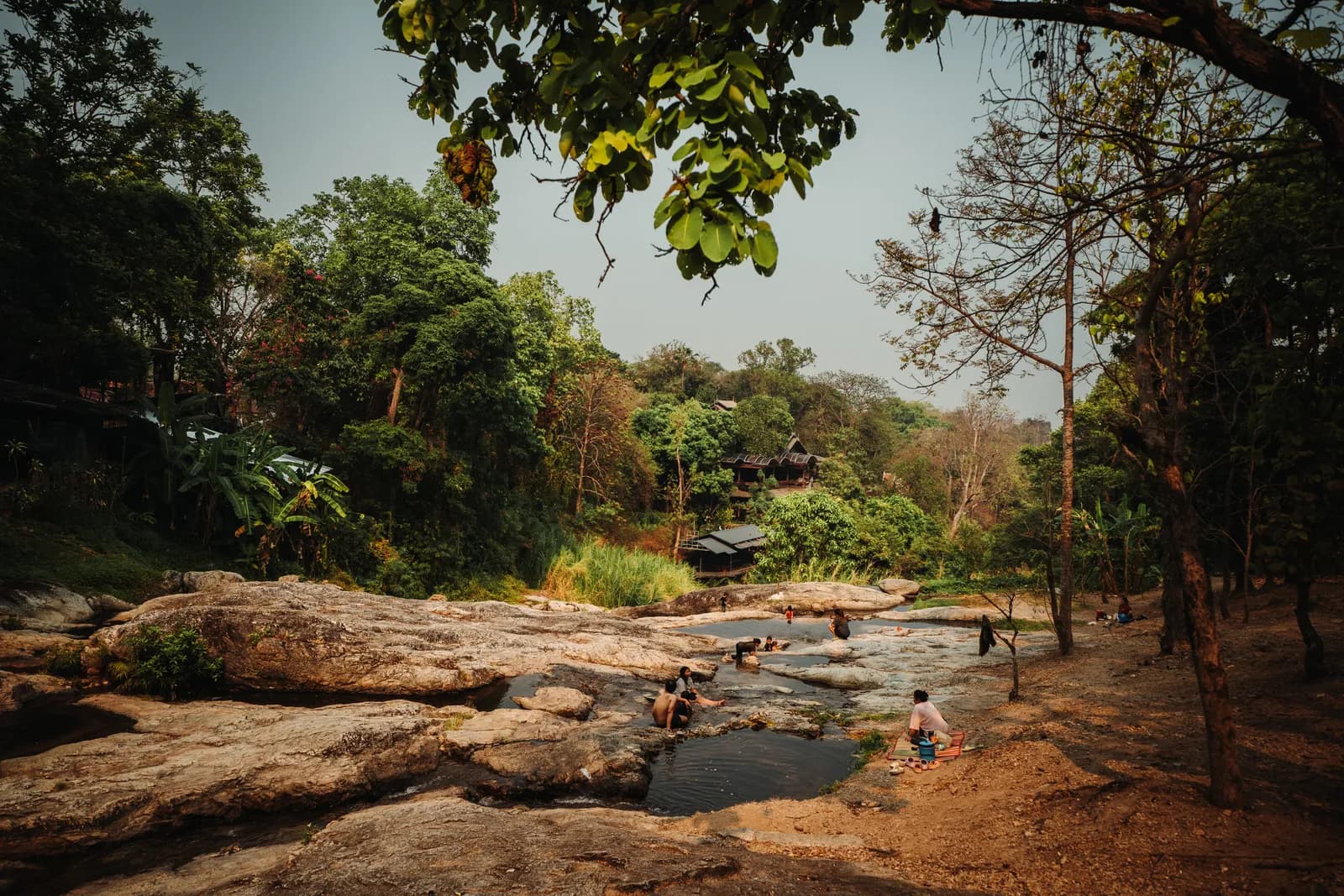
13. It is the first stop on the way up, a five-minute walk from the car park at the end of Huay Kaew Road. In April the flow was low: wide slabs of golden granite, shallow pools and Thai families bathing.
The Monk's Trail and Wat Pha Lat
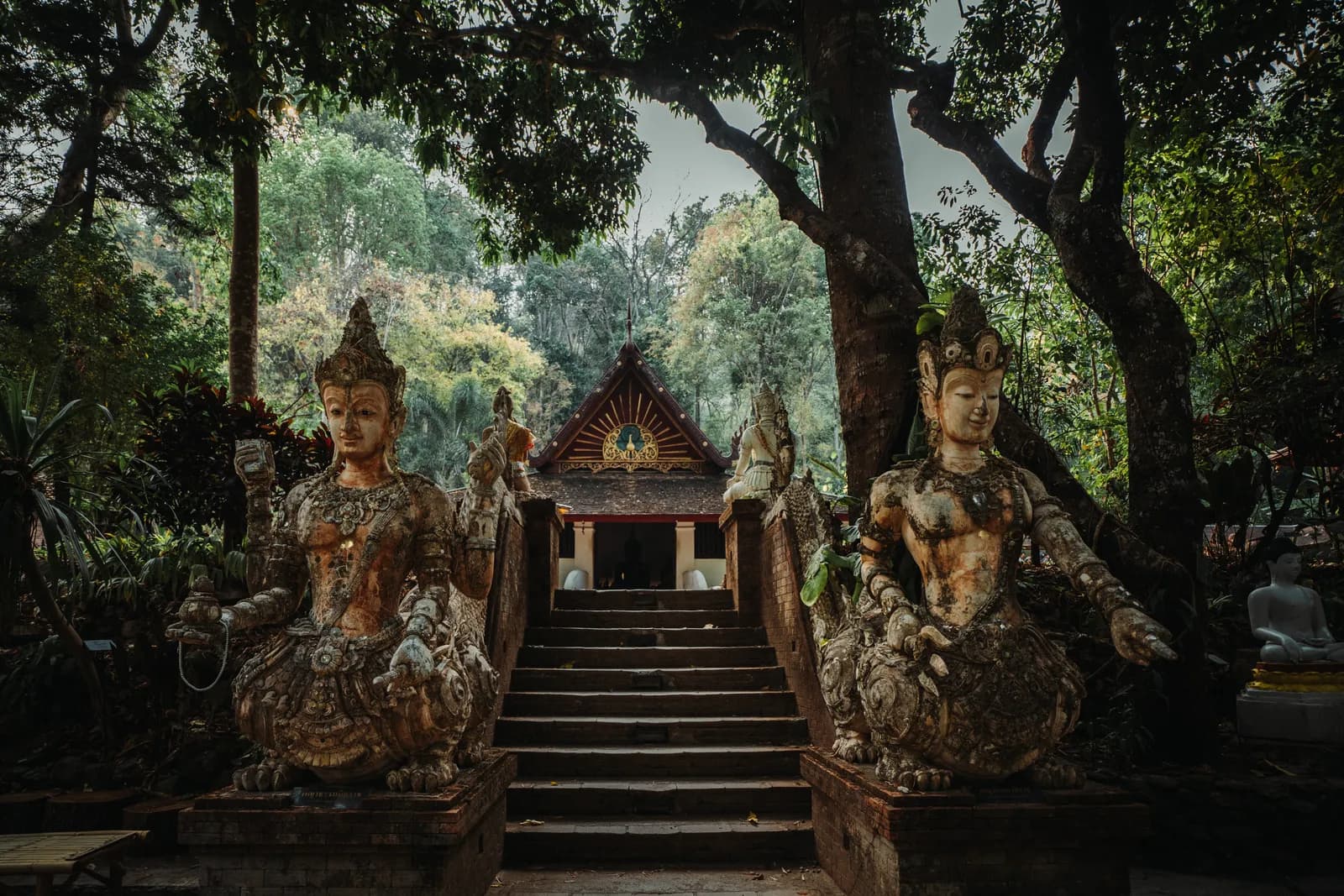
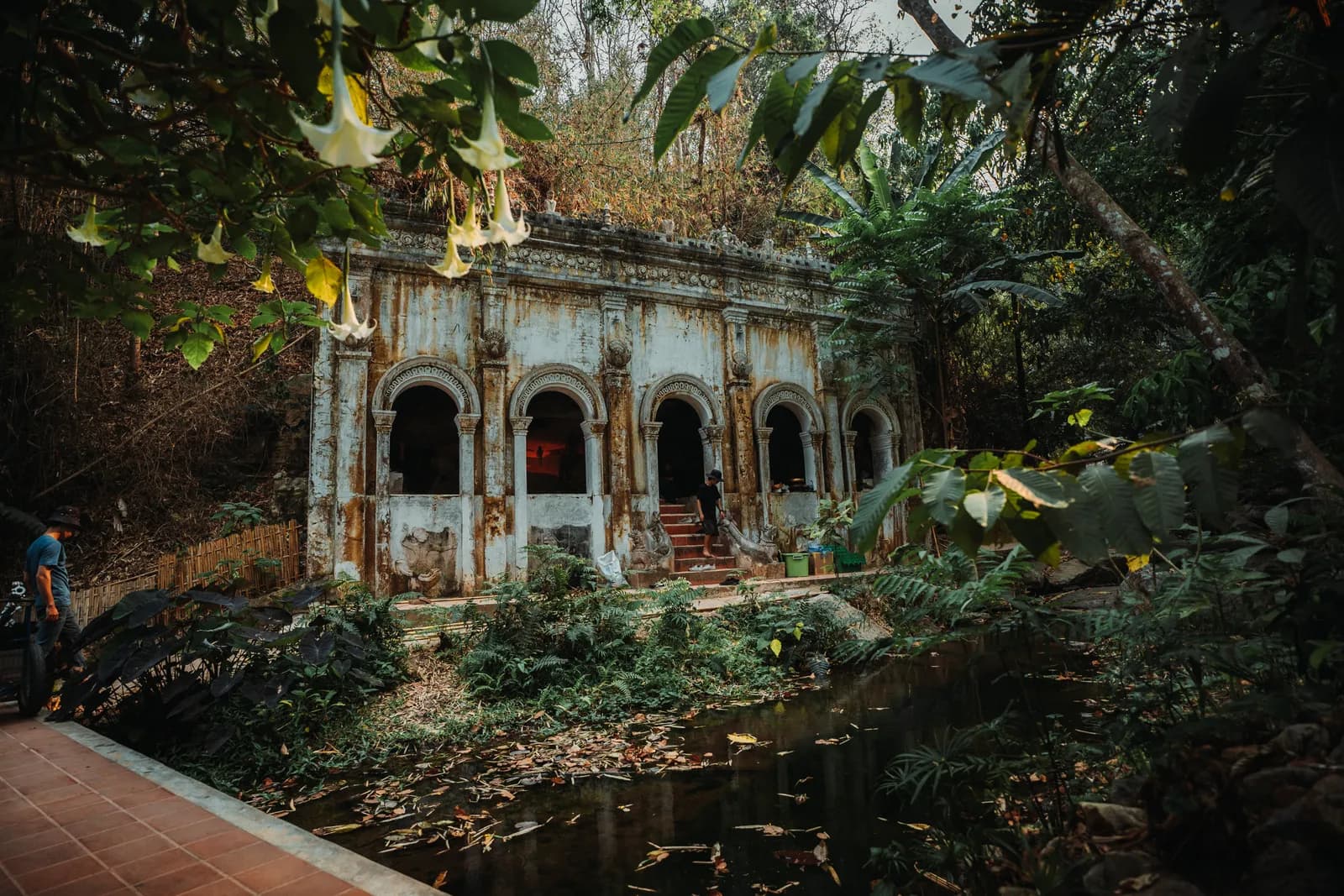
14. The Monk's Trail starts at the top of Suthep Road, behind the university. Allow 40 minutes to an hour of climbing through forest, over about 2km, to Wat Pha Lat, the "monastery of the sloping rock". According to tradition, the temple was founded in the 14th century where the white elephant carrying the Doi Suthep relic is said to have rested; it was a stopover for pilgrims before the road was built in 1935.
Photos : Pierre Bouyer
My album from 6 April shows a forest temple matching Wat Pha Lat: a Lanna gateway in the greenery, a staircase guarded by two large deity statues, an old arcaded building swallowed by the jungle beside a pond, rock slabs with a stream running over them. It is a working monastery: keep your voice down and cover your shoulders and knees.
The hardiest carry on to Doi Suthep: about 5km and another 1.5 to 2 hours, on a much steeper slope.
Wat Phra That Doi Suthep
15. The most famous temple in the north stands at about 1,050m. According to legend, the white elephant carrying a relic of the Buddha died here, marking the site of the temple, founded in the late 14th century. You reach it by a staircase of just over 300 steps lined with nagas, or by funicular (20 baht). Entry costs 30 baht, and the temple is open from about 5am to 9pm. The view over the city only really exists from November to January, when the air is clean.
The Hmong village of Doi Pui
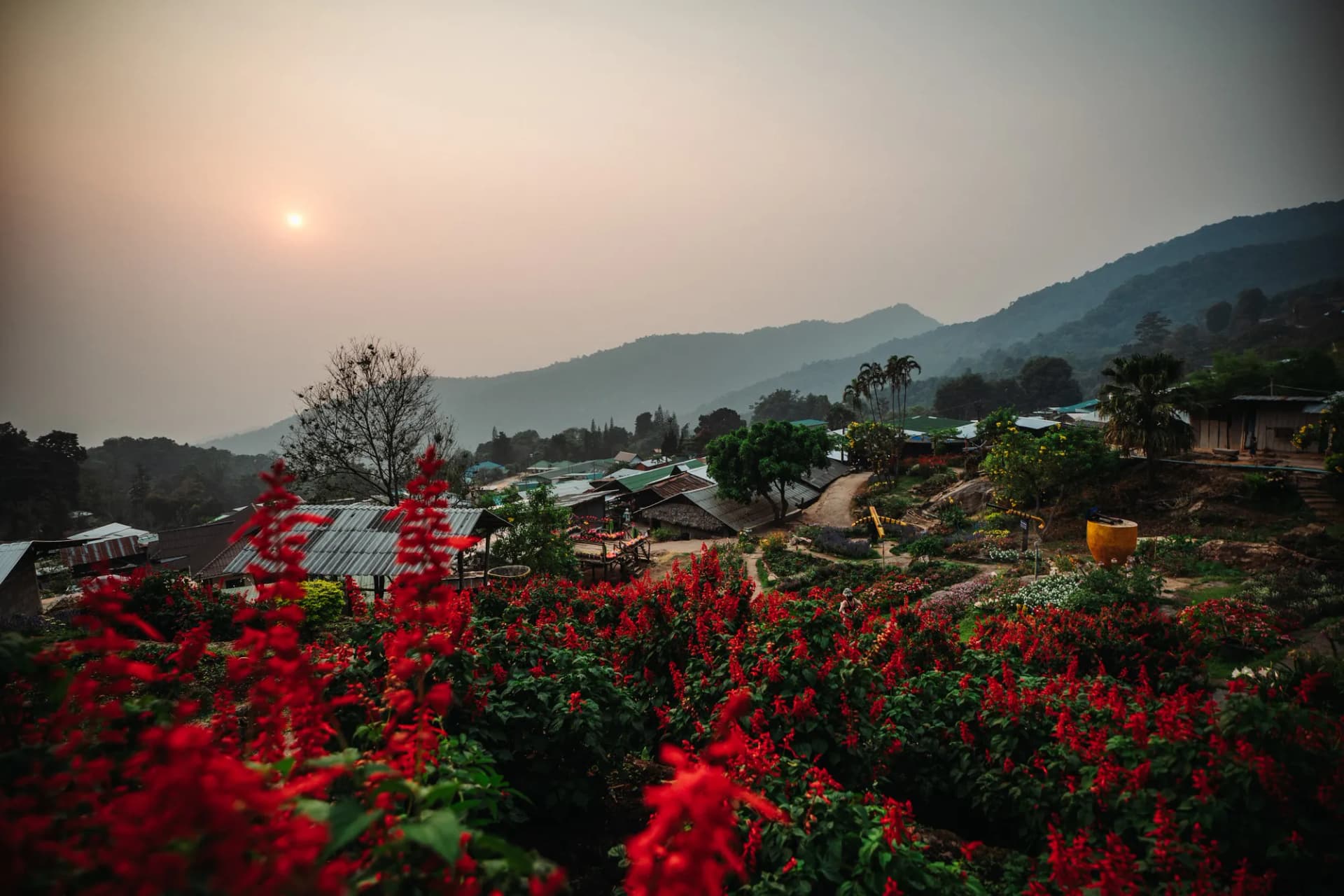
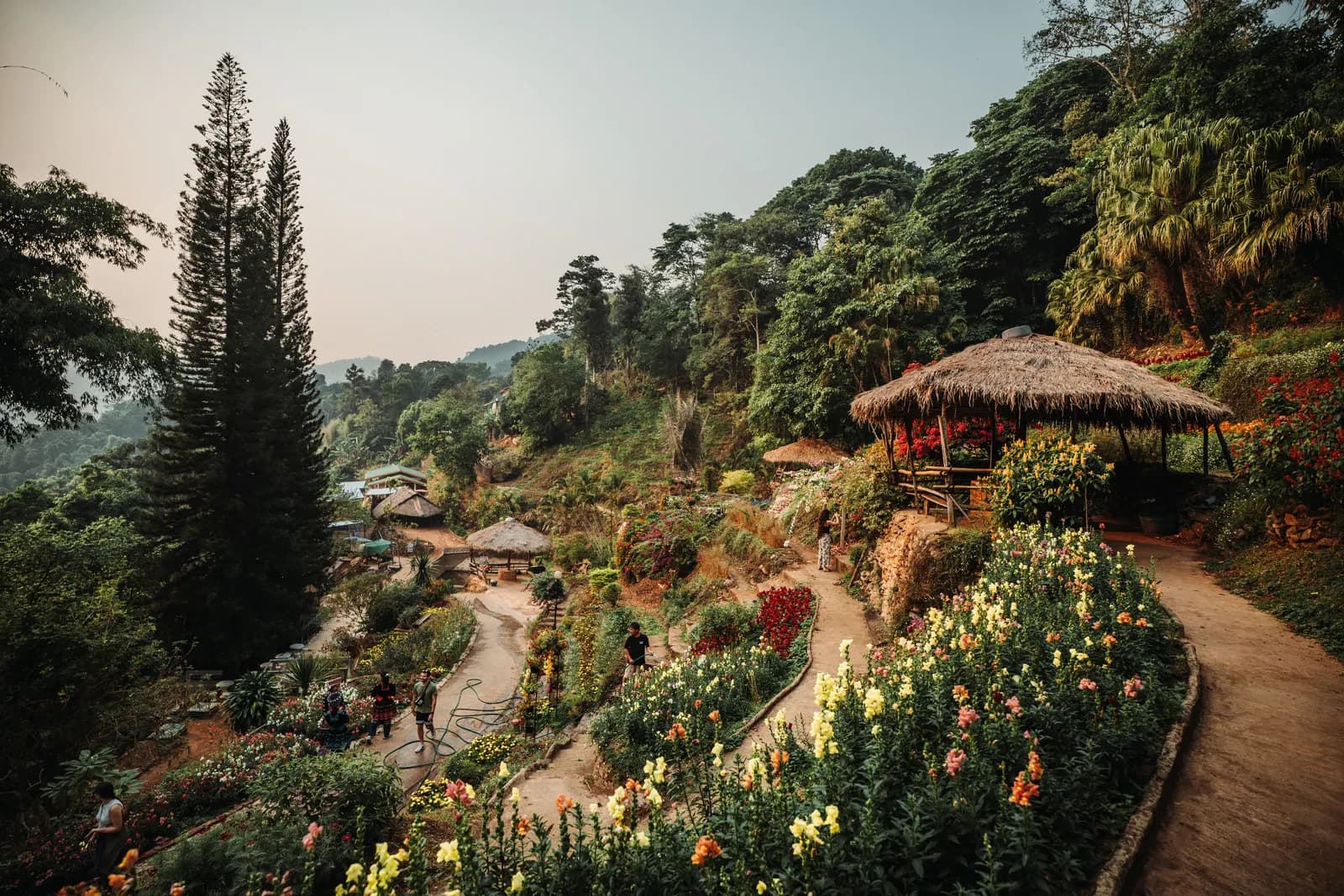
16. Higher up, beyond Bhubing royal palace, the Hmong village of Doi Pui is the highlight of the day. A street selling tea, coffee, spices and embroidered clothes and, above all, at the top of the village, a terraced flower garden: red celosias, fuchsia impatiens, pine trees, thatched huts and views over the hills. On 6 April 2024 I stayed until sunset, an orange disc veiled by burning-season smoke.
Budget for the village's small entry fee (around 10 baht) and possibly the park's 100 baht fee. By songthaew from Chang Phuak Gate, allow around 60 baht to Doi Suthep, 90 to Bhubing and 120 to Doi Pui, per person and once the vehicle is full (about ten passengers). Bhubing Palace (50 baht) often closes from January to early March.
Elephant sanctuaries
17. It is the most requested activity in Chiang Mai, and the easiest one to get wrong: there are dozens of "sanctuaries" around the city, and the word guarantees nothing.
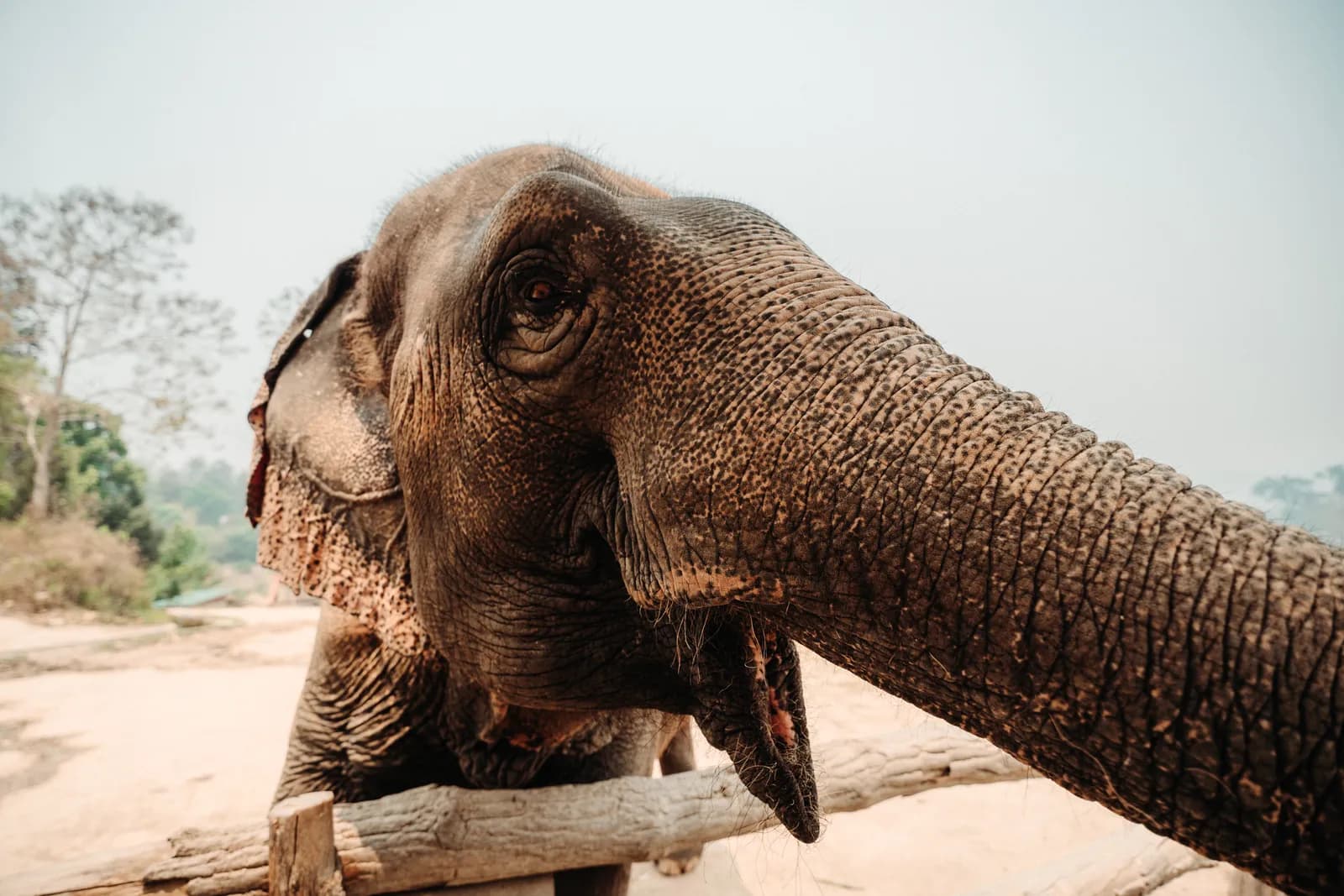
Photos : Pierre Bouyer
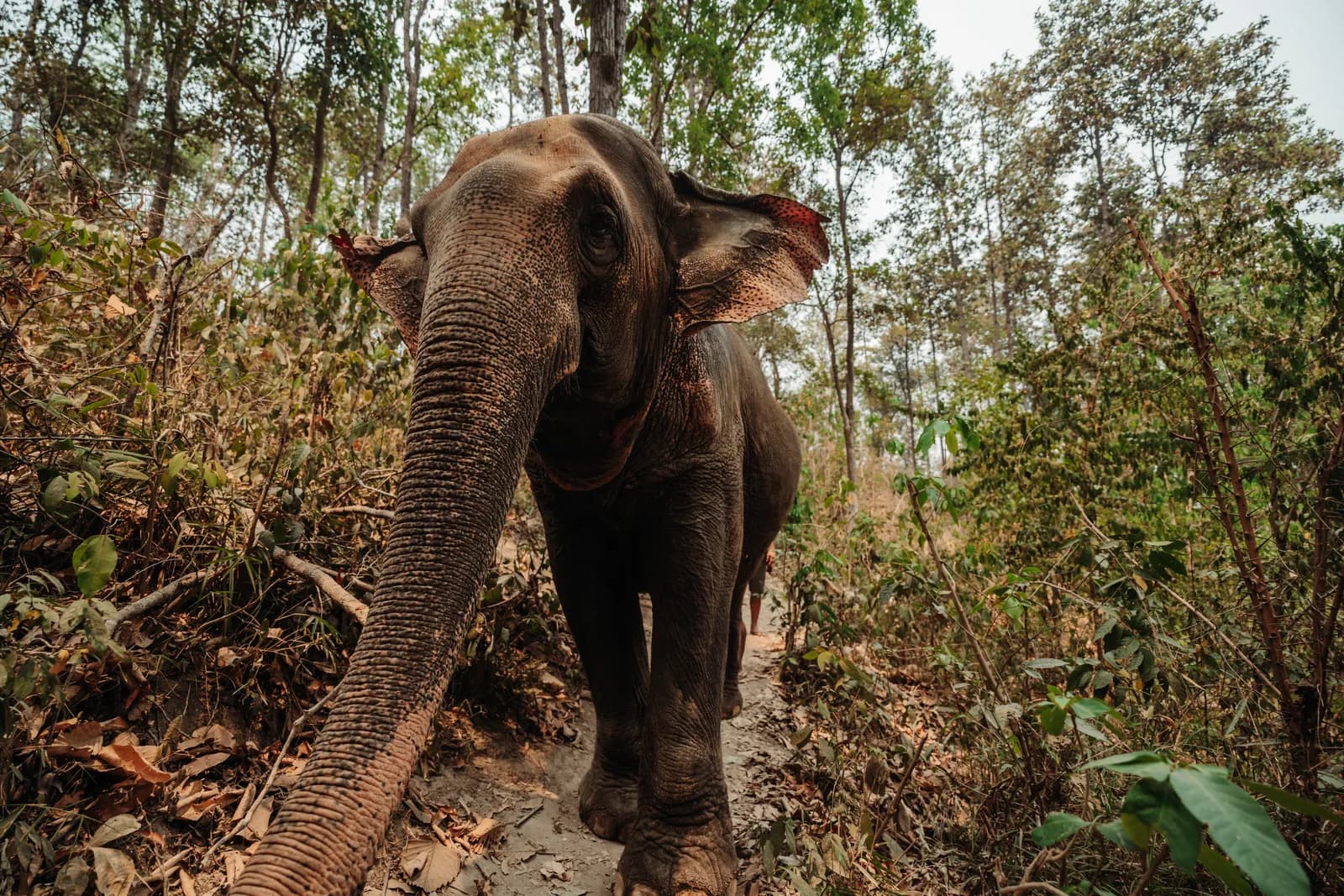
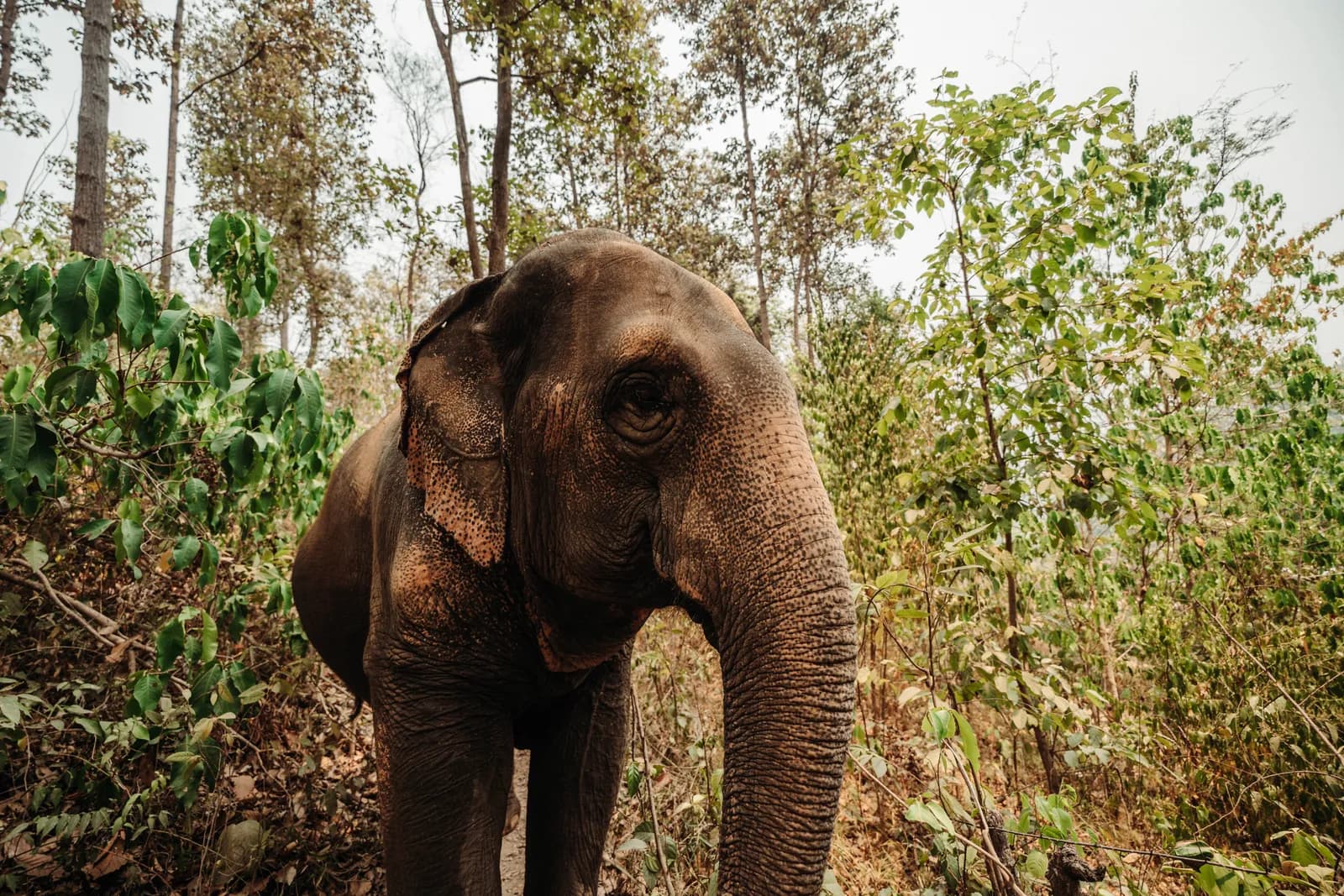
On 7 April 2024 I spent the day at one of them, in the countryside around Chiang Mai. My photos show elephants being fed over a log fence, a walk with them through dry teak forest, and two calves covered in dried mud under a shelter, fed bamboo by the mahouts. No saddles, no riding. But contact, yes. And since then, the guidance has changed.
In March 2026, the NGO World Animal Protection published a report on 2,849 elephants monitored at 236 tourist venues in Thailand. Its conclusion: bathing with elephants, sold for years as the ethical alternative to riding, also relies on punitive training. The NGO now recommends observation only, with no contact.
How to choose
- No riding, neither in a saddle nor bareback on the neck: that is the absolute minimum.
- No staged bathing: if the programme promises to "wash the elephants" in the river, walk away.
- No hook (ankus) visible in the mahouts' hands, no short chains.
- Small groups and a limited number of visitors per day.
- An observation venue: the best sanctuaries have you walk at a distance and watch the elephants live as a herd.
Price benchmarks, checked on the official websites: Elephant Nature Park, the best known, offers a half day for 2,500 baht and its full-day programmes for 3,500 baht. Kindred Spirit, in Mae Chaem, practises pure observation (no bathing, no feeding, no riding), with a two-day, one-night stay at 5,300 baht per person. This is the kind of place I recommend.
Royal Park Rajapruek and Wat Phra That Doi Kham
South-west of the city, about twenty minutes' drive from the old city, two sights combine perfectly into a half day. I visited them on 26 April 2024, after a first visit to the park on 18 April.
Royal Park Rajapruek
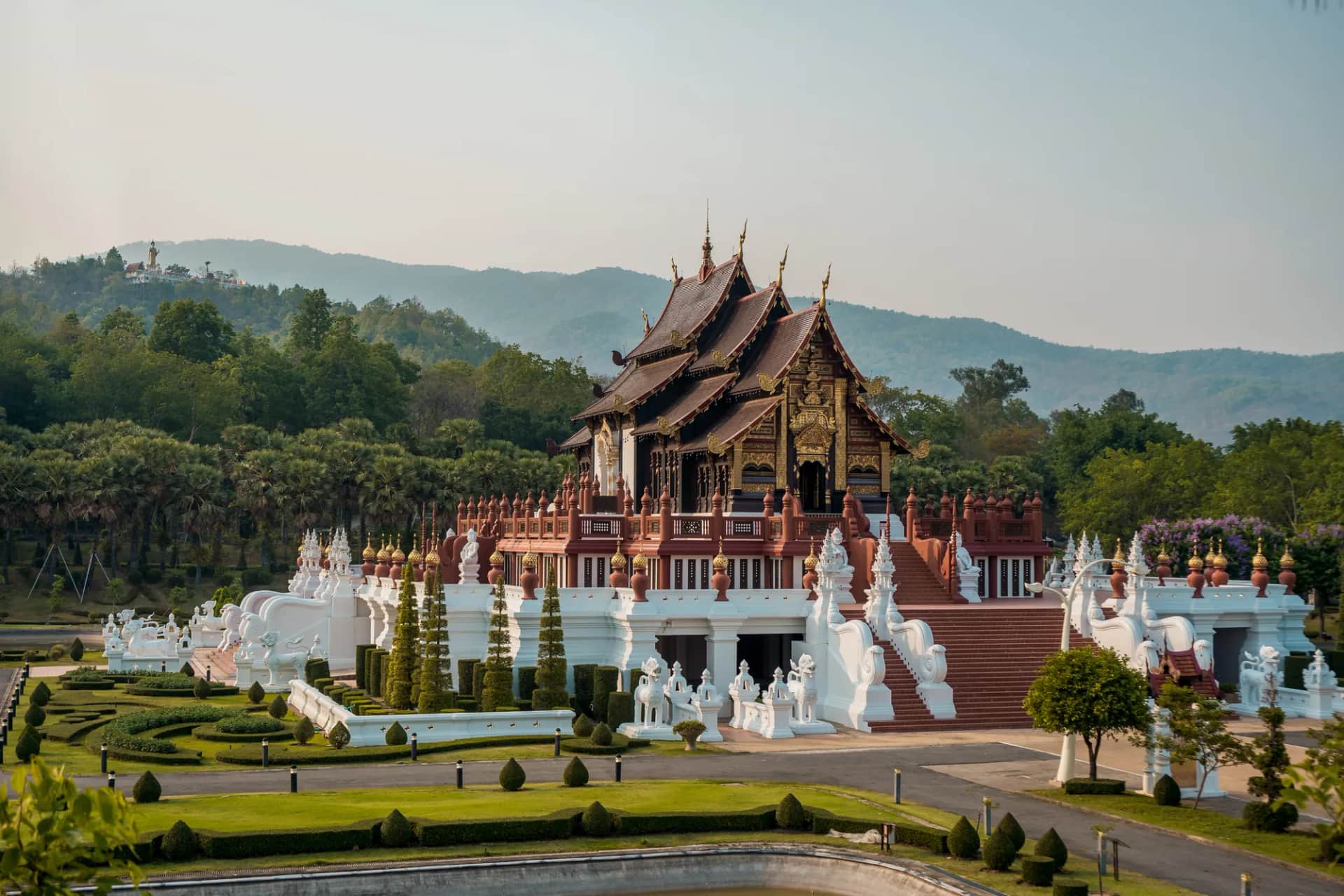
18. This large botanical park was created for an international horticultural exhibition. Its gardens spread around the Ho Kham Luang, a Lanna-style royal pavilion with a golden roof, raised above a red staircase and white nagas. Around it: fields of pink and purple globe amaranths in front of the royal emblem, tropical orchid greenhouses, a bonsai garden, a pond of giant water lilies and a series of gardens donated by other countries.
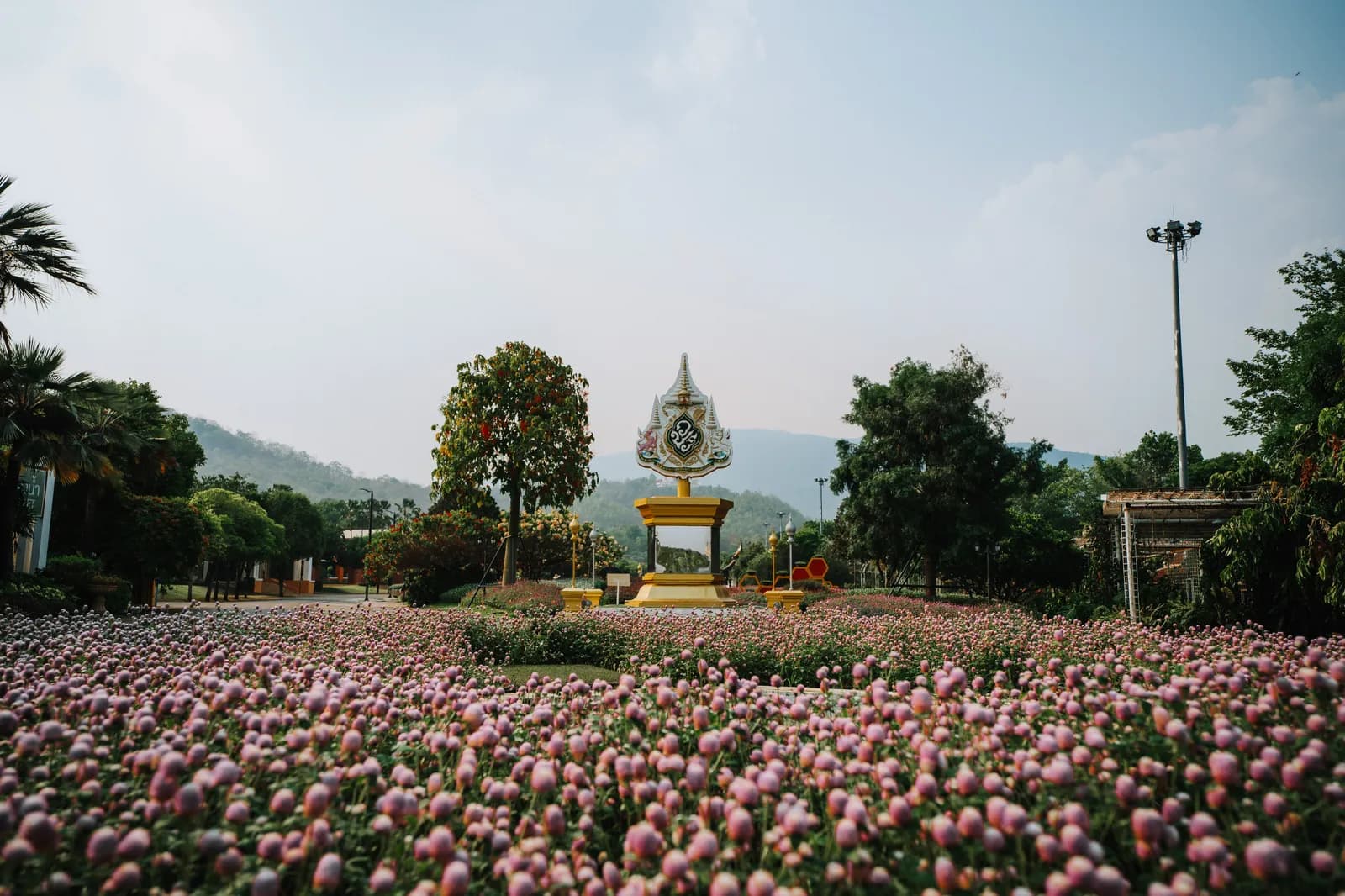
On 18 April, in the late afternoon, the sun was just a pale disc in a white sky. On the 26th the sky was bluer and a field of yellow cosmos glowed at sunset. Both times, there were few visitors. Entry costs 200 baht for a foreign adult, from 8am to 6pm (last entry around 5pm). The park is huge: take the small internal tram or a bike.
Wat Phra That Doi Kham
19. On the neighbouring hill, Wat Phra That Doi Kham is said to have been founded in 687, in the days of the Hariphunchai kingdom. You can spot it from afar by its large white and gold seated Buddha, around 17m tall. The temple is very popular with Thais, who come to make a wish to the Luang Por Tan Jai Buddha, promising jasmine garlands: if the wish comes true, they return to offer many more. The mountains of garlands piled at the foot of the altars were the most striking detail of my visit.
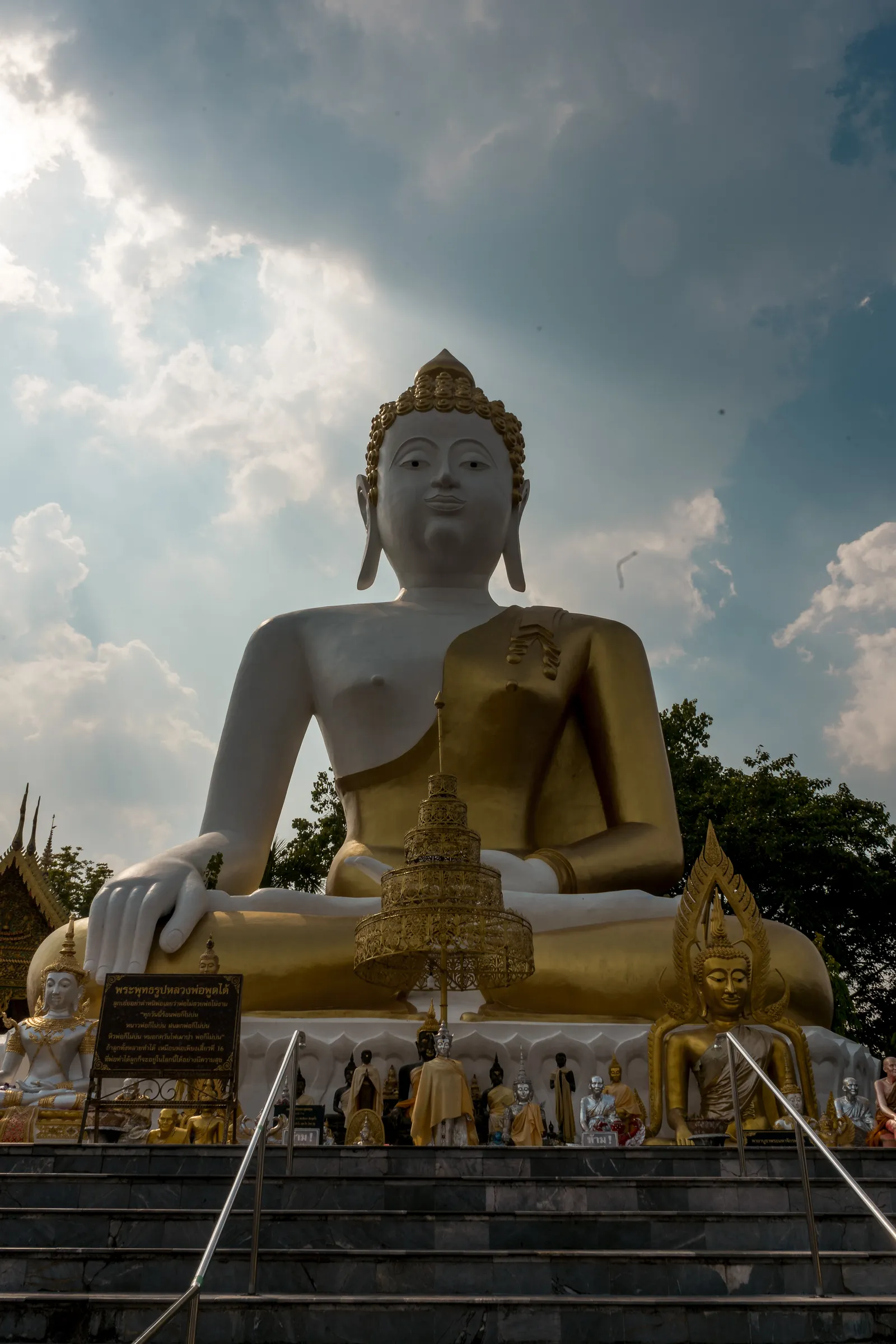
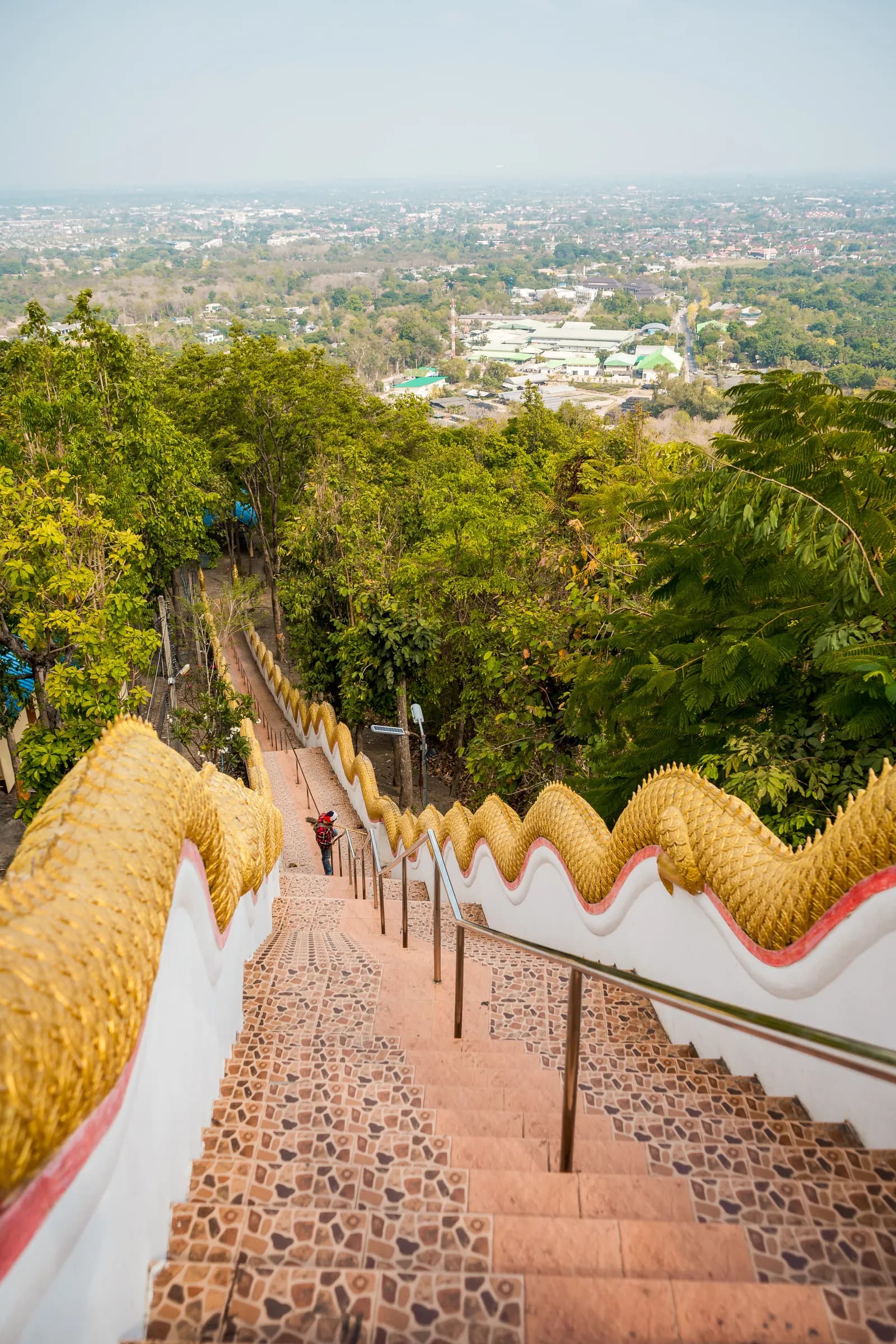
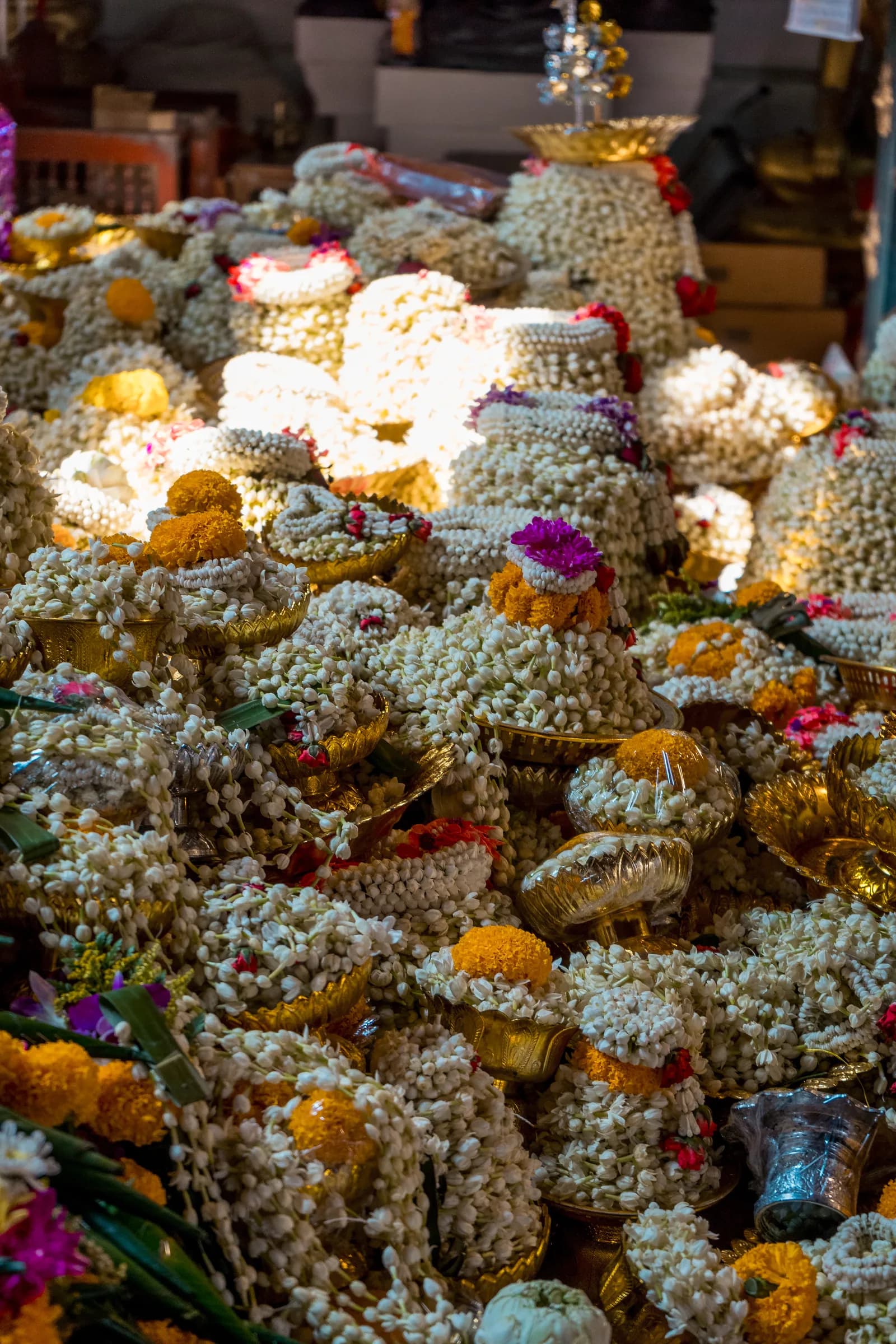
Photos : Pierre Bouyer
A long naga staircase runs down the hill, and the terrace looks out over the whole Chiang Mai valley and the airport. In late April it was drowned in haze. Entry is free according to the sources consulted, and the temple is open from about 8am to 5pm. You get there by car or Grab.
Northern food, cooking classes and massage
20. Khao soi. This is Chiang Mai's signature dish: egg noodles in a coconut milk curry, with chicken or beef, topped with a handful of crispy fried noodles and served with shallots, lime and pickled cabbage. Usually under 100 baht a bowl. Khao Soi Mae Sai, awarded a Michelin Bib Gourmand, opens Monday to Saturday from 8am to 4pm: like many khao soi spots, it is a lunchtime meal, not a dinner.
Photos : Pierre Bouyer
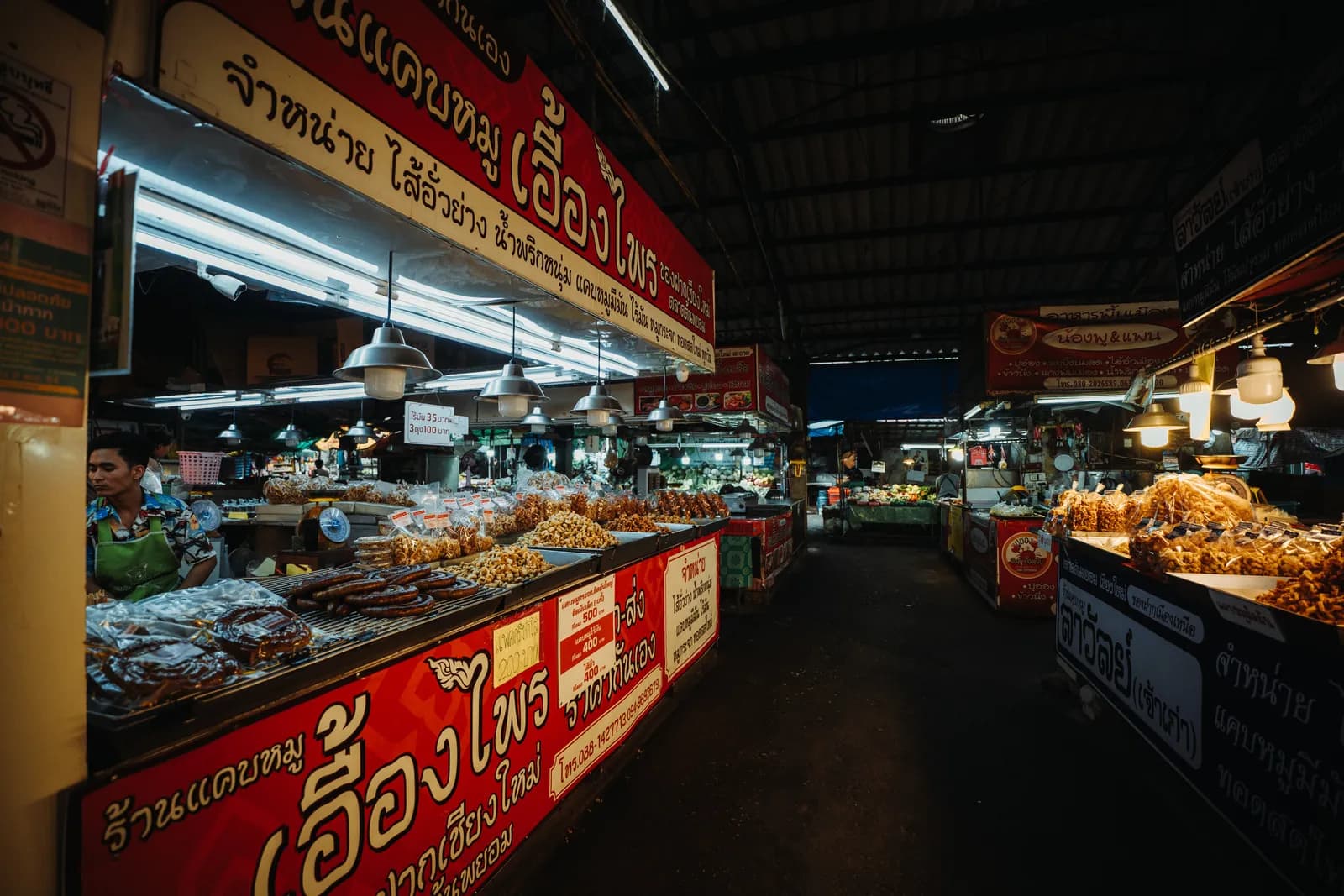
21. Other specialities. The north has its own cuisine, less sweet than Bangkok's: sai ua (herb and lemongrass sausage), nam prik noom (grilled green chilli dip) and nam prik ong (tomato and pork dip) with crispy pork crackling, kaeng hang lay (a Burmese-influenced pork curry) and khao kha moo, the braised pork served at Chang Phuak Gate in the evening. On 9 April 2024, in a covered market near Wat Suan Dok, sausages and crackling filled an entire aisle.
22. A cooking class. Chiang Mai is the cooking class capital. The classic format: a trip to the market, then preparing four to six dishes (curry, soup, stir-fry, dessert). Allow around 1,000 to 1,500 baht for a half or full day; Asia Scenic, for example, charges 1,000 baht in the old city and 1,200 baht at its farm.
23. A Thai massage. Allow 200 to 400 baht an hour in a parlour, and 150 to 350 baht at the temples that offer it. Lila Thai Massage, whose therapists are former inmates trained to help them rebuild their lives, has seven branches in town, from 400 baht an hour.
Day trips: Doi Inthanon, Chiang Rai and Pai
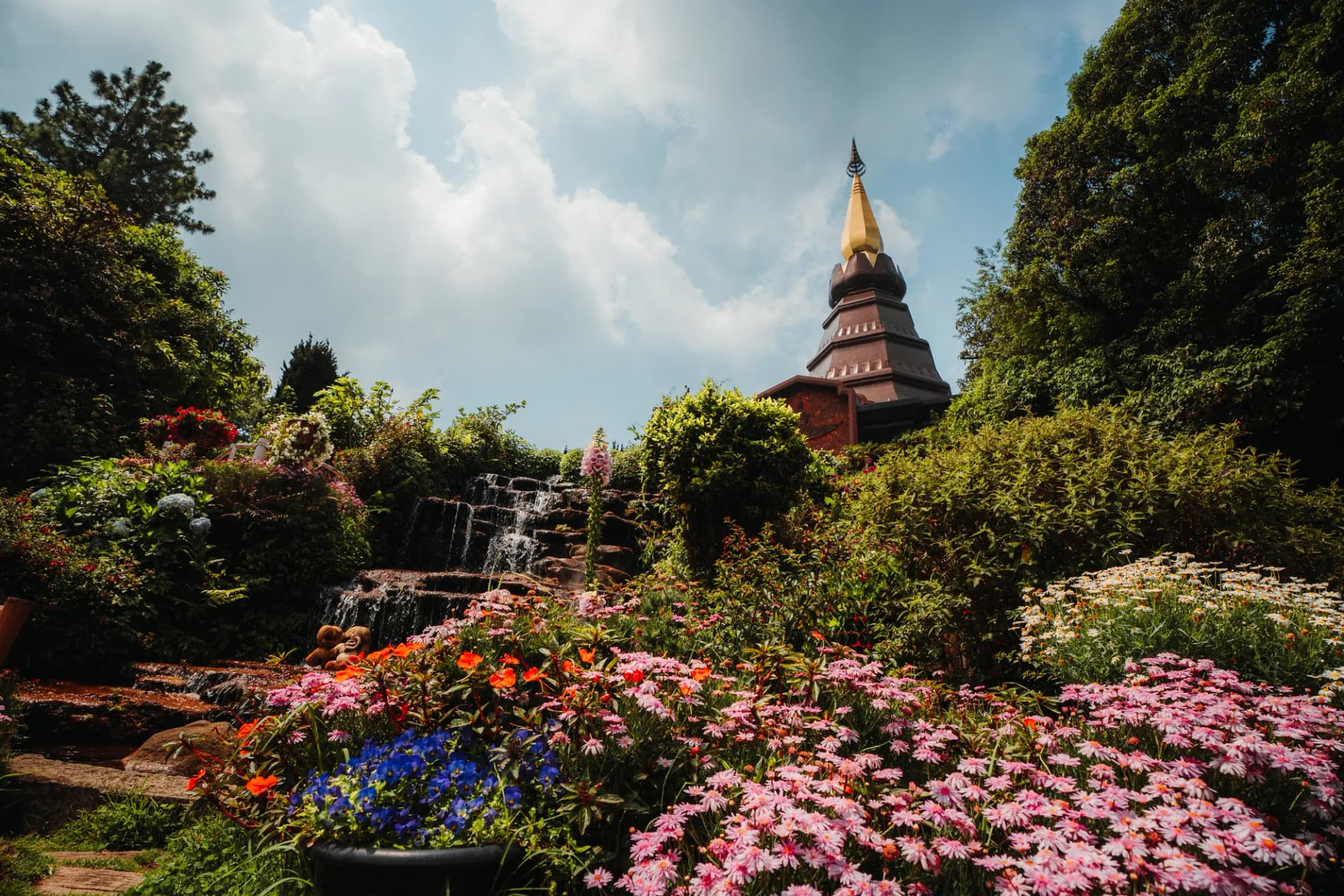
24. Doi Inthanon. Thailand's highest peak, at 2,565m, makes a day trip from Chiang Mai, about two hours' drive away. On 14 April 2024 I found blue skies and flower gardens around the two royal chedis, while the valley was full of smoke. Park entry is 300 baht, plus 100 baht for the chedis. I have written a full article on a day at Doi Inthanon.
25. Chiang Rai. The Greenbus leaves from Arcade bus terminal, with around a dozen departures a day, and takes 3 to 3.5 hours (129 to 258 baht depending on class). The White Temple, Wat Rong Khun, has cost 200 baht since 1 January 2026. I recommend a night there rather than a round trip in a day, as on my two days of 20 and 21 April 2024, to add the Blue Temple and the giant Guanyin statue at Wat Huay Pla Kang.
And Pai. The mountain village is 3.5 to 4 hours away by minivan, on a road with 762 bends, for around 150 to 250 baht. I did not go; but given the road, I would not consider it without at least two nights there.
When to go: seasons, smoke and festivals
The burning season
From January or February to April, smoke from agricultural burning and forest fires gets trapped in the Chiang Mai basin. In 2024 the province spent 87 days above the Thai fine particle standard, and the city was ranked among the most polluted in the world several days running in early April. On 4 April 2026 the province was even declared a disaster zone.
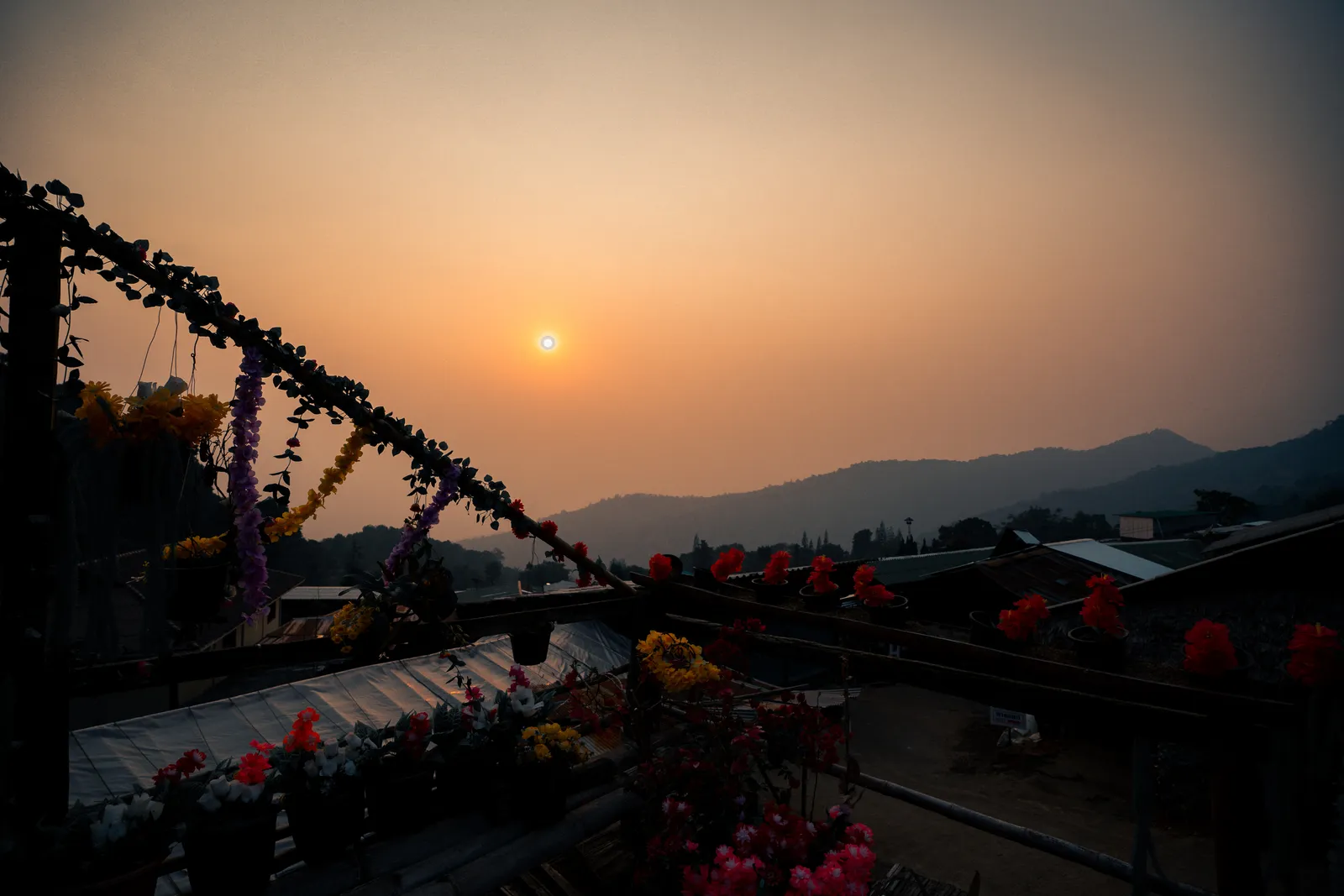
My April 2024 photos show it: milky skies, the valley invisible from Doi Kham, an orange sun above Doi Pui. Temples, markets and museums remain enjoyable; it is the views from the hills and the days outdoors that suffer. I explain everything in my article on the burning season in Chiang Mai, with figures and fallback options.
| Period | Climate | Who it suits |
|---|---|---|
| November to February | Cool season, mild mornings, clean air until January | Everyone: the best time |
| February to April | Heat (often above 35°C in April) and burning-season smoke | Those with fixed dates, with an N95 or FFP2 mask |
| May to October | Rainy season, green countryside, full waterfalls | Budget travellers and nature lovers who accept the showers |
Songkran, Thai New Year
Songkran falls every year from 13 to 15 April (national public holidays), and Chiang Mai celebrates it for longer than the rest of the country: in 2026 the city's festival ran from 6 to 17 April, with the procession of the Phra Phuttha Sihing Buddha and a water tunnel at Tha Phae Gate. Put your phone in a waterproof pouch: the water fights around the moat are huge.
Yi Peng and Loy Krathong
Yi Peng, the Lanna lantern festival, coincides with Loy Krathong, on the full moon of the 12th lunar month: in 2026, around 24 and 25 November (official dates to be confirmed by the province).
Be careful with sky lanterns: in 2025, releasing them was only allowed on 5 and 6 November, and it was banned in six districts, including the city district, and within a 15km corridor around the airport. Offenders faced up to five years in prison and a 200,000 baht fine. The mass lantern releases you see in photos everywhere are paid private events, outside the city.
How many days in Chiang Mai
Here is how I would spread the activities. Keep the outdoors for the morning and late afternoon, and museums, cafés or massages for the afternoon.
| Length of stay | Plan |
|---|---|
| 3 days | Day 1: the old city and its temples on foot. Day 2: Doi Suthep, Wat Pha Lat and Doi Pui. Day 3: Nimman, Wat Umong and a night market (Saturday or Sunday) |
| 5 days | The 3 days, plus an elephant sanctuary, then a day with the Lanna Traditional House Museum, a cooking class, Rajapruek and Doi Kham |
| 1 week | The 5 days, plus Doi Inthanon and Chiang Rai (ideally with a night there) |
Budget
| Item | Indicative price in 2026 |
|---|---|
| Old city temples | Free or a small contribution |
| Wat Phra That Doi Suthep | 30 baht, plus 20 baht for the funicular |
| Monk's Trail, Huay Kaew, Doi Pui | 100 baht (national park fee) |
| Royal Park Rajapruek | 200 baht |
| Lanna Traditional House Museum | About 100 baht |
| Elephant sanctuary | 2,500 to 3,500 baht per day |
| Doi Inthanon | 300 baht, plus 100 baht for the chedis |
| Cooking class | 1,000 to 1,500 baht |
| Thai massage (1 hour) | 200 to 400 baht |
| Songthaew in town | 30 to 50 baht per person |
Where to stay and getting around
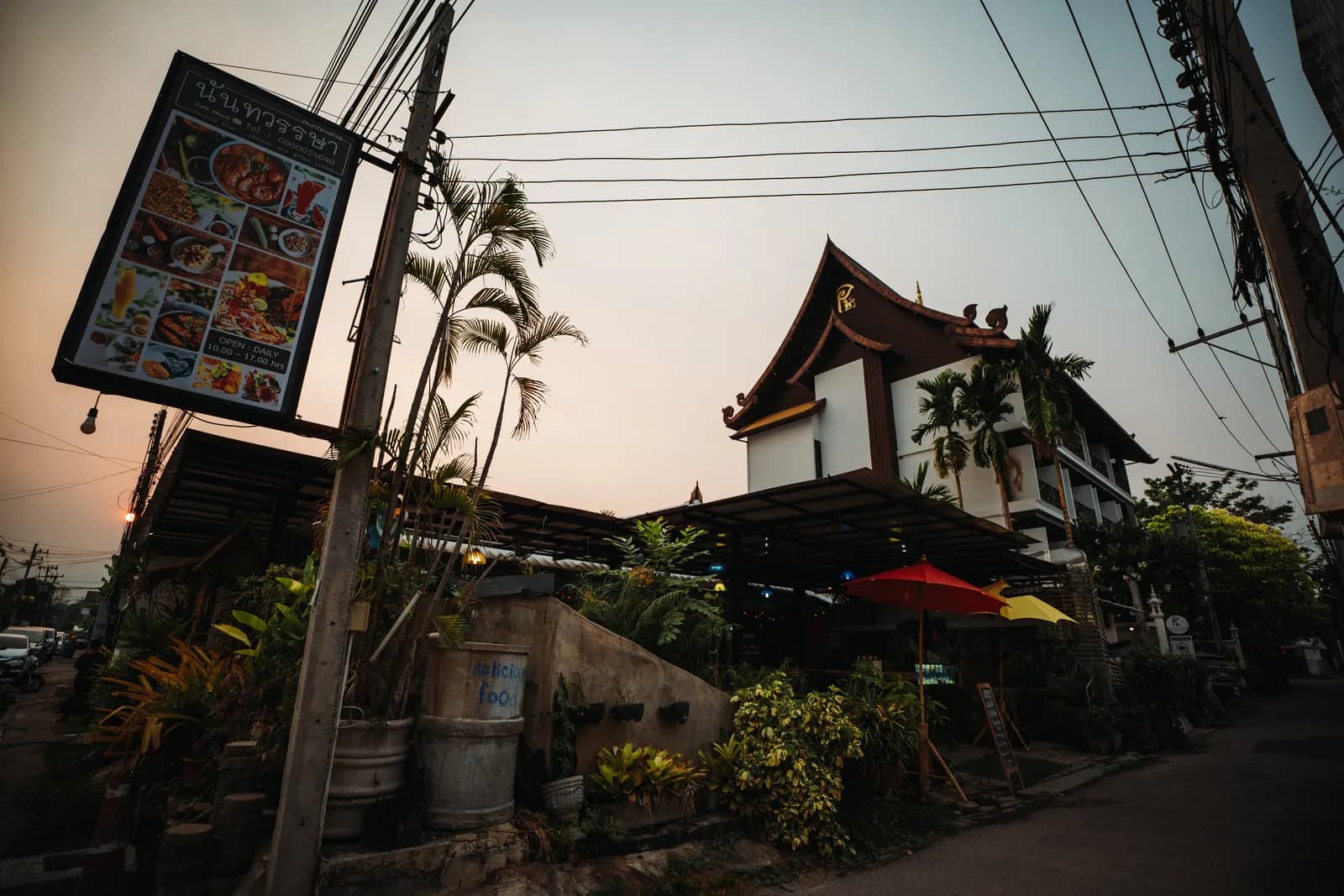
Areas
- The old city: the best choice for a first visit. Everything is walkable: temples, cafés, massages and the Sunday Walking Street. Go for the lanes in the south and west, quieter than around Tha Phae Gate.
- Nimman: for cafés, restaurants and nightlife, and the closest to Doi Suthep. You will need a Grab to reach the old city.
- The Ping riverside: the city's most elegant hotels, to the east, between the Night Bazaar and the Wat Ket area. Quiet at night, 15 minutes' walk from Tha Phae Gate.
- Santitham: a residential area north-west of the old city, between Chang Phuak Gate and Nimman. Not touristy, cheaper, popular for long stays.
Arriving and getting around
Chiang Mai International Airport is only 3 or 4km from the old city: 15 to 20 minutes and 120 to 200 baht by Grab or official taxi. From Bangkok, the flight takes about 1 hour 15 minutes; the night train, around 12.5 hours, is a lovely way to arrive.
In town, shared red songthaews cost 30 to 50 baht per person: state your destination before getting in. Grab works well, including for the trip up to Doi Suthep. A scooter is handy for the mountain and the parks to the south, provided you hold a motorbike licence and take great care on the Doi Suthep hairpins.
BikesBooking
Scooter, motorbike, quad & buggy rental worldwide
Compare verified local rental companies and book a scooter, motorbike, quad or buggy at the best price. Instant confirmation, free cancellation.


Frequently asked questions
Three days are enough for the old city, a night market and Doi Suthep. With five days you can add Nimman, Doi Pui, an elephant sanctuary and a cooking class. A week lets you add Doi Inthanon and a day in Chiang Rai.
The old city for a first visit, as everything is walkable, including the temples and the Sunday market. Nimman suits café lovers and nightlife, the Ping riverside quieter stays, and Santitham tight budgets and long stays.
Entry to Wat Phra That Doi Suthep costs 30 baht for foreigners, plus 20 baht if you take the funicular instead of climbing just over 300 steps. A red songthaew from Chang Phuak Gate costs around 60 baht one way per person, once the vehicle is full.
Yes, since 1 October 2025: 100 baht per foreign adult and 50 baht per child, the same as for Huay Kaew waterfall and Doi Pui. Wat Pha Lat remains free if you go up by road.
The Sunday Walking Street fills Ratchadamnoen Road on Sundays from about 4pm to 10pm, and the Saturday Walking Street takes over Wua Lai Road on Saturdays at the same times. The Night Bazaar on Chang Klan Road opens every evening, from about 5pm to 11pm.
Yi Peng and Loy Krathong fall on the full moon of the 12th lunar month, around 24 and 25 November in 2026; the official dates and lantern release rules are published by the province each year. In 2025, releases were allowed on only two evenings and banned in six districts, including the city district.
It is advisable: the burning season often pushes fine particle levels above the national standard from February to April, with peaks above 300 µg/m³ in some districts in April 2026. An N95 or FFP2 mask and the Air4Thai app help you plan your days.
It is not recommended: Route 1095 has 762 bends and the minivan takes 3.5 to 4 hours each way. Plan at least two nights there.
My verdict
After almost a month there, Chiang Mai strikes me as a city to live in rather than tick off: human-sized, rich in temples, markets and good food, with the mountain 30 minutes away. It rewards a slow pace: in two days, you will miss it.
What I liked:
- Doi Pui at the end of the day, its terraced gardens and views over the hills: the best outing of my stay, even in the smoke.
- The Saturday and Sunday markets, for the atmosphere of temple courtyards turned into canteens.
- The Lanna Traditional House Museum, calm and informative.
- Rajapruek and Doi Kham together in the late afternoon: well-kept gardens, few people, and the jasmine garlands.
What I liked less:
- The smoke and heat of April: coming at that time spoilt every view from the hills. It is the main reason I would come back between November and January.
- Waterfalls in the dry season: Huay Kaew in April is mostly rock.
- The confusion around elephant sanctuaries: even a no-riding venue may offer practices that NGOs now advise against.
Chiang Mai suits curious travellers, food lovers, photographers and anyone who likes to unpack for several days. It is less suited to those looking for beaches or a list of sights to tick off in 48 hours.
Further reading
To fit Chiang Mai into a wider trip, see my 3-month Thailand itinerary, and find all my articles on Thailand. If you are travelling for a long time, my tips for travelling safely will also come in handy.
Sources and fact-checkingInformation checked on 9 October 2026 · 20 sources consulted
- Chiang Mai Citylife: Doi Suthep-Pui entrance fees from October 2025
- Thai National Parks: getting to Doi Suthep-Pui National Park (songthaew fares)
- Wikipedia: Wat Phra That Doi Suthep
- Wikipedia: Wat Pha Lat
- Wikipedia: Wat Phra That Doi Kham
- Time Out Chiang Mai: the best weekend markets
- Time Out Chiang Mai: Yi Peng lantern release rules in 2025
- Asia News Network (The Nation): Songkran 2026 programme in Chiang Mai
- World Animal Protection: Bred to Entertain report on elephant bathing (March 2026)
- Elephant Nature Park: programmes and prices
- Kindred Spirit Elephant Sanctuary: visit
- Chiang Mai city museums (City Arts & Cultural Centre, Lanna Folklife Museum)
- MAIIAM Contemporary Art Museum: visitor information
- Thai Holiday Guide: Lanna Traditional House Museum
- Thai Holiday Guide: Royal Park Rajapruek
- Michelin Guide: Khao Soi Mae Sai
- The Infatuation: Chom Cafe (March 2025)
- Time Out Chiang Mai: One Nimman Glow Countdown 2026
- Time Out Chiang Mai: temple massages (July 2025)
- Asia Scenic Thai Cooking School: prices

Âme Bohème exists thanks to you
Some links in this article are affiliate links. This means that if you book or purchase a product through these links, we receive a small commission, at no extra cost to you. It's thanks to this support that we can continue creating free, quality content.
You can also buy us a coffee, or follow us on Instagram and Facebook.