

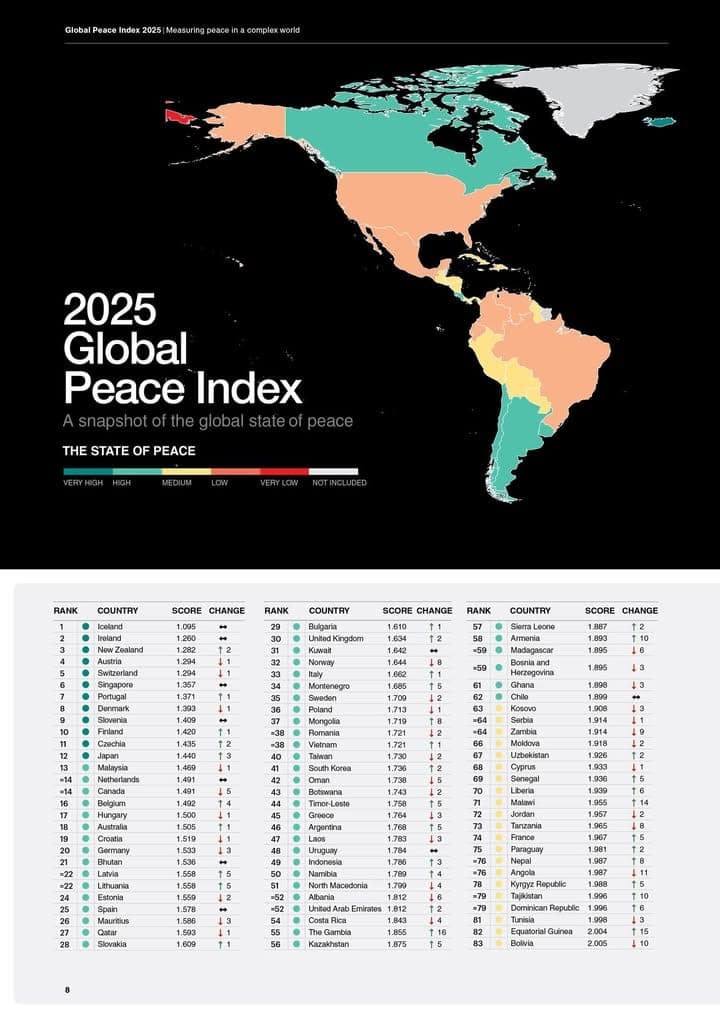
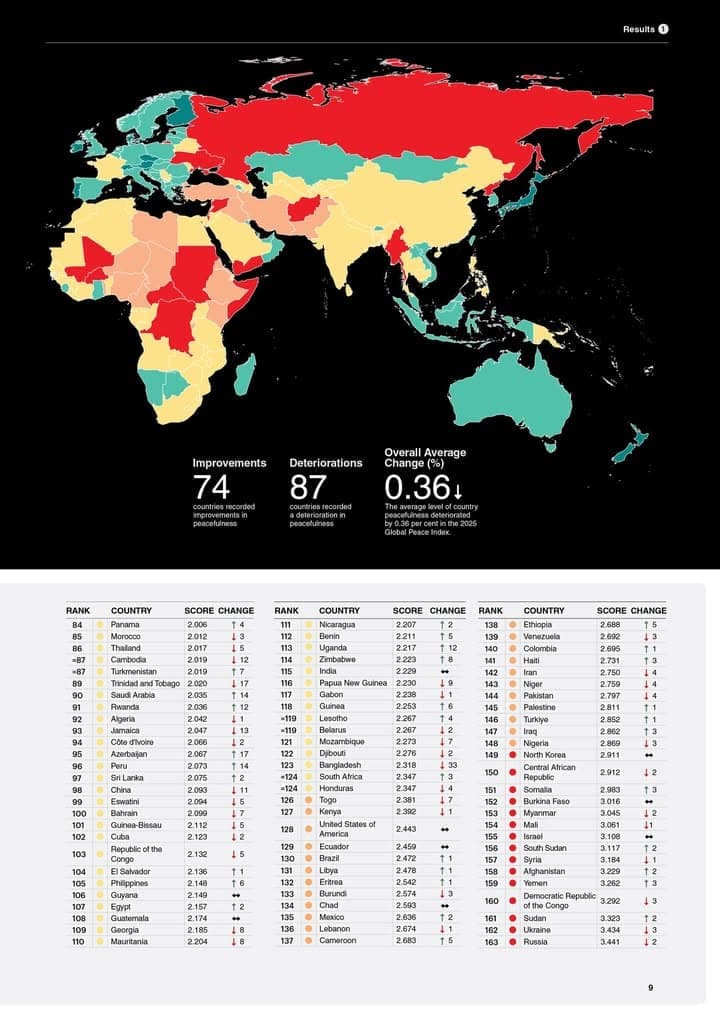
In an increasingly tense geopolitical climate, with 59 state-based conflicts currently active around the world, safety has become a crucial question for travellers. The Global Peace Index (GPI) 2025, published by the Institute for Economics and Peace, paints a mixed picture of world peace. While some countries continue to embody stability and serenity, others are seeing their situation deteriorate dangerously.
This year marks the 13th decline in world peace in 17 years, and the 6th in a row, with a 0.36% deterioration compared with 2024. Yet amid this global gloom, some destinations stand out for their ability to maintain safe and peaceful environments.
2026 update: the Global Peace Index 2026, published in June 2026 by the Institute for Economics and Peace, keeps Iceland in 1st place (score 1.161), ahead of New Zealand, Switzerland, Slovenia, Ireland, Austria, Portugal, Singapore, Finland and Japan. The global picture keeps worsening: 99 of the 163 countries deteriorated, and 63 state-based conflicts were recorded in 2025, the highest number since 1945. France ranks 99th.
The Top 10 Safest Countries in 2025
The 2025 ranking confirms Europe's dominance when it comes to safety, with eight countries from the Old Continent in the top 10. These nations stand out for their stable institutions, low crime rates and ability to avoid both internal and external conflict.
1. Iceland: 17 consecutive years at the top (score: 1.095)
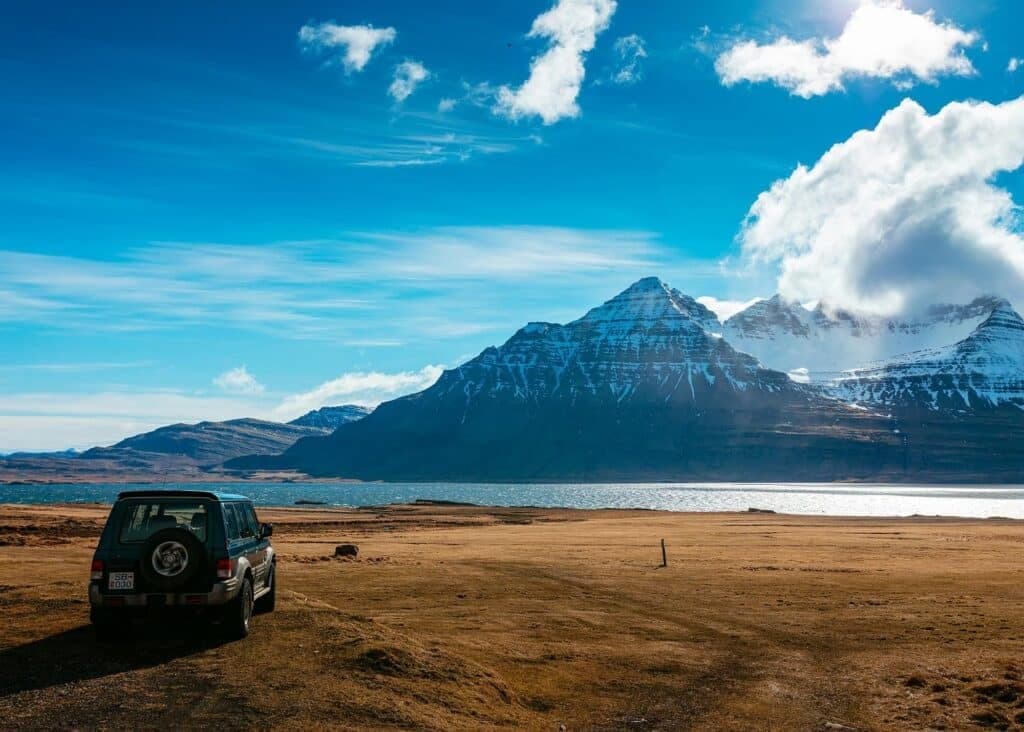
Iceland keeps first place for the 17th year in a row, ever since the first GPI ranking in 2008. This Nordic nation performs exceptionally well across every area analysed. Its lack of a standing army, combined with some of the lowest crime rates in the world, explains its dominant position.
Iceland particularly excels in militarisation, where it has the best score in the world (1.019). The country also enjoys remarkable political stability and strong social cohesion. For travellers, Iceland is one of the safest destinations in the world, whether you're chasing the northern lights or exploring its unique volcanic landscapes.
2. Ireland: Europe’s rising star (score: 1.260)
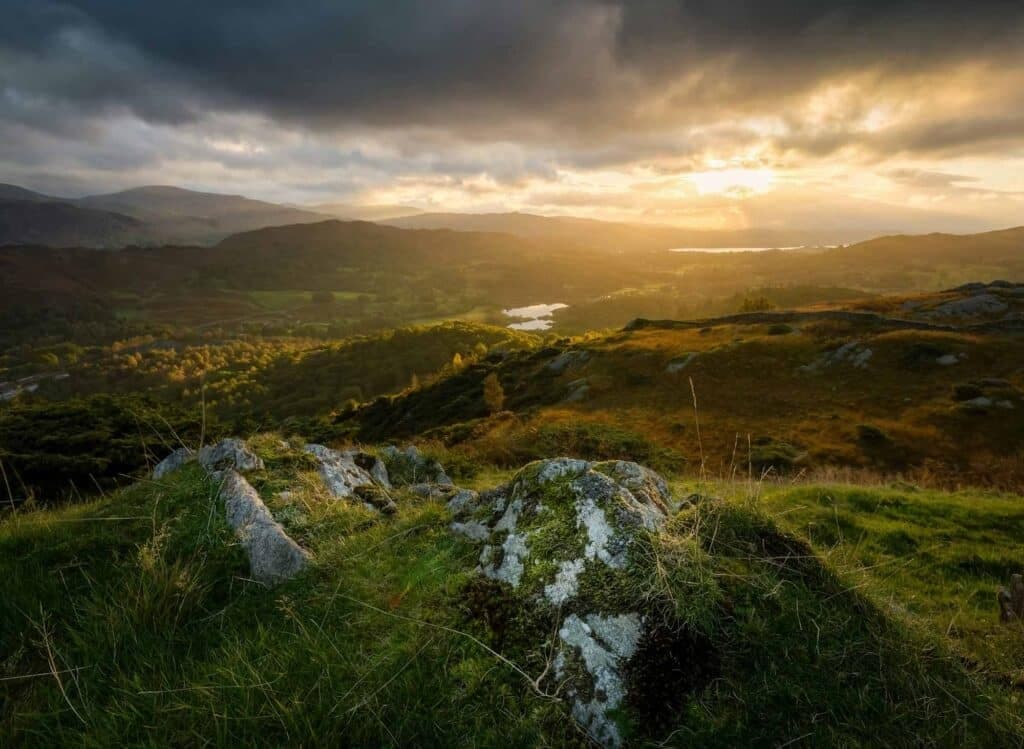
Ireland holds on to second place, confirming its status as Europe's rising star for safety. Since first entering the top 10 in 2022, the country has kept improving. Its traditional neutrality in international politics and relatively low crime rates explain this excellent position.
The country made notable progress in militarisation, a rare feat in a year when most nations increased their military spending. Ireland's thriving economy and the stability of its institutions add to its appeal for safety-conscious travellers.
3. New Zealand: a model of stability (score: 1.282)
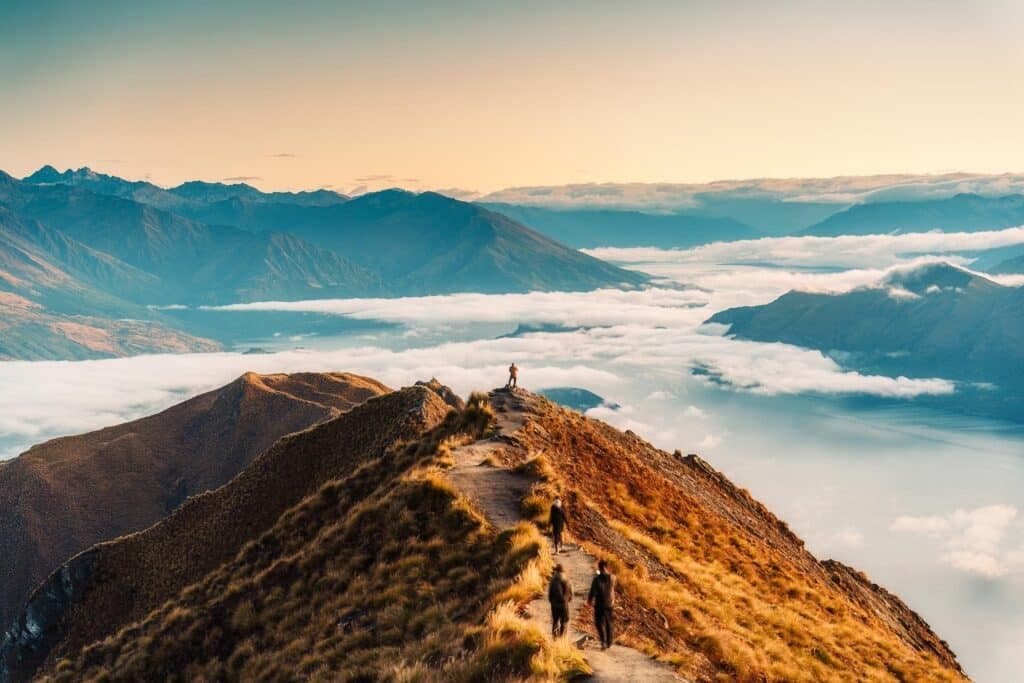
New Zealand climbs two places to reach the podium. The country stands out for the near-total absence of internal and external conflict, earning one of the best scores in the world in this area. Its solid democratic institutions and inclusive society contribute to this remarkable performance.
Although the country has increased its defence budget, leading to a slight deterioration in militarisation, New Zealand keeps improving on societal safety. For French travellers, New Zealand offers an exceptional setting for family holidays or solo adventures.
The rest of the top 10 at a glance
4. Austria (1.294), The country improved its overall score this year, moving up one place. The security measures stepped up after the 2020 Vienna attack are paying off.
5. Switzerland (1.294), The Swiss Confederation holds its position thanks to its traditional neutrality and ongoing efforts to reduce the risk of conflict. Switzerland remains a favourite destination for a carefree couple's getaway.
6. Singapore (1.357), The only Asian country in the top 10, Singapore owes its position to the near-complete absence of internal and external conflict, as well as its exceptional domestic security system.
7. Portugal (1.371), Portugal has made remarkable progress since the 2014 financial crisis, climbing from 18th to 7th place. Its low crime rates and economic stability make it a destination of choice.
8. Denmark (1.393), Despite slipping one place due to a sharp deterioration in its militarisation score, Denmark remains an extremely safe destination for travellers.
9. Slovenia (1.409), In the top 10 since 2020, Slovenia stands out for its exceptionally low crime rates and near-total absence of terrorist risk.
10. Finland (1.420), Finland enters the top 10 thanks to impressive scores in societal safety, ranking third in the world in this area.
“Iceland has been the most peaceful country in the world since the GPI began in 2008. This Nordic nation has some of the lowest military spending and rates of international conflict in the world.”, Institute for Economics and Peace
Wise Card
Travel smart with the best exchange rate
Say goodbye to banking hassles abroad with Wise, the multi-currency card with superpowers!
| Rank | Country | GPI Score |
|---|---|---|
| 1 | Iceland | 1.095 |
| 2 | Ireland | 1.260 |
| 3 | New Zealand | 1.282 |
| 4 | Austria | 1.294 |
| 5 | Switzerland | 1.294 |
| 6 | Singapore | 1.357 |
| 7 | Portugal | 1.371 |
| 8 | Denmark | 1.393 |
| 9 | Slovenia | 1.409 |
| 10 | Finland | 1.420 |
| 159 | Yemen | 3.262 |
| 160 | DR Congo | 3.292 |
| 161 | Sudan | 3.323 |
| 162 | Ukraine | 3.434 |
| 163 | Russia | 3.441 |
Understanding the Global Peace Index: more than just a safety ranking
The Global Peace Index doesn't just measure conventional crime. This comprehensive study, covering 163 countries that are home to 99.7% of the world's population, analyses peace through a sophisticated multidimensional approach.
The 3 areas analysed
- 01Societal safety and security: this area looks at crime rates, domestic stability, the impact of terrorism, violent demonstrations and the population's general perception of safety.
- 02Ongoing conflict: this dimension analyses internal and external wars, regional tensions, conflict-related deaths and general political instability.
- 03Militarisation: this component assesses military spending as a percentage of GDP, arms exports, the size of the armed forces and access to small arms.
Important: the GPI does not measure road safety, natural disasters or health risks: all crucial factors for travellers. So it's worth supplementing this information with other sources specialising in solo travel or trip planning.
The 2025 Global Context: A Less Peaceful World
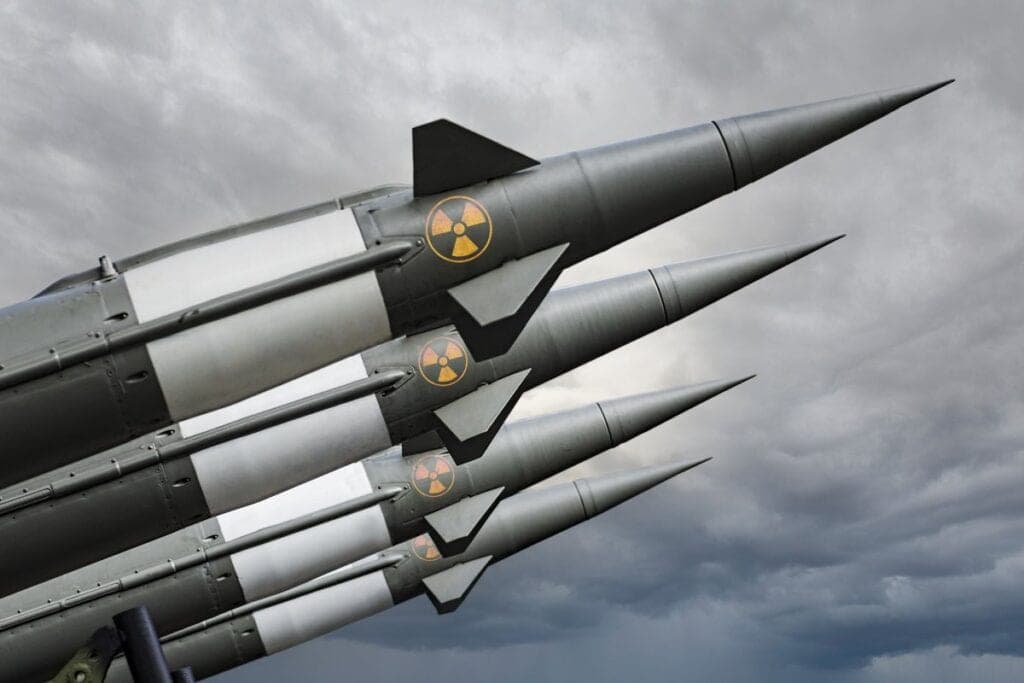
2025 marks a worrying turning point for world peace. The figures revealed by the GPI paint a particularly bleak picture of the state of international relations and global stability.
The alarming figures of 2025
The world currently has 59 active state-based conflicts, the highest number since the end of the Second World War. This escalation reflects the growing fragmentation of the global geopolitical order. Even more worrying, 78 countries are involved in conflicts beyond their borders, illustrating the increasing internationalisation of tensions.
The human toll of this deterioration is dramatic: 17 countries recorded more than 1,000 deaths from internal conflict in 2024. These figures reveal an intensification of violence that goes far beyond the conflict zones traditionally identified.
The economic cost of this violence has reached dizzying heights: $19.97 trillion in 2024, or 11.6% of the global economy. That amounts to $1,532 per person on the planet, showing the direct impact of insecurity on global prosperity.
Worrying trends
Militarisation is making a worrying comeback after ten years of steady decline. No fewer than 86 countries increased their military spending as a percentage of GDP, one of the sharpest annual deteriorations for this indicator. This arms race reflects growing mistrust between nations and widespread preparation for future conflicts.
At the same time, the “external conflicts fought” indicator recorded the biggest annual decline, highlighting the growing number of military interventions beyond national borders. This trend illustrates how traditional alliances are becoming more complex and new geopolitical axes are emerging.
For safety-conscious travellers, these developments make it even more crucial to follow the news and urgent alerts before any international trip.
DiscoverCars
Car rental comparison in 150+ countries
Compare prices from Hertz, Avis, Sixt and local providers. All fees included, free cancellation. Rated 4.6/5 on Trustpilot.

Spotlight on the Worst Performers: The 10 Least Safe Countries
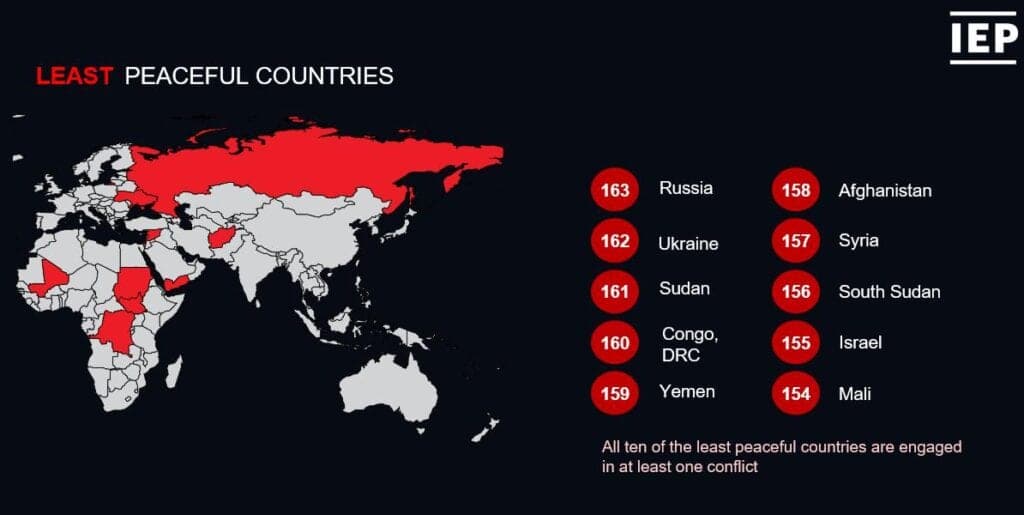
At the other end of the ranking, a handful of countries concentrate most of the world's security challenges. Facing armed conflict, chronic instability or major geopolitical tensions, these nations illustrate the dramatic consequences of a collapse in peace.
163. Russia (3.441), The war in Ukraine, international sanctions and domestic repression put Russia in last place worldwide.
162. Ukraine (3.434), The victim of major military aggression, Ukraine is suffering massive destruction and extreme militarisation.
161. Sudan (3.323), Civil war, mass displacement of people and institutional collapse define the situation in Sudan.
160. Democratic Republic of the Congo (3.292), Persistent armed conflict in the east of the country keeps it in a state of chronic instability.
159. Yemen (3.262), An extreme humanitarian crisis and tribal and regional wars are devastating this country on the Arabian Peninsula.
158. Afghanistan (3.229), The Taliban's return to power has brought widespread insecurity and economic collapse.
157. Syria (3.184), A prolonged war and the collapse of the state keep the country in a major humanitarian crisis.
156. South Sudan (3.117), Ethnic conflict and government instability have persisted since independence.
155. Israel (3.108), Active conflicts, internal and external violence and high militarisation are worsening the security situation.
154. Mali (3.061), Insurgencies, foreign interventions and chronic political instability affect this Sahel country.
Insider tip: always check the French Foreign Ministry's travel advice before any trip, even to highly ranked countries. Situations can change quickly and require constant vigilance.
Regional Analysis: Where Is Peace in the World?
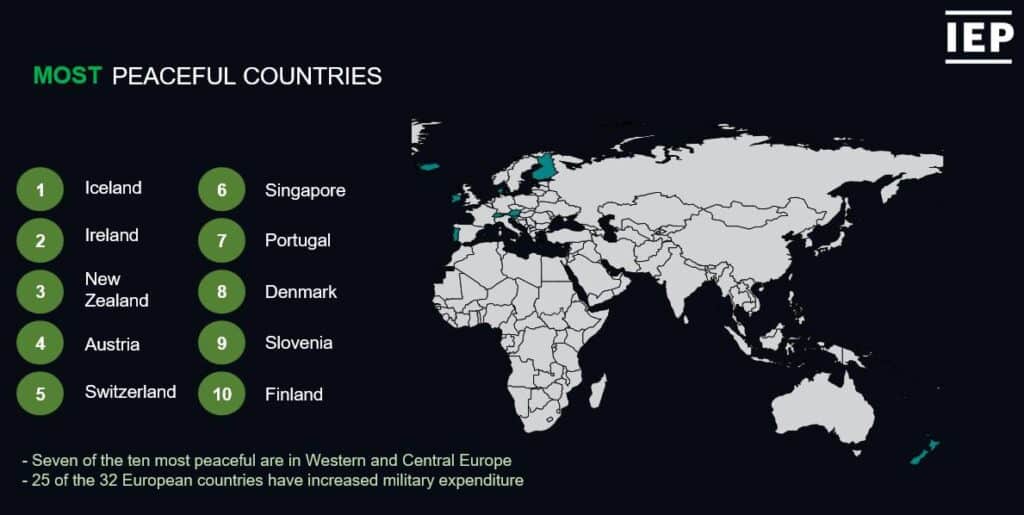
The regional analysis of the GPI 2025 reveals marked geographical disparities in how peace is distributed around the world. These contrasts reflect the historical, economic and political dynamics specific to each region.
Western Europe: the bastion of safety
Western and Central Europe remains the most peaceful region in the world, with eight countries in the global top 10. This dominance is explained by stable democratic institutions, European integration and developed economies.
Norway (32nd) and Sweden (35th) maintain high levels of safety despite some regional geopolitical tensions. These Nordic countries offer travellers unique experiences, from watching the northern lights in Tromsø to getaways in the fjords of the Lofoten Islands.
Iceland continues to fascinate with its ability to maintain absolute peace, offering visitors exceptional experiences such as the Blue Lagoon or exploring its spectacular waterfalls.
South America: the positive surprise of 2025
South America is the only region in the world to show notable improvement, with a 0.59% gain on the overall index. This positive trend contrasts with the widespread deterioration seen elsewhere.
Argentina leads this regional progress and ranks as the most peaceful country on the continent. Peru has also made significant progress, boosting its appeal to tourists. Colombia remains last in the region despite some improvements in domestic stability.
These positive developments open up new prospects for European travellers keen to explore Latin America safely.
Asia-Pacific: a mixed picture
Asia-Pacific ranks as the second most peaceful region in the world, driven in particular by the excellent performances of New Zealand (3rd worldwide) and Japan (12th).
However, the region is full of contrasts. While Singapore shines in the global top 10, Myanmar is experiencing a dramatic deterioration in its security situation. This disparity illustrates the geopolitical complexity of this vast region.
For travellers, New Zealand offers exceptional nature experiences in a perfectly safe setting, while Japan continues to draw visitors with its unique culture and remarkable level of safety.
Impact for Travellers: What This Ranking Really Means
The Global Peace Index provides a valuable framework for assessing the safety of destinations, but travellers need to interpret it with nuance and context.
French-speaking countries in the ranking
| Country | Position | Score | Change |
|---|---|---|---|
| Switzerland | #5 | 1.294 | Stable |
| Canada | #14 | 1.491 | Down (-5 places) |
| Belgium | #16 | 1.492 | Up (+4 places) |
| France | #74 | 1.967 | Up (+5 places) |
Switzerland confirms its status as an ultra-safe destination, ideal for family or romantic getaways. Canada remains a safe bet despite a slight deterioration, offering travellers a wide range of experiences from Montreal to the Rockies.
Belgium and France maintain satisfactory levels of safety for international tourism, although some urban areas call for particular vigilance.
Âme Bohème destinations in the top 50
Several destinations regularly explored on Âme Bohème feature near the top of the ranking:
- Iceland (#1): Discover our guides to hot springs and volcanic phenomena
- New Zealand (#3): Explore Auckland and the Coromandel Peninsula
- Norway (#32): Immerse yourself in the magic of Tromsø and Bergen
- Italy (#33): Discover the charms of Lake Como and its historic villas
“A country that is peaceful according to the GPI may have strict regulations; conversely, a tourist destination can rank well while still having areas to avoid.”
This nuance is crucial: an excellent GPI ranking doesn't guarantee the complete absence of localised risks or challenges specific to travellers.
Practical Tips for Travelling Safely
The GPI ranking is an excellent starting point for assessing the safety of a destination, but it needs to go hand in hand with methodical, personalised preparation.
Important: a good GPI ranking is no substitute for checking official travel advice and finding out about the local situation. Conditions can change quickly, especially in the current geopolitical context.
Careful planning remains the cornerstone of a safe trip. That preparation includes taking out suitable travel insurance and regularly checking up-to-date travel advice.
Travel safety essentials
- Check official travel advice: French Ministry of Foreign Affairs
- Comprehensive travel insurance: take out cover suited to your destination and activities
- Keep in touch with loved ones: share your detailed itinerary with the people close to you
- Secure documents: keep digital copies of your important documents
- In-depth local research: find out about the cultural and security specifics of your destination
To dig deeper into these topics, see our complete guide on how to travel safely, especially useful for solo trips.
Chapka Insurance
Travel with peace of mind with the best travel insurance
Stay covered in every situation with the best insurance for your next trip.
Staying safe while travelling also means constantly adapting to local circumstances. The safest destinations can present unexpected challenges, while lower-ranked countries sometimes offer remarkable experiences with the right precautions.
Methodology and Limitations of the Global Peace Index
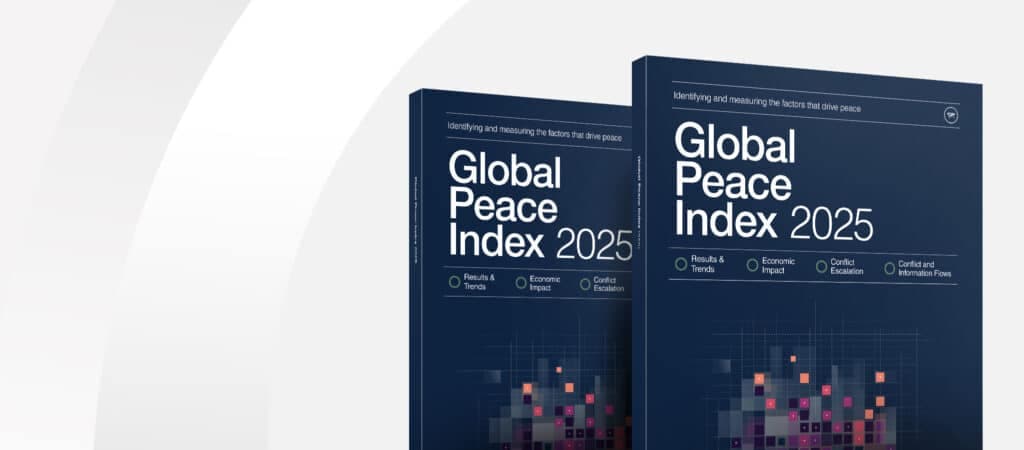
The GPI is based on 23 quantitative and qualitative indicators, analysed by the Economist Intelligence Unit through a rigorous multi-level review process. This methodology ensures data are consistent and comparable across countries and years.
However, the GPI has some important limitations for travellers. The index doesn't cover health or climate risks, or the logistical challenges specific to tourism. A country can be “peaceful” according to the GPI while still posing significant risks for certain types of travellers.
What's more, national averages can hide major regional disparities. Some parts of a highly ranked country may be advised against, while specific regions of lower-ranked countries remain perfectly safe for tourism.
Insider tip: the GPI measures national “peace” but is no substitute for a personalised risk assessment based on your traveller profile. Always supplement this information with specialist sources, especially for solo trips or off-the-beaten-track adventures.
Trends to Watch in 2025 and Beyond
The changing global security landscape points to several major trends that will have a lasting influence on the travel industry and the safety of tourist destinations.
The drivers of change
Climate change is emerging as a security risk multiplier. Climate migration, more intense natural disasters and increasingly scarce resources are creating new geopolitical tensions. These changes will gradually affect the appeal and safety of many traditional destinations.
Technological change is bringing both new risks and new opportunities. Cybersecurity is becoming a major issue for tourism infrastructure, while surveillance and communication technologies are strengthening the ability to protect travellers.
Travel trends for 2025 already reflect these changes, with growing demand for safe destinations and responsible experiences. This trend favours countries at the top of the GPI ranking and encourages higher security standards worldwide.
The emergence of new regional conflicts and the reshaping of international alliances will continue to influence future rankings. Travellers will have to adapt to a more complex and volatile geopolitical environment.
Conclusion: Travelling Smart in a Changing World
The Global Peace Index 2025 reveals a paradoxical world: while global peace is deteriorating, some countries continue to offer remarkable havens of safety. Iceland, Ireland and New Zealand prove that it's possible to maintain peaceful environments even in a tense international context.
For today's travellers, this data is a valuable but not sufficient tool. Safe travel comes from a subtle combination of choosing the right destinations, careful preparation and constant adaptation to local realities.
The top-ranked GPI destinations generally offer the best safety guarantees, but every trip calls for a personalised risk assessment. In this context, up-to-date information, flexibility and caution become the modern traveller's best companions.
The changing global security landscape reminds us that the privilege of travelling comes with a responsibility: to stay informed, to prepare and to respect local realities. By taking this thoughtful approach, we can keep exploring a fascinating world while protecting our own safety and that of our loved ones.

Âme Bohème exists thanks to you
Some links in this article are affiliate links. This means that if you book or purchase a product through these links, we receive a small commission, at no extra cost to you. It's thanks to this support that we can continue creating free, quality content.
You can also buy us a coffee, or follow us on Instagram and Facebook.